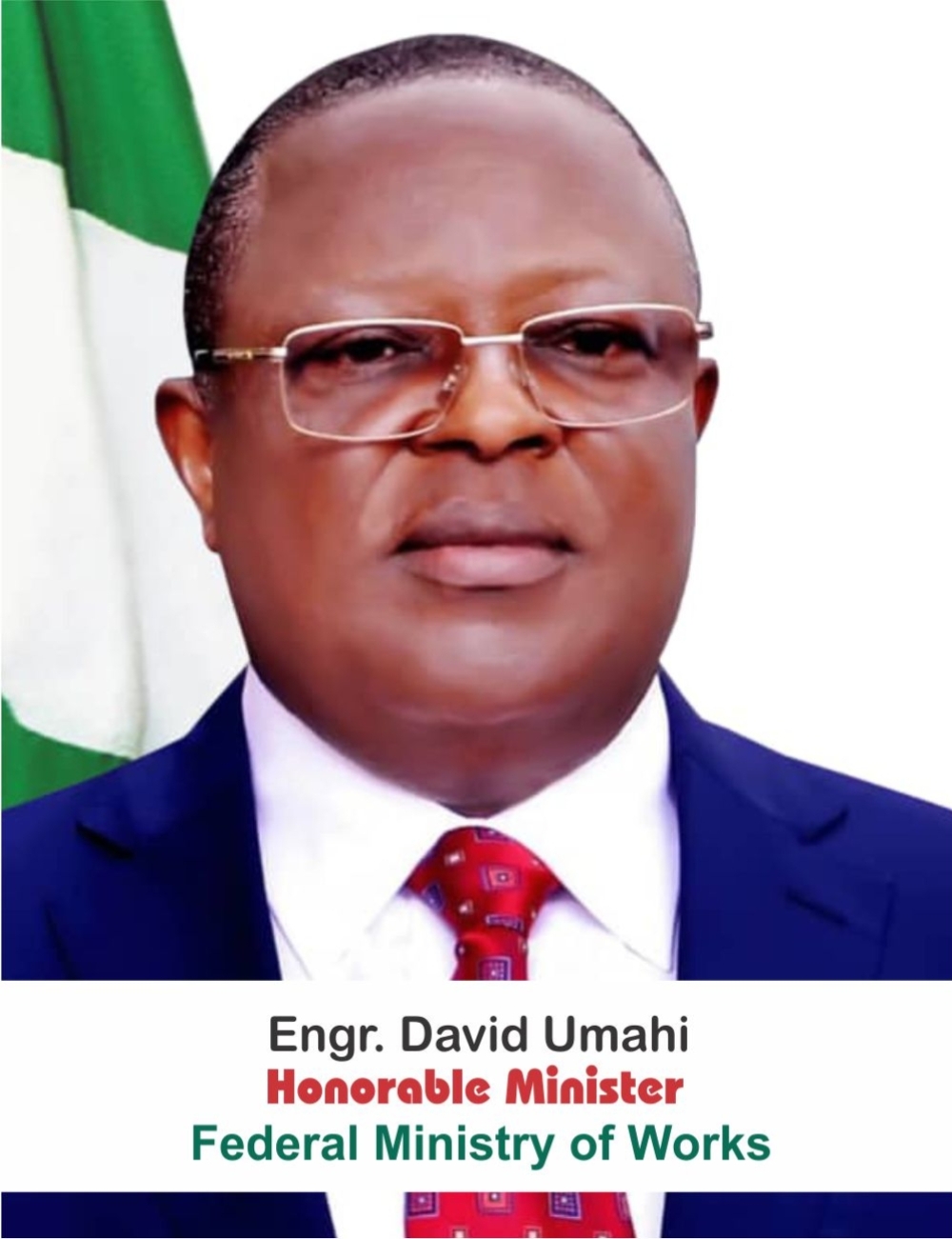
PRESIDENT TINUBU’S REFORMS ARE YIELDING RESULTS, SAYS UMAHI, AS FG FLAGS OFF 122KM KADUNA (MANDO)–BIRNIN GWARI ROAD
The Honourable Minister of Works, Senator Engr. David Umahi, CON, has affirmed that the economic reforms of President Bola Ahmed Tinubu, GCFR, are yielding results across the country, with strategic road infrastructure driving economic growth, improving security, reducing hunger and reconnecting communities.
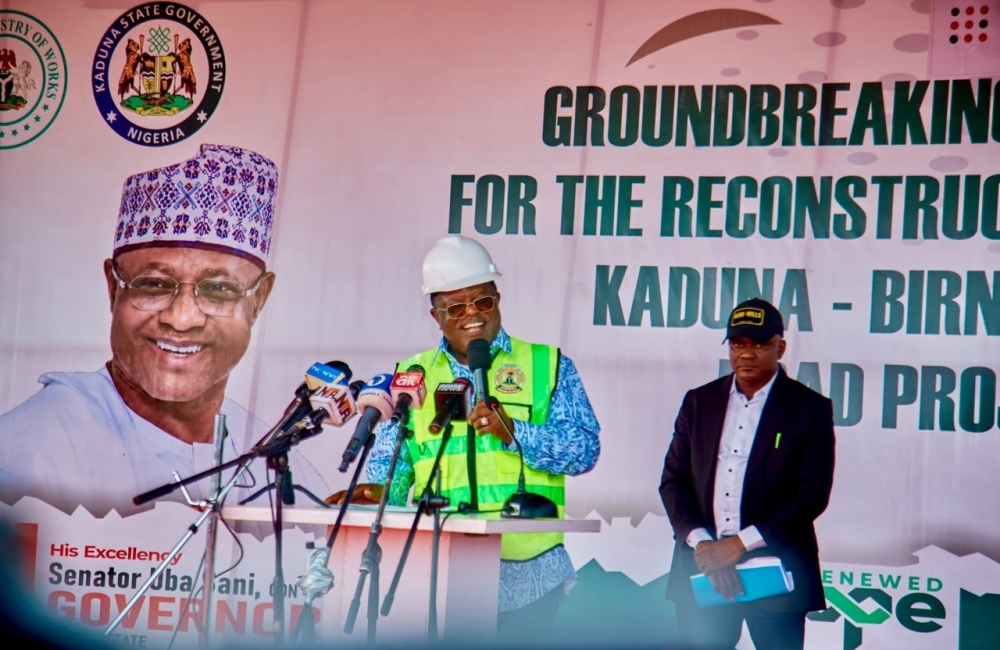
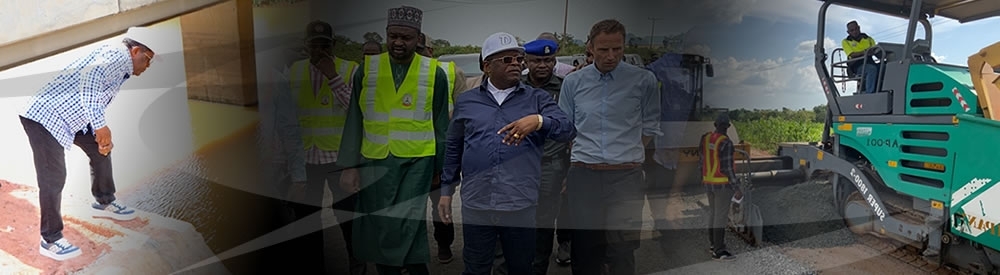
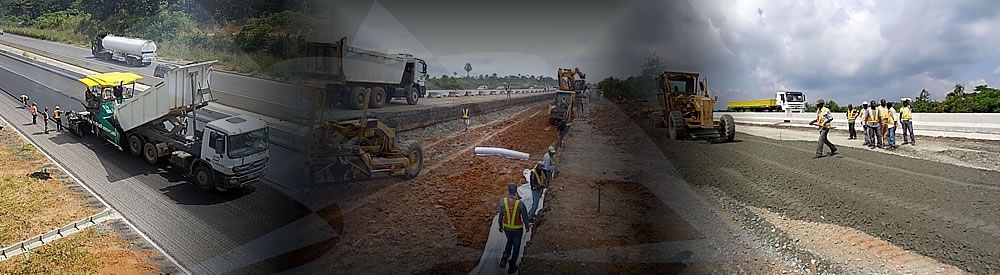
The Minister made the statement on Tuesday, August 4, 2026, during the official flag-off of the reconstruction of the 122KM Kaduna–Birnin Gwari Road at the Afaka Mando Arena in Kaduna State. He described the project as another fulfilled promise by President Tinubu and a major step towards strengthening regional connectivity, stimulating commerce and expanding economic opportunities under the Renewed Hope Agenda.
“We are using this road infrastructure to fix the economic problems we met on ground, we are using road infrastructure to fight the insecurity we met on the ground, we are using road building to fight hunger we met on the ground, we are using this road infrastructure to fight the injustices we met on ground where some state had no federal project like Plateau, Gombe, Ebonyi and even Kaduna.”
Umahi emphasized that the Kaduna–Birnin Gwari Road is one of President Tinubu’s promises fulfilled, noting that the project will significantly reduce travel time between Northern Nigeria and Lagos while opening up new economic routes. “By doing this road the president is shortening the distance between the north and Lagos. This is the shortest route to Lagos State. Because by the time it gets to Birnin Gwari, it leads to Niger then it connects Kwara, Osun, Oyo, and Lagos. What more can we say this is a very important road.”
The Minister also recalled the security challenges that once characterized the Abuja–Kaduna road, affirming that the reconstruction of the Abuja–Kaduna Road has changed the narrative. “I was told that before now it was a bad idea traveling from Abuja to Kaduna because of countless attacks but it is now a thing of the past since the Abuja-Kaduna road project started.”
Responding to claims that the Federal Government is abandoning existing roads in favour of new ones, Umahi dismissed the criticism, citing several major rehabilitation projects currently underway across the country.“People say that we are doing new roads and abandoning old roads, is this 122km a new road?… Is the Sokoto to Zamfara down to Funtua down to Zaria, is it a new road, is the Enugu to Onitsha costing the President 350 Billion, is it a new road? The road from Makurdi to 9th Mile, is it new? The Bodo Bonny road, is it new? And the Abuja-Kaduna-Zaria-Kano road.”
He further noted that road infrastructure remains the foundation for national development, explaining that investment in roads stimulates every sector of the economy. “When a road is built it is a catalyst. It is a GDP that grows other GDPs. When a road is built insecurity is minimized, there is an agricultural revolution. When a road is built there is an increase in commerce and education and that is what this Divine President Bola Ahmed Tinubu is doing.”
Umahi also congratulated Kaduna State Governor, Senator Uba Sani, for securing presidential approval for a 50-kilometre internal light rail project valued at $868 million. “Governor let me congratulate you a very big one internal light rail in Kaduna State has been approved by the President, it is a 50km light rail worth $868 million. This is a big one, you’re a goal getter.”
Calling for responsible democratic engagement, the Minister urged critics of the administration to offer constructive criticism that will help government improve service delivery. “Democracy is by choice, the people criticizing us should be constructive, it should not be insulting, deceitful, or saying mundane things. I can testify that when you criticize us constructively we have always gone to attend to such.”
President Bola Ahmed Tinubu, GCFR, was represented at the ceremony by the Governor of Kaduna State, Senator Uba Sani, who reaffirmed the President’s commitment to the people of Birnin Gwari.
Governor Sani recalled that before becoming President, Bola Ahmed Tinubu visited Birnin Gwari despite the severe security challenges in the area and promised to reconstruct the Kaduna–Birnin Gwari Road and restore lasting peace to the community. He noted that the flag-off of the project is a clear demonstration that the President keeps his promises.
Commending President Tinubu, Governor Sani explained that no previous administration has shown the level of commitment to Northern Nigeria demonstrated by the current President.“No President of the Federal Republic of Nigeria has done what President Bola Ahmed Tinubu has done for us here in Northern Nigeria and I challenge everyone to come up with anything contrary to what I am saying. President Bola Ahmed Tinubu has done a lot for us. We thank him for the love for the North, for the love for humanity, for the love for progress.”
Also speaking, the Emir of Birnin Gwari, His Royal Highness Alhaji (Dr.) Zubairu Jibril Maigwari II, commended President Tinubu and the governors of the affected states for the significant gains recorded in the fight against insecurity, noting that farmers have returned to their farms after years of fear and displacement.

PRESIDENT TINUBU’S REFORMS ARE YIELDING RESULTS, SAYS UMAHI, AS FG FLAGS OFF 122KM KADUNA (MANDO)–BIRNIN GWARI ROAD The Honourable Minister of Works, Senator Engr. David Umahi, CON, has affirmed that the economic reforms of President Bola Ahmed Tinubu, GCFR, are yielding results across the country, with strategic road infrastructure driving economic growth, improving security, reducing hunger and reconnecting communities. The Minister made the statement on Tuesday, August 4, 2026, during the official flag-off of the reconstruction of the 122KM Kaduna–Birnin Gwari Road at the Afaka Mando Arena in Kaduna State. He described the project as another fulfilled promise by President Tinubu and a major step towards strengthening regional connectivity, stimulating commerce and expanding economic opportunities under the Renewed Hope Agenda. Umahi emphasized that the Kaduna–Birnin Gwari Road is one of President Tinubu’s promises fulfilled, noting that the project will significantly reduce travel time between Northern Nigeria and Lagos while opening up new economic routes. “By doing this road the president is shortening the distance between the north and Lagos. This is the shortest route to Lagos State. Because by the time it gets to Birnin Gwari, it leads to Niger then it connects Kwara, Osun, Oyo, and Lagos. What more can we say this is a very important road.” The Minister also recalled the security challenges that once characterized the Abuja–Kaduna road, affirming that the reconstruction of the Abuja–Kaduna Road has changed the narrative. “I was told that before now it was a bad idea traveling from Abuja to Kaduna because of countless attacks but it is now a thing of the past since the Abuja-Kaduna road project started.” Responding to claims that the Federal Government is abandoning existing roads in favour of new ones, Umahi dismissed the criticism, citing several major rehabilitation projects currently underway across the country.“People say that we are doing new roads and abandoning old roads, is this 122km a new road?… Is the Sokoto to Zamfara down to Funtua down to Zaria, is it a new road, is the Enugu to Onitsha costing the President 350 Billion, is it a new road? The road from Makurdi to 9th Mile, is it new? The Bodo Bonny road, is it new? And the Abuja-Kaduna-Zaria-Kano road.” He further noted that road infrastructure remains the foundation for national development, explaining that investment in roads stimulates every sector of the economy. “When a road is built it is a catalyst. It is a GDP that grows other GDPs. When a road is built insecurity is minimized, there is an agricultural revolution. When a road is built there is an increase in commerce and education and that is what this Divine President Bola Ahmed Tinubu is doing.” Umahi also congratulated Kaduna State Governor, Senator Uba Sani, for securing presidential approval for a 50-kilometre internal light rail project valued at $868 million. “Governor let me congratulate you a very big one internal light rail in Kaduna State has been approved by the President, it is a 50km light rail worth $868 million. This is a big one, you’re a goal getter.” Calling for responsible democratic engagement, the Minister urged critics of the administration to offer constructive criticism that will help government improve service delivery. “Democracy is by choice, the people criticizing us should be constructive, it should not be insulting, deceitful, or saying mundane things. I can testify that when you criticize us constructively we have always gone to attend to such.” President Bola Ahmed Tinubu, GCFR, was represented at the ceremony by the Governor of Kaduna State, Senator Uba Sani, who reaffirmed the President’s commitment to the people of Birnin Gwari. Governor Sani recalled that before becoming President, Bola Ahmed Tinubu visited Birnin Gwari despite the severe security challenges in the area and promised to reconstruct the Kaduna–Birnin Gwari Road and restore lasting peace to the community. He noted that the flag-off of the project is a clear demonstration that the President keeps his promises. Commending President Tinubu, Governor Sani explained that no previous administration has shown the level of commitment to Northern Nigeria demonstrated by the current President.“No President of the Federal Republic of Nigeria has done what President Bola Ahmed Tinubu has done for us here in Northern Nigeria and I challenge everyone to come up with anything contrary to what I am saying. President Bola Ahmed Tinubu has done a lot for us. We thank him for the love for the North, for the love for humanity, for the love for progress.” Also speaking, the Emir of Birnin Gwari, His Royal Highness Alhaji (Dr.) Zubairu Jibril Maigwari II, commended President Tinubu and the governors of the affected states for the significant gains recorded in the fight against insecurity, noting that farmers have returned to their farms after years of fear and displacement.
“We are using this road infrastructure to fix the economic problems we met on ground, we are using road infrastructure to fight the insecurity we met on the ground, we are using road building to fight hunger we met on the ground, we are using this road infrastructure to fight the injustices we met on ground where some state had no federal project like Plateau, Gombe, Ebonyi and even Kaduna.”
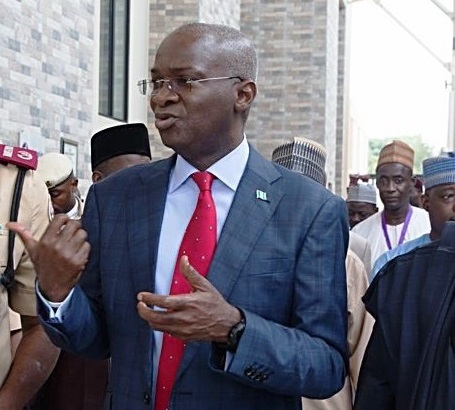
FG Grows Housing Sector For National Development –Fashola The Honourable Minister of Power, Works and Housing, Babatunde Raji Fashola, SAN, has disclosed that the Federal Government is committed to growing the housing sector and harnessing its vast potentials for sustainable national development, stating that housing has been a driver of economic growth throughout the world and that there is no reason why Nigeria cannot achieve same. In his keynote address delivered at this year's World Habitat and World Cities Day commemoration in Abuja, the Minister, represented by the Minister of State II in the Ministry, Surv. Suleiman Hassan Zarma, mnis, said that the dual theme of this year's celebration : ' Housing Policies: Affordable Homes' and 'Innovative Governance, Open Cities, is a "reflection of a strong attempt to follow up on Agenda 2030 and the New Urban Agenda adopted in Quito, Ecuador in 2016". He added that it will afford policy makers in Nigeria the opportunity to review and evaluate past housing policies and assess their impact as well as strategize for the future. He said that government has put in place the necessary machinery to jump- start a housing revolution through the innovative nationwide National Housing Programme. According to him, “the pilot implementation stage has already created opportunities for 634 contractors, created 13,689 direct jobs and 41,000 indirect jobs’’. He noted that if the Programme could be replicated on a yearly basis and also successfully implement the housing cooperatives, leverage private sector capacity, strengthen FHA and FMBN to play their roles, we will be creating an affordable housing economy that will fortify and transform our nation in the nearest future. The Minister stated that, "to complement these efforts, we have activated the Road map for Nigeria's Housing and Urban development Sector, and are in the process of producing a strategic National Physical Development Plan to integrate physical planning with economic development,” adding that the National Building Code was also being revised to curb incessant building collapse in the county and to ensure proper alignment with the International Building Code. In his welcome remarks, the Minister of State I for Power, Works and Housing, Hon Mustapha Baba Shehuri, reminded stakeholders in the housing sector of their duties to develop policies capable of providing basic infrastructures and social services that could be lacking due to rapid urbanization of cities. He said, "We are therefore duty bound to generate responsive policies which are capable of turning around the current poor state of our cities and guarantee efficient delivery of infrastructure and basic social services." In a message from the UN Secretary General, Dr. Joan Clos, delivered by the UN- Habitat Country Programme Manager, Mr Kabir Yari, he said that, "addressing the housing needs for the poorest and most vulnerable, especially women, youths and those who live in slums must be a priority in the development agenda of nations. He also noted that addressing affordability issue in the provision of housing is of strategic importance for development, social, peace and equity in the society and that promoting sound housing policies is crucial for climate change, resilience, mobility and energy consumption". In a paper titled “Cities for all Nigerians: Policy and Implementation of the Global and the New Urban Agenda.” delivered by Professor Banji Oyelaran- Oyeyinka, former Director, Regional Office for Africa, UN-Habitat, he stated that member states, in the New Urban Agenda, agreed “to promote housing policies based on the principles of inclusion, economic effectiveness, and environmental protection.” He noted that for government to ensure the provision of suitable affordable housing for all, it has a large number of policies to develop, ranging from planning problem, zoning issues, funding and constructing adequate transport linkages to other implementation policies. The World Habitat and World cities Day Commemoration is an annual event that comes up in the month of October. It presents an opportunity for nations to review and evaluate their housing policies and their political commitment by providing affordable and sustainable housing for all. ...

Road Trust Fund (Press Information Package) 1. What is a Road Trust Fund? The Road Trust Fund (RTF) is being set up to facilitate and incentivise private sector involvement in the provision of Nigeria’s Federal road infrastructure. It is a form of Public Private Partnership that will accelerate the provision of Federal Roads by allowing private sector operators to collectively fund road provision in exchange for tax credits. This will complement Federal Government’s budgetary allocation to roads. 2. What are the benefits of the Road Trust Fund? Increases funds available for road development and accelerates road provision across the nation. Reduces pressure on the Federal Budget by allowing private engagement. Allows for cost reduction by providing a new benchmark in road costing. Private sector participation in what was previously a Federal Government monopoly will create more efficient delivery of road projects. Better negotiation and the promise of prompt payment to contractors, is expected to materially reduce project costs. Provides alternate funding to the Government for road infrastructure development. Creates a platform for collaboration among private sector players as well as between private sector and Government. Encourages co-operation in business districts affected by poor road infrastructure which will enhance output and reduce business operating costs. Allows businesses to direct funds that would otherwise have been ‘tax Naira’ into much needed areas of infrastructure. 3. Why is the Government focusing on roads? Federal roads are critical in unlocking socio-economic development. While they account for just 17% of the total national road network, Federal roads carry more than 80% of national vehicular and freight traffic. (Nigeria’s road network consists of 200,000Km of which N33,000km are Federal Roads according to the Ministry of Power, Works and Housing) The deficit in roads is so large that there is a need to mobilise additional funding sources. 4. How does the Road Trust Fund work? The Road Trust Fund is a revision of the existing infrastructure tax relief scheme that allows for tax relief to companies that incur expenditure on public infrastructure. To date, just two companies have been able to take advantage of this provision. The reason being that few companies are large enough to solely undertake road projects. The RTF, being a collective model, can mobilise funds from a range of tax paying companies, irrespective of their location or sector. RTF is it therefore, expected to mobilise significant capital into road provision. RTF uses a collective model to mobilise private capital from companies of all sizes to undertake road projects through a series of Road Trust Funds. Each Fund will be a stand-alone Collective Infrastructure Fund (CIF) using a Special Purpose Vehicle (SPV). We have already consulted with the private sector in the development of the RTF and some companies have already identified roads they wish to reconstruct and are organising their funding. However, this scheme is designed such that Financial Intermediaries will be promoting Road Trust Fund projects and soliciting commitments from interested companies. 5. Why would a private company want to participate in this? Private sector participation is being incentivised through a Tax Credit Scheme that enables all participating companies to claim tax relief based on the amount of capital contribution (on a pro-rata basis). 6. What are the benefits of the Tax Credit Scheme to the private sector? Companies will be allowed to recover 100% of costs incurred on road infrastructure as a tax credit against total tax payable (including up to 10% for cost of funds); Accelerated depreciation to enable recovery in 3 years rather than 4 years for standard assets; and Ability to directly intervene in roads that are critical to their businesses which drives competitiveness. 7. Are there special incentives for building roads in economically disadvantaged areas? Yes. The relief allows for cost recovery within a single year instead of 3 years for economically disadvantaged areas. We are encouraging and facilitating investment across all areas of Nigeria to achieve inclusive economic growth. 8. Would the scheme negatively affect Government revenues? No. The effect of this scheme will be revenue neutral. In addition to the fact that we are already seeing improved performance in our tax receipts by improving tax compliance and blocking loopholes, we are proposing a cap on cost recovery to a maximum of 50% of tax payable by each participant in any year of assessment. This means that in any given year of assessment for tax purposes, at least 50% of total tax payable will be remitted. 9. Currently, road maintenance puts a major strain on budgetary resources, has this been considered? Reducing budgetary pressure is a major advantage of the fund. Participants are required to guarantee the road for 5 years beyond maintenance. 10. Will the Roads be tolled? Once the roads are completed they are handed over to the Federal Government who may decide to toll the roads in accordance with the National Tolling Policy. 11. What is the role of the Ministry of Power Works and Housing ? The Ministry is responsible for approving the road designs, monitoring all approved Road Trust Fund Projects by managing costs and timelines as well as ensuring that equal development across Nigeria by rebalancing the Federal budget, where necessary. 12. How does Government ensure costs are not inflated All costs and contractors will be scrutinised and approved by the Bureau of Public Procurement in line with legal requirements. This will ensure that costs are not inflated and that unqualified contractors are not used on the projects. 13. Would further information be provided to the private sector? Yes. The Ministry of Finance will develop detailed Guidance Notes on the Provisions of the new Infrastructure Tax Incentive within the next 30-days. ...

Road Infrastructure: FEC Approves Tax Relief Scheme for Private Sector The Federal Executive Council on Thursday approved a tax relief scheme to attract private sector involvement in the provision of Federal road infrastructure across the entire country. The approval was the outcome of a Memorandum for the setting up of a Road Trust Fund (RTF) presented by the Honourable Minister of Finance, Mrs. Kemi Adeosun, to the council at its meeting presided over by President Muhammadu Buhari. The Road Trust Fund concept was jointly developed by the Federal Ministry of Finance and the Federal Ministry of Power, Works and Housing. The RTF is expected to mobilise significant capital into road provision in order to unlock socio-economic development as well as facilitate investment across all areas of Nigeria to achieve inclusive economic growth. Federal roads carry more than 80% of national vehicular and freight traffic, accounting for 17 per cent of the total national road network. Addressing State House correspondents at the end of the FEC meeting, the Finance Minister explained that the RTF would facilitate and incentivise private sector involvement in Nigeria’s Federal road infrastructure. The Minister of Power, Works and Housing, Mr. Babatunde Fashola and Minister of Information and National Orientation, Alhaji Lai Mohammed, were also at the post-FEC briefing of the State Press Corps. Adeosun said, “It is a form of Public Private Partnership that will accelerate the provision of Federal Roads by allowing private sector operators to collectively fund road provision in exchange for tax credits. This will complement Federal Government’s budgetary allocation to roads. “Private sector participation is being incentivised through a Tax Credit Scheme that enables all participating companies to claim tax relief based on the amount of capital contribution (on a pro-rata basis). “We have already consulted with the private sector in the development of the RTF and some companies have already identified roads they wish to reconstruct and are organising their funding. However, this scheme is designed such that Financial Intermediaries will be promoting Road Trust Fund projects and soliciting commitments from interested companies.” Under the tax relief scheme, companies will be allowed to recover 100 per cent of costs incurred on road infrastructure as a tax credit against total tax payable (including up to 10 per cent for cost of funds). Adeosun further noted that the tax relief would allow for cost recovery within a single year instead of three years for economically disadvantaged areas. When completed, the Minister said the roads would be handed over to the Federal Government who may decide to toll the roads in accordance with the National Tolling Policy. On the role of the Federal Ministry of Power Works and Housing, she explained that the ministry would be responsible for approving the road designs, monitoring all approved Road Trust Fund Projects by managing costs and timelines as well as ensuring that equal development across Nigeria by rebalancing the Federal budget, where necessary. She added that all costs and contractors would be scrutinised and approved by the Bureau of Public Procurement in line with legal requirements. “This will ensure that costs are not inflated and that unqualified contractors are not used on the projects,” she stated. ...
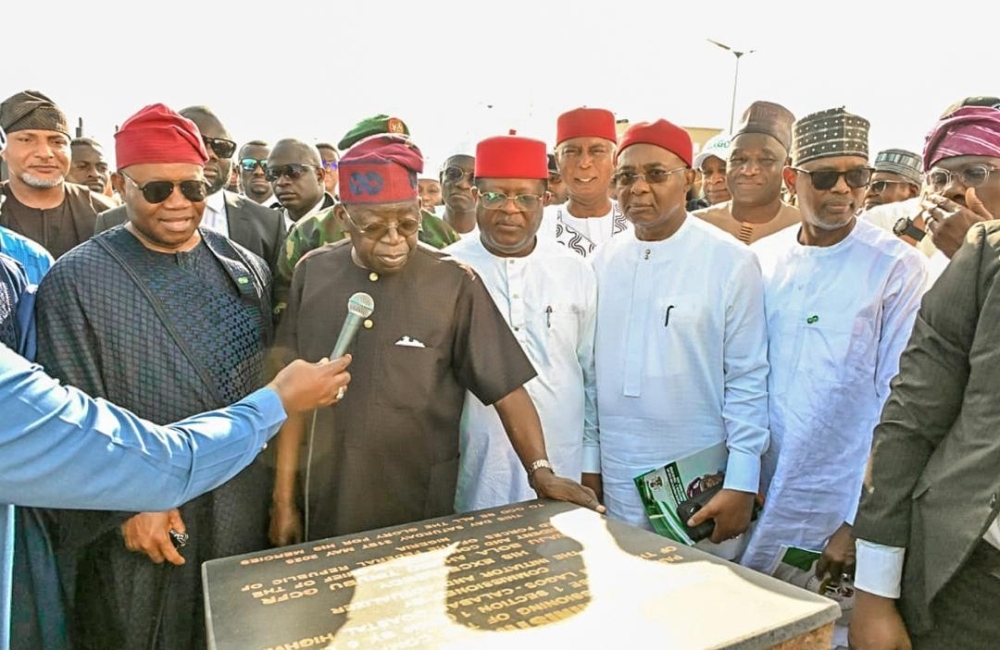
DRIVING NIGERIA’S FUTURE: CELEBRATING TWO YEARS OF TRANSFORMATIVE LEADERSHIP AND THE LAGOS-CALABAR COASTAL HIGHWAY MILESTONE
DRIVING NIGERIA’S FUTURE: CELEBRATING TWO YEARS OF TRANSFORMATIVE LEADERSHIP AND THE LAGOS-CALABAR COASTAL HIGHWAY MILESTONE
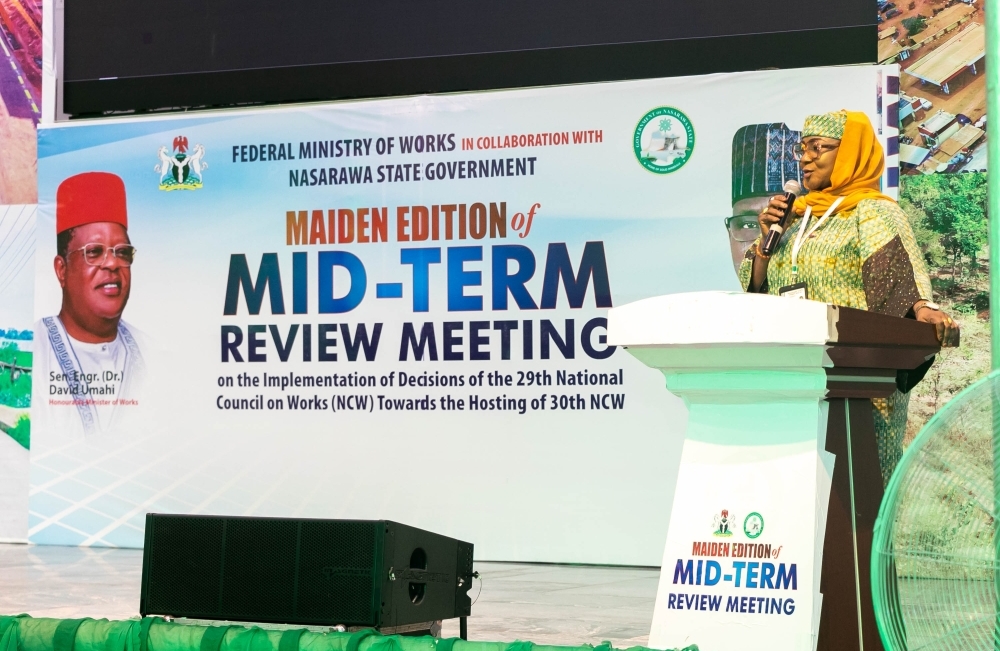
MID -TERM REVIEW MEETING ON THE IMPLIMENTATION OF THE DECISIONS REACHED AT THE 29TH NATIONAL COUNCIL ON WORKS (NCW) DAY 1
MID -TERM REVIEW MEETING ON THE IMPLIMENTATION OF THE DECISIONS REACHED AT THE 29TH NATIONAL COUNCIL ON WORKS (NCW) DAY 1