PRESIDENT TINUBU’S REFORMS ARE YIELDING RESULTS, SAYS UMAHI, AS FG FLAGS OFF 122KM KADUNA (MANDO)–BIRNIN GWARI ROAD
The Honourable Minister of Works, Senator Engr. David Umahi, CON, has affirmed that the economic reforms of President Bola Ahmed Tinubu, GCFR, are yielding results across the country, with strategic road infrastructure driving economic growth, improving security, reducing hunger and reconnecting communities.
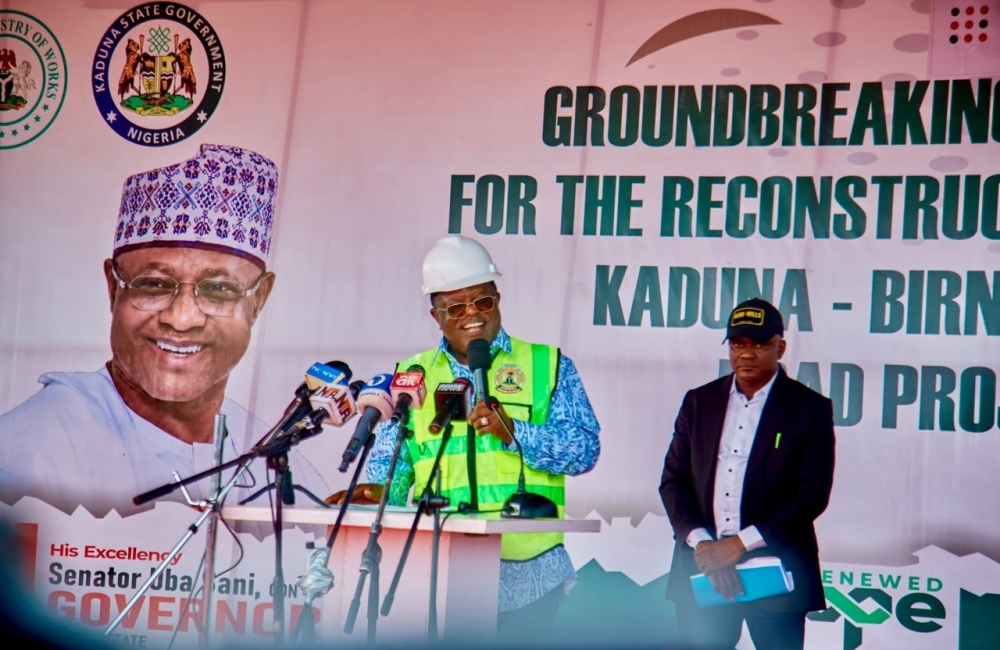
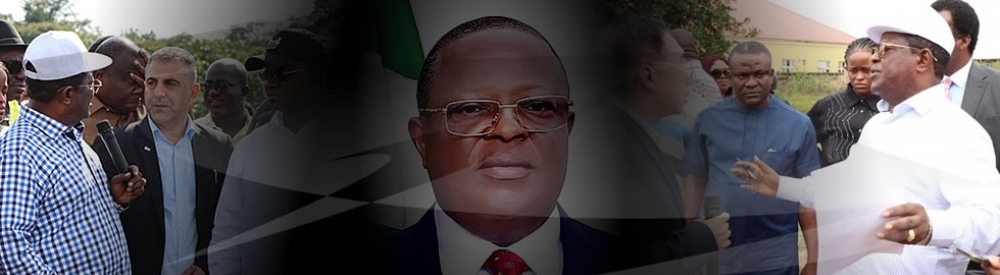
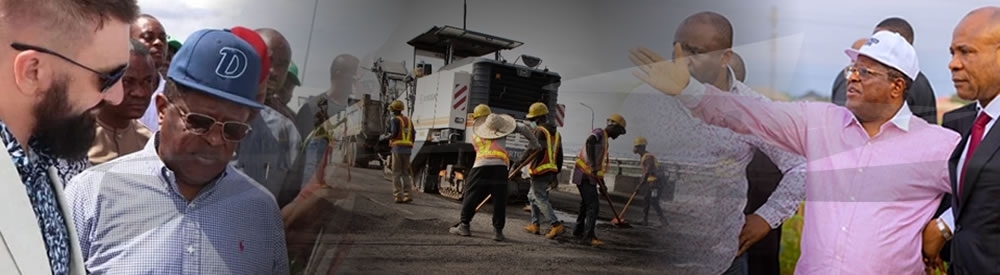
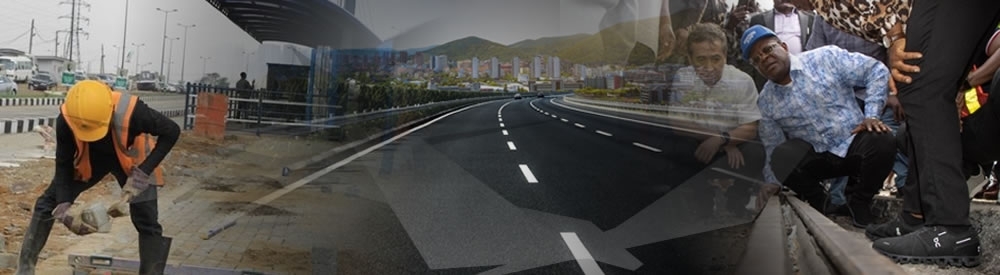
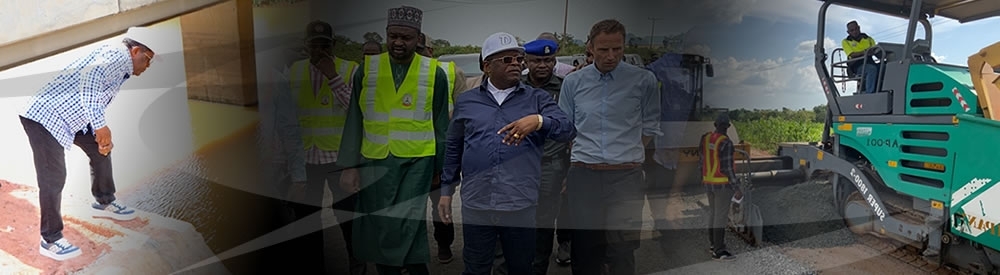
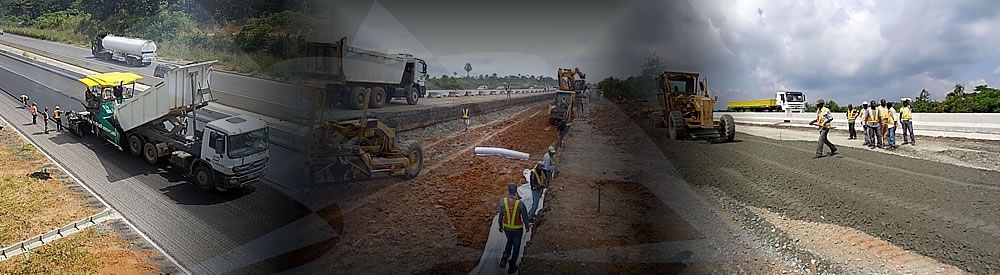
The Minister made the statement on Tuesday, August 4, 2026, during the official flag-off of the reconstruction of the 122KM Kaduna–Birnin Gwari Road at the Afaka Mando Arena in Kaduna State. He described the project as another fulfilled promise by President Tinubu and a major step towards strengthening regional connectivity, stimulating commerce and expanding economic opportunities under the Renewed Hope Agenda.
“We are using this road infrastructure to fix the economic problems we met on ground, we are using road infrastructure to fight the insecurity we met on the ground, we are using road building to fight hunger we met on the ground, we are using this road infrastructure to fight the injustices we met on ground where some state had no federal project like Plateau, Gombe, Ebonyi and even Kaduna.”
Umahi emphasized that the Kaduna–Birnin Gwari Road is one of President Tinubu’s promises fulfilled, noting that the project will significantly reduce travel time between Northern Nigeria and Lagos while opening up new economic routes. “By doing this road the president is shortening the distance between the north and Lagos. This is the shortest route to Lagos State. Because by the time it gets to Birnin Gwari, it leads to Niger then it connects Kwara, Osun, Oyo, and Lagos. What more can we say this is a very important road.”
The Minister also recalled the security challenges that once characterized the Abuja–Kaduna road, affirming that the reconstruction of the Abuja–Kaduna Road has changed the narrative. “I was told that before now it was a bad idea traveling from Abuja to Kaduna because of countless attacks but it is now a thing of the past since the Abuja-Kaduna road project started.”
Responding to claims that the Federal Government is abandoning existing roads in favour of new ones, Umahi dismissed the criticism, citing several major rehabilitation projects currently underway across the country.“People say that we are doing new roads and abandoning old roads, is this 122km a new road?… Is the Sokoto to Zamfara down to Funtua down to Zaria, is it a new road, is the Enugu to Onitsha costing the President 350 Billion, is it a new road? The road from Makurdi to 9th Mile, is it new? The Bodo Bonny road, is it new? And the Abuja-Kaduna-Zaria-Kano road.”
He further noted that road infrastructure remains the foundation for national development, explaining that investment in roads stimulates every sector of the economy. “When a road is built it is a catalyst. It is a GDP that grows other GDPs. When a road is built insecurity is minimized, there is an agricultural revolution. When a road is built there is an increase in commerce and education and that is what this Divine President Bola Ahmed Tinubu is doing.”
Umahi also congratulated Kaduna State Governor, Senator Uba Sani, for securing presidential approval for a 50-kilometre internal light rail project valued at $868 million. “Governor let me congratulate you a very big one internal light rail in Kaduna State has been approved by the President, it is a 50km light rail worth $868 million. This is a big one, you’re a goal getter.”
Calling for responsible democratic engagement, the Minister urged critics of the administration to offer constructive criticism that will help government improve service delivery. “Democracy is by choice, the people criticizing us should be constructive, it should not be insulting, deceitful, or saying mundane things. I can testify that when you criticize us constructively we have always gone to attend to such.”
President Bola Ahmed Tinubu, GCFR, was represented at the ceremony by the Governor of Kaduna State, Senator Uba Sani, who reaffirmed the President’s commitment to the people of Birnin Gwari.
Governor Sani recalled that before becoming President, Bola Ahmed Tinubu visited Birnin Gwari despite the severe security challenges in the area and promised to reconstruct the Kaduna–Birnin Gwari Road and restore lasting peace to the community. He noted that the flag-off of the project is a clear demonstration that the President keeps his promises.
Commending President Tinubu, Governor Sani explained that no previous administration has shown the level of commitment to Northern Nigeria demonstrated by the current President.“No President of the Federal Republic of Nigeria has done what President Bola Ahmed Tinubu has done for us here in Northern Nigeria and I challenge everyone to come up with anything contrary to what I am saying. President Bola Ahmed Tinubu has done a lot for us. We thank him for the love for the North, for the love for humanity, for the love for progress.”
Also speaking, the Emir of Birnin Gwari, His Royal Highness Alhaji (Dr.) Zubairu Jibril Maigwari II, commended President Tinubu and the governors of the affected states for the significant gains recorded in the fight against insecurity, noting that farmers have returned to their farms after years of fear and displacement.

PRESIDENT TINUBU’S REFORMS ARE YIELDING RESULTS, SAYS UMAHI, AS FG FLAGS OFF 122KM KADUNA (MANDO)–BIRNIN GWARI ROAD The Honourable Minister of Works, Senator Engr. David Umahi, CON, has affirmed that the economic reforms of President Bola Ahmed Tinubu, GCFR, are yielding results across the country, with strategic road infrastructure driving economic growth, improving security, reducing hunger and reconnecting communities. The Minister made the statement on Tuesday, August 4, 2026, during the official flag-off of the reconstruction of the 122KM Kaduna–Birnin Gwari Road at the Afaka Mando Arena in Kaduna State. He described the project as another fulfilled promise by President Tinubu and a major step towards strengthening regional connectivity, stimulating commerce and expanding economic opportunities under the Renewed Hope Agenda. Umahi emphasized that the Kaduna–Birnin Gwari Road is one of President Tinubu’s promises fulfilled, noting that the project will significantly reduce travel time between Northern Nigeria and Lagos while opening up new economic routes. “By doing this road the president is shortening the distance between the north and Lagos. This is the shortest route to Lagos State. Because by the time it gets to Birnin Gwari, it leads to Niger then it connects Kwara, Osun, Oyo, and Lagos. What more can we say this is a very important road.” The Minister also recalled the security challenges that once characterized the Abuja–Kaduna road, affirming that the reconstruction of the Abuja–Kaduna Road has changed the narrative. “I was told that before now it was a bad idea traveling from Abuja to Kaduna because of countless attacks but it is now a thing of the past since the Abuja-Kaduna road project started.” Responding to claims that the Federal Government is abandoning existing roads in favour of new ones, Umahi dismissed the criticism, citing several major rehabilitation projects currently underway across the country.“People say that we are doing new roads and abandoning old roads, is this 122km a new road?… Is the Sokoto to Zamfara down to Funtua down to Zaria, is it a new road, is the Enugu to Onitsha costing the President 350 Billion, is it a new road? The road from Makurdi to 9th Mile, is it new? The Bodo Bonny road, is it new? And the Abuja-Kaduna-Zaria-Kano road.” He further noted that road infrastructure remains the foundation for national development, explaining that investment in roads stimulates every sector of the economy. “When a road is built it is a catalyst. It is a GDP that grows other GDPs. When a road is built insecurity is minimized, there is an agricultural revolution. When a road is built there is an increase in commerce and education and that is what this Divine President Bola Ahmed Tinubu is doing.” Umahi also congratulated Kaduna State Governor, Senator Uba Sani, for securing presidential approval for a 50-kilometre internal light rail project valued at $868 million. “Governor let me congratulate you a very big one internal light rail in Kaduna State has been approved by the President, it is a 50km light rail worth $868 million. This is a big one, you’re a goal getter.” Calling for responsible democratic engagement, the Minister urged critics of the administration to offer constructive criticism that will help government improve service delivery. “Democracy is by choice, the people criticizing us should be constructive, it should not be insulting, deceitful, or saying mundane things. I can testify that when you criticize us constructively we have always gone to attend to such.” President Bola Ahmed Tinubu, GCFR, was represented at the ceremony by the Governor of Kaduna State, Senator Uba Sani, who reaffirmed the President’s commitment to the people of Birnin Gwari. Governor Sani recalled that before becoming President, Bola Ahmed Tinubu visited Birnin Gwari despite the severe security challenges in the area and promised to reconstruct the Kaduna–Birnin Gwari Road and restore lasting peace to the community. He noted that the flag-off of the project is a clear demonstration that the President keeps his promises. Commending President Tinubu, Governor Sani explained that no previous administration has shown the level of commitment to Northern Nigeria demonstrated by the current President.“No President of the Federal Republic of Nigeria has done what President Bola Ahmed Tinubu has done for us here in Northern Nigeria and I challenge everyone to come up with anything contrary to what I am saying. President Bola Ahmed Tinubu has done a lot for us. We thank him for the love for the North, for the love for humanity, for the love for progress.” Also speaking, the Emir of Birnin Gwari, His Royal Highness Alhaji (Dr.) Zubairu Jibril Maigwari II, commended President Tinubu and the governors of the affected states for the significant gains recorded in the fight against insecurity, noting that farmers have returned to their farms after years of fear and displacement.
“We are using this road infrastructure to fix the economic problems we met on ground, we are using road infrastructure to fight the insecurity we met on the ground, we are using road building to fight hunger we met on the ground, we are using this road infrastructure to fight the injustices we met on ground where some state had no federal project like Plateau, Gombe, Ebonyi and even Kaduna.”
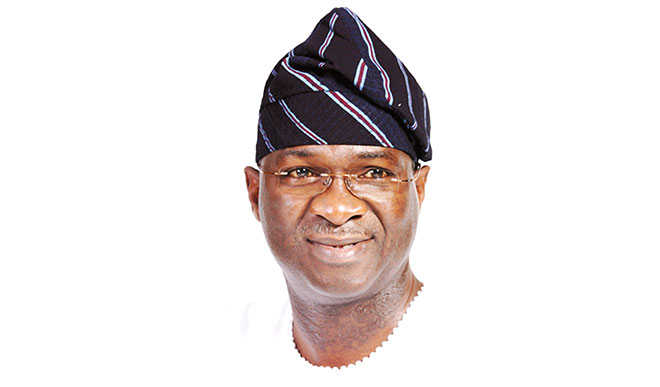
FG Invests N100b On 25 Arterial Roads Nationwide- Fashola The Federal Government is reconstructing and rehabilitating 25 arterial roads with an aggressive plan to spend about N16.7b for each geopolitical zone across the country. The fund, which is a safe and low risk investment, is a Debt Management Office (DMO) Sovereign Sukuk (bond) with a 7-year tenor to the tune of N100b. The Minister of Power, Works and Housing, Babatunde Fashola, SAN, disclosed this today while addressing members of the Manufacturers Association of Nigeria (MAN) who paid him a courtesy call, in his office. The prioritized 25 road projects include the Dualisation of Ibadan-Ilorin Road, Suleja-Minna Road, Kano-Maiduguri Road, Lokoja-Benin Road, Rehabilitation of Enugu- Port-Hartcourt Expressway and the Construction of Kaduna –Eastern Bye- Pass, amongst others. The Minister also stated that the Ministry is in the process of re-introducing the tolling system on completed Federal Highways in order to sustain the maintenance of these roads. Earlier in his address, the President of MAN, Dr. Frank Udemba Jacobs, MON, commended the Minister for the novel idea in road financing, while specifically praising him for the on-going rehabilitation of Lagos-Ibadan, Onitsha- Enugu Expressways and other strategic roads across the country. He also expressed delight for the approval of N213b Nigerian Electricity Market Stabilization Facility (NEMSF) aimed at easing some of the challenges in the electricity industry value-chain. On a final note, he applauded the Federal Government for its recent measures at getting the economy out of recession and the provision of an enabling environment for business to thrive. In attendance at the meeting were the Minister of State II for Power, Works and Housing, Surv. Suleiman Hassan Zarma, the Permanent Secretary, Power Sector, Engr. Louis Edozien, Directors and Chief Executives from the Ministry. ...
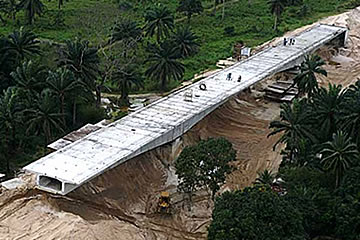
FG Patners With Nigeria Liquefied Natural Gas To Build Bodo-Bonny Road With Bridges As Fashola Signs Tripartite Agreement The Federal Government through the Ministry of Power, Works and Housing has signed a tripartite agreement with the Nigeria Liquefied Natural Gas (NLNG) and Julius Berger Nigeria Plc (JBN) to build the Bodo-Bonny Road with Bridges across the Opobo Channel Routes 430 in Rivers State. The Honourable Minister of Power, Works & Housing, Babatunde Raji Fashola, SAN, on behalf of Government, signed the over 120 billion naira project awarded to Julius Berger Nigeria Plc (JBN) at the Ministry’s Headquarters in Abuja. Fashola stated that the Bodo-Bonny Bridge is a major infrastructural project that linked Nigeria to where so much resources are produced, adding that the signing of the tripartite agreement signifies the commencement of construction work and government’s commitment to clean up, build up and repositioned the Niger Delta as a major contributor to Nation’s resources. The Minister further stated that, this is in fulfilment with the present Administration’s promise to deliver on critical infrastructural projects across the nation and put the economy back on the path of growth and development. Earlier in his remarks, the Managing Director of Nigeria Liquefied Natural Gas, Mr Tony Attah on behalf of Management and Staff of Nigeria LNG appreciated the Federal Government and the Minister for the signing of the tripartite agreement and the opportunity for the part-funding of the construction of the Bodo-Bonny Road project. Attah further stated that the provision of the road will no doubt expand the scope of economic opportunities and secure livelihoods for the rural and riverine communities. He added that the construction of Bodo-Bonny road will invariably usher the accomplishment of long held dream of connecting Bonny Island to the rest of Nigeria. On his part, the Managing Director of Julius Berger Nigeria Plc, Engr. Wolfgand Goetsch thanked the Federal Government and Nigeria LNG for the trust and confidence reposed on the company, assuring that the project will be completed within the time stipulated and in accordance to specification. The project which was first awarded in 1993, suffered series of delays and abandonments. The Ministry thereafter terminated the contract due to the dismal performance of the contractor and re-awarded the project to JBN which has proven experience in handling projects in difficult terrains of mangrove/swamp forest and creeks. The expected date of completion of Bodo-Bonny project is in 2019. ...
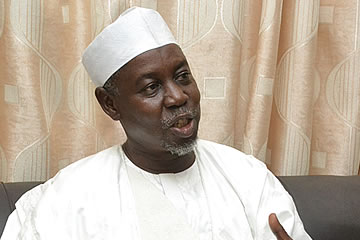
Peaceful Co-Existence Will Boost The Nation’s Economy - Surv. Suleiman The Honourable Minister of State II for Power, Works and Housing, Surv. Suleiman Hassan Zarma, mnis, has called on the nation to peacefully co-exist together as this will boost and take the nation’s economy to a greater height. He said that, this is a call for leadership at various levels of government in the country. The Minister stated this during his official visit to Gombe State. Sulieman noted that the peace in the North East is as a result of the resolute and unwavering determination of the Administration of President Buhari to tackle insurgency in the nation headlong. According to him, the celebration of Eld-El-Kabir calls for peace among tribes and nations across the world, adding that people are now celebrating in the North Eastern part of the country because of the drastic reduction in the activities of the insurgents. He enjoined the people within the region to be part of the confidence building by reporting any strange activities within their community and locality. The Minister also stated that government is doing a lot in road construction and building affordable and adaptable mass housing across the nation with value chain returns. He said that government is also looking at a model that will put the housing needs of the people into consideration as well as their capacity and the power of purchase. He added that this will in effect make the houses affordable and accessible to all Nigerians. Sulieman added that the Buhari Administration is leaving no stone unturned in the fight against corruption. According to him, ‘‘if you fight corruption, the economy will thrive. If you fight corruption, security will thrive, because all of them are anchored on the same thing. We can see that corruption is now at the minimum.’’ He further said that before now, people celebrate corrupt persons, adding that today; it is difficult for someone to come and flaunt a wealth that is illegally gotten. The Minister noted that government through the instrumentality of the Treasury Single Account (TSA) and Whistle Blowers’ Programme has saved the country a lot, assuring that tackling corruption is prospering the economy. While in Gombe State, the Minister paid courtesy visits to the Emir of Gombe, H.R.H Alhaji Abubakar Shehu Abubakar III and other Emirs within the state. He however urged them to be patient with the present government and be hopeful of a new Nigeria. ...
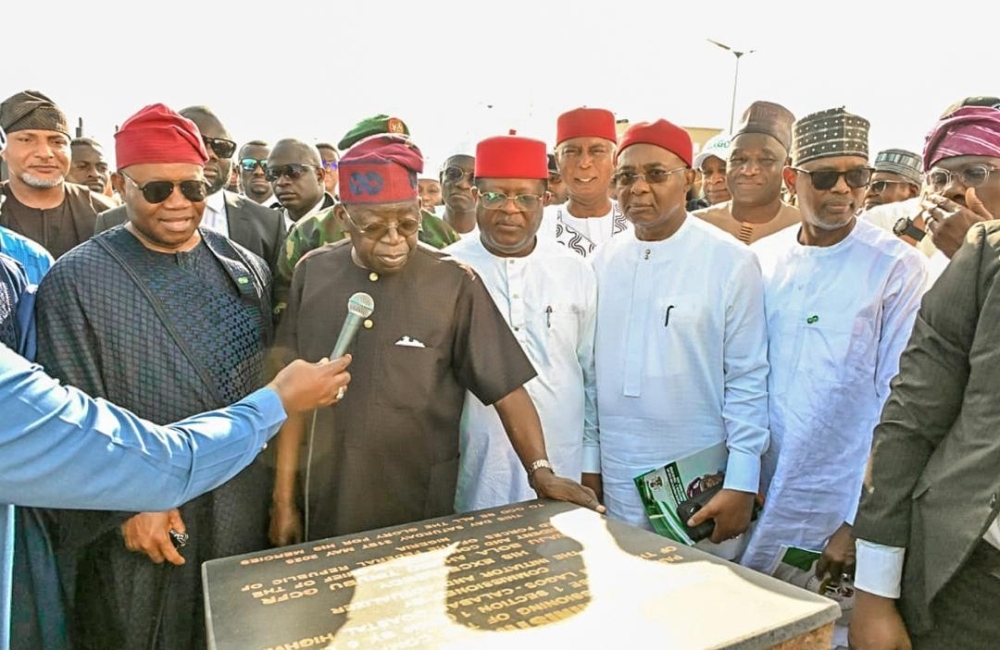
DRIVING NIGERIA’S FUTURE: CELEBRATING TWO YEARS OF TRANSFORMATIVE LEADERSHIP AND THE LAGOS-CALABAR COASTAL HIGHWAY MILESTONE
DRIVING NIGERIA’S FUTURE: CELEBRATING TWO YEARS OF TRANSFORMATIVE LEADERSHIP AND THE LAGOS-CALABAR COASTAL HIGHWAY MILESTONE
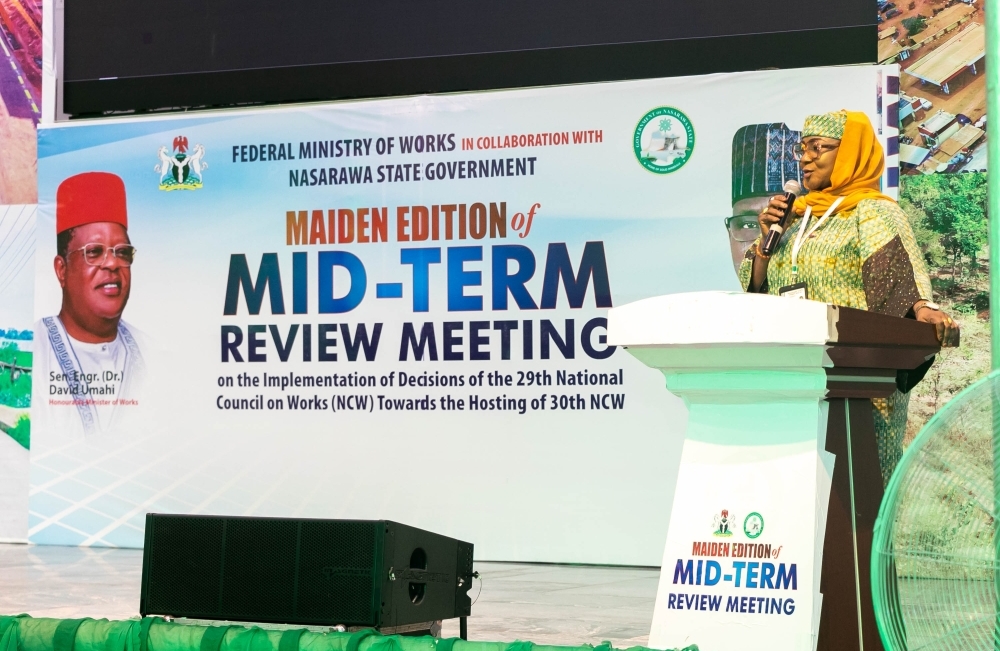
MID -TERM REVIEW MEETING ON THE IMPLIMENTATION OF THE DECISIONS REACHED AT THE 29TH NATIONAL COUNCIL ON WORKS (NCW) DAY 1
MID -TERM REVIEW MEETING ON THE IMPLIMENTATION OF THE DECISIONS REACHED AT THE 29TH NATIONAL COUNCIL ON WORKS (NCW) DAY 1