PRESIDENT TINUBU’S REFORMS ARE YIELDING RESULTS, SAYS UMAHI, AS FG FLAGS OFF 122KM KADUNA (MANDO)–BIRNIN GWARI ROAD
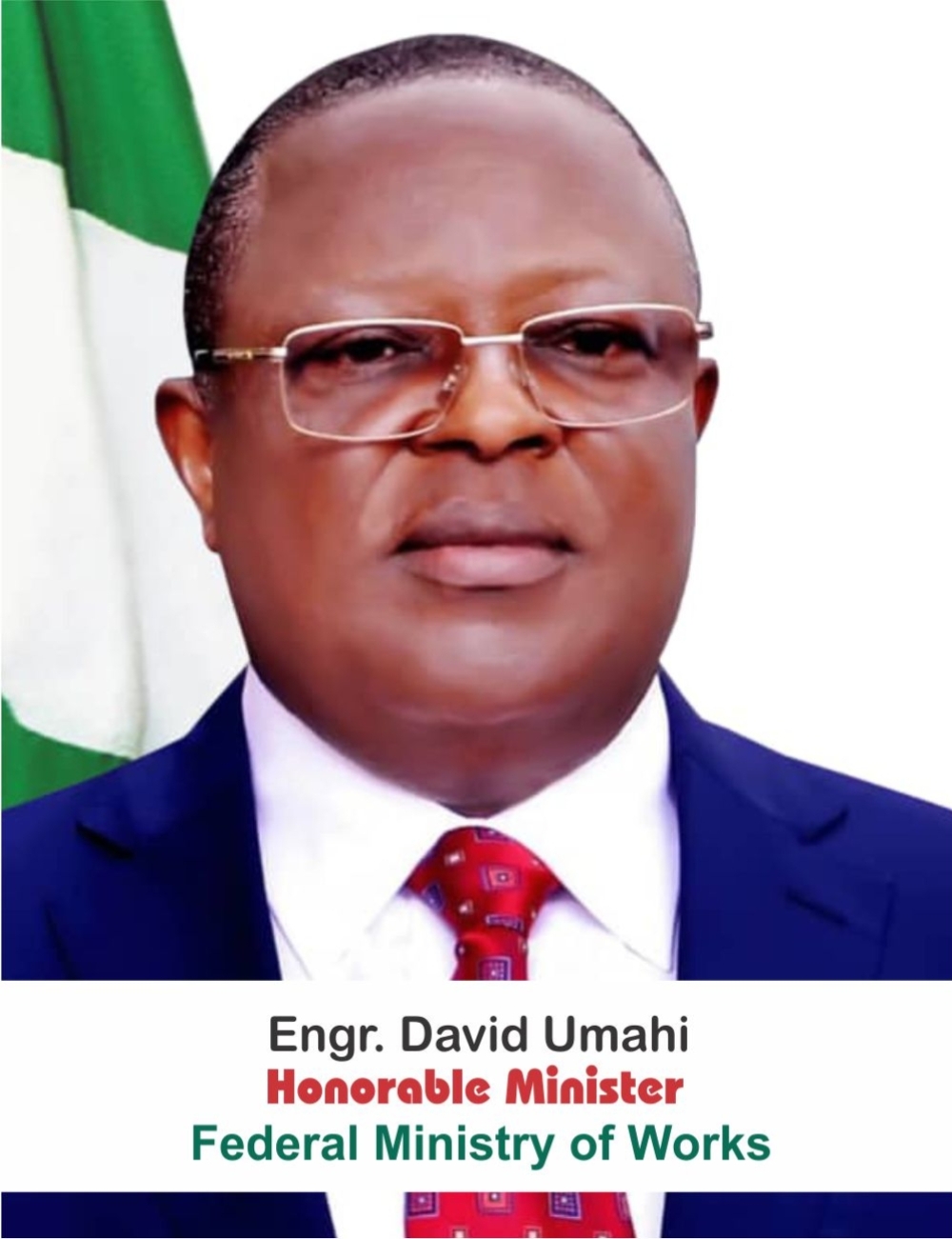
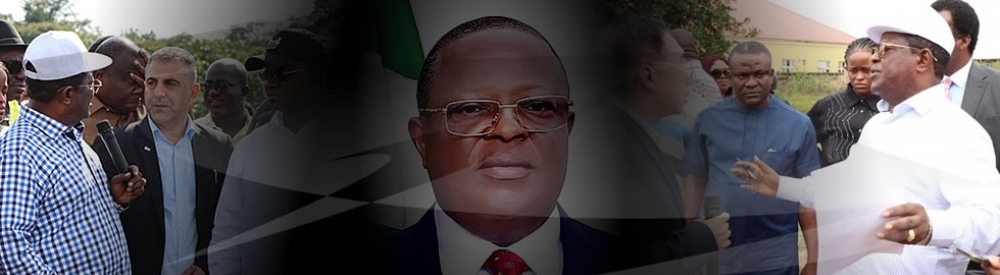
The Honourable Minister of Works, Senator Engr. David Umahi, CON, has affirmed that the economic reforms of President Bola Ahmed Tinubu, GCFR, are yielding results across the country, with strategic road infrastructure driving economic growth, improving security, reducing hunger and reconnecting communities.
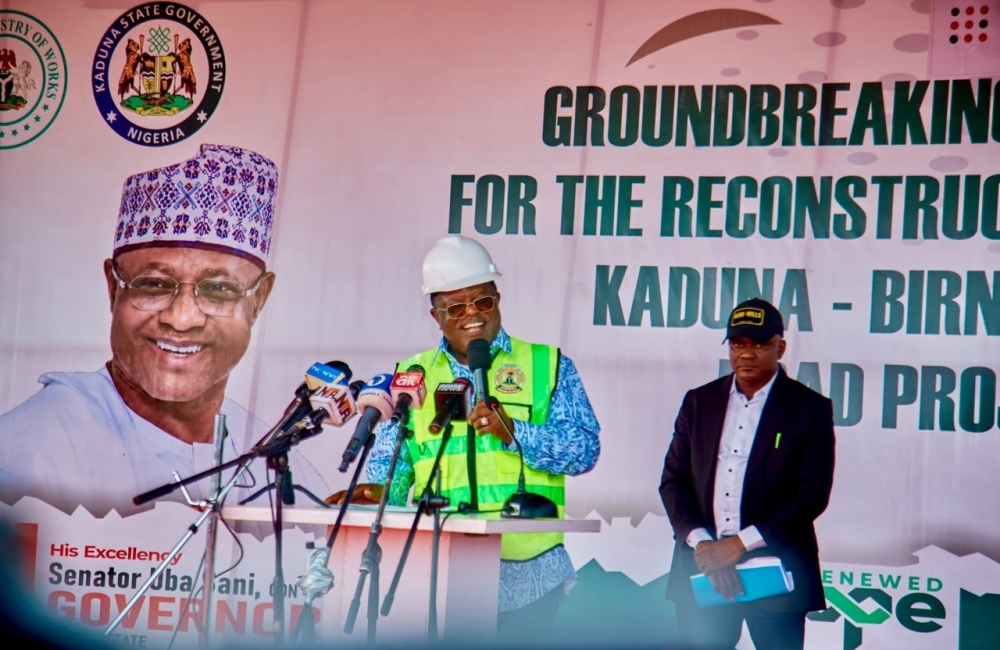
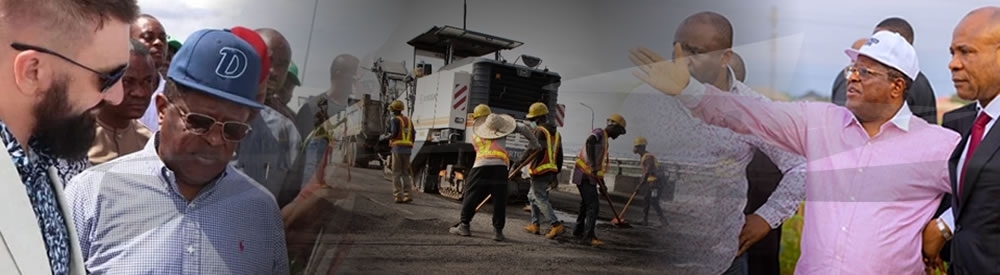
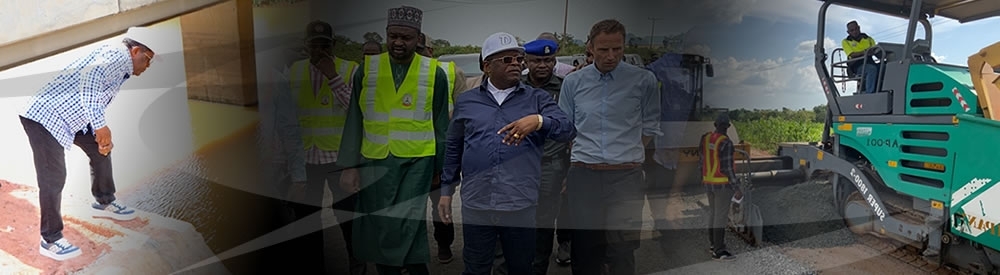
The Minister made the statement on Tuesday, August 4, 2026, during the official flag-off of the reconstruction of the 122KM Kaduna–Birnin Gwari Road at the Afaka Mando Arena in Kaduna State. He described the project as another fulfilled promise by President Tinubu and a major step towards strengthening regional connectivity, stimulating commerce and expanding economic opportunities under the Renewed Hope Agenda.
“We are using this road infrastructure to fix the economic problems we met on ground, we are using road infrastructure to fight the insecurity we met on the ground, we are using road building to fight hunger we met on the ground, we are using this road infrastructure to fight the injustices we met on ground where some state had no federal project like Plateau, Gombe, Ebonyi and even Kaduna.”
Umahi emphasized that the Kaduna–Birnin Gwari Road is one of President Tinubu’s promises fulfilled, noting that the project will significantly reduce travel time between Northern Nigeria and Lagos while opening up new economic routes. “By doing this road the president is shortening the distance between the north and Lagos. This is the shortest route to Lagos State. Because by the time it gets to Birnin Gwari, it leads to Niger then it connects Kwara, Osun, Oyo, and Lagos. What more can we say this is a very important road.”
The Minister also recalled the security challenges that once characterized the Abuja–Kaduna road, affirming that the reconstruction of the Abuja–Kaduna Road has changed the narrative. “I was told that before now it was a bad idea traveling from Abuja to Kaduna because of countless attacks but it is now a thing of the past since the Abuja-Kaduna road project started.”
Responding to claims that the Federal Government is abandoning existing roads in favour of new ones, Umahi dismissed the criticism, citing several major rehabilitation projects currently underway across the country.“People say that we are doing new roads and abandoning old roads, is this 122km a new road?… Is the Sokoto to Zamfara down to Funtua down to Zaria, is it a new road, is the Enugu to Onitsha costing the President 350 Billion, is it a new road? The road from Makurdi to 9th Mile, is it new? The Bodo Bonny road, is it new? And the Abuja-Kaduna-Zaria-Kano road.”
He further noted that road infrastructure remains the foundation for national development, explaining that investment in roads stimulates every sector of the economy. “When a road is built it is a catalyst. It is a GDP that grows other GDPs. When a road is built insecurity is minimized, there is an agricultural revolution. When a road is built there is an increase in commerce and education and that is what this Divine President Bola Ahmed Tinubu is doing.”
Umahi also congratulated Kaduna State Governor, Senator Uba Sani, for securing presidential approval for a 50-kilometre internal light rail project valued at $868 million. “Governor let me congratulate you a very big one internal light rail in Kaduna State has been approved by the President, it is a 50km light rail worth $868 million. This is a big one, you’re a goal getter.”
Calling for responsible democratic engagement, the Minister urged critics of the administration to offer constructive criticism that will help government improve service delivery. “Democracy is by choice, the people criticizing us should be constructive, it should not be insulting, deceitful, or saying mundane things. I can testify that when you criticize us constructively we have always gone to attend to such.”
President Bola Ahmed Tinubu, GCFR, was represented at the ceremony by the Governor of Kaduna State, Senator Uba Sani, who reaffirmed the President’s commitment to the people of Birnin Gwari.
Governor Sani recalled that before becoming President, Bola Ahmed Tinubu visited Birnin Gwari despite the severe security challenges in the area and promised to reconstruct the Kaduna–Birnin Gwari Road and restore lasting peace to the community. He noted that the flag-off of the project is a clear demonstration that the President keeps his promises.
Commending President Tinubu, Governor Sani explained that no previous administration has shown the level of commitment to Northern Nigeria demonstrated by the current President.“No President of the Federal Republic of Nigeria has done what President Bola Ahmed Tinubu has done for us here in Northern Nigeria and I challenge everyone to come up with anything contrary to what I am saying. President Bola Ahmed Tinubu has done a lot for us. We thank him for the love for the North, for the love for humanity, for the love for progress.”
Also speaking, the Emir of Birnin Gwari, His Royal Highness Alhaji (Dr.) Zubairu Jibril Maigwari II, commended President Tinubu and the governors of the affected states for the significant gains recorded in the fight against insecurity, noting that farmers have returned to their farms after years of fear and displacement.

PRESIDENT TINUBU’S REFORMS ARE YIELDING RESULTS, SAYS UMAHI, AS FG FLAGS OFF 122KM KADUNA (MANDO)–BIRNIN GWARI ROAD The Honourable Minister of Works, Senator Engr. David Umahi, CON, has affirmed that the economic reforms of President Bola Ahmed Tinubu, GCFR, are yielding results across the country, with strategic road infrastructure driving economic growth, improving security, reducing hunger and reconnecting communities. The Minister made the statement on Tuesday, August 4, 2026, during the official flag-off of the reconstruction of the 122KM Kaduna–Birnin Gwari Road at the Afaka Mando Arena in Kaduna State. He described the project as another fulfilled promise by President Tinubu and a major step towards strengthening regional connectivity, stimulating commerce and expanding economic opportunities under the Renewed Hope Agenda. Umahi emphasized that the Kaduna–Birnin Gwari Road is one of President Tinubu’s promises fulfilled, noting that the project will significantly reduce travel time between Northern Nigeria and Lagos while opening up new economic routes. “By doing this road the president is shortening the distance between the north and Lagos. This is the shortest route to Lagos State. Because by the time it gets to Birnin Gwari, it leads to Niger then it connects Kwara, Osun, Oyo, and Lagos. What more can we say this is a very important road.” The Minister also recalled the security challenges that once characterized the Abuja–Kaduna road, affirming that the reconstruction of the Abuja–Kaduna Road has changed the narrative. “I was told that before now it was a bad idea traveling from Abuja to Kaduna because of countless attacks but it is now a thing of the past since the Abuja-Kaduna road project started.” Responding to claims that the Federal Government is abandoning existing roads in favour of new ones, Umahi dismissed the criticism, citing several major rehabilitation projects currently underway across the country.“People say that we are doing new roads and abandoning old roads, is this 122km a new road?… Is the Sokoto to Zamfara down to Funtua down to Zaria, is it a new road, is the Enugu to Onitsha costing the President 350 Billion, is it a new road? The road from Makurdi to 9th Mile, is it new? The Bodo Bonny road, is it new? And the Abuja-Kaduna-Zaria-Kano road.” He further noted that road infrastructure remains the foundation for national development, explaining that investment in roads stimulates every sector of the economy. “When a road is built it is a catalyst. It is a GDP that grows other GDPs. When a road is built insecurity is minimized, there is an agricultural revolution. When a road is built there is an increase in commerce and education and that is what this Divine President Bola Ahmed Tinubu is doing.” Umahi also congratulated Kaduna State Governor, Senator Uba Sani, for securing presidential approval for a 50-kilometre internal light rail project valued at $868 million. “Governor let me congratulate you a very big one internal light rail in Kaduna State has been approved by the President, it is a 50km light rail worth $868 million. This is a big one, you’re a goal getter.” Calling for responsible democratic engagement, the Minister urged critics of the administration to offer constructive criticism that will help government improve service delivery. “Democracy is by choice, the people criticizing us should be constructive, it should not be insulting, deceitful, or saying mundane things. I can testify that when you criticize us constructively we have always gone to attend to such.” President Bola Ahmed Tinubu, GCFR, was represented at the ceremony by the Governor of Kaduna State, Senator Uba Sani, who reaffirmed the President’s commitment to the people of Birnin Gwari. Governor Sani recalled that before becoming President, Bola Ahmed Tinubu visited Birnin Gwari despite the severe security challenges in the area and promised to reconstruct the Kaduna–Birnin Gwari Road and restore lasting peace to the community. He noted that the flag-off of the project is a clear demonstration that the President keeps his promises. Commending President Tinubu, Governor Sani explained that no previous administration has shown the level of commitment to Northern Nigeria demonstrated by the current President.“No President of the Federal Republic of Nigeria has done what President Bola Ahmed Tinubu has done for us here in Northern Nigeria and I challenge everyone to come up with anything contrary to what I am saying. President Bola Ahmed Tinubu has done a lot for us. We thank him for the love for the North, for the love for humanity, for the love for progress.” Also speaking, the Emir of Birnin Gwari, His Royal Highness Alhaji (Dr.) Zubairu Jibril Maigwari II, commended President Tinubu and the governors of the affected states for the significant gains recorded in the fight against insecurity, noting that farmers have returned to their farms after years of fear and displacement.
“We are using this road infrastructure to fix the economic problems we met on ground, we are using road infrastructure to fight the insecurity we met on the ground, we are using road building to fight hunger we met on the ground, we are using this road infrastructure to fight the injustices we met on ground where some state had no federal project like Plateau, Gombe, Ebonyi and even Kaduna.”
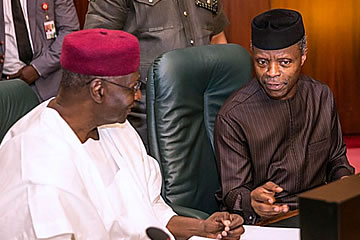
Federal Executive Council Approves N54 Billion For Reconstruction of Road Linking Akwa Ibom and Cross River States The Federal Executive Council (FEC), presided over by Vice-President Yemi Osimbajo, on Wednesday, approved N54billion for the reconstruction of Odukpani Itu-Ikot Ekpene road linking Akwa Ibom and Cross River states. The Minister of Power, Works and Housing, Babatunde Fashola, disclosed this when he briefed State House correspondents on the outcome of the FEC meeting held in the Presidential Villa, Abuja. He stated that the road, which was constructed over 40 years ago, would boost socio-economic activities and improve the performance of the economy by reducing journey time, the cost of doing business and also create more job opportunities. Fashola added that this is consistent with the promise of this administration to create employment opportunities from construction works and stimulate the economy. “We will do the best to quickly mobilise the contractor to site with the onset of the rainy season and I am sure that by this time next year, it will be a better story, a better journey time experience in that area of the country,” he said. Also addressing the reporters, the Minister of State for Aviation, Hadi Sirika disclosed that the Council approved N1.5billion for projects in the aviation sector. He disclosed that the Council approved the appointment of transaction advisers to carry out advisory services on establishment of national carriers, establishment of aviation leasing company and establishment of maintenance repair and overhaul centre. He said advisers were also approved for the establishment of Aerotropolis or airport city and for the concession of the nation’s airports. The Minister of Water Resources, Alhaji Suleiman Adamu told the correspondents that the Council approved contract verification of the dairy irrigation project located along Kano and Jigawa states. He noted that the project, which is about 2,300 hectare, was abandoned after reaching 50 per cent completion about 17 years ago. According to the minister, there is already a provision for the project in the 2016 budget and it has also been included in the 2017 budget. Minister of Information and Culture, Lai Mohammed also explained that President Muhammadu Buhari’s absence at the Wednesday’s Federal Executive Council (FEC) meeting followed medical advice from his doctors. The minister stated that the President, who was in office on Tuesday, was asked to take some rest by his doctors, today. He thanked Nigerians for their concern and prayers for the quick recovery of the president. Mohammed dismissed as wicked and ungodly the insinuation that the President’s health had deteriorated to the extent that he was being assisted before taking his meals. According to the minister, President Buhari deserves commendation from all well-meaning individuals and groups for being transparent and upfront in the matter concerning his health. ...
World Bank Group Support for Nigeria’s Power Sector Recovery Program Washington, DC, April 22, 2017 – The World Bank Group and the Federal Government of Nigeria today had a high level consultation meeting to discuss World Bank Group support for the Government’s Power Sector Recovery Program, which was approved by the Federal Executive Council of Nigeria on March 22, 2017. The current status of the power sector characterized by poor service and lack of liquidity is a source of macro-economic imbalances and a binding constraint to the revival of growth for the country. The Power Sector Recovery Program focuses on supporting implementation of power sector reform, reducing losses in the distribution companies, enhancing the sector’s financial viability, increasing access to electricity services, and mobilizing private sector investment. “The approval of the Power Sector Recovery Program by the Federal Executive Council demonstrates that the Federal Government is committed to the sustainable development of the power sector. The implementation of the Program is critical to achieving the objectives of the Government’s Economic Growth and Recovery Plan,” said H.E. Babatunde Fashola, SAN, Minister for Power, Works and Housing. “There is need for well-designed derisking in order to attract private investors to the sector,” said Mrs. Kemi Adeosun, Minister of Finance. “All the agencies of Government will work in concert to ensure implementation of the Power Sector Recovery Program.” “The legislative arm of the Nigerian government is fully committed to the successful implementation of the Power Sector Recovery Program,” said Senator Enyinnaya Abaribe, Chairman, Senate Committee on Power, Steel and Metallurgy. “We will make sure our oversight functions focus on the completion of projects and initiatives that support the effectiveness of the Power Sector Recovery Program” said Honourable Dan Asuquo, Chairman, House of Representatives Committee on Power. The World Bank Group congratulated the Government on its commitment to the Recovery Program, stressing the critical importance of the power sector for Nigeria’s development and for restoring macroeconomic resilience and growth. The meeting discussed the action plan set out in the Program, stressing the need for strong interagency coordination to ensure that it attains its aims. "Controlling the cost of electricity supply is a critical element of the Recovery Program that will require close attention to prioritizing investments based on least cost power development investment planning principles,” said Riccardo Puliti, World Bank Senior Director for Energy and Extractive Industries. “A turnaround of the power sector will require the expertise and financing of the private sector,” said Bernard Sheahan, Global Director for Infrastructure and Natural Resources at the International Finance Corporation. “This would require continuous improvement in the investment climate in Nigeria and strong communications among stakeholders of the sector reform plan during its implementation.” “A full range of instruments will be deployed to help the Government mobilize investments directly from the private sector and through private sector guarantees,” said Sarvesh Suri, Director of Operations at the Multilateral Investment Guarantee Agency. The World Bank Group reaffirmed its strong partnership with the Government of Nigeria in addressing the challenges in power sector, that include bringing its experience in developing financing solutions and attracting private sector capital in Nigeria. The meeting resulted in agreement on the next steps in developing the World Bank Group’s support, recognizing the need for concerted efforts to accelerate its preparation. “The World Bank Group is committed to supporting the implementation of the Government’s Power Sector Recovery Program to re-establish financial sustainability in the power sector,” said Rachid Benmessaoud, World Bank Country Director for Nigeria. Contacts: In Abuja (Federal Government of Nigeria): Permanent Secretary, Ministry for Power, Works and Housing: Louis Edozien, louis.edozien@power.gov.ng In Abuja (The World Bank Group): Olufunke Olufon, 08149921055, oolufon@worldbank.org In Washington (The World Bank Group): Ekaterina Svirina, (202) 458-1042, esvirina@worldbank.org For more information on the World Bank’s programs in Nigeria, visit: http://www.worldbank.org/en/country/nigeria Join us on: https://www.facebook.com/worldbank Follow us on Twitter: https://twitter.com/WorldBankAfrica Find us on YouTube: http://www.worldbank.org/africa/youtube Listen to us on Soundcloud: https://soundcloud.com/worldbank/sets/world-bank-africa ...
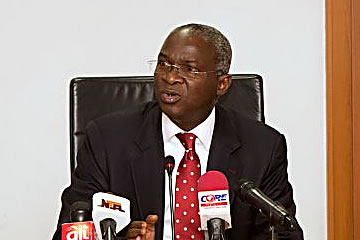
Fashola Urges Professional Builders To Develop Effective Strategies And Framework To Ensure Project Quality The Hon. Minister of Power, Works and Housing, Babatunde Fashola has urged members of the Council of Registered Builders of Nigeria (CORBON) to develop for implementation, effective strategies, framework and benchmarks for ensuring the proper application of the project quality management plan of building projects in Nigeria. He said this will guarantee the attainment of quality in project delivery as well as regulate and control the practice of the building profession. The Minister said this today at the 15th Induction / Investiture ceremony of New Builders held in Abuja. The Minister who was represented by the Director, Public Building and Housing Department in the Ministry, Arc. Sani Gidado, said that the present administration was determined to ensure the enactment of enabling legislation on the National Building Code which includes Project Quality Management Plan in contract documentation for full implementation. Fashola identified cases of building failures and collapse in Nigeria as a clear manifestation of failings of the designs and the construction processes and stated that the onus lies with the critical stakeholders to undertake a conscientious overhaul of the present system to curb the menace. He commended the Council for its contributions in the quest to achieve sanity in the built industry especially on its consistency in contributions and recommendations to the National Building Code and the National Council on Housing. In his welcome address, Chairman of CORBON, Bldr.Prof. Bala Kabir said the Council has the primary responsibility of establishing and implementing standards of education and practice for Building Technology provided in the Builders Registration Act. He said some of the specific functions in the Act include: to regulate the activities of Builders through registration and licensure; define the scope of practice of building technology; set standards for practice and continuing education of Builders and discipline registered and license holders. He said that the induction is another effort to disenfranchise quacks from carrying out their illegal activities in the industry and admonished the inductees to be building production managers who will ensure good quality project delivery at all times. Guest speaker at the occasion, Prof Akin Akindoyeni also urged the Builders to maintain standards and quality and also go for expertise in the profession, adding that it is incumbent on the inductees and others to keep abreast of modern technology in the industry. A total of 106 members were inducted into the Council. ...
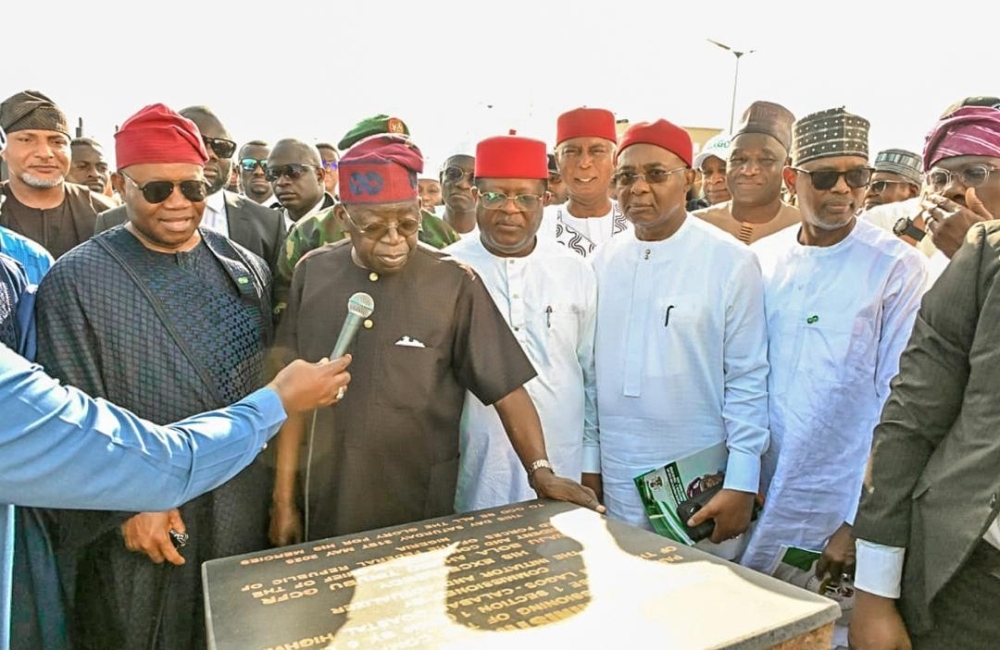
DRIVING NIGERIA’S FUTURE: CELEBRATING TWO YEARS OF TRANSFORMATIVE LEADERSHIP AND THE LAGOS-CALABAR COASTAL HIGHWAY MILESTONE
DRIVING NIGERIA’S FUTURE: CELEBRATING TWO YEARS OF TRANSFORMATIVE LEADERSHIP AND THE LAGOS-CALABAR COASTAL HIGHWAY MILESTONE
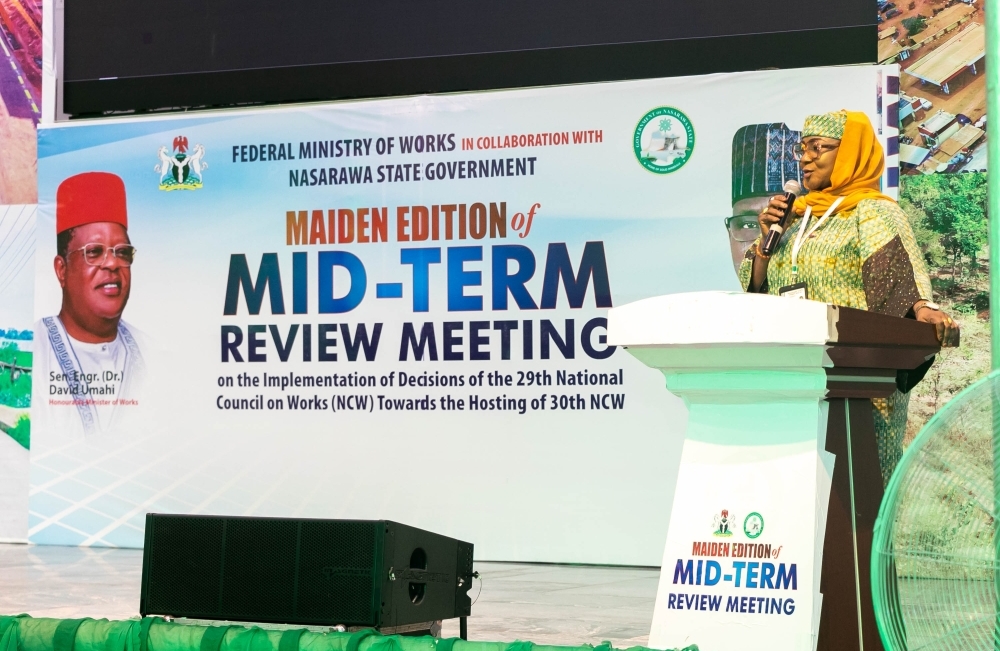
MID -TERM REVIEW MEETING ON THE IMPLIMENTATION OF THE DECISIONS REACHED AT THE 29TH NATIONAL COUNCIL ON WORKS (NCW) DAY 1
MID -TERM REVIEW MEETING ON THE IMPLIMENTATION OF THE DECISIONS REACHED AT THE 29TH NATIONAL COUNCIL ON WORKS (NCW) DAY 1