PRESIDENT TINUBU’S REFORMS ARE YIELDING RESULTS, SAYS UMAHI, AS FG FLAGS OFF 122KM KADUNA (MANDO)–BIRNIN GWARI ROAD
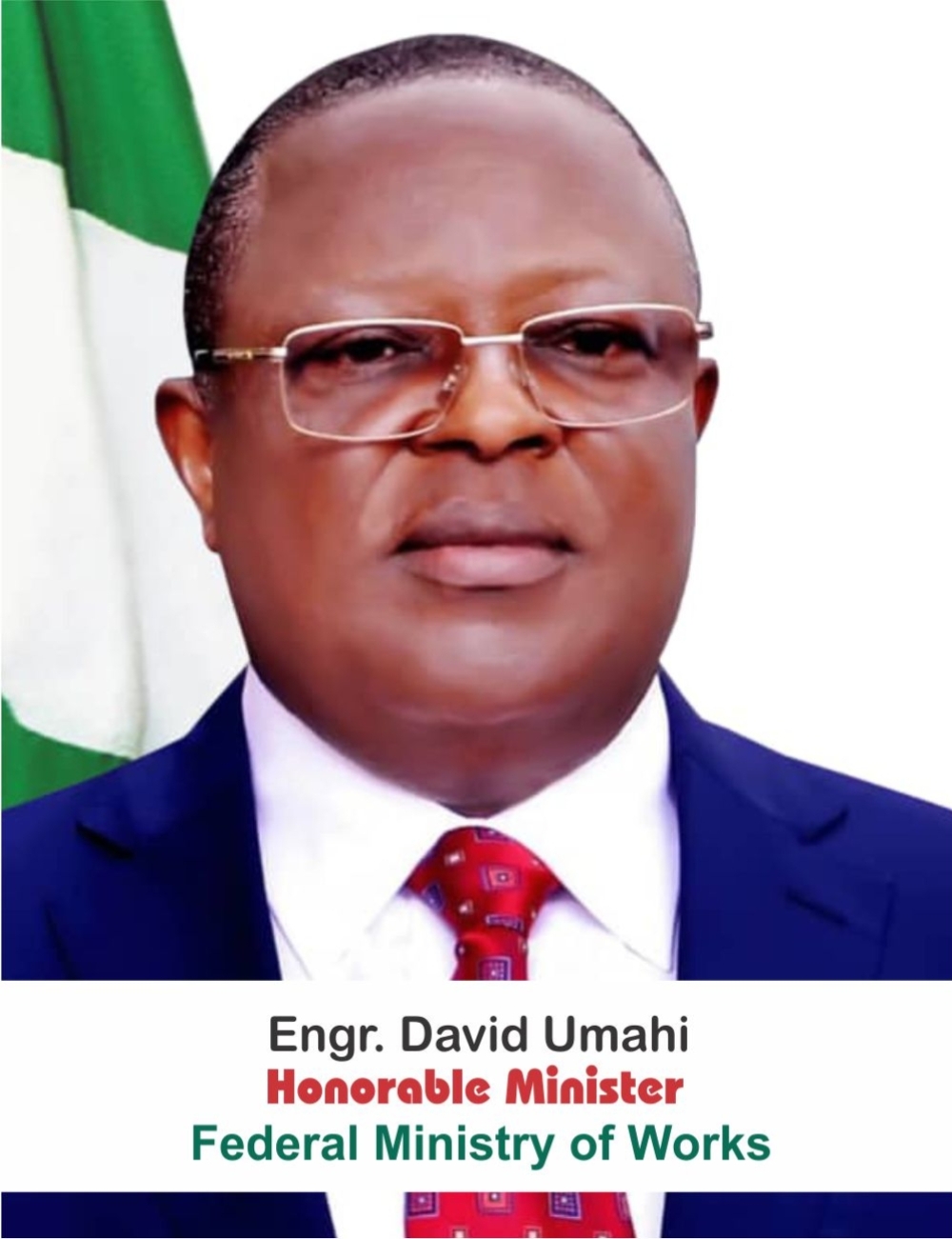
The Honourable Minister of Works, Senator Engr. David Umahi, CON, has affirmed that the economic reforms of President Bola Ahmed Tinubu, GCFR, are yielding results across the country, with strategic road infrastructure driving economic growth, improving security, reducing hunger and reconnecting communities.
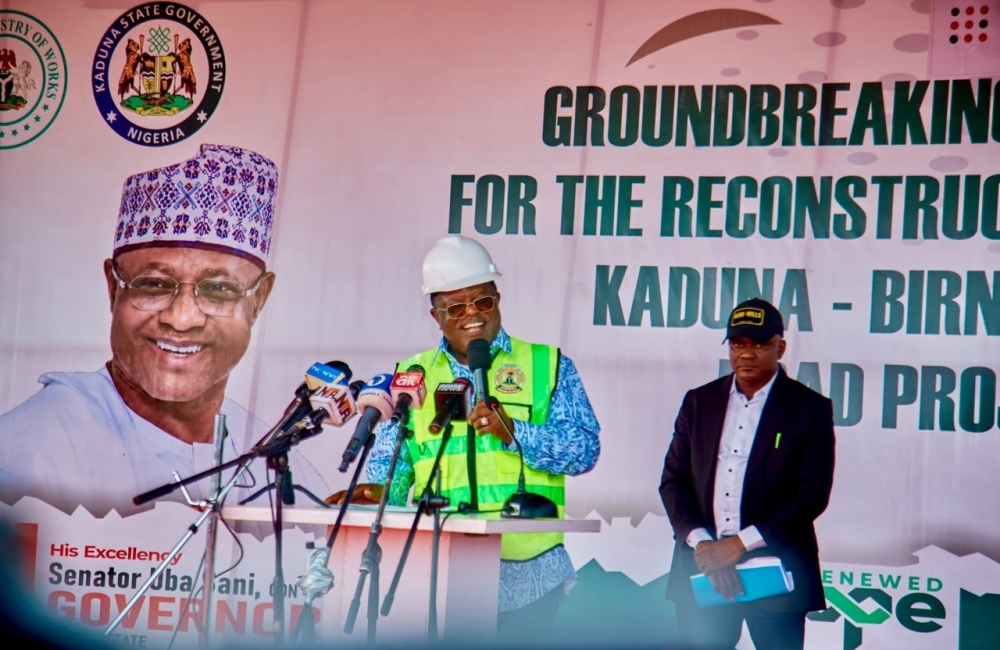
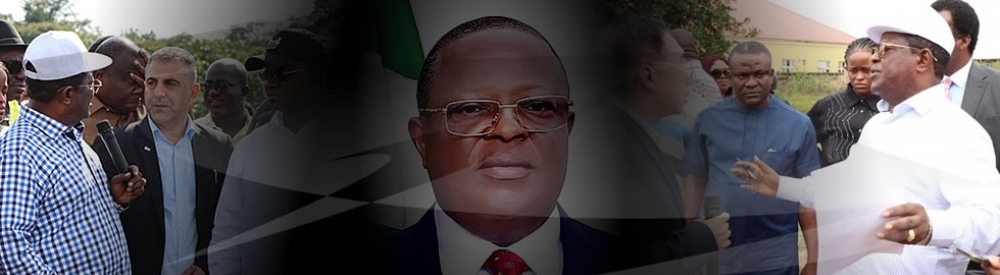
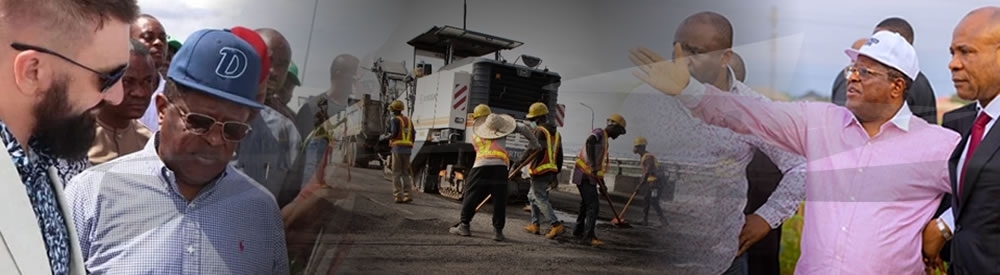
The Minister made the statement on Tuesday, August 4, 2026, during the official flag-off of the reconstruction of the 122KM Kaduna–Birnin Gwari Road at the Afaka Mando Arena in Kaduna State. He described the project as another fulfilled promise by President Tinubu and a major step towards strengthening regional connectivity, stimulating commerce and expanding economic opportunities under the Renewed Hope Agenda.
“We are using this road infrastructure to fix the economic problems we met on ground, we are using road infrastructure to fight the insecurity we met on the ground, we are using road building to fight hunger we met on the ground, we are using this road infrastructure to fight the injustices we met on ground where some state had no federal project like Plateau, Gombe, Ebonyi and even Kaduna.”
Umahi emphasized that the Kaduna–Birnin Gwari Road is one of President Tinubu’s promises fulfilled, noting that the project will significantly reduce travel time between Northern Nigeria and Lagos while opening up new economic routes. “By doing this road the president is shortening the distance between the north and Lagos. This is the shortest route to Lagos State. Because by the time it gets to Birnin Gwari, it leads to Niger then it connects Kwara, Osun, Oyo, and Lagos. What more can we say this is a very important road.”
The Minister also recalled the security challenges that once characterized the Abuja–Kaduna road, affirming that the reconstruction of the Abuja–Kaduna Road has changed the narrative. “I was told that before now it was a bad idea traveling from Abuja to Kaduna because of countless attacks but it is now a thing of the past since the Abuja-Kaduna road project started.”
Responding to claims that the Federal Government is abandoning existing roads in favour of new ones, Umahi dismissed the criticism, citing several major rehabilitation projects currently underway across the country.“People say that we are doing new roads and abandoning old roads, is this 122km a new road?… Is the Sokoto to Zamfara down to Funtua down to Zaria, is it a new road, is the Enugu to Onitsha costing the President 350 Billion, is it a new road? The road from Makurdi to 9th Mile, is it new? The Bodo Bonny road, is it new? And the Abuja-Kaduna-Zaria-Kano road.”
He further noted that road infrastructure remains the foundation for national development, explaining that investment in roads stimulates every sector of the economy. “When a road is built it is a catalyst. It is a GDP that grows other GDPs. When a road is built insecurity is minimized, there is an agricultural revolution. When a road is built there is an increase in commerce and education and that is what this Divine President Bola Ahmed Tinubu is doing.”
Umahi also congratulated Kaduna State Governor, Senator Uba Sani, for securing presidential approval for a 50-kilometre internal light rail project valued at $868 million. “Governor let me congratulate you a very big one internal light rail in Kaduna State has been approved by the President, it is a 50km light rail worth $868 million. This is a big one, you’re a goal getter.”
Calling for responsible democratic engagement, the Minister urged critics of the administration to offer constructive criticism that will help government improve service delivery. “Democracy is by choice, the people criticizing us should be constructive, it should not be insulting, deceitful, or saying mundane things. I can testify that when you criticize us constructively we have always gone to attend to such.”
President Bola Ahmed Tinubu, GCFR, was represented at the ceremony by the Governor of Kaduna State, Senator Uba Sani, who reaffirmed the President’s commitment to the people of Birnin Gwari.
Governor Sani recalled that before becoming President, Bola Ahmed Tinubu visited Birnin Gwari despite the severe security challenges in the area and promised to reconstruct the Kaduna–Birnin Gwari Road and restore lasting peace to the community. He noted that the flag-off of the project is a clear demonstration that the President keeps his promises.
Commending President Tinubu, Governor Sani explained that no previous administration has shown the level of commitment to Northern Nigeria demonstrated by the current President.“No President of the Federal Republic of Nigeria has done what President Bola Ahmed Tinubu has done for us here in Northern Nigeria and I challenge everyone to come up with anything contrary to what I am saying. President Bola Ahmed Tinubu has done a lot for us. We thank him for the love for the North, for the love for humanity, for the love for progress.”
Also speaking, the Emir of Birnin Gwari, His Royal Highness Alhaji (Dr.) Zubairu Jibril Maigwari II, commended President Tinubu and the governors of the affected states for the significant gains recorded in the fight against insecurity, noting that farmers have returned to their farms after years of fear and displacement.

PRESIDENT TINUBU’S REFORMS ARE YIELDING RESULTS, SAYS UMAHI, AS FG FLAGS OFF 122KM KADUNA (MANDO)–BIRNIN GWARI ROAD The Honourable Minister of Works, Senator Engr. David Umahi, CON, has affirmed that the economic reforms of President Bola Ahmed Tinubu, GCFR, are yielding results across the country, with strategic road infrastructure driving economic growth, improving security, reducing hunger and reconnecting communities. The Minister made the statement on Tuesday, August 4, 2026, during the official flag-off of the reconstruction of the 122KM Kaduna–Birnin Gwari Road at the Afaka Mando Arena in Kaduna State. He described the project as another fulfilled promise by President Tinubu and a major step towards strengthening regional connectivity, stimulating commerce and expanding economic opportunities under the Renewed Hope Agenda. Umahi emphasized that the Kaduna–Birnin Gwari Road is one of President Tinubu’s promises fulfilled, noting that the project will significantly reduce travel time between Northern Nigeria and Lagos while opening up new economic routes. “By doing this road the president is shortening the distance between the north and Lagos. This is the shortest route to Lagos State. Because by the time it gets to Birnin Gwari, it leads to Niger then it connects Kwara, Osun, Oyo, and Lagos. What more can we say this is a very important road.” The Minister also recalled the security challenges that once characterized the Abuja–Kaduna road, affirming that the reconstruction of the Abuja–Kaduna Road has changed the narrative. “I was told that before now it was a bad idea traveling from Abuja to Kaduna because of countless attacks but it is now a thing of the past since the Abuja-Kaduna road project started.” Responding to claims that the Federal Government is abandoning existing roads in favour of new ones, Umahi dismissed the criticism, citing several major rehabilitation projects currently underway across the country.“People say that we are doing new roads and abandoning old roads, is this 122km a new road?… Is the Sokoto to Zamfara down to Funtua down to Zaria, is it a new road, is the Enugu to Onitsha costing the President 350 Billion, is it a new road? The road from Makurdi to 9th Mile, is it new? The Bodo Bonny road, is it new? And the Abuja-Kaduna-Zaria-Kano road.” He further noted that road infrastructure remains the foundation for national development, explaining that investment in roads stimulates every sector of the economy. “When a road is built it is a catalyst. It is a GDP that grows other GDPs. When a road is built insecurity is minimized, there is an agricultural revolution. When a road is built there is an increase in commerce and education and that is what this Divine President Bola Ahmed Tinubu is doing.” Umahi also congratulated Kaduna State Governor, Senator Uba Sani, for securing presidential approval for a 50-kilometre internal light rail project valued at $868 million. “Governor let me congratulate you a very big one internal light rail in Kaduna State has been approved by the President, it is a 50km light rail worth $868 million. This is a big one, you’re a goal getter.” Calling for responsible democratic engagement, the Minister urged critics of the administration to offer constructive criticism that will help government improve service delivery. “Democracy is by choice, the people criticizing us should be constructive, it should not be insulting, deceitful, or saying mundane things. I can testify that when you criticize us constructively we have always gone to attend to such.” President Bola Ahmed Tinubu, GCFR, was represented at the ceremony by the Governor of Kaduna State, Senator Uba Sani, who reaffirmed the President’s commitment to the people of Birnin Gwari. Governor Sani recalled that before becoming President, Bola Ahmed Tinubu visited Birnin Gwari despite the severe security challenges in the area and promised to reconstruct the Kaduna–Birnin Gwari Road and restore lasting peace to the community. He noted that the flag-off of the project is a clear demonstration that the President keeps his promises. Commending President Tinubu, Governor Sani explained that no previous administration has shown the level of commitment to Northern Nigeria demonstrated by the current President.“No President of the Federal Republic of Nigeria has done what President Bola Ahmed Tinubu has done for us here in Northern Nigeria and I challenge everyone to come up with anything contrary to what I am saying. President Bola Ahmed Tinubu has done a lot for us. We thank him for the love for the North, for the love for humanity, for the love for progress.” Also speaking, the Emir of Birnin Gwari, His Royal Highness Alhaji (Dr.) Zubairu Jibril Maigwari II, commended President Tinubu and the governors of the affected states for the significant gains recorded in the fight against insecurity, noting that farmers have returned to their farms after years of fear and displacement.
“We are using this road infrastructure to fix the economic problems we met on ground, we are using road infrastructure to fight the insecurity we met on the ground, we are using road building to fight hunger we met on the ground, we are using this road infrastructure to fight the injustices we met on ground where some state had no federal project like Plateau, Gombe, Ebonyi and even Kaduna.”
FG approves construction of Ilorin-Omuaran-Kabba road; Consultancy for transmission lines. The Federal Executive Council (FEC) also on Wednesday approved the construction of the section 1 of the Ilorin-Omuaran-Kabba Road for N21 billion to link Kwara and Kogi states. The Minister of Power, Works and Housing, Mr Babatunde Fashola, said that FEC also approved a N589 million consultancy for Environmental Impact Assessment on the 200 kilometre Olorunshogbo Transmission line. Fashola said the projects were consistent with the programmes of the federal government to reduce travel time and improve power supply to parts of the country.. “The second approval was for consultancy services for professionals to conduct line-route studies, Environmental Social Impact Assessment and resettlement action plan as well as environmental social management plan. “(It) is in order for us to access the Japanese International Cooperation Agency (JICA) loan to support the Transmission Company of Nigeria (TCN) to continue its transmission grid expansion programme.’’ The Minister said that the TCN projects cover the routes which the transmission line would pass through. He added that the 200 kilometre line would enable TCN evacuate power from the Olorunshogbo power plant to industrial clusters in Ogun and parts of Lagos state. In his briefing, the Minister of Agriculture, Chief Audu Ogbe, said that the committee set up on the rising cost of food prices has submitted an interim report to the Council. According to him, the committee identified the causes of the rise in prices as high cost of transportation and illegal taxation by states and local governments on producers and transporters. He said that the good thing was that there was no real shortage of food, adding that Nigerians were groaning under the pain of high prices. He attributed the high cost of transportation to the complete reliance on roads for evacuation of produce coupled with high cost of diesel and difficulties of trucks to move to places at the old fares. “So we considered the following alternatives using railway wagons on the current railway networks as we did before. When we moved cattle from the North West to Lagos by rail, we brought down the costs. “We avoided the multiple taxation visited on transporters in this country by local governments, road blocks, most of them not very legal, along the high ways, which delay movement and cause damage to a lot of foods like tomatoes. “We decided to work with the state governments and the police to reduce those delays and we are going to adapt what they have in Cote D’Ivioire where trucks carrying food are given labels. “In fact in Cote D’Ivoire, they cannot be stopped for more than 10 minutes anywhere even if something serious has happened. “The security agencies will follow them to the port or to their destinations and come back to investigate whatever happens. “Finally, we shall be looking into our reserves , if the situation in the next few days persists, then we have to see what we can bring out to lower the prices. (This is) because another round of harvests would be coming up again by the end of March,"Audu Ogbe said. The Minister said there was really no starvation in the country, adding that there was also a lot of pressure on Nigerian food from West, North and Central Africa. “Our food production is very robust and we are doing pretty well,’’ he added. ...
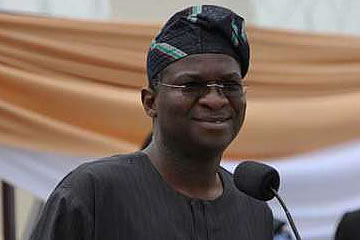
FG to Boost Economy by Consolidating on Existing Housing Projects Across The Nation The federal government has reiterated that it will consolidate on the various existing housing projects across the nation as a way of boosting the economy and taking Nigeria out of the present economy recession. The minister of Power, Works and Housing, Mr Babatunde Raji Fashola, SAN, stated this while presenting the 2017 budget proposal of the Housing Sector of the ministry at the Joint Committee on Works, Power, Housing and Urban Development recently. The minister, while giving an overview of the 2016 appropriation noted that despite the delay in budget passage of 2016 coupled with the process of finalization/standardization of the prototype designs for the National Housing Projects which was concluded around December, the ministry has issued award letters to competent and successful contractors. The contractors, who have since been mobilized, have moved to their various sites to commence work. He further stated that the ministry was only able to achieve about 57 per cent of the estimated budget appropriation in 2016 due to paucity of funds and delay in releases, adding that the ministry will have done better if sufficient funds were released for designated projects. Fashola said that the country will soon begin to feel the impact as laid-off workers have been re-absorbed, more are being employed, goods and services are in exchange and the local economy of the various project locations/sites around the country are now taking shapes. While giving the broad framework of the proposal for 2017, the minister noted that the highlight of this year’s budget will focus mainly on the National Housing Programme, completion and award of new federal secretariats in some states of the federation and payment of outstanding local debt to contractors, adding that this in the overall will positively impact on the nation’s economy. The chairman, Joint committee on Works, Power and Housing Urban Development, Hon. Ahmed Babba Usman Keita thanked the minister and his team for their efforts and requested that the minister should furnish the committee with a detailed breakdown and clarifications of the proposed 2017 budget to help in facilitating necessary appropriation for the ministry. Hon. Keita also assured the minister that the committee will use every constitutional means available to it to ensure the release of adequate funds to the ministry. ...
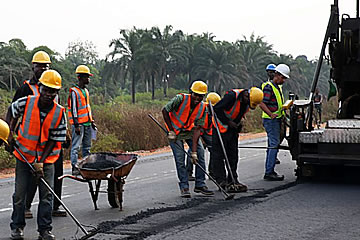
FG To Ensure Speedy Completion of Projects in the South –East The Minister of Power, Works, and Housing, Mr. Babatunde Fashola says the present administration led by President Muhammadu Buhari will ensure that contractors handling federal road projects in the South- East complete them within the specified time frame. Mr. Fashola who stated this when he visited the Anambra State Governor, Chief Willie Obiano at Governor’s Lodge, Amawbia said the Federal Government had put modalities in motion for the prompt release of funds and monitoring of the projects. The Minister, who said that he was in Anambra State to rap- up his inspection tour of federal roads in the South East, noted that it was the intention of Federal Government to ensure that the roads, especially those connecting the States within the zone and with other regions were in good motorable condition. Mr. Fashola who disclosed that alternative measures were been put in place to end the frequent failure of the Ninth-Mile-Ugwu Onyeama section of the Enugu – Onitsha Expressway pointed out that time and economic activities have improved in places where work had been completed on the Port Harcourt highway. He reiterated the commitment of the present administration to support the state governments in the zone to achieve their development objectives and appealed to them to allow their Commissioners of Works to liaise with Federal Controllers in their areas to workout modalities for more efficient service delivery. On the issue of Second Niger Bridge as well as the power situation in the country, the Minister explained that the Federal Government last year gave approval for early pilling works at the site, while it had adopted a three pronged approach to address the power challenges in the Country. Governor Willie Obiano who expressed delight that the bad portion of the Umunya-Awkuzu axis of the Enugu- Onitsha Expressway would soon be included in the ongoing reconstruction of the highway appealed for more Federal Government presence in the area. He pledged the support of Anambra State Government to the efforts of Federal Government to transform the Country. In their separate remarks, the Federal Controllers of Works and Housing respectively in Anambra State, Messrs Edward Bosah and Newton Okorafor assured of the Federal Government commitment to initiate meaningful development in the South- East zone. ...
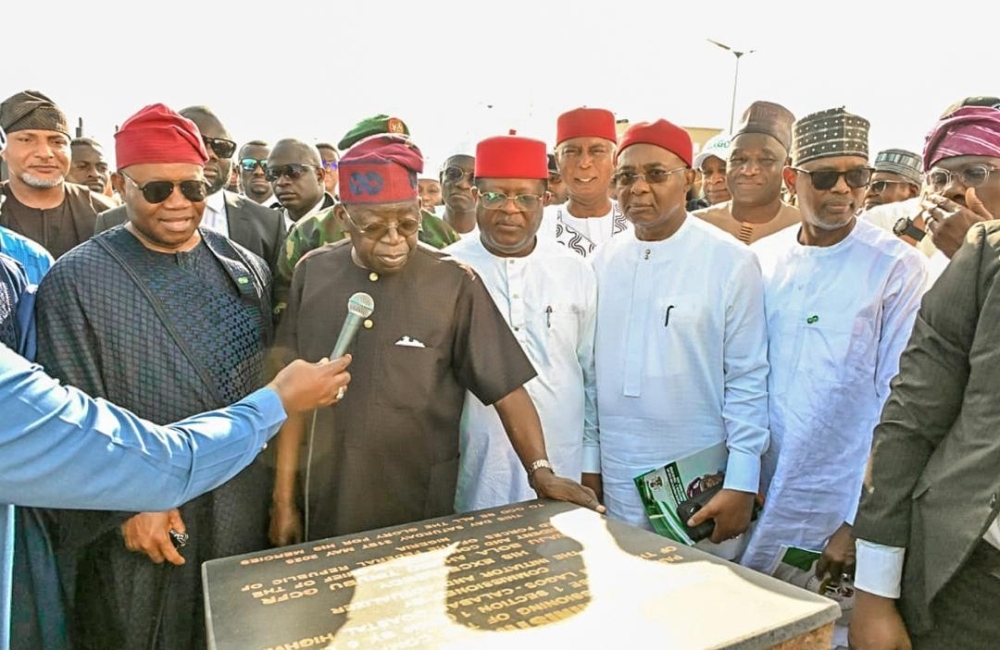
DRIVING NIGERIA’S FUTURE: CELEBRATING TWO YEARS OF TRANSFORMATIVE LEADERSHIP AND THE LAGOS-CALABAR COASTAL HIGHWAY MILESTONE
DRIVING NIGERIA’S FUTURE: CELEBRATING TWO YEARS OF TRANSFORMATIVE LEADERSHIP AND THE LAGOS-CALABAR COASTAL HIGHWAY MILESTONE
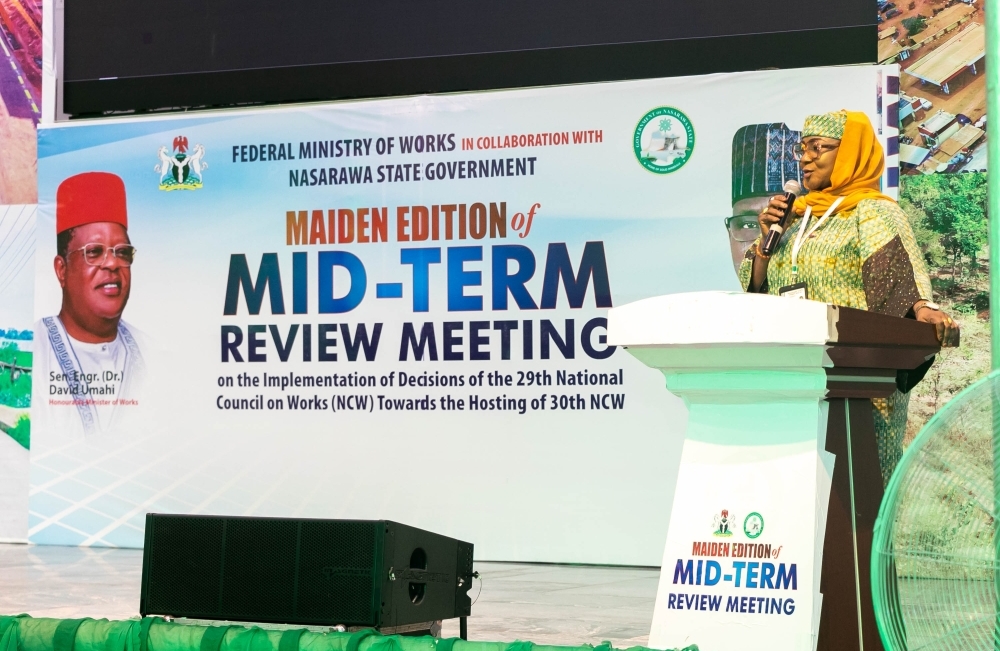
MID -TERM REVIEW MEETING ON THE IMPLIMENTATION OF THE DECISIONS REACHED AT THE 29TH NATIONAL COUNCIL ON WORKS (NCW) DAY 1
MID -TERM REVIEW MEETING ON THE IMPLIMENTATION OF THE DECISIONS REACHED AT THE 29TH NATIONAL COUNCIL ON WORKS (NCW) DAY 1