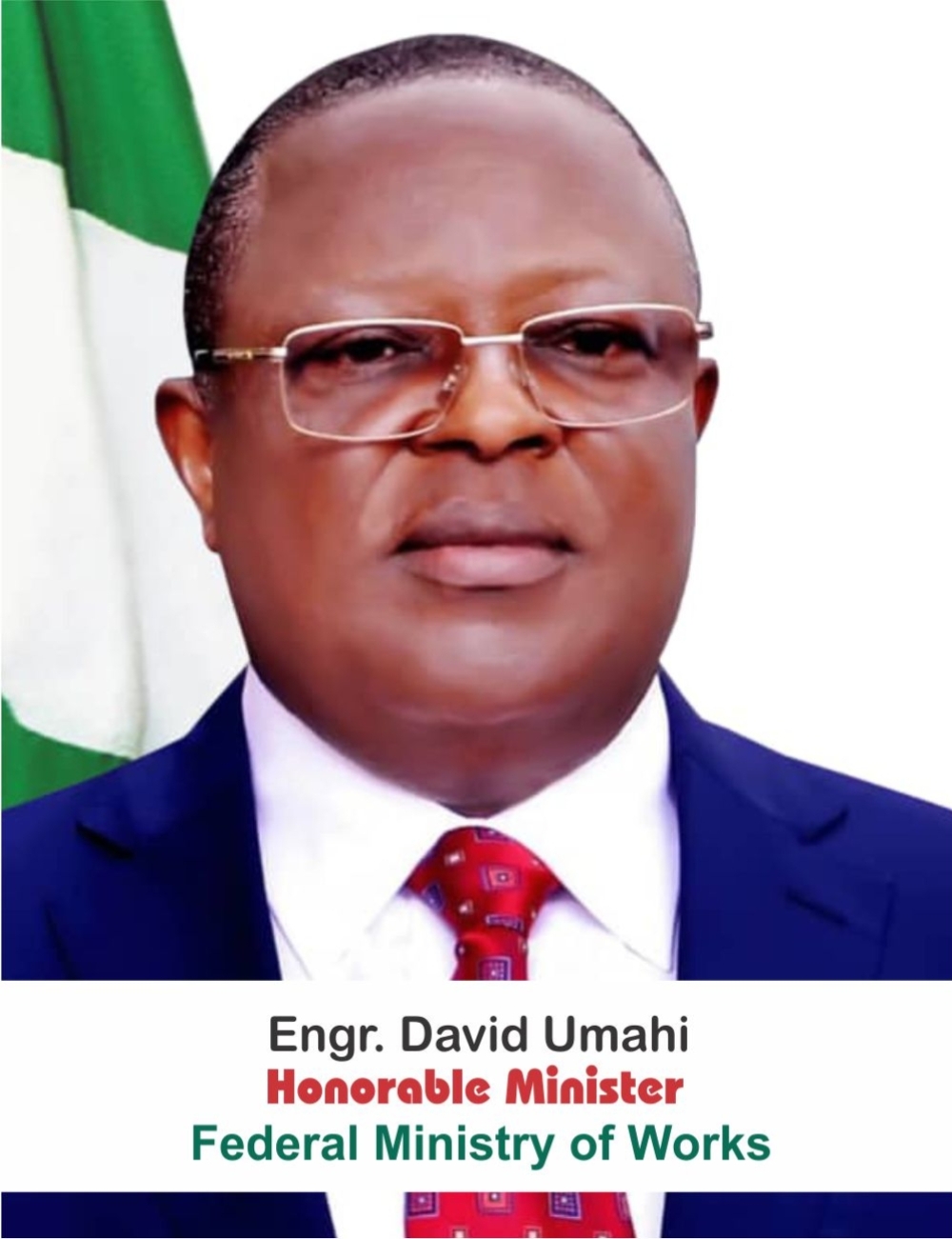
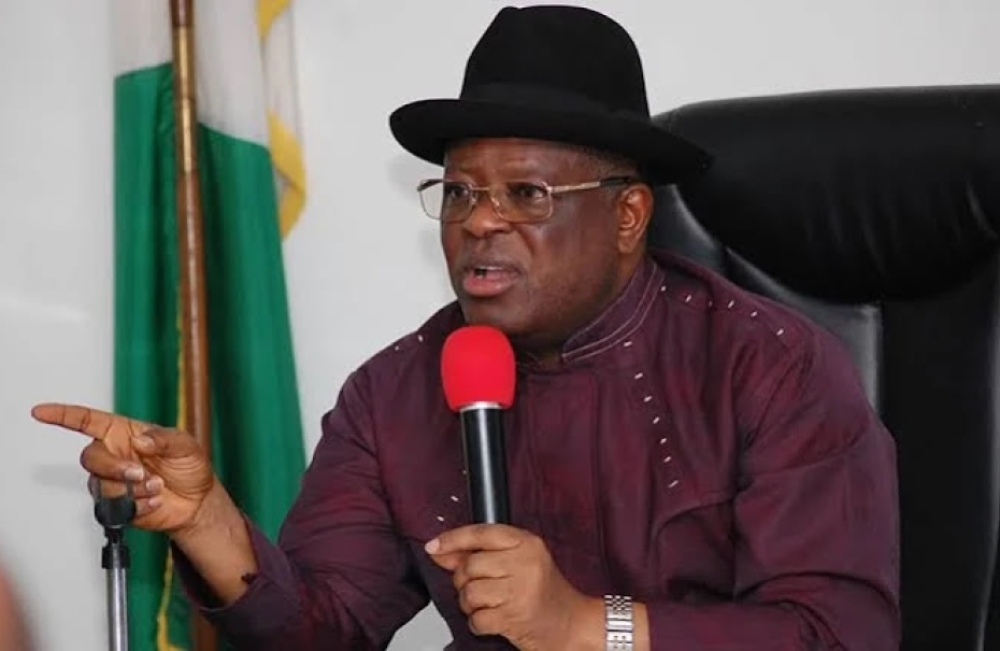
UMAHI ORDERS IMMEDIATE EMERGENCY INTERVENTION ON BENIN-ASABA ROAD, AND SOME OTHER CRITICAL FEDERAL ROADS
The Honourable Minister of Works, Senator Engr. David Nweze Umahi, CON, has directed the immediate deployment of major contractors to all three sections of the Benin-Asaba Federal Road to restore the failed sections and bring an end to the suffering of motorists and other road users.
This is because, the situation on the concessioned Benin-Asaba Road has reached a point where the overall public interest must take precedence over the existing concession agreement.
Recall that the Honourable Minister of Works was on the Benin-Asaba Road about seven days ago, where he assembled a number of contractors and directed them to prepare for immediate palliative intervention on the affected sections of the road at no cost to the concessionaire. In line with the Concession agreement which requires that before the Federal Government could intervene, the permission of the concessionaire must be required, and that permission was not granted to federal government.
The Minister subsequently proposed three options to the concessionaire, any one of which would have enabled the Federal Government to move in and address the worsening condition of the road. Unfortunately, none of the options was accepted by the concessionaire. Immediately after the Minister left Asaba, the already limited equipment deployed to the road by the concessionaire was further reduced to just one, worsening the situation and increasing the suffering of motorists and other road users.
While the Minister takes responsibility for the concerns and suffering of Nigerians using the road, it is important to state that the concessionaire has also not taken the suffering of Edo people and travelling public sufficiently into consideration by declining all the options put forward by the Federal Government. The concessionaire continues to rely on the terms of the concession agreement entered into by the previous administration, an agreement which weighs heavily against the Federal Government’s ability to intervene quickly in the interest of the public in a situation like this.
In view of this situation, the Honourable Minister of Works has directed the immediate deployment of major contractors within the corridor to all three sections of the Benin-Asaba Road to restore the failed sections and bring relief to the people, with the cost of the emergency intervention being borne by the Federal Government. The Honourable Minister has also directed immediate redesign of the entire route to be rebuilt with reinforced concrete pavement. The public should therefore take note that immediate action is underway to restore every failed section of the Benin-Asaba Road and subsequently rehabilitate the entire sections of the road using reinforced concrete pavement.
2. On the Benin-Sapele Road:
The Governors of Edo and Delta States, the Niger Delta Development Commission (NDDC), and the Federal Government are currently engaged in interventions on different sections of the road to restore the entire route. While some sections are receiving palliative attention, permanent works are also ongoing on other sections.
3. On Ifaki(Ekiti) - Kabba (Kogi) Road:
The Federal Government is engaging both the contractor; Gamji Nigeria Company Limited, and Dangote PLC on immediate emergency and permanent intervention on the most failed sections of the road, while efforts are being made to financially mobilise the company for more extensive permanent work to commence on the axis.
4. On the Sokoto-Zamfara-Katsina Road: This is an inherited project involving the dualisation of approximately 350 kilometres, which translates to about 700 kilometers. The project has since been redesigned and is currently ongoing and most sections are being reconstructed using reinforced concrete pavement. From the Sokoto axis towards Zamfara, over 50 kilometres of one carriageway have been fully completed with reinforced concrete pavement. From Zamfara to Katsina, some sections have been completed and palliative works have been ordered over the sections that have not been reconstructed. However, the pace of work slowed down due to the redesign and rephasing of the project. The contractors currently engaged on the road include CBC, SETRACO, Triacta and Mothercat. They are being remobilised to return to site and complete the outstanding works.
5. On the Abuja-Kaduna-Zaria-Kano Road: The Federal Government took over the Road project and has currently completed the 118-kilometer mostly on reinforced concrete pavement on lot 1. The Lot 2, which covers 164 kilometres, is over 60 percent completed on reinforced concrete pavement. The Federal Government has also introduced solar-powered light on the entire route of Abuja-Kaduna-Zaria - Kano to improve visibility during night travel and enhance the overall security situation on the route. The entire project is scheduled for completion by December 2026.
6. On Bauchi-Jigawa Road: Triacta Nigeria Limited has been mobilised to carry out the necessary interventions on some failed sections and work is currently ongoing in those failed sections.
7. On the Sagamu-Ore Road: 48 Kilometers of the 96-kilometre road have already been completed using reinforced concrete pavement. There is also a 24-kilometre section around Ore which was abandoned by the previous contractor. The Federal Government has directed its immediate restoration to ensure seamless travel. Solar lights are being installed in the entire 96kilometer of the road.
8. On Flooded Sections on Sagamu-Ore-Benin Road: The flooded sections on the same corridor between Sagamu-Ore-Benin Road, as well as other flooded sections in Ondo State, are being designed for emergency procurement and intervention.
9. On the East-West Road:
Some failed and critical sections, including defective sections of bridges along the East-West Road, are being marked out for emergency procurement and intervention.
10. On the Abuja-Lokoja Road:
Several contracts are ongoing along the route, while the three critical sections currently without contracts are being procured for emergency intervention.
11. On the Lokoja-Benin-Warri Road: The President has directed a complete redesign and procurement of the 400-kilometre dualised route covering the uncompleted sections, using reinforced concrete pavement, while palliative works will continue with the contractors currently on the road.
12. On Carter Bridge:
While the Federal Government continues to undertake weekly maintenance of the underwater elements of the bridge. The site has also been handed over to the contractor, CCECC, for the construction of a permanent new bridge, and work has commenced.
13. On the Third Mainland Bridge:
With regard to the defective underwater structural elements, the Federal Government is at the final stage of determining the appropriate intervention for the repair of the affected elements.
14. On the flooded section of the Lagos-Ibadan Road: Work has commenced on the affected section. There are also several flooded sections on federal roads across the six geopolitical zones, largely occasioned by excessive flooding and the effects of climate change. The Federal Government is identifying and marking these sections for immediate attention.
15. On the First and Second Niger Bridges:
Intervention work is ongoing on the approach roads to the Second Niger Bridge damaged by flood and the work is progressing very well. The First Niger Bridge has been closed to traffic to enable immediate repair works. Contractor has mobilized to site and comprehensive rehabilitation of the bridge has started. From Summit Junction to the First Niger Bridge, massive rehabilitation work is also ongoing using reinforced concrete pavement.
16. The Honourable Minister wishes to commend the President of the Federal Republic of Nigeria, His Excellency Bola Ahmed Tinubu, GCFR, for the massive work being undertaken on the nation’s roads since the administration assumed office in 2023.
17. It is important to state that when the present administration came into office, there was hardly any part of the country where one could travel for an hour without encountering significant challenges on the road network. The condition of the country’s roads and bridges was a major national infrastructure challenge.
18. Rather than shy away from the problem, the administration of President Bola Ahmed Tinubu made the nation’s road network a priority. Virtually every part of the country became a priority, and the Federal Government, through the Federal Ministry of Works, Regional Commissions, Parastatals and other MDA’s has continued to respond extensively to these challenges.
19. The Federal Government is currently working on over 80 percent of the inherited federal roads, an unprecedented level of intervention in the country’s road infrastructure.
20. We ask the public to understand the enormous challenges inherited on our roads and bridges and to take note not only of the problems being solved, but also of the permanent solutions being introduced.
21. A major part of this new approach is the use of reinforced concrete pavement, designed to significantly extend the lifespan of major roads. These roads are expected to last between 50 and 100 years. This means that roads being constructed under President Bola Ahmed Tinubu’s administration are being designed with future generations in mind, rather than simply providing temporary solutions to today’s problems. And this is a complete departure from the past, when roads often deteriorated only a few years after completion, resulting in a continuous cycle of reconstruction and expenditure.
22. We appreciate the concerns of Nigerians over the condition of some roads presently and the difficulties faced by motorists and commuters who cannot move easily from one point to another. Those concerns are legitimate, and the Federal Government is listening. But Nigerians should also recognise the enormous scale of the problems inherited and the amount of work currently being undertaken across the country.
23. It is simply impossible to resolve every road challenge accumulated over many years of neglect by the past administrations within three years. What is important is that the government is working, the government is responding, and the government is putting permanent solutions in place.
25. We appreciate members of the public who send situation reports on failed roads and other infrastructure challenges. These reports help the Ministry identify areas requiring urgent attention. However, we also appeal to members of the public to report when such problems have been addressed, just as they report when they occur.
24. We are aware of situations where photographs and reports of road challenges continue to circulate on social media even after the Federal Government has intervened and resolved the particular problem.
25. However, the Ministry will continue to respond as rapidly as possible to genuine reports and concerns from Nigerians.
26. It is also important to note that we have compiled a comprehensive record of all inherited, ongoing and intervention projects across the country which is available to the public. This is to ensure that Nigerians have access to information on the infrastructure projects being undertaken nationwide and can fully participate in and appreciate the infrastructure revolution of President Bola Ahmed Tinubu’s administration.

UMAHI ORDERS IMMEDIATE EMERGENCY INTERVENTION ON BENIN-ASABA ROAD, AND SOME OTHER CRITICAL FEDERAL ROADS The Honourable Minister of Works, Senator Engr. David Nweze Umahi, CON, has directed the immediate deployment of major contractors to all three sections of the Benin-Asaba Federal Road to restore the failed sections and bring an end to the suffering of motorists and other road users. This is because, the situation on the concessioned Benin-Asaba Road has reached a point where the overall public interest must take precedence over the existing concession agreement. Recall that the Honourable Minister of Works was on the Benin-Asaba Road about seven days ago, where he assembled a number of contractors and directed them to prepare for immediate palliative intervention on the affected sections of the road at no cost to the concessionaire. In line with the Concession agreement which requires that before the Federal Government could intervene, the permission of the concessionaire must be required, and that permission was not granted to federal government. The Minister subsequently proposed three options to the concessionaire, any one of which would have enabled the Federal Government to move in and address the worsening condition of the road. Unfortunately, none of the options was accepted by the concessionaire. Immediately after the Minister left Asaba, the already limited equipment deployed to the road by the concessionaire was further reduced to just one, worsening the situation and increasing the suffering of motorists and other road users. While the Minister takes responsibility for the concerns and suffering of Nigerians using the road, it is important to state that the concessionaire has also not taken the suffering of Edo people and travelling public sufficiently into consideration by declining all the options put forward by the Federal Government. The concessionaire continues to rely on the terms of the concession agreement entered into by the previous administration, an agreement which weighs heavily against the Federal Government’s ability to intervene quickly in the interest of the public in a situation like this. In view of this situation, the Honourable Minister of Works has directed the immediate deployment of major contractors within the corridor to all three sections of the Benin-Asaba Road to restore the failed sections and bring relief to the people, with the cost of the emergency intervention being borne by the Federal Government. The Honourable Minister has also directed immediate redesign of the entire route to be rebuilt with reinforced concrete pavement. The public should therefore take note that immediate action is underway to restore every failed section of the Benin-Asaba Road and subsequently rehabilitate the entire sections of the road using reinforced concrete pavement. 2. On the Benin-Sapele Road: 3. On Ifaki(Ekiti) - Kabba (Kogi) Road: 4. On the Sokoto-Zamfara-Katsina Road: This is an inherited project involving the dualisation of approximately 350 kilometres, which translates to about 700 kilometers. The project has since been redesigned and is currently ongoing and most sections are being reconstructed using reinforced concrete pavement. From the Sokoto axis towards Zamfara, over 50 kilometres of one carriageway have been fully completed with reinforced concrete pavement. From Zamfara to Katsina, some sections have been completed and palliative works have been ordered over the sections that have not been reconstructed. However, the pace of work slowed down due to the redesign and rephasing of the project. The contractors currently engaged on the road include CBC, SETRACO, Triacta and Mothercat. They are being remobilised to return to site and complete the outstanding works. 5. On the Abuja-Kaduna-Zaria-Kano Road: The Federal Government took over the Road project and has currently completed the 118-kilometer mostly on reinforced concrete pavement on lot 1. The Lot 2, which covers 164 kilometres, is over 60 percent completed on reinforced concrete pavement. The Federal Government has also introduced solar-powered light on the entire route of Abuja-Kaduna-Zaria - Kano to improve visibility during night travel and enhance the overall security situation on the route. The entire project is scheduled for completion by December 2026. 6. On Bauchi-Jigawa Road: Triacta Nigeria Limited has been mobilised to carry out the necessary interventions on some failed sections and work is currently ongoing in those failed sections. 7. On the Sagamu-Ore Road: 48 Kilometers of the 96-kilometre road have already been completed using reinforced concrete pavement. There is also a 24-kilometre section around Ore which was abandoned by the previous contractor. The Federal Government has directed its immediate restoration to ensure seamless travel. Solar lights are being installed in the entire 96kilometer of the road. 8. On Flooded Sections on Sagamu-Ore-Benin Road: The flooded sections on the same corridor between Sagamu-Ore-Benin Road, as well as other flooded sections in Ondo State, are being designed for emergency procurement and intervention. 9. On the East-West Road: 10. On the Abuja-Lokoja Road: 11. On the Lokoja-Benin-Warri Road: The President has directed a complete redesign and procurement of the 400-kilometre dualised route covering the uncompleted sections, using reinforced concrete pavement, while palliative works will continue with the contractors currently on the road. 12. On Carter Bridge: 13. On the Third Mainland Bridge: 14. On the flooded section of the Lagos-Ibadan Road: Work has commenced on the affected section. There are also several flooded sections on federal roads across the six geopolitical zones, largely occasioned by excessive flooding and the effects of climate change. The Federal Government is identifying and marking these sections for immediate attention. 15. On the First and Second Niger Bridges: 16. The Honourable Minister wishes to commend the President of the Federal Republic of Nigeria, His Excellency Bola Ahmed Tinubu, GCFR, for the massive work being undertaken on the nation’s roads since the administration assumed office in 2023. 17. It is important to state that when the present administration came into office, there was hardly any part of the country where one could travel for an hour without encountering significant challenges on the road network. The condition of the country’s roads and bridges was a major national infrastructure challenge. 18. Rather than shy away from the problem, the administration of President Bola Ahmed Tinubu made the nation’s road network a priority. Virtually every part of the country became a priority, and the Federal Government, through the Federal Ministry of Works, Regional Commissions, Parastatals and other MDA’s has continued to respond extensively to these challenges. 19. The Federal Government is currently working on over 80 percent of the inherited federal roads, an unprecedented level of intervention in the country’s road infrastructure. 20. We ask the public to understand the enormous challenges inherited on our roads and bridges and to take note not only of the problems being solved, but also of the permanent solutions being introduced. 21. A major part of this new approach is the use of reinforced concrete pavement, designed to significantly extend the lifespan of major roads. These roads are expected to last between 50 and 100 years. This means that roads being constructed under President Bola Ahmed Tinubu’s administration are being designed with future generations in mind, rather than simply providing temporary solutions to today’s problems. And this is a complete departure from the past, when roads often deteriorated only a few years after completion, resulting in a continuous cycle of reconstruction and expenditure. 22. We appreciate the concerns of Nigerians over the condition of some roads presently and the difficulties faced by motorists and commuters who cannot move easily from one point to another. Those concerns are legitimate, and the Federal Government is listening. But Nigerians should also recognise the enormous scale of the problems inherited and the amount of work currently being undertaken across the country. 23. It is simply impossible to resolve every road challenge accumulated over many years of neglect by the past administrations within three years. What is important is that the government is working, the government is responding, and the government is putting permanent solutions in place. 25. We appreciate members of the public who send situation reports on failed roads and other infrastructure challenges. These reports help the Ministry identify areas requiring urgent attention. However, we also appeal to members of the public to report when such problems have been addressed, just as they report when they occur. 24. We are aware of situations where photographs and reports of road challenges continue to circulate on social media even after the Federal Government has intervened and resolved the particular problem.
The Governors of Edo and Delta States, the Niger Delta Development Commission (NDDC), and the Federal Government are currently engaged in interventions on different sections of the road to restore the entire route. While some sections are receiving palliative attention, permanent works are also ongoing on other sections.
The Federal Government is engaging both the contractor; Gamji Nigeria Company Limited, and Dangote PLC on immediate emergency and permanent intervention on the most failed sections of the road, while efforts are being made to financially mobilise the company for more extensive permanent work to commence on the axis.
Some failed and critical sections, including defective sections of bridges along the East-West Road, are being marked out for emergency procurement and intervention.
Several contracts are ongoing along the route, while the three critical sections currently without contracts are being procured for emergency intervention.
While the Federal Government continues to undertake weekly maintenance of the underwater elements of the bridge. The site has also been handed over to the contractor, CCECC, for the construction of a permanent new bridge, and work has commenced.
With regard to the defective underwater structural elements, the Federal Government is at the final stage of determining the appropriate intervention for the repair of the affected elements.
Intervention work is ongoing on the approach roads to the Second Niger Bridge damaged by flood and the work is progressing very well. The First Niger Bridge has been closed to traffic to enable immediate repair works. Contractor has mobilized to site and comprehensive rehabilitation of the bridge has started. From Summit Junction to the First Niger Bridge, massive rehabilitation work is also ongoing using reinforced concrete pavement.
25. However, the Ministry will continue to respond as rapidly as possible to genuine reports and concerns from Nigerians.
26. It is also important to note that we have compiled a comprehensive record of all inherited, ongoing and intervention projects across the country which is available to the public. This is to ensure that Nigerians have access to information on the infrastructure projects being undertaken nationwide and can fully participate in and appreciate the infrastructure revolution of President Bola Ahmed Tinubu’s administration.

Roads: FG Commission's 33 Kilometre Road Section linking Jigawa - Yobe States It was celebration galore, over the weekend in Jigawa State when the Federal Government commissioned the completed phase 2 (Kirikasama-Nguru) of the Hadejia- Nguru-Gashua road linking Jigawa and Yobe States. The commissioning of the completed section took place over the weekend in Birniwa town, Birniwa local government headquarters in Jigawa State. The commissioning tagged ''Season of Completion and Delivery of Projects' was performed by President Muhammadu Buhari, represented by the Honourable Minister of Water Resources, Engr Suleiman Adamu, FNSE. In his address, the President said, “it is our commitment to improving road transport infrastructure. It is also our determination to improve the ease of doing business, create jobs, wealth and prosperity in order to lift citizens from poverty " President Buhari described the over 33 Kilometre Road, which links Hadejia-Kirikasama in Jigawa State as a very important road that connects agrarian and trading communities, which to a large extent will ease the movement of their farm produce . He said, the road became a critical component of national road network for linking communities together, pointing out that the travel time has now reduced with the completion of the road. Accordingly, the President called on all road users not to abuse the road, pointing out that forms of road abuses such as: overloading of vehicles and trucks accelerates pavement damage, also spilling of petroleum products dissolves all the road components and allows penetration of water, worst still, converting the road shoulders to permanent parking places results in quick onset of road failure from the shoulder. The President pleaded with all road users to take responsibility and play their part in ensuring that they avoid these unwholesome practices, and make every effort to report them when they occur and act in a lawful manner to stop them. " Now that we have this new and well-built road, we owe it as duties to ourselves and to other road users to protect these facilities. One of those duties is to ensure that we drive in accordance with the law as stipulated in the Road Highway Code, " he said. In his remarks, the Minister of Works and Housing, Babatunde Raji Fashola, said that the phase 2 (Kirikasama-Nguru) of the Hadeja-Nguru Federal road project was among the other projects lined up for commissioning in the second phase under the season of completion and impact which started in the last quarter of 2021 The Minister who was represented by the Zonal Director Highway (Construction & Rehabilitation) North West, Engr Wasiu Adetayo Taiwo said the projects represent major investment in road Transport infrastructure, which is a commitment of the Buhari led-administration as a driver for economic growth and prosperity. He described the projects as visible and incontrovertible Assets and as proof of what Nigeria’s resources are being invested into from a combination of earned resources and borrowings. Accordingly, Fashola listed the other roads lined up for commissioning across the geo-political zones to include: Isoko Ring Road (Section II) covering Aviara -Uzere in Delta State; Nguru-Gashua-Bayamari (section I, phase II) covering Nguru-Gashua in Yobe State; Lafia-Obi-Awe-Tunga Road in Nassarawa State, and Gombe -Numan-Yola Road (Phase II) covering Gombe- Kaltungo in Gombe- State. In a welcome address, the Permanent Secretary, Federal Ministry of Works and Housing, Bashir Nura Alkali, represented by the Federal Controller of Works in Jigawa State, Engr. Atewolora Oladele Gabriel, said the project was part of President Muhammadu Buhari’s developmental agenda of addressing road infrastructural development across the length and breadth of Nigeria He said " Federal Government has a policy direction which was focused on the completion of several on-going projects to stimulate economic development, job creation and promoting local content. The focus is to link the major arterial roads to Refineries, Ports, tertiary institutions and high volume commercial centres with a view to reducing travel times, cost of vehicle maintenance, safety and security of commuters, " Alkali disclosed that the Ministry has successfully completed several roads and maintained several bridges to ensure that road users have a rewarding road travel experience, adding that several roads and bridges are at various stages of completion. He listed among other projects: the 2nd Niger Bridge and its approaching road, Dualization of Abuja-Kaduna-Kano, Loko-Oweto Bridge linking Nasarawa to Benue States, dualization of Enugu-Por-Harcourt Expressway, Bodo-Bonny Brigde, and Lagos-Ibadan Dualization projects. In his remark, Jigawa State Governor, Muhammadu Badaru Abubakar, expressed gratitude to the Federal Government for the numerous projects executed by the administration of President Muhamadu Buhari in Jigawa state. Governor Badaru was represented at the occasion by his deputy, Alhaji Umar Namadi . He stated that the road being commissioned today was a nightmare to the people before the intervention of the Buhari's administration, pointing out also the many other roads being constructed by the Federal Government in Jigawa State. " What do we have to say to Mr President. The many interventions by the Federal Government in Jigawa State has improved the lives of the people. Jigawa State is grateful for all the Interventions, including the Social Interventions, N Power, Trader Money etc " he said The Governor also commended the Minister of Works and Housing, Babatunde Fashola for what he described as his commitment in making things happened for the visibility of the Buhari Administration, stating that the Interventions have improved the social lives and economic status of his people. House of Representatives Member representing Kirikasama/Birniwa/ Guri Federal Constituency, the location of the project, Hon. Dr. Abubakar Hassan Fulata , appreciated the Federal Government for the many laudable projects in Jigawa State. Dr. Fulata said " the road project being commissioned today had defied many administrations for almost four decades. The road project budget was alot of money without commensurate result. President Buhari has now completed the road within a reasonable time. We are grateful to Mr President. Jigawa State is grateful for benefiting from the Federal Government's projects" In a goodwill message, the Emir of Hadejia and Chairman Jigawa State Council of Traditional Rulers, His Royal Highness Alh. Adamu Abubakar Maje expressed delight witnessing the commissioning of the project in his Emirate The Emir who was represented by the Galadiman Hadejia, Alh. Usman Abdul'aziz, commended President Muhamadu Buhari for ensuring completion of the project which he described as critical and important to the economy of the society. He said the road was critical and has opened the Hadejia Emirate to Yobe State and by extension to Borno State, adding that other projects such as water project, tomatoes factory and siting of some higher Institutions in the stated were also commendable. "We all know the importance of roads to the economic and social existence of every community and every society. We are grateful for the infrastructural projects. Hadejia Emirate got a large share of it. We also wish and pray for more" he said. In his vote of thanks, the Project Contractor, Mothercat Limited, Fady Khoury Hanna, expressed gratitude to the Federal Government and to the Minister of Works and Housing, Babatunde Raji Fashola, for the ample opportunity given to them to handle the project. Fady appreciated Jigawa and Yobe States Government for their cooperation, hospitality and making them feel at home during the construction, assuring the Federal Government of their commitment to deliver quality work at any time in any project they undertook. Testimonies from the people of the community and road users were also full of commendation and appreciation. Mallam Ali Alaska, a transporter narrated how terrible and difficult the road was before the rehabilitation. He appreciated the Federal Government for the road project. He said that there was no doubt the contractor has done a good work and the travel time has drastically reduced. ...
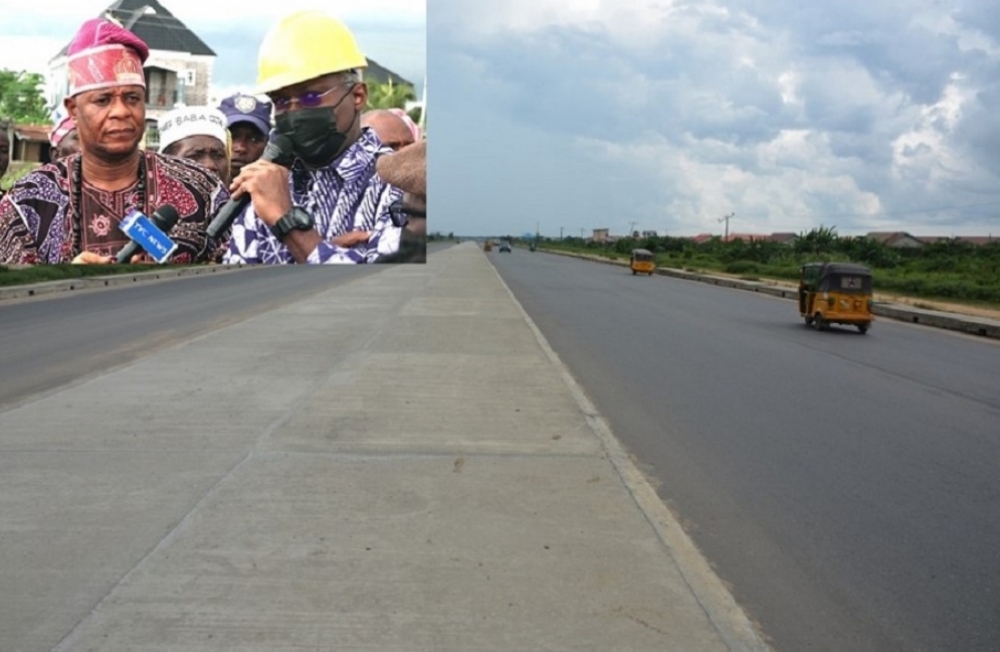
Rehabilitation And Expansion Of Lagos–Badagry Expressway: Funding Substantially Addressed – Fashola The Honourable Minister of Works and Housing, H.E. Babatunde Raji Fashola, SAN during his working inspection tour of the ongoing rehabilitation and expansion of Lagos – Badagry Expressway while fielding questions from journalists remarked, “The main problem on the Lagos –Badagry expressway project was always funding and budget , now that has been substantially addressed with the Nigerian National Petroleum Corporation (NNPC) Road Infrastructure Tax Credit Scheme and the contractor is progressing with the project as we can see.” ‘’The Lagos –Badagry route is part of the Lagos –Abidjan highway which is about 1,048 Kilometres. It is also a very strategic investment Nigeria is making as Nigeria’s contribution to West African Trade and also for the local community,” he explained. During the inspection, while interacting with the Oni Ibereko of Ibereko 1, Oba Israel Adewale Okoya, Fashola urged the King to discourage some members of the communities from carting away construction materials meant for the road embankment for personal use, and to also tell his subjects in the area to stop trading by the road side. The Minister advised the Management of the Contractor handling the road project, China Geo-Engineering Corporation (CGC) Nigeria Limited to employ more staff and get more equipment in order to speed up the progress of work on the road before the weather condition and other factors start to impede the progress on the construction work. One of the Community Chiefs in the area, Oni Ibereko of Ibereko 1, Oba Israel Adewale Okoya speaking earlier said “ The completed portion of the road has brought succor to the people. In the past Badagry to Agbara used to be a journey of about four to five hours but the travel time is now less than 30 minutes, and the contractor keep working on the road , we are so happy. I thank President Muhammadu Buhari on behalf of our own son Babatunde Raji Fashola.” The Oba assured the Minister that he would have meeting with his fellow chiefs and elders in the communities to ensure that the people stop trading by the road side and those carting away building materials would be handed over to the police if they failed to heed warning. ...
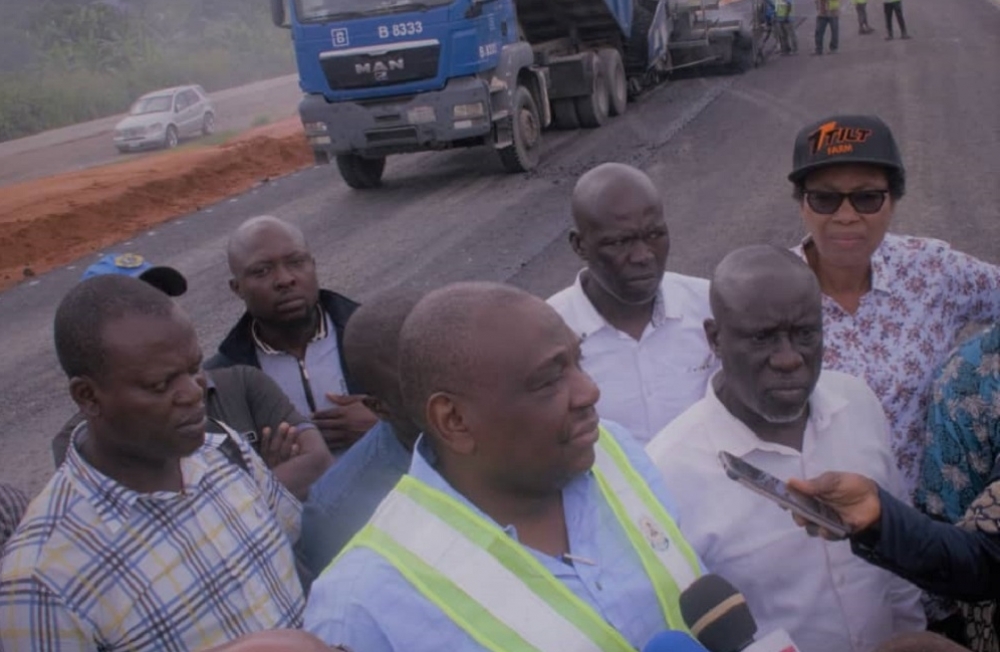
FG Reaffirms Commitment To Complete Idukpani- Itu - Ikot Ekpene Road In 2023 ... East-west Road bridge section iv will be ready soon The Federal Government has reaffirmed its commitment to completing the ongoing dualization and rehabilitation of the Odukpani - Itu - Ikot Ekpene road in Cross River and Akwa Ibom States. The Director, Highway Construction and Rehabilitation of the Federal Ministry of Works and Housing, Engineer Folorunsho Esan made the reaffirmation on Thursday, June 16, 2022 during the inspection of work on the 83 .3 kilometres road being handled by Julius Berger, SERMATEC and CCECC companies. The Director however called on the State governments to prevail on its people who have structures on the right of way to remove them in order not to frustrate the effort of the contractors so that the roads can be delivered on target since the land belongs to the state government. Engineer Essan said, " The challenges are mainly on the right of way, people have their structures on the right of way and this will delay the work, the land belongs to the states, they are the owners of the land, they are the ones that can talk to them so that we can have space to work". He disclosed that funding is not a problem as the road is being funded by the Nigerian National Petroleum Company (NNPC) under the Federal Government Tax Credit Scheme. The Director expressed satisfaction at the pace of work by Julius Berger and SERMATECK companies while urging CCECC to improve on its pace of work. The Federal Controller of Works in Cross River State, Engineer Bassey Nsentip said the contractors have the equipment and are willing to work, adding that the road project include five bridges and several culverts. Engineer Bakari Kehinde and Engineer Joseph Ukpata, site engineers of Julius Berger and SERMATECK respectively also called on the state governments to help in resolving the problem of the right of way. Similarly, Engineer Esan informed newsmen that the bridge on section iv of the east-west road in Akwa Ibom state will be opened to traffic soon He said, " The contractor is working on the bridge so that it can open up traffic in order to work on the other side of the road and they are saying it will take them eight weeks and we are taking them by their words ". He disclosed that the road was under the Ministry of Niger Delta Affairs before it was recently handed over to the Federal Ministry of Works and Housing to continue with the supervision and completion He further said that the east-west road is not yet under the Tax Credit Scheme but hoped that it will be part of it soon. ...
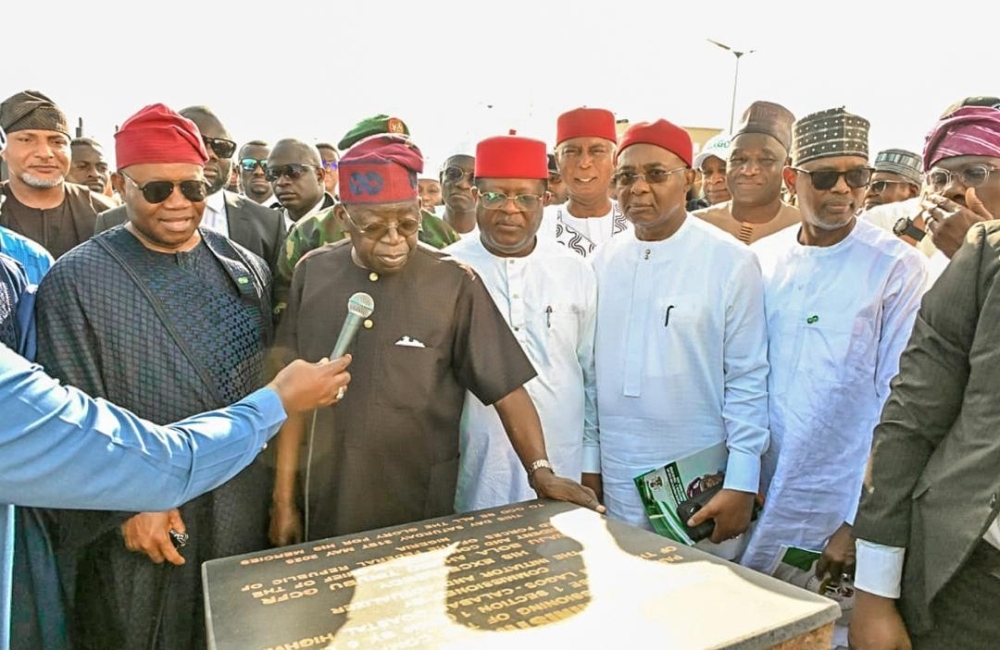
DRIVING NIGERIA’S FUTURE: CELEBRATING TWO YEARS OF TRANSFORMATIVE LEADERSHIP AND THE LAGOS-CALABAR COASTAL HIGHWAY MILESTONE
DRIVING NIGERIA’S FUTURE: CELEBRATING TWO YEARS OF TRANSFORMATIVE LEADERSHIP AND THE LAGOS-CALABAR COASTAL HIGHWAY MILESTONE
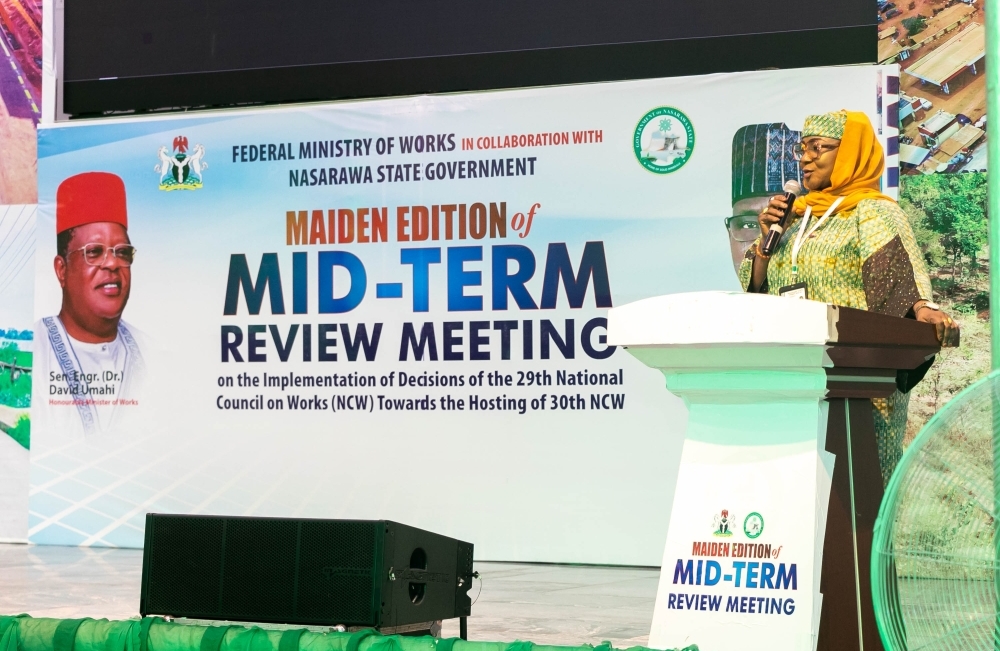
MID -TERM REVIEW MEETING ON THE IMPLIMENTATION OF THE DECISIONS REACHED AT THE 29TH NATIONAL COUNCIL ON WORKS (NCW) DAY 1
MID -TERM REVIEW MEETING ON THE IMPLIMENTATION OF THE DECISIONS REACHED AT THE 29TH NATIONAL COUNCIL ON WORKS (NCW) DAY 1