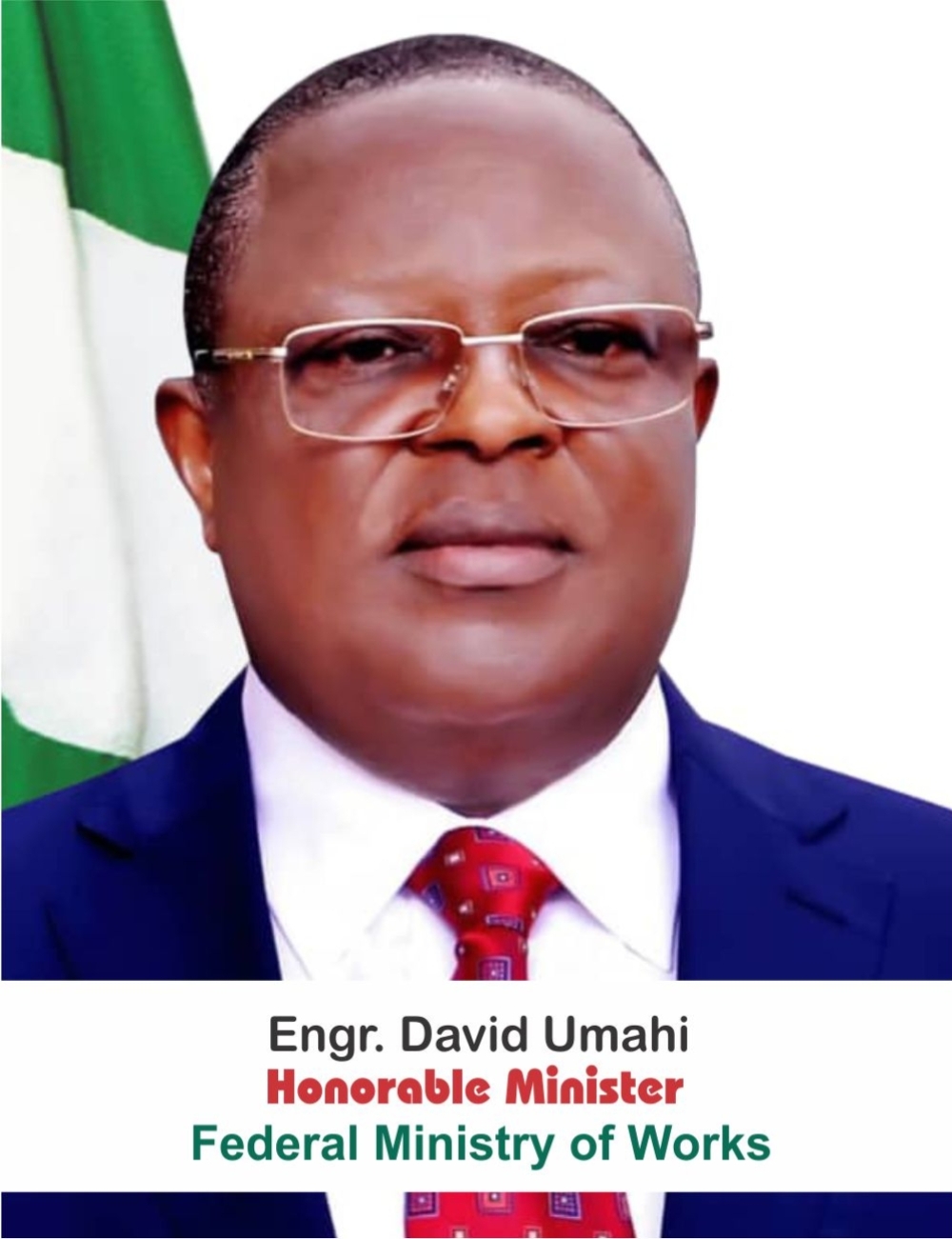
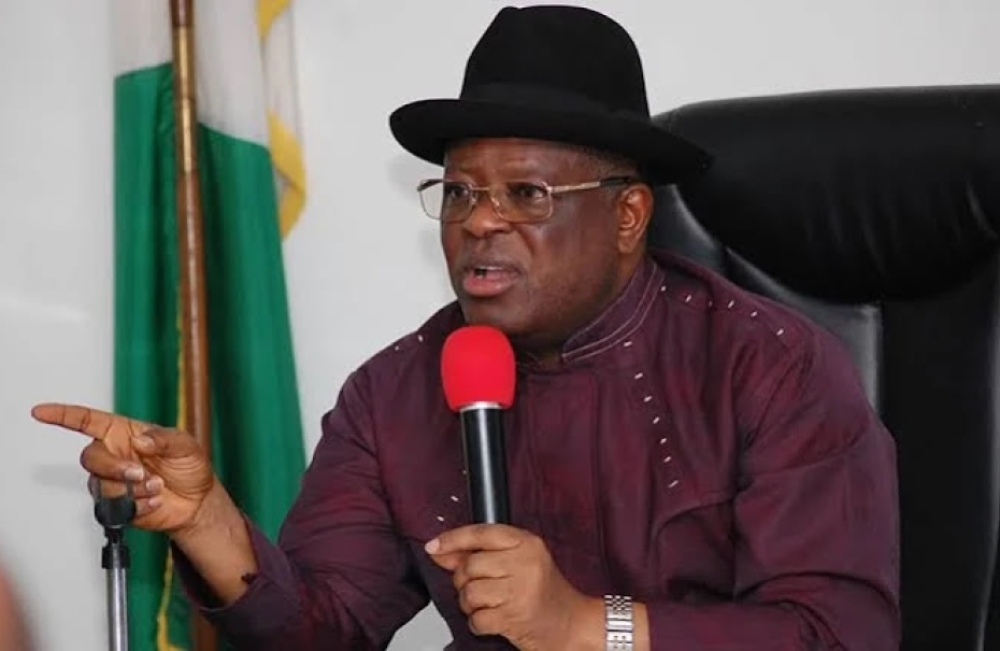
UMAHI ORDERS IMMEDIATE EMERGENCY INTERVENTION ON BENIN-ASABA ROAD, AND SOME OTHER CRITICAL FEDERAL ROADS
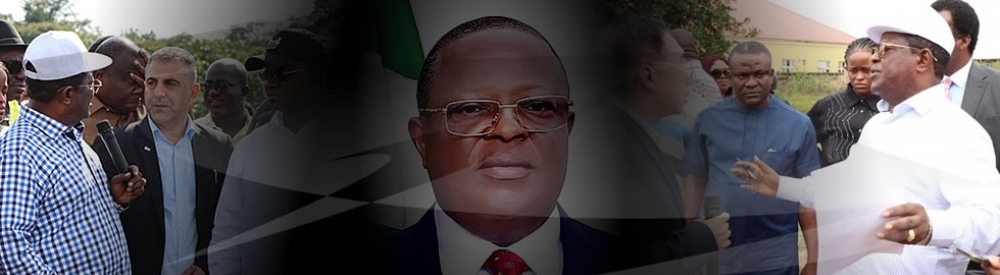
The Honourable Minister of Works, Senator Engr. David Nweze Umahi, CON, has directed the immediate deployment of major contractors to all three sections of the Benin-Asaba Federal Road to restore the failed sections and bring an end to the suffering of motorists and other road users.
This is because, the situation on the concessioned Benin-Asaba Road has reached a point where the overall public interest must take precedence over the existing concession agreement.
Recall that the Honourable Minister of Works was on the Benin-Asaba Road about seven days ago, where he assembled a number of contractors and directed them to prepare for immediate palliative intervention on the affected sections of the road at no cost to the concessionaire. In line with the Concession agreement which requires that before the Federal Government could intervene, the permission of the concessionaire must be required, and that permission was not granted to federal government.
The Minister subsequently proposed three options to the concessionaire, any one of which would have enabled the Federal Government to move in and address the worsening condition of the road. Unfortunately, none of the options was accepted by the concessionaire. Immediately after the Minister left Asaba, the already limited equipment deployed to the road by the concessionaire was further reduced to just one, worsening the situation and increasing the suffering of motorists and other road users.
While the Minister takes responsibility for the concerns and suffering of Nigerians using the road, it is important to state that the concessionaire has also not taken the suffering of Edo people and travelling public sufficiently into consideration by declining all the options put forward by the Federal Government. The concessionaire continues to rely on the terms of the concession agreement entered into by the previous administration, an agreement which weighs heavily against the Federal Government’s ability to intervene quickly in the interest of the public in a situation like this.
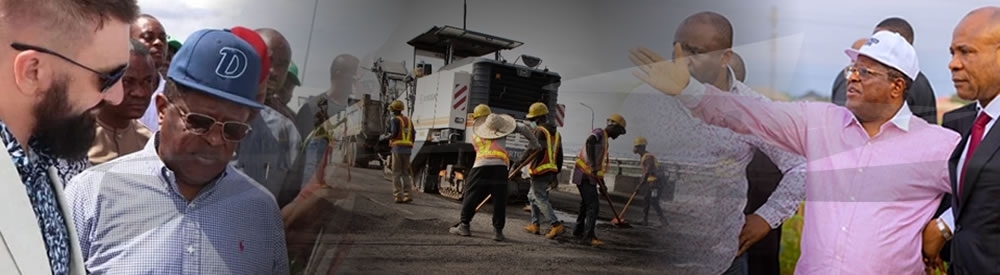
In view of this situation, the Honourable Minister of Works has directed the immediate deployment of major contractors within the corridor to all three sections of the Benin-Asaba Road to restore the failed sections and bring relief to the people, with the cost of the emergency intervention being borne by the Federal Government. The Honourable Minister has also directed immediate redesign of the entire route to be rebuilt with reinforced concrete pavement. The public should therefore take note that immediate action is underway to restore every failed section of the Benin-Asaba Road and subsequently rehabilitate the entire sections of the road using reinforced concrete pavement.
2. On the Benin-Sapele Road:
The Governors of Edo and Delta States, the Niger Delta Development Commission (NDDC), and the Federal Government are currently engaged in interventions on different sections of the road to restore the entire route. While some sections are receiving palliative attention, permanent works are also ongoing on other sections.
3. On Ifaki(Ekiti) - Kabba (Kogi) Road:
The Federal Government is engaging both the contractor; Gamji Nigeria Company Limited, and Dangote PLC on immediate emergency and permanent intervention on the most failed sections of the road, while efforts are being made to financially mobilise the company for more extensive permanent work to commence on the axis.
4. On the Sokoto-Zamfara-Katsina Road: This is an inherited project involving the dualisation of approximately 350 kilometres, which translates to about 700 kilometers. The project has since been redesigned and is currently ongoing and most sections are being reconstructed using reinforced concrete pavement. From the Sokoto axis towards Zamfara, over 50 kilometres of one carriageway have been fully completed with reinforced concrete pavement. From Zamfara to Katsina, some sections have been completed and palliative works have been ordered over the sections that have not been reconstructed. However, the pace of work slowed down due to the redesign and rephasing of the project. The contractors currently engaged on the road include CBC, SETRACO, Triacta and Mothercat. They are being remobilised to return to site and complete the outstanding works.
5. On the Abuja-Kaduna-Zaria-Kano Road: The Federal Government took over the Road project and has currently completed the 118-kilometer mostly on reinforced concrete pavement on lot 1. The Lot 2, which covers 164 kilometres, is over 60 percent completed on reinforced concrete pavement. The Federal Government has also introduced solar-powered light on the entire route of Abuja-Kaduna-Zaria - Kano to improve visibility during night travel and enhance the overall security situation on the route. The entire project is scheduled for completion by December 2026.
6. On Bauchi-Jigawa Road: Triacta Nigeria Limited has been mobilised to carry out the necessary interventions on some failed sections and work is currently ongoing in those failed sections.
7. On the Sagamu-Ore Road: 48 Kilometers of the 96-kilometre road have already been completed using reinforced concrete pavement. There is also a 24-kilometre section around Ore which was abandoned by the previous contractor. The Federal Government has directed its immediate restoration to ensure seamless travel. Solar lights are being installed in the entire 96kilometer of the road.
8. On Flooded Sections on Sagamu-Ore-Benin Road: The flooded sections on the same corridor between Sagamu-Ore-Benin Road, as well as other flooded sections in Ondo State, are being designed for emergency procurement and intervention.
9. On the East-West Road:
Some failed and critical sections, including defective sections of bridges along the East-West Road, are being marked out for emergency procurement and intervention.
10. On the Abuja-Lokoja Road:
Several contracts are ongoing along the route, while the three critical sections currently without contracts are being procured for emergency intervention.
11. On the Lokoja-Benin-Warri Road: The President has directed a complete redesign and procurement of the 400-kilometre dualised route covering the uncompleted sections, using reinforced concrete pavement, while palliative works will continue with the contractors currently on the road.
12. On Carter Bridge:
While the Federal Government continues to undertake weekly maintenance of the underwater elements of the bridge. The site has also been handed over to the contractor, CCECC, for the construction of a permanent new bridge, and work has commenced.
13. On the Third Mainland Bridge:
With regard to the defective underwater structural elements, the Federal Government is at the final stage of determining the appropriate intervention for the repair of the affected elements.
14. On the flooded section of the Lagos-Ibadan Road: Work has commenced on the affected section. There are also several flooded sections on federal roads across the six geopolitical zones, largely occasioned by excessive flooding and the effects of climate change. The Federal Government is identifying and marking these sections for immediate attention.
15. On the First and Second Niger Bridges:
Intervention work is ongoing on the approach roads to the Second Niger Bridge damaged by flood and the work is progressing very well. The First Niger Bridge has been closed to traffic to enable immediate repair works. Contractor has mobilized to site and comprehensive rehabilitation of the bridge has started. From Summit Junction to the First Niger Bridge, massive rehabilitation work is also ongoing using reinforced concrete pavement.
16. The Honourable Minister wishes to commend the President of the Federal Republic of Nigeria, His Excellency Bola Ahmed Tinubu, GCFR, for the massive work being undertaken on the nation’s roads since the administration assumed office in 2023.
17. It is important to state that when the present administration came into office, there was hardly any part of the country where one could travel for an hour without encountering significant challenges on the road network. The condition of the country’s roads and bridges was a major national infrastructure challenge.
18. Rather than shy away from the problem, the administration of President Bola Ahmed Tinubu made the nation’s road network a priority. Virtually every part of the country became a priority, and the Federal Government, through the Federal Ministry of Works, Regional Commissions, Parastatals and other MDA’s has continued to respond extensively to these challenges.
19. The Federal Government is currently working on over 80 percent of the inherited federal roads, an unprecedented level of intervention in the country’s road infrastructure.
20. We ask the public to understand the enormous challenges inherited on our roads and bridges and to take note not only of the problems being solved, but also of the permanent solutions being introduced.
21. A major part of this new approach is the use of reinforced concrete pavement, designed to significantly extend the lifespan of major roads. These roads are expected to last between 50 and 100 years. This means that roads being constructed under President Bola Ahmed Tinubu’s administration are being designed with future generations in mind, rather than simply providing temporary solutions to today’s problems. And this is a complete departure from the past, when roads often deteriorated only a few years after completion, resulting in a continuous cycle of reconstruction and expenditure.
22. We appreciate the concerns of Nigerians over the condition of some roads presently and the difficulties faced by motorists and commuters who cannot move easily from one point to another. Those concerns are legitimate, and the Federal Government is listening. But Nigerians should also recognise the enormous scale of the problems inherited and the amount of work currently being undertaken across the country.
23. It is simply impossible to resolve every road challenge accumulated over many years of neglect by the past administrations within three years. What is important is that the government is working, the government is responding, and the government is putting permanent solutions in place.
25. We appreciate members of the public who send situation reports on failed roads and other infrastructure challenges. These reports help the Ministry identify areas requiring urgent attention. However, we also appeal to members of the public to report when such problems have been addressed, just as they report when they occur.
24. We are aware of situations where photographs and reports of road challenges continue to circulate on social media even after the Federal Government has intervened and resolved the particular problem.
25. However, the Ministry will continue to respond as rapidly as possible to genuine reports and concerns from Nigerians.
26. It is also important to note that we have compiled a comprehensive record of all inherited, ongoing and intervention projects across the country which is available to the public. This is to ensure that Nigerians have access to information on the infrastructure projects being undertaken nationwide and can fully participate in and appreciate the infrastructure revolution of President Bola Ahmed Tinubu’s administration.

UMAHI ORDERS IMMEDIATE EMERGENCY INTERVENTION ON BENIN-ASABA ROAD, AND SOME OTHER CRITICAL FEDERAL ROADS The Honourable Minister of Works, Senator Engr. David Nweze Umahi, CON, has directed the immediate deployment of major contractors to all three sections of the Benin-Asaba Federal Road to restore the failed sections and bring an end to the suffering of motorists and other road users. This is because, the situation on the concessioned Benin-Asaba Road has reached a point where the overall public interest must take precedence over the existing concession agreement. Recall that the Honourable Minister of Works was on the Benin-Asaba Road about seven days ago, where he assembled a number of contractors and directed them to prepare for immediate palliative intervention on the affected sections of the road at no cost to the concessionaire. In line with the Concession agreement which requires that before the Federal Government could intervene, the permission of the concessionaire must be required, and that permission was not granted to federal government. The Minister subsequently proposed three options to the concessionaire, any one of which would have enabled the Federal Government to move in and address the worsening condition of the road. Unfortunately, none of the options was accepted by the concessionaire. Immediately after the Minister left Asaba, the already limited equipment deployed to the road by the concessionaire was further reduced to just one, worsening the situation and increasing the suffering of motorists and other road users. While the Minister takes responsibility for the concerns and suffering of Nigerians using the road, it is important to state that the concessionaire has also not taken the suffering of Edo people and travelling public sufficiently into consideration by declining all the options put forward by the Federal Government. The concessionaire continues to rely on the terms of the concession agreement entered into by the previous administration, an agreement which weighs heavily against the Federal Government’s ability to intervene quickly in the interest of the public in a situation like this. In view of this situation, the Honourable Minister of Works has directed the immediate deployment of major contractors within the corridor to all three sections of the Benin-Asaba Road to restore the failed sections and bring relief to the people, with the cost of the emergency intervention being borne by the Federal Government. The Honourable Minister has also directed immediate redesign of the entire route to be rebuilt with reinforced concrete pavement. The public should therefore take note that immediate action is underway to restore every failed section of the Benin-Asaba Road and subsequently rehabilitate the entire sections of the road using reinforced concrete pavement. 2. On the Benin-Sapele Road: 3. On Ifaki(Ekiti) - Kabba (Kogi) Road: 4. On the Sokoto-Zamfara-Katsina Road: This is an inherited project involving the dualisation of approximately 350 kilometres, which translates to about 700 kilometers. The project has since been redesigned and is currently ongoing and most sections are being reconstructed using reinforced concrete pavement. From the Sokoto axis towards Zamfara, over 50 kilometres of one carriageway have been fully completed with reinforced concrete pavement. From Zamfara to Katsina, some sections have been completed and palliative works have been ordered over the sections that have not been reconstructed. However, the pace of work slowed down due to the redesign and rephasing of the project. The contractors currently engaged on the road include CBC, SETRACO, Triacta and Mothercat. They are being remobilised to return to site and complete the outstanding works. 5. On the Abuja-Kaduna-Zaria-Kano Road: The Federal Government took over the Road project and has currently completed the 118-kilometer mostly on reinforced concrete pavement on lot 1. The Lot 2, which covers 164 kilometres, is over 60 percent completed on reinforced concrete pavement. The Federal Government has also introduced solar-powered light on the entire route of Abuja-Kaduna-Zaria - Kano to improve visibility during night travel and enhance the overall security situation on the route. The entire project is scheduled for completion by December 2026. 6. On Bauchi-Jigawa Road: Triacta Nigeria Limited has been mobilised to carry out the necessary interventions on some failed sections and work is currently ongoing in those failed sections. 7. On the Sagamu-Ore Road: 48 Kilometers of the 96-kilometre road have already been completed using reinforced concrete pavement. There is also a 24-kilometre section around Ore which was abandoned by the previous contractor. The Federal Government has directed its immediate restoration to ensure seamless travel. Solar lights are being installed in the entire 96kilometer of the road. 8. On Flooded Sections on Sagamu-Ore-Benin Road: The flooded sections on the same corridor between Sagamu-Ore-Benin Road, as well as other flooded sections in Ondo State, are being designed for emergency procurement and intervention. 9. On the East-West Road: 10. On the Abuja-Lokoja Road: 11. On the Lokoja-Benin-Warri Road: The President has directed a complete redesign and procurement of the 400-kilometre dualised route covering the uncompleted sections, using reinforced concrete pavement, while palliative works will continue with the contractors currently on the road. 12. On Carter Bridge: 13. On the Third Mainland Bridge: 14. On the flooded section of the Lagos-Ibadan Road: Work has commenced on the affected section. There are also several flooded sections on federal roads across the six geopolitical zones, largely occasioned by excessive flooding and the effects of climate change. The Federal Government is identifying and marking these sections for immediate attention. 15. On the First and Second Niger Bridges: 16. The Honourable Minister wishes to commend the President of the Federal Republic of Nigeria, His Excellency Bola Ahmed Tinubu, GCFR, for the massive work being undertaken on the nation’s roads since the administration assumed office in 2023. 17. It is important to state that when the present administration came into office, there was hardly any part of the country where one could travel for an hour without encountering significant challenges on the road network. The condition of the country’s roads and bridges was a major national infrastructure challenge. 18. Rather than shy away from the problem, the administration of President Bola Ahmed Tinubu made the nation’s road network a priority. Virtually every part of the country became a priority, and the Federal Government, through the Federal Ministry of Works, Regional Commissions, Parastatals and other MDA’s has continued to respond extensively to these challenges. 19. The Federal Government is currently working on over 80 percent of the inherited federal roads, an unprecedented level of intervention in the country’s road infrastructure. 20. We ask the public to understand the enormous challenges inherited on our roads and bridges and to take note not only of the problems being solved, but also of the permanent solutions being introduced. 21. A major part of this new approach is the use of reinforced concrete pavement, designed to significantly extend the lifespan of major roads. These roads are expected to last between 50 and 100 years. This means that roads being constructed under President Bola Ahmed Tinubu’s administration are being designed with future generations in mind, rather than simply providing temporary solutions to today’s problems. And this is a complete departure from the past, when roads often deteriorated only a few years after completion, resulting in a continuous cycle of reconstruction and expenditure. 22. We appreciate the concerns of Nigerians over the condition of some roads presently and the difficulties faced by motorists and commuters who cannot move easily from one point to another. Those concerns are legitimate, and the Federal Government is listening. But Nigerians should also recognise the enormous scale of the problems inherited and the amount of work currently being undertaken across the country. 23. It is simply impossible to resolve every road challenge accumulated over many years of neglect by the past administrations within three years. What is important is that the government is working, the government is responding, and the government is putting permanent solutions in place. 25. We appreciate members of the public who send situation reports on failed roads and other infrastructure challenges. These reports help the Ministry identify areas requiring urgent attention. However, we also appeal to members of the public to report when such problems have been addressed, just as they report when they occur. 24. We are aware of situations where photographs and reports of road challenges continue to circulate on social media even after the Federal Government has intervened and resolved the particular problem.
The Governors of Edo and Delta States, the Niger Delta Development Commission (NDDC), and the Federal Government are currently engaged in interventions on different sections of the road to restore the entire route. While some sections are receiving palliative attention, permanent works are also ongoing on other sections.
The Federal Government is engaging both the contractor; Gamji Nigeria Company Limited, and Dangote PLC on immediate emergency and permanent intervention on the most failed sections of the road, while efforts are being made to financially mobilise the company for more extensive permanent work to commence on the axis.
Some failed and critical sections, including defective sections of bridges along the East-West Road, are being marked out for emergency procurement and intervention.
Several contracts are ongoing along the route, while the three critical sections currently without contracts are being procured for emergency intervention.
While the Federal Government continues to undertake weekly maintenance of the underwater elements of the bridge. The site has also been handed over to the contractor, CCECC, for the construction of a permanent new bridge, and work has commenced.
With regard to the defective underwater structural elements, the Federal Government is at the final stage of determining the appropriate intervention for the repair of the affected elements.
Intervention work is ongoing on the approach roads to the Second Niger Bridge damaged by flood and the work is progressing very well. The First Niger Bridge has been closed to traffic to enable immediate repair works. Contractor has mobilized to site and comprehensive rehabilitation of the bridge has started. From Summit Junction to the First Niger Bridge, massive rehabilitation work is also ongoing using reinforced concrete pavement.
25. However, the Ministry will continue to respond as rapidly as possible to genuine reports and concerns from Nigerians.
26. It is also important to note that we have compiled a comprehensive record of all inherited, ongoing and intervention projects across the country which is available to the public. This is to ensure that Nigerians have access to information on the infrastructure projects being undertaken nationwide and can fully participate in and appreciate the infrastructure revolution of President Bola Ahmed Tinubu’s administration.
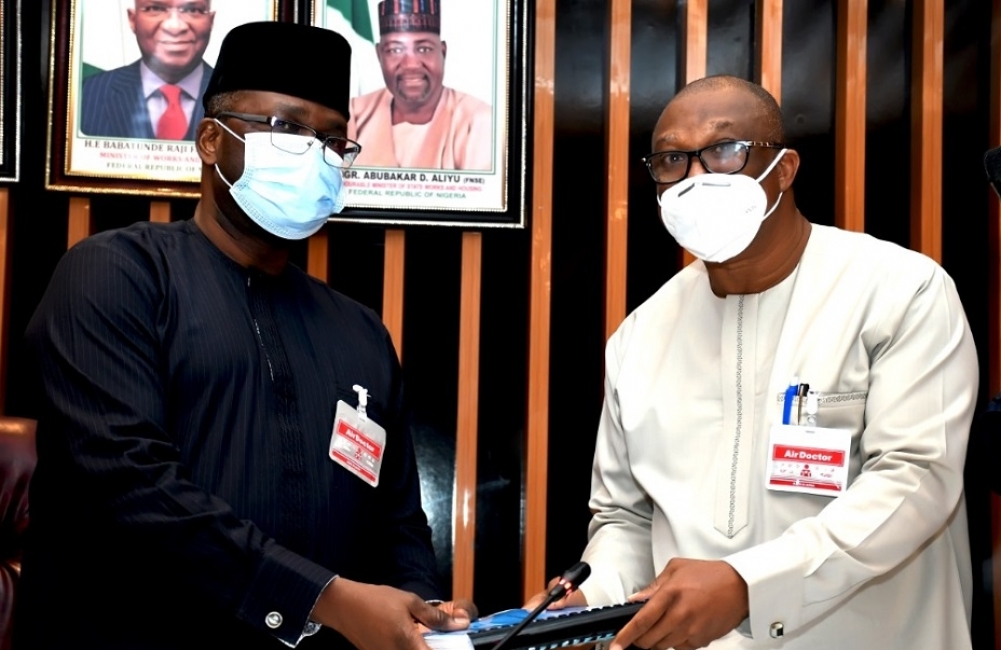
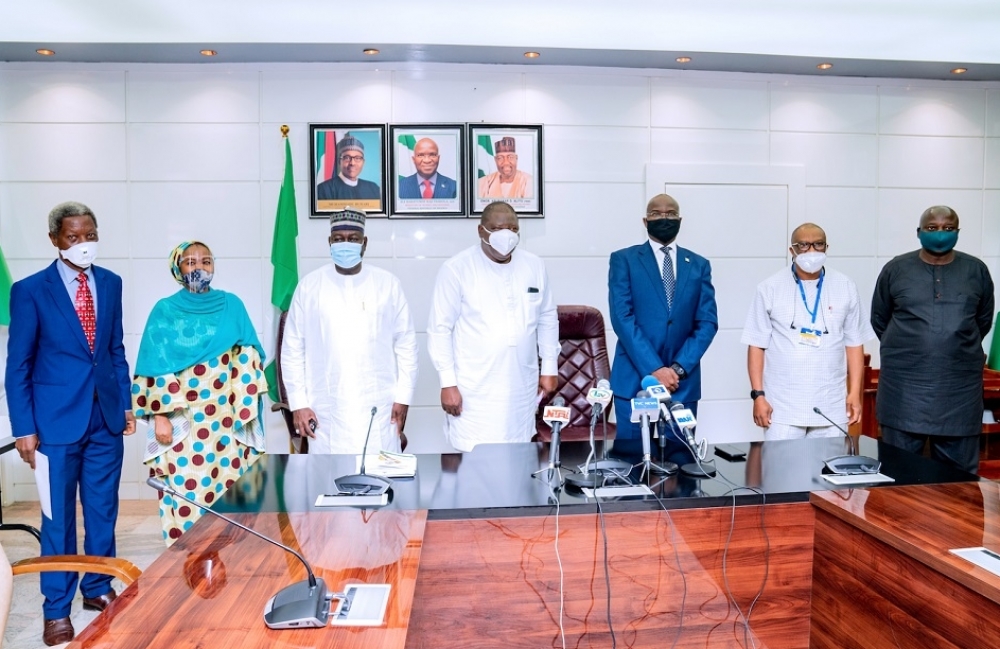
Our Target is to Achieve President’s Next Level Agenda – Umakhihe The new Permanent Secretary of the Federal Ministry of Works and Housing, Ernest Afolabi Umakhihe has promised to actualize President Muhammadu Buhari’s Next Level Agenda. The Permanent Secretary made the promise during the formal handing and taking over ceremony of the affairs of the Ministry between him and the Director Overseeing the Office of the Permanent Secretary, Engr.Yemi Oguntominiyi. The Permanent Secretary said “Mine is to make sure I am able to mobilize all of us to work in achieving the mandate of Mr. President’s Next Level Agenda and of course our Honourable Minister and I promise you, we will all work as a team.” Umakhihe who noted the enormity of work in the Ministry assured all that he was poised to take up the responsibility. He said “I want to thank you for this reception to the Ministry of Works and Housing where I am told that there is a lot of work.” “Like the Minister told me yesterday, when he said I had joined a moving train, I told him no matter how fast that train is, I will make sure I am able to log onto it and then within a short time I will be fully on board and even join the Driver.” Umakhihe called for openness and transparency in official dealings. “ I am open and transparent in all my work and I do hope you will extend same to me in the course of our duties,” he said. Earlier, the Director who was Overseeing the Permanent Secretary’s Office, Engineer Yemi Oguntominiyi and who is the Director Highway Construction and Rehabilitation of the Ministry, expressed happiness and confidence that the new Permanent Secretary would move the Ministry to greater heights due to his robust experience having served in similar capacity in other Federal Government establishments . He said,“Permit me to first of all welcome our new Permanent Secretary who has served in no less important ministries, with a rich pedigree and requisite experience to man the affairs of this ministry, he is undoubtedly suitable for the new assignment.” Oguntominiyi who described the staff of the Ministry as competent, diligent and experienced assured the Permanent Secretary of the unalloyed support and loyalty of management and staff of the Ministry. He thanked his colleagues and the entire staff for the spirit of comradeship and cooperation extended to him while overseeing the office of the Permanent Secretary. Born on the 5th of April, 1964, Umakhihe is a professional accountant of high repute and a core technocrat. He has plied his trade in the public service for years; served in the office of the Accountant General of the Federation, Ministry of Foreign Affairs, Ministry of Defence, Ministry of Finance, Budget and National Planning and Office of the Head of Service of the Federation. The occasion was attended by Directors and Heads of Units of the Ministry. ...
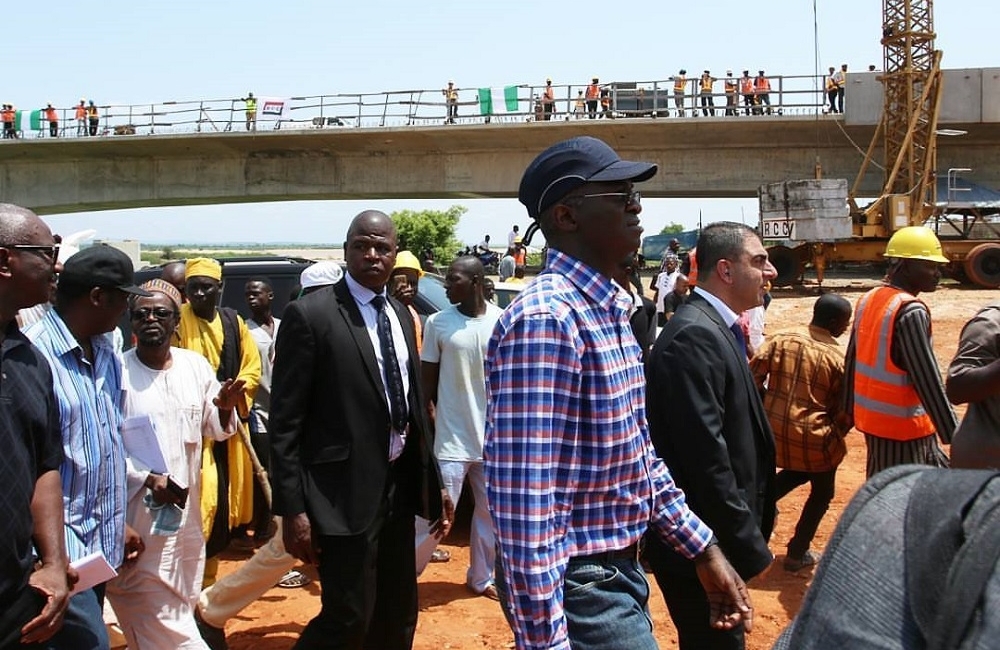
Loko-Oweto Bridge Providing Shorter Route Says Minister The Minister of Works and Housing, Babatunde Raji Fashola, SAN said the construction of the Loko-Oweto Bridge across River Benue has offered shorter route for travellers , reduced travel hours to its barest minimum and facilitated redistribution of wealth in the local communities. Fashola made the remark on the bridge during an inspection tour to the project with his counterparts from ministries of Informational and Culture,Alhaji Lai Mohammed, Special Duties and Inter-Governmental Relations, Senator George Akume. The Loko-Oweto Bridge Mr. Fashola said “Provides a shorter route cutting off about four to five hours. For someone coming from Cross River to Abuja by road, ordinarily will have to go from Calabar to Ikom, Ogoja to Katsina-Ala and then join Markudi, come through Lafia then Keffi and Akwanga into Abuja; but now you have a bifurcation through Oweto to Nasarawa." Apart from the Loko-Oweto bridge project, Fashola said work was going on at the 2nd Niger Bridge, the Ikom Bridge and 37 other bridges across Nigeria were being constructed, repaired or rehabilitated by his Ministry. According to the Minister of Works and Housing some of the bridges being constructed, rehabilitated and repaired were: the 3rd Mainland Bridge in Lagos, the Murtala Mohammed Bridge in Koton Karfi and the Isaac Boro Bridge in Port Harcourt. Others were Chanchangi Bridge in Niger state, linking Niger and Ilorin and the Tambuwara Bridge in Kano. Mr. Fashola further said “This government in spite of very limited resources and having to borrow is simply doing almost the near impossible in terms of infrastructure. Mr. President continues to give his support and commitment to infrastructure. His understanding of the purpose of infrastructure for growth and development is very clear”. Speaking earlier the Minister of Information and Culture, Alhaji Lai Mohammed was enthusiastic that with the completion of the bridge, the South-South and the South-East will be connected to the North and this would save five hours of travel time on the road. He said Benue state would automatically be the food storage of the Federation by drawing people from every part of the nation while generating economic growth on one hand it would advance social cohesion on the other hand. On foreign loans, Mohammed said, "Yes we are taking loans.We are also making judicious use of the loans. And while these loans have a life span of 20-50 years, the roads we are constructing will have 50-60years lifespan and outlive many of us”. Also lending his voice, the Minister for Special Duties and Inter-governmental Relations, Senator George Akume urged the people to maintain peace and order among the various communities where the project is sited owing to the fact that the project was a huge one intending to serve not just Benue and Nasarawa states but also the larger Nigerian population. The Emir of Loko, HRH Alhaji Abubakar Ahmed Sabo Sarikin Loko and Second-Class Chief of Agatu HRH Chief Godwin Ngbede Onah expressed appreciation to the Federal Government over the construction of the Loko- Oweto Bridge which had impacted on their lives positively. The Loko- Oweto Bridge Project is 97.37% completed. ...
Fashola Charges Universities On Preparation Of Young People For Leadership * As Committee of Vice Chancellors hails FG, Minister over interventions in 44 tertiary institutions, infrastructure development across the country * Minister describes those who set up universities as “casting a stone of faith into the future” * Also charges them on research and data collation to assist governments and businesses The Committee of Vice Chancellors of Nigeria has commended the Federal Government over interventions in 44 Federal tertiary institutions as well as the on-going infrastructure development across the country just as the Minister of Works and Housing, Mr. Babatunde Fashola SAN charged the nation’s universities on the need to produce men and women of character worthy to take over the leadership of the country. Fashola, who spoke when the Committee of Vice Chancellors/Association of Vice Chancellors of Nigerian Universities (CVC/AVCNU), paid him a courtesy visit, also stressed the importance of universities as a place where the characters of young people were finally shaped in readiness for leadership. Stressing the importance of universities as platforms for character molding, among other functions, the Minister, who described investment in universities as “casting a stone of faith into the future”, said it was an investment that always yielded very enormous profit for any nation. “It is a place where young boys and girls transit to becoming young men and women and that is where their characters are finally shaped in readiness to take over the leadership of the country”, he said adding that as overseers of the institutions, the Vice Chancellors have daunting tasks to accomplish. Assuring the University dons of government support to ensure success, Fashola declared, “Somebody like me, I am a product of an investment of those who set up the University of Benin. Also there are many Nigerians who, like me, are products of that act of faith that happened in the 1970s”. “I sit here today, and there are Senators, Senate Presidents and so many other professionals who were also products of that investment. And what is true of the University of Benin is also true of all other universities across the country”, he said. The Minister, who also charged the Universities on the collation and use of data, said the world was now chasing data and there was, therefore, need for the universities to put in useful form the data they have accumulated over the years to assist governments and businesses in the country in national development. “The world is chasing data, collating data. This data is sitting in our universities. Almost every lecturer I know asks students to write one research paper or the other. The data is there, but can we put it in a useful form to inform our governments, to inform our businesses, to inform our society?” he said. Recalling his years as Visitor to the Lagos State University (LASU), Fashola, who noted that they had meetings which they christened “The Town and Gown”, with the Town representing Government and the Gown representing Universities, said his administration gained a lot in terms of research outcomes and development. “It was a time when we had lectures, symposia, not just in LASU but in other universities”, he said adding that the University of Lagos Consult was one of the state government registered consultants which his administration used to do a lot of research and a lot of consultancy work. The Minister, however, expressed regrets that not enough universities were investing in such consultancy today pointing out that there are many areas in which Nigerian universities could do research and consultancy such as on general elections and other political issues arising from elections across the country. Noting that every government would be interested in such research results, the Minister asked, “How many universities have hosted Presidential Debates? You have the auditorium, you have the students, If you put it together you will have sponsors”, adding that governments and the universities could work together to ensure that the right persons were elected into office. On collaboration between his Ministry and the Universities in infrastructure development in tertiary institutions, Fashola, who expressed readiness to work with the institutions to strengthen their infrastructure, however, urged them to come up with a structured plan adding that any such plan that would ensure security of investment would attract investors. Assuring the university dons of his readiness to collaborate with them in infrastructure development in the tertiary institutions, Fashola asked them to develop a plan for such investment adding, “When there is a plan, money will come”. “Let us start from hostels. Students are paying something or the other, but is there a structured plan to ensure that there is land, to ensure that the land is safe, to do a survey about students’ willingness to pay. What is the average size of rooms available? What is the market cost, transport cost that is safe? Those are the things that any investor would want to know”, he said adding that an investor would also be interested in knowing that the academic year would not be disrupted by strikes of either the academic or non-academic staff. Expressing confidence that investments in infrastructure would happen in universities in the country, Fashola declared, “I offer myself willing and ready to work with you along this line anytime”, adding that the Ministry was currently in 44 tertiary institutions owned by the Federal Government, both Universities, Colleges of Education and Polytechnics building their internal roads. “Some of those roads have not been touched for 20 to 30 year”, the Minister noted expressing dismay, however, that when people complain about the budget for education, they do not put into account such investment as road rehabilitations and other interventions from other sectors outside Education. He told his guests, “We want the universities to come out and say, no this is also investment in education. So it is not only what you see in the Ministry of Education that is the sum total of the investment in Education”, adding that there is a lot that the universities could do Fashola also decried the proliferation and abuse of Honorary Degrees by universities in the country recalling that in his eight-year tenure as Governor of Lagos State and Visitor at LASU one of the things his administration did was to put on hold the award of any Honorary Degree for about two to three years. “We said, look we are going to be different and for two or three years we did not award any Honorary Degree because truly the idea of Honorary Degree is an important building block of society and once we throw those blocks away or make them unviable then the purpose for it is lost”, the Minister said. He recalled. “In my eight years in office I had 17 offers and I didn’t take one. I told them to wait until when I was out of office and if they still find me worthy they should then come. And when I was out of office only one came back”, adding, “The point I want to make is that we have to encourage our children to work hard. What have these honorees of the universities done to deserve the honour? What of those who have become undeserving, will you go back and tell them to return the degrees, that they don’t deserve it anymore?” Noting that there was need to have an acceptable version of the History of Nigeria, Fashola charged the Committee to assemble the many professors of History in the universities and assign the task to them to produce such a version that would be a true History of Nigeria, acceptable by all Nigerians, including the Historians themselves. “There is one thing you can do for Nigeria. Bring all these people together to start work on one acceptable version of Nigeria’s history. It is that version that can be thought in primary and secondary schools. Because that is what is happening in other countries. They fought wars too but they have written one final version of their history. When you have written that final version it will be thought in our primary and secondary schools”, the Minister said. Earlier, in his opening remarks, the Chairman of the Committee, Professor Yakubu Aboki Ochefu, said the Committee had come to express gratitude to the Minister for the interventions in 44 tertiary institutions across the country adding that it was the first time government was undertaking rehabilitation of roads in the institutions. Professor Ochefu, who also informed the Minister that the Committee was preparing a Compendium of Achievements as part of programmes being lined up to celebrate its 60th anniversary in October this year said the Committee had prepared a questionnaire for the Minister to fill that would give them an insight into his infrastructure development at the Lagos State University while he was Governor of Lagos State, which would form part of the Compendium. Giving a brief background of the Committee, the Chairman said it was established in 1962 with eight universities, including the Universities of Lagos and Ibadan as members adding that the membership now stood at 174 consisting of 46 Federal, 48 State and 79 private universities. He noted that the Committee was working to improve the number of women Vice Chancellors in the country. Professor Ochefu, who later handed a copy of the questionnaire to the Minister explained further, “We will devote a section of the Compendium to share with you how you turned the fortunes of the Lagos State University (LASU) during your tenure as Governor of Lagos State and Visitor to the University. Also present at the occasion were the Minister of State, Engr. Abubakar Aliyu, Acting Permanent Secretary, Engr. Yemi Oguntominiyi, Directors, Special Advisers and other top Ministry functionaries while on the Committee’s side were three other executives including the Secretary General of the Committee. ...
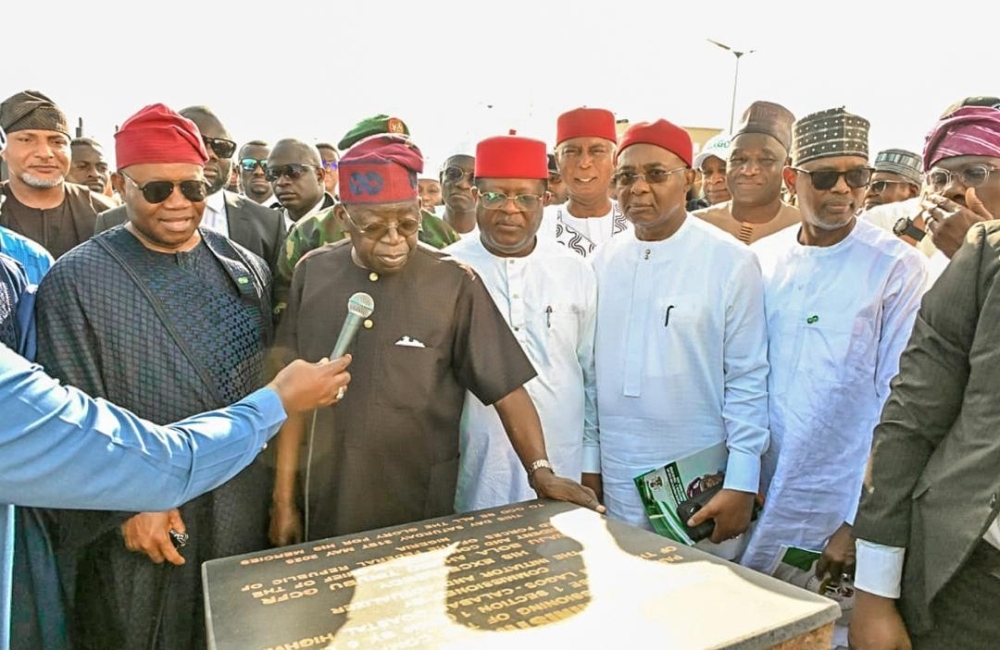
DRIVING NIGERIA’S FUTURE: CELEBRATING TWO YEARS OF TRANSFORMATIVE LEADERSHIP AND THE LAGOS-CALABAR COASTAL HIGHWAY MILESTONE
DRIVING NIGERIA’S FUTURE: CELEBRATING TWO YEARS OF TRANSFORMATIVE LEADERSHIP AND THE LAGOS-CALABAR COASTAL HIGHWAY MILESTONE
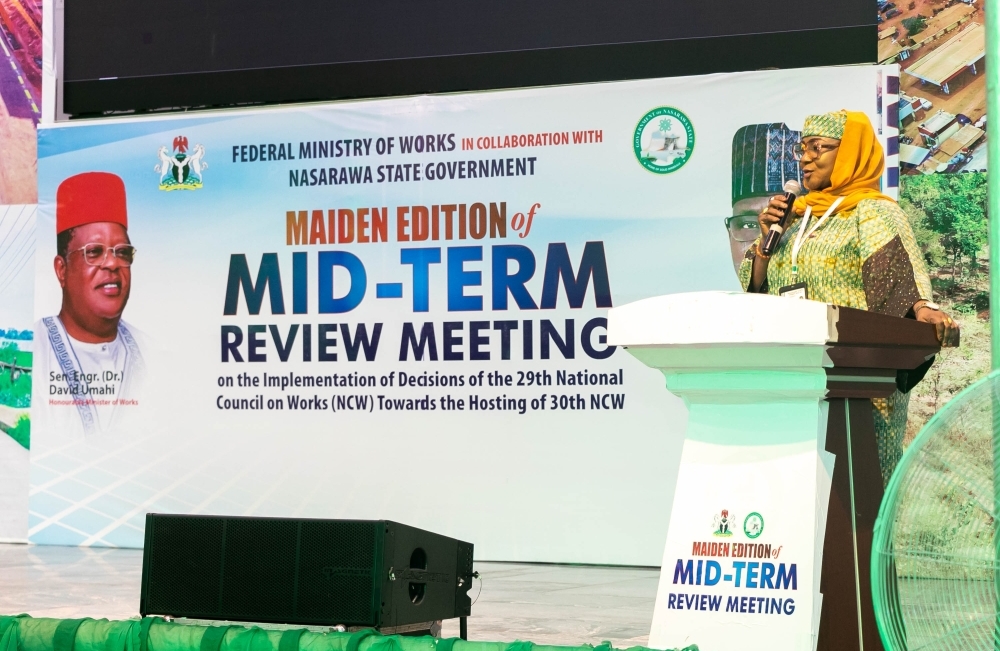
MID -TERM REVIEW MEETING ON THE IMPLIMENTATION OF THE DECISIONS REACHED AT THE 29TH NATIONAL COUNCIL ON WORKS (NCW) DAY 1
MID -TERM REVIEW MEETING ON THE IMPLIMENTATION OF THE DECISIONS REACHED AT THE 29TH NATIONAL COUNCIL ON WORKS (NCW) DAY 1