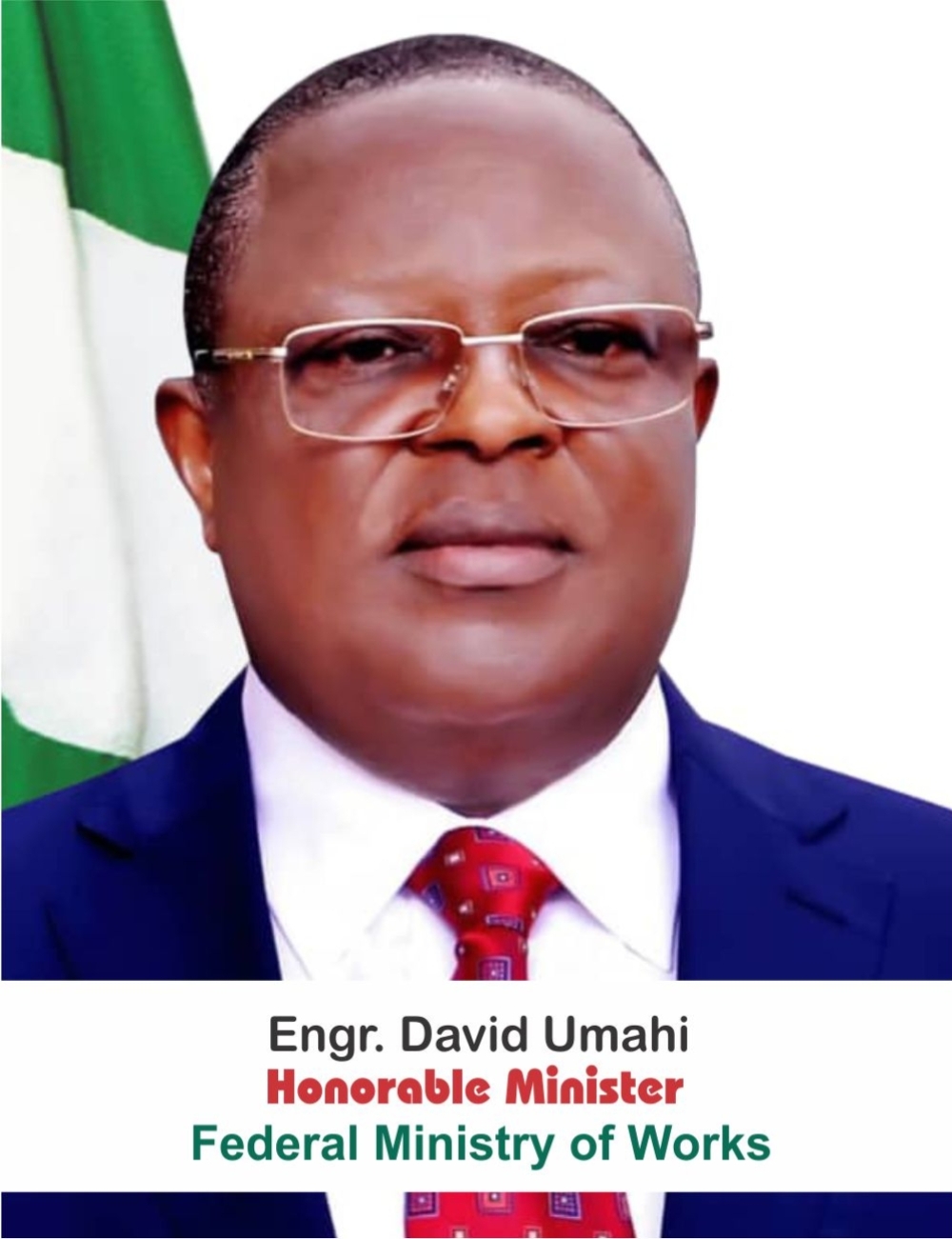
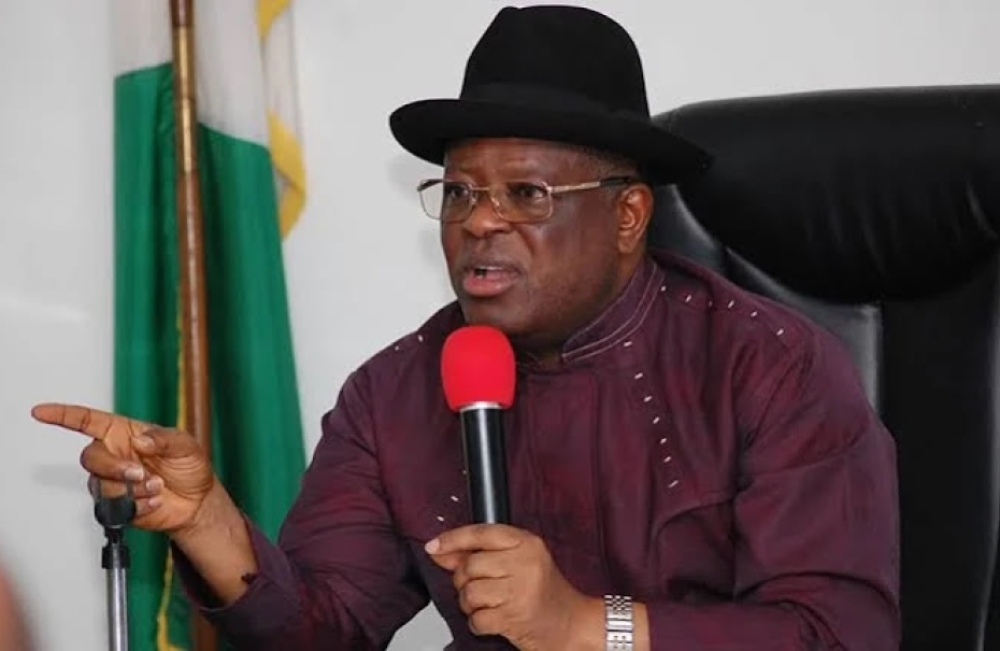
UMAHI ORDERS IMMEDIATE EMERGENCY INTERVENTION ON BENIN-ASABA ROAD, AND SOME OTHER CRITICAL FEDERAL ROADS
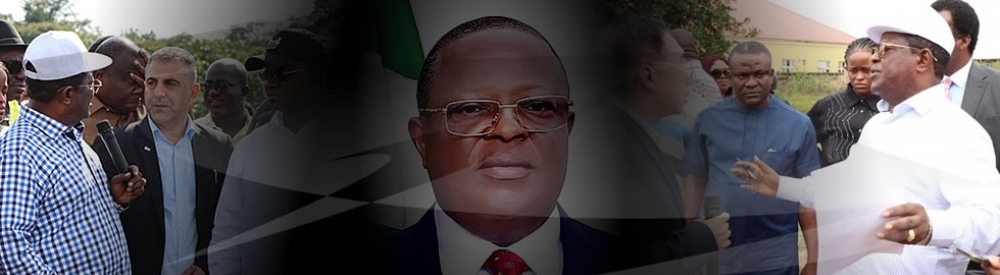
The Honourable Minister of Works, Senator Engr. David Nweze Umahi, CON, has directed the immediate deployment of major contractors to all three sections of the Benin-Asaba Federal Road to restore the failed sections and bring an end to the suffering of motorists and other road users.
This is because, the situation on the concessioned Benin-Asaba Road has reached a point where the overall public interest must take precedence over the existing concession agreement.
Recall that the Honourable Minister of Works was on the Benin-Asaba Road about seven days ago, where he assembled a number of contractors and directed them to prepare for immediate palliative intervention on the affected sections of the road at no cost to the concessionaire. In line with the Concession agreement which requires that before the Federal Government could intervene, the permission of the concessionaire must be required, and that permission was not granted to federal government.
The Minister subsequently proposed three options to the concessionaire, any one of which would have enabled the Federal Government to move in and address the worsening condition of the road. Unfortunately, none of the options was accepted by the concessionaire. Immediately after the Minister left Asaba, the already limited equipment deployed to the road by the concessionaire was further reduced to just one, worsening the situation and increasing the suffering of motorists and other road users.
While the Minister takes responsibility for the concerns and suffering of Nigerians using the road, it is important to state that the concessionaire has also not taken the suffering of Edo people and travelling public sufficiently into consideration by declining all the options put forward by the Federal Government. The concessionaire continues to rely on the terms of the concession agreement entered into by the previous administration, an agreement which weighs heavily against the Federal Government’s ability to intervene quickly in the interest of the public in a situation like this.
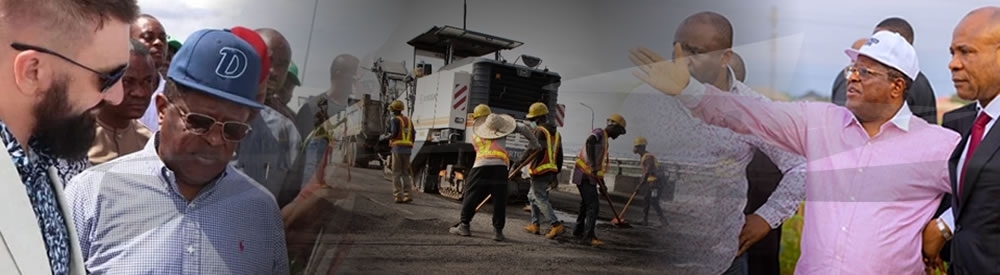
In view of this situation, the Honourable Minister of Works has directed the immediate deployment of major contractors within the corridor to all three sections of the Benin-Asaba Road to restore the failed sections and bring relief to the people, with the cost of the emergency intervention being borne by the Federal Government. The Honourable Minister has also directed immediate redesign of the entire route to be rebuilt with reinforced concrete pavement. The public should therefore take note that immediate action is underway to restore every failed section of the Benin-Asaba Road and subsequently rehabilitate the entire sections of the road using reinforced concrete pavement.
2. On the Benin-Sapele Road:
The Governors of Edo and Delta States, the Niger Delta Development Commission (NDDC), and the Federal Government are currently engaged in interventions on different sections of the road to restore the entire route. While some sections are receiving palliative attention, permanent works are also ongoing on other sections.
3. On Ifaki(Ekiti) - Kabba (Kogi) Road:
The Federal Government is engaging both the contractor; Gamji Nigeria Company Limited, and Dangote PLC on immediate emergency and permanent intervention on the most failed sections of the road, while efforts are being made to financially mobilise the company for more extensive permanent work to commence on the axis.
4. On the Sokoto-Zamfara-Katsina Road: This is an inherited project involving the dualisation of approximately 350 kilometres, which translates to about 700 kilometers. The project has since been redesigned and is currently ongoing and most sections are being reconstructed using reinforced concrete pavement. From the Sokoto axis towards Zamfara, over 50 kilometres of one carriageway have been fully completed with reinforced concrete pavement. From Zamfara to Katsina, some sections have been completed and palliative works have been ordered over the sections that have not been reconstructed. However, the pace of work slowed down due to the redesign and rephasing of the project. The contractors currently engaged on the road include CBC, SETRACO, Triacta and Mothercat. They are being remobilised to return to site and complete the outstanding works.
5. On the Abuja-Kaduna-Zaria-Kano Road: The Federal Government took over the Road project and has currently completed the 118-kilometer mostly on reinforced concrete pavement on lot 1. The Lot 2, which covers 164 kilometres, is over 60 percent completed on reinforced concrete pavement. The Federal Government has also introduced solar-powered light on the entire route of Abuja-Kaduna-Zaria - Kano to improve visibility during night travel and enhance the overall security situation on the route. The entire project is scheduled for completion by December 2026.
6. On Bauchi-Jigawa Road: Triacta Nigeria Limited has been mobilised to carry out the necessary interventions on some failed sections and work is currently ongoing in those failed sections.
7. On the Sagamu-Ore Road: 48 Kilometers of the 96-kilometre road have already been completed using reinforced concrete pavement. There is also a 24-kilometre section around Ore which was abandoned by the previous contractor. The Federal Government has directed its immediate restoration to ensure seamless travel. Solar lights are being installed in the entire 96kilometer of the road.
8. On Flooded Sections on Sagamu-Ore-Benin Road: The flooded sections on the same corridor between Sagamu-Ore-Benin Road, as well as other flooded sections in Ondo State, are being designed for emergency procurement and intervention.
9. On the East-West Road:
Some failed and critical sections, including defective sections of bridges along the East-West Road, are being marked out for emergency procurement and intervention.
10. On the Abuja-Lokoja Road:
Several contracts are ongoing along the route, while the three critical sections currently without contracts are being procured for emergency intervention.
11. On the Lokoja-Benin-Warri Road: The President has directed a complete redesign and procurement of the 400-kilometre dualised route covering the uncompleted sections, using reinforced concrete pavement, while palliative works will continue with the contractors currently on the road.
12. On Carter Bridge:
While the Federal Government continues to undertake weekly maintenance of the underwater elements of the bridge. The site has also been handed over to the contractor, CCECC, for the construction of a permanent new bridge, and work has commenced.
13. On the Third Mainland Bridge:
With regard to the defective underwater structural elements, the Federal Government is at the final stage of determining the appropriate intervention for the repair of the affected elements.
14. On the flooded section of the Lagos-Ibadan Road: Work has commenced on the affected section. There are also several flooded sections on federal roads across the six geopolitical zones, largely occasioned by excessive flooding and the effects of climate change. The Federal Government is identifying and marking these sections for immediate attention.
15. On the First and Second Niger Bridges:
Intervention work is ongoing on the approach roads to the Second Niger Bridge damaged by flood and the work is progressing very well. The First Niger Bridge has been closed to traffic to enable immediate repair works. Contractor has mobilized to site and comprehensive rehabilitation of the bridge has started. From Summit Junction to the First Niger Bridge, massive rehabilitation work is also ongoing using reinforced concrete pavement.
16. The Honourable Minister wishes to commend the President of the Federal Republic of Nigeria, His Excellency Bola Ahmed Tinubu, GCFR, for the massive work being undertaken on the nation’s roads since the administration assumed office in 2023.
17. It is important to state that when the present administration came into office, there was hardly any part of the country where one could travel for an hour without encountering significant challenges on the road network. The condition of the country’s roads and bridges was a major national infrastructure challenge.
18. Rather than shy away from the problem, the administration of President Bola Ahmed Tinubu made the nation’s road network a priority. Virtually every part of the country became a priority, and the Federal Government, through the Federal Ministry of Works, Regional Commissions, Parastatals and other MDA’s has continued to respond extensively to these challenges.
19. The Federal Government is currently working on over 80 percent of the inherited federal roads, an unprecedented level of intervention in the country’s road infrastructure.
20. We ask the public to understand the enormous challenges inherited on our roads and bridges and to take note not only of the problems being solved, but also of the permanent solutions being introduced.
21. A major part of this new approach is the use of reinforced concrete pavement, designed to significantly extend the lifespan of major roads. These roads are expected to last between 50 and 100 years. This means that roads being constructed under President Bola Ahmed Tinubu’s administration are being designed with future generations in mind, rather than simply providing temporary solutions to today’s problems. And this is a complete departure from the past, when roads often deteriorated only a few years after completion, resulting in a continuous cycle of reconstruction and expenditure.
22. We appreciate the concerns of Nigerians over the condition of some roads presently and the difficulties faced by motorists and commuters who cannot move easily from one point to another. Those concerns are legitimate, and the Federal Government is listening. But Nigerians should also recognise the enormous scale of the problems inherited and the amount of work currently being undertaken across the country.
23. It is simply impossible to resolve every road challenge accumulated over many years of neglect by the past administrations within three years. What is important is that the government is working, the government is responding, and the government is putting permanent solutions in place.
25. We appreciate members of the public who send situation reports on failed roads and other infrastructure challenges. These reports help the Ministry identify areas requiring urgent attention. However, we also appeal to members of the public to report when such problems have been addressed, just as they report when they occur.
24. We are aware of situations where photographs and reports of road challenges continue to circulate on social media even after the Federal Government has intervened and resolved the particular problem.
25. However, the Ministry will continue to respond as rapidly as possible to genuine reports and concerns from Nigerians.
26. It is also important to note that we have compiled a comprehensive record of all inherited, ongoing and intervention projects across the country which is available to the public. This is to ensure that Nigerians have access to information on the infrastructure projects being undertaken nationwide and can fully participate in and appreciate the infrastructure revolution of President Bola Ahmed Tinubu’s administration.

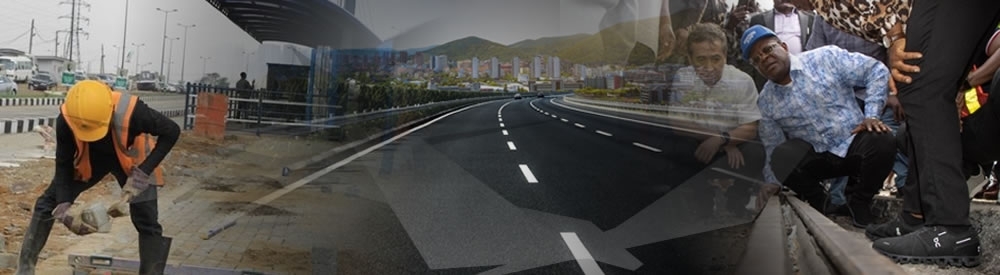
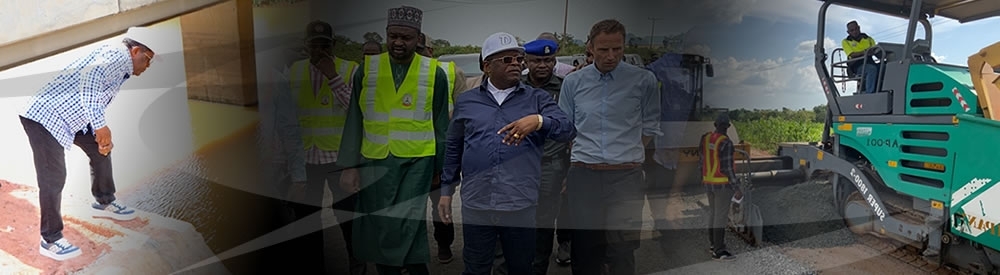
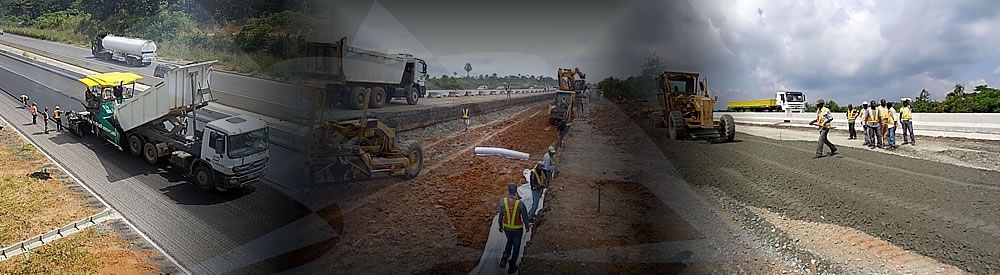
UMAHI ORDERS IMMEDIATE EMERGENCY INTERVENTION ON BENIN-ASABA ROAD, AND SOME OTHER CRITICAL FEDERAL ROADS The Honourable Minister of Works, Senator Engr. David Nweze Umahi, CON, has directed the immediate deployment of major contractors to all three sections of the Benin-Asaba Federal Road to restore the failed sections and bring an end to the suffering of motorists and other road users. This is because, the situation on the concessioned Benin-Asaba Road has reached a point where the overall public interest must take precedence over the existing concession agreement. Recall that the Honourable Minister of Works was on the Benin-Asaba Road about seven days ago, where he assembled a number of contractors and directed them to prepare for immediate palliative intervention on the affected sections of the road at no cost to the concessionaire. In line with the Concession agreement which requires that before the Federal Government could intervene, the permission of the concessionaire must be required, and that permission was not granted to federal government. The Minister subsequently proposed three options to the concessionaire, any one of which would have enabled the Federal Government to move in and address the worsening condition of the road. Unfortunately, none of the options was accepted by the concessionaire. Immediately after the Minister left Asaba, the already limited equipment deployed to the road by the concessionaire was further reduced to just one, worsening the situation and increasing the suffering of motorists and other road users. While the Minister takes responsibility for the concerns and suffering of Nigerians using the road, it is important to state that the concessionaire has also not taken the suffering of Edo people and travelling public sufficiently into consideration by declining all the options put forward by the Federal Government. The concessionaire continues to rely on the terms of the concession agreement entered into by the previous administration, an agreement which weighs heavily against the Federal Government’s ability to intervene quickly in the interest of the public in a situation like this. In view of this situation, the Honourable Minister of Works has directed the immediate deployment of major contractors within the corridor to all three sections of the Benin-Asaba Road to restore the failed sections and bring relief to the people, with the cost of the emergency intervention being borne by the Federal Government. The Honourable Minister has also directed immediate redesign of the entire route to be rebuilt with reinforced concrete pavement. The public should therefore take note that immediate action is underway to restore every failed section of the Benin-Asaba Road and subsequently rehabilitate the entire sections of the road using reinforced concrete pavement. 2. On the Benin-Sapele Road: 3. On Ifaki(Ekiti) - Kabba (Kogi) Road: 4. On the Sokoto-Zamfara-Katsina Road: This is an inherited project involving the dualisation of approximately 350 kilometres, which translates to about 700 kilometers. The project has since been redesigned and is currently ongoing and most sections are being reconstructed using reinforced concrete pavement. From the Sokoto axis towards Zamfara, over 50 kilometres of one carriageway have been fully completed with reinforced concrete pavement. From Zamfara to Katsina, some sections have been completed and palliative works have been ordered over the sections that have not been reconstructed. However, the pace of work slowed down due to the redesign and rephasing of the project. The contractors currently engaged on the road include CBC, SETRACO, Triacta and Mothercat. They are being remobilised to return to site and complete the outstanding works. 5. On the Abuja-Kaduna-Zaria-Kano Road: The Federal Government took over the Road project and has currently completed the 118-kilometer mostly on reinforced concrete pavement on lot 1. The Lot 2, which covers 164 kilometres, is over 60 percent completed on reinforced concrete pavement. The Federal Government has also introduced solar-powered light on the entire route of Abuja-Kaduna-Zaria - Kano to improve visibility during night travel and enhance the overall security situation on the route. The entire project is scheduled for completion by December 2026. 6. On Bauchi-Jigawa Road: Triacta Nigeria Limited has been mobilised to carry out the necessary interventions on some failed sections and work is currently ongoing in those failed sections. 7. On the Sagamu-Ore Road: 48 Kilometers of the 96-kilometre road have already been completed using reinforced concrete pavement. There is also a 24-kilometre section around Ore which was abandoned by the previous contractor. The Federal Government has directed its immediate restoration to ensure seamless travel. Solar lights are being installed in the entire 96kilometer of the road. 8. On Flooded Sections on Sagamu-Ore-Benin Road: The flooded sections on the same corridor between Sagamu-Ore-Benin Road, as well as other flooded sections in Ondo State, are being designed for emergency procurement and intervention. 9. On the East-West Road: 10. On the Abuja-Lokoja Road: 11. On the Lokoja-Benin-Warri Road: The President has directed a complete redesign and procurement of the 400-kilometre dualised route covering the uncompleted sections, using reinforced concrete pavement, while palliative works will continue with the contractors currently on the road. 12. On Carter Bridge: 13. On the Third Mainland Bridge: 14. On the flooded section of the Lagos-Ibadan Road: Work has commenced on the affected section. There are also several flooded sections on federal roads across the six geopolitical zones, largely occasioned by excessive flooding and the effects of climate change. The Federal Government is identifying and marking these sections for immediate attention. 15. On the First and Second Niger Bridges: 16. The Honourable Minister wishes to commend the President of the Federal Republic of Nigeria, His Excellency Bola Ahmed Tinubu, GCFR, for the massive work being undertaken on the nation’s roads since the administration assumed office in 2023. 17. It is important to state that when the present administration came into office, there was hardly any part of the country where one could travel for an hour without encountering significant challenges on the road network. The condition of the country’s roads and bridges was a major national infrastructure challenge. 18. Rather than shy away from the problem, the administration of President Bola Ahmed Tinubu made the nation’s road network a priority. Virtually every part of the country became a priority, and the Federal Government, through the Federal Ministry of Works, Regional Commissions, Parastatals and other MDA’s has continued to respond extensively to these challenges. 19. The Federal Government is currently working on over 80 percent of the inherited federal roads, an unprecedented level of intervention in the country’s road infrastructure. 20. We ask the public to understand the enormous challenges inherited on our roads and bridges and to take note not only of the problems being solved, but also of the permanent solutions being introduced. 21. A major part of this new approach is the use of reinforced concrete pavement, designed to significantly extend the lifespan of major roads. These roads are expected to last between 50 and 100 years. This means that roads being constructed under President Bola Ahmed Tinubu’s administration are being designed with future generations in mind, rather than simply providing temporary solutions to today’s problems. And this is a complete departure from the past, when roads often deteriorated only a few years after completion, resulting in a continuous cycle of reconstruction and expenditure. 22. We appreciate the concerns of Nigerians over the condition of some roads presently and the difficulties faced by motorists and commuters who cannot move easily from one point to another. Those concerns are legitimate, and the Federal Government is listening. But Nigerians should also recognise the enormous scale of the problems inherited and the amount of work currently being undertaken across the country. 23. It is simply impossible to resolve every road challenge accumulated over many years of neglect by the past administrations within three years. What is important is that the government is working, the government is responding, and the government is putting permanent solutions in place. 25. We appreciate members of the public who send situation reports on failed roads and other infrastructure challenges. These reports help the Ministry identify areas requiring urgent attention. However, we also appeal to members of the public to report when such problems have been addressed, just as they report when they occur. 24. We are aware of situations where photographs and reports of road challenges continue to circulate on social media even after the Federal Government has intervened and resolved the particular problem.
The Governors of Edo and Delta States, the Niger Delta Development Commission (NDDC), and the Federal Government are currently engaged in interventions on different sections of the road to restore the entire route. While some sections are receiving palliative attention, permanent works are also ongoing on other sections.
The Federal Government is engaging both the contractor; Gamji Nigeria Company Limited, and Dangote PLC on immediate emergency and permanent intervention on the most failed sections of the road, while efforts are being made to financially mobilise the company for more extensive permanent work to commence on the axis.
Some failed and critical sections, including defective sections of bridges along the East-West Road, are being marked out for emergency procurement and intervention.
Several contracts are ongoing along the route, while the three critical sections currently without contracts are being procured for emergency intervention.
While the Federal Government continues to undertake weekly maintenance of the underwater elements of the bridge. The site has also been handed over to the contractor, CCECC, for the construction of a permanent new bridge, and work has commenced.
With regard to the defective underwater structural elements, the Federal Government is at the final stage of determining the appropriate intervention for the repair of the affected elements.
Intervention work is ongoing on the approach roads to the Second Niger Bridge damaged by flood and the work is progressing very well. The First Niger Bridge has been closed to traffic to enable immediate repair works. Contractor has mobilized to site and comprehensive rehabilitation of the bridge has started. From Summit Junction to the First Niger Bridge, massive rehabilitation work is also ongoing using reinforced concrete pavement.
25. However, the Ministry will continue to respond as rapidly as possible to genuine reports and concerns from Nigerians.
26. It is also important to note that we have compiled a comprehensive record of all inherited, ongoing and intervention projects across the country which is available to the public. This is to ensure that Nigerians have access to information on the infrastructure projects being undertaken nationwide and can fully participate in and appreciate the infrastructure revolution of President Bola Ahmed Tinubu’s administration.
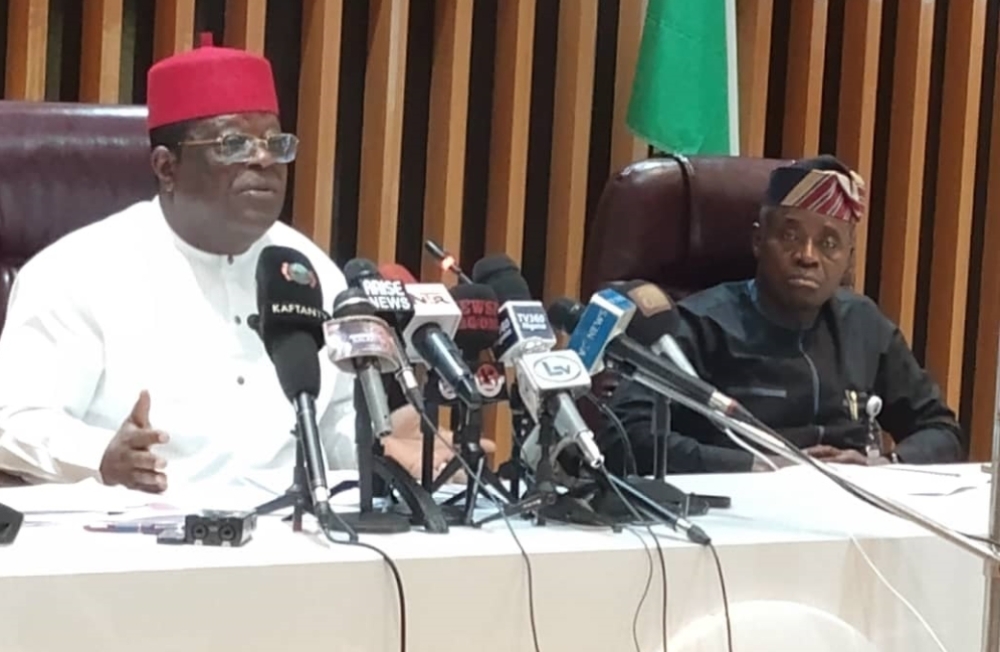
WORKS MINISTRY DID NOT AWARD ABUJA–KADUNA ROAD CONTRACT TO MIKANO – UMAHI CLARIFIES The Honourable Minister of Works, Engr. Sen. David Nweze Umahi, CON, FNSE, FNATE, has clarified that the Federal Ministry of Works did not award the Abuja–Kaduna Road contract to Mikano International Limited. The Minister stated that the contract was awarded to Infiouest International Limited, in line with due procurement processes and transparency standards. The Minister made this clarification while briefing journalist on 12 Febuary, 2026 in the Ministry Confrence Room in Mabushi Abuja, also drawing public attention to the increasing rate of vandalisation of critical road infrastructure across the country. He noted that the Ministry has a responsibility to provide accurate information to the public and to protect national infrastructure from destruction. Engr. Umahi expressed serious concern over widespread vandalism affecting roads, bridges, and related infrastructure nationwide. He cited recent cases along the Lagos Coastal Road corridor, where protective structures and road components have been deliberately damaged. According to the Minister, flooding recorded in some sections of the coastal highway was largely caused by blockage of underground drainage channels with refuse, emphasizing the need for public cooperation in maintaining infrastructure. He commended the Lagos State Government, security agencies, and the Nigeria Police for deploying personnel to safeguard critical infrastructure and combat vandalism. Parking of heavy trucks on bridges creates structural stress, as bridges are not designed for static heavy loads. He disclosed that some offenders have already been arrested and are being prosecuted. The Minister highlighted the Federal Government’s adoption of reinforced concrete road technology, which is expected to last between 50 and 100 years, compared to traditional asphalt roads. He commended President Bola Ahmed Tinubu GCFR, for supporting long-term infrastructure development and for approving several strategic road projects nationwide. The Minister announced the Extension of the Bodo–Bonny Road by 8.7km to link the East–West Road, using concrete pavement technology. He added that Progress on major legacy road corridors including routes connecting Akwanga – Jos – Bauchi – Gombe – Maiduguri. Expansion of CCTV surveillance on major bridges and highways to curb vandalism and enhance monitoring. The Minister emphasized that federal road projects are distributed based on national development priorities, not regional considerations. He called on Nigerians to support national unity and protect public assets. The Federal Government is considering stronger policies and collaboration with private sector partners and state governments to improve road maintenance and enforce compliance against illegal road obstructions and structures. Addressing the status of NNPCL-funded road projects initiated under Executive Order 007 (April–May 2023), the Minister clarified that the Nigerian National Petroleum Company Limited (NNPCL) will no longer directly pay contractors for these projects. He announced that the Federal Ministry of Works has officially taken over both project supervision and payment responsibilities, in line with new federal directives. The Honorable Minister disclosed that ₦127 billion has been released by Mr. President for the continuation of these projects, underscoring the administration’s commitment to completing inherited infrastructure initiatives. He noted that an estimated ₦7 trillion will be required to complete all NNPCL-funded projects, describing them as critical to national connectivity and economic development. Sen. Umahi further revealed that the Federal Government inherited 6,604 ongoing federal road and bridge projects nationwide, with a projected ₦16.9 trillion required for their completion. He reiterated that President Bola Ahmed Tinubu has directed that all inherited projects must be completed, stressing that infrastructure development remains a top priority of the administration. The Honourable Minister reaffirmed the Ministry’s commitment to transparency, efficiency, and accountability in the execution of these projects, assuring Nigerians that the government is determined to deliver quality infrastructure that meets international standards. The Permanent Secretary, Federal Ministry of Works, Mr. Rafiu Adeladan, In his closing remarks, thanked members of the press for their continued partnership and commitment to national development. He reiterated the Ministry’s commitment to transparency and urged the public and media to verify facts and provide constructive feedback to support improved service delivery. ...
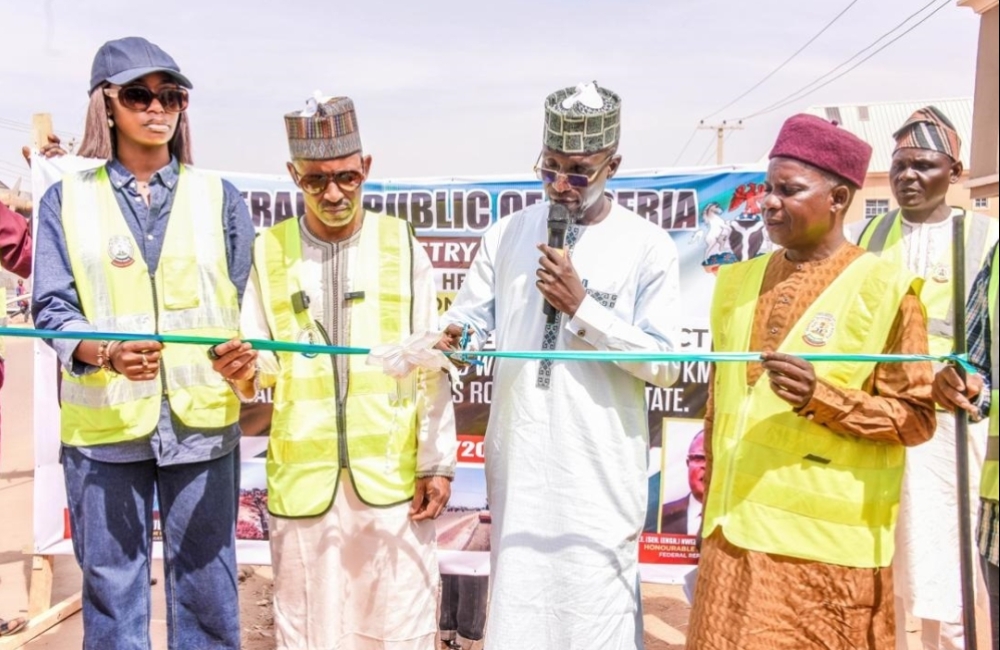
RESTORING MOBILITY THROUGH EMERGENCY INTERVENTIONS ON BAUCHI-GOMBE-BILLIRI-CHAM ROAD To address nationwide infrastructure challenges, the Federal Ministry of Works commissioned key Emergency/Special Intervention Projects along the Bauchi–Gombe and Gombe–Cham corridors on Wednesday, 11 February, 2026, in Gombe State. As part of a nationwide media tour under the Renewed Hope Agenda of His Excellency, President Bola Ahmed Tinubu, GCFR, these initiatives are among the 260 Emergency/Special Intervention Projects launched at the administration's inception in May, 2023, to restore critically damaged portions of federal highways across the country. When the administration came into office, it inherited 2,064 ongoing projects with a debt overhang of over ₦13 trillion. In view of this fiscal burden and, most especially, the paucity of funds, priority was given to roads whose conditions had deteriorated to the point of near-total collapse or had already collapsed, to restore motorability, enhance safety, and facilitate the free movement of people, goods, and services. On the alignment, a critical corridor linking Bauchi, Gombe, and Adamawa States, emergency works were executed in two complementary components: overlay of the carriageway and reinstatement of shoulders, alongside drainage improvements. Before the intervention, the road had suffered significant failure, posing safety risks and constraining socioeconomic activities. With the completion of the works, the carriageway has been strengthened, and riding quality significantly improved, while reinstated shoulders now allow motorists to park safely off the main carriageway, reducing obstruction and risk of accidents. The Federal Controller of Works, Gombe State, Engr. Mohammed Jahun stated that the project was completed and has restored the safety and durability of the route, observing that traffic flow has improved considerably as a result of the intervention. Commending the Federal Government’s efforts, Comrade Faruk Mu'azu, Chairman of the Nigeria Union of Journalists (NUJ), Gombe State Chapter, described the rehabilitation as timely and impactful. “If you can recall vividly, this road before now was not motorable, but now, with the intervention of the Federal Ministry of Works, movement is free and without hitches”, he said. Comrade Mu’azu commissioned the project, as a representative of the Honourable Minister. He also extended a profound gratitude to President Bola Ahmed Tinubu, GCFR, for his approval of the award of a contract for the dualisation of the Akwanga–Jos–Bauchi–Gombe road. He emphasised that the expansion of the highway would significantly ease movement between the North Central, and North-East zones and serve as an enabler of growth. Also commissioned by the NUJ Chairman was the Reinstatement of Failed Shoulders along the Gombe Bypass. The contract, completed within 3 months, covered 1.5km of road and 910m of drainage. Road users and residents, alike, eulogise the President for being proactive, heaving a sign of relief for alleviating their long-term suffering. Another strategic and vital corridor, is the Gombe–Billiri–Cham Road, linking Gombe and Adamawa States. Three failed bridges along that stretch were singled out for urgent rehabilitation under the Emergency/Special Intervention due to safety concerns, particularly nighttime traveling. The scope of work included restoration of damaged handrails, rehabilitation of abutments, stone pitching, reconstruction of wing walls, and reinforcement of structural components to enhance stability and visibility. The Federal Controller explained that the rehabilitation has eliminated previous hazards associated with the bridges, improving structural integrity and ensuring safer passage for road users. The commissioning of these projects was done by the Chairman of the Gombe State Correspondents’ Chapel, Mr. Hudu Shehu, as he officially handed them over for public use, on behalf of the Minister. He prayed that the road would serve the interests of humanity, whilst contributing to the common good of the people. The Bauchi–Gombe component also forms part of the approved 4th Renewed Hope Legacy Road Project for dualisation from Akwanga through Jos to Bauchi and terminating in Gombe. Others are the Lagos–Calabar Coastal Highway, the Sokoto–Badagry Superhighway, and the Calabar–Abuja Highway, designed on continuous reinforced concrete pavements (CRCP) technology with street lights and rail lines to enhance connectivity across all six (6) geopolitical zones of the country. ...
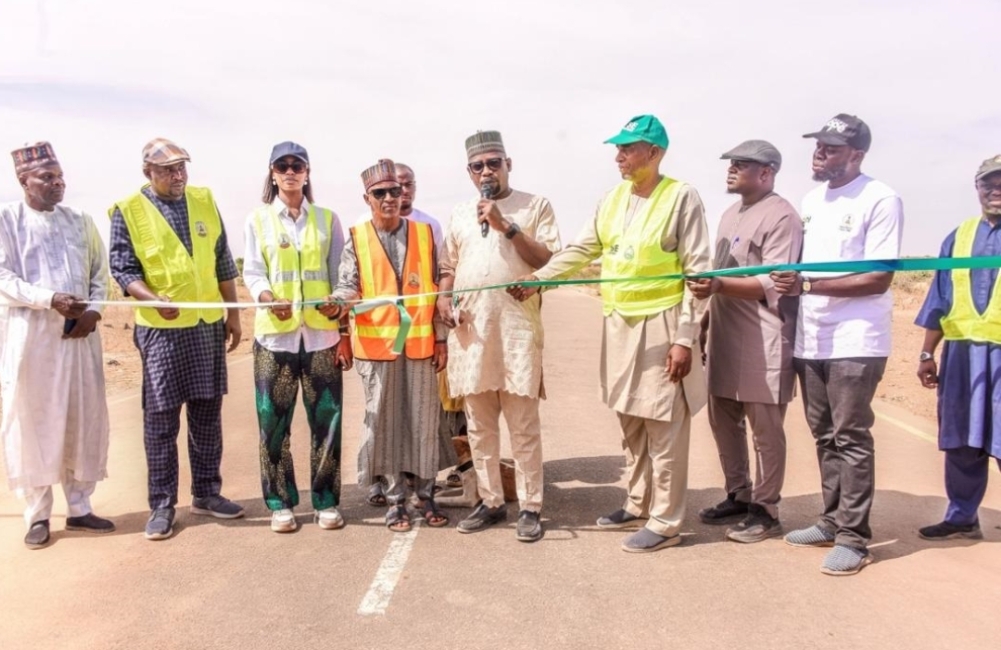
FG PUSHES AHEAD WITH STRATEGIC ROAD PROJECTS IN BORNO DESPITE SECURITY CHALLENGES The Federal Ministry of Works has restated its avowed intention to rehabilitate the Maiduguri–Monguno Road (Section I) in Borno State, as work progresses steadily despite prevailing security and logistical challenges. As the nationwide media tour of the North East Zone continues, the Federal Controller of Works in the State, Engr. Salihu Adamu assured Nigerians that the project will be completed despite persistent security and logistical constraints. “The biggest challenge faced by the contractor is insecurity. There are pockets of attacks on the highways, and this has forced them to take longer and safer routes to source construction materials,” he stated, while addressing the media at the project site in Maiduguri. The project was initially awarded in 2018 to QUMECS (Nigeria) Limited at a contract sum of ₦21.73 billion, traversing 105.6 kilometres. Following a technical review and scope adjustment, the project was revised to incorporate a flexible pavement structure with asphaltic concrete shoulders, bringing the current contract sum to ₦28.37 billion to reflect prevailing realities and enhanced engineering specifications. Phase 1 of the project covers 30 kilometres. Significant progress has been recorded, with approximately 5.8 kilometres completed up to binder course level and about 8 kilometres of stone base executed. Clearance works have also extended beyond 15 kilometres, while shoulder construction is ongoing, in line with the Ministry’s revised policy, which replaces surface dressing with asphaltic concrete shoulders to provide stronger structural protection for the carriageway and enhanced pavement durability. As security remains the major constraint on the Maiduguri–Monguno corridor, Borno State continues to operate under emergency conditions, with base and sub-base laterite sourced from Ngamdu near the Yobe State border (about 150 km away). And stone materials hauled from as far as Shira town in Bauchi State (approximately 450 km) due to restricted access and security considerations like the ban on the blasting of rocks in the state. The Project Manager for the company, Engr. Bukar Kadai, confirmed that the contractor remains fully mobilised on site with two active teams handling shoulder construction and stone base operations simultaneously, while asphalt laying is scheduled to commence following the delivery of bitumen to the site, soon. Also speaking on the same project, the Chairman of the Nigerian Society of Engineers (NSE), Maiduguri Branch, Engr. Mohammed Shettima expressed satisfaction with the quality of work, stating that the rehabilitation will ease transportation challenges for residents and road users. In another vein, the Chairman of the Nigeria Union of Journalists (NUJ), Borno State Council, Abdulkarim Haruna, inaugurated the completed Limited Rehabilitation of Kaga–Gubio Road, Sections I and II outside Benisheik Town, on behalf of the Honourable Minister of Works, Engr. David Umahi, CON, FNSE, FNATE. He described the road as a strategic one for economic empowerment and social inclusion. He stated, “Roads are a means of empowering the people. This road connecting to Benisheik, which serves as a gateway to Maiduguri and Yobe state, is a very positive development.” He further urged the media to continue sensitising Nigerians on ongoing infrastructure reforms and national development efforts of the administration of President Bola Ahmed Tinubu, GCFR. The FCW described the Kaga–Gubio Road as a critical intervention, facilitating the movement of agricultural produce into Maiduguri and other parts of the zone, strengthening commercial activities within the corridor. He explained that the project forms part of a broader emergency and special works designed to safeguard existing infrastructure, improve mobility, and support economic stability in areas facing security challenges. ...
BRF: The Omoluabi Eko At 59
By Hakeem Bello
"What will protect all of us when all is said and done is law and order."
If there is a quiz to guess which Nigerian public servant said the above, chances are most will answer: Babatunde Raji Fashola (BRF).
Yes, of course. The quintessential lawyer and Senior Advocate of Nigeria (SAN) is not just a champion of Infrastructure development and deep thinker, he is a stickler for law and order.
He is 59 today.
Quite perceptively and against the run of high public expectation, BRF decided to remain president of his home rather than joining the initially crowded train for the Presidency of the country. But without a doubt, his confidence in, devotion and commitment to the development of Nigeria remains ever unwavering.
Indeed, BRF has become a brand name for efficiency, effectiveness, diligence, commitment and tenacity of purpose. The name will continue to resonate long after he leaves public office and whenever and wherever there is a need for devotion to duty, progressive idealism and commitment to Law and Order.
Probably because of his desire to serve away from the mainstream leadership - which agrees perfectly with his often-stated philosophy of commitment to service to one’s fatherland even “without a title or an office" - his engagements with the public will continue to revolve around the preoccupation with the attainment of a better society, governed by law and order, for all.
Just as Gabfest, a youth-focused conversation platform created in 2016 to commemorate BRF's birthday. This year's edition will explore the theme, “Why am I Voting?”
This topic which agrees significantly with the mood of the nation, currently undergoing the processes leading to the 2023 General Elections, will seek to examine the motivations of a cross-section of Nigerians behind their electoral choices.
During Gabfest 6, carefully selected panelists will interrogate their personal desires and expectations in relation to the Nigerian elections. Is their focus on transparency? Is it on better power or healthcare? Is potable water their challenge? Do they intend to vote across party, gender or ethnic lines? Have they voted in the past and for what position? These are just some examples of the questions that will hopefully yield a robust and lively discussion.
Having addressed such testy questions as, “Restructuring for a Better Life – Lessons from Brexit” and “What can the President Do for me?” in previous public lectures, you can trust Mr Fashola for encouraging a discourse on such a simple yet challenging question as “Why am I Voting?”
Perhaps as a prelude to this and a proof of his avowed commitment to the essence of performing basic civic obligations and maintaining order to keep society functioning optimally, Fashola in a virtual presentation he made recently at a symposium in Lagos with the theme, “Driving and the Nigerian in You” interrogated the nexus between individual conduct and public well-being.
In the presentation, he sought to graphically illustrate that it is neither solely the failure on the part of government nor lack of good roads that cause traffic jams or road mishaps on the nation’s highways and intra-city roads but the non-compliance to Law and Order by some members of the public including even the supposed law enforcers in some instances.
According to him, “We are converting what we built for traffic movement into other uses. It is totally against traffic and all other kinds of laws. So, I still say that traders cannot trade on our streets, buses cannot park on the sidewalks. Pedestrians must leave the roads. They must remain on the sidewalks that separate pedestrians from motorists. If these things happen, we will leave the stress, the tensions, accidents and the deaths that we experience as a result of those anomalies.”
The point must, perhaps, be made here that in advocating the adherence to Law and Order by the citizens, BRF has not in any way tried to shield the elite and the leadership from the guilt of infractions of law and order in their duties.
As a matter of fact, there are very many occasions when in his tour of duties as Governor or Minister, he had personally enforced the law, especially traffic laws, on government officials including high ranking police and army officers.
But he, however, maintains that it is incumbent on all citizens to insist on the compliance to Law and Order whenever their rights are being infringed upon by political office holders and those in positions of leadership.
And to prove his earlier assertion that 87 percent of road crashes in the country are caused by human factor, he showed an abridged version of the 2021-April 2022 monthly reports of road crashes across the country by the Federal Road Safety Corps (FRSC) saying the situation had been so since he had been Minister.
“What I have done is to separate those items which are human causative factors of road crashes and I have come up with 19 of such factors. I listed 13 of these factors which cause up to 87 percent of road crashes. And I say if these are eliminated, we would have eliminated by 87 percent the cause of road crashes,” he said.
Fashola, who cautioned against indiscriminate donation of motorcycles and tricycles to illiterate youths by politicians and elites in society in what they refer to as “Empowerment”, added, “We see a lot of motorcycles now inflicting pains on our lives. But who are the biggest donors of this Korope and Maruwa (Tricycles)? …Politicians, government officials and the elite; they call it empowerment...”
Saying all Nigerians have a role to play in bringing about law and order in the country, the Minister recalled an incident in Lagos, when he was State governor, when a citizen, Lanre Adio, insisted on his right of way to Lagos Mainland when a convoy of buses driving against traffic tried to force him out of the way, thereby causing a serious traffic jam on the Third Mainland Bridge.
“I had finished my work in Alausa one day and we were heading to the Island on Third Mainland Bridge. Normally at that time on a normal day, traffic would be light on the Island-bound traffic from Alausa. But this night the traffic was heavy. And as we inched towards it, I had to send some of our security details to go and see what was happening; and you can bet or imagine what happened,” the Minister narrated.
“Citizen Adio was driving with his daughter on the Mainland-bound side heading for the Oworonsoki end of the road. They were on their right side of the traffic and they were heading home when a long convoy of vehicles, including a public transporter who was driving against traffic was asking those who had the right of way to leave. Many left, but Citizen Adio was scandalised so he refused to leave.”
Fashola said in his presentation that despite invectives thrown at him by passengers in the offending bus, the man stood his ground till he arrived the scene and used his power of law enforcement “to force all the convoy back, made some arrests and then set Citizen Adio on his way.”
Posing the question, “Are we ready to act like Citizen Lanre Adio?” he asked his audience and proceeded to list more of the ways through which the high and the low contribute to dysfunctionality in society. “So, we must bring all of these to bear on ourselves. What will protect all of us when all is said and done is law and order, for the rich and the poor. We cannot trade on the streets, we cannot have big men driving unregistered vehicles or they cover their name plates and we cannot identify who did what with the vehicle. It makes crime detection very difficult. And at the end of the day it is just Law and Order.”
Rooted in the evergreen definition that “Law and Order exists for the purpose of establishing justice,” BRF has, in his now nearly two decades of public service, preached and led by example the essence of Law and Order as a foundation on which the sustainable development and progress of any nation could be laid.
He has continually built on this philosophy, perhaps with the consciousness, without doubt, that when Law and Order fail to establish justice “they become the dangerously structured dams that block the flow of progress”.
So, what has all this got to do with the coming General Elections, and what is the relation to the topic of the Sixth Gabfest. The truth of the matter is that this election will afford the people of Nigeria the opportunity to choose leaders that will maintain Law and Order and the Rule of Law.
With political parties waiting to begin official campaigns in earnest, BRF could only mean that any conversation involving compliance to Law and Order must involve everyone, including those aspiring to political leadership and those entrusted with the enforcement of Law and Order.
And if the topic, “Why am I Voting?” could also be expanded to read “Why am I voting for Candidate A or Candidate B,” then the question challenges all electorate to interrogate their true reason and motives for voting any aspirant to the position of leadership. Can such aspirants fulfill the yearning for security, peace, unity and good governance?
In that virtual presentation, BRF also spoke of the importance of continuity in governance especially good governance and knowledge and understanding of leadership. Citizens, he said, must not only appreciate good governance when they experience one but must also insist on it under any leader that emerges after the elections.
He elaborates on this by recalling the investments as Governor of Lagos State for two terms of eight years.
“When I look back to some of the investments that we made in Lagos and also across Nigeria; the Drivers’ Institute and training schools set up to train people to improve productivity, to set order and separate motorists from motorcyclists and all that, it is really a matter of regrets that we are still where we are. Many of the gains have been rolled back,” he said.
Stretched further, the topic, “Why am I Voting?”, could also mean that citizens must be ready to challenge their leaders when they are derailing from the path of good governance; when they deliberately tow the path of negligence in matters pertaining to the interest of the electorates and inclining to situations unacceptable to them.
Surely, as BRF turns 59 today, many Nigerians would wish him a happy birthday as a shining example of good leadership in whose steady hands the legacy projects of the current administration of President Muhammadu Buhari in life-defining road transport infrastructure are making rapid progress towards the finish line. They are also looking up to him for dedicated service to the nation at whatever level he chooses to be going forward with or without a title.
Happy Birthday, BRF.
● Mr Hakeem Bello, FNGE, is Special Adviser, Communications
to the Hon. Minister
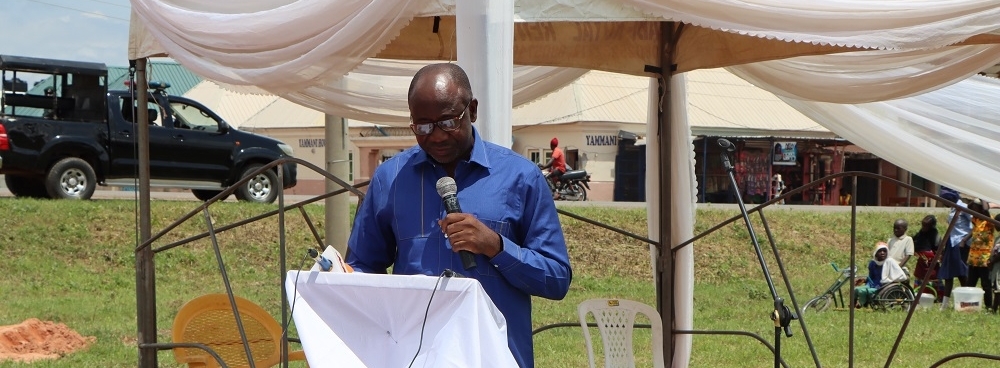
WELCOME ADDRESS BY THE PERMANENT SECRETARY, FEDERAL MINISTRY OF WORKS AND HOUSING, BASHIR NURA ALKALI, FCA, FCTI AT THE COMMISSIONING OF LAFIA-OBI-AWE-TUNGA ROAD IN NASARAWA STATE ON THURSDAY, 23rd JUNE, 2022.
PROTOCOLS
It is my great pleasure to welcome you all to this significant event in the affairs of our National life. I welcome all the eminent and distinguished invited guests to the occasion of the commissioning of the second phase of the completed roads across the country.
2. On behalf of the Honourable Minister Babatunde Raji Fashola SAN, Directors and Head of Units, Federal Ministry of Works & Housing, I welcome all distinguished invited Guests, the Royal Fathers and the entire people of Nasarawa State to this event.
3. As part of President Muhammadu Buhari’s developmental agenda of addressing road infrastructural development across the length and breadth of Nigeria, the Federal Government as a policy direction focused on the completion of several on-going projects to stimulate economic development, job creation and promoting local content. The focus is to link the major arterial roads to Refineries, Ports, tertiary institutions and high volume commercial centres with a view to reducing travel times, vehicle maintenance costs, safety and security of commuters etc.
4. The Ministry has successfully completed several roads and maintained several bridges to ensure that road users have a rewarding road travel experience. Several other roads and bridges are at various stages of completion such as the 2nd Niger Bridge and its approach road, Dualization of Abuja-Kaduna-Kano, Loko-Oweto Bridge linking Nasarawa to Benue States, Dualization of Enugu-Portharcourt Expressway, Bodo-Bonny Brigde, Lagos-Ibadan Dualization project, to mention just a few.
5. We have now entered the season of completion and handover of several roads and bridges projects across the country. Recently, 5-roads were commissioned by Mr. President who was represented by the Cabinet Ministers from the states where the projects were sited such as:
Commissioning of Sokoto-Tambuwal-Jega-Kotangora-Makere Road, Phases I&II in Kebbi State;
Vandeikya-Obudu Cattle Ranch Road Phases I&II in Benue State;
Nenwe-Oduma Road Sections I&II in Enugu and Ebonyi States;
Kano-Maiduguri Section III (Azare-Potiskum) in Bauchi/Yobe States; and
Kano-Maiduguri Road Section II Shuwarin-Azare, with spur from Dutse to Kwanar Huguma in Jigawa/Bauchi States.
6. In this phase of the commissioning, Mr. President approved the commissioning of the following roads:
Rehabilitation of Efon Alaaye-Erinmo-Iwaraja Road In Ekiti/Osun States;
Isoko Ring Road in Delta State;
Rehabilitation of Hadeija-Nguru Road, Phase II CH 40+000-CH 73+150 Kirikasama-Nguru in Jigawa State;
Completion of Gombe-Numan-Yola Road Phase II (Gombe-Kaltungo) in Gombe State;
Construction of Nguru-Gashua-Bayamari Road Section II, Phase I, (Gashua-Bayamari), Yobe State;
Rehabilitation of Nguru-Gashua-Bayamari Road Section I (Nguru-Gashua) Phase II in Yobe State;
Rehabilitation of Lafia-Obi-Awe-Tunga Road in Nasarawa State.
7. As we complete the commissioning of this road here in Nasarawa State, the train will move to Yobe State.
8. Our joy is that Nigerians are benefitting from the fruits of democracy and the promises made by the present Administration. These projects have created direct and indirect jobs as well as provided socio-economic benefits that the magnitude of such projects carries with it.
9. At this juncture, I welcome you all once again to the commissioning ceremony of this laudable road project in Nasarawa State.
Thank you and God bless you.
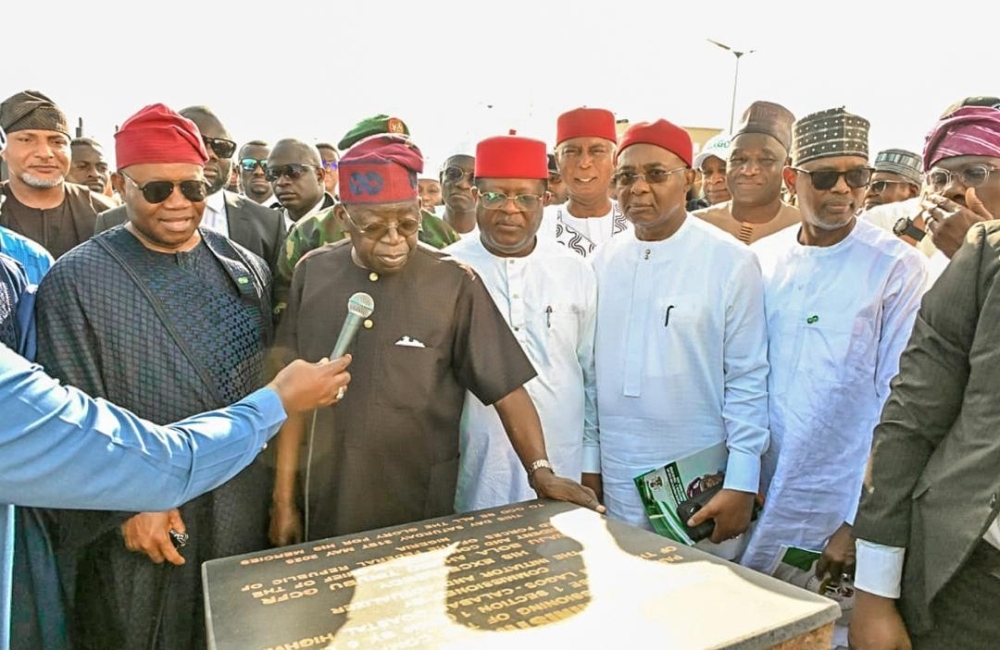
DRIVING NIGERIA’S FUTURE: CELEBRATING TWO YEARS OF TRANSFORMATIVE LEADERSHIP AND THE LAGOS-CALABAR COASTAL HIGHWAY MILESTONE
DRIVING NIGERIA’S FUTURE: CELEBRATING TWO YEARS OF TRANSFORMATIVE LEADERSHIP AND THE LAGOS-CALABAR COASTAL HIGHWAY MILESTONE
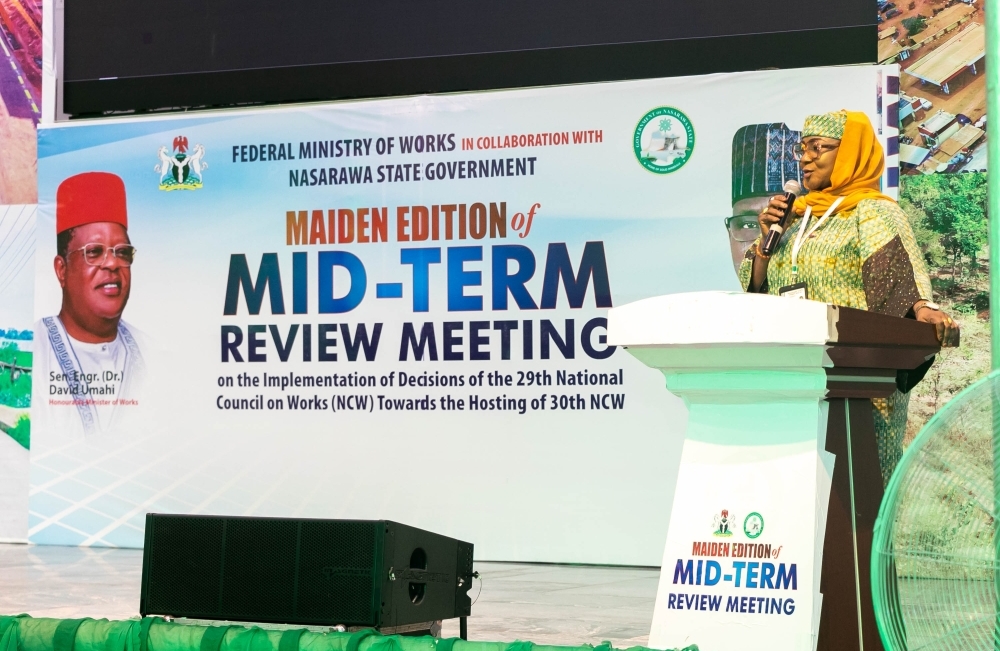
MID -TERM REVIEW MEETING ON THE IMPLIMENTATION OF THE DECISIONS REACHED AT THE 29TH NATIONAL COUNCIL ON WORKS (NCW) DAY 1
MID -TERM REVIEW MEETING ON THE IMPLIMENTATION OF THE DECISIONS REACHED AT THE 29TH NATIONAL COUNCIL ON WORKS (NCW) DAY 1