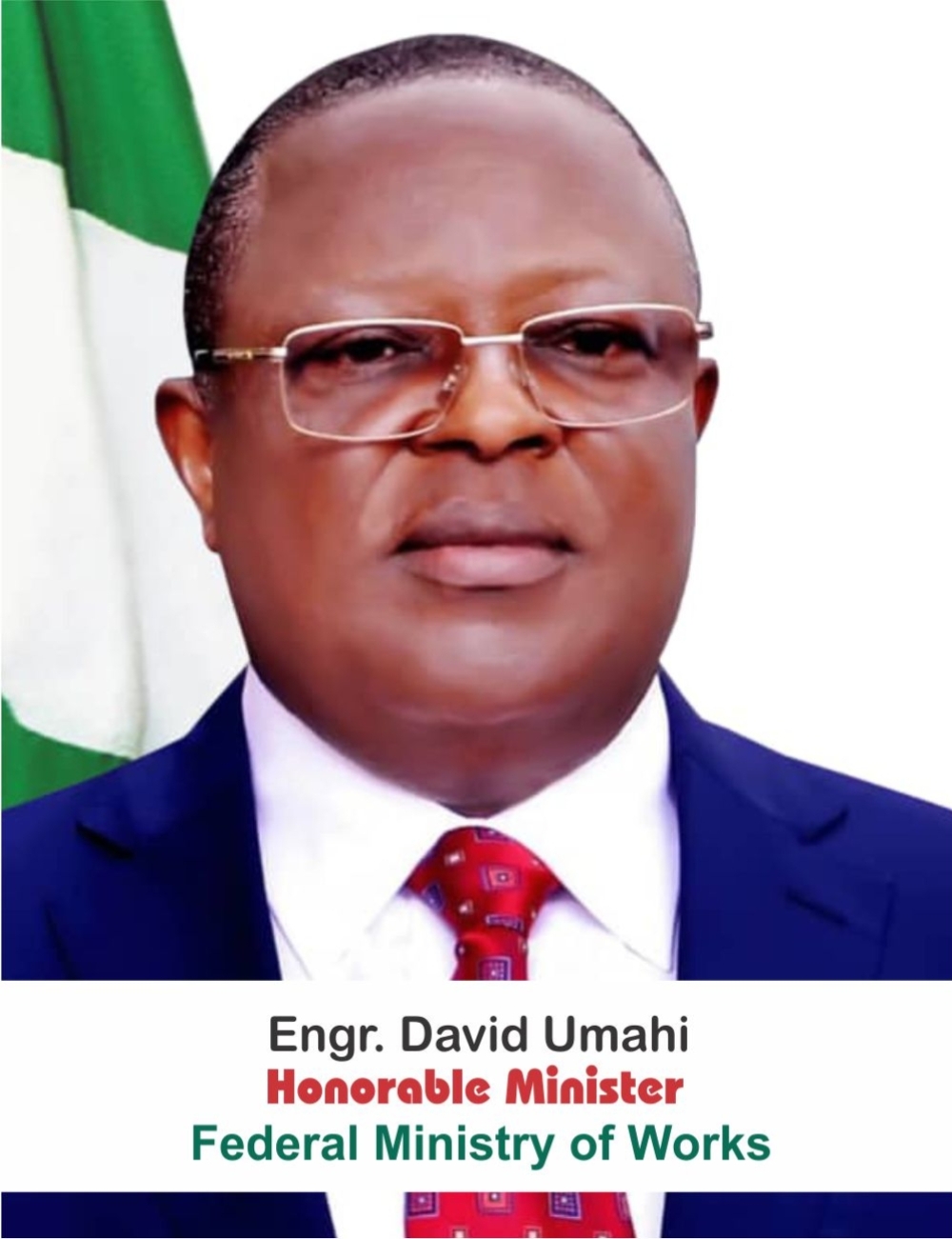
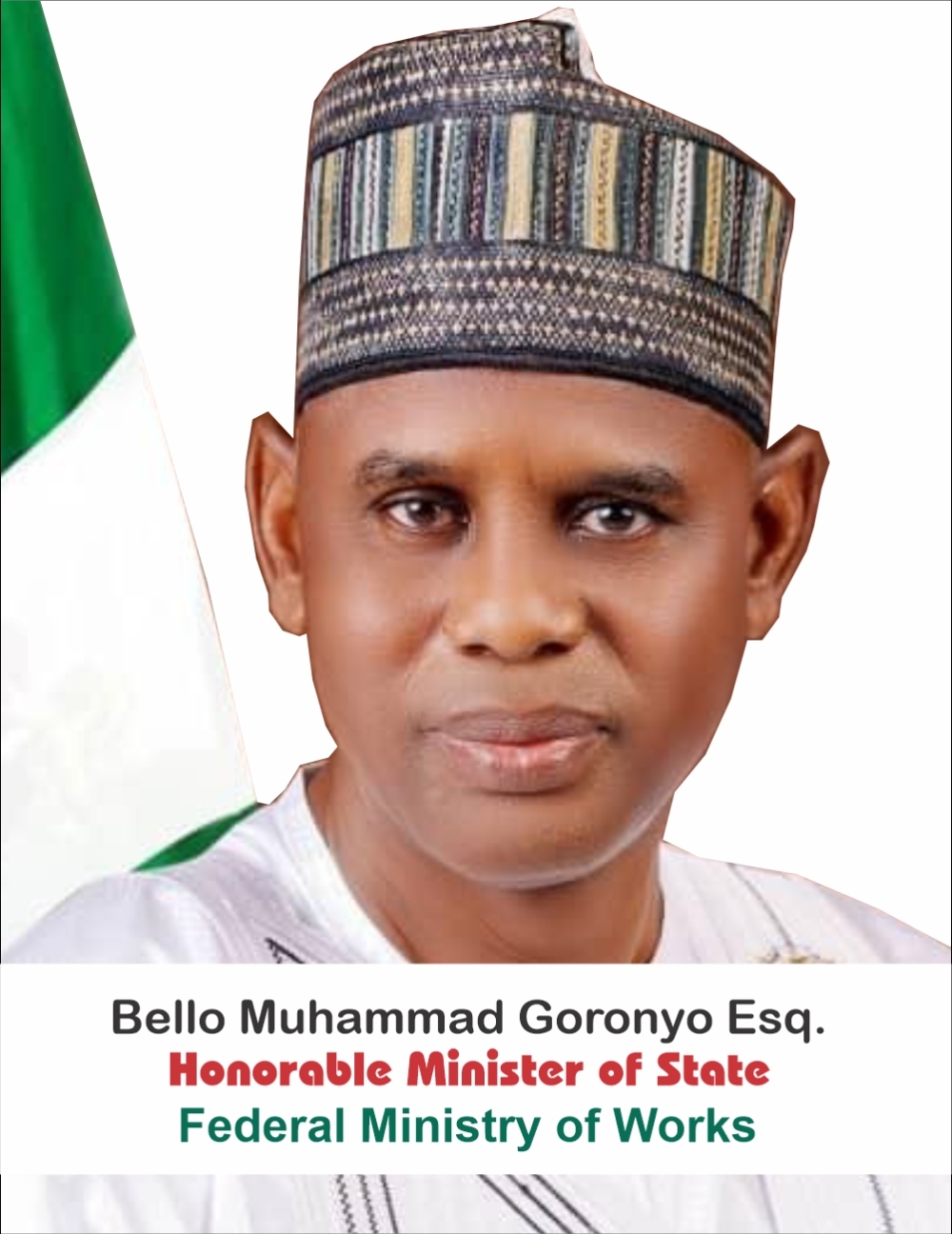
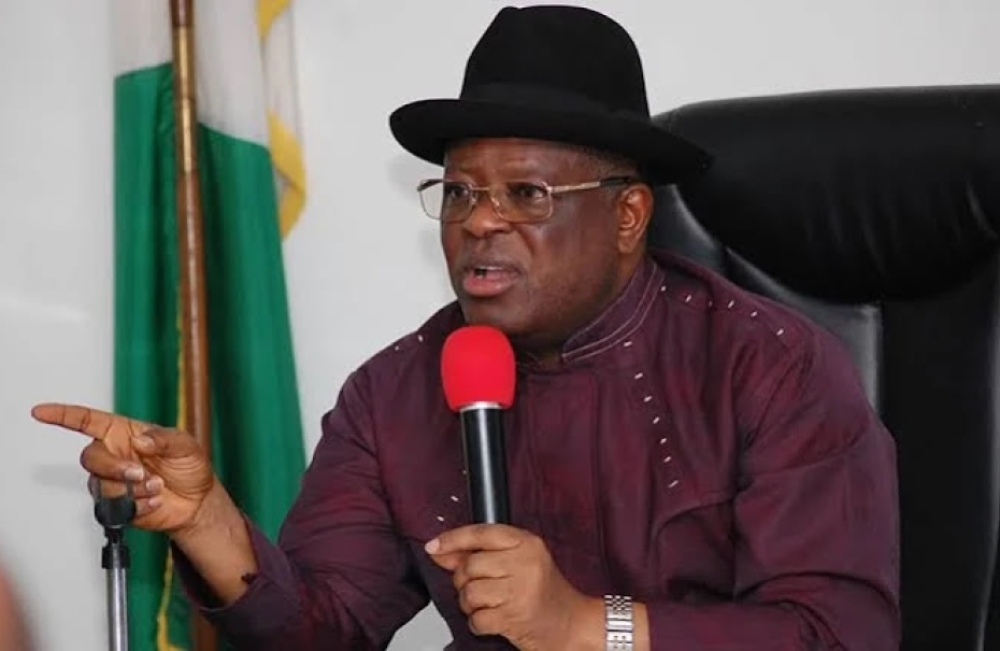
UMAHI ORDERS IMMEDIATE EMERGENCY INTERVENTION ON BENIN-ASABA ROAD, AND SOME OTHER CRITICAL FEDERAL ROADS
The Honourable Minister of Works, Senator Engr. David Nweze Umahi, CON, has directed the immediate deployment of major contractors to all three sections of the Benin-Asaba Federal Road to restore the failed sections and bring an end to the suffering of motorists and other road users.
This is because, the situation on the concessioned Benin-Asaba Road has reached a point where the overall public interest must take precedence over the existing concession agreement.
Recall that the Honourable Minister of Works was on the Benin-Asaba Road about seven days ago, where he assembled a number of contractors and directed them to prepare for immediate palliative intervention on the affected sections of the road at no cost to the concessionaire. In line with the Concession agreement which requires that before the Federal Government could intervene, the permission of the concessionaire must be required, and that permission was not granted to federal government.
The Minister subsequently proposed three options to the concessionaire, any one of which would have enabled the Federal Government to move in and address the worsening condition of the road. Unfortunately, none of the options was accepted by the concessionaire. Immediately after the Minister left Asaba, the already limited equipment deployed to the road by the concessionaire was further reduced to just one, worsening the situation and increasing the suffering of motorists and other road users.
While the Minister takes responsibility for the concerns and suffering of Nigerians using the road, it is important to state that the concessionaire has also not taken the suffering of Edo people and travelling public sufficiently into consideration by declining all the options put forward by the Federal Government. The concessionaire continues to rely on the terms of the concession agreement entered into by the previous administration, an agreement which weighs heavily against the Federal Government’s ability to intervene quickly in the interest of the public in a situation like this.
In view of this situation, the Honourable Minister of Works has directed the immediate deployment of major contractors within the corridor to all three sections of the Benin-Asaba Road to restore the failed sections and bring relief to the people, with the cost of the emergency intervention being borne by the Federal Government. The Honourable Minister has also directed immediate redesign of the entire route to be rebuilt with reinforced concrete pavement. The public should therefore take note that immediate action is underway to restore every failed section of the Benin-Asaba Road and subsequently rehabilitate the entire sections of the road using reinforced concrete pavement.
2. On the Benin-Sapele Road:
The Governors of Edo and Delta States, the Niger Delta Development Commission (NDDC), and the Federal Government are currently engaged in interventions on different sections of the road to restore the entire route. While some sections are receiving palliative attention, permanent works are also ongoing on other sections.
3. On Ifaki(Ekiti) - Kabba (Kogi) Road:
The Federal Government is engaging both the contractor; Gamji Nigeria Company Limited, and Dangote PLC on immediate emergency and permanent intervention on the most failed sections of the road, while efforts are being made to financially mobilise the company for more extensive permanent work to commence on the axis.
4. On the Sokoto-Zamfara-Katsina Road: This is an inherited project involving the dualisation of approximately 350 kilometres, which translates to about 700 kilometers. The project has since been redesigned and is currently ongoing and most sections are being reconstructed using reinforced concrete pavement. From the Sokoto axis towards Zamfara, over 50 kilometres of one carriageway have been fully completed with reinforced concrete pavement. From Zamfara to Katsina, some sections have been completed and palliative works have been ordered over the sections that have not been reconstructed. However, the pace of work slowed down due to the redesign and rephasing of the project. The contractors currently engaged on the road include CBC, SETRACO, Triacta and Mothercat. They are being remobilised to return to site and complete the outstanding works.
5. On the Abuja-Kaduna-Zaria-Kano Road: The Federal Government took over the Road project and has currently completed the 118-kilometer mostly on reinforced concrete pavement on lot 1. The Lot 2, which covers 164 kilometres, is over 60 percent completed on reinforced concrete pavement. The Federal Government has also introduced solar-powered light on the entire route of Abuja-Kaduna-Zaria - Kano to improve visibility during night travel and enhance the overall security situation on the route. The entire project is scheduled for completion by December 2026.
6. On Bauchi-Jigawa Road: Triacta Nigeria Limited has been mobilised to carry out the necessary interventions on some failed sections and work is currently ongoing in those failed sections.
7. On the Sagamu-Ore Road: 48 Kilometers of the 96-kilometre road have already been completed using reinforced concrete pavement. There is also a 24-kilometre section around Ore which was abandoned by the previous contractor. The Federal Government has directed its immediate restoration to ensure seamless travel. Solar lights are being installed in the entire 96kilometer of the road.
8. On Flooded Sections on Sagamu-Ore-Benin Road: The flooded sections on the same corridor between Sagamu-Ore-Benin Road, as well as other flooded sections in Ondo State, are being designed for emergency procurement and intervention.
9. On the East-West Road:
Some failed and critical sections, including defective sections of bridges along the East-West Road, are being marked out for emergency procurement and intervention.
10. On the Abuja-Lokoja Road:
Several contracts are ongoing along the route, while the three critical sections currently without contracts are being procured for emergency intervention.
11. On the Lokoja-Benin-Warri Road: The President has directed a complete redesign and procurement of the 400-kilometre dualised route covering the uncompleted sections, using reinforced concrete pavement, while palliative works will continue with the contractors currently on the road.
12. On Carter Bridge:
While the Federal Government continues to undertake weekly maintenance of the underwater elements of the bridge. The site has also been handed over to the contractor, CCECC, for the construction of a permanent new bridge, and work has commenced.
13. On the Third Mainland Bridge:
With regard to the defective underwater structural elements, the Federal Government is at the final stage of determining the appropriate intervention for the repair of the affected elements.
14. On the flooded section of the Lagos-Ibadan Road: Work has commenced on the affected section. There are also several flooded sections on federal roads across the six geopolitical zones, largely occasioned by excessive flooding and the effects of climate change. The Federal Government is identifying and marking these sections for immediate attention.
15. On the First and Second Niger Bridges:
Intervention work is ongoing on the approach roads to the Second Niger Bridge damaged by flood and the work is progressing very well. The First Niger Bridge has been closed to traffic to enable immediate repair works. Contractor has mobilized to site and comprehensive rehabilitation of the bridge has started. From Summit Junction to the First Niger Bridge, massive rehabilitation work is also ongoing using reinforced concrete pavement.
16. The Honourable Minister wishes to commend the President of the Federal Republic of Nigeria, His Excellency Bola Ahmed Tinubu, GCFR, for the massive work being undertaken on the nation’s roads since the administration assumed office in 2023.
17. It is important to state that when the present administration came into office, there was hardly any part of the country where one could travel for an hour without encountering significant challenges on the road network. The condition of the country’s roads and bridges was a major national infrastructure challenge.
18. Rather than shy away from the problem, the administration of President Bola Ahmed Tinubu made the nation’s road network a priority. Virtually every part of the country became a priority, and the Federal Government, through the Federal Ministry of Works, Regional Commissions, Parastatals and other MDA’s has continued to respond extensively to these challenges.
19. The Federal Government is currently working on over 80 percent of the inherited federal roads, an unprecedented level of intervention in the country’s road infrastructure.
20. We ask the public to understand the enormous challenges inherited on our roads and bridges and to take note not only of the problems being solved, but also of the permanent solutions being introduced.
21. A major part of this new approach is the use of reinforced concrete pavement, designed to significantly extend the lifespan of major roads. These roads are expected to last between 50 and 100 years. This means that roads being constructed under President Bola Ahmed Tinubu’s administration are being designed with future generations in mind, rather than simply providing temporary solutions to today’s problems. And this is a complete departure from the past, when roads often deteriorated only a few years after completion, resulting in a continuous cycle of reconstruction and expenditure.
22. We appreciate the concerns of Nigerians over the condition of some roads presently and the difficulties faced by motorists and commuters who cannot move easily from one point to another. Those concerns are legitimate, and the Federal Government is listening. But Nigerians should also recognise the enormous scale of the problems inherited and the amount of work currently being undertaken across the country.
23. It is simply impossible to resolve every road challenge accumulated over many years of neglect by the past administrations within three years. What is important is that the government is working, the government is responding, and the government is putting permanent solutions in place.
25. We appreciate members of the public who send situation reports on failed roads and other infrastructure challenges. These reports help the Ministry identify areas requiring urgent attention. However, we also appeal to members of the public to report when such problems have been addressed, just as they report when they occur.
24. We are aware of situations where photographs and reports of road challenges continue to circulate on social media even after the Federal Government has intervened and resolved the particular problem.
25. However, the Ministry will continue to respond as rapidly as possible to genuine reports and concerns from Nigerians.
26. It is also important to note that we have compiled a comprehensive record of all inherited, ongoing and intervention projects across the country which is available to the public. This is to ensure that Nigerians have access to information on the infrastructure projects being undertaken nationwide and can fully participate in and appreciate the infrastructure revolution of President Bola Ahmed Tinubu’s administration.

UMAHI ORDERS IMMEDIATE EMERGENCY INTERVENTION ON BENIN-ASABA ROAD, AND SOME OTHER CRITICAL FEDERAL ROADS The Honourable Minister of Works, Senator Engr. David Nweze Umahi, CON, has directed the immediate deployment of major contractors to all three sections of the Benin-Asaba Federal Road to restore the failed sections and bring an end to the suffering of motorists and other road users. This is because, the situation on the concessioned Benin-Asaba Road has reached a point where the overall public interest must take precedence over the existing concession agreement. Recall that the Honourable Minister of Works was on the Benin-Asaba Road about seven days ago, where he assembled a number of contractors and directed them to prepare for immediate palliative intervention on the affected sections of the road at no cost to the concessionaire. In line with the Concession agreement which requires that before the Federal Government could intervene, the permission of the concessionaire must be required, and that permission was not granted to federal government. The Minister subsequently proposed three options to the concessionaire, any one of which would have enabled the Federal Government to move in and address the worsening condition of the road. Unfortunately, none of the options was accepted by the concessionaire. Immediately after the Minister left Asaba, the already limited equipment deployed to the road by the concessionaire was further reduced to just one, worsening the situation and increasing the suffering of motorists and other road users. While the Minister takes responsibility for the concerns and suffering of Nigerians using the road, it is important to state that the concessionaire has also not taken the suffering of Edo people and travelling public sufficiently into consideration by declining all the options put forward by the Federal Government. The concessionaire continues to rely on the terms of the concession agreement entered into by the previous administration, an agreement which weighs heavily against the Federal Government’s ability to intervene quickly in the interest of the public in a situation like this. In view of this situation, the Honourable Minister of Works has directed the immediate deployment of major contractors within the corridor to all three sections of the Benin-Asaba Road to restore the failed sections and bring relief to the people, with the cost of the emergency intervention being borne by the Federal Government. The Honourable Minister has also directed immediate redesign of the entire route to be rebuilt with reinforced concrete pavement. The public should therefore take note that immediate action is underway to restore every failed section of the Benin-Asaba Road and subsequently rehabilitate the entire sections of the road using reinforced concrete pavement. 2. On the Benin-Sapele Road: 3. On Ifaki(Ekiti) - Kabba (Kogi) Road: 4. On the Sokoto-Zamfara-Katsina Road: This is an inherited project involving the dualisation of approximately 350 kilometres, which translates to about 700 kilometers. The project has since been redesigned and is currently ongoing and most sections are being reconstructed using reinforced concrete pavement. From the Sokoto axis towards Zamfara, over 50 kilometres of one carriageway have been fully completed with reinforced concrete pavement. From Zamfara to Katsina, some sections have been completed and palliative works have been ordered over the sections that have not been reconstructed. However, the pace of work slowed down due to the redesign and rephasing of the project. The contractors currently engaged on the road include CBC, SETRACO, Triacta and Mothercat. They are being remobilised to return to site and complete the outstanding works. 5. On the Abuja-Kaduna-Zaria-Kano Road: The Federal Government took over the Road project and has currently completed the 118-kilometer mostly on reinforced concrete pavement on lot 1. The Lot 2, which covers 164 kilometres, is over 60 percent completed on reinforced concrete pavement. The Federal Government has also introduced solar-powered light on the entire route of Abuja-Kaduna-Zaria - Kano to improve visibility during night travel and enhance the overall security situation on the route. The entire project is scheduled for completion by December 2026. 6. On Bauchi-Jigawa Road: Triacta Nigeria Limited has been mobilised to carry out the necessary interventions on some failed sections and work is currently ongoing in those failed sections. 7. On the Sagamu-Ore Road: 48 Kilometers of the 96-kilometre road have already been completed using reinforced concrete pavement. There is also a 24-kilometre section around Ore which was abandoned by the previous contractor. The Federal Government has directed its immediate restoration to ensure seamless travel. Solar lights are being installed in the entire 96kilometer of the road. 8. On Flooded Sections on Sagamu-Ore-Benin Road: The flooded sections on the same corridor between Sagamu-Ore-Benin Road, as well as other flooded sections in Ondo State, are being designed for emergency procurement and intervention. 9. On the East-West Road: 10. On the Abuja-Lokoja Road: 11. On the Lokoja-Benin-Warri Road: The President has directed a complete redesign and procurement of the 400-kilometre dualised route covering the uncompleted sections, using reinforced concrete pavement, while palliative works will continue with the contractors currently on the road. 12. On Carter Bridge: 13. On the Third Mainland Bridge: 14. On the flooded section of the Lagos-Ibadan Road: Work has commenced on the affected section. There are also several flooded sections on federal roads across the six geopolitical zones, largely occasioned by excessive flooding and the effects of climate change. The Federal Government is identifying and marking these sections for immediate attention. 15. On the First and Second Niger Bridges: 16. The Honourable Minister wishes to commend the President of the Federal Republic of Nigeria, His Excellency Bola Ahmed Tinubu, GCFR, for the massive work being undertaken on the nation’s roads since the administration assumed office in 2023. 17. It is important to state that when the present administration came into office, there was hardly any part of the country where one could travel for an hour without encountering significant challenges on the road network. The condition of the country’s roads and bridges was a major national infrastructure challenge. 18. Rather than shy away from the problem, the administration of President Bola Ahmed Tinubu made the nation’s road network a priority. Virtually every part of the country became a priority, and the Federal Government, through the Federal Ministry of Works, Regional Commissions, Parastatals and other MDA’s has continued to respond extensively to these challenges. 19. The Federal Government is currently working on over 80 percent of the inherited federal roads, an unprecedented level of intervention in the country’s road infrastructure. 20. We ask the public to understand the enormous challenges inherited on our roads and bridges and to take note not only of the problems being solved, but also of the permanent solutions being introduced. 21. A major part of this new approach is the use of reinforced concrete pavement, designed to significantly extend the lifespan of major roads. These roads are expected to last between 50 and 100 years. This means that roads being constructed under President Bola Ahmed Tinubu’s administration are being designed with future generations in mind, rather than simply providing temporary solutions to today’s problems. And this is a complete departure from the past, when roads often deteriorated only a few years after completion, resulting in a continuous cycle of reconstruction and expenditure. 22. We appreciate the concerns of Nigerians over the condition of some roads presently and the difficulties faced by motorists and commuters who cannot move easily from one point to another. Those concerns are legitimate, and the Federal Government is listening. But Nigerians should also recognise the enormous scale of the problems inherited and the amount of work currently being undertaken across the country. 23. It is simply impossible to resolve every road challenge accumulated over many years of neglect by the past administrations within three years. What is important is that the government is working, the government is responding, and the government is putting permanent solutions in place. 25. We appreciate members of the public who send situation reports on failed roads and other infrastructure challenges. These reports help the Ministry identify areas requiring urgent attention. However, we also appeal to members of the public to report when such problems have been addressed, just as they report when they occur. 24. We are aware of situations where photographs and reports of road challenges continue to circulate on social media even after the Federal Government has intervened and resolved the particular problem.
The Governors of Edo and Delta States, the Niger Delta Development Commission (NDDC), and the Federal Government are currently engaged in interventions on different sections of the road to restore the entire route. While some sections are receiving palliative attention, permanent works are also ongoing on other sections.
The Federal Government is engaging both the contractor; Gamji Nigeria Company Limited, and Dangote PLC on immediate emergency and permanent intervention on the most failed sections of the road, while efforts are being made to financially mobilise the company for more extensive permanent work to commence on the axis.
Some failed and critical sections, including defective sections of bridges along the East-West Road, are being marked out for emergency procurement and intervention.
Several contracts are ongoing along the route, while the three critical sections currently without contracts are being procured for emergency intervention.
While the Federal Government continues to undertake weekly maintenance of the underwater elements of the bridge. The site has also been handed over to the contractor, CCECC, for the construction of a permanent new bridge, and work has commenced.
With regard to the defective underwater structural elements, the Federal Government is at the final stage of determining the appropriate intervention for the repair of the affected elements.
Intervention work is ongoing on the approach roads to the Second Niger Bridge damaged by flood and the work is progressing very well. The First Niger Bridge has been closed to traffic to enable immediate repair works. Contractor has mobilized to site and comprehensive rehabilitation of the bridge has started. From Summit Junction to the First Niger Bridge, massive rehabilitation work is also ongoing using reinforced concrete pavement.
25. However, the Ministry will continue to respond as rapidly as possible to genuine reports and concerns from Nigerians.
26. It is also important to note that we have compiled a comprehensive record of all inherited, ongoing and intervention projects across the country which is available to the public. This is to ensure that Nigerians have access to information on the infrastructure projects being undertaken nationwide and can fully participate in and appreciate the infrastructure revolution of President Bola Ahmed Tinubu’s administration.
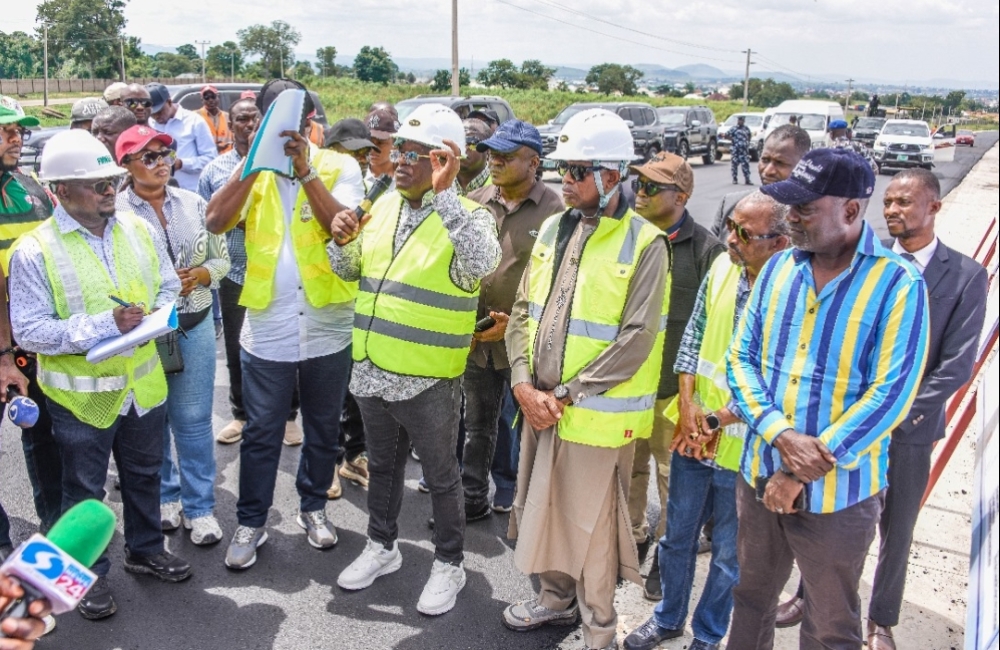
Umahi Inspects Mararaba–Keffi Carriageway, Keffi Flyover Project, Visits Keffi-Nasarawan Toto–Abaji Road The Honourable Minister of Works, Sen. (Engr.) David Umahi, CON, FNSE, FNATE led a high-powered delegation from the Ministry on an inspection tour of key road projects in Nasarawa State. At the site of the Reconstruction and Expansion of Mararraba-Keffi Dual Carriageway, the Minister expressed serious concerns about the pace of work and lack of adherence to engineering specifications. He informed the contractor, China Harbour Engineering Company that after several warnings, the Ministry is left with no choice but to revoke the contract for the Abuja-bound carriageway. He further directed that it should be awarded to a local contractor with a proven track record, who will be mobilised to complete the concrete shoulders and other pending works. The slow pace of construction had been causing considerable hardship for road users and residents along the corridor. The Minister was accompanied by the Minister of State for Works, Bello Muhammad Goronyo, Esq, Directors and other staff of the Ministry, representatives of the construction firms handling the various projects, and was met at the Keffi Flyover by the Governor of Nasarawa State, His Excellency, Engr. Abdullahi Sule, Sen. Ahmed Wadata, officials of the State Government, and other stakeholders. Engr. Umahi emphasised that the Federal Government is committed to delivering high-quality and durable road infrastructure, meeting global engineering standards and capable of serving Nigerians for decades. “We cannot continue to tolerate uncooperative contractors, who delay projects and ignore directives,” he declares. The Minister reiterated his faith in Nigerian Engineers and contractors, guaranteeing that they would deliver quality jobs comparable to international standards, when given the opportunity. He also warned that any contractor who fails to meet deadlines or flouts directives would have their contracts terminated. Engr. Umahi cautioned that “If by the 15th of December, you do not finish the scope of work, I will terminate the whole contract. We must begin to trust our local contractors. This is about discipline, quality, and integrity,” he stressed. He went further to say that “when we came on board, we reviewed the method statement for this project because we could not accept a design that would destroy an already consolidated subgrade,” Umahi explained. “We changed the design to include 20 cm of concrete on the inner shoulder and reinforced the stone base with 3.5% cement content. The sections already completed are excellent and will last for a minimum of 50 years.” The Minister of State for Works, Bello Muhammad Goronyo, Esq, also admonished contractors to show greater seriousness and commitment to the timely completion of projects. He restated that the present administration is determined to deliver quality infrastructure that will stand the test of time, as well as improve the quality of life of Nigerians. Goronyo added that we must all take our responsibilities seriously. “Contractors must adhere strictly to specifications and timelines, as the Ministry will not compromise on quality and accountability,” the Minister disclosed. The Director, Highways, Construction and Rehabilitation, Engr. Clement Ogbuagu reported that about 50% of the project has been completed and assured that the first phase will be delivered by December 15, 2025. At the site of the Emergency Repairs of the Damaged Keffi Flyover, the Minister, accompanied by the Nasarawa State Governor, said that “two months ago, a tragic accident damaged part of this flyover, leading to loss of lives. We reported it to Mr. President, who immediately approved funds for its repairs.” “Today, we can see the quality of work being done. They are recasting the entire slab, not just the affected part at a very conservative cost of ₦1.5 billion,” he added. On the soon-to-be-awarded rescoped Keffi-Nasarawan Toto-Abaji Road, the Minister informed the Governor and his entourage that the original contract sum of ₦73 billion covered an initial 43.65 km stretch. However, the initial scope has now been reviewed and extended to 137 km, reaching Abaji town in the FCT, following the directive of President Bola Ahmed Tinubu, GCFR, under a special funding arrangement. In his remarks, His Excellency, Engr. Abdullahi Sule commended President Tinubu and the Minister of Works for their interventions in the State, especially the Keffi Flyover, which was recently damaged by an overloaded truck. The Governor further noted that the Keffi–Nasarawan Toto-Abaji road is crucial to the economic development of both Nasarawa State and the Federal Capital Territory, as it serves as a major gateway for goods, services, and people. It also serves the biggest Lithium Factory in Africa, recently commissioned by Mr. President. Senator Wadada, representing Nasarawa West and other stakeholders commended the Minister for his dedication, describing him as an “uncommon performer,” whose hands-on approach reflects the Renewed Hope Agenda of President Tinubu. They also applauded the President for being “a leader for all.” Engr. Umahi reaffirmed that all ongoing Federal projects will now adopt the revised engineering method statement, which emphasises, complete milling of old pavement, reinforcement of subgrade with stone base and cement, 20 cm concrete shoulders, and proper drainage and slope control. He also stressed that these specifications are designed to guarantee a minimum lifespan of 50 years for the reconstructed roads. “No contractor, no matter how connected, will be allowed to compromise on quality. Mr. President has done his part by approving funding; it is now our duty to ensure delivery,” the Minister emphasised. Mohammed A. Ahmed, Director, Press and Public Relations. 12th October 2025. ...

OUSTANDING WORKS ON ABUJA-KADUNA-ZARIA-KANO ROAD PROJECT GET EXPEDITIOUS DELIVERY BOOST, AS WORKS MINISTER, SEN DAVID UMAHI AND KADUNA STATE GOVERNOR,SEN. UBA SANI MEET ON MODALITIES TO FASTRACK DELIVERY OF PROJECT. In the commitment of the Renewed Hope administration towards achieving timeous completion of the outstanding works on Abuja-Kaduna-Zaria-Kano road project, handled by Messrs Infiouest International Limited, the Hoonourable Minister of Works, His Excellency, Sen. Engr. Nweze David Umahi CON has directed the contractor to fastrack the delivery of the two sections of the road project particularly by increasing the number of work zones between Jere and kaduna in Kaduna State and ensuring that the project is delivered in record time. The Honourable Minister of Works gave this directive after a meeting he had with the Governor of Kaduna State, His Excellency, Sen. Uba Sani CON together with the contractor handling the project, held at the Honourable Minister’s office, Federal Ministry of Works, Mabushi, Abuja on 10th October, 2025. Speaking on the importance and priority accorded to the project by the President of the Federal Republic of Nigeria, His Excellency, Bola Ahmed Tinubu GCFR, the Hounourable Minister stated; “We have been monitoring this project almost every week, and so we insisted that we must do a meeting with the MD of Infiouest who has the contract of these sections, lot 1, which is N252,000,000,000.00 (Two Hundred and Fifty Two Billion Naira), and lot 2 which is basically in Kaduna, 82 kilometres by 2 that is 164 kilometres costing Federal Government N502,000,000,000.00 (Five Hundred and Two Billion Naira), so altogether to complete all the sections from Abuja down to Kaduna, down Kano is costing the Federal Government N754,000,000,000.00 (Seven Hundred and Fifty Four Billion). Lot 1 is 118 kilometres, costing N252,000,000,000.00 (Two Hundred and Fifty Two Billion Naira), and lot 2 is 164 kilometres, costing N502,000,000,000.00 (Five Hundred and Two Billion)”. He directed the contractor, Infiouest, to deploy on 4 sections and ensure steady work progress, and the Engineer Representative to relocate to Kaduna and monitor strictly the progress of the project and feed him back on daily basis. He assured the Governor that the progress and quality of work would be tracked with a view to achieving delivery in record time. " I want to assure you that the President is very highly concerned to get this project done. But the quality of using the same standard of coastal highway is something that our brothers and sisters in the North will never forget President Bola Ahmed Tinubu for his love and commitment towards the development of every part of this country ." Also, speaking on the outcome of the meeting, the Governor of Kaduna State expressed satisfaction with the outcome of the meeting and the quality of the job being done on the project. He said that he had no doubt that in the next two weeks, the contractor should be able to record commendable milestones given the quality of the meeting held with the Honourable Minister of Works and the contractor handling the job.He further stated that the road is a very important transport corridor that connects not only the economic corridors of the North West but also that of the North Central and the North East " What is more important for us here is for you to understand that Abuja, Kaduna, Kano road connects about 12 States. States from North West, as well as some States from North Central and North East. So it is a very important road that I believe that by the time you complete this project, many people, apart from Kaduna, will be very happy." He commended the professionalism, passion, and innovation brought to bare by the Honourable Minister of Works, whom he described as a rare gem in public service delivery." We are proud to have a Minister of the caliber of Engr. David Umahi, who is of very top profession. I am surprised, when I came here he had to break down the entire project ( off hand) from the size of the project to the level of the project as well as the quality of what is going on there, and I can say that if we have a lot of Honourable Ministers like him in Nigeria,we have to go to sleep without having any problems " In the response of the contractor handling the project, the Managing Director of Infiouest International Limited, Mr. Joseph Abou Jaounde assured of keeping to the directive of the Honourable Minister. “ I am here to assure you, even though we have some little challenges in Kaduna, but from now to 2 weeks, we are going to have a visit a site and to make sure that this portion of the road will be joined with Zuba to Kaduna, and all the sections will be joined together to make sure that the work will be done on time in the right way and quality required ”. This collaborative support and encouragement from the Governor of Kaduna State is made possible because of his interest to tap into the massive infrastructural development programmes of the federal government across the Geo-Political Zones of Nigeria. He is a visionary leader and development advocate who is widely recognized for his contributions to democracy, governance, and social transformation. He is a product of Nigeria’s diverse educational system, a financial guru, business administrator, and engineer in thought. He played a frontline role in the struggle against the military rule in Nigeria. He was a courageous pro-democracy activist, organizing and mobilizing citizens in Northern Nigeria against military dictatorship. Today, he is on the saddle as the Governor of Kaduna State and he is one of the serving Governors in Nigeria who have shown untiring determination to right the wrong in the socio-economic conditions of their people and he is achieving progressive and exponential result given the unprecedented wave of support and leverage provided by the Renewed Hope administration of President Tinubu to the sub-national governments. Hon. Barr. Orji Uchenna Orji Special Adviser (Media) to the Honourable Minister of Works. ...
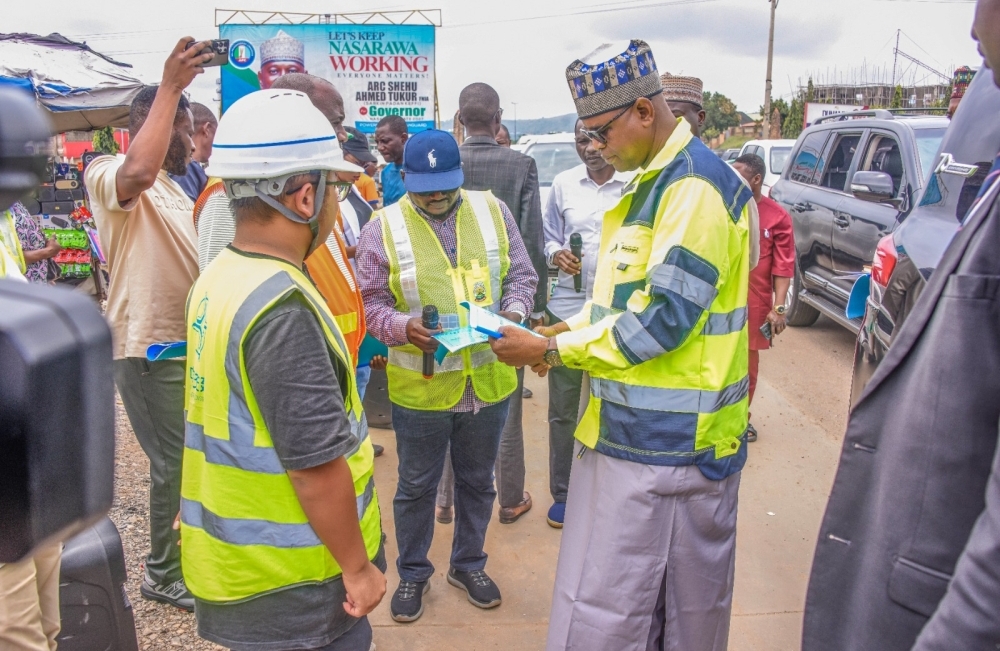
Minister Inspects Ongoing Reconstruction and Expansion of Mararaba-Keffi Road (43.65km) Under Tax Credit Scheme. The Honourable Minister of State for Works, Rt. Hon. Muhammad Bello Goronyo, Esq., on Thursday, 2nd October 2025, conducted a site inspection of the ongoing reconstruction and expansion works on the 43.65-kilometre Mararaba-Keffi Road. The project, a critical infrastructure upgrade under the Road Infrastructure Development and Refurbishment Investment Tax Credit Scheme, is being executed by China Harbour Engineering Company Nigeria Limited. The Minister, during the inspection, expressed serious concern over the pace of work and the persistent traffic congestion along the corridor, which serves as a vital link between the Federal Capital Territory and Nasarawa State. He noted that the daily gridlock severely affects thousands of commuters, particularly civil servants residing along the axis, many of whom struggle to arrive at work on time. Rt. Hon. Goronyo emphasized the urgency of expediting the construction timeline, reminding the contractor that the Federal Government had granted permission for night-time construction activities to ensure faster delivery and to mitigate the hardship faced by road users. "This project is of national importance. The volume of traffic here is massive, and many public servants are suffering. The government is fully supportive of this project, but the contractor must rise to the occasion. You have approval to work at night — please utilise it to meet the delivery schedule," the Minister stated. In response, Mr. Dong Hong, the Project Manager representing China Harbour Engineering Company Nigeria Limited, assured the Minister and the Nigerian public that the project remains on track and will be completed within the agreed timeline. "We understand the importance of this road and the urgency to ease traffic for the people. Our team is fully mobilised, and we are committed to delivering quality work on time," said Mr. Hong. The Mararaba-Keffi Road project forms part of the Federal Government’s efforts to address critical infrastructure needs through innovative financing mechanisms such as the Tax Credit Scheme, which allows private sector partners to invest in public road projects in exchange for tax reliefs. The Federal Ministry of Works remains committed to ensuring that all ongoing infrastructure projects are delivered efficiently, timely, and to the highest standards, in line with President Bola Ahmed Tinubu’s Renewed Hope Agenda. Mohammed Abdullahi Ahmed. Director, Press and Public Relations Department. Federal Ministry of Works. ...
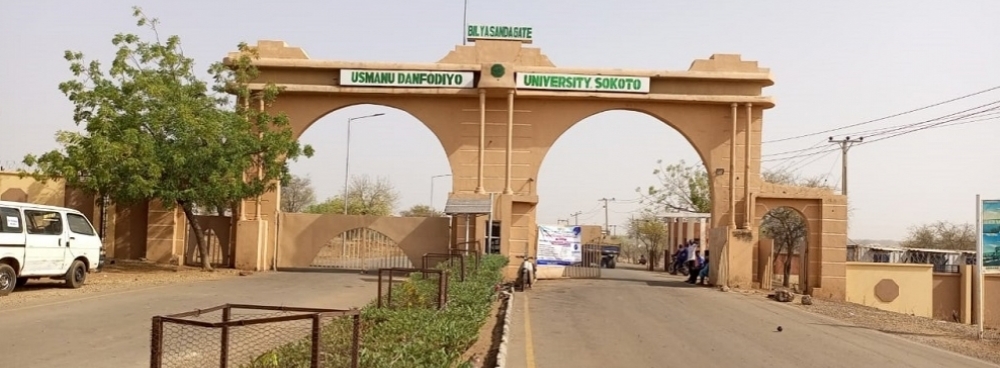
Varsity Lauds Fashola Over 2.0 km Internal Road Intervention
• Minister of Works and Housing, Babatunde Raji Fashola has been commended for the 2.0 kilimeters road Intervention project done in the Usmanu Danfodio University, Sokoto (UDUS)
Vice Chancellor of the University, Prof. Lawal Sulaiman Bilbis gave the commendation during the official handover of the completed road to the University, Wednesday, March 9, 2022.
The Minister, represented by the Federal Controller of Works in Sokoto State, Engr Akintunde Akintade, said that the Ministry is working on 76 road projects in selected Federal Tertiary Institutions across the nation.
"We have successfully intervened in the internal road networks of 46 tertiary institutions and handed over 29 as at 2021 and we now have another 17 ready to be handed over, while we are currently attending to 30 roads in similar institutions across the country making a total of 76," he said
Fashola explained that there were clear indications that responses from institutions who benefited with the intervention revealed that the gap of the infrastructure needs is steadily being bridged by a gradual process of repairs and construction on the major highways and schools.
Accordingly, he added that the construction of the internal roads in the tertiary institutions by the Federal Government has enormously helped the students' renewed enthusiasm to attend classes because bad roads across the tertiary institutions have been restored to good condition.
Similarly, the Minister explained the project has created jobs for no less than ninety (90) people during the execution which contributed tremendously to the job creation initiatives of Buhari’s administration.
In his response the Vice Chancellor of UDUS, Prof. Lawal Sulaiman Bilbis, who was represented by the Deputy Vice Chancellor (Academic), Prof. Garba Mahuta applauded the Minister His Excellency Babatunde Fashola for the intervention, describing it as a giant stride in the course of humanity
Prof Bilbis stated that the rehabilitation of the road commenced last year and was completed 100 percent by the Federal Ministry of Works and Housing under the able leadership of Minister Fashola
The President of the Students Union Government (SUG), Umar Shamsudeen, said he was so delighted with the road project and under his tenure the project would be protected and maintained, adding that the road would enhance the environment and improve teaching and learning.
While speaking, the Sector Commandant of 10.1 of Federal Road Safety Commission (FRSC), Sokoto State, Muhammad Kabo, appreciated the effort of the Federal Government in putting the road in good condition and appealed to the road users to always observe road signage and speed limit.
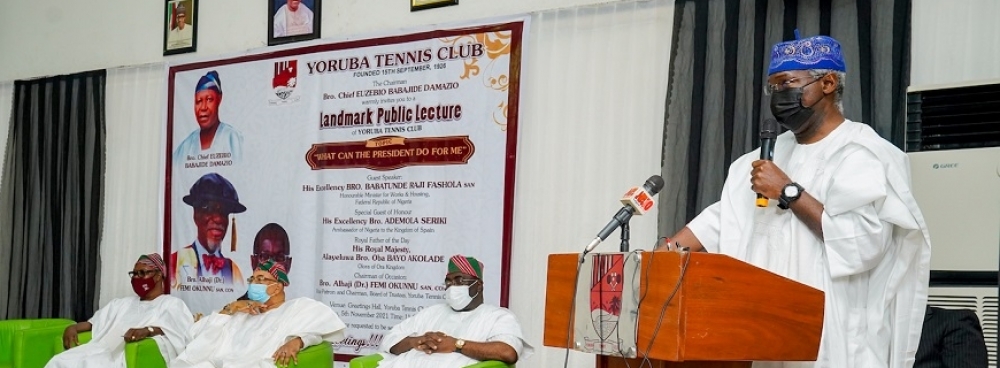
WHAT CAN THE PRESIDENT DO FOR ME? BEING THE TEXT OF A KEYNOTE DELIVERED BY H.E BABATUNDE RAJI FASHOLA, SAN AT THE YORUBA TENNIS CLUB ANNUAL LECTURE
Distinguished Ladies and Gentlemen:
At the onset of the protest against the Special Anti-Robbery Squad (SARS) when five demands were made in respect of the police and SARS, President Muhammadu Buhari weighed in on the side of the protesters when he said:
“On Monday 12th October, I acknowledged the genuine concerns and agitations of members of the public regarding the excessive use of force by some members of SARS…As a democratic government, we listened to, and carefully evaluated the five-point demands of the protesters. And, having accepted them, we immediately scrapped SARS, and put measures in place to address the other demands of our youth.”
To some of the protesters this was not enough action. In my interaction with some of them, young and not so young they wanted the President to sack some policemen, in some cases even the Inspector General of Police.
During this interaction I referred them to the provisions of the 1999 Constitution as amended, that I pointed out to them that:
* The President of Nigeria cannot sack a policeman because a policeman is not the employee of the President but rather the employee of the Police Service Commission;
* The President can only sack Ministers, and other appointees that he personally appoints to assist him and not any civil servant deployed to work for him such as a cook, driver, or administrative staff who are ordinary employees of the Civil Service Commission.
Not a few persons were surprised to hear this.
Indeed, I have discovered that a sizeable number of our people express surprise when I explain the structure of Government to them.
For example, when I explain to people that as Governor or Minister I do not sign cheques, vouchers or documents that directly involve the transfer of money.
On the contrary, at certain levels of payment under the financial regulation, my powers as Governor or Minister are limited to approving recommendations for payment made to me through the Permanent Secretary; after he and I have satisfied ourselves that the Government has received value for the payment or will do so.
Although the Federal Ministry of Works and Housing has several directorates such as Construction and Rehabilitation, Planning and Development, Bridges and Design, Materials Geotechnics and Quality Control, Finance and Accounts, Legal and Procurement, many openly express surprise when I tell them that only Engineers, Architects, Valuers, Builders, Town Planners and those involved in the built industry are staff of the Ministry of Works and Housing.
Those in Legal Department are lawyers seconded from the Ministry of Justice to whom they report, Finance and Accounts are staff of the Accountant General/Ministry of Finance, to whom they report, and procurement personnel are staff of the Bureau of Public Procurement to whom they report; while those in administration are staff of the Head of Service/Public Service Office to whom they report.
And this is true of all ministries, in a system of checks and balances.
Similarly of course, in the engineering sections of other ministries, the Ministry of Works also seconds engineers to support those ministries and they report to their parent ministry.
What is true of the Federal civil service system in this regard is largely true of the state civil service systems.
This in part is why the public service is a bureaucracy, which has been defined as:
“…a complex organization that has multi-layered systems and processes.” (Source - Investopedia)
I am surprised that this surprises people and this is a part of the reason for choosing to discuss it at this public forum.
So very often, I hear general statements that the President of Nigeria is very powerful, sometimes they say the office is too powerful in some cases they even ascribe more powers to him than the United States President.
Therefore I have decided, in responding to the invitation of Chief Babajide Damazio, the Chairman of the Yoruba Tennis Club, to interrogate the matter publicly by titling my speech “What can the President do for me?”
The flip side is also that some of our public discourse is coloured with general statements that are not factual such as some statements to the effect that the Vice President is in their words “just a spare tyre” suggesting that he has no powers or functions except those assigned to him by the President.
These statements betray a lack of knowledge about the Constitution and I intend to discuss them here within the reasonable limits of time.
If one looks through the length and breadth of the constitution as I have, you will find that the office of the President is referred to 48 (FORTY-EIGHT) times.
A closer look at the details for those who have read the constitution, will suggest possibly an error in mixing up or conflating “powers” with “function” and the difference is significant.
“Whereas ‘power’ is the legal right or authorisation to act or not to act, it is the ability conferred on a person by law to alter, by an act of will, the rights, duties liabilities and other relations, either of that person or another. On the other hand, the term “function” is the duty of the office.
In the 48 mentions of the Office of the President in the Constitution:
* 23 instances refer to powers exercisable by the President;
* 9 instances refer to powers exercisable by the President subject to the National Assembly;
* 4 instances refer to powers exercisable by the President subject to other institutions;
* 9 instances refer to the President’s functions and duties; and
* 3 instances refer to restrictions on the powers of the President.
Yes, the “all powerful,” “too powerful” President that we generalise about his powers, has restrictions on his powers.
I have provided a table of all the references in the Constitution below:
Part A: Powers exercisable by the President
| Section | ||
| 1 | The executive powers of the Federation is vested in the President | Section 5(1)(a) |
| 2 | The executive powers include the power to execute and maintain the Constitution | Section 5(1)(b) |
| 3 | Power to execute and maintain all laws made by the National Assembly | Section 5(1)(b) |
| 4 | Power to make treaties [Power conferred on the Federation] | Section 12 |
| 5 | Power to deprive registered or naturalized citizens of their citizenship | Section 30 |
| 6 | Authorization of qualified private persons to establish a television or wireless broadcast station | Section 39 |
| 7 | Power to assent (or withhold assent) to bills passed by both the Senate and the House of Representatives | Section 58 |
| 8 | Power to decide whether or not it is practicable to hold elections | Section 64 |
| 9 | Power to issue proclamation for the holding of the first session of the National Assembly | Section 64 |
| 10 | Right to attend joint meetings of the National Assembly or of either the Senate or the House of Representatives to deliver an address on national affairs or to make statement on government policies | Section 67 |
| 11 | Power to order withdrawal of moneys from the Consolidated Revenue Fund of the Federation for the purpose of meeting expenditure necessary to carry on the services of the Government | Section 82 |
| 12 | Establishment of offices of Ministers of the Government of the Federation | Section 147 |
| 13 | Assignment of responsibilities to the Vice President and Ministers | Section 148(1) |
| 14 | Power to appoint or remove Chairman and members of Federal Executive Bodies established by section 153 of the Constitution | Section 154 |
| 15 | Approval of rules of procedure made by the Federal Executive Bodies established by section 153 of the Constitution | Section 160 |
| 16 | Power to approve delegation by the Federal Civil Service Commission of its power to any of its members or to any officer in the civil service of the Federation | Section 170 |
| 17 | Power to appoint and remove the following officers: Secretary to the Government of the Federation, Head of Service, Ambassadors, High Commissioners and Permanent Secretary, etc | Section 171 |
| 18 | Power to give approval to a State body where it is intended by the body to confer power or impose duties to any officer or authority of the Federation | Section 204 |
| 19 | Power to give lawful directions to the Inspector General of Police with respect to the maintenance and securing of public safety and public order | Section 215(3) |
| 20 | Power to direct the armed forces to suppress insurrection and acting in aid of civil authorities to restore order | Section 217(2)(c) |
| 21 | The President is the Commander-in-Chief of the armed forces of the Federation and as such is empowered to: * determine the operational use of the armed forces of the Federation; * appoint the Chiefs of Staff of Defence, Army, Navy, and Air Force; and * appoint heads of any other branches of the armed forces of the Federation. |
Section 218 |
| 22 | The Constitution vests the Executive power for the administration of the Federal Capital Territory in the President | Section 299 |
| 23 | Power to appoint a Minister for the Federal Capital Territory | Section 302 |
| 24 | As the Appropriate Authority, the President is authorized to make modifications in the text of any existing law as he considers necessary to bring the law into conformity with the provisions of the Constitution | Section 315(2) |
Part B: Power subject to the National Assembly
| 1 | Power to declare a state of war between the Federation and another country [subject to the sanction of the National Assembly] | Section 5(4) |
| 2 | Deployment of members of the armed forces of the Federation on combat duty outside Nigeria. [subject to approval of the Senate] | Section 5(5) |
| 3 | Making regulations to prescribe matters which are required to give effect to constitutional provisions on citizenship [subject to laying before the National Assembly] | Section 32 |
| 4 | Appointment and removal of the Auditor-General for the Federation | Section 86 |
| 5 | Appointment of Ministers | Section 147 |
| 6 | Power to appoint Special Advisers to assist the President in the performance of his functions. [Their number is to be determined by the National Assembly] | Section 151 |
| 7 | Power to appoint the Chief Justice of the Federation, Justices of the Supreme Court of Nigeria, President of the Court of Appeal, Justices of the Court of Appeal, Chief Judge and Justices of the Federal High Court and Justices of other Federal Courts. [Subject to confirmation by the Senate] | Sections 231, 238, 250, 254B, etc |
| 8 | Power to remove the Justices and Judges appointed by him [Acting on address supported by 2/3 majority of the Senate or NJC] | Section 292 |
| 9 | Power to issue a proclamation of a state of emergency in the Federation or any part thereof in the circumstances listed in section 305(3) and (4) of the Constitution | Section 305(1) |
Part C: Power subject to other institution
| 1 | Deployment of members of the armed forces of the Federation on a limited combat duty outside Nigeria. [in consultation with the National Defence Council] | Section 5(5) |
| 2 | Power to grant a pardon to any person convicted of any offence created by an Act of National Assembly (Prerogative of mercy) [This power is to be exercised by the President after consultation with the Council of State] |
Section 175 |
| 3 | Power to accept or reject report of population census conducted by the National Population Commission. [This power is subject to the advice of the Council of State] |
Section 213 |
| 4 | Appointment of the Inspector General of Police [This power is to be exercised on the advice of Nigeria Police Council] |
Section 215(1)(a) |
Part D: Functions and Duties
| 1 | Considering recommendations from a body set up to review ownership and control of business enterprises operating in Nigeria | Section 16(3) |
| 2 | Approving the registration of persons who apply to be registered as citizens of Nigeria | Section 26 |
| 3 | Granting of certificate of naturalization to persons who are qualified | Section 27 |
| 4 | The President has the responsibility to cause budget to be prepared and laid before the National Assembly | Section 81 |
| 5 | Duty to hold regular meetings with the Vice President and the Ministers of the Government of the Federation | Section 148(2) |
| 6 | Tabling of proposals for revenue allocation from the Federation Account to the National Assembly | Section 162(2) |
| 7 | Duty to transmit copies of official gazette containing emergency proclamation to the President of the Senate and the Speaker of the House of Representatives | Section 305(2) |
| 8 | The President is the chairman of the following constitutional bodies: The Council of State * National Defence Council * National Security Council * Nigeria Police Council |
|
| 9 | Duty to lay accepted report of population census conducted by the National Population Commission before the National Assembly. [This power is subject to the advice of the Council of State] |
Section 213 |
Part E: Restriction
| 1 | Prohibition from holding any other executive office or paid employment | Section 138 |
| 2 | Prohibition from maintaining or operating a bank account in a country outside Nigeria | Fifth Schedule to the Constitution |
| 3 | Prohibition from being employed by foreign company or foreign enterprises after leaving office | Fifth Schedule to the Constitution |
Is the Vice President really without responsibilities, duties and functions unless the President assigns them to him?
Certainly not. Those who assert that position tell a big lie. A lie born either out of ignorance at the best or mischief at the worst.
The framers of the Nigerian Constitution and our legislators seem to have deliberately attempted to entrust matters relating to its security with the President by making him chairman of the National Councils such as the Security Council, Defence Council and the Police Council, while entrusting the Vice President with matters relating to the economy by making him the Chairman of the National Council on Privatization and the National Economic Council.
Although they did not say the President cannot deal with economic matters, it is my view that he cannot chair the Economic Council or National council on privatization without violating/breaching the constitution with its attendant constitutional risks and consequences.
So much for the “all-powerful” President.
As for the Vice President, his other constitutional functions include:
|
SECTION A Constitutional Function and Duty of the Vice President |
Constitutional Provision | |
| 1 | Exercise of Executive Powers of the Federation as delegated by the President | Section 5(1)(a) |
| 2 | Power to perform the functions of the President as Acting President during temporary absence of the President | Section 145(1) |
| 3 | Power to hold the office of the President if the office of the President becomes vacant by Section 146 | Section 146(1) |
| 4 | Performance of ‘responsibility for any business of the Government of the Federation’ as may be assigned by the President | Section 148(1) |
| SECTION B Constitutional Appointment/Position |
Constitutional Provision | |
| 1 | Deputy Chairman of the Council of State | Third Schedule, Part I, Paragraph B (5) |
| 2 | Chairman of the National Economic Council | Third Schedule, Part I, Paragraph H (18) |
| 3 | Deputy Chairman of the National Defence Council | Third Schedule, Part I, Paragraph G (16) |
| 4 | Deputy Chairman of the National Security Council | Third Schedule, Part I, Paragraph K (25) |
| SECTION C Statutory Function/Position |
Statutory Provision | |
| 1 | Chairman of the Governing Council of the National Emergency Management Agency | Section of National Emergency Management Agency Act |
| 2 | Chairman of the Governing Board of the Border Communities Development Agency | Section 2 Border Communities Development Agency (Establishment, etc.) Act |
| 3 | Chairman of the National Boundary Commission | Section 4 National Boundary Commission (Establishment) Act |
| 4 | The Vice President may represent the President of the Federal Republic of Nigeria as the Chairman of the Governing Council) | Section 8 Nigeria Sovereign Investment Authority (Establishment etc.) Act 2011 |
| 5 | Chairman of the National Planning Commission | Section 3 National Planning Commission Act |
| 6 | Vice Chairman of the Council of the National Space Research Development Agency | Section 2 National Space Research and Development Agency Act |
| 7 | Chairman of the Supervisory Board of the Debt Management Bureau | Section 2 Debt Management Bureau (Establishment) Act |
| 8 | Chairman of the National Council on Privatisation | Section 9(2) Public Enterprises (Privatisation and Commercialisation) Act |
Which brings me to the heart of the matter, as to why a significant number of Nigerians place their hopes and expectation for a better life on their President rather than their Governors and Local Government Chairmen.
Or put differently, why do we seem to only like our Presidents after they have left office and not while in office or after they have died, like “the best President we never had.”
Again, after a very deep interrogation, my answer to this question is traceable to the constitution. And this is not a concession to the advocates of restructuring, but rather a clear lack of relationship by many of us with the constitution.
In other words, we are not fully or sufficiently familiar with our constitution and the roles it ascribes to the different levels of government, at local, state and federal, and the officers attaching to them such as Local Government Chairman, State Governor and the President.
And the related question, to the question what can the president do for me, is to ask ourselves: how the office of the President make my life better?
Before I offer an answer, let me share with you the feedback of a survey that I commissioned to gauge the sense of what the Nigerians who were polled desired most.
The common thread in the responses were: security, education, healthcare, transportation, water supply, employment, housing and electricity. Of course, there are others, which time and space will not permit me to interrogate.
In understanding what the President can do, we must bear in mind the nature of our political arrangement where the President as head of the country, also leads the executive arm of the Federal Government and projects our sovereign status, but shares power and responsibility with 36 states headed by Governors, and 774 Local Government headed by Local Government chairmen.
If we go through our constitution, (and I urge everybody to get a copy and read it if only casually) we will find two (2) lists of responsibilities in the schedule to the constitution.
They are:
* The Exclusive list
* The Concurrent list
The first list contains matters over which only the National Assembly, as the custodian of legislative power of the Federal Government can make laws and over which the President as the head of the executive arm can take action. This list contains 68 (SIXTY-EIGHT) items and includes matters like the banking, currency, police, the military, customs, immigration, citizenship etc.
The second list, which is called the concurrent list, means exactly what it says. A concurrence of authority where the Federal and State governments share power and therefore the state houses of assembly as well as the National Assembly can make laws over these matters; while the Governors, as well as the President, can act in these areas.
This list contains 12 (TWELVE) items and includes matters like Education (secondary and university including polytechnics) Health (secondary and tertiary), Electricity (generation, transmission and distribution).
This list does not include primary education or primary health or sanitation or markets which are expressly left for the Local Governments in the 4th schedule of the constitution.
All matters not listed in these two lists or in the fourth schedule to the constitution such as magistrate courts, consumption tax, rent control, local levies and non-specified taxes, are regarded as RESIDUAL, and the sole preserve of the state governments.
Manifestly and contrary to the view that everything revolves around the President or the Federal Government, what is obvious from the Nigerian constitution and political arrangement, what we really have is an arrangement of shared powers, and I might add, shared responsibility. The question then must be, whether all those who bear responsibility actually discharge them; and I will come back to this in some comparative examination of some of the problems identified earlier that people seek government action for.
But before I do so, I need to quickly shed light on even the nature of the Federal Government.
The Executive arm, such as the Federal Executive Council, has the President and Vice-President elected by the people of Nigeria, and at least 36 ministers appointed from each state as prescribed by the constitution that every state must have a Minister. It also then prescribes that the ministerial nominee must be cleared and approved by the Senate.
And who is the Senate? 109 people, elected by you and I, whether you voted or not, 3 from each state to represent us in the Federal Government because there is no building big enough to accommodate us so we send representatives.
The FCT also has one Senator. The House of Representatives, the other arm of the National Assembly has 360 members from all the 36 states who act to exercise legislative powers over the exclusive list, to determine what the Federal Executive can act upon.
When you see how the structure is laid out, what is obvious to me and hopefully to you, is that it is the people of Nigeria, rather than one man, (the President), who truly have powers and responsibility over our affairs.
Let us now then look at a few examples, because there are many, to examine how these powers have been exercised.
Let me start with electricity. As I said it is a concurrent power by the federal and state. The Federal Government since 2013 has chosen to privatize its own responsibility by selling the generating and distribution assets, while managing the transmission side with varying degrees of success.
The question to ask is what is happening at state level across Nigeria with electricity generation, transmission and distribution.
This question cannot be posed to the President. He is not in charge of any state. He did not elect or appoint a Governor. You and I did.
So I am not suggesting that all electricity problems are the responsibility of the state Governors, but if you have an electricity problem in your states please ask your Governor what he plans to do about it, and your House of Assembly lawmaker which law he will support if you vote for him to give you electricity.
The same applies to primary education and primary health. The Federal Government does not and should not own a primary school or primary healthcare centre. But these are the most defining centres for quality education and preventive health. The foundations of young life are defined here. Basic literacy and numeracy, ante-natal care and life protecting immunization are delivered here.
Please ask your Local Government chairman not the Governor or the President.
Sanitation, characterized by water supply and proper refuse management and civic education are not the constitutional responsibility of the Federal Government, your Senator, house of representative member or the President.
It is our state representatives who have constitutional mandate to deliver water to our homes, move our refuse and make sure our surroundings are clean and we do not suffer from disease and epidemics.
Because I expect that there will be responses, whether informed or uninformed to what I already said and will say, let me be clear that I have not come to absolve the Ministers, the Senators, House of Rep, Federal Civil servants and the President of responsibility.
We have our responsibilities and can do a lot more, but I first sought to clear the air and state the facts for those right thinking and indeed well-meaning Nigerians who honestly want a better life and do not know who is responsible for the problems they face.
So, let me go to a contentious area, like Security.
Section 14.2 (b) of the Constitution provides that:
“the security and the welfare of the people shall be the primary purpose of government…”
Interestingly, it does not say which government. My view is that security is an all government responsibility not a Federal Government responsibility alone.
Yes, the Federal Government controls the apparatus of coercive law-enforcement prescribed in the constitution like the military and police, but it has not precluded states from setting up certain types of law enforcement for traffic, sanitation etc.
I am also a public advocate for states to control their own law enforcement apparatus in other extensive areas where they have powers to make laws.
However, I hold the view that security, which is a concern of some of the people, is not guaranteed by having a state law enforcement apparatus.
Indeed, it is more than a government affair.
In my view, it is an all nation affair as contemplated in section 24(e) which provides that:
“It shall be the duty of every citizen to…render assistance to appropriate and lawful agencies in the maintenance of law and order…”
It seems to me that the road to resolving our security problems, starts with a resolution to prevent or resolve the existence of conflict, eliminate the opportunities for crime to happen, and this requires effort from the family unit to the schools, religious institutions, to all levels of government.
It requires a reset of our values for hard work, a love for one another as a keeper of each other, brothers and sisters, a commitment to peaceful cohabitation and the mustering of the capacity to ensure that no conflict lasts to the next day, whenever any occurs.
This will reduce the need for law-enforcement and put less pressure on them.
It is more than a job for a President, Governor, Local Government chairman, or legislator at any level. It is a job that requires parents at home, teachers in schools, religious leaders in places of worship, title holders like Obas, Emirs, Chiefs like Obis, Baloguns, Turakis, Asiwajus, Bashoruns, Galadimas, Ezes and many more.
This again does not absolve the need for well-equipped law enforcement or excuse those responsible, as it does not absolve the need to stem and stop drug abuse in our society, and the need to reduce or eliminate abandoned buildings where suspicious people thrive in our society and need for street lighting at night to deter criminal atrocity.
I cannot conclude this intervention without mentioning road infrastructure.
Nigeria as a country has 200,000 plus kilometres of roads. But they belong to different levels of government.
Federal trunk roads, mentioned in item 11 of the executive legislative list is the one the Federal Government is responsible for
These are the roads that connect one state to the other, interstate roads. These account for 35,000km out of the 200,000km representing 17.5 %.
The state government roads are 17.5% of the 200,000 km and these are the roads that connect one Local Government to another; while the Local Governments have responsibility for the balance, representing 65% of roads that connect one ward to another.
I cannot of course ignore the fact that the Federal Government has a big and important role to play in respect of fiscal and monetary policy that impacts exchange rate, interest rate and inflation.
But there are legitimate questions to ask about how many local businesses need foreign exchange to operate as much as they need water, electricity and skilled personnel and lower levies and non-state actors from extorting them.
There is a legitimate question to ask about whether those of us who keep bank accounts are ready to accept lower deposit rates as a measure to induce lower lending rates, because high interest rates affect our people.
And of course, with housing on the rental side, how many of us who own houses are ready to accept monthly payments as rent paid in arrears as against two (2) years rent paid in advance, which is a point of pain and stress for many people.
While the properties for which these rents are charged largely belong to individuals and companies, not to government, there is also the question to ask whether or not our legislators at state levels can make laws to control rent. This is not a matter for the president because the federal legislator has no powers over rent.
On the construction side of housing, we must remember that it is the state Governors who control land, not the Federal Government. While the Federal Government is currently constructing houses in 34 states, and developing site and service schemes on land provided by state governments and using employee’s contribution to fund mortgages to help some people buy houses, there is a legitimate question to ask whether your state government is building houses and ready to create a mortgage funding institution.
Ladies and gentlemen, there is a lot to expect of a President, there is perhaps much more to ask of State and Local Government actors.
After all, the projection of national might and success on the international stage by heads of Governments such as Presidents, whether in terms of cuisine, technology, sports or the economy, is the projection of the aggregate of what happens at their sub-national entities.
Now that you know who to ask about primary education, primary health, water supply, refuse management, electricity, security, interest rate, roads and a lot more, please know that candidates will soon begin to emerge as 2023 beckons. Do not keep quiet.
Ask them what they will do to make your life better.
Thank you for listening.
Babatunde Raji Fashola, SAN
Honourable Minister of Works and Housing
Friday 5th November 2021
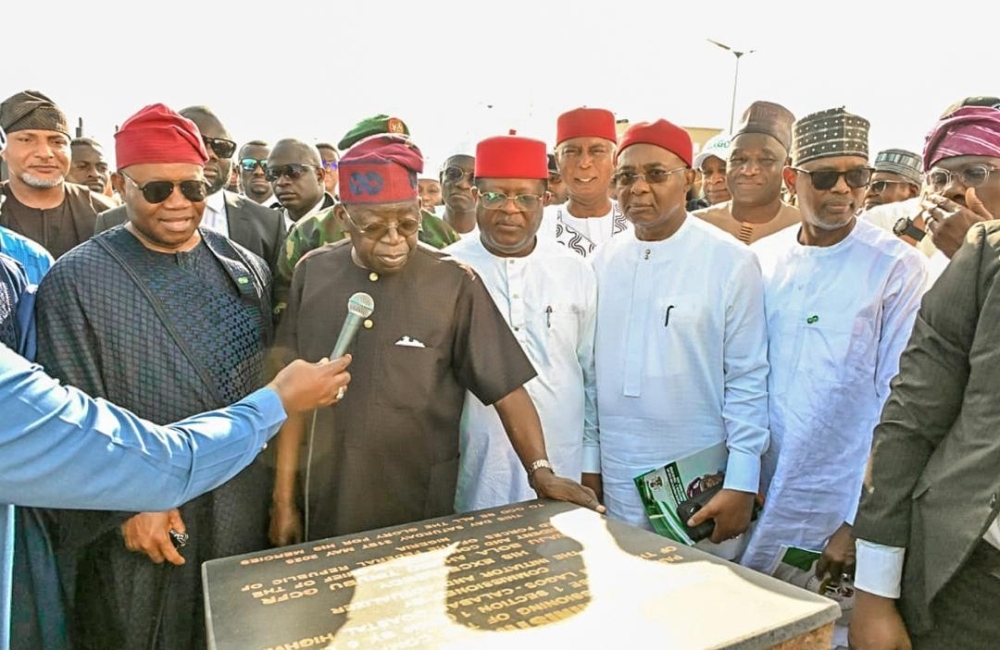
DRIVING NIGERIA’S FUTURE: CELEBRATING TWO YEARS OF TRANSFORMATIVE LEADERSHIP AND THE LAGOS-CALABAR COASTAL HIGHWAY MILESTONE
DRIVING NIGERIA’S FUTURE: CELEBRATING TWO YEARS OF TRANSFORMATIVE LEADERSHIP AND THE LAGOS-CALABAR COASTAL HIGHWAY MILESTONE
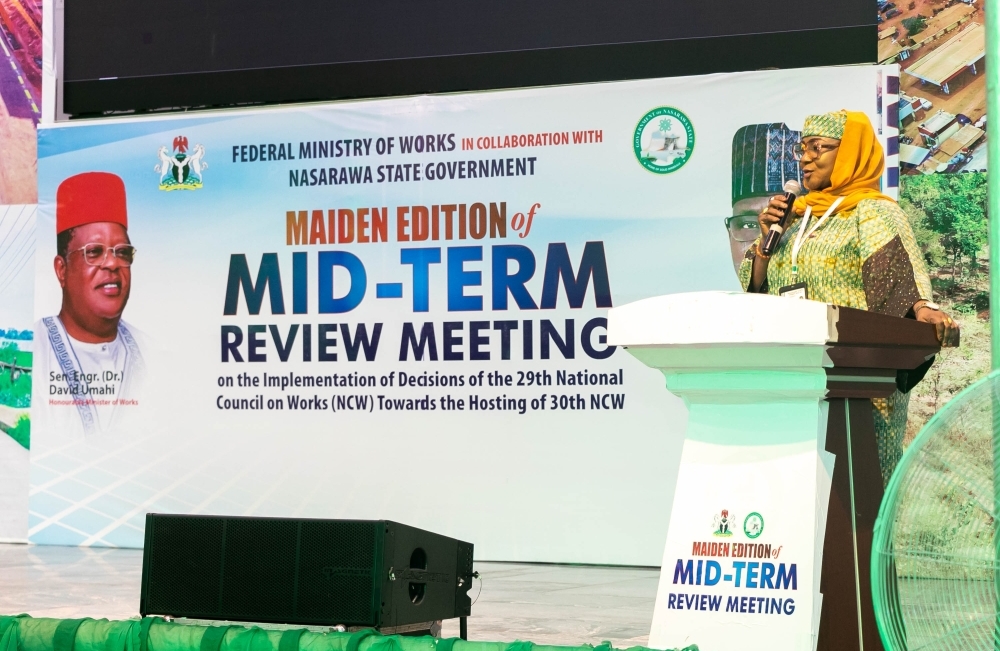
MID -TERM REVIEW MEETING ON THE IMPLIMENTATION OF THE DECISIONS REACHED AT THE 29TH NATIONAL COUNCIL ON WORKS (NCW) DAY 1
MID -TERM REVIEW MEETING ON THE IMPLIMENTATION OF THE DECISIONS REACHED AT THE 29TH NATIONAL COUNCIL ON WORKS (NCW) DAY 1