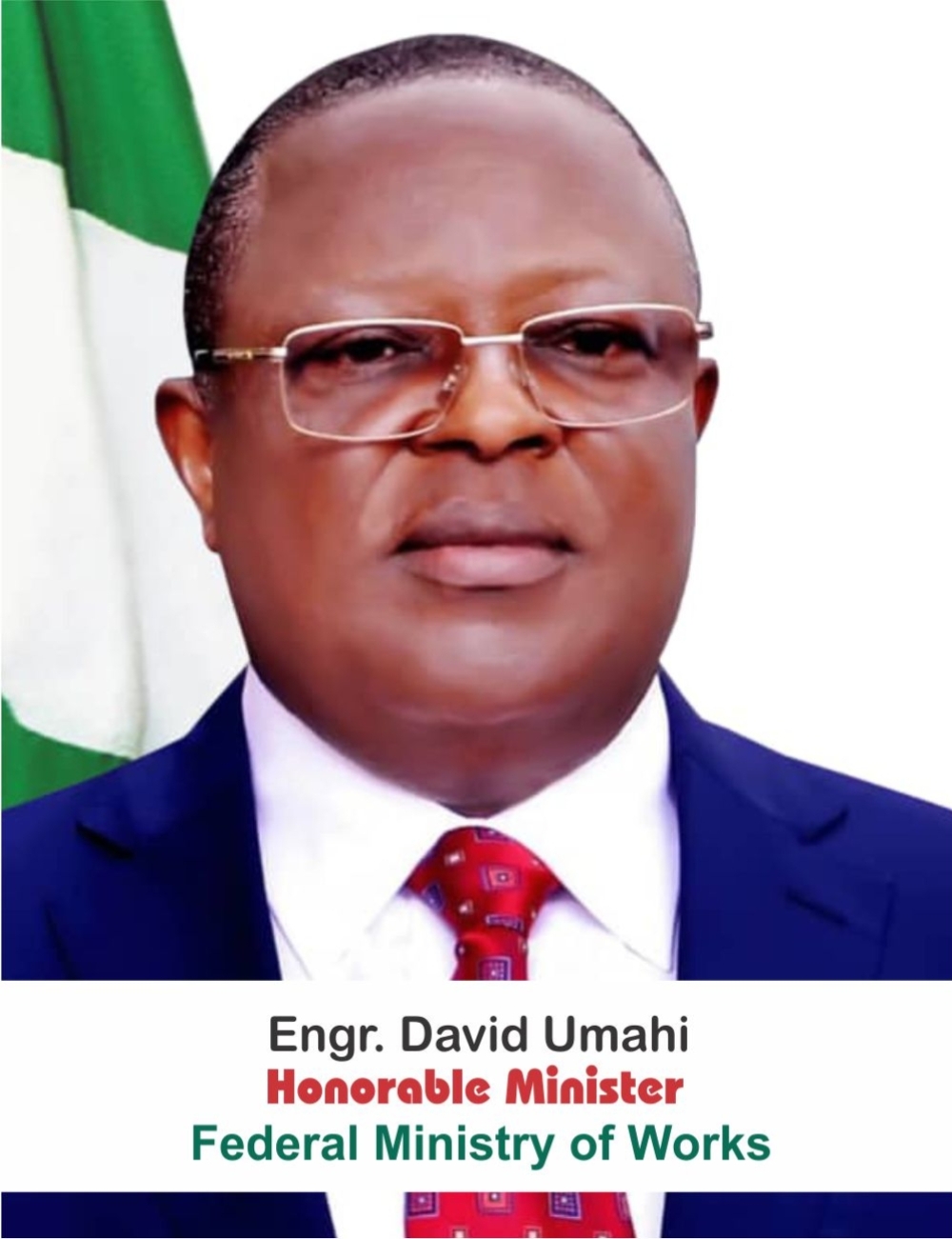
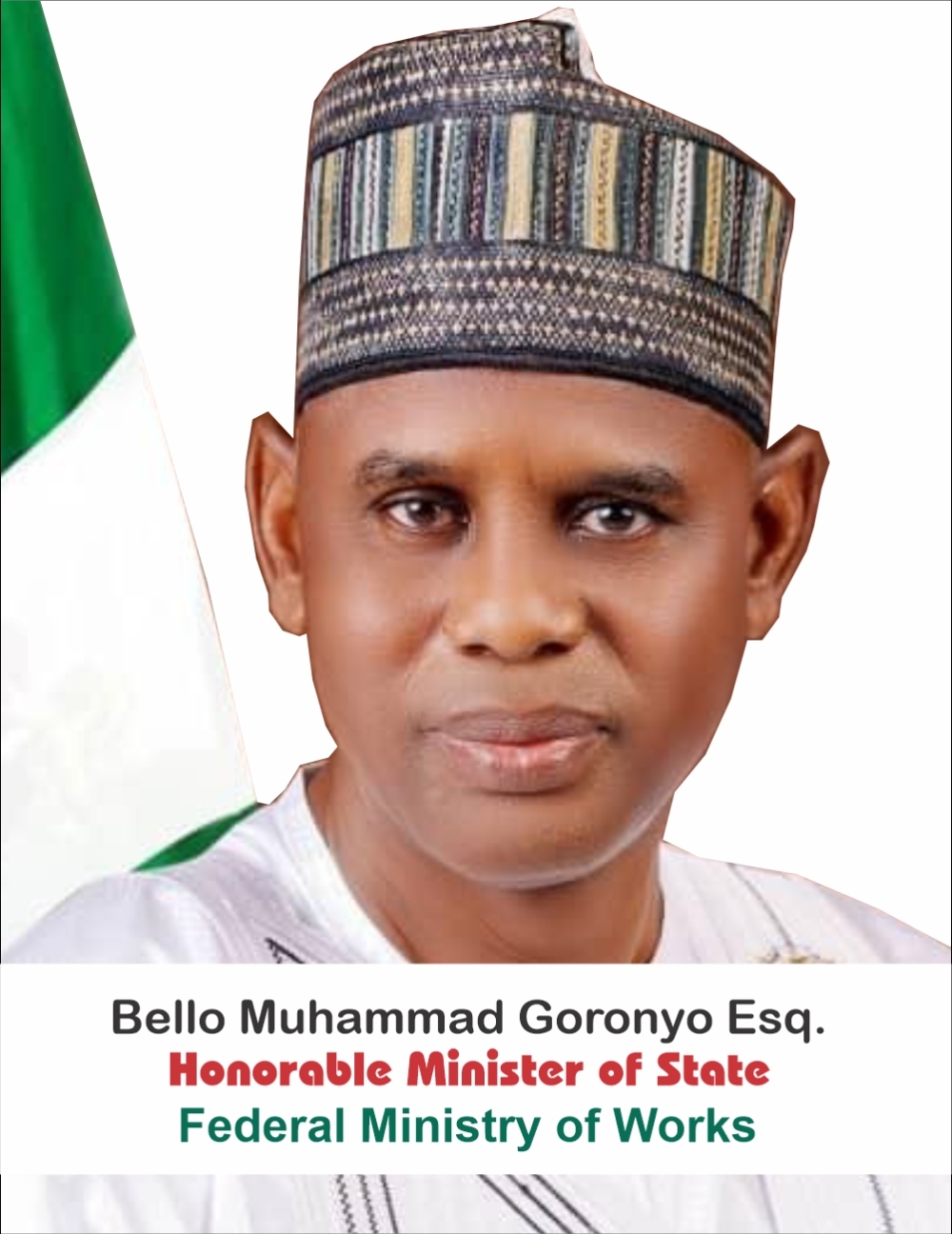
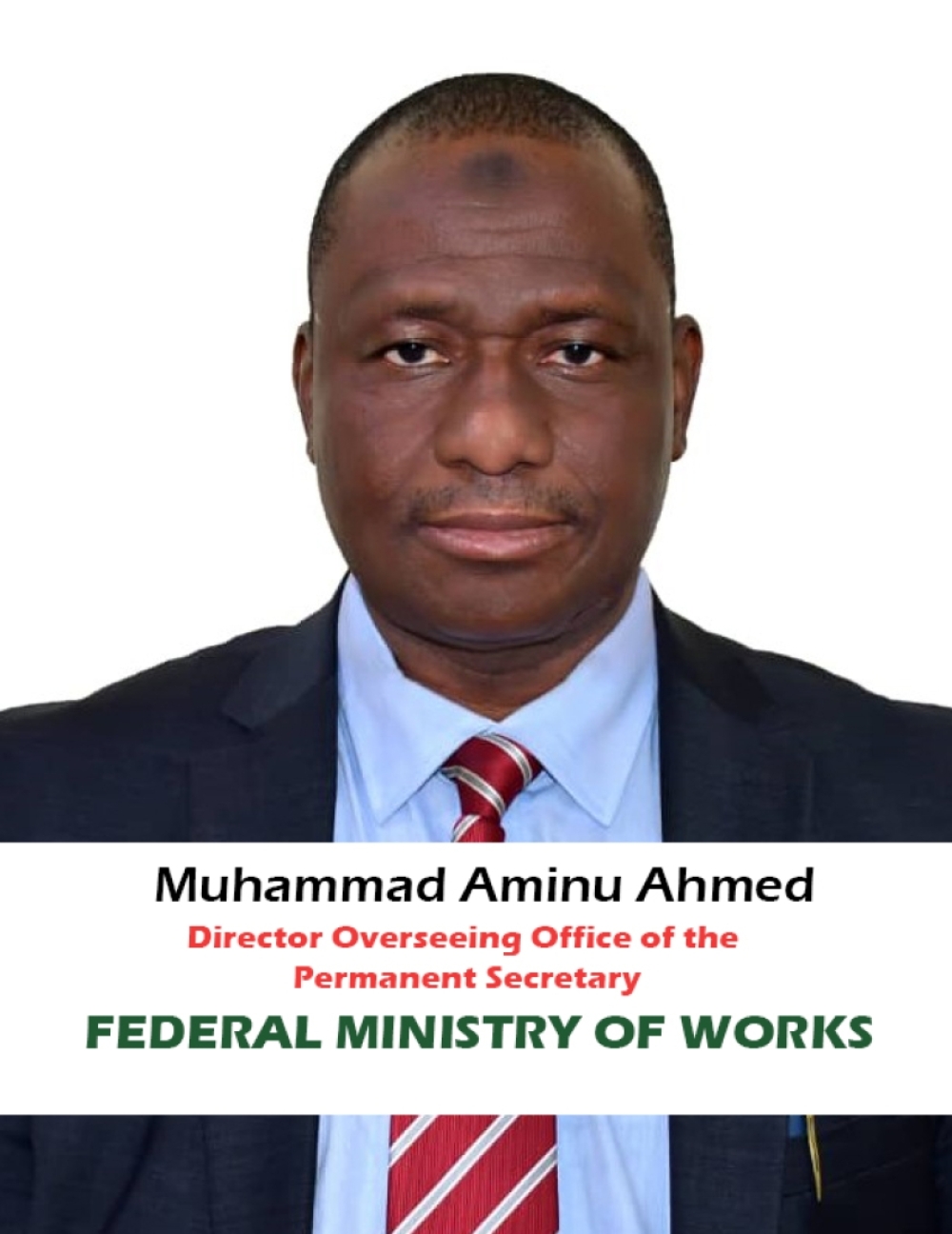
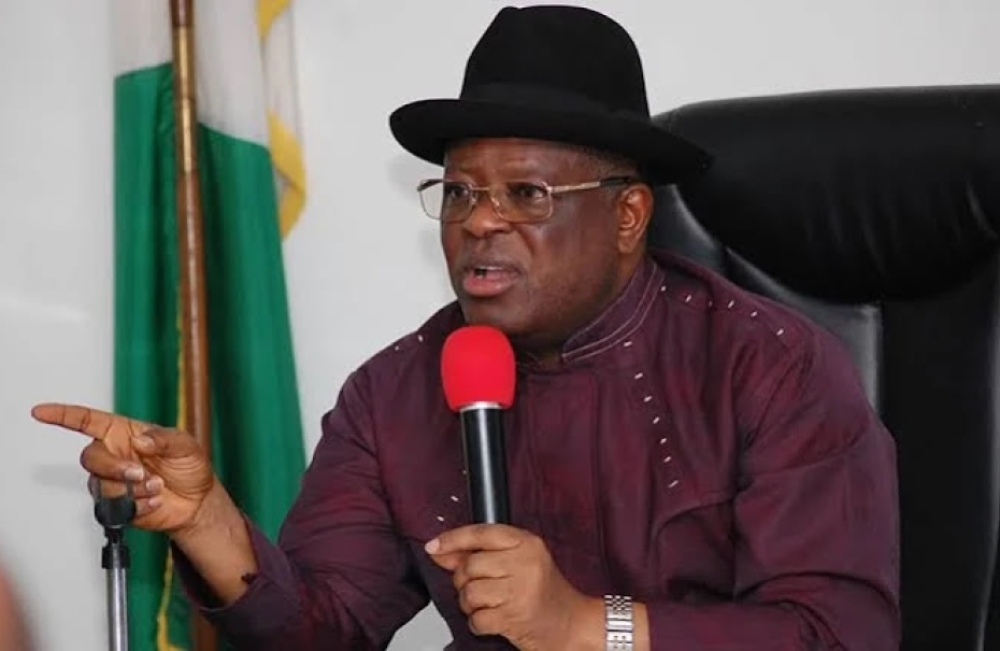
UMAHI ORDERS IMMEDIATE EMERGENCY INTERVENTION ON BENIN-ASABA ROAD, AND SOME OTHER CRITICAL FEDERAL ROADS
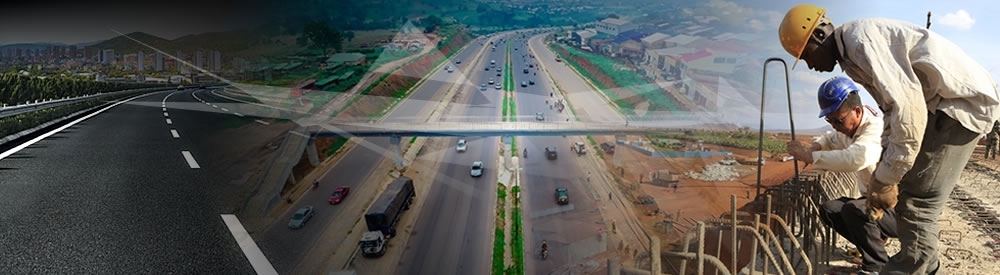
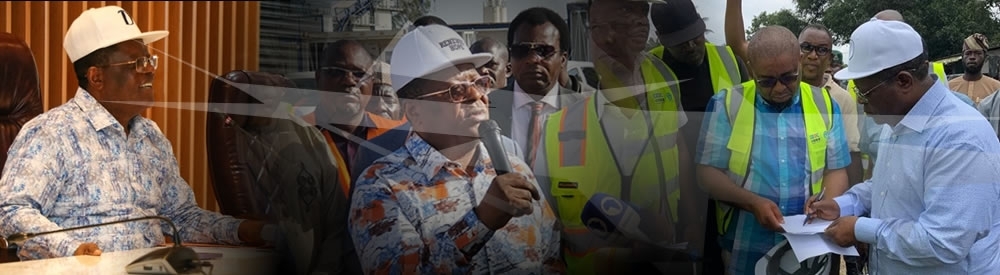
The Honourable Minister of Works, Senator Engr. David Nweze Umahi, CON, has directed the immediate deployment of major contractors to all three sections of the Benin-Asaba Federal Road to restore the failed sections and bring an end to the suffering of motorists and other road users.
This is because, the situation on the concessioned Benin-Asaba Road has reached a point where the overall public interest must take precedence over the existing concession agreement.
Recall that the Honourable Minister of Works was on the Benin-Asaba Road about seven days ago, where he assembled a number of contractors and directed them to prepare for immediate palliative intervention on the affected sections of the road at no cost to the concessionaire. In line with the Concession agreement which requires that before the Federal Government could intervene, the permission of the concessionaire must be required, and that permission was not granted to federal government.
The Minister subsequently proposed three options to the concessionaire, any one of which would have enabled the Federal Government to move in and address the worsening condition of the road. Unfortunately, none of the options was accepted by the concessionaire. Immediately after the Minister left Asaba, the already limited equipment deployed to the road by the concessionaire was further reduced to just one, worsening the situation and increasing the suffering of motorists and other road users.
While the Minister takes responsibility for the concerns and suffering of Nigerians using the road, it is important to state that the concessionaire has also not taken the suffering of Edo people and travelling public sufficiently into consideration by declining all the options put forward by the Federal Government. The concessionaire continues to rely on the terms of the concession agreement entered into by the previous administration, an agreement which weighs heavily against the Federal Government’s ability to intervene quickly in the interest of the public in a situation like this.
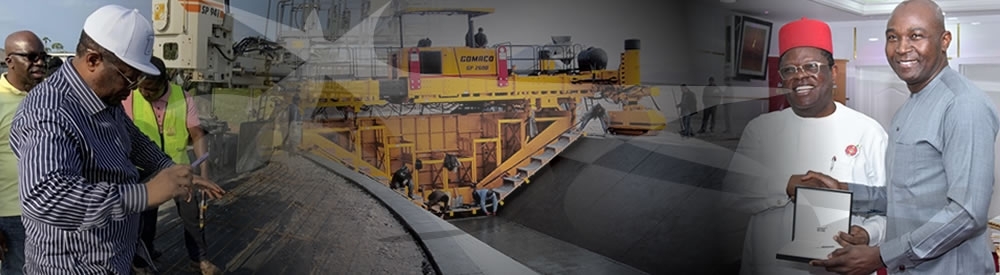
In view of this situation, the Honourable Minister of Works has directed the immediate deployment of major contractors within the corridor to all three sections of the Benin-Asaba Road to restore the failed sections and bring relief to the people, with the cost of the emergency intervention being borne by the Federal Government. The Honourable Minister has also directed immediate redesign of the entire route to be rebuilt with reinforced concrete pavement. The public should therefore take note that immediate action is underway to restore every failed section of the Benin-Asaba Road and subsequently rehabilitate the entire sections of the road using reinforced concrete pavement.
2. On the Benin-Sapele Road:
The Governors of Edo and Delta States, the Niger Delta Development Commission (NDDC), and the Federal Government are currently engaged in interventions on different sections of the road to restore the entire route. While some sections are receiving palliative attention, permanent works are also ongoing on other sections.
3. On Ifaki(Ekiti) - Kabba (Kogi) Road:
The Federal Government is engaging both the contractor; Gamji Nigeria Company Limited, and Dangote PLC on immediate emergency and permanent intervention on the most failed sections of the road, while efforts are being made to financially mobilise the company for more extensive permanent work to commence on the axis.
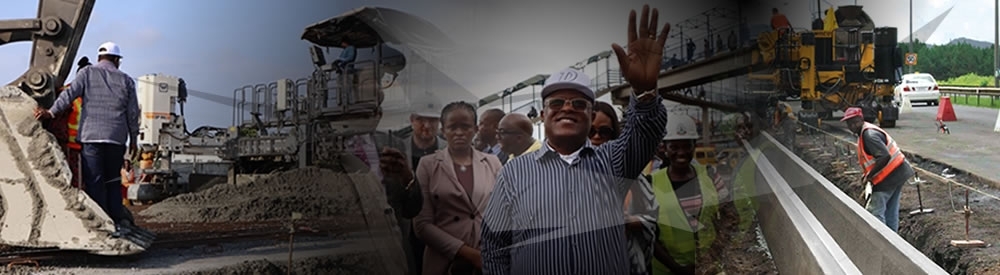
4. On the Sokoto-Zamfara-Katsina Road: This is an inherited project involving the dualisation of approximately 350 kilometres, which translates to about 700 kilometers. The project has since been redesigned and is currently ongoing and most sections are being reconstructed using reinforced concrete pavement. From the Sokoto axis towards Zamfara, over 50 kilometres of one carriageway have been fully completed with reinforced concrete pavement. From Zamfara to Katsina, some sections have been completed and palliative works have been ordered over the sections that have not been reconstructed. However, the pace of work slowed down due to the redesign and rephasing of the project. The contractors currently engaged on the road include CBC, SETRACO, Triacta and Mothercat. They are being remobilised to return to site and complete the outstanding works.
5. On the Abuja-Kaduna-Zaria-Kano Road: The Federal Government took over the Road project and has currently completed the 118-kilometer mostly on reinforced concrete pavement on lot 1. The Lot 2, which covers 164 kilometres, is over 60 percent completed on reinforced concrete pavement. The Federal Government has also introduced solar-powered light on the entire route of Abuja-Kaduna-Zaria - Kano to improve visibility during night travel and enhance the overall security situation on the route. The entire project is scheduled for completion by December 2026.
6. On Bauchi-Jigawa Road: Triacta Nigeria Limited has been mobilised to carry out the necessary interventions on some failed sections and work is currently ongoing in those failed sections.
7. On the Sagamu-Ore Road: 48 Kilometers of the 96-kilometre road have already been completed using reinforced concrete pavement. There is also a 24-kilometre section around Ore which was abandoned by the previous contractor. The Federal Government has directed its immediate restoration to ensure seamless travel. Solar lights are being installed in the entire 96kilometer of the road.
8. On Flooded Sections on Sagamu-Ore-Benin Road: The flooded sections on the same corridor between Sagamu-Ore-Benin Road, as well as other flooded sections in Ondo State, are being designed for emergency procurement and intervention.
9. On the East-West Road:
Some failed and critical sections, including defective sections of bridges along the East-West Road, are being marked out for emergency procurement and intervention.
10. On the Abuja-Lokoja Road:
Several contracts are ongoing along the route, while the three critical sections currently without contracts are being procured for emergency intervention.
11. On the Lokoja-Benin-Warri Road: The President has directed a complete redesign and procurement of the 400-kilometre dualised route covering the uncompleted sections, using reinforced concrete pavement, while palliative works will continue with the contractors currently on the road.
12. On Carter Bridge:
While the Federal Government continues to undertake weekly maintenance of the underwater elements of the bridge. The site has also been handed over to the contractor, CCECC, for the construction of a permanent new bridge, and work has commenced.
13. On the Third Mainland Bridge:
With regard to the defective underwater structural elements, the Federal Government is at the final stage of determining the appropriate intervention for the repair of the affected elements.
14. On the flooded section of the Lagos-Ibadan Road: Work has commenced on the affected section. There are also several flooded sections on federal roads across the six geopolitical zones, largely occasioned by excessive flooding and the effects of climate change. The Federal Government is identifying and marking these sections for immediate attention.
15. On the First and Second Niger Bridges:
Intervention work is ongoing on the approach roads to the Second Niger Bridge damaged by flood and the work is progressing very well. The First Niger Bridge has been closed to traffic to enable immediate repair works. Contractor has mobilized to site and comprehensive rehabilitation of the bridge has started. From Summit Junction to the First Niger Bridge, massive rehabilitation work is also ongoing using reinforced concrete pavement.
16. The Honourable Minister wishes to commend the President of the Federal Republic of Nigeria, His Excellency Bola Ahmed Tinubu, GCFR, for the massive work being undertaken on the nation’s roads since the administration assumed office in 2023.
17. It is important to state that when the present administration came into office, there was hardly any part of the country where one could travel for an hour without encountering significant challenges on the road network. The condition of the country’s roads and bridges was a major national infrastructure challenge.
18. Rather than shy away from the problem, the administration of President Bola Ahmed Tinubu made the nation’s road network a priority. Virtually every part of the country became a priority, and the Federal Government, through the Federal Ministry of Works, Regional Commissions, Parastatals and other MDA’s has continued to respond extensively to these challenges.
19. The Federal Government is currently working on over 80 percent of the inherited federal roads, an unprecedented level of intervention in the country’s road infrastructure.
20. We ask the public to understand the enormous challenges inherited on our roads and bridges and to take note not only of the problems being solved, but also of the permanent solutions being introduced.
21. A major part of this new approach is the use of reinforced concrete pavement, designed to significantly extend the lifespan of major roads. These roads are expected to last between 50 and 100 years. This means that roads being constructed under President Bola Ahmed Tinubu’s administration are being designed with future generations in mind, rather than simply providing temporary solutions to today’s problems. And this is a complete departure from the past, when roads often deteriorated only a few years after completion, resulting in a continuous cycle of reconstruction and expenditure.
22. We appreciate the concerns of Nigerians over the condition of some roads presently and the difficulties faced by motorists and commuters who cannot move easily from one point to another. Those concerns are legitimate, and the Federal Government is listening. But Nigerians should also recognise the enormous scale of the problems inherited and the amount of work currently being undertaken across the country.
23. It is simply impossible to resolve every road challenge accumulated over many years of neglect by the past administrations within three years. What is important is that the government is working, the government is responding, and the government is putting permanent solutions in place.
25. We appreciate members of the public who send situation reports on failed roads and other infrastructure challenges. These reports help the Ministry identify areas requiring urgent attention. However, we also appeal to members of the public to report when such problems have been addressed, just as they report when they occur.
24. We are aware of situations where photographs and reports of road challenges continue to circulate on social media even after the Federal Government has intervened and resolved the particular problem.
25. However, the Ministry will continue to respond as rapidly as possible to genuine reports and concerns from Nigerians.
26. It is also important to note that we have compiled a comprehensive record of all inherited, ongoing and intervention projects across the country which is available to the public. This is to ensure that Nigerians have access to information on the infrastructure projects being undertaken nationwide and can fully participate in and appreciate the infrastructure revolution of President Bola Ahmed Tinubu’s administration.

UMAHI ORDERS IMMEDIATE EMERGENCY INTERVENTION ON BENIN-ASABA ROAD, AND SOME OTHER CRITICAL FEDERAL ROADS The Honourable Minister of Works, Senator Engr. David Nweze Umahi, CON, has directed the immediate deployment of major contractors to all three sections of the Benin-Asaba Federal Road to restore the failed sections and bring an end to the suffering of motorists and other road users. This is because, the situation on the concessioned Benin-Asaba Road has reached a point where the overall public interest must take precedence over the existing concession agreement. Recall that the Honourable Minister of Works was on the Benin-Asaba Road about seven days ago, where he assembled a number of contractors and directed them to prepare for immediate palliative intervention on the affected sections of the road at no cost to the concessionaire. In line with the Concession agreement which requires that before the Federal Government could intervene, the permission of the concessionaire must be required, and that permission was not granted to federal government. The Minister subsequently proposed three options to the concessionaire, any one of which would have enabled the Federal Government to move in and address the worsening condition of the road. Unfortunately, none of the options was accepted by the concessionaire. Immediately after the Minister left Asaba, the already limited equipment deployed to the road by the concessionaire was further reduced to just one, worsening the situation and increasing the suffering of motorists and other road users. While the Minister takes responsibility for the concerns and suffering of Nigerians using the road, it is important to state that the concessionaire has also not taken the suffering of Edo people and travelling public sufficiently into consideration by declining all the options put forward by the Federal Government. The concessionaire continues to rely on the terms of the concession agreement entered into by the previous administration, an agreement which weighs heavily against the Federal Government’s ability to intervene quickly in the interest of the public in a situation like this. In view of this situation, the Honourable Minister of Works has directed the immediate deployment of major contractors within the corridor to all three sections of the Benin-Asaba Road to restore the failed sections and bring relief to the people, with the cost of the emergency intervention being borne by the Federal Government. The Honourable Minister has also directed immediate redesign of the entire route to be rebuilt with reinforced concrete pavement. The public should therefore take note that immediate action is underway to restore every failed section of the Benin-Asaba Road and subsequently rehabilitate the entire sections of the road using reinforced concrete pavement. 2. On the Benin-Sapele Road: 3. On Ifaki(Ekiti) - Kabba (Kogi) Road: 4. On the Sokoto-Zamfara-Katsina Road: This is an inherited project involving the dualisation of approximately 350 kilometres, which translates to about 700 kilometers. The project has since been redesigned and is currently ongoing and most sections are being reconstructed using reinforced concrete pavement. From the Sokoto axis towards Zamfara, over 50 kilometres of one carriageway have been fully completed with reinforced concrete pavement. From Zamfara to Katsina, some sections have been completed and palliative works have been ordered over the sections that have not been reconstructed. However, the pace of work slowed down due to the redesign and rephasing of the project. The contractors currently engaged on the road include CBC, SETRACO, Triacta and Mothercat. They are being remobilised to return to site and complete the outstanding works. 5. On the Abuja-Kaduna-Zaria-Kano Road: The Federal Government took over the Road project and has currently completed the 118-kilometer mostly on reinforced concrete pavement on lot 1. The Lot 2, which covers 164 kilometres, is over 60 percent completed on reinforced concrete pavement. The Federal Government has also introduced solar-powered light on the entire route of Abuja-Kaduna-Zaria - Kano to improve visibility during night travel and enhance the overall security situation on the route. The entire project is scheduled for completion by December 2026. 6. On Bauchi-Jigawa Road: Triacta Nigeria Limited has been mobilised to carry out the necessary interventions on some failed sections and work is currently ongoing in those failed sections. 7. On the Sagamu-Ore Road: 48 Kilometers of the 96-kilometre road have already been completed using reinforced concrete pavement. There is also a 24-kilometre section around Ore which was abandoned by the previous contractor. The Federal Government has directed its immediate restoration to ensure seamless travel. Solar lights are being installed in the entire 96kilometer of the road. 8. On Flooded Sections on Sagamu-Ore-Benin Road: The flooded sections on the same corridor between Sagamu-Ore-Benin Road, as well as other flooded sections in Ondo State, are being designed for emergency procurement and intervention. 9. On the East-West Road: 10. On the Abuja-Lokoja Road: 11. On the Lokoja-Benin-Warri Road: The President has directed a complete redesign and procurement of the 400-kilometre dualised route covering the uncompleted sections, using reinforced concrete pavement, while palliative works will continue with the contractors currently on the road. 12. On Carter Bridge: 13. On the Third Mainland Bridge: 14. On the flooded section of the Lagos-Ibadan Road: Work has commenced on the affected section. There are also several flooded sections on federal roads across the six geopolitical zones, largely occasioned by excessive flooding and the effects of climate change. The Federal Government is identifying and marking these sections for immediate attention. 15. On the First and Second Niger Bridges: 16. The Honourable Minister wishes to commend the President of the Federal Republic of Nigeria, His Excellency Bola Ahmed Tinubu, GCFR, for the massive work being undertaken on the nation’s roads since the administration assumed office in 2023. 17. It is important to state that when the present administration came into office, there was hardly any part of the country where one could travel for an hour without encountering significant challenges on the road network. The condition of the country’s roads and bridges was a major national infrastructure challenge. 18. Rather than shy away from the problem, the administration of President Bola Ahmed Tinubu made the nation’s road network a priority. Virtually every part of the country became a priority, and the Federal Government, through the Federal Ministry of Works, Regional Commissions, Parastatals and other MDA’s has continued to respond extensively to these challenges. 19. The Federal Government is currently working on over 80 percent of the inherited federal roads, an unprecedented level of intervention in the country’s road infrastructure. 20. We ask the public to understand the enormous challenges inherited on our roads and bridges and to take note not only of the problems being solved, but also of the permanent solutions being introduced. 21. A major part of this new approach is the use of reinforced concrete pavement, designed to significantly extend the lifespan of major roads. These roads are expected to last between 50 and 100 years. This means that roads being constructed under President Bola Ahmed Tinubu’s administration are being designed with future generations in mind, rather than simply providing temporary solutions to today’s problems. And this is a complete departure from the past, when roads often deteriorated only a few years after completion, resulting in a continuous cycle of reconstruction and expenditure. 22. We appreciate the concerns of Nigerians over the condition of some roads presently and the difficulties faced by motorists and commuters who cannot move easily from one point to another. Those concerns are legitimate, and the Federal Government is listening. But Nigerians should also recognise the enormous scale of the problems inherited and the amount of work currently being undertaken across the country. 23. It is simply impossible to resolve every road challenge accumulated over many years of neglect by the past administrations within three years. What is important is that the government is working, the government is responding, and the government is putting permanent solutions in place. 25. We appreciate members of the public who send situation reports on failed roads and other infrastructure challenges. These reports help the Ministry identify areas requiring urgent attention. However, we also appeal to members of the public to report when such problems have been addressed, just as they report when they occur. 24. We are aware of situations where photographs and reports of road challenges continue to circulate on social media even after the Federal Government has intervened and resolved the particular problem.
The Governors of Edo and Delta States, the Niger Delta Development Commission (NDDC), and the Federal Government are currently engaged in interventions on different sections of the road to restore the entire route. While some sections are receiving palliative attention, permanent works are also ongoing on other sections.
The Federal Government is engaging both the contractor; Gamji Nigeria Company Limited, and Dangote PLC on immediate emergency and permanent intervention on the most failed sections of the road, while efforts are being made to financially mobilise the company for more extensive permanent work to commence on the axis.
Some failed and critical sections, including defective sections of bridges along the East-West Road, are being marked out for emergency procurement and intervention.
Several contracts are ongoing along the route, while the three critical sections currently without contracts are being procured for emergency intervention.
While the Federal Government continues to undertake weekly maintenance of the underwater elements of the bridge. The site has also been handed over to the contractor, CCECC, for the construction of a permanent new bridge, and work has commenced.
With regard to the defective underwater structural elements, the Federal Government is at the final stage of determining the appropriate intervention for the repair of the affected elements.
Intervention work is ongoing on the approach roads to the Second Niger Bridge damaged by flood and the work is progressing very well. The First Niger Bridge has been closed to traffic to enable immediate repair works. Contractor has mobilized to site and comprehensive rehabilitation of the bridge has started. From Summit Junction to the First Niger Bridge, massive rehabilitation work is also ongoing using reinforced concrete pavement.
25. However, the Ministry will continue to respond as rapidly as possible to genuine reports and concerns from Nigerians.
26. It is also important to note that we have compiled a comprehensive record of all inherited, ongoing and intervention projects across the country which is available to the public. This is to ensure that Nigerians have access to information on the infrastructure projects being undertaken nationwide and can fully participate in and appreciate the infrastructure revolution of President Bola Ahmed Tinubu’s administration.
FG Commences Construction of 700 Km Lagos- Calabar Coastal Road and Maintenance of Piers and Other Under Bridge Works of Critical Bridges in Lagos 1. As part of strategic plans for holistic economic recovery, the Federal Government has commenced the construction of the 700km Lagos- Calabar Coastal Highway, spanning 9 States with two spurs leading to the Northern States. This was expressed by the Honourable Minister of Works, His Excellency Sen. Engr. Nweze David Umahi, CON, during the official handover of the first phase of the project, made up of 47.47 kilometers dual carriageway, to Hitech Construction Company Ltd, and which is to be constructed in concrete pavement. 2. The Hon. Minister who was in company with the Federal Ministry of Works' Controller in charge of Lagos State, Engr. (Mrs) O. I. Kesha, emphasized the need for all contractors handling Federal Government’s road projects to deliver within a record time, noting that the government would not allow variation arising from delays or slow pace of work once mobilization had been done. He, however, commended very highly Hitech Construction Company Nigeria Ltd for being reputable for quality and speedy delivery of jobs. He acknowledged their efforts in starting work immediately after the contract was awarded. He said, " They have completed some filling of 1.3 kilometer from the day the project was awarded to them. It shows the speed they are going to deploy to this project. Within a couple of weeks, we awarded the project to them, they mobilized a lot of dredging equipment, and you can see that they have recovered 1.3 kilometer of section one of the phase". 3. The Honourable Minister who also visited project sites at the Queen's Drive Ikoyi, the Third Mainland bridge top deck, the underwater, the Eddo bridge, the Eko bridge and Carter bridge expressed the determination of the Federal Government to carry out a comprehensive rehabilitation of the bridges which he said are critical links between the Mainland and the Island of Lagos, the economic hub of the country. These repairs are expected to cover not only the top of the bridge but also the under-bridge works. He said, " At the Third Mainland bridge, we have three or four critical elements to be rehabilitated. The first one is the deck, and the deck is about 11 kilometers × two. That is dual carriageway, including the ramps, and it has been done by CCECC. They have done very beautiful jobs, but we have not concluded. Before the end of March, we'll be concluding the asphalt milling and the reasphalting. He further said, "But that is not all our commitment there. We are installing the guardrails, we are replacing the lights with solar light, we are going to put some decorative lights too, and then we are going to put CCTV camera both on top and under the bridge to check insecurity and illegal mining of sand, which is causing scouring on the piles and the pipe bits. The second job is that some sections of the slab are deflected, and so what we have done is to get an expert to understudy the level of deflection. That's the tendons of the slab that deflected. And so, we are going to cut open the slabs, enter and then look at it, scoop it, and then reinstate the tendons of the slab. There's nothing to worry about. It's been done at a Eko bridge by Buildwell. So, this one is not a threat to us at all. 4. He commended what Julius Berger Nigeria Ltd is doing already, which is restoration of deteriorated peirs and peir caps including the cover of peirs and peircaps themselves, and said the piles which he also inspected were the most critical of the works to be done. 5. Earlier in their respective remarks, the State Controller, Federal Ministry of Works and the representatives of Hitech Construction Nigeria Ltd, Julius Bergger Nigeria Ltd, China Civil Engineering Construction Corporation Ltd, and. Buildwell Nigeria Ltd assured the Honourable Minister that they would continue to work in line with the spirit of excellence, which the Renewed Hope administration of His Excellency President Asiwaju Bola Ahmed Tinubu GCFR is known for. ...
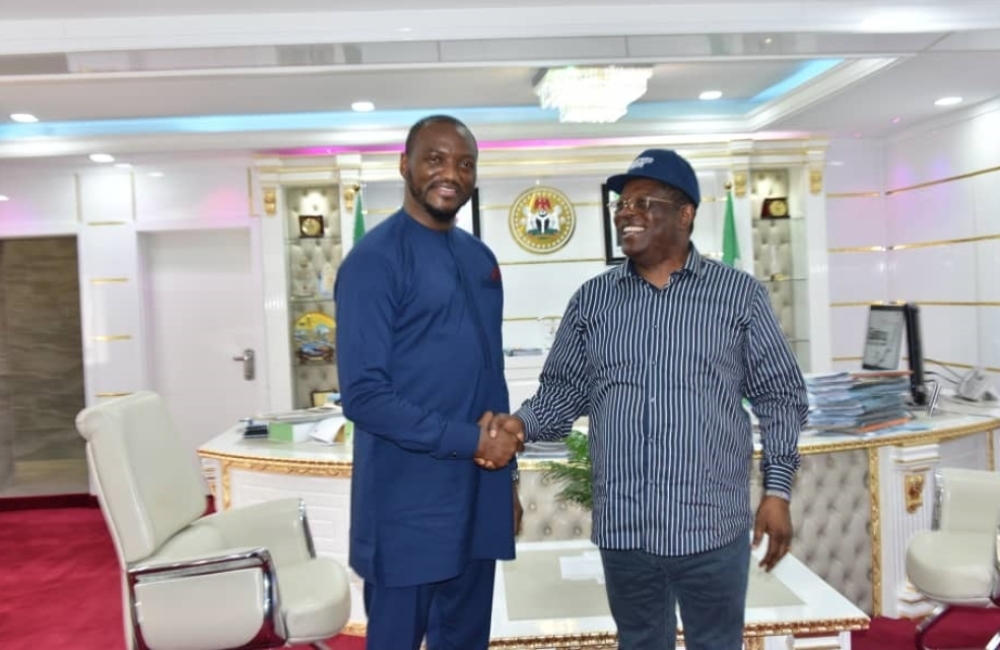
Federal Government in Discussion with African Development Bank (AFDB) Over Funding of Sections of the Coastal and Trans-Sahara Highways for Greater Regional Transport Environment and Economic Integration 1. As part of the action plan of the Federal Government to increase the economic opportunities of the nation and enhance the transnational investment process as envisioned by the Renewed Hope administration of the President of Nigeria, His Excellency, President Asiwaju Bola Ahmed Tinubu GCFR, the Hon. Minister of Works, His Excellency Sen. Engr Nweze David Umahi CON has opened a discussion with African Development Bank on possible funding for the construction of some sections of the Coastal and Trans- Sahara Highways in parts of Nigeria. He stated this in a meeting with a delegation from Africa Development Bank (AFDB) led by the Director, Infrastructure and Urban Development, Mike Salawou held at the office of the Honourable Minister Federal Ministry of Works, this 5th March 2024. 2. This project, which the Honourable Minister said would be a measure to provide enduring infrastructure and industrialization along the corridors, is expected to carry a large network of paved highways that will create a good transport environment and trade routes for moving goods and services along the North- South corridors. The Honourable Minister said opportunities of investment on infrastructure development abound along the coastal and trans-sahara routes, including opportunities for investment in the hospitality industry, tourism, agricultural production, estate, park, and industrial business He said that funding would be required to tackle the sections of the Coastal and Trans-Sahara Highways not yet constructed, awarded, or taken over by concessionaires under the Highway Development and Management Initiative(HDMI). According to him "The coastal road is 700 km. That is phase one and it is running from Lagos through Ogun State to Ondo State, passing through the coastal States of Delta, Bayelsa, Port Harcourt, Akwa Ibom, and ending in Cross River in 700 kilometers. We have spores to the Ogoja road, the one you did, the African Trans- Sahara Road that is going to Cameroon." He further said."We are sectioning the roads. Just last week, we awarded section one, phase one, and phase one is 47.47 kilometers. It's already awarded to Hi-tech Construction Limited. We have phase two, which is about 57 kilometers, taking us from the end of phase one. Phase one ends at Lekki Peninsula. It takes us from Ahmadu Bello Way to Lekki deep seaport. Phase two takes us to the boundary between Ogun State and Ondo State. That's about 57km"“. And also said, "it's going to be available for a number of funders under the lead investor, That's Hi-tech Construction Nigeria Limited. So that is available, and when discussion comes up, then there will be a need for us to meet with Hi-tech and the Honourable Minister of Finance Coordinating Minister of the Economy". 3. Earlier in his mission statement, the spokesperson of the team from Africa Development Bank. (AFDB) and Director of Infrastructure and Urban Development said the bank has a mandate to contribute to the sustainable economic development and social progress of its regional members individually and jointly and is therefore prepared as a multilateral institution to offer a robust partnership to the Federal Government of Nigeria, especially by providing technical and financial support for the development of road infrastructure in Nigeria. He said, "So as the African Development bank, we are ready to assist you. To make it easy for us, we need to have any studies available to make sure how we can support you on this project. So we are ready, we can see where we can find the resources to support you in structuring the different projects" He further added" And the third one, the dualization of the road between Nigeria and Cameroon will foster regional integration between the two counties, because I believe Nigeria is Cameroon's number one trade partner So, we need to reinforce the modernized infrastructure there." ...
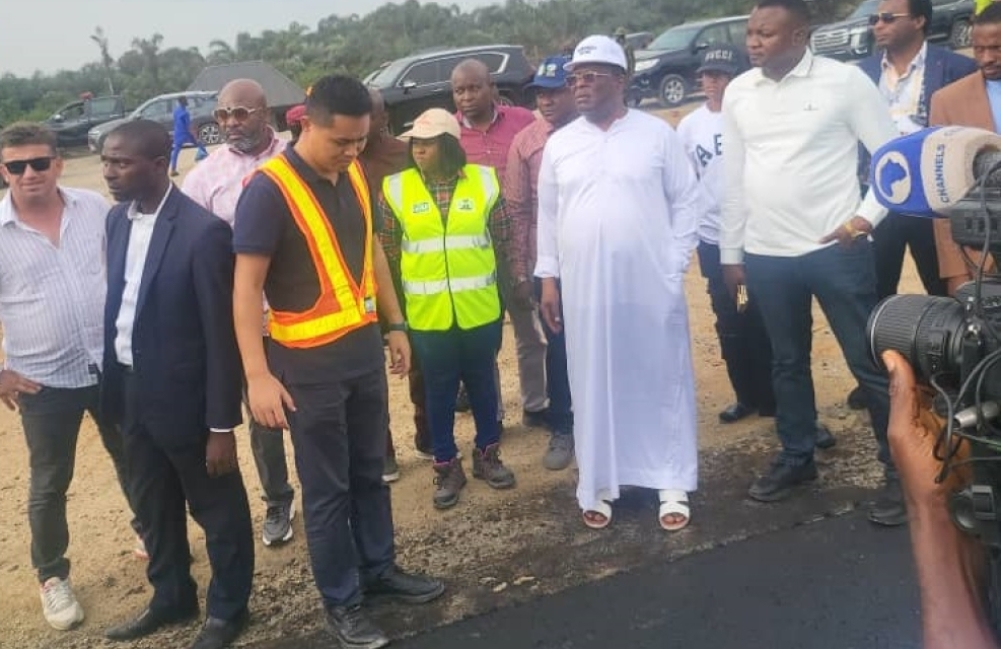
Works Minister Committed to Speedy and Quality Delivery of Road Infrastructure Nationwide, Says The Policy of No VOP on Mobilization is a Measure to Ensure Value for Money and Timely Completion of Projects 1. The Honourable Minister of Works. His Excellency, Sen. Engr Nweze David Umahi CON has restated the commitment of the Federal Government under the Renewed Hope administration of His Excellency, President Asiwaju Bola Ahmed Tinubu GCFR in ensuring that all the Federal Road projects are executed speedily and delivered in best standards. The Honourable Minister gave this assurance during his inspection visit to the rehabilitation work at Enugu- Port Harcourt dual carriageway section 4( Aba-PH) executed by China Civil Engineering Construction Corporation Ltd(CCECC).He commended the contractor handling the project for showing purposefulness, and he therefore announced the revocation of the warning letter issued to CCECC a fortnight ago over their delay in mobilizing to the site despite the government's directive."The warning letter given to CCECC for slow pace of work is hereby revoked. The new pace of work is excellent, the job quality is excellent, and the Controller sends me progress reports every day. " 2. The Honourable Minister, who also inspected the Rehabilitation and Reconstruction of Enugu- Port Harcourt dual carriageway section 2 ( Umuahia Tower- Aba Township Rail/ Road) in Abia State, handled by the Arab Contractors; the East West Road section 111( Eleme-Onne junction) in Rivers State handled by Reynolds Construction Company Nigeria Ltd; the Rehabilitation of Enugu- Port Harcourt Expressway Section 3( Enugu -Lokpanta) in Enugu State handled by CGC, said he was impressed by the progress of work on the respective projects. He said of RCC" I want to commend RCC openly and with all sincerity. I will also take the quality of work going on to Mr. President because he directed me. I was just barely one week in office when he directed me to go and flag off this project because the leaders of Niger Delta came to visit him, and they complained bitterly about the road. " He spoke of the good job by the Arab Contractors and said," I am very happy that the Arab Contractors has done a good job. I commend the contractor. Anybody who wants to see a good job should come here. The Controller of Abia State is doing extremely well together with his engineers." While at the CGC project site, he said, "I have seen the work they are doing, they are doing a very beautiful work. The job quality is very good and the speed is also very good. They are among the contractors that have the highest number of equipment in any of their project sites. So I commend them very highly. " 3. The contractors who spoke during the inspection visit to their respective projects said they were committed to the new order in road infrastructure development in Nigeria and assured the Honourable Minister that they would ensure quality and speed in the delivery of their road projects. The Project Manager of CCECC in charge of Enugu- Port Harcourt Expressway, Mr Henry Shaw said, "I am going to assure you that the Honourable Minister, His Excellency is a professional Engineer with a great difference. He knows everything, so nobody can cheat him." ...

FG Approves Local Production Of Bitumen To Boost Job Creation, Conservation Of Foreign Exchange
* Directs Ministries of Petroleum Resources, Mines and Steel to develop strategies to enhance, stimulate, and encourage local production
* Fashola calls on entrepreneurs to tap into the production of bitumen locally as he presents Memorandum on Initiative to FEC
* “We see a demand of 500,000 metric tonnes of bitumen locally per annum,” he says
* Local production is also expected to generate no less than 30, 000 jobs for the unemployed in the country
Local and foreign investors with focus on the immense opportunities in the production of Bitumen in the country have received further boost with the Federal Government approval of investment by manufacturers, in the local production of bitumen and other construction materials that are being imported currently for construction of roads across the country.
The Federal Executive Council (FEC), which gave the approvals sequel to a memorandum presented to it by the Minister of Works and Housing, Mr. Babatunde Fashola SAN, also directed the Ministries of Petroleum Resources and Mines and Steel to develop strategies to enhance, stimulate and encourage local production.
The memo, which originated from an initiative of President Muhammadu Buhari, who had made inquiry about the sources of the major components in Road Construction and the possibility of producing them locally, will boost job creation and preserve foreign exchange.
In the Policy Memorandum titled “Approval For The Local Production Of Bitumen And Other Construction Materials In Nigeria”, Fashola, who drew the attention of Council to the fact that bitumen and other major road construction materials were currently being imported, submitted that when produced locally bitumen was expected to be sold at about N125, 000 per metric tonne, which, according to him, is 48. 8 per cent of the cost of the imported one which stands at N285, 000.
Also, according to him, in terms of job creation, producing bitumen locally would, aside reducing the cost of road construction significantly and other benefits earlier mentioned, would also generate no less than 30, 000 jobs for the unemployed in the country.
The Minister informed the Council that the Policy Memo which, was meant to stimulate local production of bitumen as a component of road construction, was an initiative of President Muhammadu Buhari, adding that the President has accordingly challenged the Kaduna Refinery and Petrochemical Company to key into the policy by collaborating with related agencies of government to realize the goal.
Noting that, in buying bitumen at such reduced price, the nation would be saving 56.2 per cent of the cost of importation, the Minister also argued that aside boosting the nation’s construction capacity, the local manufacture would also create thousands of jobs for Nigerians adding that the product, which he described as “a low grade crude oil which is either extracted from the ground or gotten as a by-product of refined crude oil”, has an estimated 38 billion barrels of reserve and extra heavy oils that have remained untapped for years across the country but especially in Ondo, Lagos and Edo States.
Also drawing the attention of Council to the fact that the Kaduna Refinery and Petrochemical Company (KRPC) is the only refinery in the country that has the capacity to produce bitumen deposits, Fashola pointed out that with current installed capacity of 1, 796 metric tonnes per day, well above the present annual local consumption which, according to him, stands at 500, 000 metric tonnes, the company could produce bitumen to satisfy the nation’s requirement and even for export, adding, however, that to achieve that the company has to function at full capacity.
Some of the advantages derivable from the local production of bitumen and other construction materials, the Minister said, also include the diversification of the nation’s economy, improvement in technological growth, establishment of contracts vital for international cooperation in the new expanding technology and socio-economic impact on the areas of operation, among others.
According to him, local production would also help to maintain quality control on production through the Standard Organization of Nigeria (SON) and related Consumer Protection Agencies to ensure that the right quality of bitumen is produced for use by the construction companies while also ensuring further diversification of the nation’s economy.
Assuring investors wishing to invest in the local production of bitumen of government patronage and encouragement, Fashola said local production would also free the foreign exchange currently being expended on the importation of the commodity for other socio-economic needs of the country.
“It will preserve local jobs and also create thousands more that are currently being created in countries from where we import the commodity”, the Minister said adding that the envisaged employment boost, especially in transportation haulage was in line with the President’s projection of lifting 100 million Nigerians from poverty’ and his mandate, “to use what we produce and produce what we need”.
In order to implement the initiative, he recommended that the Ministry of Petroleum Resources, the Nigerian National Petroleum Corporation (NNPC) and the Kaduna Refinery and Petrochemical Company should come up with strategies and requirements that would enable the KRPC to resume the production of bitumen at its plant.
Assuring the Council that President Buhari has directed the reconstitution of the Bitumen Committee for auctioning of the Bitumen Blocks while the Nigerian Geological Survey Agency (NGSA).is also engaged in exploration of more blocks, the Minister informed Council with delight that upon reviewing the Memorandum, the Minister of Mines and Steel Development had already given his “No Objection” to the position of the Ministry of Works and Housing on the need for local production of bitumen to reduce cost of road construction.
Aside bitumen, Fashola also sought the improved local production of other essential road construction materials such as cement, crushed rock and steel explaining that while cement constitutes the major component of reinforced concrete utilized in the construction of bridges, drains, culverts and rigid pavement, crushed rock is used as the base course to give road pavement the desired load bearing strength while steel is utilized as reinforcements in the construction of drains, culverts, bridges and other hydraulic structures on roads.
In inviting the Council to approve the Memorandum, the Minister noted that there was need to encourage local production of essential construction materials in the country to reduce the cost of road construction, create employment and stimulate growth adding that the spiral increase in the cost of construction materials over the years has resulted in the rise of road construction cost and led to repeated requests for augmentation of ongoing contract sums.
He said while efforts were on to revamp the Ajaokuta Steel Complex to achieve full local production, the required quantity of bitumen for construction of roads across the country are being imported because the Kaduna Refinery and Petrochemical Company had stopped the production of bitumen since 2017 adding that road construction utilizes major part of the average 500, 000 metric tonnes of the product made locally when it was still in production.
Stressing the importance of bitumen in road construction, Fashola declared, “Bitumen is used at almost all levels of road construction, from sub grade, sub base, base course and asphaltic course (Binder and Wearing)”, reiterating that the lack of the product contributes significantly to the high cost of road projects in the country.
Speaking to newsmen later on the approvals, Fashola, who also disclosed government’s intention “to give encouragement and support to all those who take up the opportunity of manufacturing bitumen”, said the Kaduna Refinery and Petrochemical Company was expected to also raise its game by participating in the production sub-sector of hydro-carbon industry, adding, “We expect that it will improve the quality of bitumen that is produced and goes into our road construction just as we are now able to control the quality of cement that goes into local construction”.
“We are also promoting the use of more cement, stones, and rocks in road construction”, the Minister said adding that his Ministry was now developing a design manual of rock and stone used in road construction in the country which, according to him, formed the framework of the policy documentations that he presented to Council and which were approved.
“So, we expect the Nigerian entrepreneurial community to now respond to all of the existing government policies for setting up businesses and embracing this policy as part of ways to develop our made-in-Nigeria capacity”, Fashola said.
Remarks by the Honorable Minister. During the Presentation of 20 Years Transmission Expansion Master Plan for TCN on 30 January 2018
When the Buhari administration was inaugurated in 2015, the story of Transmission Company of Nigeria (TCN) was the story of a lack of capacity to transport generated power.
With or without verification, the popular view was that TCN had only a rigid capacity to transport 5,000 MW of energy and no more.
With a mandate to improve TCN’s capacity, supported by appropriate policy approvals from Mr. President and budgetary support, that story is changing.
The budgetary support has been most helpful; first in enabling TCN to pay warehouse and shipping companies to recover over 500 containers of goods and equipment left at the port for many years before the Buhari administration.
Secondly these containers and the equipment are now regularly being transported to TCN sites and substations to restart and complete transmission projects that had stalled for years.
TCN’s capacity to transport energy has steadily but surely grown to 7,125 MW as at December 2017.
With more projects heading towards completion in 2018 and beyond, this capacity will increase.
But increased capacity is not the real story.
The real story is that the increase is now orderly, logical, and targeted to address, as a priority, locations where there is existing power or incoming power.
This will ensure that in due course we do not have stories of stranded power again in our conversations about energy production and supply.
Ladies and gentlemen, this is the background that makes today a milestone day in our journey of incremental power, aiming to achieve steady power, and ultimately deliver uninterrupted power.
We gather to receive the 20-year Transmission Expansion Master Plan by Fichtner and participate in a workshop which would enable stakeholders the opportunity to review and improve the report.
With the completion of the 20-year Transmission Expansion Plan, the era of trial and error in the transmission expansion program will be over.
I accepted to open this workshop based on my conviction that the report will clearly bring out the future development of improved power system delivery in Nigeria for the next 20 years; starting from gas supply through the other power supply value chain.
The development of the master plan started in 2016. The objective of the studies is to complement the transmission rehabilitation and expansion program and power sector recovery plan by establishing the long-term generation and transmission plan that meets the forecasted national electricity demand at the lowest economic cost.
I therefore urge the CEOs of all generator and distribution companies to work closely with TCN to ensure that the outcome of the report is carefully reviewed and practical implementation should commence after obtaining formal approval from the relevant agencies.
The NERC and NBET are implored to key into the master plan when procuring additional generation, while the Discos should follow the Transmission plan for developing their own distribution master plan.
This is a new dawn for order and methods in the process of solving the power problem.
On behalf of the President, the Federal Government of Nigeria, I accept this report and commit that our team will do our best to implement its recommendations for the benefit of our people.
Thank you for your attention.
Babatunde Raji Fashola, SAN
Honourable Minister of Power, Works and Housing
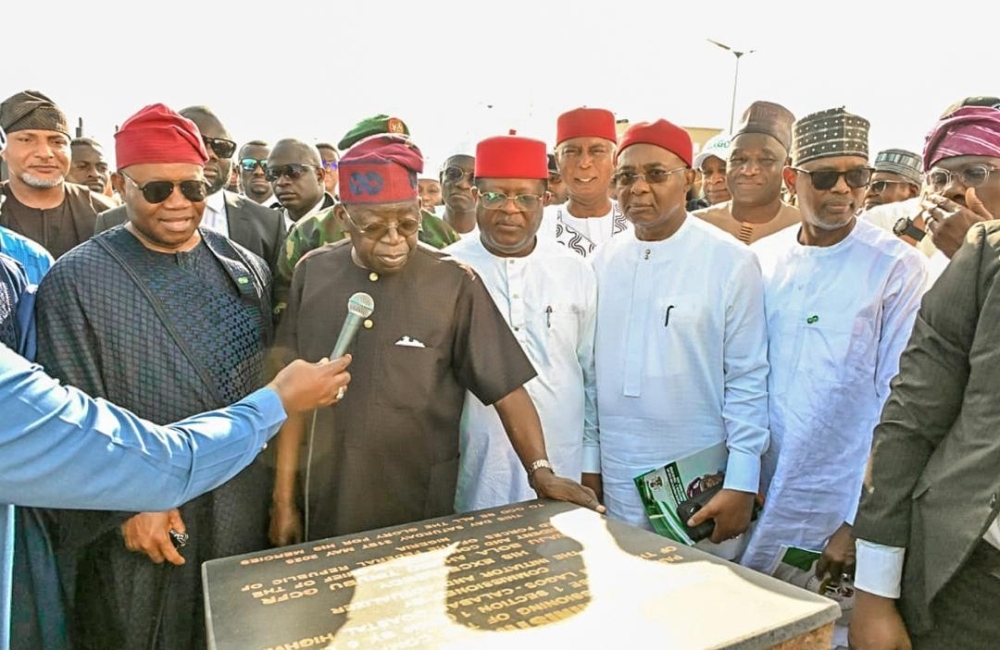
DRIVING NIGERIA’S FUTURE: CELEBRATING TWO YEARS OF TRANSFORMATIVE LEADERSHIP AND THE LAGOS-CALABAR COASTAL HIGHWAY MILESTONE
DRIVING NIGERIA’S FUTURE: CELEBRATING TWO YEARS OF TRANSFORMATIVE LEADERSHIP AND THE LAGOS-CALABAR COASTAL HIGHWAY MILESTONE
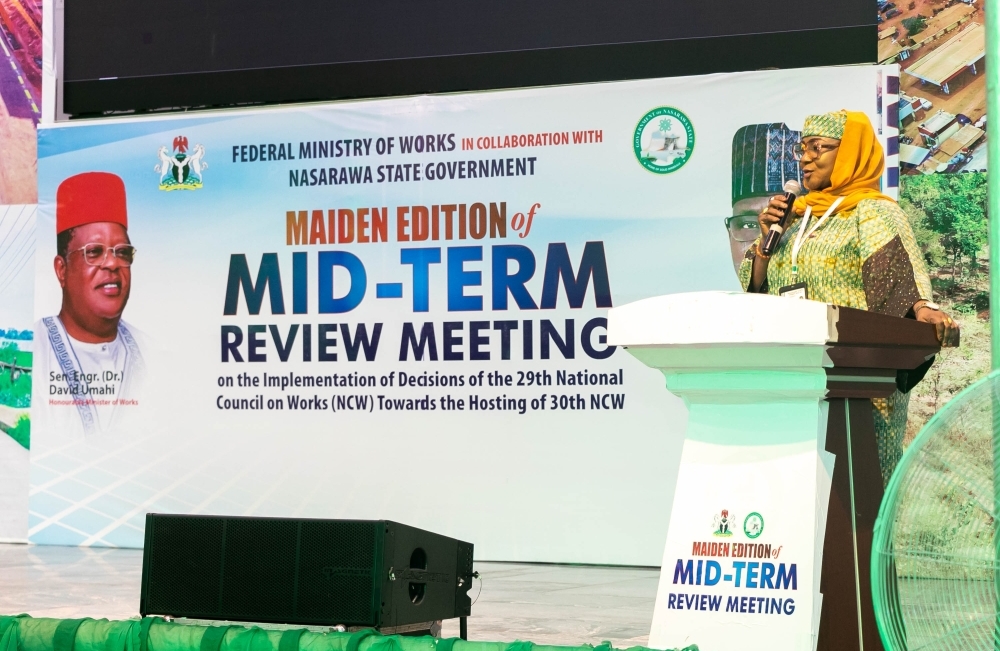
MID -TERM REVIEW MEETING ON THE IMPLIMENTATION OF THE DECISIONS REACHED AT THE 29TH NATIONAL COUNCIL ON WORKS (NCW) DAY 1
MID -TERM REVIEW MEETING ON THE IMPLIMENTATION OF THE DECISIONS REACHED AT THE 29TH NATIONAL COUNCIL ON WORKS (NCW) DAY 1