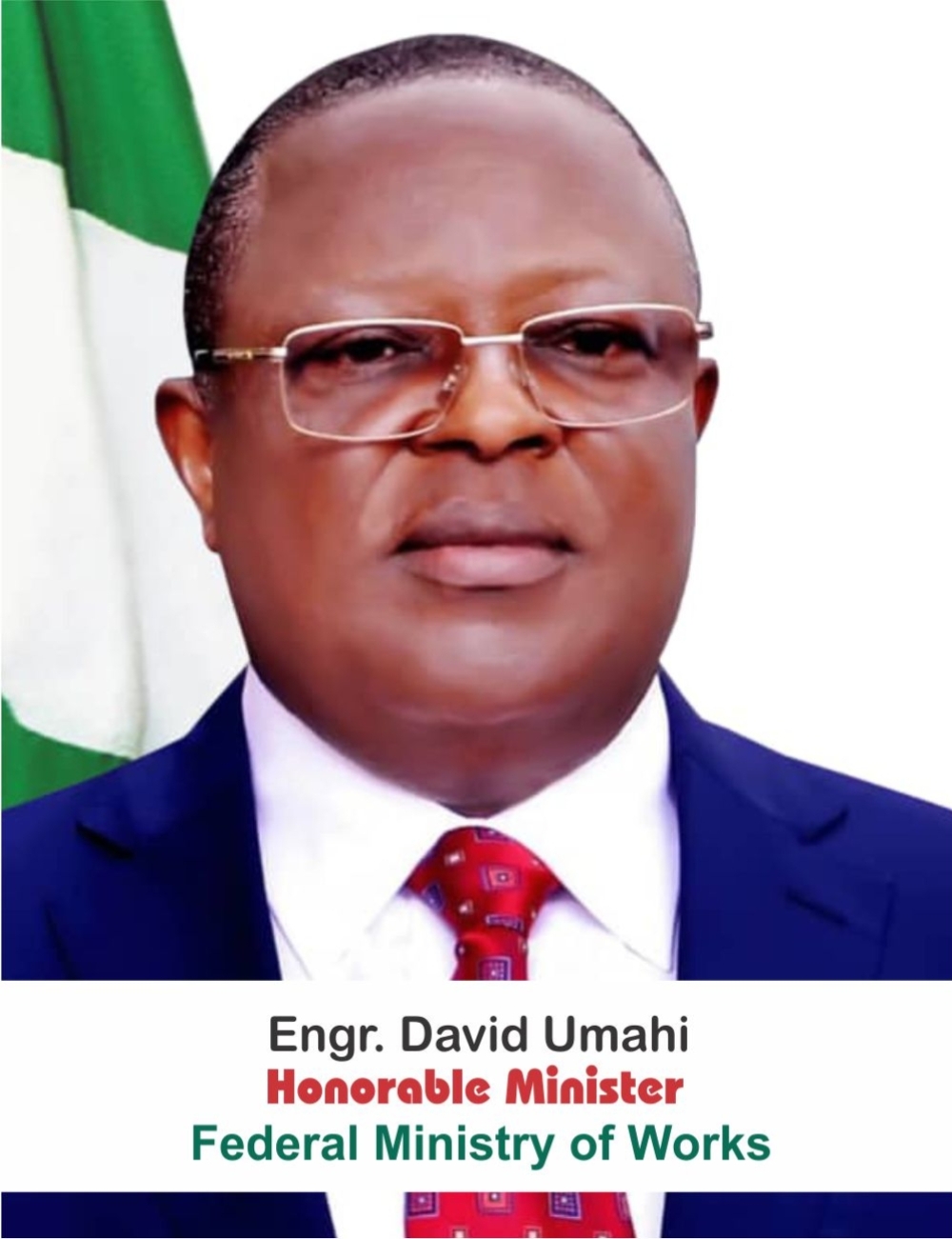
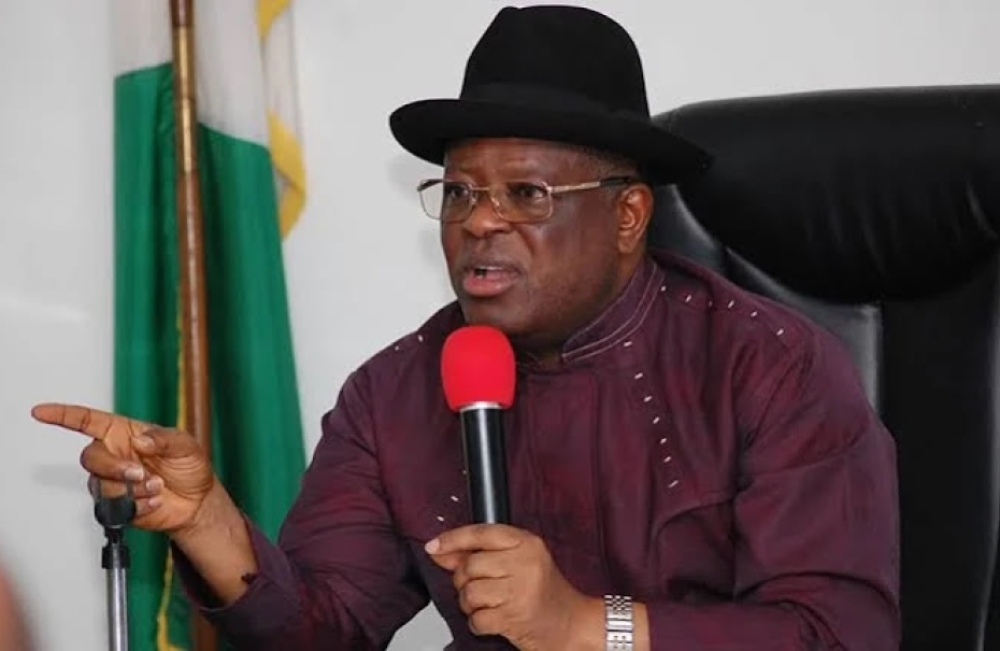
UMAHI ORDERS IMMEDIATE EMERGENCY INTERVENTION ON BENIN-ASABA ROAD, AND SOME OTHER CRITICAL FEDERAL ROADS
The Honourable Minister of Works, Senator Engr. David Nweze Umahi, CON, has directed the immediate deployment of major contractors to all three sections of the Benin-Asaba Federal Road to restore the failed sections and bring an end to the suffering of motorists and other road users.
This is because, the situation on the concessioned Benin-Asaba Road has reached a point where the overall public interest must take precedence over the existing concession agreement.
Recall that the Honourable Minister of Works was on the Benin-Asaba Road about seven days ago, where he assembled a number of contractors and directed them to prepare for immediate palliative intervention on the affected sections of the road at no cost to the concessionaire. In line with the Concession agreement which requires that before the Federal Government could intervene, the permission of the concessionaire must be required, and that permission was not granted to federal government.
The Minister subsequently proposed three options to the concessionaire, any one of which would have enabled the Federal Government to move in and address the worsening condition of the road. Unfortunately, none of the options was accepted by the concessionaire. Immediately after the Minister left Asaba, the already limited equipment deployed to the road by the concessionaire was further reduced to just one, worsening the situation and increasing the suffering of motorists and other road users.
While the Minister takes responsibility for the concerns and suffering of Nigerians using the road, it is important to state that the concessionaire has also not taken the suffering of Edo people and travelling public sufficiently into consideration by declining all the options put forward by the Federal Government. The concessionaire continues to rely on the terms of the concession agreement entered into by the previous administration, an agreement which weighs heavily against the Federal Government’s ability to intervene quickly in the interest of the public in a situation like this.
In view of this situation, the Honourable Minister of Works has directed the immediate deployment of major contractors within the corridor to all three sections of the Benin-Asaba Road to restore the failed sections and bring relief to the people, with the cost of the emergency intervention being borne by the Federal Government. The Honourable Minister has also directed immediate redesign of the entire route to be rebuilt with reinforced concrete pavement. The public should therefore take note that immediate action is underway to restore every failed section of the Benin-Asaba Road and subsequently rehabilitate the entire sections of the road using reinforced concrete pavement.
2. On the Benin-Sapele Road:
The Governors of Edo and Delta States, the Niger Delta Development Commission (NDDC), and the Federal Government are currently engaged in interventions on different sections of the road to restore the entire route. While some sections are receiving palliative attention, permanent works are also ongoing on other sections.
3. On Ifaki(Ekiti) - Kabba (Kogi) Road:
The Federal Government is engaging both the contractor; Gamji Nigeria Company Limited, and Dangote PLC on immediate emergency and permanent intervention on the most failed sections of the road, while efforts are being made to financially mobilise the company for more extensive permanent work to commence on the axis.
4. On the Sokoto-Zamfara-Katsina Road: This is an inherited project involving the dualisation of approximately 350 kilometres, which translates to about 700 kilometers. The project has since been redesigned and is currently ongoing and most sections are being reconstructed using reinforced concrete pavement. From the Sokoto axis towards Zamfara, over 50 kilometres of one carriageway have been fully completed with reinforced concrete pavement. From Zamfara to Katsina, some sections have been completed and palliative works have been ordered over the sections that have not been reconstructed. However, the pace of work slowed down due to the redesign and rephasing of the project. The contractors currently engaged on the road include CBC, SETRACO, Triacta and Mothercat. They are being remobilised to return to site and complete the outstanding works.
5. On the Abuja-Kaduna-Zaria-Kano Road: The Federal Government took over the Road project and has currently completed the 118-kilometer mostly on reinforced concrete pavement on lot 1. The Lot 2, which covers 164 kilometres, is over 60 percent completed on reinforced concrete pavement. The Federal Government has also introduced solar-powered light on the entire route of Abuja-Kaduna-Zaria - Kano to improve visibility during night travel and enhance the overall security situation on the route. The entire project is scheduled for completion by December 2026.
6. On Bauchi-Jigawa Road: Triacta Nigeria Limited has been mobilised to carry out the necessary interventions on some failed sections and work is currently ongoing in those failed sections.
7. On the Sagamu-Ore Road: 48 Kilometers of the 96-kilometre road have already been completed using reinforced concrete pavement. There is also a 24-kilometre section around Ore which was abandoned by the previous contractor. The Federal Government has directed its immediate restoration to ensure seamless travel. Solar lights are being installed in the entire 96kilometer of the road.
8. On Flooded Sections on Sagamu-Ore-Benin Road: The flooded sections on the same corridor between Sagamu-Ore-Benin Road, as well as other flooded sections in Ondo State, are being designed for emergency procurement and intervention.
9. On the East-West Road:
Some failed and critical sections, including defective sections of bridges along the East-West Road, are being marked out for emergency procurement and intervention.
10. On the Abuja-Lokoja Road:
Several contracts are ongoing along the route, while the three critical sections currently without contracts are being procured for emergency intervention.
11. On the Lokoja-Benin-Warri Road: The President has directed a complete redesign and procurement of the 400-kilometre dualised route covering the uncompleted sections, using reinforced concrete pavement, while palliative works will continue with the contractors currently on the road.
12. On Carter Bridge:
While the Federal Government continues to undertake weekly maintenance of the underwater elements of the bridge. The site has also been handed over to the contractor, CCECC, for the construction of a permanent new bridge, and work has commenced.
13. On the Third Mainland Bridge:
With regard to the defective underwater structural elements, the Federal Government is at the final stage of determining the appropriate intervention for the repair of the affected elements.
14. On the flooded section of the Lagos-Ibadan Road: Work has commenced on the affected section. There are also several flooded sections on federal roads across the six geopolitical zones, largely occasioned by excessive flooding and the effects of climate change. The Federal Government is identifying and marking these sections for immediate attention.
15. On the First and Second Niger Bridges:
Intervention work is ongoing on the approach roads to the Second Niger Bridge damaged by flood and the work is progressing very well. The First Niger Bridge has been closed to traffic to enable immediate repair works. Contractor has mobilized to site and comprehensive rehabilitation of the bridge has started. From Summit Junction to the First Niger Bridge, massive rehabilitation work is also ongoing using reinforced concrete pavement.
16. The Honourable Minister wishes to commend the President of the Federal Republic of Nigeria, His Excellency Bola Ahmed Tinubu, GCFR, for the massive work being undertaken on the nation’s roads since the administration assumed office in 2023.
17. It is important to state that when the present administration came into office, there was hardly any part of the country where one could travel for an hour without encountering significant challenges on the road network. The condition of the country’s roads and bridges was a major national infrastructure challenge.
18. Rather than shy away from the problem, the administration of President Bola Ahmed Tinubu made the nation’s road network a priority. Virtually every part of the country became a priority, and the Federal Government, through the Federal Ministry of Works, Regional Commissions, Parastatals and other MDA’s has continued to respond extensively to these challenges.
19. The Federal Government is currently working on over 80 percent of the inherited federal roads, an unprecedented level of intervention in the country’s road infrastructure.
20. We ask the public to understand the enormous challenges inherited on our roads and bridges and to take note not only of the problems being solved, but also of the permanent solutions being introduced.
21. A major part of this new approach is the use of reinforced concrete pavement, designed to significantly extend the lifespan of major roads. These roads are expected to last between 50 and 100 years. This means that roads being constructed under President Bola Ahmed Tinubu’s administration are being designed with future generations in mind, rather than simply providing temporary solutions to today’s problems. And this is a complete departure from the past, when roads often deteriorated only a few years after completion, resulting in a continuous cycle of reconstruction and expenditure.
22. We appreciate the concerns of Nigerians over the condition of some roads presently and the difficulties faced by motorists and commuters who cannot move easily from one point to another. Those concerns are legitimate, and the Federal Government is listening. But Nigerians should also recognise the enormous scale of the problems inherited and the amount of work currently being undertaken across the country.
23. It is simply impossible to resolve every road challenge accumulated over many years of neglect by the past administrations within three years. What is important is that the government is working, the government is responding, and the government is putting permanent solutions in place.
25. We appreciate members of the public who send situation reports on failed roads and other infrastructure challenges. These reports help the Ministry identify areas requiring urgent attention. However, we also appeal to members of the public to report when such problems have been addressed, just as they report when they occur.
24. We are aware of situations where photographs and reports of road challenges continue to circulate on social media even after the Federal Government has intervened and resolved the particular problem.
25. However, the Ministry will continue to respond as rapidly as possible to genuine reports and concerns from Nigerians.
26. It is also important to note that we have compiled a comprehensive record of all inherited, ongoing and intervention projects across the country which is available to the public. This is to ensure that Nigerians have access to information on the infrastructure projects being undertaken nationwide and can fully participate in and appreciate the infrastructure revolution of President Bola Ahmed Tinubu’s administration.

UMAHI ORDERS IMMEDIATE EMERGENCY INTERVENTION ON BENIN-ASABA ROAD, AND SOME OTHER CRITICAL FEDERAL ROADS The Honourable Minister of Works, Senator Engr. David Nweze Umahi, CON, has directed the immediate deployment of major contractors to all three sections of the Benin-Asaba Federal Road to restore the failed sections and bring an end to the suffering of motorists and other road users. This is because, the situation on the concessioned Benin-Asaba Road has reached a point where the overall public interest must take precedence over the existing concession agreement. Recall that the Honourable Minister of Works was on the Benin-Asaba Road about seven days ago, where he assembled a number of contractors and directed them to prepare for immediate palliative intervention on the affected sections of the road at no cost to the concessionaire. In line with the Concession agreement which requires that before the Federal Government could intervene, the permission of the concessionaire must be required, and that permission was not granted to federal government. The Minister subsequently proposed three options to the concessionaire, any one of which would have enabled the Federal Government to move in and address the worsening condition of the road. Unfortunately, none of the options was accepted by the concessionaire. Immediately after the Minister left Asaba, the already limited equipment deployed to the road by the concessionaire was further reduced to just one, worsening the situation and increasing the suffering of motorists and other road users. While the Minister takes responsibility for the concerns and suffering of Nigerians using the road, it is important to state that the concessionaire has also not taken the suffering of Edo people and travelling public sufficiently into consideration by declining all the options put forward by the Federal Government. The concessionaire continues to rely on the terms of the concession agreement entered into by the previous administration, an agreement which weighs heavily against the Federal Government’s ability to intervene quickly in the interest of the public in a situation like this. In view of this situation, the Honourable Minister of Works has directed the immediate deployment of major contractors within the corridor to all three sections of the Benin-Asaba Road to restore the failed sections and bring relief to the people, with the cost of the emergency intervention being borne by the Federal Government. The Honourable Minister has also directed immediate redesign of the entire route to be rebuilt with reinforced concrete pavement. The public should therefore take note that immediate action is underway to restore every failed section of the Benin-Asaba Road and subsequently rehabilitate the entire sections of the road using reinforced concrete pavement. 2. On the Benin-Sapele Road: 3. On Ifaki(Ekiti) - Kabba (Kogi) Road: 4. On the Sokoto-Zamfara-Katsina Road: This is an inherited project involving the dualisation of approximately 350 kilometres, which translates to about 700 kilometers. The project has since been redesigned and is currently ongoing and most sections are being reconstructed using reinforced concrete pavement. From the Sokoto axis towards Zamfara, over 50 kilometres of one carriageway have been fully completed with reinforced concrete pavement. From Zamfara to Katsina, some sections have been completed and palliative works have been ordered over the sections that have not been reconstructed. However, the pace of work slowed down due to the redesign and rephasing of the project. The contractors currently engaged on the road include CBC, SETRACO, Triacta and Mothercat. They are being remobilised to return to site and complete the outstanding works. 5. On the Abuja-Kaduna-Zaria-Kano Road: The Federal Government took over the Road project and has currently completed the 118-kilometer mostly on reinforced concrete pavement on lot 1. The Lot 2, which covers 164 kilometres, is over 60 percent completed on reinforced concrete pavement. The Federal Government has also introduced solar-powered light on the entire route of Abuja-Kaduna-Zaria - Kano to improve visibility during night travel and enhance the overall security situation on the route. The entire project is scheduled for completion by December 2026. 6. On Bauchi-Jigawa Road: Triacta Nigeria Limited has been mobilised to carry out the necessary interventions on some failed sections and work is currently ongoing in those failed sections. 7. On the Sagamu-Ore Road: 48 Kilometers of the 96-kilometre road have already been completed using reinforced concrete pavement. There is also a 24-kilometre section around Ore which was abandoned by the previous contractor. The Federal Government has directed its immediate restoration to ensure seamless travel. Solar lights are being installed in the entire 96kilometer of the road. 8. On Flooded Sections on Sagamu-Ore-Benin Road: The flooded sections on the same corridor between Sagamu-Ore-Benin Road, as well as other flooded sections in Ondo State, are being designed for emergency procurement and intervention. 9. On the East-West Road: 10. On the Abuja-Lokoja Road: 11. On the Lokoja-Benin-Warri Road: The President has directed a complete redesign and procurement of the 400-kilometre dualised route covering the uncompleted sections, using reinforced concrete pavement, while palliative works will continue with the contractors currently on the road. 12. On Carter Bridge: 13. On the Third Mainland Bridge: 14. On the flooded section of the Lagos-Ibadan Road: Work has commenced on the affected section. There are also several flooded sections on federal roads across the six geopolitical zones, largely occasioned by excessive flooding and the effects of climate change. The Federal Government is identifying and marking these sections for immediate attention. 15. On the First and Second Niger Bridges: 16. The Honourable Minister wishes to commend the President of the Federal Republic of Nigeria, His Excellency Bola Ahmed Tinubu, GCFR, for the massive work being undertaken on the nation’s roads since the administration assumed office in 2023. 17. It is important to state that when the present administration came into office, there was hardly any part of the country where one could travel for an hour without encountering significant challenges on the road network. The condition of the country’s roads and bridges was a major national infrastructure challenge. 18. Rather than shy away from the problem, the administration of President Bola Ahmed Tinubu made the nation’s road network a priority. Virtually every part of the country became a priority, and the Federal Government, through the Federal Ministry of Works, Regional Commissions, Parastatals and other MDA’s has continued to respond extensively to these challenges. 19. The Federal Government is currently working on over 80 percent of the inherited federal roads, an unprecedented level of intervention in the country’s road infrastructure. 20. We ask the public to understand the enormous challenges inherited on our roads and bridges and to take note not only of the problems being solved, but also of the permanent solutions being introduced. 21. A major part of this new approach is the use of reinforced concrete pavement, designed to significantly extend the lifespan of major roads. These roads are expected to last between 50 and 100 years. This means that roads being constructed under President Bola Ahmed Tinubu’s administration are being designed with future generations in mind, rather than simply providing temporary solutions to today’s problems. And this is a complete departure from the past, when roads often deteriorated only a few years after completion, resulting in a continuous cycle of reconstruction and expenditure. 22. We appreciate the concerns of Nigerians over the condition of some roads presently and the difficulties faced by motorists and commuters who cannot move easily from one point to another. Those concerns are legitimate, and the Federal Government is listening. But Nigerians should also recognise the enormous scale of the problems inherited and the amount of work currently being undertaken across the country. 23. It is simply impossible to resolve every road challenge accumulated over many years of neglect by the past administrations within three years. What is important is that the government is working, the government is responding, and the government is putting permanent solutions in place. 25. We appreciate members of the public who send situation reports on failed roads and other infrastructure challenges. These reports help the Ministry identify areas requiring urgent attention. However, we also appeal to members of the public to report when such problems have been addressed, just as they report when they occur. 24. We are aware of situations where photographs and reports of road challenges continue to circulate on social media even after the Federal Government has intervened and resolved the particular problem.
The Governors of Edo and Delta States, the Niger Delta Development Commission (NDDC), and the Federal Government are currently engaged in interventions on different sections of the road to restore the entire route. While some sections are receiving palliative attention, permanent works are also ongoing on other sections.
The Federal Government is engaging both the contractor; Gamji Nigeria Company Limited, and Dangote PLC on immediate emergency and permanent intervention on the most failed sections of the road, while efforts are being made to financially mobilise the company for more extensive permanent work to commence on the axis.
Some failed and critical sections, including defective sections of bridges along the East-West Road, are being marked out for emergency procurement and intervention.
Several contracts are ongoing along the route, while the three critical sections currently without contracts are being procured for emergency intervention.
While the Federal Government continues to undertake weekly maintenance of the underwater elements of the bridge. The site has also been handed over to the contractor, CCECC, for the construction of a permanent new bridge, and work has commenced.
With regard to the defective underwater structural elements, the Federal Government is at the final stage of determining the appropriate intervention for the repair of the affected elements.
Intervention work is ongoing on the approach roads to the Second Niger Bridge damaged by flood and the work is progressing very well. The First Niger Bridge has been closed to traffic to enable immediate repair works. Contractor has mobilized to site and comprehensive rehabilitation of the bridge has started. From Summit Junction to the First Niger Bridge, massive rehabilitation work is also ongoing using reinforced concrete pavement.
25. However, the Ministry will continue to respond as rapidly as possible to genuine reports and concerns from Nigerians.
26. It is also important to note that we have compiled a comprehensive record of all inherited, ongoing and intervention projects across the country which is available to the public. This is to ensure that Nigerians have access to information on the infrastructure projects being undertaken nationwide and can fully participate in and appreciate the infrastructure revolution of President Bola Ahmed Tinubu’s administration.
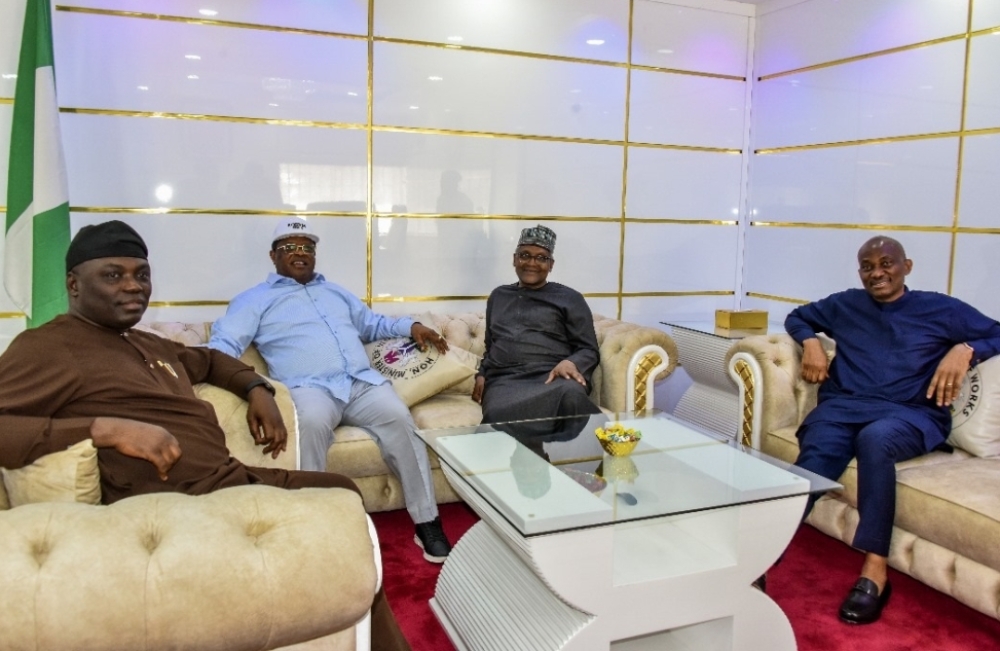
WORKS MINISTER, SEN UMAHI HARPS ON PUBLIC PRIVATE PARTNERSHIP IN BRIDGING THE GAP ON FINANCING OF NIGERIA'S ROAD INFRASTRUCTURE, MEETS GOVERNOR KEFAS OF TARABA STATE, ALHAJI ALIKO DANGOTE AND HON. NDUDI GODWIN ELUMELU In keeping with the road infrastructure initiatives of the Renewed Hope administration of the President of the Federal Republic of Nigeria, His Excellency President Asiwaju Bola Ahmed Tinubu GCFR, the Hon. Minister of Works, His Excellency, Sen. Engr. Nweze David Umahi CON has been engaging with concessionaires and other private sector organizations on the need for private sector investment on our road infrastructure as done in advanced economies of the world. This informed the closed door meeting the Hon. Minister of Works had with the Governor of Taraba State, His Excellency, Dr. Agbu Kefas, the founder and CEO of Dangote Group of Conglomerates, Alhaji Aliko Dangote GCON, and Hon. Ndudi Godwin Elumelu, former Minority Leader, Federal House of Representatives. It would be recalled that the Hon. Minister of Works in his zeal to change the ugly narrative of road infrastructure in Nigeria had set up three committees to work on the contracts executed by some concessionaires with the Federal Ministry of Works with a view to reviewing the scope and cost implications of the projects they undertook to execute under the Highway Development and Management Initiative (HDMI). This private sector initiative will fastrack road infrastructure revolution and bring order, accountability, and profitable entrepreneurship to the operations, management, and maintenance of Federal Highways. The Governor of Taraba who retired as a military professional was a one-time chairman Governing Board of Directors Nigerian Maritime Administration and Safety Agency (NIMASA) before he became Governor. The founder and CEO Dangote Group is one of Africa's foremost captains of industry who have made ambitious investments in the development of infrastructure in Nigeria and he has shown manifest commitment in the transformation of Nigeria's infrastructure through long- term investment in strategic sectors of Nigeria's economy, including financial services, and infrastructure development. Hon Ndudi G. Elumelu is a well-travelled politician and contemporary public administrator, and also a product of Harvard Business School, Boston. It is hoped that investors, local and international, and other organized bodies would take advantage of the will power of the President Asiwaju Bola Ahmed Tinubu's Renewed Hope administration and the private sector experience and professional capacities of the Hon. Minister of Works to invest in the over 35,000 Km of the national road network being managed by Federal Government of Nigeria as this road network carries more than 70% of the vehicular traffic, making it a critical infrastructure for the movement of goods and services across the nation. This initiative will trigger economic development, job creation, local content development and wealth creation for Nigerian population. Mr. President mean business with his efforts to prosper our country and make it the pride of the African continent. Your support is critical. ...
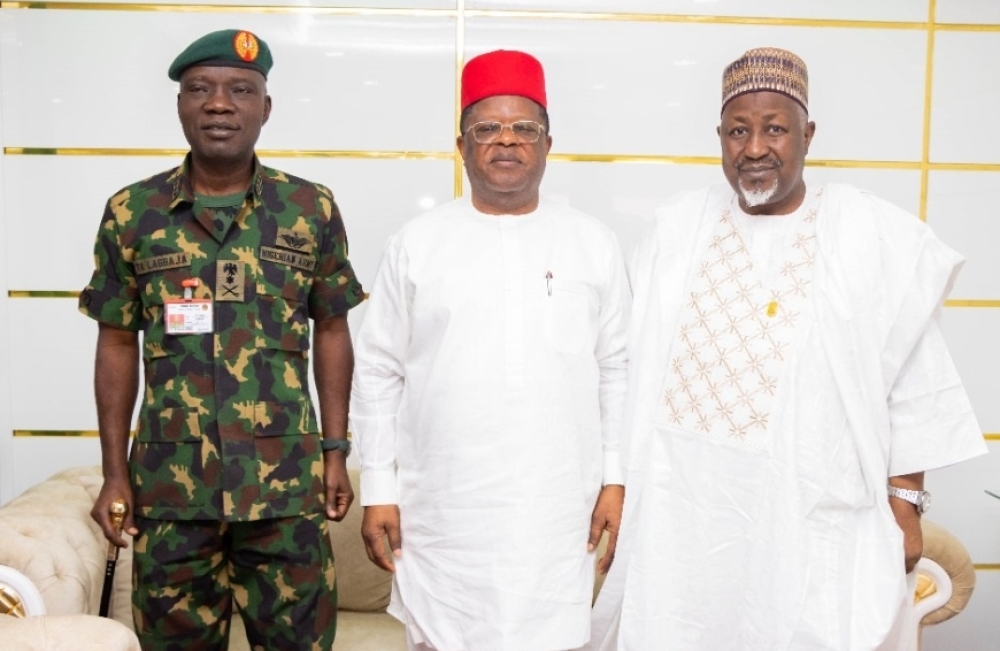
Hon. Ministers of Works, Defence, and Chief of Army Staff meet on areas of Collaboration to Improve Internal Security, Focus on Road Infrastructure as an Important Predictor ...ACTIVITIES OF CONTRACTORS TO FOCUS IN THIS DIRECTION As part of the strategic and holistic security roadmap of the Federal Government under His Excellency, President Asiwaju Bola Ahmed Tinubu GCFR, the Hon. Minister of Works, His Excellency Sen. Engr Nweze David Umahi, CON had a closed door meeting with his counterpart, the Hon. Minister of Defence, His Excellency, Mohammed Badaru Abubarkar,CON, and the Chief of Army Staff (COAS) Lieutenant General Taoreed Lagbaja in his office at the Federal Ministry of Works, this 19th January 2024, and the focus was on strengthening collaborations towards improving the nation’s internal security through revolutionalizing road infrastructure development. The Hon. Minister of Works praised the interactive meeting as a Renewed Hope initiative that would add value to the implementation of the security roadmap of the present administration. He commended the President of the Federal Republic of Nigeria for appointing men of proven professional capacities and passion for service delivery to tackle the security challenges facing our country, and expressed hope that with the interventions of Mr. President towards rejiging the nation’s road infrastructure, military operations across the nation would assume greater imptetus. "I commend Mr. President very highly, and I thank members of the public who have also supported in different dimensions. Yes, we have discussed certain infrastructure as it concerns my ministry to enhance their performances, and our minds are working together. The main focus of Mr. President, when it comes to road infrastructure, is the interstate routes that are linked to security operations nationwide, the palliative jobs, and the roads that are linked to markets, industries, and factories etc. And so, this is one of the mandates that Mr. President has given to us. And so, we are going to hasten this mandate and to ensure that the desire of Mr. President, as far as road infrastructure is concerned, is achieved" "Road is everything. If you improve the roads, you have improved security, agriculture, education, and commerce, and you have improved the happiness of people. And this is just what Mr. President is doing. We have started to be in the field to repair over 320 roads that Mr. President directed us to do." Speaking on behalf of the visiting team, the Chief of Army Staff said that the essence of the meeting was to discuss with the Hon. Minister of Works elements of national power support to the military field operations with a focus on the role of infrastructural upgrade in the enhancement of military operations across the country. "We have discussed extensively, and we are glad that the Hon. Minister of Works is disposed to some of the suggestions that we have made on the need to focus on some critical roads that will impact positively on military operations across the country. And so, the Minister of Works has made some promises, and we look forward to seeing activities of contractors and other agents focus in this direction in the field, and the military will support them going forward. Overall, improved security is our objective, and we will continue to pursue that." ...
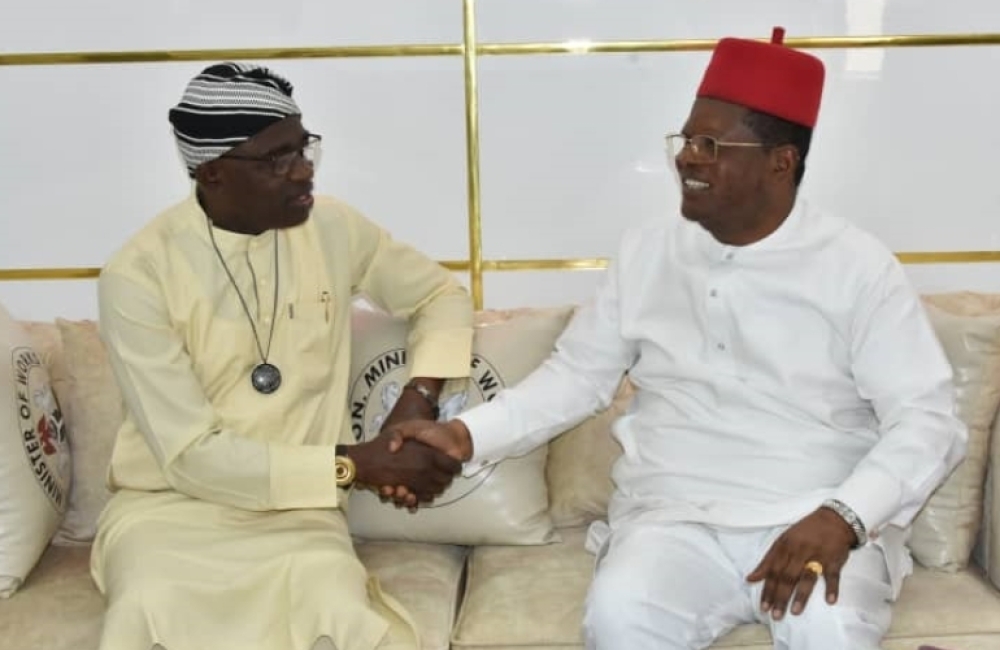
ROAD INFRASTRUCTURE REVOLUTION UNDER THE RENEWED HOPE ADMINISTRATION OF PRESIDENT ASIWAJU BOLA AHMED TINUBU GCFR, WIN -WIN SITUATION FOR ALL STATES - As Benue State Governor visits the Hon. Minister of Works Photo speaks The Renewed Hope administration of the President of Nigeria, His Excellency Sen. Asiwaju Bola Ahmed Tinubu GCFR has proven to be a grandmaster of inclusive and impactful governance that embraces the desires of the federating States. The federal government under Mr. President carries along all the States in her road infrastructure development plans. Just recently, the President of Nigeria released funds for the commencement of nationwide palliative interventions on our road infrastructure in addition to the budgetary and extra budgetary funds provided for the execution of the 2024 road projects. The 36 State Governors have been working progressively with the APC led federal government, notwithstanding party affiliations or ideological inclinations, to ensure that roads of socio-economic priority in their States are captured in the infrastructure roadmap of the Federal Ministry of Works. Today, 16th January 2024, the Governor of Benue State, His Excellency, Fr. Hyacinth Alia visited the Honourable Minister of Works, His Excellency Sen. Engr. Nweze David Umahi CON in his office. The meeting was obviously not unconnected with the desire of the Governor of Benue State to change the infrastructural landscape of Benue State through tapping into Mr. President’s Renewed Hope infrastructure initiatives across the nation. His Excellency Hyacinth Alia is the second Catholic Priest to be elected as Governor in the history of Nigeria. He emerged victorious in the Benue State Gubernatorial election held on March 18 , 2023, and on Monday, the 8th day of January 2024, the Supreme Court upheld his election and dismissed the appeal of Mr. Titus Uba of the People's Democratic Party (PDP), who was his rival on the 18th March, 2023 poll. He is proudly a member of All Progressives Congress,APC. ...
Two Senior Directors Retire From Works And Housing Ministry
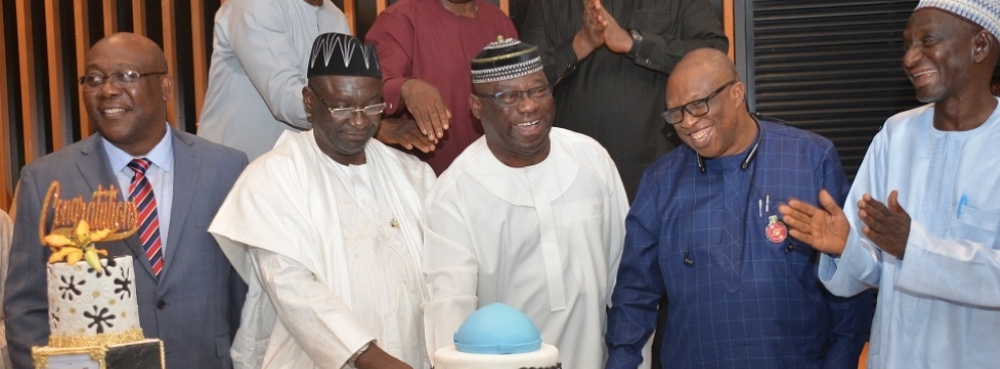
Works and Housing’s Ministry Director of Highways (South East) , Engr Henry Okechukwu Udeh and Coordinating Director Bridge and Design , Engr Charles Obiora Okonmah had their joint retirement ceremony after 35 years in Federal Civil Service at the Ministry Conference’s Room yesterday.
The two retirees thanked God for preserving them while in office and also appreciated the staff of the Ministry for their cooperation and team work , they said without the cooperation from the staff , they wouldn’t have succeeded in their chosen endeavors.
Chairman of the event, the President of Council for the Regulation of Engineering in Nigeria (COREN) Engr. Ali Rabiu congratulated the two celebrants and said it was worthy of joy having served the country with good credentials in their individuals capacities professionally.
In his goodwill message, the Ministry’s Director Highways, Planning and Development, Engr. Chukwunwike Ogonna Uzo said that he was sure that they were retiring with happiness , as confidence and satisfaction could be seeing radiating from both of them , which showed that they were well prepared for the retirement and wish them good luck as they go further in life.
The Director Highways Design Road (North) in the Ministry Engr. Omotayo Awosanya while reading the citation of Engr Charles Obiora said “ He graduated from University of Benin and commenced work with the Ministry for 35years , during which he held top management positions . He is a COREN registered engineer, a member of the Nigerian Society of Engineers (NSE), Nigerian Institute of
Highways of Engineers (NIHTE), Nigeria Institute of Civil Engineers (NICE). While in the field, he was involved in the supervision of a host of large Highway construction projects.’’
The Citation of Engr. Henry Okechukwu Udeh was read by the Deputy Director Highways South East in the same ministry, Engr Clement Ogbuagu . He said “Engr Henry graduated in June 1983, with Bachelor of Engineering degree in Civil Engineering, he joined the Federal Civil Service in 1984. He was a Federal controller of works for the following states; Plateau, Kogi and Ogun State. He attended both local and international courses and conferences during his career in service.’’
In his remarks, while giving votes of thanks Deputy Director Highway (North Central ) Engr Bola Aganaba congratulated the retirees on their meritorious services rendered to the nation while in service.
Speech Delivered By H.E Babatunde Raji Fashola, SAN At The National Council On Power On Thursday 21st September 2017 In Jos, Plateau State
I welcome the opportunity to speak to you at this year’s National Council on Power, holding in the famous city of Jos in Plateau State.
Mining, Agriculture, the High Altitude and Climate, Tourism and brands like the Hill Station Hotel, The Rock Beer are some of the very proud heritage that have put Jos city on the global map.
This city of Jos is also famous for its contributions to Nigeria’s power history, through NESCO, the first privately run Power service in Nigeria that started producing power since 1920s, before the ECN (which became NEPA and PHCN.)
We have recently admitted NESCO to our monthly meetings and I believe we have something to learn from them.
I thank the Governor and the Government for their good work in ensuring that this conference holds despite the recent threats to public peace and order.
The proactive statements and actions have shown that Plateau state Government takes its primary responsibility of safety of lives and property very seriously.
I am also pleased to inform you that TCN has a major transmission sub-station in Panskshin in this state which will improve power service when completed. I have previously visited that site and our monthly power meeting gets periodic progress updates.
The sustenance of peace and order are critical to the completion of this and service delivery.
Ladies and Gentlemen, the theme of this Year’s council meeting on power is not accidental. It is deliberate and purposed. The theme is “Completing the Power Sector Reform.”
It follows logically and sensibly from last year’s our achievements at last year’s meeting, the highlight of which was to launch the country’s energy mix, to diversify our energy resources beyond gas and hydro to coal, solar and other sources.
That is already bearing fruit as we are gradually seeing an increasing foot- print of solar power systems especially at mini and off-grid levels and many more are afoot.
And as is now well known, this Government has finally approved the award of the 3,050 MW Mambilla hydro power project after over 40 years of starts and stops.
The solar foot print is growing slowly but surely, not just because of what the FGN is doing but because of what Nigerians are doing in their states, and this is why this theme at this meeting was chosen because all the states are expected to be represented here.
Let me set the context by once again reminding all of us that the power sector has been privatized and is largely in the hands of the private sector. Therefore, the work that needs to be done is largely the responsibility of the private sector.
Our role as governmental institutions at Federal and State levels is to implement the laws, enunciate Policies and take actions that help the private sector play its part effectively.
Our roles in this regard are well set out in the Electric Power Sector Reform Act 2005 pursuant to which the privatization of the power sector took place. That law, which I urge everybody to read, clearly sets out my role as minister which is to administer the Law in section 100.
As we are all aware, there have been comments about how effective privatization has been in the power sector and some people have called for its cancellation which I disagree with.
However, I agree that there are problems, I understand that 4 (FOUR) years post privatization is a transition period, and some more work needs to be done before the expected benefits of privatization come to fruition.
That is why we developed the Power Sector Recovery Programme (PSRP) which are a set of policies, programmes and actions aimed at solving Generation, Transmission, Distribution, Liquidity, Metering, Estimated Billing, Energy Theft, Safety and other challenges.
While we are beginning to see results of increased generation up to 7001MW on 12th September 2017, Transmission up to 6,700 MW and Distribution 4,600, it is not yet enough.
The theme of this meeting therefore provides opportunity to share with state representatives and other participants what the PSRP is about.
Let me state emphatically that everything in the PSRP is based on the 2005 Law and that is why I urge everybody to read it.
So, the N701B payment assurance guarantee which has driven up power Generation is consistent with Section 76(2)(b) of the Law which seeks to ensure that producers of power recover their investment and some profit.
Similarly, the constitution of the Board of NERC another objective set under the PSRP is a requirement of section 34 of the law, while efforts being made by NERC to;
a. Develop a new multi- year Tariff order Template
b. Develop regulations for meter service provided, meter Franchise operators
c. Develop regulations for Eligible Customer
are requirements of Section 76; 67(1); 68(2) and 100 of the Law.
The issuance of mini-Grid Regulations by NERC in August of 2017 to allow people provide their own power from 1KW-1 MW and ease the pressure on grid distributed power and improve access to power is a requirement of section 62(2) of the Law.
The constitution of the Board and management of the Rural Electrification Agency by President Buhari in March 2017, to deepen access of Rural communities to power and champion deployment of Solar Power is in accordance with section 88(1)-(4) of the Law.
Ladies and Gentlemen, these are some of the reform actions contained in the Power Sector Recovery Programme being undertaken at Federal Government level.
But there are other areas of Reform where progress will be defined by what happens at the state and Local Government and this is one of the reasons why we chose to discuss this theme at this council where all the states are represented.
For example, out of the estimated MDA debts of about N90Billion claimed by the DisCos, only about N27Billion has been verified as debts owed by the FGN.
There are invoices which show that other parts of the debt are attributable to service points at States and local governments.
I will urge first that states and local governments insist that their buildings are metered so that they can budget for and pay for energy they use. It will turn out to be cheaper than diesel generated power.
It will also help reduce loss of income by DisCos.
Furthermore, I urge state Governments to set up small teams with audit capacity to verify debts owed by them and their local governments, ascertain the quantum and develop a payment plan which can then be budgeted for. This will help to reduce the liquidity issues and contribute to the reforms.
More importantly the challenges of inadequate power manifests itself in households, businesses, service centres and other points of need that are located in states and local Governments.
Therefore, the impact of insufficient power is manifest at municipal level and so will be the benefit of improved power.
Therefore, it is only logical and necessary for states and local Governments to own and participate in the implementation of the 2005 Law and the PSRP.
Therefore instead passing votes of no confidence in the DisCos who serve them, I will urge that they take a more important role of engagement and consultation to help the DisCos serve them better.
Communities and states who want to see improved power must also sacrifice and contribute some of their land for this service to be provided.
The land will not finish but the prosperity that comes from better power will only help improve the quality of life, the value of their land and the use of their land.
Ladies and Gentlemen, the list of things that states can do to help improve power supply, reform the sector and implement the 2005 Law and the PSRP are only limited by imagination.
I will conclude by urging states to pay more attention to the provision of the Law, the PSRP, and to consult with the ministry and NERC should they need clarification.
I hope that when we meet next year, all states will be in a position to report actions taken, progress achieved, improved power service and better value, for attending this year’s National Council on Power
Thank you.
Babatunde Raji Fashola, SAN
Honourable Minister of Power, Works and Housing
Thursday 21st September 2017
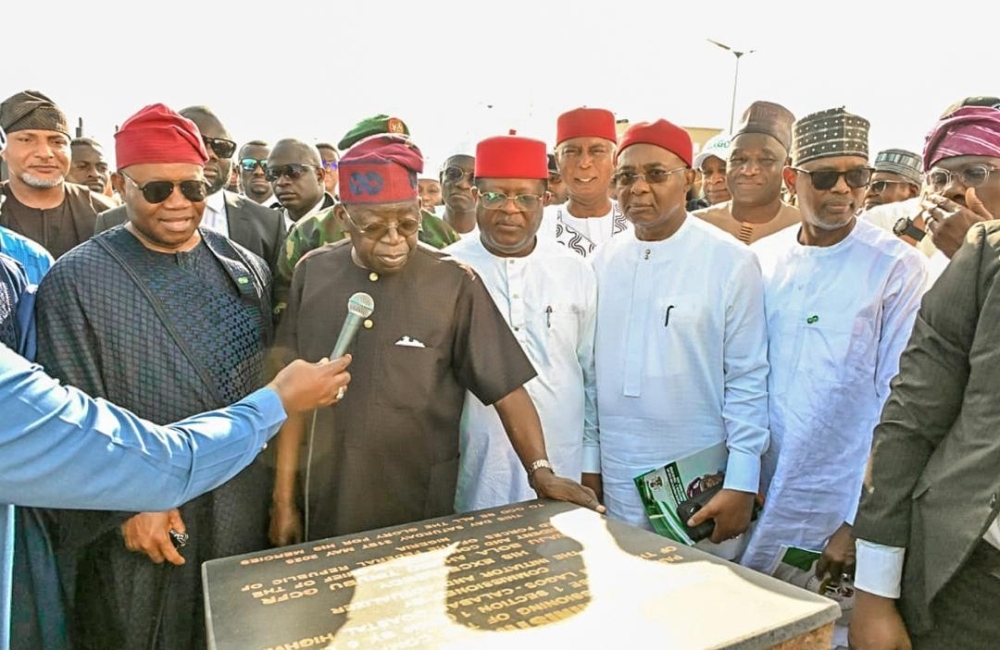
DRIVING NIGERIA’S FUTURE: CELEBRATING TWO YEARS OF TRANSFORMATIVE LEADERSHIP AND THE LAGOS-CALABAR COASTAL HIGHWAY MILESTONE
DRIVING NIGERIA’S FUTURE: CELEBRATING TWO YEARS OF TRANSFORMATIVE LEADERSHIP AND THE LAGOS-CALABAR COASTAL HIGHWAY MILESTONE
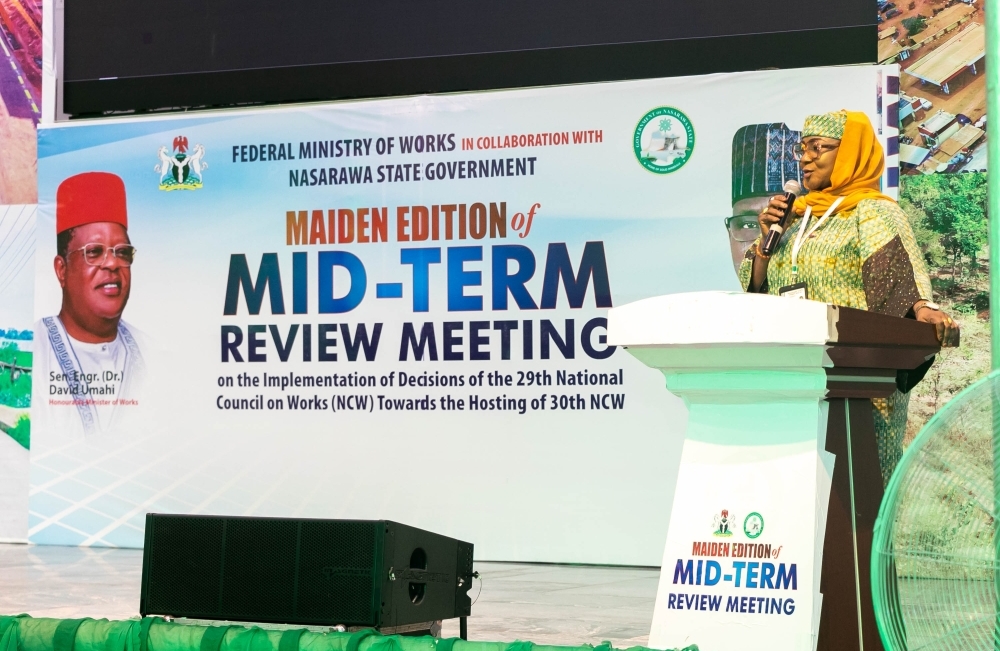
MID -TERM REVIEW MEETING ON THE IMPLIMENTATION OF THE DECISIONS REACHED AT THE 29TH NATIONAL COUNCIL ON WORKS (NCW) DAY 1
MID -TERM REVIEW MEETING ON THE IMPLIMENTATION OF THE DECISIONS REACHED AT THE 29TH NATIONAL COUNCIL ON WORKS (NCW) DAY 1