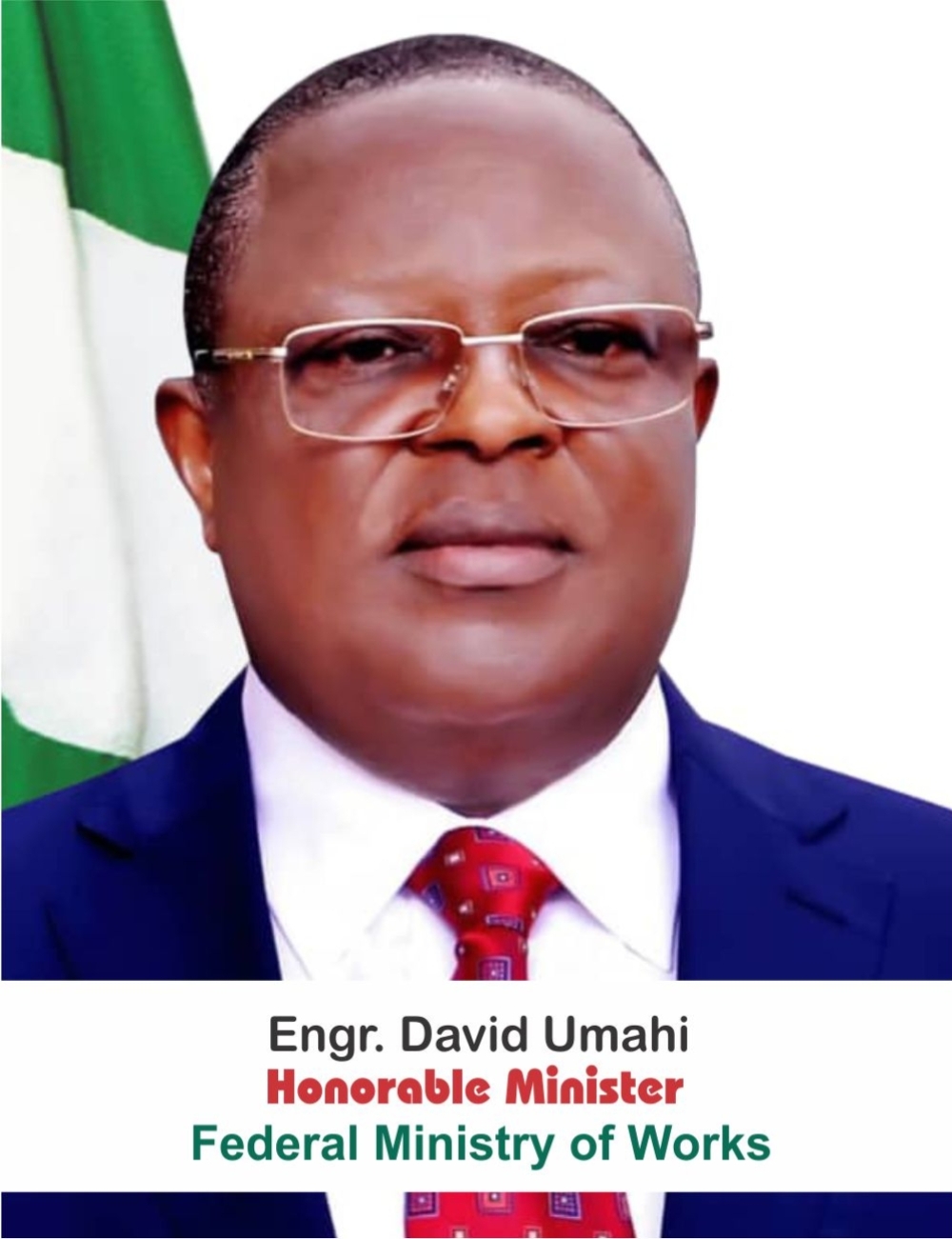
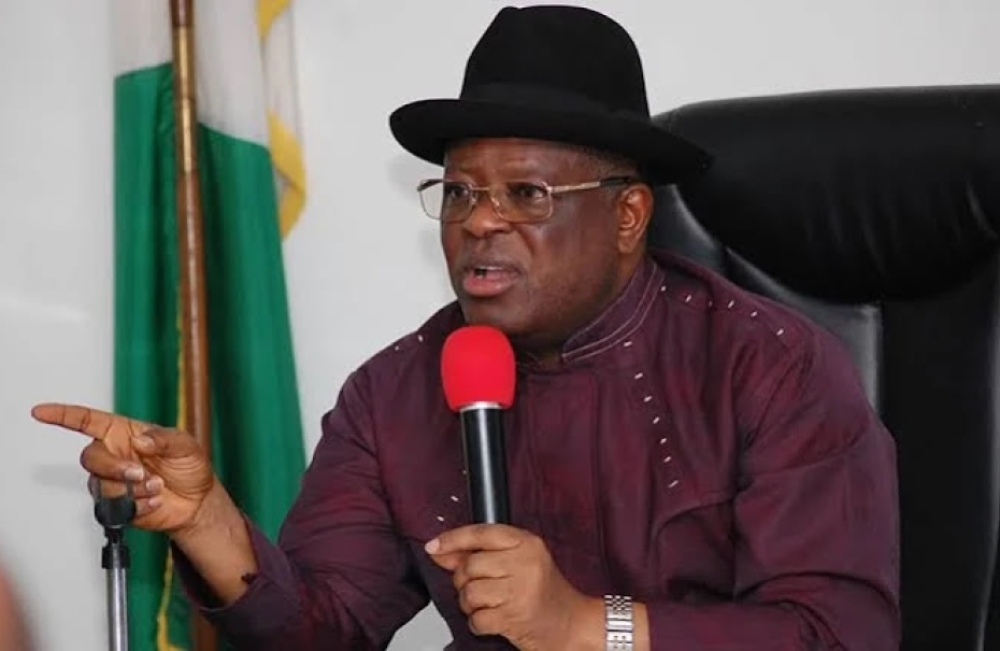
UMAHI ORDERS IMMEDIATE EMERGENCY INTERVENTION ON BENIN-ASABA ROAD, AND SOME OTHER CRITICAL FEDERAL ROADS
The Honourable Minister of Works, Senator Engr. David Nweze Umahi, CON, has directed the immediate deployment of major contractors to all three sections of the Benin-Asaba Federal Road to restore the failed sections and bring an end to the suffering of motorists and other road users.
This is because, the situation on the concessioned Benin-Asaba Road has reached a point where the overall public interest must take precedence over the existing concession agreement.
Recall that the Honourable Minister of Works was on the Benin-Asaba Road about seven days ago, where he assembled a number of contractors and directed them to prepare for immediate palliative intervention on the affected sections of the road at no cost to the concessionaire. In line with the Concession agreement which requires that before the Federal Government could intervene, the permission of the concessionaire must be required, and that permission was not granted to federal government.
The Minister subsequently proposed three options to the concessionaire, any one of which would have enabled the Federal Government to move in and address the worsening condition of the road. Unfortunately, none of the options was accepted by the concessionaire. Immediately after the Minister left Asaba, the already limited equipment deployed to the road by the concessionaire was further reduced to just one, worsening the situation and increasing the suffering of motorists and other road users.
While the Minister takes responsibility for the concerns and suffering of Nigerians using the road, it is important to state that the concessionaire has also not taken the suffering of Edo people and travelling public sufficiently into consideration by declining all the options put forward by the Federal Government. The concessionaire continues to rely on the terms of the concession agreement entered into by the previous administration, an agreement which weighs heavily against the Federal Government’s ability to intervene quickly in the interest of the public in a situation like this.
In view of this situation, the Honourable Minister of Works has directed the immediate deployment of major contractors within the corridor to all three sections of the Benin-Asaba Road to restore the failed sections and bring relief to the people, with the cost of the emergency intervention being borne by the Federal Government. The Honourable Minister has also directed immediate redesign of the entire route to be rebuilt with reinforced concrete pavement. The public should therefore take note that immediate action is underway to restore every failed section of the Benin-Asaba Road and subsequently rehabilitate the entire sections of the road using reinforced concrete pavement.
2. On the Benin-Sapele Road:
The Governors of Edo and Delta States, the Niger Delta Development Commission (NDDC), and the Federal Government are currently engaged in interventions on different sections of the road to restore the entire route. While some sections are receiving palliative attention, permanent works are also ongoing on other sections.
3. On Ifaki(Ekiti) - Kabba (Kogi) Road:
The Federal Government is engaging both the contractor; Gamji Nigeria Company Limited, and Dangote PLC on immediate emergency and permanent intervention on the most failed sections of the road, while efforts are being made to financially mobilise the company for more extensive permanent work to commence on the axis.
4. On the Sokoto-Zamfara-Katsina Road: This is an inherited project involving the dualisation of approximately 350 kilometres, which translates to about 700 kilometers. The project has since been redesigned and is currently ongoing and most sections are being reconstructed using reinforced concrete pavement. From the Sokoto axis towards Zamfara, over 50 kilometres of one carriageway have been fully completed with reinforced concrete pavement. From Zamfara to Katsina, some sections have been completed and palliative works have been ordered over the sections that have not been reconstructed. However, the pace of work slowed down due to the redesign and rephasing of the project. The contractors currently engaged on the road include CBC, SETRACO, Triacta and Mothercat. They are being remobilised to return to site and complete the outstanding works.
5. On the Abuja-Kaduna-Zaria-Kano Road: The Federal Government took over the Road project and has currently completed the 118-kilometer mostly on reinforced concrete pavement on lot 1. The Lot 2, which covers 164 kilometres, is over 60 percent completed on reinforced concrete pavement. The Federal Government has also introduced solar-powered light on the entire route of Abuja-Kaduna-Zaria - Kano to improve visibility during night travel and enhance the overall security situation on the route. The entire project is scheduled for completion by December 2026.
6. On Bauchi-Jigawa Road: Triacta Nigeria Limited has been mobilised to carry out the necessary interventions on some failed sections and work is currently ongoing in those failed sections.
7. On the Sagamu-Ore Road: 48 Kilometers of the 96-kilometre road have already been completed using reinforced concrete pavement. There is also a 24-kilometre section around Ore which was abandoned by the previous contractor. The Federal Government has directed its immediate restoration to ensure seamless travel. Solar lights are being installed in the entire 96kilometer of the road.
8. On Flooded Sections on Sagamu-Ore-Benin Road: The flooded sections on the same corridor between Sagamu-Ore-Benin Road, as well as other flooded sections in Ondo State, are being designed for emergency procurement and intervention.
9. On the East-West Road:
Some failed and critical sections, including defective sections of bridges along the East-West Road, are being marked out for emergency procurement and intervention.
10. On the Abuja-Lokoja Road:
Several contracts are ongoing along the route, while the three critical sections currently without contracts are being procured for emergency intervention.
11. On the Lokoja-Benin-Warri Road: The President has directed a complete redesign and procurement of the 400-kilometre dualised route covering the uncompleted sections, using reinforced concrete pavement, while palliative works will continue with the contractors currently on the road.
12. On Carter Bridge:
While the Federal Government continues to undertake weekly maintenance of the underwater elements of the bridge. The site has also been handed over to the contractor, CCECC, for the construction of a permanent new bridge, and work has commenced.
13. On the Third Mainland Bridge:
With regard to the defective underwater structural elements, the Federal Government is at the final stage of determining the appropriate intervention for the repair of the affected elements.
14. On the flooded section of the Lagos-Ibadan Road: Work has commenced on the affected section. There are also several flooded sections on federal roads across the six geopolitical zones, largely occasioned by excessive flooding and the effects of climate change. The Federal Government is identifying and marking these sections for immediate attention.
15. On the First and Second Niger Bridges:
Intervention work is ongoing on the approach roads to the Second Niger Bridge damaged by flood and the work is progressing very well. The First Niger Bridge has been closed to traffic to enable immediate repair works. Contractor has mobilized to site and comprehensive rehabilitation of the bridge has started. From Summit Junction to the First Niger Bridge, massive rehabilitation work is also ongoing using reinforced concrete pavement.
16. The Honourable Minister wishes to commend the President of the Federal Republic of Nigeria, His Excellency Bola Ahmed Tinubu, GCFR, for the massive work being undertaken on the nation’s roads since the administration assumed office in 2023.
17. It is important to state that when the present administration came into office, there was hardly any part of the country where one could travel for an hour without encountering significant challenges on the road network. The condition of the country’s roads and bridges was a major national infrastructure challenge.
18. Rather than shy away from the problem, the administration of President Bola Ahmed Tinubu made the nation’s road network a priority. Virtually every part of the country became a priority, and the Federal Government, through the Federal Ministry of Works, Regional Commissions, Parastatals and other MDA’s has continued to respond extensively to these challenges.
19. The Federal Government is currently working on over 80 percent of the inherited federal roads, an unprecedented level of intervention in the country’s road infrastructure.
20. We ask the public to understand the enormous challenges inherited on our roads and bridges and to take note not only of the problems being solved, but also of the permanent solutions being introduced.
21. A major part of this new approach is the use of reinforced concrete pavement, designed to significantly extend the lifespan of major roads. These roads are expected to last between 50 and 100 years. This means that roads being constructed under President Bola Ahmed Tinubu’s administration are being designed with future generations in mind, rather than simply providing temporary solutions to today’s problems. And this is a complete departure from the past, when roads often deteriorated only a few years after completion, resulting in a continuous cycle of reconstruction and expenditure.
22. We appreciate the concerns of Nigerians over the condition of some roads presently and the difficulties faced by motorists and commuters who cannot move easily from one point to another. Those concerns are legitimate, and the Federal Government is listening. But Nigerians should also recognise the enormous scale of the problems inherited and the amount of work currently being undertaken across the country.
23. It is simply impossible to resolve every road challenge accumulated over many years of neglect by the past administrations within three years. What is important is that the government is working, the government is responding, and the government is putting permanent solutions in place.
25. We appreciate members of the public who send situation reports on failed roads and other infrastructure challenges. These reports help the Ministry identify areas requiring urgent attention. However, we also appeal to members of the public to report when such problems have been addressed, just as they report when they occur.
24. We are aware of situations where photographs and reports of road challenges continue to circulate on social media even after the Federal Government has intervened and resolved the particular problem.
25. However, the Ministry will continue to respond as rapidly as possible to genuine reports and concerns from Nigerians.
26. It is also important to note that we have compiled a comprehensive record of all inherited, ongoing and intervention projects across the country which is available to the public. This is to ensure that Nigerians have access to information on the infrastructure projects being undertaken nationwide and can fully participate in and appreciate the infrastructure revolution of President Bola Ahmed Tinubu’s administration.

UMAHI ORDERS IMMEDIATE EMERGENCY INTERVENTION ON BENIN-ASABA ROAD, AND SOME OTHER CRITICAL FEDERAL ROADS The Honourable Minister of Works, Senator Engr. David Nweze Umahi, CON, has directed the immediate deployment of major contractors to all three sections of the Benin-Asaba Federal Road to restore the failed sections and bring an end to the suffering of motorists and other road users. This is because, the situation on the concessioned Benin-Asaba Road has reached a point where the overall public interest must take precedence over the existing concession agreement. Recall that the Honourable Minister of Works was on the Benin-Asaba Road about seven days ago, where he assembled a number of contractors and directed them to prepare for immediate palliative intervention on the affected sections of the road at no cost to the concessionaire. In line with the Concession agreement which requires that before the Federal Government could intervene, the permission of the concessionaire must be required, and that permission was not granted to federal government. The Minister subsequently proposed three options to the concessionaire, any one of which would have enabled the Federal Government to move in and address the worsening condition of the road. Unfortunately, none of the options was accepted by the concessionaire. Immediately after the Minister left Asaba, the already limited equipment deployed to the road by the concessionaire was further reduced to just one, worsening the situation and increasing the suffering of motorists and other road users. While the Minister takes responsibility for the concerns and suffering of Nigerians using the road, it is important to state that the concessionaire has also not taken the suffering of Edo people and travelling public sufficiently into consideration by declining all the options put forward by the Federal Government. The concessionaire continues to rely on the terms of the concession agreement entered into by the previous administration, an agreement which weighs heavily against the Federal Government’s ability to intervene quickly in the interest of the public in a situation like this. In view of this situation, the Honourable Minister of Works has directed the immediate deployment of major contractors within the corridor to all three sections of the Benin-Asaba Road to restore the failed sections and bring relief to the people, with the cost of the emergency intervention being borne by the Federal Government. The Honourable Minister has also directed immediate redesign of the entire route to be rebuilt with reinforced concrete pavement. The public should therefore take note that immediate action is underway to restore every failed section of the Benin-Asaba Road and subsequently rehabilitate the entire sections of the road using reinforced concrete pavement. 2. On the Benin-Sapele Road: 3. On Ifaki(Ekiti) - Kabba (Kogi) Road: 4. On the Sokoto-Zamfara-Katsina Road: This is an inherited project involving the dualisation of approximately 350 kilometres, which translates to about 700 kilometers. The project has since been redesigned and is currently ongoing and most sections are being reconstructed using reinforced concrete pavement. From the Sokoto axis towards Zamfara, over 50 kilometres of one carriageway have been fully completed with reinforced concrete pavement. From Zamfara to Katsina, some sections have been completed and palliative works have been ordered over the sections that have not been reconstructed. However, the pace of work slowed down due to the redesign and rephasing of the project. The contractors currently engaged on the road include CBC, SETRACO, Triacta and Mothercat. They are being remobilised to return to site and complete the outstanding works. 5. On the Abuja-Kaduna-Zaria-Kano Road: The Federal Government took over the Road project and has currently completed the 118-kilometer mostly on reinforced concrete pavement on lot 1. The Lot 2, which covers 164 kilometres, is over 60 percent completed on reinforced concrete pavement. The Federal Government has also introduced solar-powered light on the entire route of Abuja-Kaduna-Zaria - Kano to improve visibility during night travel and enhance the overall security situation on the route. The entire project is scheduled for completion by December 2026. 6. On Bauchi-Jigawa Road: Triacta Nigeria Limited has been mobilised to carry out the necessary interventions on some failed sections and work is currently ongoing in those failed sections. 7. On the Sagamu-Ore Road: 48 Kilometers of the 96-kilometre road have already been completed using reinforced concrete pavement. There is also a 24-kilometre section around Ore which was abandoned by the previous contractor. The Federal Government has directed its immediate restoration to ensure seamless travel. Solar lights are being installed in the entire 96kilometer of the road. 8. On Flooded Sections on Sagamu-Ore-Benin Road: The flooded sections on the same corridor between Sagamu-Ore-Benin Road, as well as other flooded sections in Ondo State, are being designed for emergency procurement and intervention. 9. On the East-West Road: 10. On the Abuja-Lokoja Road: 11. On the Lokoja-Benin-Warri Road: The President has directed a complete redesign and procurement of the 400-kilometre dualised route covering the uncompleted sections, using reinforced concrete pavement, while palliative works will continue with the contractors currently on the road. 12. On Carter Bridge: 13. On the Third Mainland Bridge: 14. On the flooded section of the Lagos-Ibadan Road: Work has commenced on the affected section. There are also several flooded sections on federal roads across the six geopolitical zones, largely occasioned by excessive flooding and the effects of climate change. The Federal Government is identifying and marking these sections for immediate attention. 15. On the First and Second Niger Bridges: 16. The Honourable Minister wishes to commend the President of the Federal Republic of Nigeria, His Excellency Bola Ahmed Tinubu, GCFR, for the massive work being undertaken on the nation’s roads since the administration assumed office in 2023. 17. It is important to state that when the present administration came into office, there was hardly any part of the country where one could travel for an hour without encountering significant challenges on the road network. The condition of the country’s roads and bridges was a major national infrastructure challenge. 18. Rather than shy away from the problem, the administration of President Bola Ahmed Tinubu made the nation’s road network a priority. Virtually every part of the country became a priority, and the Federal Government, through the Federal Ministry of Works, Regional Commissions, Parastatals and other MDA’s has continued to respond extensively to these challenges. 19. The Federal Government is currently working on over 80 percent of the inherited federal roads, an unprecedented level of intervention in the country’s road infrastructure. 20. We ask the public to understand the enormous challenges inherited on our roads and bridges and to take note not only of the problems being solved, but also of the permanent solutions being introduced. 21. A major part of this new approach is the use of reinforced concrete pavement, designed to significantly extend the lifespan of major roads. These roads are expected to last between 50 and 100 years. This means that roads being constructed under President Bola Ahmed Tinubu’s administration are being designed with future generations in mind, rather than simply providing temporary solutions to today’s problems. And this is a complete departure from the past, when roads often deteriorated only a few years after completion, resulting in a continuous cycle of reconstruction and expenditure. 22. We appreciate the concerns of Nigerians over the condition of some roads presently and the difficulties faced by motorists and commuters who cannot move easily from one point to another. Those concerns are legitimate, and the Federal Government is listening. But Nigerians should also recognise the enormous scale of the problems inherited and the amount of work currently being undertaken across the country. 23. It is simply impossible to resolve every road challenge accumulated over many years of neglect by the past administrations within three years. What is important is that the government is working, the government is responding, and the government is putting permanent solutions in place. 25. We appreciate members of the public who send situation reports on failed roads and other infrastructure challenges. These reports help the Ministry identify areas requiring urgent attention. However, we also appeal to members of the public to report when such problems have been addressed, just as they report when they occur. 24. We are aware of situations where photographs and reports of road challenges continue to circulate on social media even after the Federal Government has intervened and resolved the particular problem.
The Governors of Edo and Delta States, the Niger Delta Development Commission (NDDC), and the Federal Government are currently engaged in interventions on different sections of the road to restore the entire route. While some sections are receiving palliative attention, permanent works are also ongoing on other sections.
The Federal Government is engaging both the contractor; Gamji Nigeria Company Limited, and Dangote PLC on immediate emergency and permanent intervention on the most failed sections of the road, while efforts are being made to financially mobilise the company for more extensive permanent work to commence on the axis.
Some failed and critical sections, including defective sections of bridges along the East-West Road, are being marked out for emergency procurement and intervention.
Several contracts are ongoing along the route, while the three critical sections currently without contracts are being procured for emergency intervention.
While the Federal Government continues to undertake weekly maintenance of the underwater elements of the bridge. The site has also been handed over to the contractor, CCECC, for the construction of a permanent new bridge, and work has commenced.
With regard to the defective underwater structural elements, the Federal Government is at the final stage of determining the appropriate intervention for the repair of the affected elements.
Intervention work is ongoing on the approach roads to the Second Niger Bridge damaged by flood and the work is progressing very well. The First Niger Bridge has been closed to traffic to enable immediate repair works. Contractor has mobilized to site and comprehensive rehabilitation of the bridge has started. From Summit Junction to the First Niger Bridge, massive rehabilitation work is also ongoing using reinforced concrete pavement.
25. However, the Ministry will continue to respond as rapidly as possible to genuine reports and concerns from Nigerians.
26. It is also important to note that we have compiled a comprehensive record of all inherited, ongoing and intervention projects across the country which is available to the public. This is to ensure that Nigerians have access to information on the infrastructure projects being undertaken nationwide and can fully participate in and appreciate the infrastructure revolution of President Bola Ahmed Tinubu’s administration.
FG is Committed to the Engineering Values in Road Infrastructure Development as Supervision Occupies a Centre Stage in the New Policy of the Federal Ministry of Works The Federal Government under President Asiwaju Bola Ahmed Tinubu, GCFR is committed to outstanding quality, value for money, innovation, responsiveness, fast deliveries and technical expertise in road infrastructure development in Nigeria. This was contained in the message of the Hon. Minister of Works, Sen. Engr. Nweze David Umahi, CON when the national leadership of Nigerian Society of Engineers (NSE) led by its President, Engr. Tasiu Sa'ad Gidari Wudil paid him a courtesy call in his office in Abuja on 23rd November, 2023. The Hon. Minister emphasized the importance attached to quality delivery of construction works by the Renewed Hope administration of Mr. President stressing that the 'business as usual' syndrome in road construction is no longer tenable under the Renewed Hope administration of Mr. President. He reeled out the new policies on road infrastructure to include: • good stabilized and tested subgrade, sub-base course before pavement placement. • expose subgrade, sub-base and base course to 60 days vehicular movement and continuous sheep-foot rolling before pavement placement. • introduction of reinforced concrete road pavement in most roads’ carriageway and shoulders. • continuous maintenance of all roads under construction throughout the life of the project under contract. • effective design of road infrastructure anchored on detailed report of environmental site conditions and geotechnical report. • community relations in terms of keeping roads motorable under the period of the contract. He said that supervision was necessary in the actualization of quality delivery of road construction whether concrete pavement or asphalt, noting that each of the two models has its own attendant conditions. “When you start to compare asphalt and concrete, it is if all things are equal, here all things are not equal, there are many factors why we are talking about concrete”. He noted that the stand of the Ministry is not about comparing asphalt and concrete pavement but that if you are using either of them, there are conditions attached to them. He said there are certain terrains on our roads that make it imperative for concrete pavement to be used." You cannot put asphalt in water but you can put concrete in water”. The Minister explained that the rate of increase in the cost of materials for construction of the two models is alarming and argued that the cost of materials for asphalt is in geometric progression while the cost of materials for concrete pavement is in arithmetic progression. He reiterated that prudence and value for money are the watchwords of the Ministry of Works under him, and this involves getting materials at the minimum purchase price and maximum efficiency and effectiveness of the product. He urged the leadership of Nigerian Society of Engineers to consider retraining of members of the society and enforcement of discipline and strict standards of ethics in the practice of Engineering in Nigeria in the interest of public safety and for the protection of the economic investments. " I went to China, and I saw their roads, there was no evidence of any maintenance in nearly 30 years. And I asked them what the reason is, and they said that if you build a road in China and within your lifetime, the road fails, they will come for test and if there is any evidence of compromise, the person responsible goes to prison for life". The Hon. Minister offered partnership with the NSE in the area of supervision and consultancy. In his mission statement earlier, the President of Nigerian Society of Engineers ( NSE) said the aim of the courtesy call was to seek areas of collaboration with their own and described the Hon. Minister as a round beg in a round hole "Since after your assumption of office, we have been monitoring your progress, and I must tell you we are not surprised, what you did as Governor in Ebonyi State is amazing. We visited you when you were the Governor of Ebonyi State, and I am going to visit your Governor now. I must go because it is like a pilgrimage.... In fact, Your Excellency, we are proud of you." The President said that the Society which is an umbrella organization for Engineering profession in Nigeria is committed to best Engineering practices. He enumerated the achievements of the Society and the prospects of their smart office project, and expressed hope that it would be an innovation hub of the nation. ...
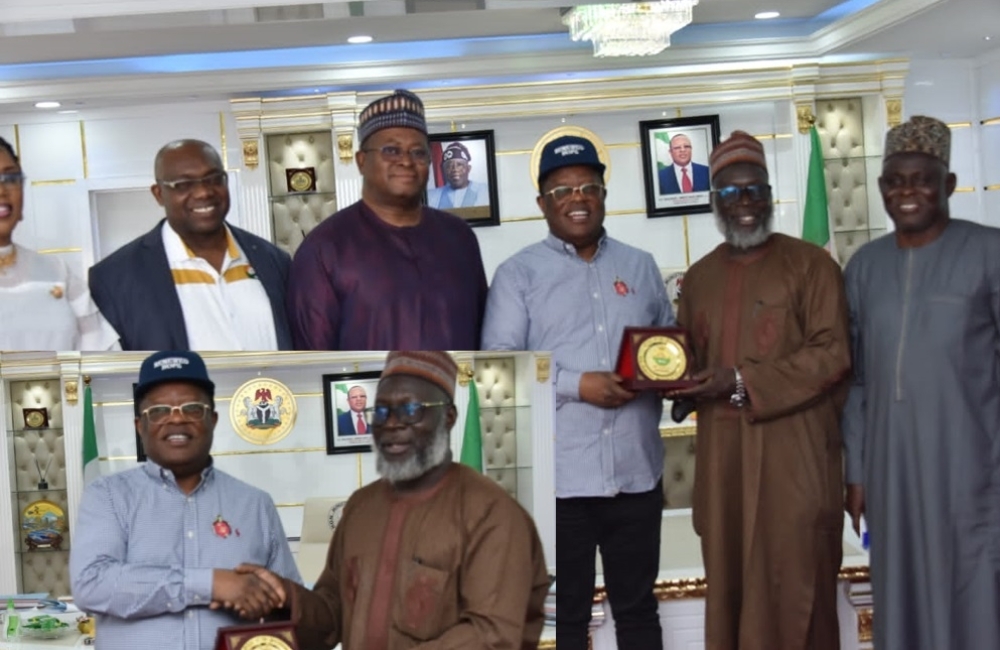
Asphalt Pavement and Concrete Pavement not Compared - Umahi. .....We will Partner with NSE The Minister of Works, Sen. Nweze David Umahi has reiterated the stand of the Ministry on the use of either asphalt or concrete on the construction of federal roads across the nation saying that each one has conditions attached to its usage. He made this assertion when the President of the Nigeria Society of Engineer, Engr. Tasiu Sa’ad Gidari Wudil paid him a courtesy visit in his office in Abuja. Umahi stated that there are many factors why the issue of concrete technology came up and it’s only because all things are not equal and can only be understood by professionals and not by people who have no knowledge about it. “When you start to compare Asphalt and Concrete, it is as if all things are equal, here all things are not equal, because there are many factors why we are emphasizing about the use of concrete, nevertheless, people speak about a profession they have no knowledge about” He said. He noted that the stand of the Ministry is not about comparing asphalt pavement and concrete pavement but that if you are using either of them, there are certain conditions according to the terrains in different states that will require our roads being built with concrete as well as that concrete must be used as pavement. “We are not just comparing asphalt and concrete, no, that is not what we are doing, first of all, for the use of asphalt, these are the conditions, also for the use of concrete, these are the conditions, but there are certain terrain in states that we stressed must use concrete, we cannot change that. You cannot put asphalt in water, but you can put concrete into water” he said. The Minister explained that the rate at which the prices of these two products fluctuates is alarming and that increment in asphalt is Geometric while that of concrete is in Arithmetic progression noting that the FG is the one funding these huge projects and must tread with caution taking into consideration the budgetary allocation of the Ministry of Works. Umahi expressed his worries saying that the greatest challenge experienced in road construction is the problem of supervision caused by lack of commitment by not putting professional ethics over and above chasing of money but that the Ministry is committed to providing adequate supervision to all road constructions across the 36 states and the FCT. "If we are committed to public things, God will give you new ideas, if you are not committed to public things, you will not get new ideas “he said. The Minister declared that the Ministry will partner with the Nigeria Society of Engineers in the supervision of all road projects across the country and encouraged NSE to improve on the professionalism by opening a training school, both in the North and in the South one each, while he pledged his support. “We are going to partner with NSE in the supervision of all road projects and will also emphasis the need for retraining schools across states. Engineering is wide, if you are a professional engineer, you will not have problem with professional ethics” he said. Umahi maintained that the first job of Nigeria Society of Engineer is to bring discipline among members by setting standard for membership in the sense that if any action against the profession is committed, one can be disrobed noting that everyone cannot be an engineer. “The first job of NSE is to bring discipline, you have to bring us under your leadership so if you hear that a member has committed fraud, you can disrobe him, and it is not everyone that will answer the name -Engineer” he said. ...
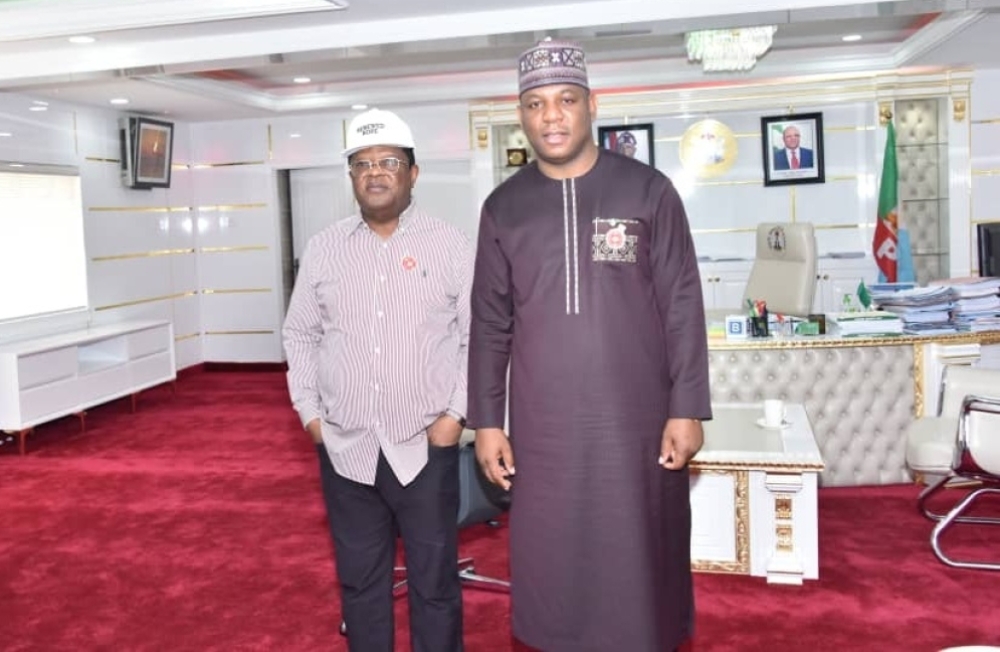
Thinking Out of The Box and Inter- Ministerial Co-Operation Resonate as Mr. President's Minister of Works and The Minister of Steel Development Brainstorm on Tapping into the Opportunities in Ajaokuta Steel Plant for The Development of Concrete Road Infrastructure in Nigeria The Honourable Minister of Works, His Excellency Sen. Engr. Nweze David Umahi, CON and the Hon. Minister of Steel Development, Shuaib Audu have resolved to synergize and strategize in tapping into the opportunities in Ajaokuta Steel Plant for the development of road infrastructure in Nigeria. This was part of the outcome of their inter-ministerial meeting held today, 21st November, 2023 at the Office of the Hon. Minister of Works, Federal Ministry of Works, Headquarters, Mabushi- Abuja and this is in keeping with the Renewed Hope Agenda of the President of the Federal Republic of Nigeria, His Excellency, Sen. Asiwaju Bola Ahmed Tinubu GCFR who is doing everything possible to reverse the ugly trend of Nigeria's developmental history and revolutionize national economic development within the shortest period of time. The far-reaching resolutions of the two Hon. Ministers underscored the imperative of coordination, cooperation coherence, and complementarity in the execution of Federal Government's action plans for national development. Speaking on the outcome of their meeting, the Hon. Minister of Works said that the Ministry of Steel Development would play a major role in the road infrastructure revolution plan envisioned by Mr. President by providing more than 16% of the materials needed for the construction of Nigeria's roads in concrete pavement. He said that tapping into the opportunities in Steel Industry would not only create jobs and wealth for Nigeria's population, but it would also create a global market and encourage industrialization. "How do we reactivate Ajaokuta Steel. We are going into concrete road, in this concrete road, about 16 percent of it is from Steel while 30 percent is cement. We need a lot of money to start but we decided to face it and God has given us an idea, we need about 35 billion dollars to start. If we start waiting for FG, it might become difficult. We did Return on Investment (ROI), the profit we could have made, part of it will go to bank interest, we are looking at commercial bank, but Federal Executive Council has to endorse it. If this could be done it means Mr. President is actually living to his words, and this is going to be possible." The Hon Minister of Works also commended the Hon. Minister of Steel Development for his efforts in developing the steel sector, noting that steel industry is the bedrock of Nigeria's industrialization and the backbone that stimulates national development and economic boost for the industrial growth of any nation. He assured the Hon. Minister of Steel Development that his Ministry would work collaboratively in his efforts of enhancing the potentialities of Ajaokuta Steel Plant- the largest Steel Mill in Nigeria. "Mr. President never made a mistake in his appointment, I call him a Divine President, and the most important thing is that our eyes are on the job”. The Minister continued, “One of the renewed hope agenda of Mr. President is to think outside the box, Mr. President inherited a large chunk of debt from the past administration. The beauty about it is that he is not complaining, he knew how the country was before he took the job and how it is. The good thing is that if you have passion for something God will give you an idea”. Earlier, the Minister of Steel Development said the meeting was robust and incisive “My mission is a wonderful one, I had a fantastic meeting initiated by the Hon. Minister of Works. We are seriously thinking outside the box to see how we can implement the Renewed Hope Agenda of Mr. President. What we came to discuss here is how to restart Steel production at Ajaokuta Steel Plant. The Hon. Minister of Works has made it very clear that the Federal Government is looking to develop over 30,000 kilometers of road and a large component of that will be from Steel wrought, and percentage of that Steel wrought will be produced in Ajaokuta. We came to have a discussion on how to implement the process for producing it in Ajaokuta within the shortest possible time". The Hon. Minister of Steel Development emphasized the importance of the initiative by both Ministers and expressed hope that it would provide the needed economic boost for the nation, generate revenue and provide thousands of direct jobs for skilled and non- skilled technicians and hundreds of thousands of unskilled jobs in Nigeria. "And we are to achieve 2 or 3 three things , one to create job opportunity for Nigerians as a whole, two, to ensure that the corridor around the North Central Zone and around the Ajaokuta Warri axis is busy with activities and thirdly, the plant has been inactive for close to four decades and we are here to restart the plant within the shortest possible time”. ...
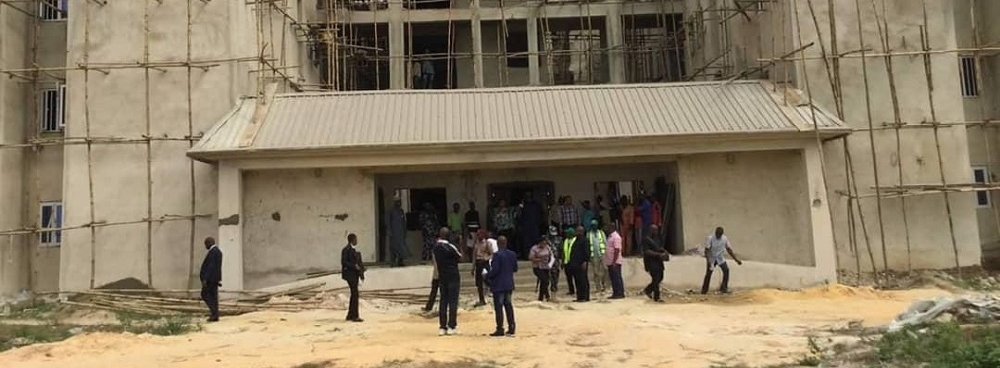
FG Commends Contractors On Quality Of Roads; Advocates For Alternative Funding Sources
The Federal Government has commended contractors handling various road and housing projects in the South South region for doing a good and quality job.
2. The Honourable Minister of State I for Power, Works and Housing, Hon. Mustapha Baba Shehuri expressed satisfaction on the quality of road rehabilitation and construction, as well as the construction of mass houses under the present administration, since its inception three years ago. He added that contractors are now fully back to sites with attendant effects on rejuvenating the economy and enhancing human capital development.
3. Shehuri noted that in tackling infrastructural deficits across the country, there is a dire need for alternative and innovative sources of funding beside the usual annual budgetary allocations, adding that government is presently using the SUKUK (bond) funding option and Public - Private - Partnerships (PPP) to bridge infrastructural gaps in the country.
4. The Minister stated this in Yenagoa, Bayelsa State during a working tour to the South South geopolitical zone to inspect ongoing projects being embarked upon by the Ministry.
5. Earlier in his tour, the Minister inspected the Dualisation of Lokoja – Benin road, Section II: Okene – Auchi, Section III: Auchi – Ehor, as well as Section IV: Ehor – Benin City.
6. He also visited the ongoing Dualisation of Sapele - Ewu road, sections I and II, Sapele - Agbor and Agbor - Ewu, respectively.
7. The Honourable Minister expressed satisfaction in the level and quality of work being carried out, especially in Bayelsa state inspite of the difficult terrain. He said this while inspecting ongoing construction works on Yenegwe – Okaki – Kolo road and the Dualisation of Yenegwe Road Junction – Kolo – Otuoke – Bayelsa Palm road.
8. While in Rivers State, the Federal Controller of Works, Engr. J. O. Fadire briefed the Minister on the progress of work on the Rehabilitation of Enugu – Port Harcourt Expressway, Section IV, Aba - Port Harcourt, as well as the 39 - kilometre Bodo – Bonny road with bridges across Afa, Opobo and Nanabie Creeks, the only one to link the Ogoni people with Bonny Island.
9. Engr. Fadire stated that though there are challenges affecting the pace of work such as the environment, compensation and youth restiveness, he, however, commended the contractor, Messrs Julius Berger (Nig.) Ltd. for the progress made within a short period of time. He further assured the Minister that the project will be delivered as scheduled because funding is not an issue as the major financiers, Messrs NLNG Ltd. is committed.
10. The Minister visited the construction sites of houses under the National Housing Programme (NHP), the second of its kind in the history of the nation since the President Shagari Low Cost Housing of the early 1980s, in Benin City, Edo State, Asaba, Delta State, Uyo, Akwa Ibom State and Calabar, Cross Rivers State. He also inspected the ongoing construction of the Federal Secretariat in Yenegoa, Bayelsa, where the Federal Controller of Housing in the State assured the Minister that the project will be completed by February, next year.
11. Hon. Shehuri noted that with the construction of these affordable Mass Housing Estates across the country, the present government is delivering on its campaign promise of bridging the housing deficit in the country, creating jobs and generating wealth.
12. The Phase I of the NHP projects, according to the Minister, have reached advance stages of completion and will be due for commissioning in the first quarter of next year, stressing that the houses are for all interested illegible Nigerians.
13. The Minister further disclosed that the procurement processes for the second phase of the Programme will soon be concluded and contracts awarded for its commencement in all the states that have provided the Ministry with land.
14. During the course of the Tour of Duty, the Honourable Minister also visited the 132 KVA Transmission Substations at Uyo and Calabar in Akwa Ibom and Cross River States, respectively, where the present Government installed and commissioned an additional 1 * 60 MVA Transformer each, in April.
15. While conducting the Minister round the Uyo Facility, the General Manager, Port Harcourt Region of the Transmission Company of Nigeria (TCN), Engr. Solomon Uyouko lamented that out of the 144 megawatts capacity of the transmission infrastructure, the DisCo utilise a meagre 2% daily, leaving most of the generated and transmitted power idle.
16. The story is almost similar at the 132 KVA Transmission Substation in Calabar, where the Acting Assistant General Manager, Engr. Nasiru Bello stated that out of the 192 megawatts transmitted daily, the DisCo evacuates between 20 - 30%.
17. Commenting on the unfortunate state of power distribution infrastructure in the country, Hon. Shehuri said the present scenario is unacceptable, while admonishing the DisCos to up their game or pave way for those with requisite capacities. He further urged Nigerians to start blaming the DisCos for lack of electricity, not the Federal Government.
Power Sector Reforms- Challenges And The Way Forward
Being The Text Of The Lecture Delivered By The Honourable Minister Of Power, Works And Housing, Mr Babatunde Raji Fashola, San At The Department Of Economics 2017 Public Lecture Series, University Of Lagos, On Thursday 13th July 2017
I thank you for inviting me to be your guest lecturer at the 2017 edition of your public lecture series.
I accepted this invitation for many reasons. First it was conveyed through Mr. Ayo Gbeleyi who served with me meritoriously as Honourable Commissioner and Head of PPP Office and he implored me to do the best I could to make time to accept.
Secondly, the topic which focuses on “Challenges and the way forward” resonates with my view of the power sector and I believe that of many, who acknowledge that the sector has challenges; more importantly the topic is solution driven and positive in outlook which is consistent with my attitude, that, instead of recrimination, reproach and cynicism, we should look for the way forward.
I will like to say that many right thinking and well-meaning Nigerians are now taking this view, which is that the problem of power in the country can be solved, and we all have different but very important roles to play.
I will come to this as I proceed, but I must warn that this may be a fairly long speech, because there is a lot to say, and because there is a lot happening in power, and more importantly because I believe one of the most important things I can do as a Minister is to simplify what is going on for the benefit of the public and to discuss it using street level terms and not technical terms.
The bottom line really is that people want to know when they will have stable electricity, why they do not have it, and what government is doing about it.
Permit me to share with you, what our road map is.
We recognise that our power supply is not enough and what we have done is do the simplest thing, get more power.
So our road map seeks to get, first incremental power, progress to stable power, and then achieve uninterrupted power.
From this road map it must be clear to any right thinking and well meaning person that this is a journey and not an event that will happen overnight.
As we progress on this journey, we will get to critical milestones from which we can look back and say we are now better off at that milestone, than when we started the journey.
I understand the urgency of now, to get the power, I understand the high level of expectation.
I know that they come from many years of broken promises and a change from government-managed power to privatisation of power.
While I fully support privatisation, I believe what took place in 2013 in the heat of politics was a privatisation that was well intentioned since 2005 but delivered with some deception in 2013 with the expectation of political profit.
It led many uninformed Nigerians to believe that once the privatisation was concluded, the assets sold to the Distribution companies (DisCos) and the Generation companies (GenCos) there was immediately going to be power.
I cautioned then that people’s expectations were being unduly raised without telling them that there was a lot of work to do.
While I believed that the APC government will do a better job, little did I expect that I would inherit the problem. But I am grateful for the opportunity from Mr. President, to contribute to solving a problem that I am deeply passionate about and I will offer nothing but my best while I am at it.
As I have said, there are challenges, which is why I accepted this invitation and they can be solved, which is why I have come to share my thoughts about the way forward.
I have also pointed out that we have a road map whose first objective is to get incremental power and this means power from gas, solar, wind, coastal waves, hydro dams, nuclear and bio mass.
I have also pointed out that all of us have roles to play.
I am inspired by the history of Nigeria that whenever we have united to confront a problem, we have never lost. The number of Nigerians interested in generating power is increasing daily and this is encouraging.
This is evidenced by dozens of letters and proposals I get daily, even though they are wrongly directed to the Ministry, because power is now privatised.
There are people who know about it, there are those seeking to make money from it, there are those who know absolutely nothing about it but are still seeking to try. The positive I take away from it is that we are increasingly looking in the right direction.
I will share a story with you, first for its humour and secondly for its consistency, with our road map to get the incremental power.
I had received a text on my telephone, one of the many hundreds I get daily since I published my telephone number many years ago.
This particular one was interesting because the sender alleged that he had found the solution to our energy needs and was wiling to share it with me.
I called him to discuss this “novel” idea he claimed to have. He then referred me to a news report that showed how somebody was generating electricity from a potato.
I then took the time to explain to him that this was not new technology but indeed what we had shared with school children in my time as Governor, in the Power Kids Club that we set up to introduce people to the fundamentals of electricity early in life.
Just as I was preparing this speech, one of my former state Executive Council members who served with me referred me to an online publication about generating electricity using biomass.
Ladies and gentlemen, these two instances confirm what I said about:
Increasing interest of Nigerians in solving the power challenge, which is positive and welcome.
Generating incremental power from all viable sources.
The hard truth is that generating electricity from potatoes or cow dung is possible. The question is viability and sustainability.
First, how much cow dung can we produce to keep the power going? Because even countries who have enough cows, like Brazil and can export beef, don’t use cow dung for power.
Similarly, how much potato can we produce to fire our power needs?
In any event, in a country where there is poverty and hungry people, and with the proven calorific and nutritional values of potato, I think it would be a poor choice to use it for power generation as opposed to using it for nutrition and well-being of children and people.
I will shortly come to specifics of what we are doing to resolve the challenges, but permit me as I have just clarified the situation about cow dung, potato, (which also by the way applies to all those who want to generate electricity by using waste) to also explain what I think is fundamental about power.
It is that there is no real problem in buying and installing a power plant. It is not different from you buying and installing a generator in your home.
The problem starts when you cannot get diesel or petrol, just as we usually don’t have enough gas supply either because of production shortages or vandalism.
The problem with your generator starts when you have to connect your neighbour and issues arise as to how you share the cost or what appliances your neighbour or even your family can switch on when the generator is running especially if it is not a very big one, in order to avoid damage.
The problem arises if the generator needs maintenance or repairs. Can you use it during repairs if you don’t have a backup?
What is true of the generators we install for ourselves is essentially true of the power plants we have as a country.
Those plants are nothing more than big generators. We connect them through 330KV wires, 132 KV wires, 33KV wires and 11 KV wires that transmit the power from the plant, carrying them across several hundreds of kilometres, injecting and sending them through about 183 sub-stations to the distribution companies before they get to our homes, offices, schools and so on.
In the process wires snap, equipment gets damaged by us or by natural wear and tear and requires replacement. Most of it, we have to import because we do not have enough as backup, the plant is not available during repairs.
In order to get incremental power therefore, we have resolved to use all our sustainable energy sources like hydro, gas, wind, solar, and coal (not potato and cow dung) and work is now going on at:
For Hydro -
a) Zungeru Hydro plant in Niger for 700 MW
b) Kashimbilla Hydro plant in Taraba for 40 MW
c) Dadin Kowa Hydro plant in Gombe for 29 MW
d) Gurara Hydro plant Nigeria for 30 MW
e) Later this year work should start on Mambilla Hydro for 3,050 MW
As for gas plants, there are many already such as:
Egbin 1,320
Geregu I & II
Omotosho I
Omotosho II
Olorunsogo I
Olorunsogo II
Alaoji
Ibom
Calabar
Ughelli
to mention just a few, all of which are challenged by Debts owed from the previous administrations, lack of sufficient gas or vandalism of existing gas lines or a combination of them.
Gas supply is the responsibility of the Ministry of Petroleum Resources and its parastatals like NNPC, Nigerian Gas Company and others.
We are working with them to improve on supply of gas to these plants to ensure that their redundant capacities and idle turbines come back into operation to produce electricity.
We have just concluded repairs on Afam IV Power Plant that was plagued by a damaged transformer which we replaced in order to restore 100 MW of gas fired power to the grid.
Simultaneously there is a Presidential initiative with General Electric through our Ministry to deliver 240 MW of emergency power to the site of Afam III using the existing gas resources there.
The turbines are already in country and installation should be complete within year.
As for wind energy, we are completing the abandoned 10MW Katsina wind farm project to pilot wind energy development and if sustainable, we can expand it.
There is no recorded coal power production today. The last one at Orji River Coal Power Plant in Enugu built by the colonial government had been dismantled when I visited.
But we are working with a group that shows the commitment to deliver up to 3,000MW of coal power in the Benue/Kogi belt where there are proven and sustainable deposits of coal about 20 kilometres from the intended power site.
Solar power presents the real window of opportunity to quickly increase power and also give people access.
We have shown that we can deliver solar by completing the 1.2MW solar project in the lower Usman Dam area. We have signed power purchase agreements with 14 developers who potentially can deliver 1,125 MW of solar.
We are partnering with Jigawa state to deliver about 1,000 MW of solar power at a site of 2,000 hectares already delivered to us by the state government. The project is at design and preparation stage.
We have completed the energy audit to deliver independent power to 37 universities and 7 teaching hospitals and one of them is the University of Lagos.
27 (TWENTY-SEVEN) of those plants will be solar plants.
These are only one side of what government is doing to deliver incremental power through solar.
The other side is what citizens have started on their own with solar.
Some of the ones I can recall are those of an oil marketing company that is now powering its petrol filling stations by solar, and initiatives by other groups which I have helped to launch to deliver solar packs to unconnected communities.
Recently, the Acting President also commissioned an Independent Solar Power facility at a village called Wuna in Abuja that had not been connected to the Grid.
For the avoidance of doubt solar is the new power, its appeal is very strong with young people and it provides a unique opportunity to close our power supply deficit.
My final word on these sources of power generation is that they speak to the idea of an energy mix; and we have delivered one for Nigeria which targets 30% renewable of our total energy production by 2030.
Generation of power is not the end of the power value chain. On the contrary, it is just the beginning. To reach our homes the power has to be transported.
This is the Transmission System and the National Grid that co-ordinates 8 transmission regions with 183 substations from the National Control Centre in Oshogbo.
For the record, this Grid is also somewhat misunderstood. People have said it is the problem because it can only carry 5,000 MW.
I will correct this unchanging opinion first by stating that under the Buhari Administration, the Grid has expanded to 6,200 MW because we have completed transmission stations in places like Ikot Ekepene, Okada, Alagbon, Ajah, Katampe, Sokoto and awarded many more in places like Damboa, Pankshin, Osogbo, Kumbotso, Odogunyan to mention a few.
In the last few days we completed work at:
Kukwaba substation in Abuja
Increased transformer capacity at
Ajah substation in Lagos
Mayo Belwa substation in Adamawa
The logic therefore is that if projects to expand the Grid are being completed and new ones started, it is either ignorance or mischief to continue to argue that the Grid cannot wheel more than 5,000 MW.
The correct, informed and sensible view is that the Grid is dynamic and must grow as power production grows.
How we got to this Grid improvement is the story that I will share now.
Since the integrated power project started almost a decade ago, several projects were issued as contracts to develop the transmission system.
Many of the equipment imported by contactors were trapped at the port in over 800 containers for almost 10 (TEN) years because Government did not budget to pay the contactors.
It is in the first full budget of the Buhari Administration that a budget for payment was presented and approved in 2016.
At the time of preparing this speech, we have paid N930, 229, 418 (NINE HUNDRED AND THIRTY MILLION, TWO HUNDRED AND TWENTY-NINE THOUSAND FOUR HUNDRED AND EIGHTEEN NAIRA) and resultantly 387 (THREE HUNDRED AND EIGHTY SEVEN) containers have now been recovered and handed to the contractors for deployment to their site.
Some of those sites whose projects have been held back were:
1. Design and construction of 2x60 MVA 132/33KV transmission substations at Kachia Kaduna State.
2. Ganmo-Ogbomosho 132KV transmission Line Project (45KM) Kwara-Oyo.
3. Supply of Aluminum conductor composite core for Re-conducting of Onitsha New Haven 330KV transmission line.
4. Construction of 132KV DC TRX line Yola-Song-Little Gombe-Mubi-Gulak.
5. Construction of Onitsha Oba-Nnewi-Ideato Okigwe 132KV Double Circuit Transmission.
6. Even the completion of the 215 MW Kaduna plant was held back because some of those equipment were previously trapped in the port.
We are currently planning to maintain and upgrade the carrying capacity of some old lines by re-conducting them and expanding their transmission capacity.
But while the transmission is being upgraded the last mile of the value chain, which is the distribution end, must be ready to accept and distribute the power.
For the record, there are 11 Distribution Companies namely:
– Kaduna Distribution Company
– Kano Distribution Company
– Yola Distribution Company
– Jos Distribution Company
– Abuja Distribution Company
– Ibadan Distribution Company
– Ikeja Distribution Company
– Eko Distribution Company
– Benin Distribution Company
– Port Harcourt Distribution Company
– Enugu Distribution Company
Many of them inherited old distribution assets like feeders, Transformers, Ring main units and conductors (the lines) to mention a few.
If you are observant you will see falling, bending, misaligned poles and wires in your streets and neighbourhoods.
They don’t look as organised as those you see abroad.
These are the old assets sold to the DisCos which must be upgraded, repaired and replaced over time in order to be able to effectively distribute power (received from the Transmission Company) to your offices, schools, shops and homes.
Therefore, the Transmission Company is a service provider to the DisCo, who is the customer just as the DisCo is the service provider to you and I who are customers.
Therefore, if any one of them is inefficient, you and I don’t get power or it is unreliable.
You will have heard of load rejection and be wondering why what is not enough is being rejected.
Each DisCo has a fixed % of the total amount allocated to it and the DisCo then nominates the area within their business area where they want TCN (the transmission) to send power.
| Disco | % of total allocated in MYTO2 |
| Abuja | 11.5% |
| Benin | 9% |
| Enugu | 9% |
| Eko | 11% |
| Ibadan | 13% |
| Ikeja | 15% |
| Jos | 5.5% |
| Kaduna | 8% |
| Kano | 8% |
| Port Harcourt | 6.5% |
| Yola | 3.5% |
Normally as a business they will nominate supply to places where customers are paying and where their equipment is working.
In places where collection is difficult or equipment is not functioning, they will refuse to energise their power intake or are unable to do so. This is what is called load rejection.
What then happens is that the Control Centre tells the GenCos to reduce their power production because if it is not taken, it results in high frequency which can damage the generating unit, create loss of power, and sometimes result in Grid collapse depending on how severe the outage is.
The problems came on the Horizon as Gas is improving and Rains are arriving to increase power production on Thermal and Hydro plants.
Eligible Customer
This is why I have exercised the power conferred on me by the Act to declare what is called “Eligible Customer”.
What this simply means is that certain classes of consumers that consume a lot of energy like factories, hotels, state governments or local government secretariats, whose DisCos have poor distribution equipment, can apply to NERC for eligibility to build the distribution facility that the DisCo cannot or refuses to build, and then take their power direct from the GenCo.
Clearly the purpose is to increase service and access to power and we have already received a number of requests; however the power is not cheap.
The cost of building the distribution asset means that it comes at a premium, but offers access to more realistic power, which is cheaper than self-generation and diesel, which is between N60-N70 per kw/h.
The success of this initiative offers many prospects for success:
Competition by small GenCos
Response by DisCos to upgrade their equipment
Disaggregated tariff paid by eligible customers who are high end consumers without materially adversely affecting regular domestic consumers, (whose tariff can only be changed by a major tariff review which I will explain) and creating an opportunity for cross-subsidization. (Rich and heavy consumers bear some of the cost of the poor and small consumers.)
Tariff
This is as best as I can attempt to summarize the value chain and what we are doing. There are of course more technical issues that time and the forum do not permit or compel. However, we must all recognize and accept that tariff is a cost that we must all pay to keep the value chain viable as a business.
It is measured by meters (which I will come to) but every consumer must pay. It is a criminal offence in Nigeria and all over the civilized world to use public electricity and not pay for it.
Tariff is not fixed by the Minister. I have no such power. Tariff is proposed by the DisCos after consultation with their customers, and then approved by NERC (the Nigerian Electric Regulatory Commission) during a major Tarrif review.
The process of determining tariff takes into consideration the amount of power (4,500 MV in 2015) the number of consumers on record who will pay it (6,000,000), the cost of producing and transporting power, operating cost of the operators, exchange rate, inflation and interest rate; and the tariff for each class of consumer is determined.
The classes of consumers are R1, R2, R3 and MD. The tariff of each class is different in their DisCo while the tariff of R2, R3 and M are different from DisCo to DisCo.
It is only R1 that has a fixed tariff of N4 per/kwh across all DisCos and it was not changed in the last tariff review.
I spoke about a major tariff review; there is also minor tariff review.
The 2015 tariff review gave us a 10-year tariff that should be declining as the sector stabilizes.
It provides for a major review after 5 years, and minor reviews every 6 (SIX) months to keep the market abreast of the economic realities of foreign exchange, gas price, and inflation changes.
If we want to experience reliable electricity, we must accept the reality of tariffs and possible upward or downward reviews.
We must stop going to court to get injunctions to stop tariff reviews. We don’t do so, when exchange rate, inflation and prices of other commodities change. (The Court of Appeal has reversed the decision of the Federal High Court which stopped the implementation of the last tariff review).
What we must insist on, is the provision of meters, so that we can monitor and control what we consume.
Government must also not interfere with the power of the regulator when it fixes tariff in the way the last administration ordered a reversal of tariff in order to win electoral votes in 2014.
It created a massive debt for Nigeria, because while the Government ordered a reversal of Tariff, it did not reduce Exchange Rate, Interest Rate , cost of wages or cost of gas and other inputs necessary to produce power.
Why should Nigeria carry a debt created by an individual’s electoral ambition?
This is what the Buhari administration has to contend with.
It might interest members of the public to know that most if not all the oil & gas producing communities where there is electricity connection do not pay for power, somebody is carrying that cost.
It is worsened by the fact that the light bulbs are on during the day and I am told in some communities that they are never switched off. This is waste. What is wasted will never be enough.
Meters
One of the omissions of the privatization carried out by the last administration was lack of compulsory metering before the privatization.
This is compounded by an inaccurate consumer projection of 6 million households, without a consumer audit. These are the problems the Buhari government is now trying to fix with the Power Sector Recovery Program, which I will discuss later.
What the public must know about meters are:
Meters are measuring and safety equipment that must be tested by NEMSA before they can be used.
Different classes of consumers require different types of meters: Single and multiple phases to ensure that your meter matches your consumption.
Meters by the same manufacturers are calibrated for each DisCo use, such that you cannot use a meter calibrated for Ikeja DisCo in Eko DisCo without Re-calibration.
Meters cannot be installed without visit to the home for audit assessment.
DisCos liquidity problem makes it difficult for them to access credit to order and supply meters. One DisCo requires over N20B to meter.
The consumer base does not capture all those who consume power, and without meters, the DisCos aggregate power distributed to a destination and estimate the bill for the known consumer who is perhaps paying for the neighbour who is not known or is stealing energy; (whistle blowing for energy theft is a civic responsibility)
Those who are resisting the installation of meters and assaulting DisCo staff who seek to install meters must stop it. It is a criminal offence.
N37 Billion meter contract
The government of Nigeria had in 2003 (14 years ago) issued a contract for the supply of 3 million meters to NEPA/PHCN
That contract was not performed until the privatization was concluded in 2013, and was inherited by the Buhari government as a court case in which a judgment of N119Billion had been signed against government. We have worked to get the case out of court , negotiate the judgement and go back to the N37Billion contract to see how many meters it can now provide, and how to install them. We are still finalising the terms of agreement.
Gas supply
Although we get power from Hydro and we plan more from solar and coal, I cannot conclude this speech without speaking a little about gas which is managed by the Ministry of Petroleum Resources but which is the fuel for 26 (TWENTY-SIX) plants out of the 29 (TWENTY-NINE) power plants in the country.
2016 was a particularly difficult year for our gas fired turbines because there were at least 16 major gas pipeline attacks with explosions, between February and May of 2016.
This is why we did not experience stability until August when the rains came and we could rely on the Hydros, whose capacity had been upgraded.
Those pipelines are gradually now being repaired as a result of relative peace secured by initiatives of the President, Vice President, Minister of Petroleum Resources, Governors and other stakeholders.
Power Sector Recovery Programme (PSRP)
Without a doubt the privatisation of power is the way to go.
Admittedly it has not yet delivered the kind of results we were all made to expect, for some of the reasons I have stated; political interference, liquidity, metering, debts, governance, technical capacity of operators and the political dishonesty with which Nigerians expectation were raised to the sky.
But I have no doubt at all, having studied the privatization of Brazil, Mexico, India, South-Africa and China (who went through some or all of our current challenges), that reliable electricity will happen in Nigeria.
It is not an event, it is a journey marked by positive trends that have occurred and will occur as the right solutions are deployed to challenges.
This is what the Power Sector Reform Program (PSRP) seeks to achieve.
Because of the current transition challenges, some people have called for the cancellation of the privatization, but such a course of action (which I do not support) has consequences: -
Government will be breaching its own contract in the same way we cancelled the privatization of refineries in 2007 and will send a negative investment signal that we do not respect agreements;
Government will have to refund in dollars, all the monies paid by the DisCos and GenCos most of which have been spent on almost 50,000 workers of PHCN who had to be paid;
Government will now have to re-employ those or other workers back to operate the assets and again increase salary and pension costs, when our recurrent cost is above 70% of budget today.
Instead of doing these, Government believes that the lapses in the privatization can be re-engineered, retrofitted or reformed to deliver.
The PSRP is therefore a set of policies and actions aimed at restoring credibility, liquidity, transparency, efficiency, good governance and improved service delivery to the power sector.
The PSRP is meant to implement and deliver the power component of the Economic Recovery & Growth Plan (ERGP) of the Buhari Government and it is already being implemented.
N701 Billion NBET payment assurance programme
Metering plan (already discussed)
Constitution of Boards of Agencies for Governance (NERC); Rural Electrification Agency (REA)
Change of Government Representatives in DisCos
Procurement and Capital Requirement Guidelines for Discos by NERC
Energy mix, already done to achieve diversity of energy sources and energy security
Tariff Computation Reform
Communication and Advocacy
Technical capacity and equipment upgrade by DisCos for loss restriction
Legislation to restore and punish energy theft and damage to power assets
Ladies and Gentlemen, these are some of the challenges the power sector faces and the way forward as formulated by the Buhari Government in order to reform the power sector for efficient delivery.
As you will have seen, many if not all of them are man made.
Therefore if men and women create problems , only men and women can solve them.
You and I therefore have critical roles to play , and I have signed up to play my own.
Have you ?
Thank you for your attention.
Babatunde Raji Fashola, SAN
Honourable Minister of Power, Works and Housing
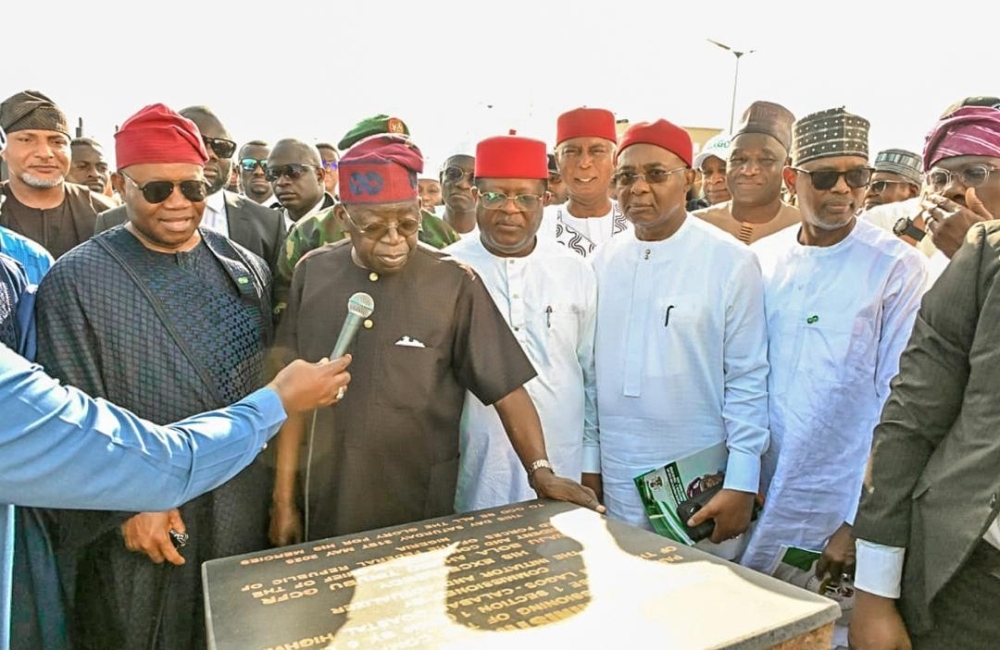
DRIVING NIGERIA’S FUTURE: CELEBRATING TWO YEARS OF TRANSFORMATIVE LEADERSHIP AND THE LAGOS-CALABAR COASTAL HIGHWAY MILESTONE
DRIVING NIGERIA’S FUTURE: CELEBRATING TWO YEARS OF TRANSFORMATIVE LEADERSHIP AND THE LAGOS-CALABAR COASTAL HIGHWAY MILESTONE
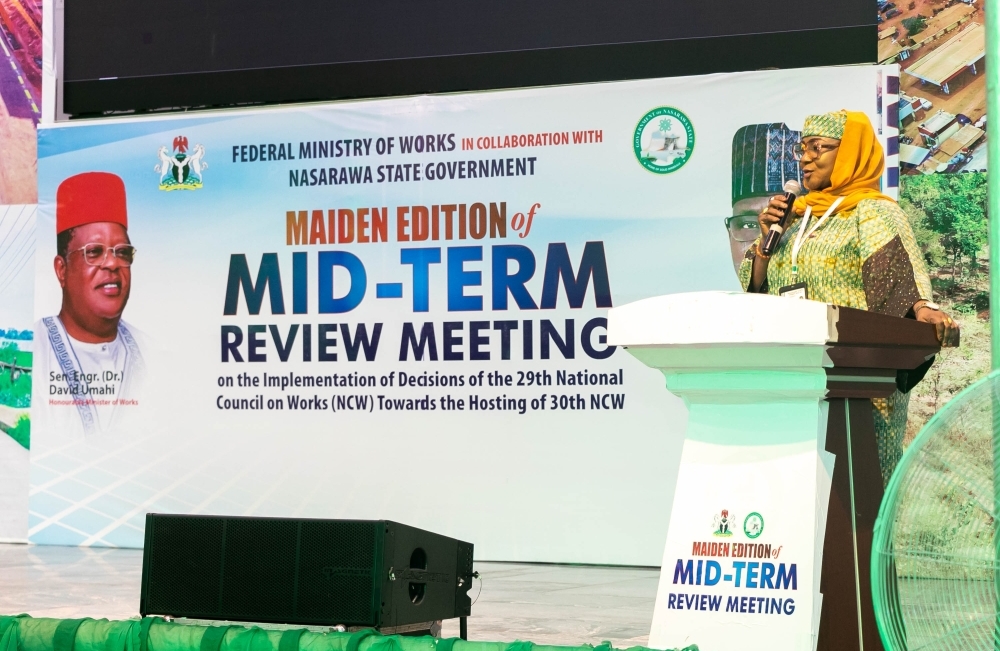
MID -TERM REVIEW MEETING ON THE IMPLIMENTATION OF THE DECISIONS REACHED AT THE 29TH NATIONAL COUNCIL ON WORKS (NCW) DAY 1
MID -TERM REVIEW MEETING ON THE IMPLIMENTATION OF THE DECISIONS REACHED AT THE 29TH NATIONAL COUNCIL ON WORKS (NCW) DAY 1