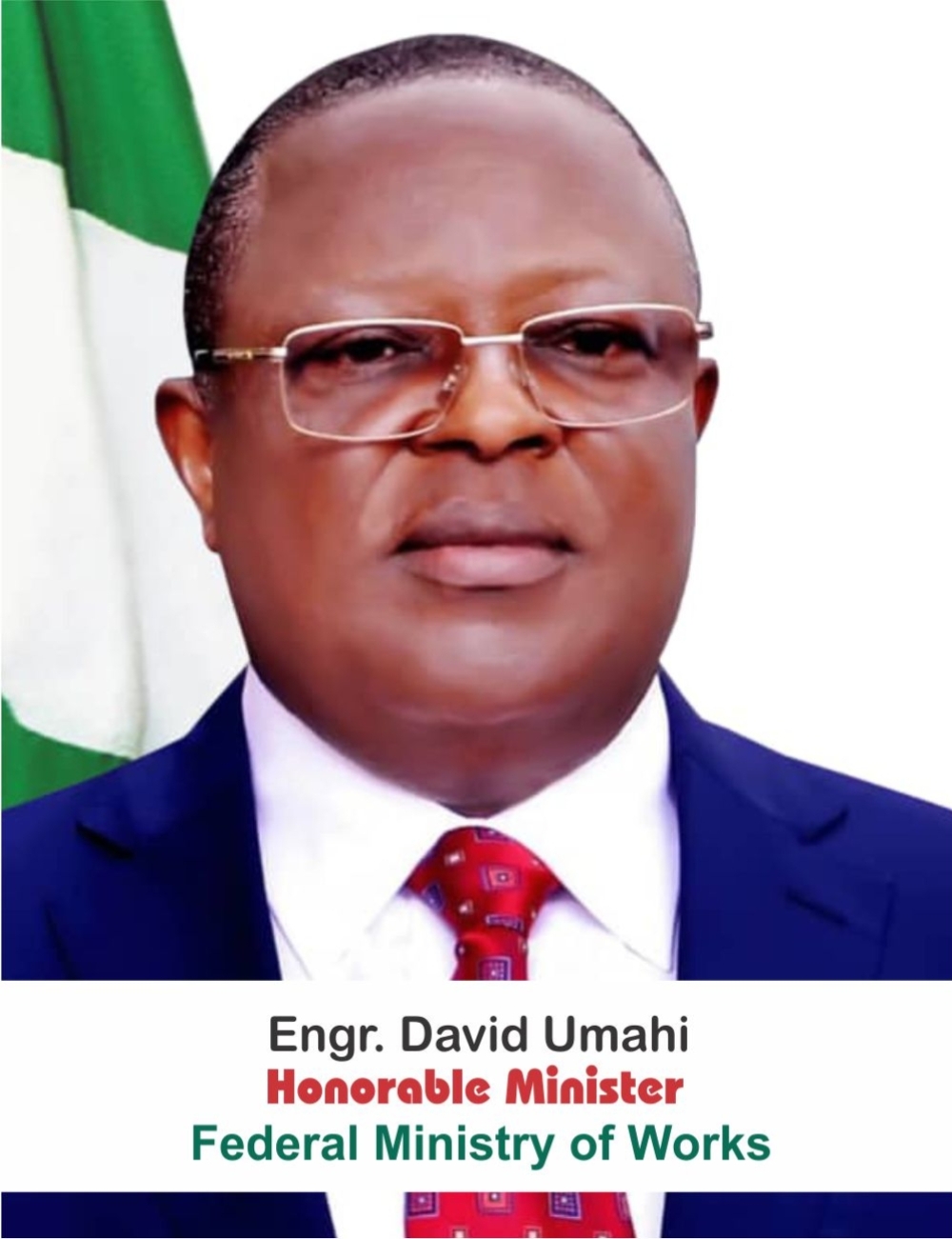
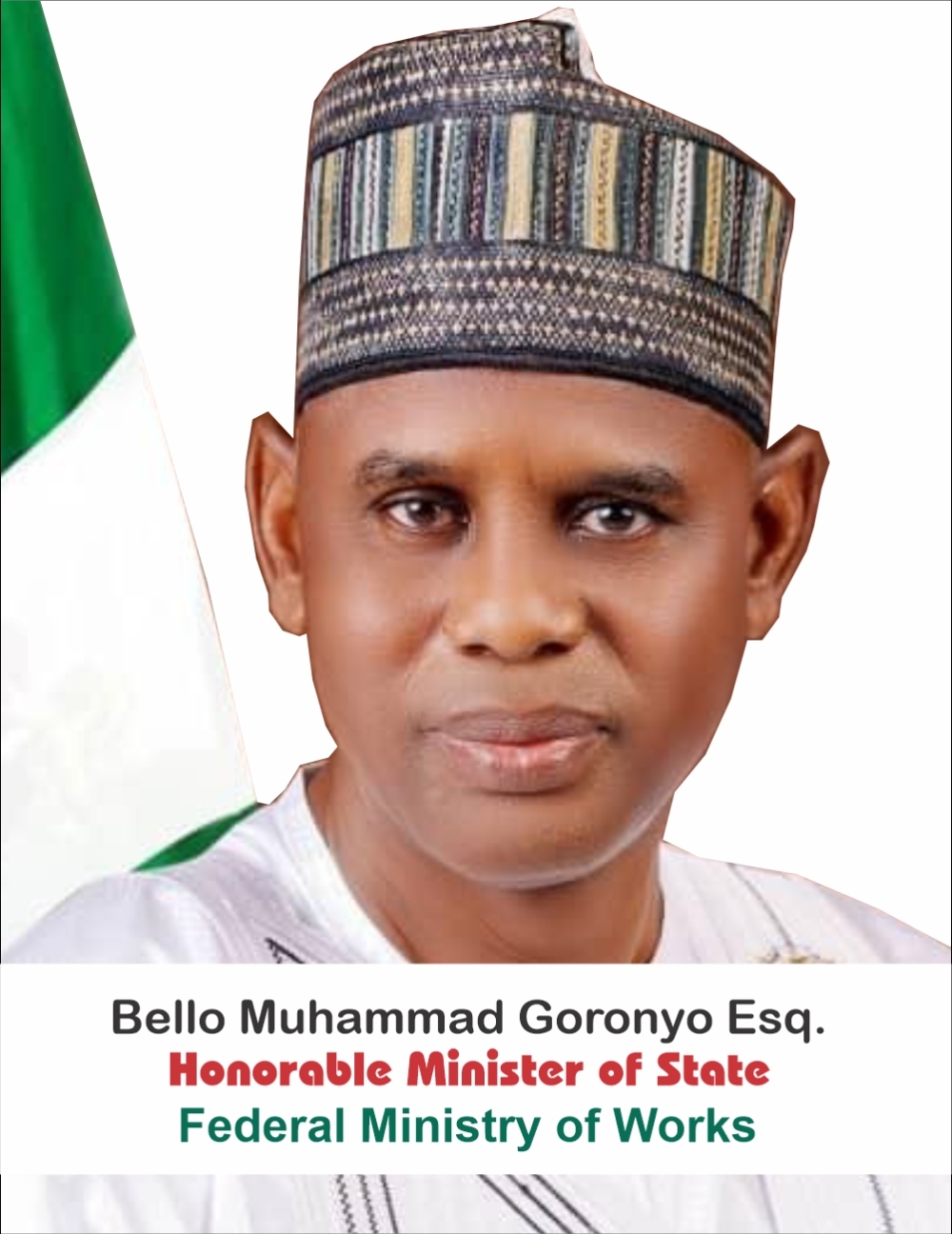
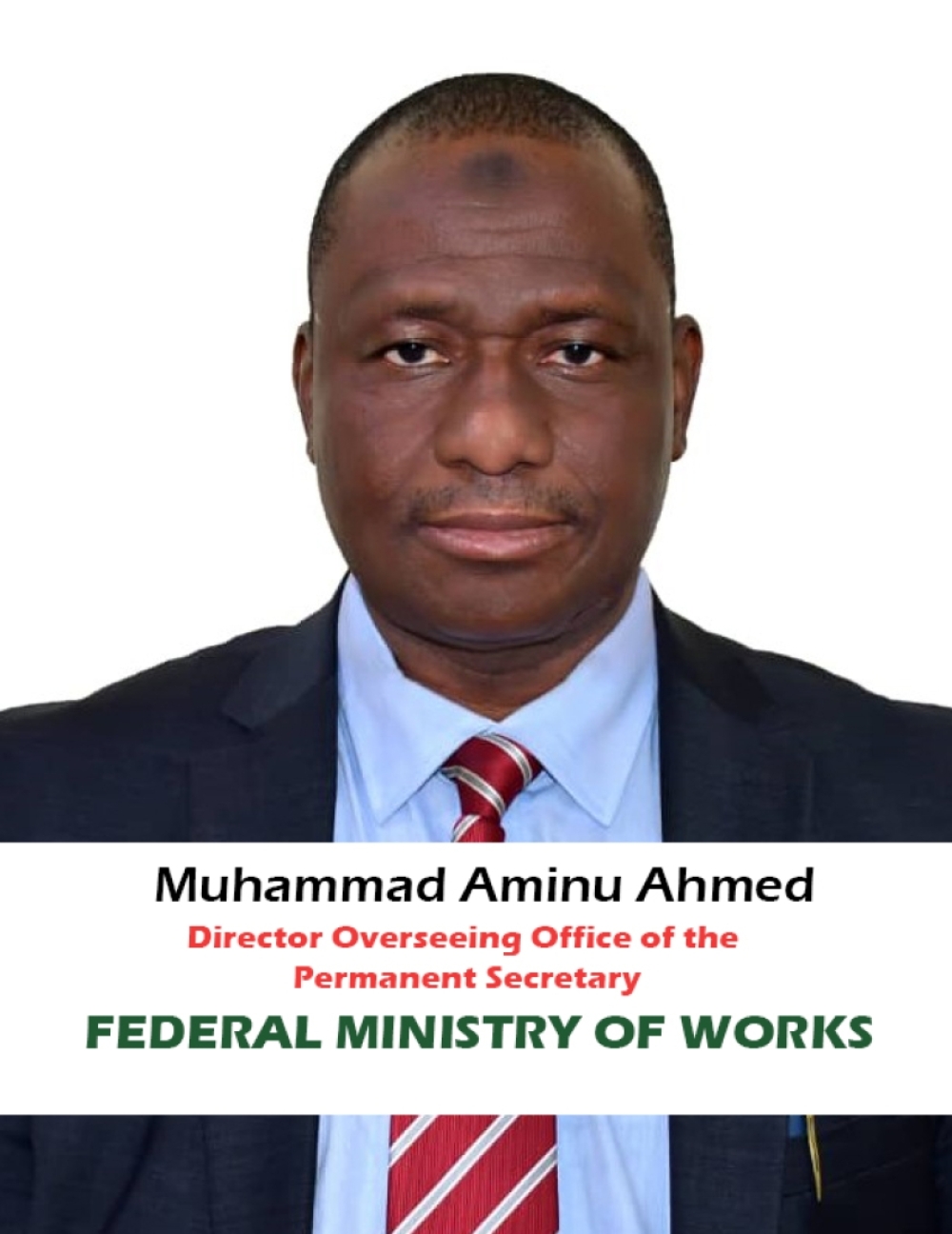
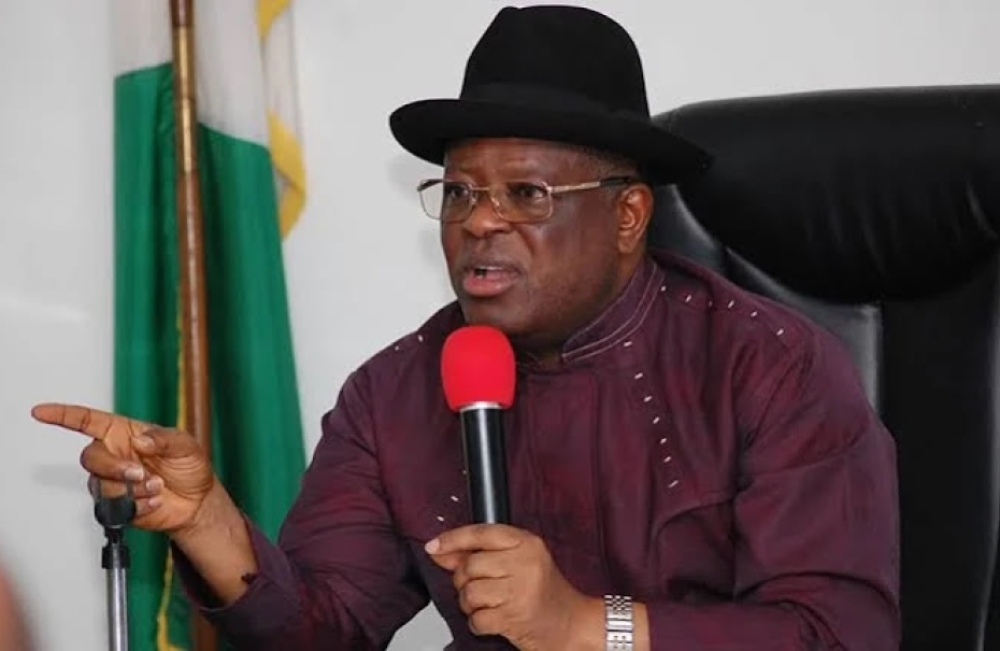
UMAHI ORDERS IMMEDIATE EMERGENCY INTERVENTION ON BENIN-ASABA ROAD, AND SOME OTHER CRITICAL FEDERAL ROADS
The Honourable Minister of Works, Senator Engr. David Nweze Umahi, CON, has directed the immediate deployment of major contractors to all three sections of the Benin-Asaba Federal Road to restore the failed sections and bring an end to the suffering of motorists and other road users.
This is because, the situation on the concessioned Benin-Asaba Road has reached a point where the overall public interest must take precedence over the existing concession agreement.
Recall that the Honourable Minister of Works was on the Benin-Asaba Road about seven days ago, where he assembled a number of contractors and directed them to prepare for immediate palliative intervention on the affected sections of the road at no cost to the concessionaire. In line with the Concession agreement which requires that before the Federal Government could intervene, the permission of the concessionaire must be required, and that permission was not granted to federal government.
The Minister subsequently proposed three options to the concessionaire, any one of which would have enabled the Federal Government to move in and address the worsening condition of the road. Unfortunately, none of the options was accepted by the concessionaire. Immediately after the Minister left Asaba, the already limited equipment deployed to the road by the concessionaire was further reduced to just one, worsening the situation and increasing the suffering of motorists and other road users.
While the Minister takes responsibility for the concerns and suffering of Nigerians using the road, it is important to state that the concessionaire has also not taken the suffering of Edo people and travelling public sufficiently into consideration by declining all the options put forward by the Federal Government. The concessionaire continues to rely on the terms of the concession agreement entered into by the previous administration, an agreement which weighs heavily against the Federal Government’s ability to intervene quickly in the interest of the public in a situation like this.
In view of this situation, the Honourable Minister of Works has directed the immediate deployment of major contractors within the corridor to all three sections of the Benin-Asaba Road to restore the failed sections and bring relief to the people, with the cost of the emergency intervention being borne by the Federal Government. The Honourable Minister has also directed immediate redesign of the entire route to be rebuilt with reinforced concrete pavement. The public should therefore take note that immediate action is underway to restore every failed section of the Benin-Asaba Road and subsequently rehabilitate the entire sections of the road using reinforced concrete pavement.
2. On the Benin-Sapele Road:
The Governors of Edo and Delta States, the Niger Delta Development Commission (NDDC), and the Federal Government are currently engaged in interventions on different sections of the road to restore the entire route. While some sections are receiving palliative attention, permanent works are also ongoing on other sections.
3. On Ifaki(Ekiti) - Kabba (Kogi) Road:
The Federal Government is engaging both the contractor; Gamji Nigeria Company Limited, and Dangote PLC on immediate emergency and permanent intervention on the most failed sections of the road, while efforts are being made to financially mobilise the company for more extensive permanent work to commence on the axis.
4. On the Sokoto-Zamfara-Katsina Road: This is an inherited project involving the dualisation of approximately 350 kilometres, which translates to about 700 kilometers. The project has since been redesigned and is currently ongoing and most sections are being reconstructed using reinforced concrete pavement. From the Sokoto axis towards Zamfara, over 50 kilometres of one carriageway have been fully completed with reinforced concrete pavement. From Zamfara to Katsina, some sections have been completed and palliative works have been ordered over the sections that have not been reconstructed. However, the pace of work slowed down due to the redesign and rephasing of the project. The contractors currently engaged on the road include CBC, SETRACO, Triacta and Mothercat. They are being remobilised to return to site and complete the outstanding works.
5. On the Abuja-Kaduna-Zaria-Kano Road: The Federal Government took over the Road project and has currently completed the 118-kilometer mostly on reinforced concrete pavement on lot 1. The Lot 2, which covers 164 kilometres, is over 60 percent completed on reinforced concrete pavement. The Federal Government has also introduced solar-powered light on the entire route of Abuja-Kaduna-Zaria - Kano to improve visibility during night travel and enhance the overall security situation on the route. The entire project is scheduled for completion by December 2026.
6. On Bauchi-Jigawa Road: Triacta Nigeria Limited has been mobilised to carry out the necessary interventions on some failed sections and work is currently ongoing in those failed sections.
7. On the Sagamu-Ore Road: 48 Kilometers of the 96-kilometre road have already been completed using reinforced concrete pavement. There is also a 24-kilometre section around Ore which was abandoned by the previous contractor. The Federal Government has directed its immediate restoration to ensure seamless travel. Solar lights are being installed in the entire 96kilometer of the road.
8. On Flooded Sections on Sagamu-Ore-Benin Road: The flooded sections on the same corridor between Sagamu-Ore-Benin Road, as well as other flooded sections in Ondo State, are being designed for emergency procurement and intervention.
9. On the East-West Road:
Some failed and critical sections, including defective sections of bridges along the East-West Road, are being marked out for emergency procurement and intervention.
10. On the Abuja-Lokoja Road:
Several contracts are ongoing along the route, while the three critical sections currently without contracts are being procured for emergency intervention.
11. On the Lokoja-Benin-Warri Road: The President has directed a complete redesign and procurement of the 400-kilometre dualised route covering the uncompleted sections, using reinforced concrete pavement, while palliative works will continue with the contractors currently on the road.
12. On Carter Bridge:
While the Federal Government continues to undertake weekly maintenance of the underwater elements of the bridge. The site has also been handed over to the contractor, CCECC, for the construction of a permanent new bridge, and work has commenced.
13. On the Third Mainland Bridge:
With regard to the defective underwater structural elements, the Federal Government is at the final stage of determining the appropriate intervention for the repair of the affected elements.
14. On the flooded section of the Lagos-Ibadan Road: Work has commenced on the affected section. There are also several flooded sections on federal roads across the six geopolitical zones, largely occasioned by excessive flooding and the effects of climate change. The Federal Government is identifying and marking these sections for immediate attention.
15. On the First and Second Niger Bridges:
Intervention work is ongoing on the approach roads to the Second Niger Bridge damaged by flood and the work is progressing very well. The First Niger Bridge has been closed to traffic to enable immediate repair works. Contractor has mobilized to site and comprehensive rehabilitation of the bridge has started. From Summit Junction to the First Niger Bridge, massive rehabilitation work is also ongoing using reinforced concrete pavement.
16. The Honourable Minister wishes to commend the President of the Federal Republic of Nigeria, His Excellency Bola Ahmed Tinubu, GCFR, for the massive work being undertaken on the nation’s roads since the administration assumed office in 2023.
17. It is important to state that when the present administration came into office, there was hardly any part of the country where one could travel for an hour without encountering significant challenges on the road network. The condition of the country’s roads and bridges was a major national infrastructure challenge.
18. Rather than shy away from the problem, the administration of President Bola Ahmed Tinubu made the nation’s road network a priority. Virtually every part of the country became a priority, and the Federal Government, through the Federal Ministry of Works, Regional Commissions, Parastatals and other MDA’s has continued to respond extensively to these challenges.
19. The Federal Government is currently working on over 80 percent of the inherited federal roads, an unprecedented level of intervention in the country’s road infrastructure.
20. We ask the public to understand the enormous challenges inherited on our roads and bridges and to take note not only of the problems being solved, but also of the permanent solutions being introduced.
21. A major part of this new approach is the use of reinforced concrete pavement, designed to significantly extend the lifespan of major roads. These roads are expected to last between 50 and 100 years. This means that roads being constructed under President Bola Ahmed Tinubu’s administration are being designed with future generations in mind, rather than simply providing temporary solutions to today’s problems. And this is a complete departure from the past, when roads often deteriorated only a few years after completion, resulting in a continuous cycle of reconstruction and expenditure.
22. We appreciate the concerns of Nigerians over the condition of some roads presently and the difficulties faced by motorists and commuters who cannot move easily from one point to another. Those concerns are legitimate, and the Federal Government is listening. But Nigerians should also recognise the enormous scale of the problems inherited and the amount of work currently being undertaken across the country.
23. It is simply impossible to resolve every road challenge accumulated over many years of neglect by the past administrations within three years. What is important is that the government is working, the government is responding, and the government is putting permanent solutions in place.
25. We appreciate members of the public who send situation reports on failed roads and other infrastructure challenges. These reports help the Ministry identify areas requiring urgent attention. However, we also appeal to members of the public to report when such problems have been addressed, just as they report when they occur.
24. We are aware of situations where photographs and reports of road challenges continue to circulate on social media even after the Federal Government has intervened and resolved the particular problem.
25. However, the Ministry will continue to respond as rapidly as possible to genuine reports and concerns from Nigerians.
26. It is also important to note that we have compiled a comprehensive record of all inherited, ongoing and intervention projects across the country which is available to the public. This is to ensure that Nigerians have access to information on the infrastructure projects being undertaken nationwide and can fully participate in and appreciate the infrastructure revolution of President Bola Ahmed Tinubu’s administration.

UMAHI ORDERS IMMEDIATE EMERGENCY INTERVENTION ON BENIN-ASABA ROAD, AND SOME OTHER CRITICAL FEDERAL ROADS The Honourable Minister of Works, Senator Engr. David Nweze Umahi, CON, has directed the immediate deployment of major contractors to all three sections of the Benin-Asaba Federal Road to restore the failed sections and bring an end to the suffering of motorists and other road users. This is because, the situation on the concessioned Benin-Asaba Road has reached a point where the overall public interest must take precedence over the existing concession agreement. Recall that the Honourable Minister of Works was on the Benin-Asaba Road about seven days ago, where he assembled a number of contractors and directed them to prepare for immediate palliative intervention on the affected sections of the road at no cost to the concessionaire. In line with the Concession agreement which requires that before the Federal Government could intervene, the permission of the concessionaire must be required, and that permission was not granted to federal government. The Minister subsequently proposed three options to the concessionaire, any one of which would have enabled the Federal Government to move in and address the worsening condition of the road. Unfortunately, none of the options was accepted by the concessionaire. Immediately after the Minister left Asaba, the already limited equipment deployed to the road by the concessionaire was further reduced to just one, worsening the situation and increasing the suffering of motorists and other road users. While the Minister takes responsibility for the concerns and suffering of Nigerians using the road, it is important to state that the concessionaire has also not taken the suffering of Edo people and travelling public sufficiently into consideration by declining all the options put forward by the Federal Government. The concessionaire continues to rely on the terms of the concession agreement entered into by the previous administration, an agreement which weighs heavily against the Federal Government’s ability to intervene quickly in the interest of the public in a situation like this. In view of this situation, the Honourable Minister of Works has directed the immediate deployment of major contractors within the corridor to all three sections of the Benin-Asaba Road to restore the failed sections and bring relief to the people, with the cost of the emergency intervention being borne by the Federal Government. The Honourable Minister has also directed immediate redesign of the entire route to be rebuilt with reinforced concrete pavement. The public should therefore take note that immediate action is underway to restore every failed section of the Benin-Asaba Road and subsequently rehabilitate the entire sections of the road using reinforced concrete pavement. 2. On the Benin-Sapele Road: 3. On Ifaki(Ekiti) - Kabba (Kogi) Road: 4. On the Sokoto-Zamfara-Katsina Road: This is an inherited project involving the dualisation of approximately 350 kilometres, which translates to about 700 kilometers. The project has since been redesigned and is currently ongoing and most sections are being reconstructed using reinforced concrete pavement. From the Sokoto axis towards Zamfara, over 50 kilometres of one carriageway have been fully completed with reinforced concrete pavement. From Zamfara to Katsina, some sections have been completed and palliative works have been ordered over the sections that have not been reconstructed. However, the pace of work slowed down due to the redesign and rephasing of the project. The contractors currently engaged on the road include CBC, SETRACO, Triacta and Mothercat. They are being remobilised to return to site and complete the outstanding works. 5. On the Abuja-Kaduna-Zaria-Kano Road: The Federal Government took over the Road project and has currently completed the 118-kilometer mostly on reinforced concrete pavement on lot 1. The Lot 2, which covers 164 kilometres, is over 60 percent completed on reinforced concrete pavement. The Federal Government has also introduced solar-powered light on the entire route of Abuja-Kaduna-Zaria - Kano to improve visibility during night travel and enhance the overall security situation on the route. The entire project is scheduled for completion by December 2026. 6. On Bauchi-Jigawa Road: Triacta Nigeria Limited has been mobilised to carry out the necessary interventions on some failed sections and work is currently ongoing in those failed sections. 7. On the Sagamu-Ore Road: 48 Kilometers of the 96-kilometre road have already been completed using reinforced concrete pavement. There is also a 24-kilometre section around Ore which was abandoned by the previous contractor. The Federal Government has directed its immediate restoration to ensure seamless travel. Solar lights are being installed in the entire 96kilometer of the road. 8. On Flooded Sections on Sagamu-Ore-Benin Road: The flooded sections on the same corridor between Sagamu-Ore-Benin Road, as well as other flooded sections in Ondo State, are being designed for emergency procurement and intervention. 9. On the East-West Road: 10. On the Abuja-Lokoja Road: 11. On the Lokoja-Benin-Warri Road: The President has directed a complete redesign and procurement of the 400-kilometre dualised route covering the uncompleted sections, using reinforced concrete pavement, while palliative works will continue with the contractors currently on the road. 12. On Carter Bridge: 13. On the Third Mainland Bridge: 14. On the flooded section of the Lagos-Ibadan Road: Work has commenced on the affected section. There are also several flooded sections on federal roads across the six geopolitical zones, largely occasioned by excessive flooding and the effects of climate change. The Federal Government is identifying and marking these sections for immediate attention. 15. On the First and Second Niger Bridges: 16. The Honourable Minister wishes to commend the President of the Federal Republic of Nigeria, His Excellency Bola Ahmed Tinubu, GCFR, for the massive work being undertaken on the nation’s roads since the administration assumed office in 2023. 17. It is important to state that when the present administration came into office, there was hardly any part of the country where one could travel for an hour without encountering significant challenges on the road network. The condition of the country’s roads and bridges was a major national infrastructure challenge. 18. Rather than shy away from the problem, the administration of President Bola Ahmed Tinubu made the nation’s road network a priority. Virtually every part of the country became a priority, and the Federal Government, through the Federal Ministry of Works, Regional Commissions, Parastatals and other MDA’s has continued to respond extensively to these challenges. 19. The Federal Government is currently working on over 80 percent of the inherited federal roads, an unprecedented level of intervention in the country’s road infrastructure. 20. We ask the public to understand the enormous challenges inherited on our roads and bridges and to take note not only of the problems being solved, but also of the permanent solutions being introduced. 21. A major part of this new approach is the use of reinforced concrete pavement, designed to significantly extend the lifespan of major roads. These roads are expected to last between 50 and 100 years. This means that roads being constructed under President Bola Ahmed Tinubu’s administration are being designed with future generations in mind, rather than simply providing temporary solutions to today’s problems. And this is a complete departure from the past, when roads often deteriorated only a few years after completion, resulting in a continuous cycle of reconstruction and expenditure. 22. We appreciate the concerns of Nigerians over the condition of some roads presently and the difficulties faced by motorists and commuters who cannot move easily from one point to another. Those concerns are legitimate, and the Federal Government is listening. But Nigerians should also recognise the enormous scale of the problems inherited and the amount of work currently being undertaken across the country. 23. It is simply impossible to resolve every road challenge accumulated over many years of neglect by the past administrations within three years. What is important is that the government is working, the government is responding, and the government is putting permanent solutions in place. 25. We appreciate members of the public who send situation reports on failed roads and other infrastructure challenges. These reports help the Ministry identify areas requiring urgent attention. However, we also appeal to members of the public to report when such problems have been addressed, just as they report when they occur. 24. We are aware of situations where photographs and reports of road challenges continue to circulate on social media even after the Federal Government has intervened and resolved the particular problem.
The Governors of Edo and Delta States, the Niger Delta Development Commission (NDDC), and the Federal Government are currently engaged in interventions on different sections of the road to restore the entire route. While some sections are receiving palliative attention, permanent works are also ongoing on other sections.
The Federal Government is engaging both the contractor; Gamji Nigeria Company Limited, and Dangote PLC on immediate emergency and permanent intervention on the most failed sections of the road, while efforts are being made to financially mobilise the company for more extensive permanent work to commence on the axis.
Some failed and critical sections, including defective sections of bridges along the East-West Road, are being marked out for emergency procurement and intervention.
Several contracts are ongoing along the route, while the three critical sections currently without contracts are being procured for emergency intervention.
While the Federal Government continues to undertake weekly maintenance of the underwater elements of the bridge. The site has also been handed over to the contractor, CCECC, for the construction of a permanent new bridge, and work has commenced.
With regard to the defective underwater structural elements, the Federal Government is at the final stage of determining the appropriate intervention for the repair of the affected elements.
Intervention work is ongoing on the approach roads to the Second Niger Bridge damaged by flood and the work is progressing very well. The First Niger Bridge has been closed to traffic to enable immediate repair works. Contractor has mobilized to site and comprehensive rehabilitation of the bridge has started. From Summit Junction to the First Niger Bridge, massive rehabilitation work is also ongoing using reinforced concrete pavement.
25. However, the Ministry will continue to respond as rapidly as possible to genuine reports and concerns from Nigerians.
26. It is also important to note that we have compiled a comprehensive record of all inherited, ongoing and intervention projects across the country which is available to the public. This is to ensure that Nigerians have access to information on the infrastructure projects being undertaken nationwide and can fully participate in and appreciate the infrastructure revolution of President Bola Ahmed Tinubu’s administration.
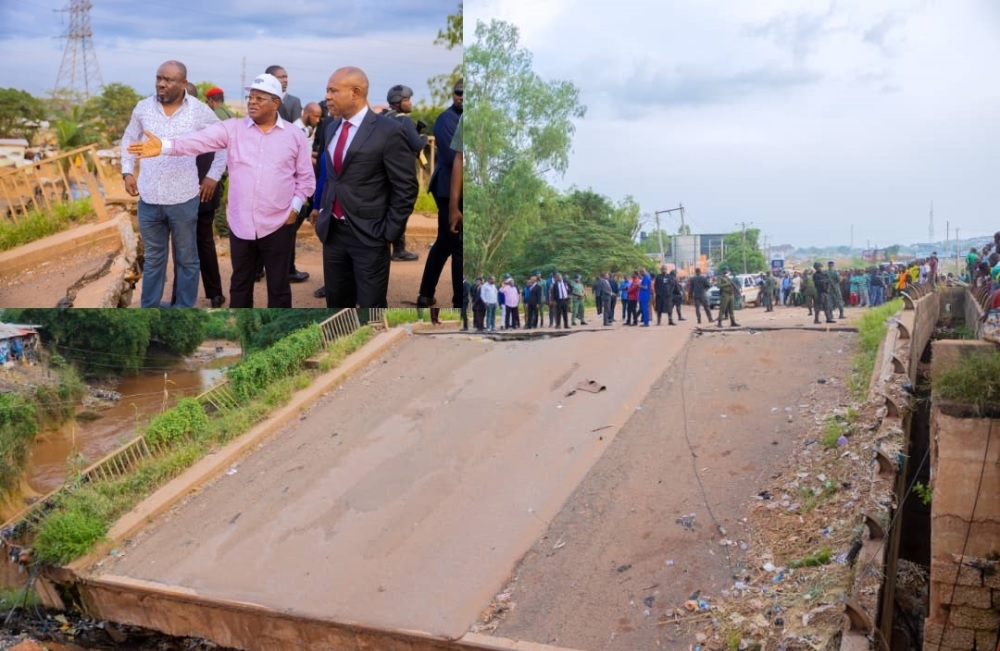
Federal Government Commences Work at The Collapsed Bridge at New Artisan Flyover Enugu/Ph Expressway, Enugu State 1. The Federal Government has approved the immediate commencement of palliative works at the collapsed bridge at New Artisan Flyover/NNPC Mega Station along Enugu/PH Expressway , Enugu State. This was contained in a statement made by the Hon. Minister of Works, His Excellency, Sen. Engr. Nweze David Umahi during his inspection visit to the collapsed bridge on this 9th day of November,2023. He directed the immediate take- off of the palliatives and hoped that in the next 10 days one lane of the bridge would be reinforced so that road users can start making use of the road "The President of the Federal Republic of Nigeria, His Excellency, Sen Asiwaju Bola Ahmed Tinubu, GCFR has also through the 2023 Supplementary Appropriation released some money that we can use to start the rebuilding of these two bridges and other bridges by the depot and also a flyover by that location". 2. The Hon. Minister of Works reiterated the determination of Mr President in bringing immediate intervention to the dilapidated road infrastructure across the nation and assured the government and people of Enugu State of having a fair share of the approved interventions by Mr President. "Mr President has released money for palliatives for over 260 roads across the 36 States of the Federation and FCT." 3. While appreciating the leadership will of the Governor of Enugu State, His Excellency, Peter Ndubuisi Mbah in turning around the economic development prospects of the State and his support for the good leadership of Mr President, he assured him of the partnership of the Renewed Hope administration of President Bola Ahmed Tinubu in rejigging the road infrastructure of Enugu State. " I know the Governor is very eager to build that Federal Road and he has concluded the design, and he is going to start soon. While he is doing that, we will do the flyover and some road works to complement the work he is doing on that Federal road" The Hon. Minister assured Nigerians of even spread of the palliative works on our road infrastructure and in doing so would ensure that all such palliative works are designed and quantified and the State Governors through their Commissioners for Works would be involved. "They would help in monitoring the works to be done and would always sign off the sheets before contractors are paid". 4. Earlier, the Governor of Enugu State thanked the Hon. Minister of Works for the interest, passion and speed with which the Ministry had attended to the challenge posed by the collapsed bridge." As you know, the last time we came here the Hon. Minister was also here to inspect and to identify areas of quick intervention and I am happy now to announce to you that the Hon. Minister has come here to inform us again that work is going to commence here tomorrow." ...
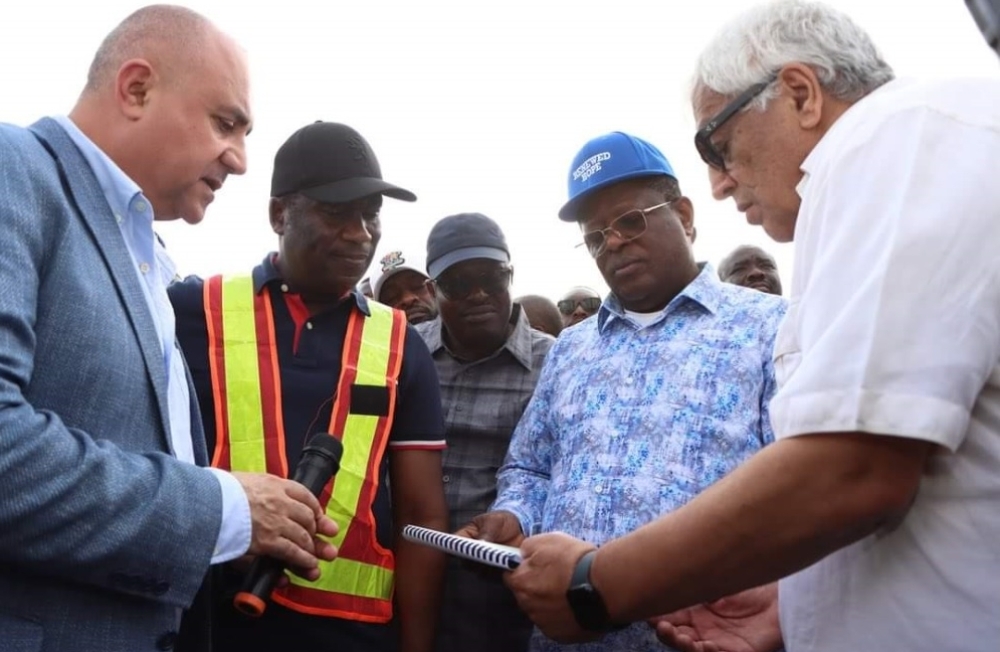
Umahi Inspects Lagos – Calabar Coastal Highway. The Minister of Works, Sen. Engr. David Nweze Umahi has inspected the construction of the Lagos – Calabar Coastal Highway in Lagos recently. The superhighway shall be funded and constructed by HiTech Construction Company under a Public Private Partnership (PPP) model. The Minister explained that upon completion, the coastal highway will go through to Lekki Deep Sea Port Road, then to Port Harcourt, to Calabar with two spurs, one of the spurs is under phase II going from a point along the coastal road to the ongoing Badagry - Sokoto Road and another spur too along the Ogoja axis of the Trans Sahara trade route. The phase one he added will be about 650km which consists of two service lanes with four carriageways both sides and a provision for a rail line in the middle of the road. “The highway shall have multiple spurs that will connect major towns and cities, including a spur connecting Ogoja-axis of the trans Sahara trade route. The phase one he added will be about 650km which will consist of two service lanes with four carriage ways on both sides with a rail line in the middle of the road” he said. Umahi added that the project is going to be a major breakthrough under the administration of President Bola Ahmed Tinubu, who has asked him to “fast track this project because it is going to be a catalyst towards the economic development of this country”. The Minister pleaded with the Lagos State Government on the permission to acquire the Right of Way on the road corridor to prevent encroachment and possible disturbances during and after construction. He said the project would promote tourism, have industrial clusters including hotels, factories, housing estates and several other facilities. “So, this is beautiful, it will promote tourism, have industrial clusters including hotels, factories, housing estates and several other facilities” he said. Umahi disclosed that the highway is going to be built on concrete road pavement which he said will bring the concrete road construction to the next level and it is happening during this administration. Earlier in his remarks, the Deputy Governor of Lagos State, Dr. Obafemi Hamzat stated that the project is of public interest, a laudable and a welcome development that will serve Nigeria and its citizens enormously. He noted that the provision of right of way is the state’s responsibility and must be released for a sustainable road to be delivered for the Nigerian citizens. He admonished the general public to desist from building on right of way because all right of ways in the state has been gazetted by the state House of Assembly. He thereafter expressed his satisfaction with the Federal Government on the construction of the Coastal Highway saying it will boost the economic growth of the country in general. With the Honourable Minister at the inspection were the Director Highways Southwest, Engr. Adedamola Kuti, the Director Bridges, Engr. Awosanya, The Deputy Governor of Lagos State, Dr. Obafemi Hamzat, The Federal Controller of Works, Lagos State, Engr. (Mrs.) Korede Kesha; and the Managing Director of HiTech Construction Company. ...
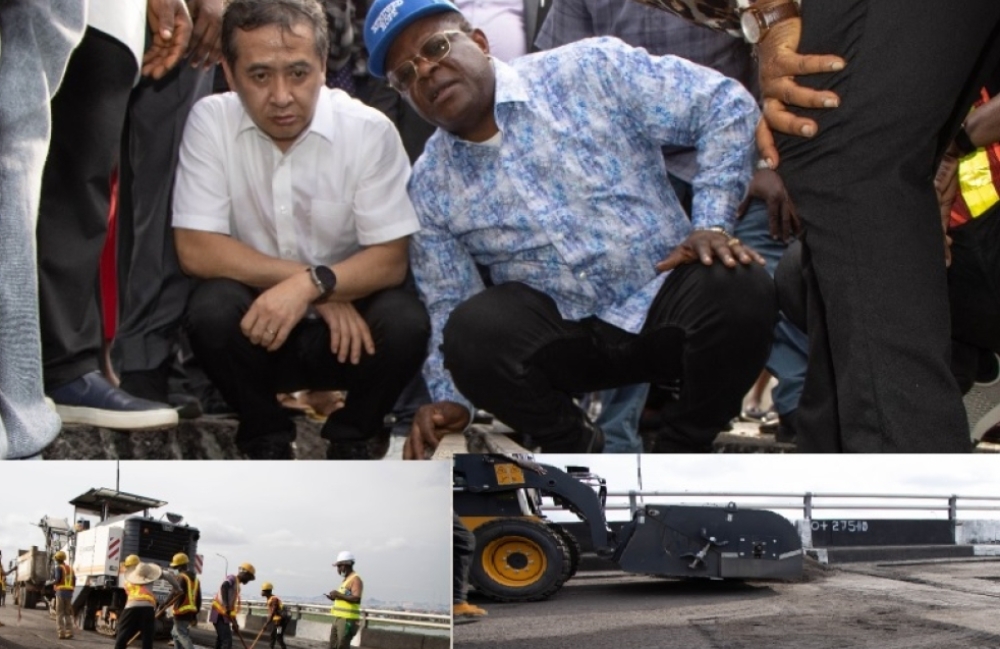
Federal Government Flags-Off Emergency Repairs at The Third Mainland Bridge Superstructure ..... Approves The Repair of Over 260 Roads Nationwide 1. The Renewed Hope administration of the President of the Federal Republic of Nigeria, His Excellency Sen. Asiwaju Bola Ahmed Tinubu, GCFR is set to make a historic mark in road Infrastructure revolution in Nigeria. This was revealed by the Hon. Minister of Works, His Excellency, Sen. Engr Nweze David Umahi, CON during the flag-off of the emergency repair of the Third Mainland bridge, Lagos on the 8th day of November, 2023. The Hon. Minister during the event reiterated the determination of the President to turn around the accumulated ugly conditions of the Nigerian roads particularly the Federal Highways. 2. Speaking on the essence of the emergency repair of the Third Mainland Bridge, the Hon. Minister said that the conditions of the bridge superstructure and other elements including the loops and ramps connecting the bridge were bad and required urgent maintenance to serve the road users better. " This is yet another milestone in the actualization of the Renewed Hope agenda of the Divine President Bola Ahmed Tinubu administration which among other things is aimed at the total repositioning of the road and bridge infrastructure in Nigeria and to bring succour to road users who have suffered the effects of the decayed infrastructure over the years," 3. The Hon. Minister recalled that the immediate past administration had awarded a contract for the comprehensive repair of the loops and ramps connecting to the Third Mainland bridge at the total cost of N6,278,063585.58. But the Renewed Hope administration of Mr President upon coming on board observed that the intervention was for a limited scope as it would not address the problems created by the extra layers of asphalt on the bridge deck of about 150mm thickness that occurred as a result of previous overlays which constitute extra dead load on the bridge." 4. According to the Hon. Minister, "it therefore became imperative to expand the scope of works as awarded to accommodate the additional works and quantities of work items needed to restore the integrity and serviceability of this very important bridge" Hence, the need to expand the scope of the contract which is now "awarded to Messrs CCECC Nig Ltd in the sum of N21,047,430,431.71. 5. The Hon Minister who used the opportunity to thank the President of Nigeria for approving the repair of over 260 Federal Roads across the nation also reiterated his Ministry's commitment to quality and timely delivery of road and bridge infrastructure in Nigeria, pointing out that under his watch, the road users will not suffer discomfort and inconveniences because of road repair. He maintained that his Ministry’s target is to ameliorate the sufferings of road users and give them the best comfort anyone can get in advanced countries of the world. On his own part, the Lagos State Governor who was represented by his Deputy, His Excellency, Dr Femi Hamzat assured the Hon Minister of Works of a robust partnership in the road revolution agenda of Federal Government, as far as Lagos State is concerned. He praised the initiative of the Federal Government in tackling the deficiencies in road Infrastructure across the nation. The Governor also assured road users of adequate traffic management within Lagos State and adequate traffic plan during the festivities. The Governor thereafter performed the flag-off ceremony at the instance of the Hon. Minister of Works. 6. Repair works on the four ramps on the Third Mainland bridge started in earnest on the 6th day of November,2023 and is expected to be completed on or before 13th December,2023. The work of the major carriageway of the bridge will commence on 15th January, 2023. ...
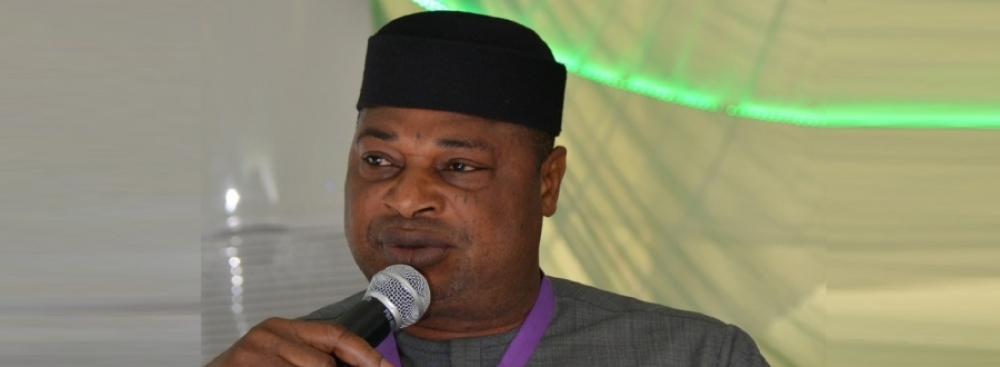
Remarks By The Permanent Secretary, Federal Ministry Of Power, Works And Housing, (Works And Housing Sector), Mohammed Bukar, At The 24th National Council Meeting On Works, Held In Birnin-Kebbi, Kebbi State
Protocols,
I am pleased to welcome you to the 24th Meeting of the National Council on Works holding in Birnin-Kebbi, Kebbi State.
2. As you are aware, the theme of this year’s National Council Meeting is “Ensuring Value-for-Money in Nigerian Highways Development”. The theme is apt and timely, considering our collective resolve to address the challenges in road development in the country within available resources.
3. In order to ensure that this target is achieved, it has become necessary for all the critical stakeholders to consider and provide contemporary policies that will support the attainment of the above target.
4. It is quite instructive that the theme was carefully chosen to ensure prudent spending of available financial resources in Highways development in the country due to the huge investment governments at all levels are making in road development.
5. The Meeting is significant as it will afford us the desired opportunities to identify challenges in the highways sector and develop strategies towards addressing them. We are therefore, expected to explore various realistic means of proper utilization of funds and other resources meant for road projects, to enable quick service delivery, which in turn will fast-track national growth and sustainability. May I also stress on the need to ensure that all our recommendations align with the objectives of the Economic Recovery and Growth Plan (ERGP) of 2017-2019 which focuses on restoring economic growth, ease of doing business, investing in our people and creating a competitive economy. The achievement of these objectives largely lies on the availability of good road network across the country.
6. Distinguished delegates and officials, the timing of this meeting therefore, is very significant as it affords us the opportunity to think through and make necessary provisions in our various Budgets for the year 2019 and beyond as well as take necessary steps that will ensure money spent on roads impacts on the Nigerian economy, positively.
7. On this note, I once again welcome you all and wish you fruitful deliberations.
8. Thank you.
Remarks By Babatunde Raji Fashola, SAN At The Inauguration Of The Board Of The Rural Electrification
Although today is only scheduled for the inauguration of the reconstituted board of the Rural Electrification Agency, I feel obliged to make a few comments that I believe shed some light on the plan of the Buhari Administration on our understanding of the purpose and role of this agency.
Before I do so, let me express the gratitude of the Federal Government of Nigeria to the immediate past acting Managing Director and his team and all those who have served in this agency since its inception, for their service and contribution.
It is my expectation that the new team will be able to build on whatever you have left behind, improve on it and ultimately achieve the purpose for which this agency was set up, which is to provide access to electricity for millions of Nigerians who are yet to be connected to the grid.
Although it is called a 'Rural' Electrification Agency, there are many urban and suburban communities that still lack access to power because they have not been connected to the national grid.
Part of the reason for this lack of access is that the 330/132 KV and 132/33 KV lines (popularly called the high-tension wires), by which this connection is often made, run over long distances covering several hundreds of kilometers.
The cost of extending these lines to communities is expensive and where the population in such communities is not large, the price of their electricity will be high because it will be borne by a few people.
Because public tariff is fixed, investments in these lines are not considered attractive and it is easy to pass over these communities or simply attempt grid extensions which have not covered the field and have resulted in many people being left behind.
All of this is about to change and that is why we are here. REA is the champion of these unconnected communities, who have have been left unserved. REA will bring them to mainstream of electricity connectivity by providing and promoting off grid connections.
Let me point out that when the Electricity Sector Reform Act was passed in 2005, it set up the Rural Electrification Agency and mandated that the Rural Electrification Implementation plan should be prepared (within a year) for Presidential Approval.
It is that plan that will set out how to reach the unconnected communities that I spoke about, through a combination of grid extension and development of independent grids, using new technology such as solar, which will mitigate the cost of the long 330/132 KV and 132/33 KV lines which I spoke about.
Unfortunately, nothing was done between 2005 and 2016 about the Rural Electrification Implementation program until 2016 when President Buhari approved this plan. That was a period of inaction of 11 (ELEVEN) years.
Thankfully, all that is behind us. We must look to tomorrow and the promise of increased access to electricity that President Buhari’s approval heralds.
The anchors for implementing Rural Access are:
A. Completion of over 2000 Grid extension projects that started life as constituency projects since 1999 but have now either been abandoned or uncompleted;
B. Resuscitation of 6 (SIX) small Hydro dams and activation of their power component, which have received Federal Executive Council (FEC) approval, have been advertised, and we have received Expressions of Interest which we are evaluating.
C. Development of Independent Power Plants in 37 (THIRTY-SEVEN) federal universities and seven teaching hospitals in rural areas and the building of independent power grids from there to connect adjoining rural and unconnected communities.
Most of these IPPs, at least 27 (TWENTY-SEVEN), will be solar powered and this is the heart of the matter.
This is because President Buhari understands the increasing emergence of renewable energy sources, like solar power from the fringes of the energy debate to the mainstream.
This is why he was one of the first leaders to append his signature on behalf of Nigeria to the Paris agreement.
Most importantly he understands the appeal of renewables generally and Solar in particular to the global youth population and Nigeria's youth.
He understands how impactful a small solar plant can be to a barber, hairdresser, small food processing plant and small businesses generally where our youth are participating in making their contribution to our national development.
He understands and appreciates the role that young people played in building the nation and driving the economy.
This is why he has appointed young people to the leadership and management of this agency, to deliver not only on the promise of their generation but also on the expectation of millions of unconnected people who are living without electricity.
This is why he has constituted a Board of Experience and Youth in this critical agency.
I hope and expect that all of us will rally round and support this new team to deliver on their mandate.
On behalf of the Ministry of Power, Works and Housing, I promise our fullest support.
It is therefore with pleasure that I formally inaugurate the Board of the Rural Electrification Agency and wish them success in the implementation of the Rural Implementation program.
Babatunde Raji Fashola, SAN
Honourable Minister of Power, Works and Housing
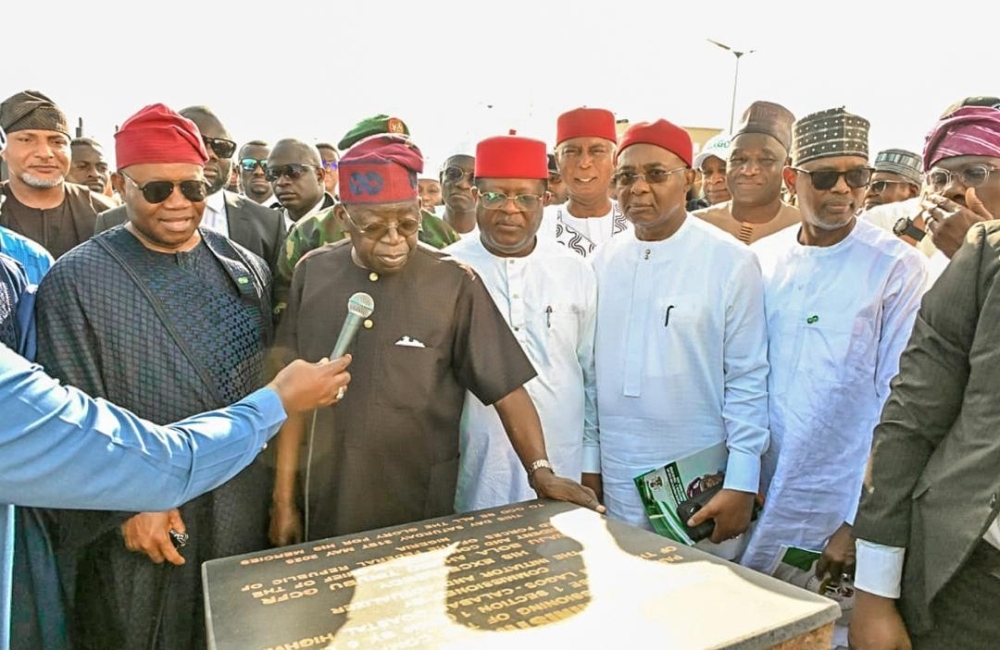
DRIVING NIGERIA’S FUTURE: CELEBRATING TWO YEARS OF TRANSFORMATIVE LEADERSHIP AND THE LAGOS-CALABAR COASTAL HIGHWAY MILESTONE
DRIVING NIGERIA’S FUTURE: CELEBRATING TWO YEARS OF TRANSFORMATIVE LEADERSHIP AND THE LAGOS-CALABAR COASTAL HIGHWAY MILESTONE
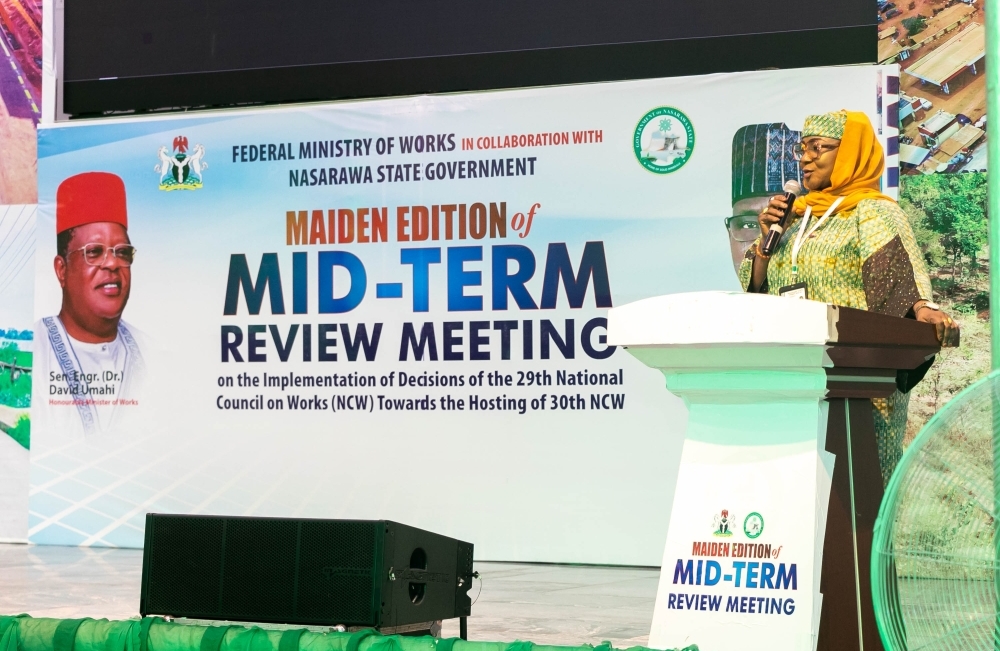
MID -TERM REVIEW MEETING ON THE IMPLIMENTATION OF THE DECISIONS REACHED AT THE 29TH NATIONAL COUNCIL ON WORKS (NCW) DAY 1
MID -TERM REVIEW MEETING ON THE IMPLIMENTATION OF THE DECISIONS REACHED AT THE 29TH NATIONAL COUNCIL ON WORKS (NCW) DAY 1