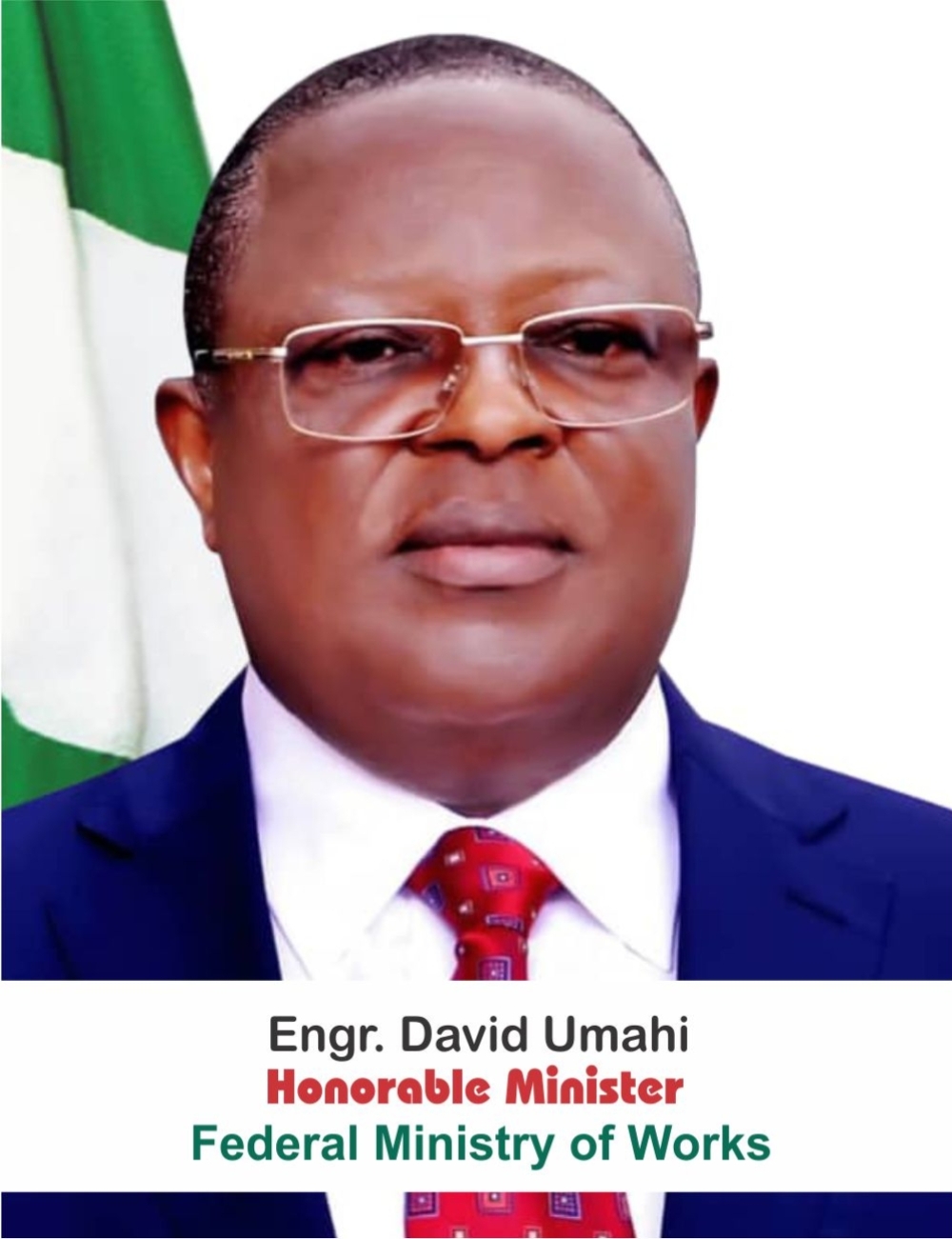
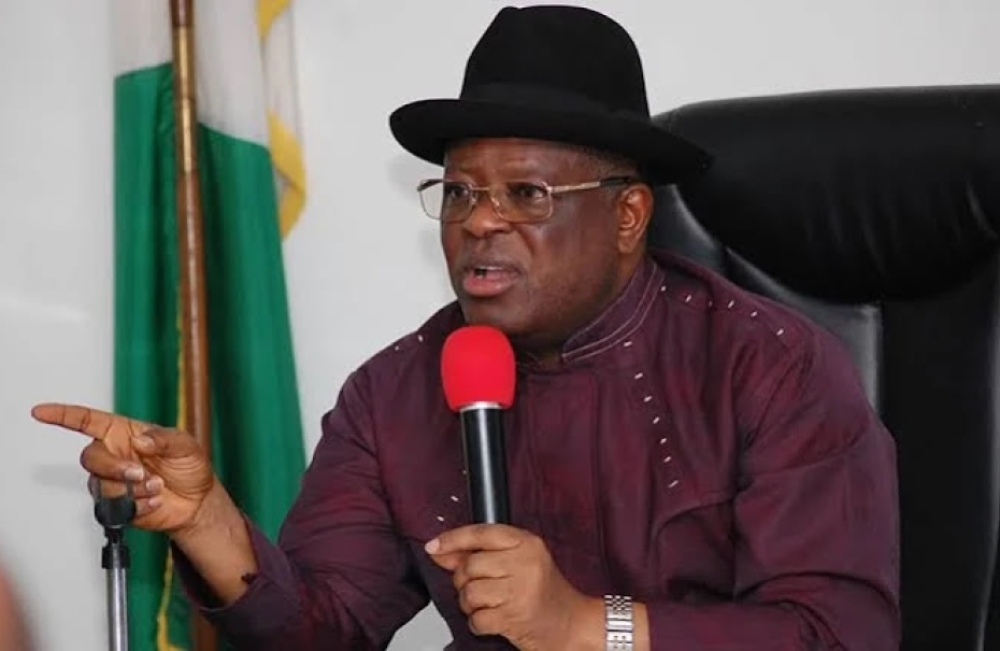
UMAHI ORDERS IMMEDIATE EMERGENCY INTERVENTION ON BENIN-ASABA ROAD, AND SOME OTHER CRITICAL FEDERAL ROADS
The Honourable Minister of Works, Senator Engr. David Nweze Umahi, CON, has directed the immediate deployment of major contractors to all three sections of the Benin-Asaba Federal Road to restore the failed sections and bring an end to the suffering of motorists and other road users.
This is because, the situation on the concessioned Benin-Asaba Road has reached a point where the overall public interest must take precedence over the existing concession agreement.
Recall that the Honourable Minister of Works was on the Benin-Asaba Road about seven days ago, where he assembled a number of contractors and directed them to prepare for immediate palliative intervention on the affected sections of the road at no cost to the concessionaire. In line with the Concession agreement which requires that before the Federal Government could intervene, the permission of the concessionaire must be required, and that permission was not granted to federal government.
The Minister subsequently proposed three options to the concessionaire, any one of which would have enabled the Federal Government to move in and address the worsening condition of the road. Unfortunately, none of the options was accepted by the concessionaire. Immediately after the Minister left Asaba, the already limited equipment deployed to the road by the concessionaire was further reduced to just one, worsening the situation and increasing the suffering of motorists and other road users.
While the Minister takes responsibility for the concerns and suffering of Nigerians using the road, it is important to state that the concessionaire has also not taken the suffering of Edo people and travelling public sufficiently into consideration by declining all the options put forward by the Federal Government. The concessionaire continues to rely on the terms of the concession agreement entered into by the previous administration, an agreement which weighs heavily against the Federal Government’s ability to intervene quickly in the interest of the public in a situation like this.
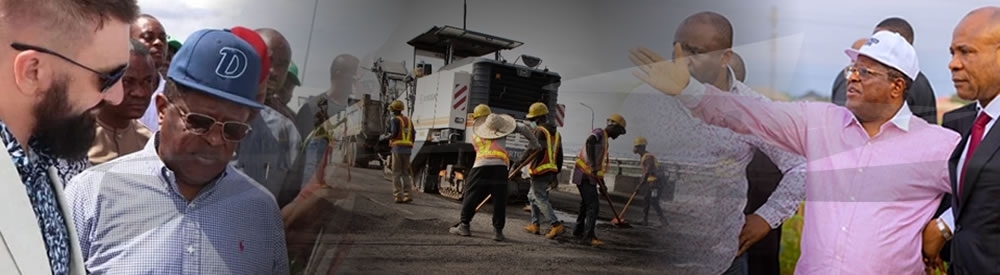
In view of this situation, the Honourable Minister of Works has directed the immediate deployment of major contractors within the corridor to all three sections of the Benin-Asaba Road to restore the failed sections and bring relief to the people, with the cost of the emergency intervention being borne by the Federal Government. The Honourable Minister has also directed immediate redesign of the entire route to be rebuilt with reinforced concrete pavement. The public should therefore take note that immediate action is underway to restore every failed section of the Benin-Asaba Road and subsequently rehabilitate the entire sections of the road using reinforced concrete pavement.
2. On the Benin-Sapele Road:
The Governors of Edo and Delta States, the Niger Delta Development Commission (NDDC), and the Federal Government are currently engaged in interventions on different sections of the road to restore the entire route. While some sections are receiving palliative attention, permanent works are also ongoing on other sections.
3. On Ifaki(Ekiti) - Kabba (Kogi) Road:
The Federal Government is engaging both the contractor; Gamji Nigeria Company Limited, and Dangote PLC on immediate emergency and permanent intervention on the most failed sections of the road, while efforts are being made to financially mobilise the company for more extensive permanent work to commence on the axis.
4. On the Sokoto-Zamfara-Katsina Road: This is an inherited project involving the dualisation of approximately 350 kilometres, which translates to about 700 kilometers. The project has since been redesigned and is currently ongoing and most sections are being reconstructed using reinforced concrete pavement. From the Sokoto axis towards Zamfara, over 50 kilometres of one carriageway have been fully completed with reinforced concrete pavement. From Zamfara to Katsina, some sections have been completed and palliative works have been ordered over the sections that have not been reconstructed. However, the pace of work slowed down due to the redesign and rephasing of the project. The contractors currently engaged on the road include CBC, SETRACO, Triacta and Mothercat. They are being remobilised to return to site and complete the outstanding works.
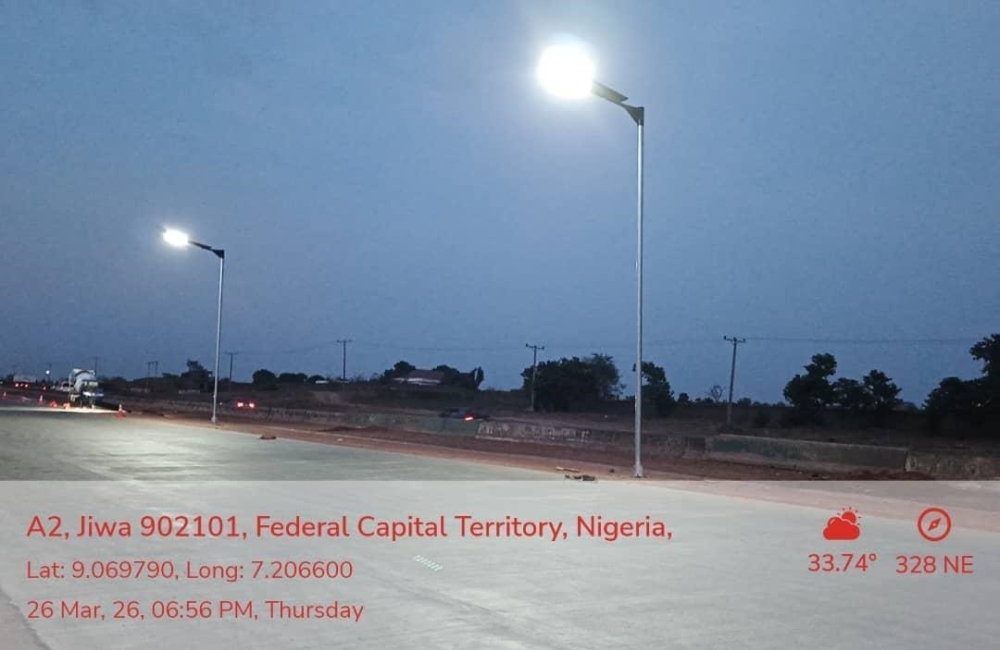
5. On the Abuja-Kaduna-Zaria-Kano Road: The Federal Government took over the Road project and has currently completed the 118-kilometer mostly on reinforced concrete pavement on lot 1. The Lot 2, which covers 164 kilometres, is over 60 percent completed on reinforced concrete pavement. The Federal Government has also introduced solar-powered light on the entire route of Abuja-Kaduna-Zaria - Kano to improve visibility during night travel and enhance the overall security situation on the route. The entire project is scheduled for completion by December 2026.
6. On Bauchi-Jigawa Road: Triacta Nigeria Limited has been mobilised to carry out the necessary interventions on some failed sections and work is currently ongoing in those failed sections.
7. On the Sagamu-Ore Road: 48 Kilometers of the 96-kilometre road have already been completed using reinforced concrete pavement. There is also a 24-kilometre section around Ore which was abandoned by the previous contractor. The Federal Government has directed its immediate restoration to ensure seamless travel. Solar lights are being installed in the entire 96kilometer of the road.
8. On Flooded Sections on Sagamu-Ore-Benin Road: The flooded sections on the same corridor between Sagamu-Ore-Benin Road, as well as other flooded sections in Ondo State, are being designed for emergency procurement and intervention.
9. On the East-West Road:
Some failed and critical sections, including defective sections of bridges along the East-West Road, are being marked out for emergency procurement and intervention.
10. On the Abuja-Lokoja Road:
Several contracts are ongoing along the route, while the three critical sections currently without contracts are being procured for emergency intervention.
11. On the Lokoja-Benin-Warri Road: The President has directed a complete redesign and procurement of the 400-kilometre dualised route covering the uncompleted sections, using reinforced concrete pavement, while palliative works will continue with the contractors currently on the road.
12. On Carter Bridge:
While the Federal Government continues to undertake weekly maintenance of the underwater elements of the bridge. The site has also been handed over to the contractor, CCECC, for the construction of a permanent new bridge, and work has commenced.
13. On the Third Mainland Bridge:
With regard to the defective underwater structural elements, the Federal Government is at the final stage of determining the appropriate intervention for the repair of the affected elements.
14. On the flooded section of the Lagos-Ibadan Road: Work has commenced on the affected section. There are also several flooded sections on federal roads across the six geopolitical zones, largely occasioned by excessive flooding and the effects of climate change. The Federal Government is identifying and marking these sections for immediate attention.
15. On the First and Second Niger Bridges:
Intervention work is ongoing on the approach roads to the Second Niger Bridge damaged by flood and the work is progressing very well. The First Niger Bridge has been closed to traffic to enable immediate repair works. Contractor has mobilized to site and comprehensive rehabilitation of the bridge has started. From Summit Junction to the First Niger Bridge, massive rehabilitation work is also ongoing using reinforced concrete pavement.
16. The Honourable Minister wishes to commend the President of the Federal Republic of Nigeria, His Excellency Bola Ahmed Tinubu, GCFR, for the massive work being undertaken on the nation’s roads since the administration assumed office in 2023.
17. It is important to state that when the present administration came into office, there was hardly any part of the country where one could travel for an hour without encountering significant challenges on the road network. The condition of the country’s roads and bridges was a major national infrastructure challenge.
18. Rather than shy away from the problem, the administration of President Bola Ahmed Tinubu made the nation’s road network a priority. Virtually every part of the country became a priority, and the Federal Government, through the Federal Ministry of Works, Regional Commissions, Parastatals and other MDA’s has continued to respond extensively to these challenges.
19. The Federal Government is currently working on over 80 percent of the inherited federal roads, an unprecedented level of intervention in the country’s road infrastructure.
20. We ask the public to understand the enormous challenges inherited on our roads and bridges and to take note not only of the problems being solved, but also of the permanent solutions being introduced.
21. A major part of this new approach is the use of reinforced concrete pavement, designed to significantly extend the lifespan of major roads. These roads are expected to last between 50 and 100 years. This means that roads being constructed under President Bola Ahmed Tinubu’s administration are being designed with future generations in mind, rather than simply providing temporary solutions to today’s problems. And this is a complete departure from the past, when roads often deteriorated only a few years after completion, resulting in a continuous cycle of reconstruction and expenditure.
22. We appreciate the concerns of Nigerians over the condition of some roads presently and the difficulties faced by motorists and commuters who cannot move easily from one point to another. Those concerns are legitimate, and the Federal Government is listening. But Nigerians should also recognise the enormous scale of the problems inherited and the amount of work currently being undertaken across the country.
23. It is simply impossible to resolve every road challenge accumulated over many years of neglect by the past administrations within three years. What is important is that the government is working, the government is responding, and the government is putting permanent solutions in place.
25. We appreciate members of the public who send situation reports on failed roads and other infrastructure challenges. These reports help the Ministry identify areas requiring urgent attention. However, we also appeal to members of the public to report when such problems have been addressed, just as they report when they occur.
24. We are aware of situations where photographs and reports of road challenges continue to circulate on social media even after the Federal Government has intervened and resolved the particular problem.
25. However, the Ministry will continue to respond as rapidly as possible to genuine reports and concerns from Nigerians.
26. It is also important to note that we have compiled a comprehensive record of all inherited, ongoing and intervention projects across the country which is available to the public. This is to ensure that Nigerians have access to information on the infrastructure projects being undertaken nationwide and can fully participate in and appreciate the infrastructure revolution of President Bola Ahmed Tinubu’s administration.

UMAHI ORDERS IMMEDIATE EMERGENCY INTERVENTION ON BENIN-ASABA ROAD, AND SOME OTHER CRITICAL FEDERAL ROADS The Honourable Minister of Works, Senator Engr. David Nweze Umahi, CON, has directed the immediate deployment of major contractors to all three sections of the Benin-Asaba Federal Road to restore the failed sections and bring an end to the suffering of motorists and other road users. This is because, the situation on the concessioned Benin-Asaba Road has reached a point where the overall public interest must take precedence over the existing concession agreement. Recall that the Honourable Minister of Works was on the Benin-Asaba Road about seven days ago, where he assembled a number of contractors and directed them to prepare for immediate palliative intervention on the affected sections of the road at no cost to the concessionaire. In line with the Concession agreement which requires that before the Federal Government could intervene, the permission of the concessionaire must be required, and that permission was not granted to federal government. The Minister subsequently proposed three options to the concessionaire, any one of which would have enabled the Federal Government to move in and address the worsening condition of the road. Unfortunately, none of the options was accepted by the concessionaire. Immediately after the Minister left Asaba, the already limited equipment deployed to the road by the concessionaire was further reduced to just one, worsening the situation and increasing the suffering of motorists and other road users. While the Minister takes responsibility for the concerns and suffering of Nigerians using the road, it is important to state that the concessionaire has also not taken the suffering of Edo people and travelling public sufficiently into consideration by declining all the options put forward by the Federal Government. The concessionaire continues to rely on the terms of the concession agreement entered into by the previous administration, an agreement which weighs heavily against the Federal Government’s ability to intervene quickly in the interest of the public in a situation like this. In view of this situation, the Honourable Minister of Works has directed the immediate deployment of major contractors within the corridor to all three sections of the Benin-Asaba Road to restore the failed sections and bring relief to the people, with the cost of the emergency intervention being borne by the Federal Government. The Honourable Minister has also directed immediate redesign of the entire route to be rebuilt with reinforced concrete pavement. The public should therefore take note that immediate action is underway to restore every failed section of the Benin-Asaba Road and subsequently rehabilitate the entire sections of the road using reinforced concrete pavement. 2. On the Benin-Sapele Road: 3. On Ifaki(Ekiti) - Kabba (Kogi) Road: 4. On the Sokoto-Zamfara-Katsina Road: This is an inherited project involving the dualisation of approximately 350 kilometres, which translates to about 700 kilometers. The project has since been redesigned and is currently ongoing and most sections are being reconstructed using reinforced concrete pavement. From the Sokoto axis towards Zamfara, over 50 kilometres of one carriageway have been fully completed with reinforced concrete pavement. From Zamfara to Katsina, some sections have been completed and palliative works have been ordered over the sections that have not been reconstructed. However, the pace of work slowed down due to the redesign and rephasing of the project. The contractors currently engaged on the road include CBC, SETRACO, Triacta and Mothercat. They are being remobilised to return to site and complete the outstanding works. 5. On the Abuja-Kaduna-Zaria-Kano Road: The Federal Government took over the Road project and has currently completed the 118-kilometer mostly on reinforced concrete pavement on lot 1. The Lot 2, which covers 164 kilometres, is over 60 percent completed on reinforced concrete pavement. The Federal Government has also introduced solar-powered light on the entire route of Abuja-Kaduna-Zaria - Kano to improve visibility during night travel and enhance the overall security situation on the route. The entire project is scheduled for completion by December 2026. 6. On Bauchi-Jigawa Road: Triacta Nigeria Limited has been mobilised to carry out the necessary interventions on some failed sections and work is currently ongoing in those failed sections. 7. On the Sagamu-Ore Road: 48 Kilometers of the 96-kilometre road have already been completed using reinforced concrete pavement. There is also a 24-kilometre section around Ore which was abandoned by the previous contractor. The Federal Government has directed its immediate restoration to ensure seamless travel. Solar lights are being installed in the entire 96kilometer of the road. 8. On Flooded Sections on Sagamu-Ore-Benin Road: The flooded sections on the same corridor between Sagamu-Ore-Benin Road, as well as other flooded sections in Ondo State, are being designed for emergency procurement and intervention. 9. On the East-West Road: 10. On the Abuja-Lokoja Road: 11. On the Lokoja-Benin-Warri Road: The President has directed a complete redesign and procurement of the 400-kilometre dualised route covering the uncompleted sections, using reinforced concrete pavement, while palliative works will continue with the contractors currently on the road. 12. On Carter Bridge: 13. On the Third Mainland Bridge: 14. On the flooded section of the Lagos-Ibadan Road: Work has commenced on the affected section. There are also several flooded sections on federal roads across the six geopolitical zones, largely occasioned by excessive flooding and the effects of climate change. The Federal Government is identifying and marking these sections for immediate attention. 15. On the First and Second Niger Bridges: 16. The Honourable Minister wishes to commend the President of the Federal Republic of Nigeria, His Excellency Bola Ahmed Tinubu, GCFR, for the massive work being undertaken on the nation’s roads since the administration assumed office in 2023. 17. It is important to state that when the present administration came into office, there was hardly any part of the country where one could travel for an hour without encountering significant challenges on the road network. The condition of the country’s roads and bridges was a major national infrastructure challenge. 18. Rather than shy away from the problem, the administration of President Bola Ahmed Tinubu made the nation’s road network a priority. Virtually every part of the country became a priority, and the Federal Government, through the Federal Ministry of Works, Regional Commissions, Parastatals and other MDA’s has continued to respond extensively to these challenges. 19. The Federal Government is currently working on over 80 percent of the inherited federal roads, an unprecedented level of intervention in the country’s road infrastructure. 20. We ask the public to understand the enormous challenges inherited on our roads and bridges and to take note not only of the problems being solved, but also of the permanent solutions being introduced. 21. A major part of this new approach is the use of reinforced concrete pavement, designed to significantly extend the lifespan of major roads. These roads are expected to last between 50 and 100 years. This means that roads being constructed under President Bola Ahmed Tinubu’s administration are being designed with future generations in mind, rather than simply providing temporary solutions to today’s problems. And this is a complete departure from the past, when roads often deteriorated only a few years after completion, resulting in a continuous cycle of reconstruction and expenditure. 22. We appreciate the concerns of Nigerians over the condition of some roads presently and the difficulties faced by motorists and commuters who cannot move easily from one point to another. Those concerns are legitimate, and the Federal Government is listening. But Nigerians should also recognise the enormous scale of the problems inherited and the amount of work currently being undertaken across the country. 23. It is simply impossible to resolve every road challenge accumulated over many years of neglect by the past administrations within three years. What is important is that the government is working, the government is responding, and the government is putting permanent solutions in place. 25. We appreciate members of the public who send situation reports on failed roads and other infrastructure challenges. These reports help the Ministry identify areas requiring urgent attention. However, we also appeal to members of the public to report when such problems have been addressed, just as they report when they occur. 24. We are aware of situations where photographs and reports of road challenges continue to circulate on social media even after the Federal Government has intervened and resolved the particular problem.
The Governors of Edo and Delta States, the Niger Delta Development Commission (NDDC), and the Federal Government are currently engaged in interventions on different sections of the road to restore the entire route. While some sections are receiving palliative attention, permanent works are also ongoing on other sections.
The Federal Government is engaging both the contractor; Gamji Nigeria Company Limited, and Dangote PLC on immediate emergency and permanent intervention on the most failed sections of the road, while efforts are being made to financially mobilise the company for more extensive permanent work to commence on the axis.
Some failed and critical sections, including defective sections of bridges along the East-West Road, are being marked out for emergency procurement and intervention.
Several contracts are ongoing along the route, while the three critical sections currently without contracts are being procured for emergency intervention.
While the Federal Government continues to undertake weekly maintenance of the underwater elements of the bridge. The site has also been handed over to the contractor, CCECC, for the construction of a permanent new bridge, and work has commenced.
With regard to the defective underwater structural elements, the Federal Government is at the final stage of determining the appropriate intervention for the repair of the affected elements.
Intervention work is ongoing on the approach roads to the Second Niger Bridge damaged by flood and the work is progressing very well. The First Niger Bridge has been closed to traffic to enable immediate repair works. Contractor has mobilized to site and comprehensive rehabilitation of the bridge has started. From Summit Junction to the First Niger Bridge, massive rehabilitation work is also ongoing using reinforced concrete pavement.
25. However, the Ministry will continue to respond as rapidly as possible to genuine reports and concerns from Nigerians.
26. It is also important to note that we have compiled a comprehensive record of all inherited, ongoing and intervention projects across the country which is available to the public. This is to ensure that Nigerians have access to information on the infrastructure projects being undertaken nationwide and can fully participate in and appreciate the infrastructure revolution of President Bola Ahmed Tinubu’s administration.
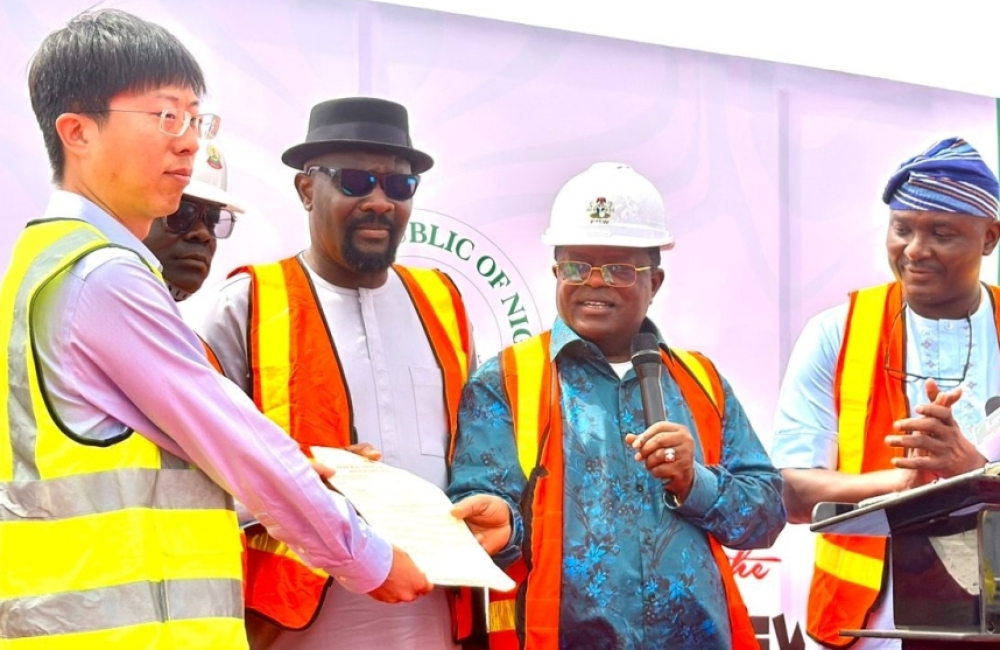
UMAHI HANDS OVER NEW CARTER BRIDGE PROJECT TO CCECC, TO SHUT DOWN ONE CARRIAGEWAY OF EKO BRIDGE ON SUNDAY The Federal Government has officially handed over the construction of a brand-new Carter Bridge in Lagos to China Civil Engineering Construction Corporation (CCECC), as part of President Bola Ahmed Tinubu’s commitment to protecting critical infrastructure and ensuring the safety of Nigerians. The event took place at Carter Bridge, Lagos Island, Lagos State, on Wednesday, May 6, 2026. Speaking during the handover ceremony, the Honourable Minister of Works, Senator Engr. David Umahi, CON, said the decision to reconstruct the bridge became necessary after years of alarming structural investigations revealed worsening defects beneath both the Carter Bridge and the 3rd Mainland Bridge. According to the Minister, investigations into the underwater structural elements of the bridges began as far back as 2013, with another assessment carried out in 2019. The reports, he said, showed that the defects were increasing at what experts described as “geometrical progression.” “The past administration commissioned investigation of what was happening with the structural elements below the water, and that was in 2013. And the very disturbing defects were noticed in Carter Bridge and 3rd Mainland Bridge,” Umahi stated. He explained that upon assumption of office, the present administration immediately engaged geologists and specialist divers to conduct further underwater investigations, which confirmed that some piles supporting the bridges had already shifted from their pile caps. “It’s just like the hip of the leg is cut off,” the Minister explained while describing the severity of the damage. Umahi said extensive consultations were held with bridge experts, stakeholders and members of the National Assembly, including foreign professionals, to determine the best solution. Experts, according to him, advised that repairing the Carter Bridge would cost almost twice the amount required to build a completely new structure. Following detailed technical analysis, the Federal Government approved the construction of a new modern bridge. He revealed that part of the new Carter Bridge will feature a world-class cable-stayed design to improve navigation and add aesthetic value to Lagos. “We decided that a section of this Carter Bridge will be a cable bridge. You see the cable bridge we see overseas, very beautiful, and that is to enhance our navigational activities,” he said. The Minister disclosed that the project is expected to last 36 months. He praised President Tinubu for what he described as bold leadership and commitment to infrastructure renewal across the country. “So we are here to commend the president, president of first, president of infrastructure, the president of second tenure,” Umahi declared. The project, valued at N545 billion, will be financed through a combination of Federal Government counterpart funding and external borrowing, with 30 percent to be paid by the Federal Government and 70 percent sourced externally. Umahi further stated that due process was strictly followed in selecting the contractor, noting that seven firms were invited while six submitted bids, including Julius Berger. According to him, CCECC emerged as the most technically and commercially viable company. “The CECC was technically and commercially most viable. And that’s why the BPP recommended them and the Federal Executive Council has awarded the project to them,” he said. Formally handing over the site, the Minister directed the company to immediately mobilize to site while assuring Nigerians that the Ministry would closely monitor the project monthly to ensure compliance with all technical and safety standards. “By the authority of our president, President Bola Ahmed Tinubu, GCFR, and with gratitude to God Almighty, it is our prayers that this which the president had started, that will last 36 months… It is the president that has started this work, and God will give him enablement and the second tenure to complete this project to the glory of God,” Umahi added. Meanwhile, the Minister also announced an emergency closure of one carriageway of the Eko Bridge following severe structural damage caused by illegal sand miners. He disclosed that illegal dredging activities around the bridge led to the destruction of several supporting piles after miners struck one of the pile caps with a barge. “When they knocked the pile cap, they broke three piles. And when they were trying to remove the barge, they broke another two,” he said. Umahi explained that the damage has weakened a section of the bridge, resulting in dangerous cracks and structural instability that could threaten lives if urgent action is not taken. As a precautionary measure, he directed that one full carriageway of the Eko Bridge be shut down by midnight of Sunday, May 10, 2026, while the unaffected carriageway remains open to traffic. “We will not allow people to endanger their lives. We are a responsible administration,” the Minister said. He further disclosed that the Federal Government has already designed an emergency technical solution involving the lifting of an entire bridge span to expose and repair the damaged sections beneath. According to him, Buildwell Construction, which has extensive experience handling bridge lifting operations on the Eko Bridge, will execute the emergency repairs alongside underwater structural investigations by specialist divers. The Minister assured Lagosians that President Tinubu has been fully briefed on the situation and directed that the matter be treated as an emergency. “President said I must be in Lagos to examine it and then treat it as an emergency situation. And that is what we are doing,” Umahi stated. He appealed for patience and understanding from residents, assuring Nigerians that the administration remains fully committed to protecting lives and preserving vital national infrastructure. “We are solving problems we didn’t create, but that’s why you voted for us, and that we are going to be working day and night,” the Minister said. ...
PRESIDENTIAL MEDIA AIDES UNDERTAKE NATIONWIDE TOUR OF KEY INFRASTRUCTURE PROJECTS IN THE NORTH WEST The Federal Government has launched a comprehensive nationwide inspection of critical infrastructure projects, reinforcing its commitment to timely execution, quality standards, and accountability under the Renewed Hope Agenda, with a focus on the North West region on Thursday. The exercise commenced along the Abuja–Kaduna–Kano Highway corridor, where the Engineers’ Representative, Engr. Chukwuma Kalu, guided the inspection team across the completed 108-kilometre stretch extending from Tungan-Maje in the Federal Capital Territory to Jere in Kaduna State. He disclosed that while this segment has been fully delivered, work on Section II is progressing steadily and is projected for completion by November. He observed that the corridor, once plagued by setbacks, is now evolving into a vital artery for mobility, trade, and economic revitalisation. Also speaking, the Senior Project Manager of Infiouest International Limited, Mr. Robert Turner, lauded the Federal Government’s sustained efforts, particularly the leadership of President Bola Ahmed Tinubu and the Honourable Minister of Works, Engr. David Umahi, for the visible advancements on the project. He highlighted that approximately 80 per cent of the workforce comprises Nigerian professionals, underscoring the administration’s emphasis on local content and capacity development. The delegation further assessed progress on the Nnamdi Azikiwe–Kaduna Western Bypass. Originally awarded in 2021, the project has witnessed accelerated development since 2023. The 21.47-kilometre dual carriageway is strategically designed to ease traffic congestion within Kaduna metropolis while unlocking new economic opportunities across adjoining communities. Beyond routine evaluation, the ongoing inspection tour—spanning multiple states in the North West—is intended to deepen transparency, foster public confidence, and provide firsthand insight into government projects. In a related development, the Special Adviser on Media and Public Communication, Mr. Sunday Dare, explained that the Renewed Hope National Media Tour will encompass a broad spectrum of projects, including highways, rail infrastructure, healthcare facilities, educational institutions, and renewable energy initiatives. He noted that media representatives will document on-the-ground progress and independently assess the impact of these interventions. The tour, which begins with the Abuja–Kaduna corridor, is set to spotlight strategic infrastructure and social development projects that underscore the administration’s drive to reposition the North West through sustainable investments. ...
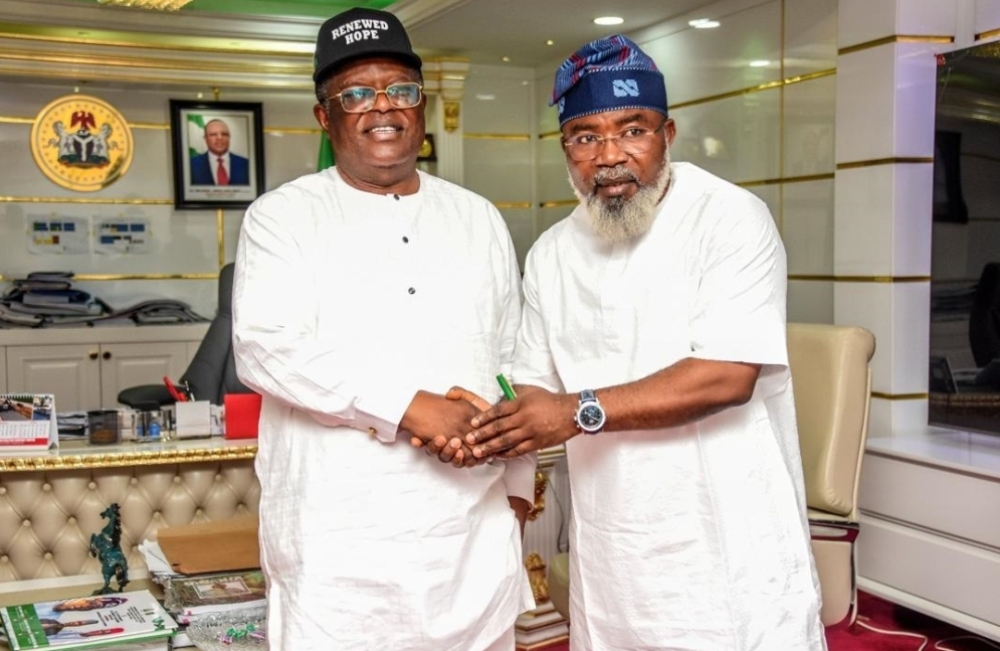
FG REAFFIRMS STRONG COMMITMENT TO KOGI ROADS AS UMAHI, DEEDAT PUSH FOR ACCELERATED INFRASTRUCTURE DELIVERY, SECURITY INTEGRATION ACROSS KEY CORRIDORS A high-level engagement between the Honourable Minister of Works, Sen. Engr. David Umahi, CON, FNSE, FNATE, and the Honourable Commissioner for Works, Kogi State, Hon. Salam Ozige Deedat, have reaffirmed the commitment of both the Federal Government and the Kogi State Government to the sustained development of critical road infrastructure across the state. At the meeting, the Honourable Commissioner expressed appreciation for the ongoing federal interventions on major road corridors, particularly the Abuja–Lokoja–Okene axis and other adjoining routes, noting that successive administrations have contributed to these projects, but observing that recent efforts under the current Renewed Hope Administration have demonstrated greater visibility and impact. He further commended the Minister for his prompt visit to Kogi State upon assumption of office, describing it as a clear demonstration of his connection and commitment to the state despite it not being his place of origin. In addition, he acknowledged the consistent presence of federal teams and contractors on sites, while also pointing out that although progress on key corridors such as the Abuja–Lokoja and Lokoja–Okene are evident, delays in some sections and flyover construction have created traffic challenges that require urgent attention. Moreover, he highlighted other strategic routes, including Okene–Ajaokuta, Takete–Mopa–Isanlu–Egbe towards Kwara State, as well as the Lokoja–Okene corridor, stressing that they all demand accelerated intervention, especially given Kogi State’s strategic proximity to the Federal Capital Territory. In response, the Honourable Minister explained that the major challenge confronting infrastructure delivery nationwide remains funding, even as the Federal Government continues to intensify efforts to address infrastructure deficits across all regions. He emphasised that the current administration is undertaking unprecedented road construction and rehabilitation works, noting that if past administrations had achieved similar levels of development, the present infrastructure pressure across the country would have been significantly reduced. He also reiterated that all parts of the country are demanding attention, adding that ongoing works are being systematically reviewed and restructured to ensure proper delivery and accountability. Specifically addressing the Abuja–Lokoja corridor, the Minister stated that the road, which was previously in a deplorable condition, is now undergoing extensive reconstruction, with several contractors handling different sections. He explained that a 48-kilometre stretch formerly handled by Bulletine Construction is being restructured under concrete pavement due to funding and durability considerations, while an 86-kilometre section previously executed by Gitto has also been re-awarded and reorganised for renewed construction works. Similarly, he disclosed that additional sections, including a 56-kilometre stretch, are being rescoped from asphalt to concrete pavement after contractors voluntarily agreed to adopt a more durable construction method within the available cost framework. Furthermore, he noted that about 50 kilometres remain, which have now been divided between contractors such as JRB and Trucrete to accelerate completion. In the same vein, he explained that other contractors, including CGC, CCECC, BUA, and CBC, are actively working on various segments of the corridor, with several portions already completed or ongoing under concrete pavement technology. He stressed that this transition to concrete construction is deliberate, as it ensures long-term durability and reduces maintenance costs, unlike previous asphalt methods that deteriorate quickly due to water penetration and inadequate shoulder protection. While addressing concerns raised about national security, the Minister acknowledged the strong relationship between infrastructure and security, noting that poor road networks often exacerbate insecurity. Consequently, he revealed that the Ministry is considering integrating solar-powered lighting and CCTV surveillance systems along critical highways such as Abuja–Lokoja Expressway to enhance monitoring, safety, and response capabilities. He further assured that similar interventions will be extended to other strategic corridors to improve security and protect road users. Additionally, he provided updates on several ongoing and planned national projects, including the Trans-Saharan Highway, which forms part of the President’s Legacy Road Infrastructure initiative and passes through Kogi, Benue, and Nasarawa States before terminating at Apo in the FCT. He also referenced the Makurdi–9th Mile corridor, the Kabba–Ado Ekiti road project, and other interventions under the Renewed Hope Infrastructure Programme, noting that several of these projects are captured within the 2024–2026 budget cycle, with funding already allocated but awaiting full mobilisation or contractor deployment in some cases. Moreover, he urged stronger collaboration between the federal and state governments, encouraging sub-national governments to complement federal efforts by undertaking basic interventions such as stone-base construction and maintenance works, where necessary. He also advocated for the adoption of more durable road construction methods, particularly concrete pavement and reinforced mesh technology, which have proven effective in states where they have been implemented. ...

EXIT OF A CORE CIVIL SERVANT: RETD PERMANENT SECRETARY; MR. AKOH DANIEL ALIFA
The Federal Ministry of Works And Housing (FMWH) and the entire family of Mr. Akoh Daniel Alifa, wish to announce the glorious exit of a retired Permanent Secretary of the Ministry who passed in the early hours of Sunday, 26th March, 2023 at LUTH in Lagos.
Speaking on behalf of the family, former Minister of Health, Architect Gabriel Yakubu Aduku confirmed the death of this retired core Civil Servant. Mr. Alifa who hails from Kogi State died after a brief illness peacefully at the age of Eighty –Eight (88) years.
He is survived by his wife, four children, grandchildren and other relatives.
The Ministry deeply regrets his sudden exit and pray Almighty God to comfort the family and give them the grace and fortitude to bear this sad incidence.
MAY GOD GRANT HIS SOUL PEACEFUL REST
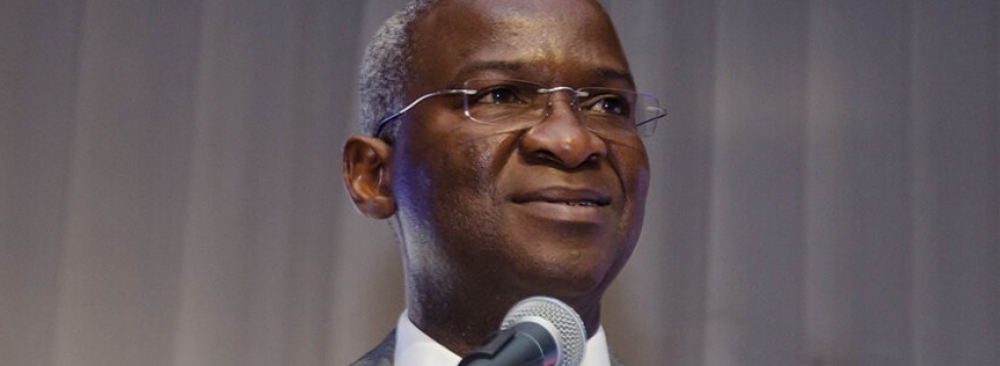
Keynote Speech Delivered By H.E Babatunde Raji Fashola, SAN As Guest Speaker At The Niche 2022 Annual Lecture On Thursday September 8, 2022 At The Muson Centre, Lagos
The theme chosen by Acclaim Communications Ltd, for this year’s annual lecture, which is “2023 AND THE FUTURE OF NIGERIA’S DEMOCRACY” was perhaps too tempting for me to resist, and the invitation, issued since April 20, 2022, was more than timely, which is not easy to say these days for some speaking events.
Given that we are 20 Days to the formal commencement of campaigns for the 2023 general elections, this year’s annual lecture coming 170 days to the first of the elections in February 2023 provides a potential platform for many possibilities.
However, I have elected not to be partisan, and instead chosen to be even-handed, I believe this is the challenge, albeit self-imposed that the theme of the lecture now presents.
Let me start from the beginning about the 2023 general elections.
Shortly after the announcement of the results of the 2019 General Elections proclaiming the victory of President Muhammadu Buhari, and whilst the opposition petition in the election tribunal was still pending, I started hearing talk of 2023.
Initially I dismissed it as offhanded or, at the worst, isolated but it turned out that I was mistaken; it continued.
Therefore, long before the Presidential Election petition was resolved and before Buhari was sworn in for a second term in 2019, talk of the 2023 election, especially the presidential one, had started gathering momentum.
This is the context in which I present my thoughts about the 2023 General Elections and Nigeria’s democracy.
Therefore, you can see that rather than focus on what was going to happen to our lives as a result of the new mandate, now clearly won and lost as determined by the Election Tribunal, some were already thinking about the next election.
So, it should not surprise anyone when you hear rhetoric like: “this will be a most defining election,” “this will be an election like no other,” and so on and so forth.
But truth be told, this rhetoric is common in every democracy and at the onset of a new election cycle.
This is understandable because no two elections are the same; and the intensity always varies anyway as indeed the number of voters and sometimes the number of parties; and the novelty of some candidates.
Unlike economists who urge the probability that “all things being the same,” politics and elections draw their oxygen from the probability that things will not remain the same, especially if you are in opposition.
For example, young people who were by age not eligible to vote in a previous election, would have attained voting age at the next election cycle and become eligible to vote if they register.
In our current situation we now have 12,332,336 newly registered voters for the 2023 election, whereas there were 14,360,053 newly registered voters in 2019, while 6,944,752 registered as new voters in 2015.
So, if the hype about 2023 is anything to go by, the number of 12,332,366 newly registered voters does not support it, because it is 2,027,687 less than the 14,360,053 newly registered voters in 2019.
Obviously, we have seen all the hype before and they detract from the real question which in my view should be: how can democracy, especially the 2023 elections, make our lives better and our country greater?
I think we should focus on this question because we must remember that democracy is simply concerned about the popular participation in choosing a leader or set of leaders.
Democracy does not guarantee that the leader or those leaders will deliver or indeed are able to deliver on what we want.
Put conversely, what really is it that we expect from those we elect and what do they promise to do before we vote, and what have they done for us?
Did we vote for, or did we collect tricycles, sewing machines, generators etc. from them?
If we did, can we legitimately expect that the budget from which these things were procured will also provide healthcare, drugs and diagnostic equipment in our health facilities?
If they have sponsored weddings for our families, financed the burial of our dear departed ones or paid school fees for a whole community do we understand that these things or some of them are funded by the budget from which we also expect good schools, good roads and other public infrastructure and services upon which our prosperity depends collectively?
Put differently, how many of us who vote truly understand how the process works?
How many of our electorate understand what the actual constitutional roles of our legislators, Local Government Chairman, Governors, and President are?
These questions may look ordinary, but my experience in government suggests that they are not. I have been surprised by how unfamiliar some of us are with the constitution and our responsibilities, although I must concede that we are fairly well acquainted when it comes to our rights.
Truth be told, elections are only a part of the democratic process; and this requires not only the successful party to play their role in the formation and running of government, but the opposition as watchdog, and government in waiting, has an equally important role to play in enriching the process.
Governance in power is not easy, and I daresay opposition is even more hard work.
Let us ask ourselves when last an opposition party prepared and detailed an alternative budget to that of the party in government.
True enough, we hear criticisms of what the party in Government is not doing or getting right; but when I ask, can you recall an opposition party offering a credible and alternative solution to what the party in Government has done wrong.
To be fair I must acknowledge the generalizations such as we will do this and do that, but very often that is where it ends.
On the question of revenue or lack thereof for example and the borrowing by Government, apart from the legitimate concerns about borrowing which are rightfully expressed, I have challenged the critics to provide the alternative; and I am still awaiting a response.
If you listen to any of the several Morning shows the issue will come up and you will hear the criticisms, which are legitimate, but you will not get any credible answer to the question – what are the alternatives?
The answer must lie somewhere between cutting waste, reducing the size of Government, raising taxes, stopping some programmes, projects or policies.
But who is ready to have these conversations in real politics?
This is something we must demand in the run up to the 2023 General Elections in order to sustain the future of our democracy.
Yes, democracy heralds freedoms including the freedom to speak. But what kind of speeches are we engaging in? Heckling, online trolling, hate and in person verbal abuse in some cases or talk about ethnicity or religion.
How do we resolve the revenue problem we have with fuel subsidy without leading to social unrest which the two dominant parties have not yet resolved, and the other contenders remain quiet about.
Why has parliament, where all the people of Nigeria are represented, not taken a bipartisan position on the matter after consulting with their constituents, the Nigerian people, and say that we have your mandate to do this or that about the subsidy.
Why can we not have a voting process that shows how each legislator voted, to show that the vote was the result of consultation with the constituents and ensure that they will re-elect the legislator again.
Why is it not a stipulation that our elected representatives live in our constituency so that they understand what we experience and present it for government attention.
Is this type of hands-on representation less important than the occasional goodies shared at seasonal meetings by absentee representatives?
When the campaigns for election to executive office starts and we hear of free this and free that, do we engage in a conversation about how much it would cost and where the money will come from?
After all, to use the cliche nothing is free even in Freetown.
When those promises do not materialize, are we complicit in their stillbirth by the lack of engagement or the quality of engagement.
Let me segue to another issue, to which perhaps we should pay attention, and this is the Federal Government.
In particular, I seek to highlight what I perceive to be a lack of appreciation of what constitutes the Federal Government and what her role is.
To start with, there is a lie that is being told and repeated and some are beginning to believe it, that we do not have a Federal type of constitutional governance partly because they think our Federation is not perfect which I agree with, but an imperfect federation is not the same thing as a non-existent Federation.
The truth is that the imperfection is probably one of the reasons why there are provisions for amendments in the constitution.
If a constitution provides that the federal, state and local governments have different responsibilities and some shared responsibilities as our constitution does in the exclusive and concurrent list of the second schedule and the fourth schedule, I think the minimum requirements of federalism have been met.
Whether the states or local governments should get more powers, lies with us to exercise the amendment in a process requiring federal legislators to initiate it and 2/3 of the states to concur with it.
If that has not happened, it seems to me that it does not extinguish the existence of a federal arrangement, neither is it solely the fault of one person such as the president or the federal government.
This brings me to the heart of the matter about our understanding of the Federal Government.
Not infrequently, I have heard some federal legislators laying the blame of some failing or the other on the “Federal Government,” when in fact what they probably intended is the “Federal Executive” arm of the Federal Government.
The fact is that the federal judiciary, legislative and executive all constitutes one Federal Government operating in three arms.
If we decompose the constituents of the federal government, it will become obvious that it is all of us, the states, through our representatives who make up the federal government.
For example, in the Federal Executive arm of Government, the election of the president and vice president only represents a partial composition of the federal executive. By virtue of section 147 (3) of the constitution, ministers must be appointed from each of the 36 states before the federal executive is probably properly constituted.
In effect, each of our states makes up the much-vilified Federal Executive because the ministers represent us there.
On the federal legislative side of the federal government, the 109 senators and 360 representatives are elected to represent us from senatorial districts and federal constituencies created within our states.
The same is true in the federal judiciary at least at the Federal High Court level and largely so at the Appeal court, except for the supreme court that does not have 36 seats.
The point I seek to make therefore is that it is the representatives of the 36 states who truly constitute the federal government rather than any behemoth or entity.
So, if we agree for example to amend the constitution to allow state policing, I don’t see who can stop it. But do we have a consensus on this matter?
If the Government is not giving us what we expect, I think we should all look in the mirror and ask ourselves what we have put into it, because we are the ones who constitute it.
I must emphasize that democracy works when a working majority exists. Without a working majority in parliament, the work of the executive becomes more difficult.
Therefore, I fail to understand why a party that has a Legislative majority is accused without more, of being a Rubber Stamp.
They are not elected to “fight” the executive especially of their own party, and they are expected to use their majority to push their Party and government agenda through.
That is why elective seats are hotly contested and won. But I find it even stranger and inexplicable that a party that have won legislative majority then literally surrenders its mandate in the parliament by handing over not just Committee Chairmanship seats to the minority, but also committees that are critical in the party’s agenda.
Apart from Public Accounts and probably Ethics, minority should not chair a committee.
Of course, if only briefly I cannot but point out the fact that there are things we expect from different levels of government and legislators that are not their constitutional responsibilities. We would do well to read our constitution before the campaign starts and before we vote. (EXAMPLES ORALLY).
It is these things that should shape the future of our democracy in 2023 and beyond.
These things require us to focus on the kind of people we will elect to states and federal constituencies because it is those people who will determine many things that will affect us.
The kind of people we elect for example to the Senate, will determine what kind of people they will confirm to become ministers, heads of parastatals and so on, which will determine the quality of service we get.
The kind of people we elect, will determine the quality of policies, budgets, programmes and projects that are designed and delivered to us.
The local elections, to elect people to serve in the local governments, as state legislators and as governors are extremely important to our quality of life and deserve that we pay the utmost attention to them without losing sight of the federal elections.
Issues like water supply, rent, land acquisition, building permits, refuse management, sanitation, traffic management, primary health and education, community development are local and not federal issues.
As a small business operator, you need more support from your State Governments than the Federal (save for fiscal and monetary issues) in order for your business to thrive.
I have spoken to the freedoms that democracy offers and the freedom of speech in relation to our rhetoric. The other side of the coin is the role of the press.
While I respect and understand the responsibility to report the news, I hold the view that the press has a big responsibility in shaping the news.
Before I am misunderstood, let me explain.
While they have done a good job serving us with the developments relating to fallout from the choice of running mates and even the purported suspension of a presidential candidate, they can do more to focus on conversations that affect the majority of potential voters.
I am certain you agree with me that the majority of potential voters will be more likely interested to know if there is any plan to improve their children’s education and access to healthcare.
They certainly will be interested to know if something will be done to bring water to their taps at home and what the plans for more reliable electricity will be.
You can bet that those who pay 2 to 3 years rent in advance will be interested to know if anything can be done about it and what that would be.
These are examples of conversations that I think the media can focus on and thereby shape the news.
While there is a lot of work still to be done, it is proper at this point to also highlight the successes our democracy has delivered because the democratic experience since 1999 came at great cost.
Therefore, before I close, let me remind us about some of the things our democracy has delivered since 1999 so that we keep stock, and we believe and reaffirm our commitment to the choice that democracy offer is us and we remain faithful to its ideals.
Our democracy has delivered an interstate train service, the first and only one since the one built by the colonial government.
Our democracy is delivering solutions to problems that seem to have defied solutions, like a road and bridge network to Bonny Island, like the Second Niger Bridge and the reconstruction of the Lagos - Ibadan Expressway, Enugu-Onitsha Expressway, Kano-Maiduguri Expressway and an extensive broadband rollout nationwide.
And lest I forget, our democracy delivered access to telephone service for many Nigerians.
Our democracy has delivered an increasing reliance on Tax revenue as the basis of Government expenditure.
This is important because it increases the focus on representation.
While there is still a lot to do, these are building blocks of hope around which to build our prosperity.
They represent critical items of infrastructure and fiscal options about our current and future livelihoods around which to frame the issue for 2023 elections and plan the future of Nigeria’s democracy.
Therefore, let me close by saying that we can win elections without exaggerating our problems. We can do so by offering credible service and well thought out solutions.
We can win elections without disrobing our country before the global community.
We can do so by valorising Nigeria’s possibilities and not by widening her fault lines.
Elections and Democracy must represent for us a feast of ideas and choices that bring out the best of us and the best of our country.
Thank you for inviting me, and thank you for listening.
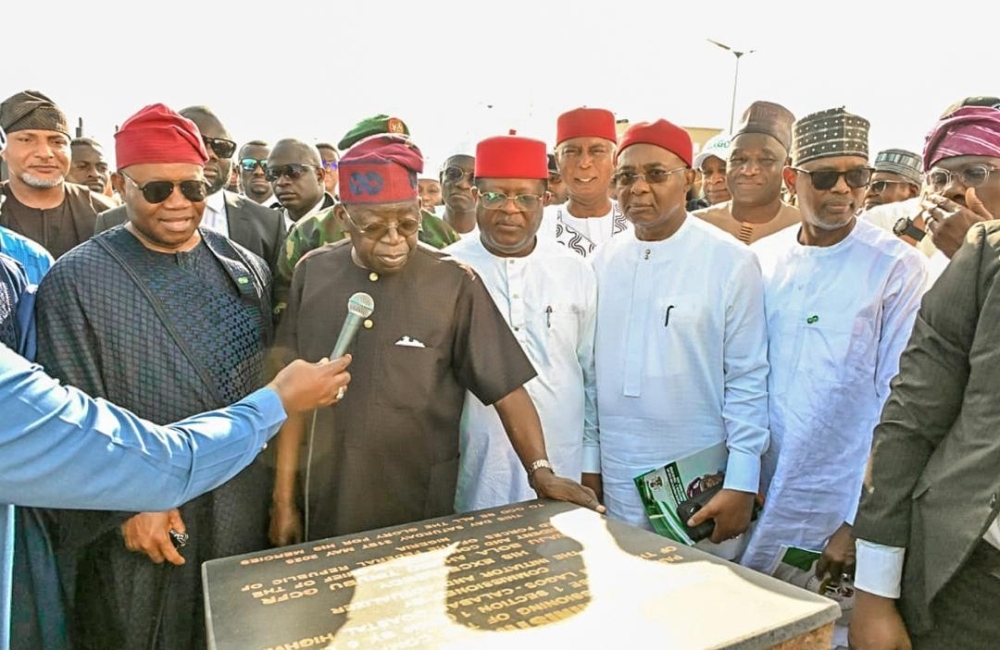
DRIVING NIGERIA’S FUTURE: CELEBRATING TWO YEARS OF TRANSFORMATIVE LEADERSHIP AND THE LAGOS-CALABAR COASTAL HIGHWAY MILESTONE
DRIVING NIGERIA’S FUTURE: CELEBRATING TWO YEARS OF TRANSFORMATIVE LEADERSHIP AND THE LAGOS-CALABAR COASTAL HIGHWAY MILESTONE
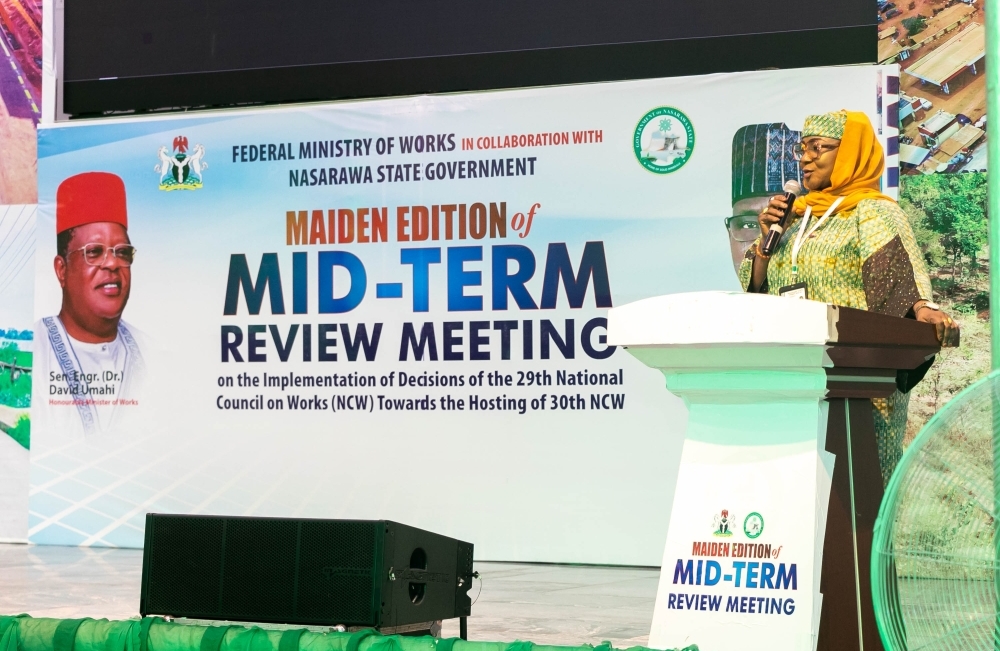
MID -TERM REVIEW MEETING ON THE IMPLIMENTATION OF THE DECISIONS REACHED AT THE 29TH NATIONAL COUNCIL ON WORKS (NCW) DAY 1
MID -TERM REVIEW MEETING ON THE IMPLIMENTATION OF THE DECISIONS REACHED AT THE 29TH NATIONAL COUNCIL ON WORKS (NCW) DAY 1