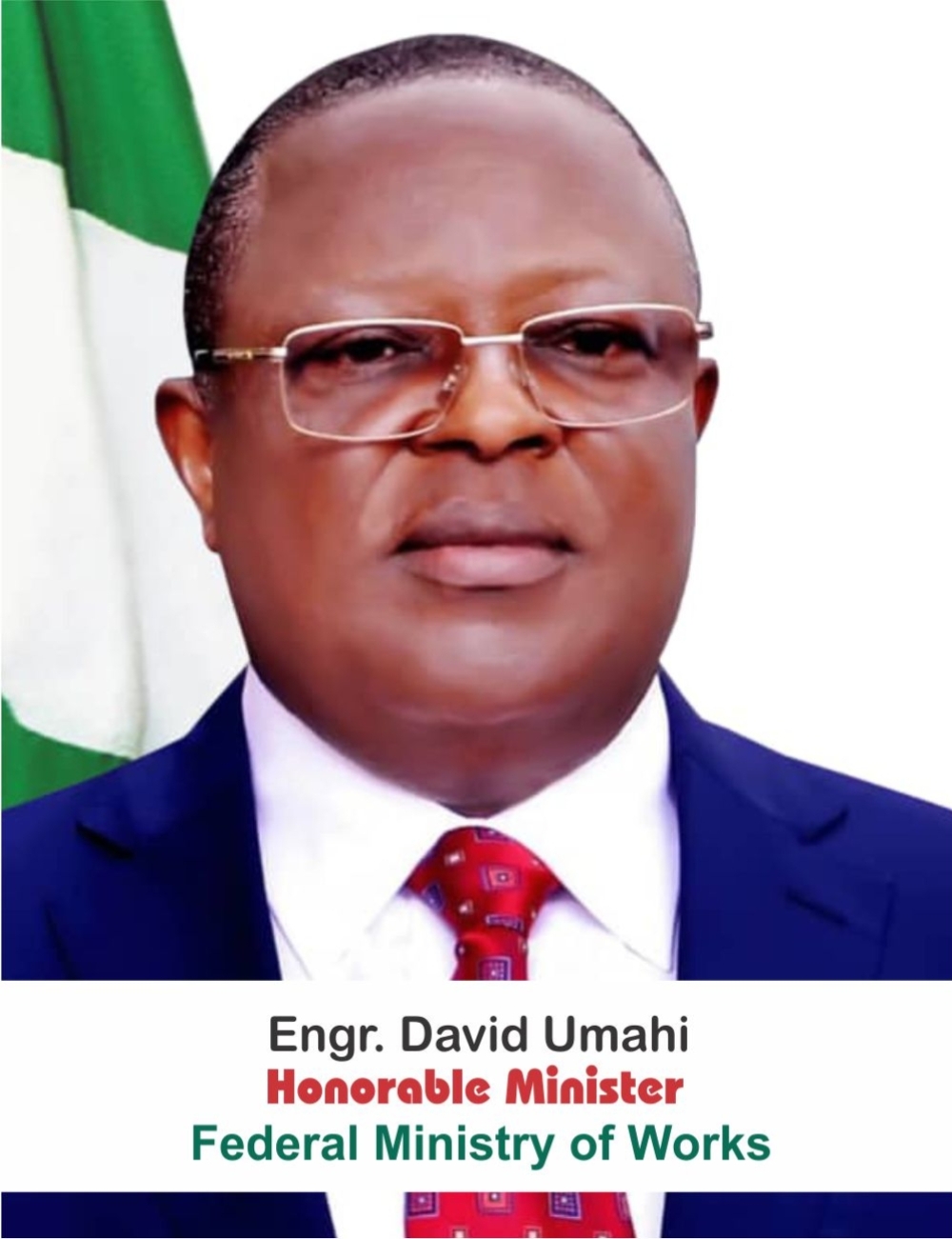
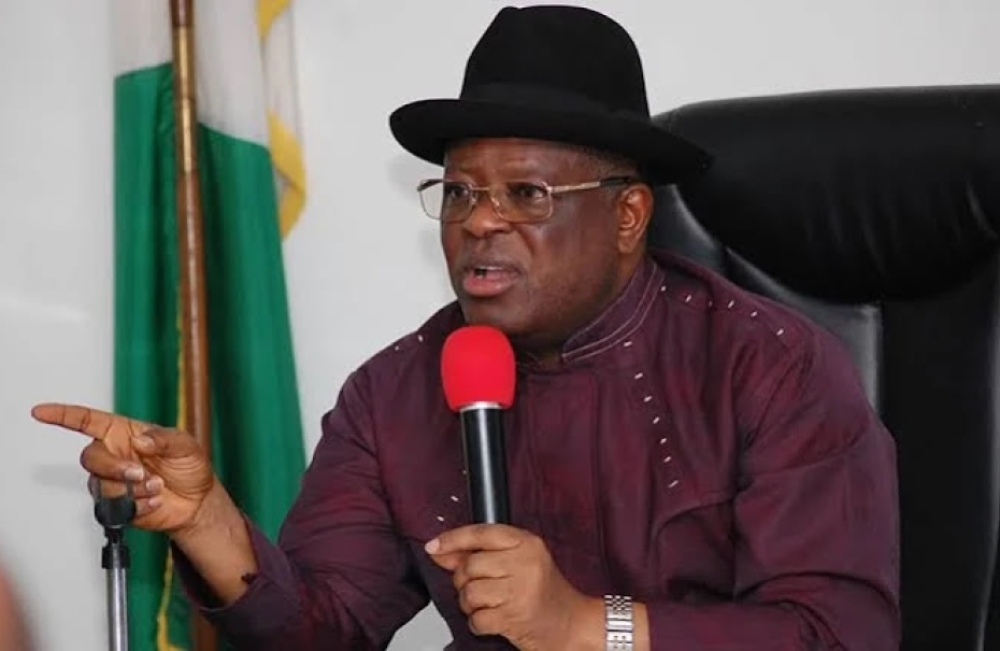
UMAHI ORDERS IMMEDIATE EMERGENCY INTERVENTION ON BENIN-ASABA ROAD, AND SOME OTHER CRITICAL FEDERAL ROADS
The Honourable Minister of Works, Senator Engr. David Nweze Umahi, CON, has directed the immediate deployment of major contractors to all three sections of the Benin-Asaba Federal Road to restore the failed sections and bring an end to the suffering of motorists and other road users.
This is because, the situation on the concessioned Benin-Asaba Road has reached a point where the overall public interest must take precedence over the existing concession agreement.
Recall that the Honourable Minister of Works was on the Benin-Asaba Road about seven days ago, where he assembled a number of contractors and directed them to prepare for immediate palliative intervention on the affected sections of the road at no cost to the concessionaire. In line with the Concession agreement which requires that before the Federal Government could intervene, the permission of the concessionaire must be required, and that permission was not granted to federal government.
The Minister subsequently proposed three options to the concessionaire, any one of which would have enabled the Federal Government to move in and address the worsening condition of the road. Unfortunately, none of the options was accepted by the concessionaire. Immediately after the Minister left Asaba, the already limited equipment deployed to the road by the concessionaire was further reduced to just one, worsening the situation and increasing the suffering of motorists and other road users.
While the Minister takes responsibility for the concerns and suffering of Nigerians using the road, it is important to state that the concessionaire has also not taken the suffering of Edo people and travelling public sufficiently into consideration by declining all the options put forward by the Federal Government. The concessionaire continues to rely on the terms of the concession agreement entered into by the previous administration, an agreement which weighs heavily against the Federal Government’s ability to intervene quickly in the interest of the public in a situation like this.
In view of this situation, the Honourable Minister of Works has directed the immediate deployment of major contractors within the corridor to all three sections of the Benin-Asaba Road to restore the failed sections and bring relief to the people, with the cost of the emergency intervention being borne by the Federal Government. The Honourable Minister has also directed immediate redesign of the entire route to be rebuilt with reinforced concrete pavement. The public should therefore take note that immediate action is underway to restore every failed section of the Benin-Asaba Road and subsequently rehabilitate the entire sections of the road using reinforced concrete pavement.
2. On the Benin-Sapele Road:
The Governors of Edo and Delta States, the Niger Delta Development Commission (NDDC), and the Federal Government are currently engaged in interventions on different sections of the road to restore the entire route. While some sections are receiving palliative attention, permanent works are also ongoing on other sections.
3. On Ifaki(Ekiti) - Kabba (Kogi) Road:
The Federal Government is engaging both the contractor; Gamji Nigeria Company Limited, and Dangote PLC on immediate emergency and permanent intervention on the most failed sections of the road, while efforts are being made to financially mobilise the company for more extensive permanent work to commence on the axis.
4. On the Sokoto-Zamfara-Katsina Road: This is an inherited project involving the dualisation of approximately 350 kilometres, which translates to about 700 kilometers. The project has since been redesigned and is currently ongoing and most sections are being reconstructed using reinforced concrete pavement. From the Sokoto axis towards Zamfara, over 50 kilometres of one carriageway have been fully completed with reinforced concrete pavement. From Zamfara to Katsina, some sections have been completed and palliative works have been ordered over the sections that have not been reconstructed. However, the pace of work slowed down due to the redesign and rephasing of the project. The contractors currently engaged on the road include CBC, SETRACO, Triacta and Mothercat. They are being remobilised to return to site and complete the outstanding works.
5. On the Abuja-Kaduna-Zaria-Kano Road: The Federal Government took over the Road project and has currently completed the 118-kilometer mostly on reinforced concrete pavement on lot 1. The Lot 2, which covers 164 kilometres, is over 60 percent completed on reinforced concrete pavement. The Federal Government has also introduced solar-powered light on the entire route of Abuja-Kaduna-Zaria - Kano to improve visibility during night travel and enhance the overall security situation on the route. The entire project is scheduled for completion by December 2026.
6. On Bauchi-Jigawa Road: Triacta Nigeria Limited has been mobilised to carry out the necessary interventions on some failed sections and work is currently ongoing in those failed sections.
7. On the Sagamu-Ore Road: 48 Kilometers of the 96-kilometre road have already been completed using reinforced concrete pavement. There is also a 24-kilometre section around Ore which was abandoned by the previous contractor. The Federal Government has directed its immediate restoration to ensure seamless travel. Solar lights are being installed in the entire 96kilometer of the road.
8. On Flooded Sections on Sagamu-Ore-Benin Road: The flooded sections on the same corridor between Sagamu-Ore-Benin Road, as well as other flooded sections in Ondo State, are being designed for emergency procurement and intervention.
9. On the East-West Road:
Some failed and critical sections, including defective sections of bridges along the East-West Road, are being marked out for emergency procurement and intervention.
10. On the Abuja-Lokoja Road:
Several contracts are ongoing along the route, while the three critical sections currently without contracts are being procured for emergency intervention.
11. On the Lokoja-Benin-Warri Road: The President has directed a complete redesign and procurement of the 400-kilometre dualised route covering the uncompleted sections, using reinforced concrete pavement, while palliative works will continue with the contractors currently on the road.
12. On Carter Bridge:
While the Federal Government continues to undertake weekly maintenance of the underwater elements of the bridge. The site has also been handed over to the contractor, CCECC, for the construction of a permanent new bridge, and work has commenced.
13. On the Third Mainland Bridge:
With regard to the defective underwater structural elements, the Federal Government is at the final stage of determining the appropriate intervention for the repair of the affected elements.
14. On the flooded section of the Lagos-Ibadan Road: Work has commenced on the affected section. There are also several flooded sections on federal roads across the six geopolitical zones, largely occasioned by excessive flooding and the effects of climate change. The Federal Government is identifying and marking these sections for immediate attention.
15. On the First and Second Niger Bridges:
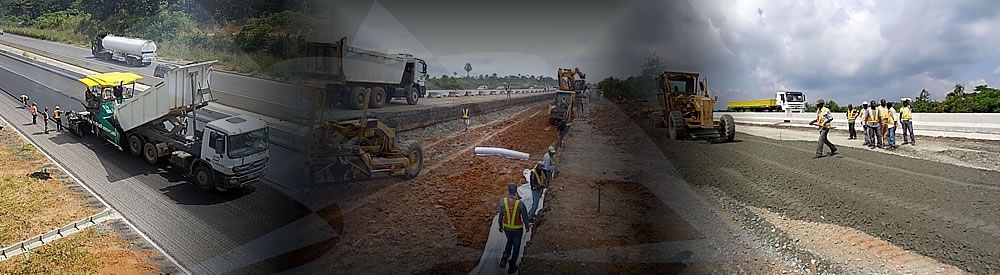
Intervention work is ongoing on the approach roads to the Second Niger Bridge damaged by flood and the work is progressing very well. The First Niger Bridge has been closed to traffic to enable immediate repair works. Contractor has mobilized to site and comprehensive rehabilitation of the bridge has started. From Summit Junction to the First Niger Bridge, massive rehabilitation work is also ongoing using reinforced concrete pavement.
16. The Honourable Minister wishes to commend the President of the Federal Republic of Nigeria, His Excellency Bola Ahmed Tinubu, GCFR, for the massive work being undertaken on the nation’s roads since the administration assumed office in 2023.
17. It is important to state that when the present administration came into office, there was hardly any part of the country where one could travel for an hour without encountering significant challenges on the road network. The condition of the country’s roads and bridges was a major national infrastructure challenge.
18. Rather than shy away from the problem, the administration of President Bola Ahmed Tinubu made the nation’s road network a priority. Virtually every part of the country became a priority, and the Federal Government, through the Federal Ministry of Works, Regional Commissions, Parastatals and other MDA’s has continued to respond extensively to these challenges.
19. The Federal Government is currently working on over 80 percent of the inherited federal roads, an unprecedented level of intervention in the country’s road infrastructure.
20. We ask the public to understand the enormous challenges inherited on our roads and bridges and to take note not only of the problems being solved, but also of the permanent solutions being introduced.
21. A major part of this new approach is the use of reinforced concrete pavement, designed to significantly extend the lifespan of major roads. These roads are expected to last between 50 and 100 years. This means that roads being constructed under President Bola Ahmed Tinubu’s administration are being designed with future generations in mind, rather than simply providing temporary solutions to today’s problems. And this is a complete departure from the past, when roads often deteriorated only a few years after completion, resulting in a continuous cycle of reconstruction and expenditure.
22. We appreciate the concerns of Nigerians over the condition of some roads presently and the difficulties faced by motorists and commuters who cannot move easily from one point to another. Those concerns are legitimate, and the Federal Government is listening. But Nigerians should also recognise the enormous scale of the problems inherited and the amount of work currently being undertaken across the country.
23. It is simply impossible to resolve every road challenge accumulated over many years of neglect by the past administrations within three years. What is important is that the government is working, the government is responding, and the government is putting permanent solutions in place.
25. We appreciate members of the public who send situation reports on failed roads and other infrastructure challenges. These reports help the Ministry identify areas requiring urgent attention. However, we also appeal to members of the public to report when such problems have been addressed, just as they report when they occur.
24. We are aware of situations where photographs and reports of road challenges continue to circulate on social media even after the Federal Government has intervened and resolved the particular problem.
25. However, the Ministry will continue to respond as rapidly as possible to genuine reports and concerns from Nigerians.
26. It is also important to note that we have compiled a comprehensive record of all inherited, ongoing and intervention projects across the country which is available to the public. This is to ensure that Nigerians have access to information on the infrastructure projects being undertaken nationwide and can fully participate in and appreciate the infrastructure revolution of President Bola Ahmed Tinubu’s administration.

UMAHI ORDERS IMMEDIATE EMERGENCY INTERVENTION ON BENIN-ASABA ROAD, AND SOME OTHER CRITICAL FEDERAL ROADS The Honourable Minister of Works, Senator Engr. David Nweze Umahi, CON, has directed the immediate deployment of major contractors to all three sections of the Benin-Asaba Federal Road to restore the failed sections and bring an end to the suffering of motorists and other road users. This is because, the situation on the concessioned Benin-Asaba Road has reached a point where the overall public interest must take precedence over the existing concession agreement. Recall that the Honourable Minister of Works was on the Benin-Asaba Road about seven days ago, where he assembled a number of contractors and directed them to prepare for immediate palliative intervention on the affected sections of the road at no cost to the concessionaire. In line with the Concession agreement which requires that before the Federal Government could intervene, the permission of the concessionaire must be required, and that permission was not granted to federal government. The Minister subsequently proposed three options to the concessionaire, any one of which would have enabled the Federal Government to move in and address the worsening condition of the road. Unfortunately, none of the options was accepted by the concessionaire. Immediately after the Minister left Asaba, the already limited equipment deployed to the road by the concessionaire was further reduced to just one, worsening the situation and increasing the suffering of motorists and other road users. While the Minister takes responsibility for the concerns and suffering of Nigerians using the road, it is important to state that the concessionaire has also not taken the suffering of Edo people and travelling public sufficiently into consideration by declining all the options put forward by the Federal Government. The concessionaire continues to rely on the terms of the concession agreement entered into by the previous administration, an agreement which weighs heavily against the Federal Government’s ability to intervene quickly in the interest of the public in a situation like this. In view of this situation, the Honourable Minister of Works has directed the immediate deployment of major contractors within the corridor to all three sections of the Benin-Asaba Road to restore the failed sections and bring relief to the people, with the cost of the emergency intervention being borne by the Federal Government. The Honourable Minister has also directed immediate redesign of the entire route to be rebuilt with reinforced concrete pavement. The public should therefore take note that immediate action is underway to restore every failed section of the Benin-Asaba Road and subsequently rehabilitate the entire sections of the road using reinforced concrete pavement. 2. On the Benin-Sapele Road: 3. On Ifaki(Ekiti) - Kabba (Kogi) Road: 4. On the Sokoto-Zamfara-Katsina Road: This is an inherited project involving the dualisation of approximately 350 kilometres, which translates to about 700 kilometers. The project has since been redesigned and is currently ongoing and most sections are being reconstructed using reinforced concrete pavement. From the Sokoto axis towards Zamfara, over 50 kilometres of one carriageway have been fully completed with reinforced concrete pavement. From Zamfara to Katsina, some sections have been completed and palliative works have been ordered over the sections that have not been reconstructed. However, the pace of work slowed down due to the redesign and rephasing of the project. The contractors currently engaged on the road include CBC, SETRACO, Triacta and Mothercat. They are being remobilised to return to site and complete the outstanding works. 5. On the Abuja-Kaduna-Zaria-Kano Road: The Federal Government took over the Road project and has currently completed the 118-kilometer mostly on reinforced concrete pavement on lot 1. The Lot 2, which covers 164 kilometres, is over 60 percent completed on reinforced concrete pavement. The Federal Government has also introduced solar-powered light on the entire route of Abuja-Kaduna-Zaria - Kano to improve visibility during night travel and enhance the overall security situation on the route. The entire project is scheduled for completion by December 2026. 6. On Bauchi-Jigawa Road: Triacta Nigeria Limited has been mobilised to carry out the necessary interventions on some failed sections and work is currently ongoing in those failed sections. 7. On the Sagamu-Ore Road: 48 Kilometers of the 96-kilometre road have already been completed using reinforced concrete pavement. There is also a 24-kilometre section around Ore which was abandoned by the previous contractor. The Federal Government has directed its immediate restoration to ensure seamless travel. Solar lights are being installed in the entire 96kilometer of the road. 8. On Flooded Sections on Sagamu-Ore-Benin Road: The flooded sections on the same corridor between Sagamu-Ore-Benin Road, as well as other flooded sections in Ondo State, are being designed for emergency procurement and intervention. 9. On the East-West Road: 10. On the Abuja-Lokoja Road: 11. On the Lokoja-Benin-Warri Road: The President has directed a complete redesign and procurement of the 400-kilometre dualised route covering the uncompleted sections, using reinforced concrete pavement, while palliative works will continue with the contractors currently on the road. 12. On Carter Bridge: 13. On the Third Mainland Bridge: 14. On the flooded section of the Lagos-Ibadan Road: Work has commenced on the affected section. There are also several flooded sections on federal roads across the six geopolitical zones, largely occasioned by excessive flooding and the effects of climate change. The Federal Government is identifying and marking these sections for immediate attention. 15. On the First and Second Niger Bridges: 16. The Honourable Minister wishes to commend the President of the Federal Republic of Nigeria, His Excellency Bola Ahmed Tinubu, GCFR, for the massive work being undertaken on the nation’s roads since the administration assumed office in 2023. 17. It is important to state that when the present administration came into office, there was hardly any part of the country where one could travel for an hour without encountering significant challenges on the road network. The condition of the country’s roads and bridges was a major national infrastructure challenge. 18. Rather than shy away from the problem, the administration of President Bola Ahmed Tinubu made the nation’s road network a priority. Virtually every part of the country became a priority, and the Federal Government, through the Federal Ministry of Works, Regional Commissions, Parastatals and other MDA’s has continued to respond extensively to these challenges. 19. The Federal Government is currently working on over 80 percent of the inherited federal roads, an unprecedented level of intervention in the country’s road infrastructure. 20. We ask the public to understand the enormous challenges inherited on our roads and bridges and to take note not only of the problems being solved, but also of the permanent solutions being introduced. 21. A major part of this new approach is the use of reinforced concrete pavement, designed to significantly extend the lifespan of major roads. These roads are expected to last between 50 and 100 years. This means that roads being constructed under President Bola Ahmed Tinubu’s administration are being designed with future generations in mind, rather than simply providing temporary solutions to today’s problems. And this is a complete departure from the past, when roads often deteriorated only a few years after completion, resulting in a continuous cycle of reconstruction and expenditure. 22. We appreciate the concerns of Nigerians over the condition of some roads presently and the difficulties faced by motorists and commuters who cannot move easily from one point to another. Those concerns are legitimate, and the Federal Government is listening. But Nigerians should also recognise the enormous scale of the problems inherited and the amount of work currently being undertaken across the country. 23. It is simply impossible to resolve every road challenge accumulated over many years of neglect by the past administrations within three years. What is important is that the government is working, the government is responding, and the government is putting permanent solutions in place. 25. We appreciate members of the public who send situation reports on failed roads and other infrastructure challenges. These reports help the Ministry identify areas requiring urgent attention. However, we also appeal to members of the public to report when such problems have been addressed, just as they report when they occur. 24. We are aware of situations where photographs and reports of road challenges continue to circulate on social media even after the Federal Government has intervened and resolved the particular problem.
The Governors of Edo and Delta States, the Niger Delta Development Commission (NDDC), and the Federal Government are currently engaged in interventions on different sections of the road to restore the entire route. While some sections are receiving palliative attention, permanent works are also ongoing on other sections.
The Federal Government is engaging both the contractor; Gamji Nigeria Company Limited, and Dangote PLC on immediate emergency and permanent intervention on the most failed sections of the road, while efforts are being made to financially mobilise the company for more extensive permanent work to commence on the axis.
Some failed and critical sections, including defective sections of bridges along the East-West Road, are being marked out for emergency procurement and intervention.
Several contracts are ongoing along the route, while the three critical sections currently without contracts are being procured for emergency intervention.
While the Federal Government continues to undertake weekly maintenance of the underwater elements of the bridge. The site has also been handed over to the contractor, CCECC, for the construction of a permanent new bridge, and work has commenced.
With regard to the defective underwater structural elements, the Federal Government is at the final stage of determining the appropriate intervention for the repair of the affected elements.
Intervention work is ongoing on the approach roads to the Second Niger Bridge damaged by flood and the work is progressing very well. The First Niger Bridge has been closed to traffic to enable immediate repair works. Contractor has mobilized to site and comprehensive rehabilitation of the bridge has started. From Summit Junction to the First Niger Bridge, massive rehabilitation work is also ongoing using reinforced concrete pavement.
25. However, the Ministry will continue to respond as rapidly as possible to genuine reports and concerns from Nigerians.
26. It is also important to note that we have compiled a comprehensive record of all inherited, ongoing and intervention projects across the country which is available to the public. This is to ensure that Nigerians have access to information on the infrastructure projects being undertaken nationwide and can fully participate in and appreciate the infrastructure revolution of President Bola Ahmed Tinubu’s administration.
FG’s N72 Billion Distribution Expansion Programme Is A Commitment Towards Enhancing Power Distribution-Fashola * Says amount was arrived at in consultation with the DisCos as to their priority investment areas within their franchise to improve evacuation of power to consumers * Although the power sector Operation is now in private hands, Government is concerned, he assures * Calls for consistency and understanding saying decision to privatize is a matter of policy and policies take time to take effect * Lists Mini-Grids, Meter Asset Providers, among others as initiatives aimed at tackling post-privatization challenges The Minister Power, Works and Housing, Mr. Babatunde Fashola SAN, Wednesday reiterated Federal Government’s commitment to enhancing the distribution segment of the Power value chain saying the approval of a N72 Billion Distribution Expansion Programme by the government was a clear demonstration of that commitment. Speaking at the December 2018 Nextier Power Dialogue in Abuja, Fashola said the Government, as a 40 per cent shareholder, had to make the approval in order to enhance the distribution of power across the country pointing out that although operationally there is 7,000 Megawatts of electricity ready for deployment, the operation was still constrained at the distribution end. Reiterating the concern of government towards correcting the anomaly, the Minister, however noted that the decision to intervene was done after asking the DisCos where they would want to spend their money within their franchise, if they have it, that could evacuate “some of the power that is available and that can yield a maximum collection report” adding that it was with that data that Government put the amount together that it would inject into the Distribution sector. The Minister, who quoted the 3rd Quarter Report of the National Bureau of Statistics as revealing that Electricity made the highest contribution of 18 per cent to the 1.8 per cent growth in the nation’s Gross Domestic Product (GDP) recalled the “Thank You” visit of the Gora Community of Nasarawa State to his office early in the week to express their gratitude to the Federal Government over the provision of Solar Power to their Community saying it was a testimony to the growth in electricity supply and increasing accessibility to the rural communities. The Community delegation, led by its Traditional Head, Alhaji Jafaru Adamu, thanked the government of President Muhammadu Buhari for initiating the rural electrification programme and the Minister for driving it adding that since the installation of the Solar electricity, the Community has consistently enjoyed several benefits hitherto not known to them, especially in the areas of social life, Education and Health. Also the Minister seized the opportunity of a question to clear the air on an alleged statement made by him in 2014 as to his ability to solve the nation’s power problem in six months explaining that the statement attributed to him was made in 2015 in Lekki in respect of distributing power to the Lekki community within six months from the residual power in an Independent Power Plant earlier commissioned by him to power some government Water Works and Street lighting on the Island. He declared, “I think it was in 2015 during the run up to the elections and I was in Lekki where we had gone to commission the Lekki IPP. It was Sam Amadi who gave us a license to do an IPP dedicated to power our Water works in Lekki, our Water Works in Victoria Island and our Water Works in Oniru and the street lighting in Lekki Phase 2. “When we switched on that power plant that night and all of the street lights came on, as I was leaving, the residents accosted me and said “Governor you can’t go; we like this; but how would we get it into our houses”. I explained that it was Eko Distribution Company’s franchise and if they wanted the power in their houses, there was reserved power still in the IPP and if they could tell NERC to issue him a license, he would do the distribution and connect the Lekki residents in six months. That was what I said”. The Minister recalled that the policy outline laid by his Ministry at inception set out a roadmap to first get incremental power and then go to steady power and then to uninterrupted power, which, according to him, “is not just a function of how much power you have”, but also “how you manage the power”. “I think that if you followed the policy outline, we set out our roadmap first to get incremental power and then we will go to steady power and then to uninterrupted power and uninterrupted power is not just a function of how much power you have; it is also a function of how you manage the power. So in terms of our first leg of incremental power, we have delivered what we promised. We have increased the power on all sides”, he said. Fashola pointed out the amount of diesel that he used to power his residence was now less than two years ago adding, “The man who buys the diesel knows and the man who supplies the diesel knows that I don’t buy as much as before. And that is the story from many parts for people on the grid. But that doesn’t mean that there are no problems”. Responding to a question posed by a participant during the Interactive Session concerning the supply of transformers, Fashola, who reiterated that all the assets that the Ministry of Power used to control for power distribution have been sold by the last administration pointed out that the people now operating the Generation and Distribution segments of power sector are now privately owned companies. The Minister added, “I am here because I am concerned. If your telephone is not working, it is not the Minister of Communication that you go to; let us be very clear. My role is regulatory, oversight and policy”, adding, however, “I cannot separate myself from the problem; I am trying to get involved to do what the law allows me to do. So the people you should be talking to about transformer is not me; the Ministry does not supply transformer anymore”. In response to another question bordering on whether or not to cancel the Privatization policy and hand back power to the government, Fashola, who called for caution, declared, “Let’s be careful what we wish for. We wished, many years ago, after 60 years or so of government run power, we wished and decided that Private Sector should take over this Power. That was our decision. No sooner had we decided, five years after, we are now asking government to take it from them. Is that what we really want?” “So let’s be consistent here and let us understand that the decision to privatize is a matter of policy. When policy is made, it takes time to take effect. When it begins to take effect, its impact takes time to spread. And that is why we can share here that five years ago nobody could talk about mini-grid, we are talking about it now; five years ago nobody was talking about Meter Asset Provider, we are talking about it today, five years ago who dared to go into the military formation to meter them; the President has directed that all the military formations must be metered”. The Minister said ministries and agencies of government now pay their electricity bills regularly adding, “I just signed the letter for this month because our office is the collection warehouse. This wasn’t happening five years ago. So we are making progress and let no one downplay that”. “Can we move faster, certainly we can”, he said adding, however, that if the consensus was that government should take it over the power sector from private hands, then there was need to “go back to Parliament and repeal the law; because I asked you, do you want a five-year old to have a moustache?” Arguing against the reversal of the Privatization Policy, Fashola, who again reiterated the existence of challenges in the sector which, he assured were being dealt with, declared, “But you must decide in this country whether you want to continue to see devils or angels. I like to see angels; my glass is always half full and problems are opportunities for me to show that nothing is wrong with us and to benchmark what I have achieved. There are problems no doubt and we must deal with them”. According to the NBS Report for Budget 3, the 3rd Quarter GDP result was 1.81 per cent growth; up from 1.50 per cent in Q2 with Electricity as the biggest motivator scoring 18 per cent, Metal Ores 17 per cent, Telecoms 14 per cent, Transportation 11.9 per cent Quarrying and Mining 3 per cent and, for the first time in about six consecutive quarters, the Services Sector grew by 2 per cent. “It is not enough”, Fashola said adding, “But it means we are heading in the right direction back up. What is also important to share is that the growth was driven by non-Oil Sector and that is important because the growth came in a quarter when oil prices have not done well and that is what this team set out to achieve; to diversify the economy. We welcome the Oil money, but when the oil money suddenly disappears, our prosperity will not go with it and that is important”. The Minister added, “So, in a period when oil prices began to flounder Nigeria’s economy did not flounder and that is important. But more importantly, who drove the growth? It means that if we continue with the foundations that are being laid-infrastructure- the jobs that all of us want to see will multiply. That is where we are”. ...
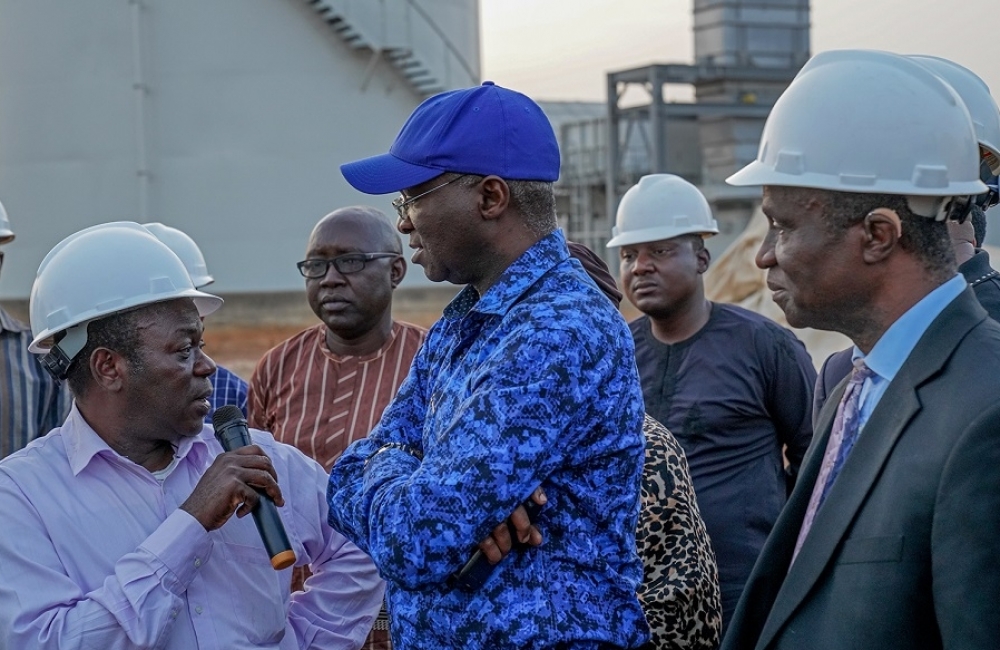
More Rural Communities To Get Access To Electricity - Fashola The Honourable Minister of Power, Works and Housing, Babatunde Raji Fashola says the Federal Government is determined to the provide critical infrastructure that will boost the economy as well as impact positively on lives of Nigerians. The Minister revealed that more rural communities are having access to electricity by the policy of the government of President Muhammadu Buhari. He made the remark when he received in audience, the the Village Head of Gora Community in Karu Local Government Area of Nasarawa state in his office. The delegation was led by Hajia Kareen Fatimah Mohammed. He said “One of the reasons I have you here is that you are the faces of electricity under this Administration: Dozen communities are having access to electricity whether on mini grid or off grid like Gora community and this demonstrates that the government is working”. Fashola further revealed that the rural electrification plan enabled government to access about 200 million dollars to run a pilot in 70 communities in 5 States of the federation, adding that the data of the communities yet to access electricity would be gathered so as to ultimately extend access to them. He explained that the President Muhammadu Buhari led administration is running an all-inclusive government by also appointing young people to leadership positions. He also said that young Nigerians under 40 years of age presently constitute the membership of the Board of the Nigeria Rural Electrification Agency (NREA) including the Managing Director, Mrs Damilola Ogunbiyi, starting that “it is the young people who have done the work, the unsung heroes of Buhari’s government”. Fashola said that apart from providing electricity to the Community, they are also connected to roads, rail and bridges, maintaining that “what is good for the people in the cities, must be good for people in the rural communities”. He pointed out that the rural and farming communities are “the most critical pillars of diversity of Nigerian government, being treasures store of food and construction materials.” The Minister pointed out that Nigerians are now more united than ever before, adding that the projects such as this has connected men, women and communities across Nigeria, citing the case of Hajia Kareem Mohammed who though hails from Gombe State, yet solicited for electricity for Gora Communities where her farm is located. Earlier, the leader of the delegation, Hajia Mohammed and the Head of Gora Community, Alhaji Jafaru Adamu took turns to appreciate the government, saying that the communities have benefited immersely in improved education, health and day to day activities of the people. Alhaji Adamu, however requested that the solar power be extended to other communities in the State ...
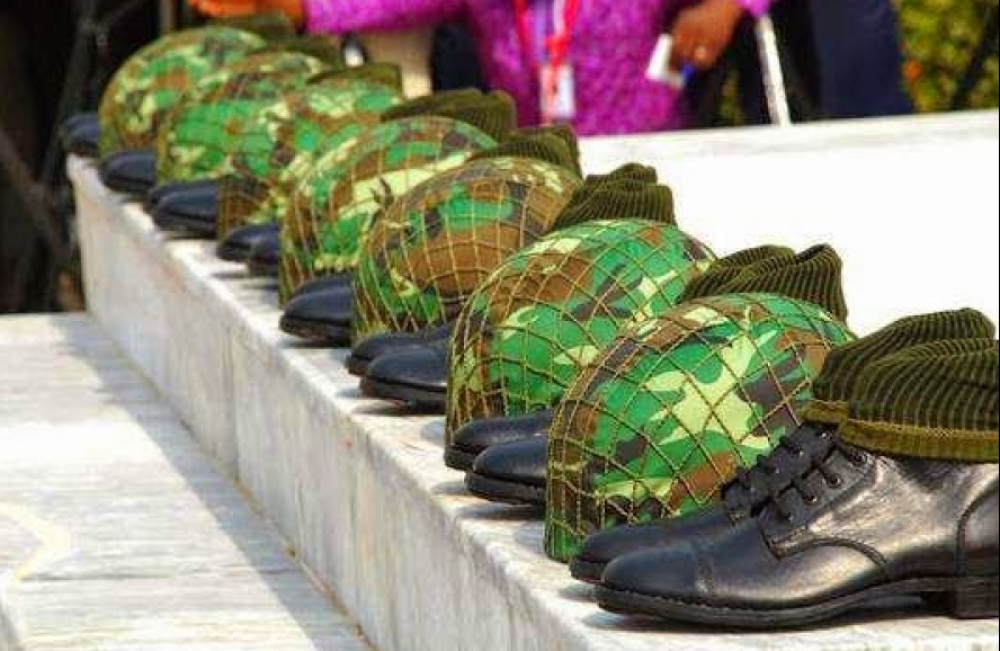
Nigerians Will Remain Grateful To The Fallen Heroes - Fashola The Minister of Power, Works and Housing, Babatunde Raji Fashola SAN has Stated that Nigerians will remain ever grateful by remembering the supreme sacrifice paid by our brothers and sister who laid down their lives for the service of our father’s land, Nigeria. Fashola made the statement, on Monday, in his Mabushi office when he received in audience the National Planning Committee of the Armed Forces Remembrance Day Celebration (AFRDC) 2019 who decorated him and also commended him for his immense contributions during the 2018 Armed Forces Remembrance Day celebration. While been decorated alongside the Minister of State 1 for Power, Works and Housing, Hon. Mustapha Baba Shehuri, Fashola noted that the seeming peace which is being enjoyed in Nigeria is as a result of commitment and sacrifices of our fallen heroes who fought gallantly and fearlessly to defend the integrity of our father land. He however commended the Nigeria Armed Forces for being combatant ready and for exhibiting professionalism at all times. The Minister maintained that the Armed Forces Remembrance Day Celebration is an important event which should be made more elaborate by calling on all well-meaning Nigerians, friends and well-wishers to contribute generously to an endowment fund that will cater for the families who lost their beloved ones. He also suggested for an improved production and redesigning of the Emblem so as to be more appealing to the eyes while the basics and the fundamental messages remains. Earlier , Major Issa Abdulhamid who represented the Chairman , National Planning Committee of the 2019 Armed Forces Remembrance Day Celebration, Major General Edward Chijioke Obi, disclosed that the reason of their visit was to identify with the Ministers in order to raise funds for the families of our fallen heroes and by so doing alleviate their plight and predicaments. Major Abdulhamid also thanked the Ministers for attending to members of his committee in spite of their busy schedules. ...
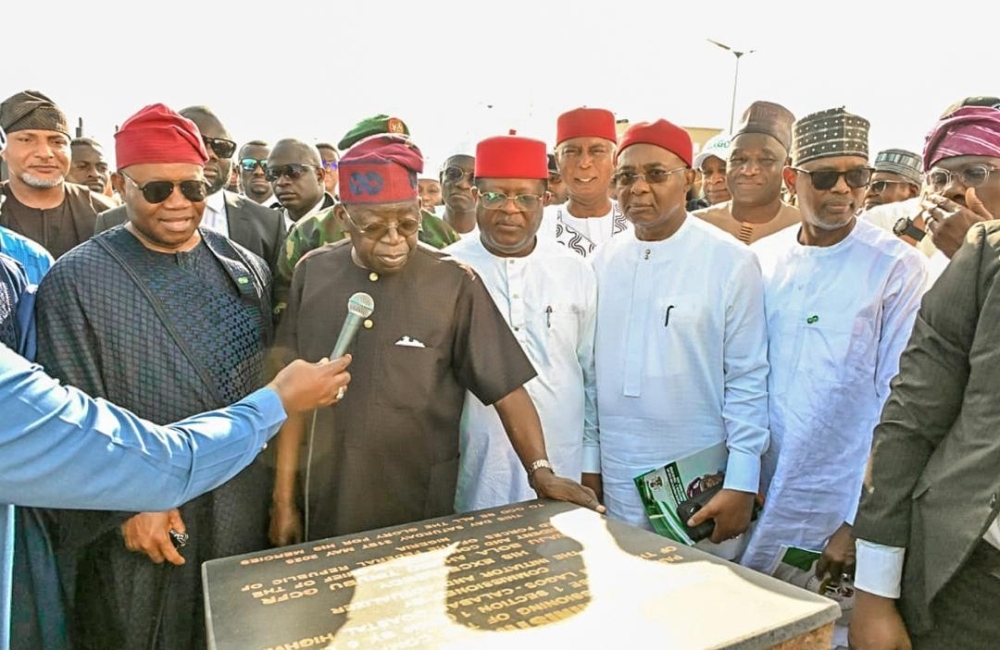
DRIVING NIGERIA’S FUTURE: CELEBRATING TWO YEARS OF TRANSFORMATIVE LEADERSHIP AND THE LAGOS-CALABAR COASTAL HIGHWAY MILESTONE
DRIVING NIGERIA’S FUTURE: CELEBRATING TWO YEARS OF TRANSFORMATIVE LEADERSHIP AND THE LAGOS-CALABAR COASTAL HIGHWAY MILESTONE
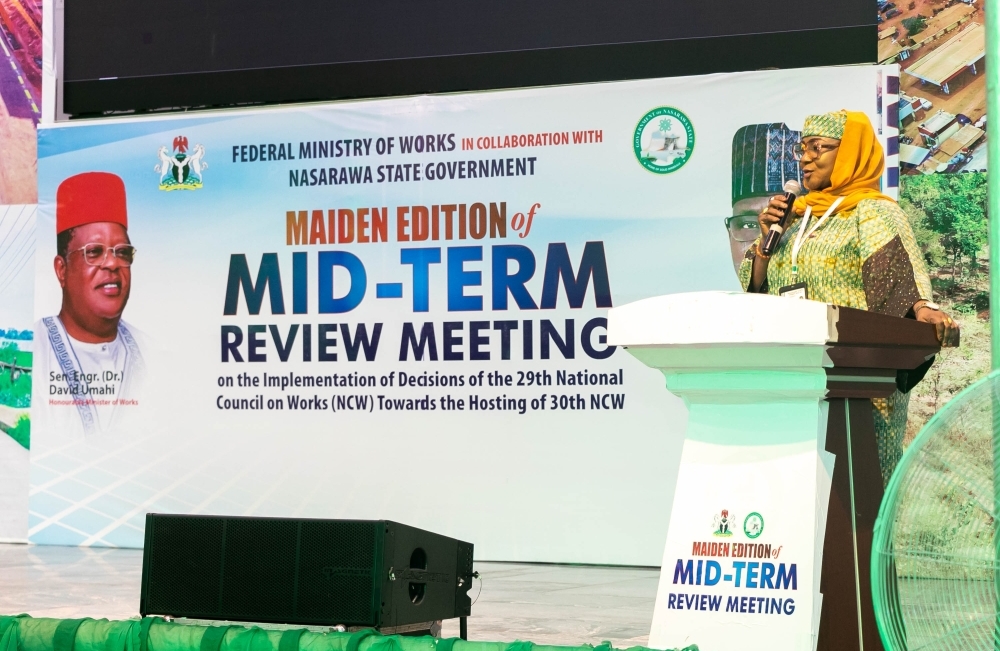
MID -TERM REVIEW MEETING ON THE IMPLIMENTATION OF THE DECISIONS REACHED AT THE 29TH NATIONAL COUNCIL ON WORKS (NCW) DAY 1
MID -TERM REVIEW MEETING ON THE IMPLIMENTATION OF THE DECISIONS REACHED AT THE 29TH NATIONAL COUNCIL ON WORKS (NCW) DAY 1