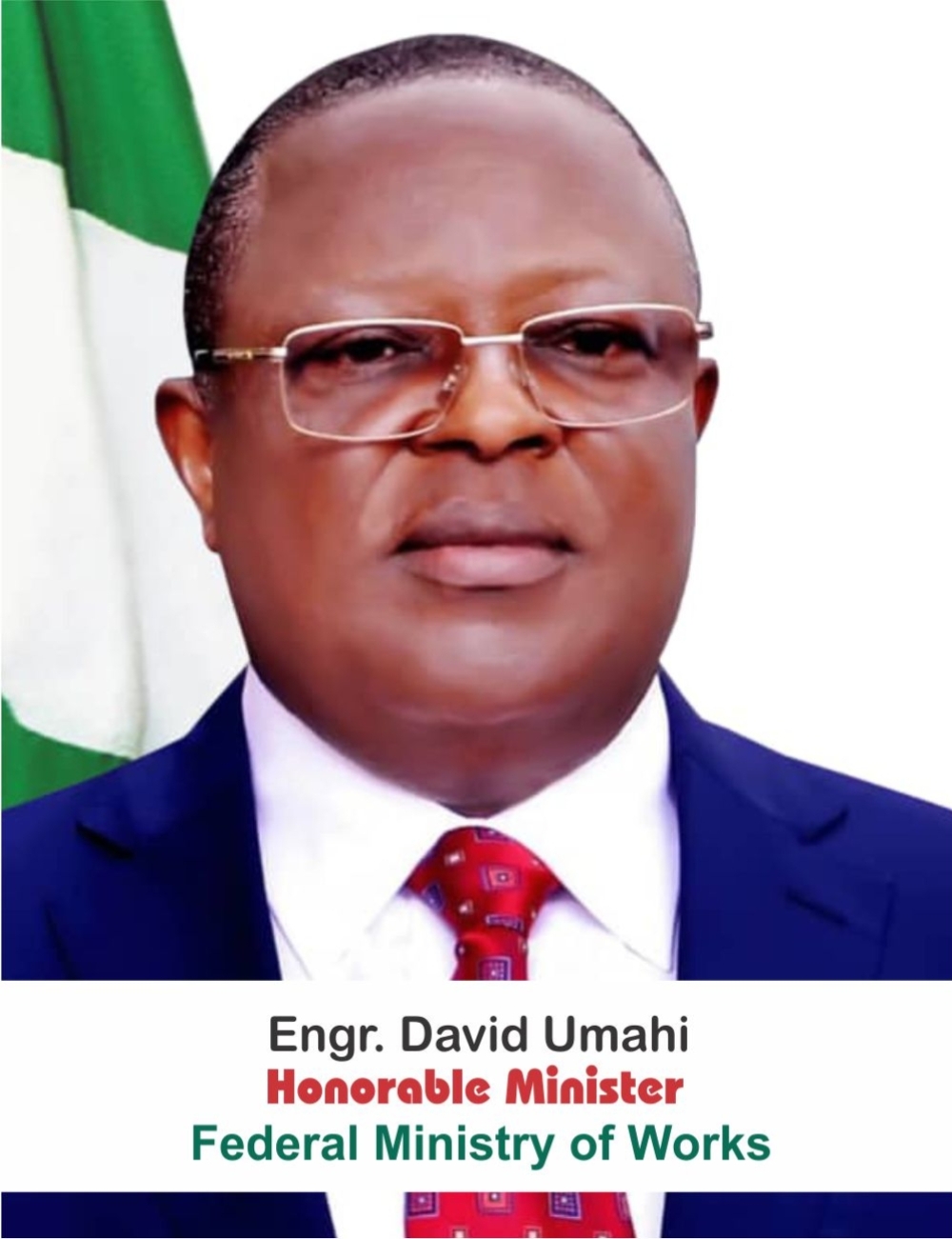
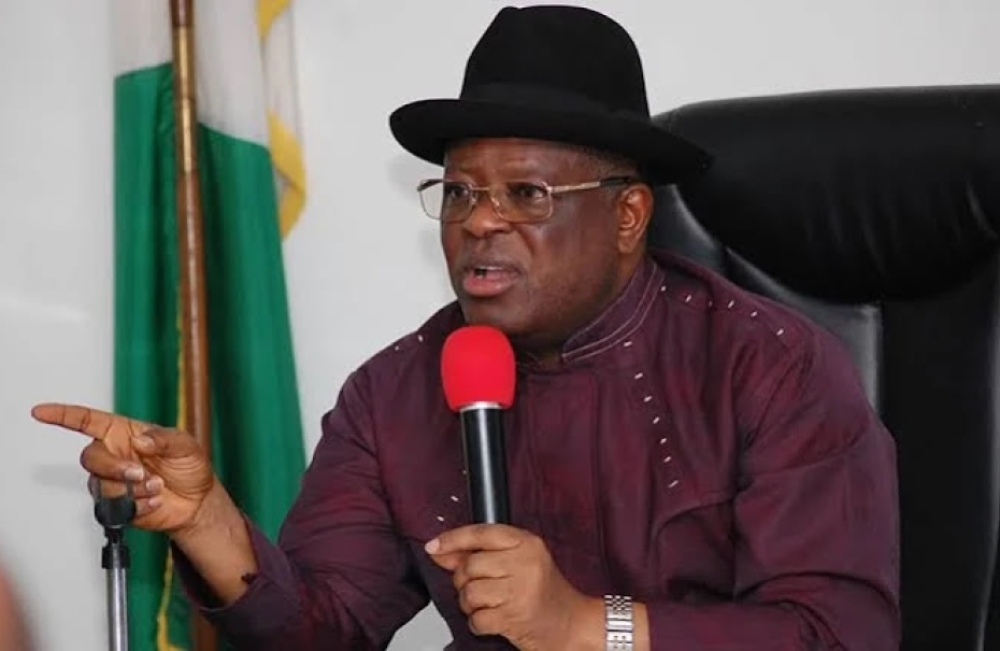
UMAHI ORDERS IMMEDIATE EMERGENCY INTERVENTION ON BENIN-ASABA ROAD, AND SOME OTHER CRITICAL FEDERAL ROADS
The Honourable Minister of Works, Senator Engr. David Nweze Umahi, CON, has directed the immediate deployment of major contractors to all three sections of the Benin-Asaba Federal Road to restore the failed sections and bring an end to the suffering of motorists and other road users.
This is because, the situation on the concessioned Benin-Asaba Road has reached a point where the overall public interest must take precedence over the existing concession agreement.
Recall that the Honourable Minister of Works was on the Benin-Asaba Road about seven days ago, where he assembled a number of contractors and directed them to prepare for immediate palliative intervention on the affected sections of the road at no cost to the concessionaire. In line with the Concession agreement which requires that before the Federal Government could intervene, the permission of the concessionaire must be required, and that permission was not granted to federal government.
The Minister subsequently proposed three options to the concessionaire, any one of which would have enabled the Federal Government to move in and address the worsening condition of the road. Unfortunately, none of the options was accepted by the concessionaire. Immediately after the Minister left Asaba, the already limited equipment deployed to the road by the concessionaire was further reduced to just one, worsening the situation and increasing the suffering of motorists and other road users.
While the Minister takes responsibility for the concerns and suffering of Nigerians using the road, it is important to state that the concessionaire has also not taken the suffering of Edo people and travelling public sufficiently into consideration by declining all the options put forward by the Federal Government. The concessionaire continues to rely on the terms of the concession agreement entered into by the previous administration, an agreement which weighs heavily against the Federal Government’s ability to intervene quickly in the interest of the public in a situation like this.
In view of this situation, the Honourable Minister of Works has directed the immediate deployment of major contractors within the corridor to all three sections of the Benin-Asaba Road to restore the failed sections and bring relief to the people, with the cost of the emergency intervention being borne by the Federal Government. The Honourable Minister has also directed immediate redesign of the entire route to be rebuilt with reinforced concrete pavement. The public should therefore take note that immediate action is underway to restore every failed section of the Benin-Asaba Road and subsequently rehabilitate the entire sections of the road using reinforced concrete pavement.
2. On the Benin-Sapele Road:
The Governors of Edo and Delta States, the Niger Delta Development Commission (NDDC), and the Federal Government are currently engaged in interventions on different sections of the road to restore the entire route. While some sections are receiving palliative attention, permanent works are also ongoing on other sections.
3. On Ifaki(Ekiti) - Kabba (Kogi) Road:
The Federal Government is engaging both the contractor; Gamji Nigeria Company Limited, and Dangote PLC on immediate emergency and permanent intervention on the most failed sections of the road, while efforts are being made to financially mobilise the company for more extensive permanent work to commence on the axis.
4. On the Sokoto-Zamfara-Katsina Road: This is an inherited project involving the dualisation of approximately 350 kilometres, which translates to about 700 kilometers. The project has since been redesigned and is currently ongoing and most sections are being reconstructed using reinforced concrete pavement. From the Sokoto axis towards Zamfara, over 50 kilometres of one carriageway have been fully completed with reinforced concrete pavement. From Zamfara to Katsina, some sections have been completed and palliative works have been ordered over the sections that have not been reconstructed. However, the pace of work slowed down due to the redesign and rephasing of the project. The contractors currently engaged on the road include CBC, SETRACO, Triacta and Mothercat. They are being remobilised to return to site and complete the outstanding works.
5. On the Abuja-Kaduna-Zaria-Kano Road: The Federal Government took over the Road project and has currently completed the 118-kilometer mostly on reinforced concrete pavement on lot 1. The Lot 2, which covers 164 kilometres, is over 60 percent completed on reinforced concrete pavement. The Federal Government has also introduced solar-powered light on the entire route of Abuja-Kaduna-Zaria - Kano to improve visibility during night travel and enhance the overall security situation on the route. The entire project is scheduled for completion by December 2026.
6. On Bauchi-Jigawa Road: Triacta Nigeria Limited has been mobilised to carry out the necessary interventions on some failed sections and work is currently ongoing in those failed sections.
7. On the Sagamu-Ore Road: 48 Kilometers of the 96-kilometre road have already been completed using reinforced concrete pavement. There is also a 24-kilometre section around Ore which was abandoned by the previous contractor. The Federal Government has directed its immediate restoration to ensure seamless travel. Solar lights are being installed in the entire 96kilometer of the road.
8. On Flooded Sections on Sagamu-Ore-Benin Road: The flooded sections on the same corridor between Sagamu-Ore-Benin Road, as well as other flooded sections in Ondo State, are being designed for emergency procurement and intervention.
9. On the East-West Road:
Some failed and critical sections, including defective sections of bridges along the East-West Road, are being marked out for emergency procurement and intervention.
10. On the Abuja-Lokoja Road:
Several contracts are ongoing along the route, while the three critical sections currently without contracts are being procured for emergency intervention.
11. On the Lokoja-Benin-Warri Road: The President has directed a complete redesign and procurement of the 400-kilometre dualised route covering the uncompleted sections, using reinforced concrete pavement, while palliative works will continue with the contractors currently on the road.
12. On Carter Bridge:
While the Federal Government continues to undertake weekly maintenance of the underwater elements of the bridge. The site has also been handed over to the contractor, CCECC, for the construction of a permanent new bridge, and work has commenced.
13. On the Third Mainland Bridge:
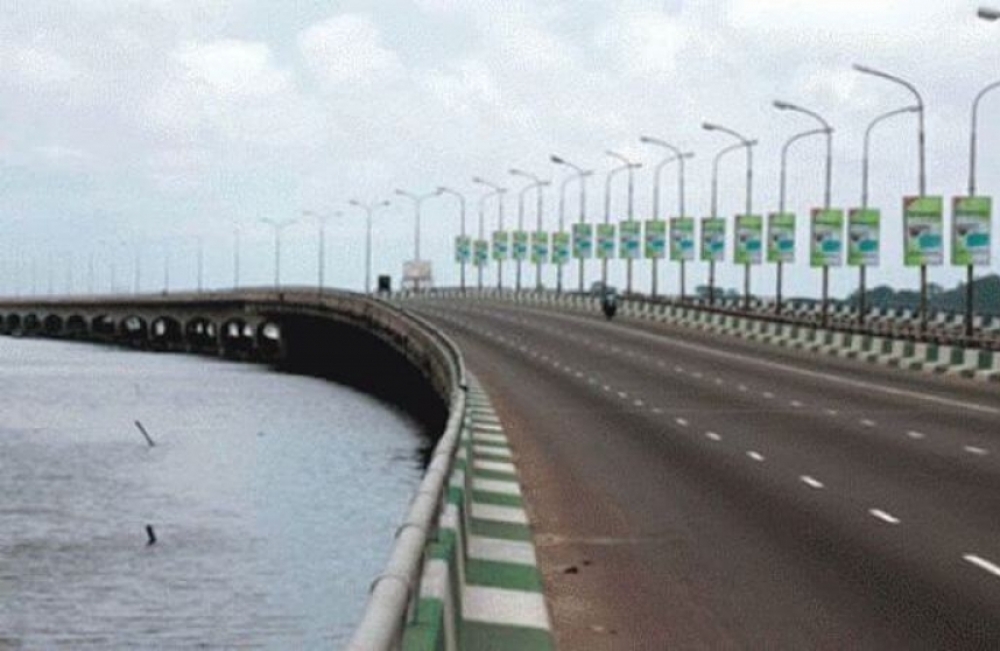
With regard to the defective underwater structural elements, the Federal Government is at the final stage of determining the appropriate intervention for the repair of the affected elements.
14. On the flooded section of the Lagos-Ibadan Road: Work has commenced on the affected section. There are also several flooded sections on federal roads across the six geopolitical zones, largely occasioned by excessive flooding and the effects of climate change. The Federal Government is identifying and marking these sections for immediate attention.
15. On the First and Second Niger Bridges:
Intervention work is ongoing on the approach roads to the Second Niger Bridge damaged by flood and the work is progressing very well. The First Niger Bridge has been closed to traffic to enable immediate repair works. Contractor has mobilized to site and comprehensive rehabilitation of the bridge has started. From Summit Junction to the First Niger Bridge, massive rehabilitation work is also ongoing using reinforced concrete pavement.
16. The Honourable Minister wishes to commend the President of the Federal Republic of Nigeria, His Excellency Bola Ahmed Tinubu, GCFR, for the massive work being undertaken on the nation’s roads since the administration assumed office in 2023.
17. It is important to state that when the present administration came into office, there was hardly any part of the country where one could travel for an hour without encountering significant challenges on the road network. The condition of the country’s roads and bridges was a major national infrastructure challenge.
18. Rather than shy away from the problem, the administration of President Bola Ahmed Tinubu made the nation’s road network a priority. Virtually every part of the country became a priority, and the Federal Government, through the Federal Ministry of Works, Regional Commissions, Parastatals and other MDA’s has continued to respond extensively to these challenges.
19. The Federal Government is currently working on over 80 percent of the inherited federal roads, an unprecedented level of intervention in the country’s road infrastructure.
20. We ask the public to understand the enormous challenges inherited on our roads and bridges and to take note not only of the problems being solved, but also of the permanent solutions being introduced.
21. A major part of this new approach is the use of reinforced concrete pavement, designed to significantly extend the lifespan of major roads. These roads are expected to last between 50 and 100 years. This means that roads being constructed under President Bola Ahmed Tinubu’s administration are being designed with future generations in mind, rather than simply providing temporary solutions to today’s problems. And this is a complete departure from the past, when roads often deteriorated only a few years after completion, resulting in a continuous cycle of reconstruction and expenditure.
22. We appreciate the concerns of Nigerians over the condition of some roads presently and the difficulties faced by motorists and commuters who cannot move easily from one point to another. Those concerns are legitimate, and the Federal Government is listening. But Nigerians should also recognise the enormous scale of the problems inherited and the amount of work currently being undertaken across the country.
23. It is simply impossible to resolve every road challenge accumulated over many years of neglect by the past administrations within three years. What is important is that the government is working, the government is responding, and the government is putting permanent solutions in place.
25. We appreciate members of the public who send situation reports on failed roads and other infrastructure challenges. These reports help the Ministry identify areas requiring urgent attention. However, we also appeal to members of the public to report when such problems have been addressed, just as they report when they occur.
24. We are aware of situations where photographs and reports of road challenges continue to circulate on social media even after the Federal Government has intervened and resolved the particular problem.
25. However, the Ministry will continue to respond as rapidly as possible to genuine reports and concerns from Nigerians.
26. It is also important to note that we have compiled a comprehensive record of all inherited, ongoing and intervention projects across the country which is available to the public. This is to ensure that Nigerians have access to information on the infrastructure projects being undertaken nationwide and can fully participate in and appreciate the infrastructure revolution of President Bola Ahmed Tinubu’s administration.

UMAHI ORDERS IMMEDIATE EMERGENCY INTERVENTION ON BENIN-ASABA ROAD, AND SOME OTHER CRITICAL FEDERAL ROADS The Honourable Minister of Works, Senator Engr. David Nweze Umahi, CON, has directed the immediate deployment of major contractors to all three sections of the Benin-Asaba Federal Road to restore the failed sections and bring an end to the suffering of motorists and other road users. This is because, the situation on the concessioned Benin-Asaba Road has reached a point where the overall public interest must take precedence over the existing concession agreement. Recall that the Honourable Minister of Works was on the Benin-Asaba Road about seven days ago, where he assembled a number of contractors and directed them to prepare for immediate palliative intervention on the affected sections of the road at no cost to the concessionaire. In line with the Concession agreement which requires that before the Federal Government could intervene, the permission of the concessionaire must be required, and that permission was not granted to federal government. The Minister subsequently proposed three options to the concessionaire, any one of which would have enabled the Federal Government to move in and address the worsening condition of the road. Unfortunately, none of the options was accepted by the concessionaire. Immediately after the Minister left Asaba, the already limited equipment deployed to the road by the concessionaire was further reduced to just one, worsening the situation and increasing the suffering of motorists and other road users. While the Minister takes responsibility for the concerns and suffering of Nigerians using the road, it is important to state that the concessionaire has also not taken the suffering of Edo people and travelling public sufficiently into consideration by declining all the options put forward by the Federal Government. The concessionaire continues to rely on the terms of the concession agreement entered into by the previous administration, an agreement which weighs heavily against the Federal Government’s ability to intervene quickly in the interest of the public in a situation like this. In view of this situation, the Honourable Minister of Works has directed the immediate deployment of major contractors within the corridor to all three sections of the Benin-Asaba Road to restore the failed sections and bring relief to the people, with the cost of the emergency intervention being borne by the Federal Government. The Honourable Minister has also directed immediate redesign of the entire route to be rebuilt with reinforced concrete pavement. The public should therefore take note that immediate action is underway to restore every failed section of the Benin-Asaba Road and subsequently rehabilitate the entire sections of the road using reinforced concrete pavement. 2. On the Benin-Sapele Road: 3. On Ifaki(Ekiti) - Kabba (Kogi) Road: 4. On the Sokoto-Zamfara-Katsina Road: This is an inherited project involving the dualisation of approximately 350 kilometres, which translates to about 700 kilometers. The project has since been redesigned and is currently ongoing and most sections are being reconstructed using reinforced concrete pavement. From the Sokoto axis towards Zamfara, over 50 kilometres of one carriageway have been fully completed with reinforced concrete pavement. From Zamfara to Katsina, some sections have been completed and palliative works have been ordered over the sections that have not been reconstructed. However, the pace of work slowed down due to the redesign and rephasing of the project. The contractors currently engaged on the road include CBC, SETRACO, Triacta and Mothercat. They are being remobilised to return to site and complete the outstanding works. 5. On the Abuja-Kaduna-Zaria-Kano Road: The Federal Government took over the Road project and has currently completed the 118-kilometer mostly on reinforced concrete pavement on lot 1. The Lot 2, which covers 164 kilometres, is over 60 percent completed on reinforced concrete pavement. The Federal Government has also introduced solar-powered light on the entire route of Abuja-Kaduna-Zaria - Kano to improve visibility during night travel and enhance the overall security situation on the route. The entire project is scheduled for completion by December 2026. 6. On Bauchi-Jigawa Road: Triacta Nigeria Limited has been mobilised to carry out the necessary interventions on some failed sections and work is currently ongoing in those failed sections. 7. On the Sagamu-Ore Road: 48 Kilometers of the 96-kilometre road have already been completed using reinforced concrete pavement. There is also a 24-kilometre section around Ore which was abandoned by the previous contractor. The Federal Government has directed its immediate restoration to ensure seamless travel. Solar lights are being installed in the entire 96kilometer of the road. 8. On Flooded Sections on Sagamu-Ore-Benin Road: The flooded sections on the same corridor between Sagamu-Ore-Benin Road, as well as other flooded sections in Ondo State, are being designed for emergency procurement and intervention. 9. On the East-West Road: 10. On the Abuja-Lokoja Road: 11. On the Lokoja-Benin-Warri Road: The President has directed a complete redesign and procurement of the 400-kilometre dualised route covering the uncompleted sections, using reinforced concrete pavement, while palliative works will continue with the contractors currently on the road. 12. On Carter Bridge: 13. On the Third Mainland Bridge: 14. On the flooded section of the Lagos-Ibadan Road: Work has commenced on the affected section. There are also several flooded sections on federal roads across the six geopolitical zones, largely occasioned by excessive flooding and the effects of climate change. The Federal Government is identifying and marking these sections for immediate attention. 15. On the First and Second Niger Bridges: 16. The Honourable Minister wishes to commend the President of the Federal Republic of Nigeria, His Excellency Bola Ahmed Tinubu, GCFR, for the massive work being undertaken on the nation’s roads since the administration assumed office in 2023. 17. It is important to state that when the present administration came into office, there was hardly any part of the country where one could travel for an hour without encountering significant challenges on the road network. The condition of the country’s roads and bridges was a major national infrastructure challenge. 18. Rather than shy away from the problem, the administration of President Bola Ahmed Tinubu made the nation’s road network a priority. Virtually every part of the country became a priority, and the Federal Government, through the Federal Ministry of Works, Regional Commissions, Parastatals and other MDA’s has continued to respond extensively to these challenges. 19. The Federal Government is currently working on over 80 percent of the inherited federal roads, an unprecedented level of intervention in the country’s road infrastructure. 20. We ask the public to understand the enormous challenges inherited on our roads and bridges and to take note not only of the problems being solved, but also of the permanent solutions being introduced. 21. A major part of this new approach is the use of reinforced concrete pavement, designed to significantly extend the lifespan of major roads. These roads are expected to last between 50 and 100 years. This means that roads being constructed under President Bola Ahmed Tinubu’s administration are being designed with future generations in mind, rather than simply providing temporary solutions to today’s problems. And this is a complete departure from the past, when roads often deteriorated only a few years after completion, resulting in a continuous cycle of reconstruction and expenditure. 22. We appreciate the concerns of Nigerians over the condition of some roads presently and the difficulties faced by motorists and commuters who cannot move easily from one point to another. Those concerns are legitimate, and the Federal Government is listening. But Nigerians should also recognise the enormous scale of the problems inherited and the amount of work currently being undertaken across the country. 23. It is simply impossible to resolve every road challenge accumulated over many years of neglect by the past administrations within three years. What is important is that the government is working, the government is responding, and the government is putting permanent solutions in place. 25. We appreciate members of the public who send situation reports on failed roads and other infrastructure challenges. These reports help the Ministry identify areas requiring urgent attention. However, we also appeal to members of the public to report when such problems have been addressed, just as they report when they occur. 24. We are aware of situations where photographs and reports of road challenges continue to circulate on social media even after the Federal Government has intervened and resolved the particular problem.
The Governors of Edo and Delta States, the Niger Delta Development Commission (NDDC), and the Federal Government are currently engaged in interventions on different sections of the road to restore the entire route. While some sections are receiving palliative attention, permanent works are also ongoing on other sections.
The Federal Government is engaging both the contractor; Gamji Nigeria Company Limited, and Dangote PLC on immediate emergency and permanent intervention on the most failed sections of the road, while efforts are being made to financially mobilise the company for more extensive permanent work to commence on the axis.
Some failed and critical sections, including defective sections of bridges along the East-West Road, are being marked out for emergency procurement and intervention.
Several contracts are ongoing along the route, while the three critical sections currently without contracts are being procured for emergency intervention.
While the Federal Government continues to undertake weekly maintenance of the underwater elements of the bridge. The site has also been handed over to the contractor, CCECC, for the construction of a permanent new bridge, and work has commenced.
With regard to the defective underwater structural elements, the Federal Government is at the final stage of determining the appropriate intervention for the repair of the affected elements.
Intervention work is ongoing on the approach roads to the Second Niger Bridge damaged by flood and the work is progressing very well. The First Niger Bridge has been closed to traffic to enable immediate repair works. Contractor has mobilized to site and comprehensive rehabilitation of the bridge has started. From Summit Junction to the First Niger Bridge, massive rehabilitation work is also ongoing using reinforced concrete pavement.
25. However, the Ministry will continue to respond as rapidly as possible to genuine reports and concerns from Nigerians.
26. It is also important to note that we have compiled a comprehensive record of all inherited, ongoing and intervention projects across the country which is available to the public. This is to ensure that Nigerians have access to information on the infrastructure projects being undertaken nationwide and can fully participate in and appreciate the infrastructure revolution of President Bola Ahmed Tinubu’s administration.
Third Mainland Bridge Closure For Maintenance Tests Now Shifted To August 24 * As FG Directs Immediate Deployment Of Trucks To 300-Capacity Trailer Park As Part Of Efforts To Decongest Oshodi-Apapa Expressway The three day closure of the Third Mainland Bridge for Investigative Maintenance Test earlier slated to begin on July 27, 2018, has been shifted to August 24 the Minister of Power, Works and Housing, Mr. Babatunde Fashola SAN, has announced. The Shutdown, earlier scheduled to last from July 27 to July 30 will now last from August 24 to August 26, 2018. In a Press Statement, Fashola said the shift in the date was arrived at after due consultations with the Lagos State Government and wide deliberations with other relevant stakeholders adding that the date shift was done “in order to give succour and relief to the people of Lagos State and other inter-state road users and support the efforts of the State Government." On the efforts to decongest the Oshodi-Apapa Expressway, Fashola said, in the short term, he has directed the immediate deployment of trucks to the trailer park being constructed by the Ministry with the capacity to accommodate about 300 trucks while construction works for the shoreline protection continues. Also, the on-going palliative work on the sections of the Apapa-Oshodi Road , the on-going construction of the road leading to the Apapa Port from Ijora will soon be completed while the main exit route through Tincan – Oshodi – Oworonshoki is under procurement for award. When completed, the project will enable free flow of traffic in the axis. Also following the visit of the Vice President, Professor Yemi Osinbajo, to Lagos in connection with the Apapa Port Gridlock, the Federal Government has said, as a short term measure, a call up system in the control of truck movement would be introduced adding that it would be initially manual while the long term digital and ICT based system would be developed and deployed. The Association of Truck Owners has agreed to manage the manual system with their members who are truck operators, government also said. ...
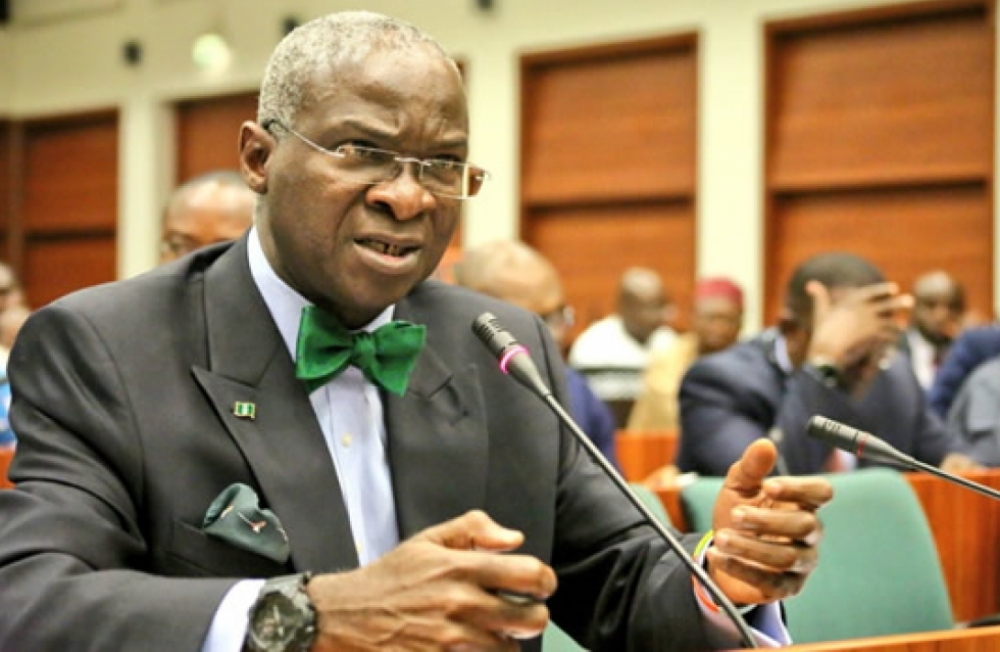
My Directives On Improved Service Delivery In The Power Sector Went To Legal Entities, Not To An Interloper - Fashola Before fiction becomes fact for lack of a response, I feel obliged to respond to SOME, NOT ALL of the allegations credited to one Mr. Sunday Oduntan who presents himself as Executive Director, Research and Advocacy of the Association of Electricity Distributors (ANED), which he made in response to my directives to NERC (the regulator) and BPE/NBET as contracting parties to the DisCos. Throughout my Press Statement which contained the directives, I referred copiously to the provisions of the Electric Power Sector Reform Act (EPSRA) which is the law that regulates the power sector. I referred to DisCos in their capacities as licensees. Mr. Oduntan should tell members of the public if ANED is a licensee. He should tell the public whether he is an investor in a DisCo and in which DisCo he has invested and what he invested. He should tell members of the public that I walked him out of our monthly meeting because he has no capacity to attend and he was not invited. If ANED is not a licensee, who is ANED ? An NGO? If so, they should listen to consumers because Nothing is Going On about poor service. The BPE, NBET and NERC, to whom my directives were made, contracted individually with DisCos not as an association. Any right thinking and well-meaning person knows that power supply has economic consequences and has political relevance. However to suggest therefore that my directives were political, turns reality on its head; because for the past 20 months, in all my public briefings at monthly meetings with the DisCos, these same issues of service delivery of meters, estimated billings, investment in distribution equipment by DisCos have dominated my remarks. However, assuming this was not so, do the onset of elections preclude the quest for better service or continued Governance? If Mr. Oduntan represents the DisCos who, for reasons best known to them, choose not to act to save their investments, that is a matter of choice for them. I do not recognize him because the law that guides my functions does not recognize him. His statement that no directives from me will save the power sector from collapse, is consistent with the views of someone who has no skin in the game. It is perhaps a Freudian revelation of the mindset of those he represents, whoever they may be. It is a sickening parallel of the Biblical story of the woman who tried to steal a baby before the great King Solomon, and asked them to divide the child. It is revealing of the mindset of a saboteur not a builder, and he would do very well to acquaint himself and advise his co-travellers about the consequences of sabotaging the economy under our Laws. While the DisCos reserve the right to choose to affiliate with that view or disown it, I am optimistic that the power sector will prosper in spite of Oduntan-minded personalities. As for the allegation that figures of power generation and distribution released by me are not true, the taste of the pudding lies with those who eat it. Electricity consumers know what their experience was in 2015, 2016, 2017 and today. These figures have been released many months back when we reached those milestones as part of my monthly report and roadmap of incremental power. It is clearly Oduntan-like, to keep quiet at the time, when there were no directives, and to suddenly wake up many months later to dispute what he did not contest. It is obvious that the warning lights of compliance necessity are blinking, and those he represents do not like the colour. Another Oduntan-minded interpretation of my directive is that it is an attempt to demonize the DisCos. Far from it. If the DisCos connect with their consumers, they will hear from them first-hand, how traumatized they feel about load shedding, absence of meters and estimated billing. The GenCos, who are short paid because the DisCos under-remit in spite of high estimated billing to consumers, will tell DisCos how they feel. My directives seek to rectify these problems because I believe they can be rectified. If Oduntan truly speaks for the DisCos, which I doubt, he should ignore the messenger (Fashola) and advise those for whom he acts as surrogate, to focus on the message. The message is simple: Electricity consumers (which include Fashola), want better service; NBET wants its money; about N800 billion, so she can pay GenCos; If DisCos can prove that FGN owes more than what we admit, they should deduct (N72 billion) from N800 billion and pay the remaining N728 billion which they owe NBET; DisCos should respond to the query from the Ministry of Power, Works and Housing as to why 408 feeders, which have a capacity to deliver 5,756MW of power to consumers only carry 444MW because of faulty lines, bad equipment and load shedding? Oduntan should interprete this and tell the public whether it is the Ministry who should fix these lines and whether the unused energy will not reach the consumers if the feeders are put to use. These are part of the subject of my directives to NERC to address deliberate load shedding. Oduntan should advise his clients to spend the money used in publishing media responses to fix these problems to restore bad lines, and provide transformers and meters to their consumers. That is what electricity consumers want, Better Service. Babatunde Raji Fashola, SAN Honourable Minister of Power, Works and Housing Friday 20th July 2018 ...
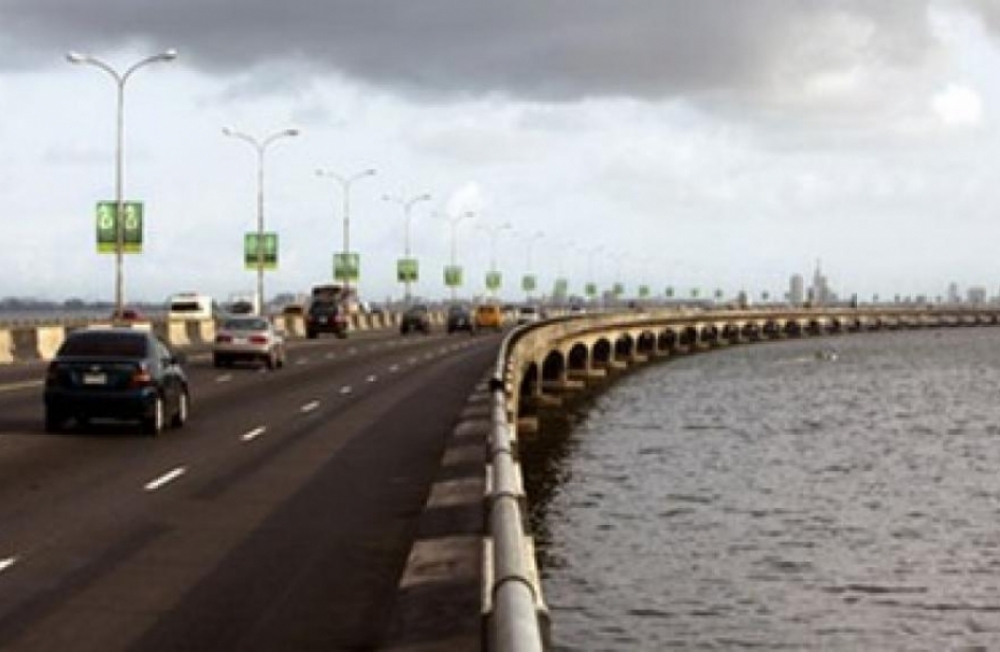
Third Mainland Bridge To Be Shut For Three Days For Assessment * Three-day closure begins from July 27 while repairs begin after report of assessment is received to determine extent of deterioration * “We will try to reduce the period of closure as much as possible. But this is ultimately a choice between peoples’ safety”, says Fashola * “There was a signed statement from my office and it did not contain 27 months”, he maintains The Third Mainland Bridge in Lagos will be closed to traffic for three days from July 27, 2018, for investigative work to be conducted to assess the current condition of the Bridge, the Minister of Power, Works and Housing, Mr. Babatunde Fashola SAN, has explained in Abuja. Fashola, who spoke, Monday, as Guest on the Channels Television breakfast programme, Sunrise Daily in the Federal Capital Territory, said the shutdown was necessary in order to ascertain whether there had been any material deterioration between the period the first procurement for maintenance of the Bridge was approved and now adding that the three days would be used “to really do an examination just to be sure that there has been no material deterioration beyond what we procured”. The Minister, who debunked the misreporting in some sections of the media that the Bridge would be closed for 27 months, declared, “The first message we sent out was that it was going to be closed for three days from the 27th of July”, adding that the duration of maintenance would only be determined after the report of the investigative work has been received and extent of deterioration known. He said the investigation would have been carried out earlier but the need to reduce the inconveniences that would accompany the closure compelled government to shift the time to a more convenient period when children would be on vacation and when fewer vehicles were likely to be on the Bridge. “We thought that if we allowed the children to go on vacation first it would reduce the number of vehicles that needed necessarily to be on the road and ultimately reduce the amount of inconvenience. But now we are torn between maintenance and safety and peoples’ convenience”, Fashola said adding, “Essentially the first three days at the end of this month, as issued in our Press Statement, is for investigative work to be conducted to assess the current condition”. The Minister, who said it was only after the assessment of the amount of maintenance work involved that government engineers and the contracting firms would lay out the plan of work, added, “I think it is later in the year or early next year that the repairs will then start”, pointing out that some of the equipment and materials have to be imported. Noting that the repairs would “imminently compel some closure”, Fashola, who recalled that the Bridge had been closed for repairs in the past when he was Governor, pointed out that it was shut down for 12 weeks, adding, “We will try to reduce the period of closure as much as possible. But this is ultimately a choice between peoples’ safety; that bridge must not collapse and it needs maintenance”. “It has been built now going up to a period of 30 years and if you recall, the maintenance that was done at that time was not completed because the budget was cut and that was why they did it in phases. So we are back to what we should have done before. It is costing more but it needs to be done”, he said. Reiterating that he was currently not in the position to say how long the maintenance would last until the receipt of the report from the investigation and the amount of damage determined, declared, “For now, the first three days is what I can speak of and it is when we get the report and determine the extent of damage that we will now come back to the public and tell them and say definitively how long it will be”. “I am not in the position to say it now until that report comes back to us. But what will happen at the end of July is three days”, he said, adding that those peddling the 27 months rumour about the duration of repairs might have mistaken the “July 27th” date mentioned in the government Press Statement for 27 months. “There was a signed statement from my office and it did not contain 27 months”, he said. Fashola, who admonished the Media, both traditional and social, to endeavour to be more accurate in their reportage especially of such sensitive issues, expressed regrets that many of the nation’s public assets have remained unmaintained for decades citing the Ijora Bridge which he recalled collapsed some time ago due to lack of maintenance after 40 years plus. ...
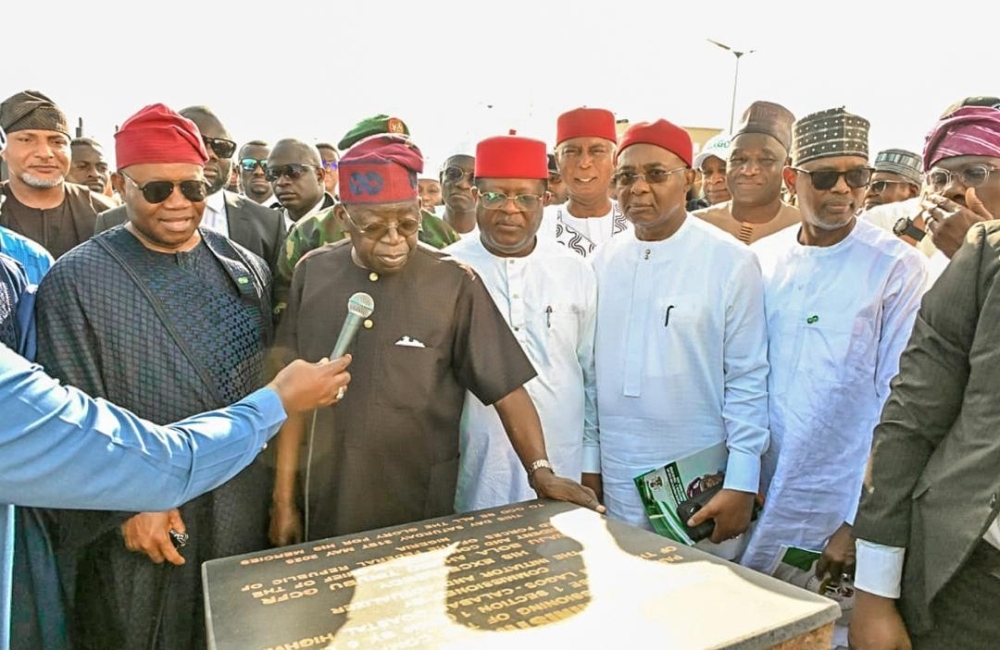
DRIVING NIGERIA’S FUTURE: CELEBRATING TWO YEARS OF TRANSFORMATIVE LEADERSHIP AND THE LAGOS-CALABAR COASTAL HIGHWAY MILESTONE
DRIVING NIGERIA’S FUTURE: CELEBRATING TWO YEARS OF TRANSFORMATIVE LEADERSHIP AND THE LAGOS-CALABAR COASTAL HIGHWAY MILESTONE
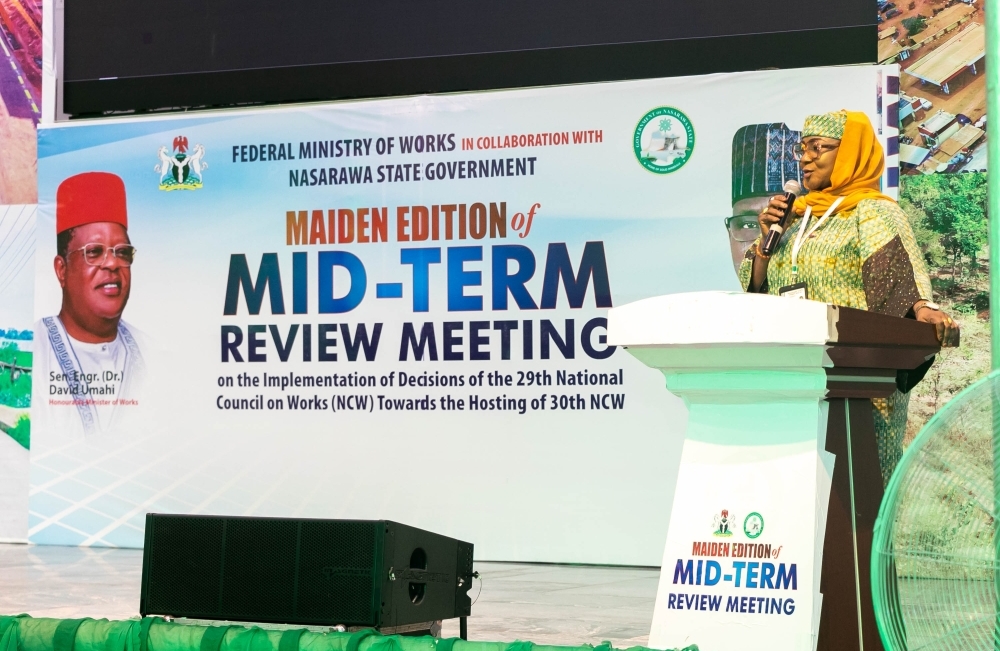
MID -TERM REVIEW MEETING ON THE IMPLIMENTATION OF THE DECISIONS REACHED AT THE 29TH NATIONAL COUNCIL ON WORKS (NCW) DAY 1
MID -TERM REVIEW MEETING ON THE IMPLIMENTATION OF THE DECISIONS REACHED AT THE 29TH NATIONAL COUNCIL ON WORKS (NCW) DAY 1