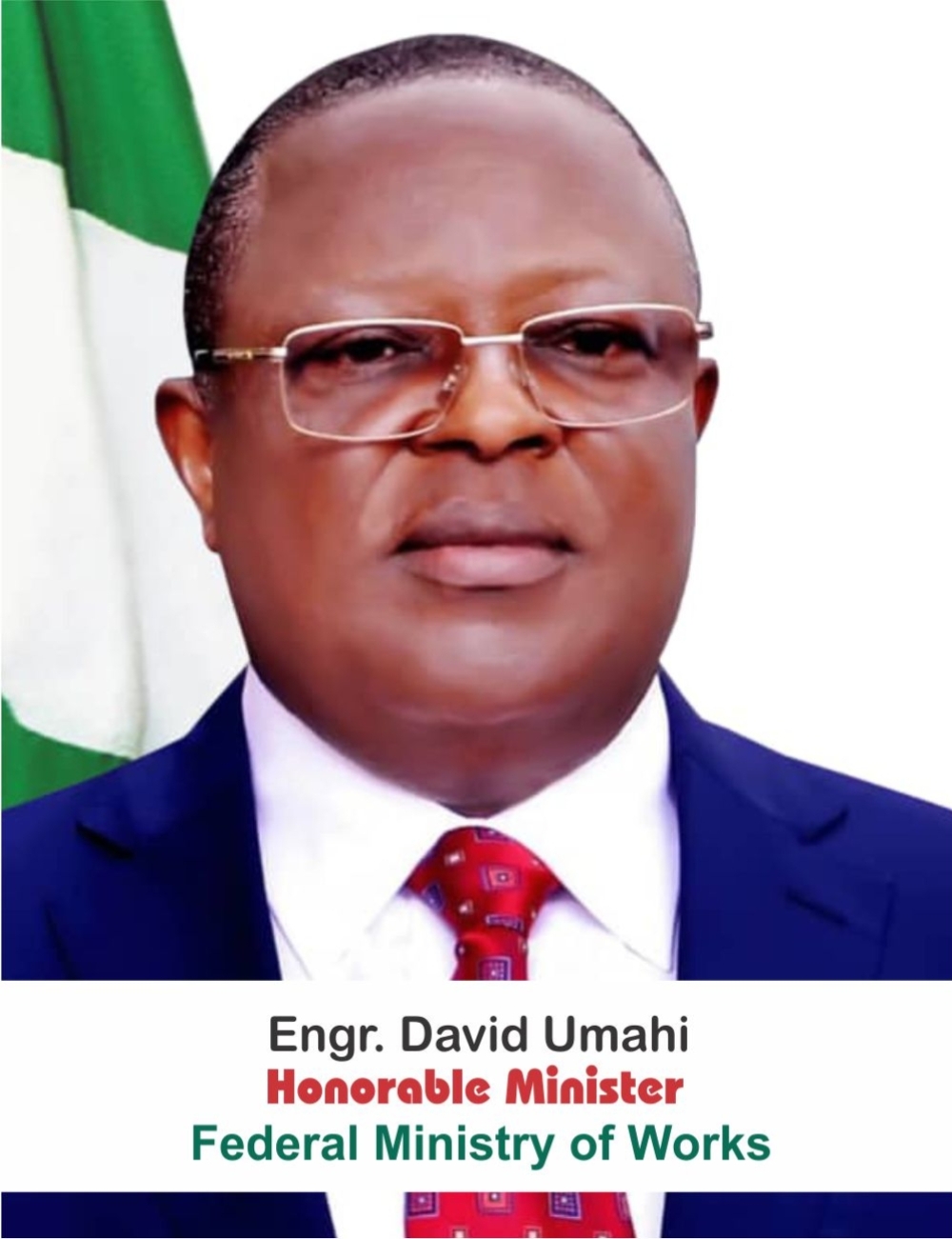
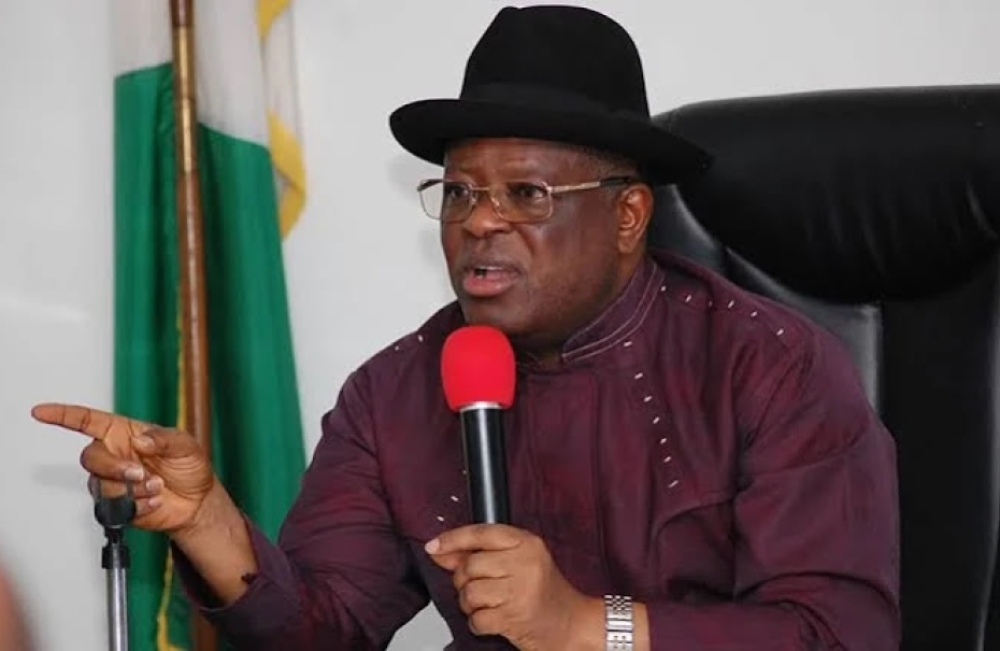
UMAHI ORDERS IMMEDIATE EMERGENCY INTERVENTION ON BENIN-ASABA ROAD, AND SOME OTHER CRITICAL FEDERAL ROADS
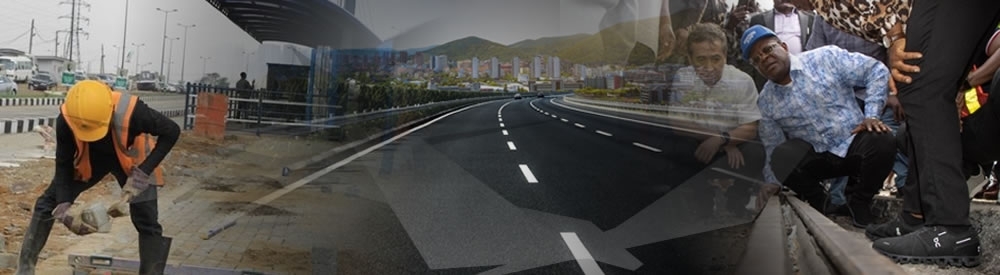
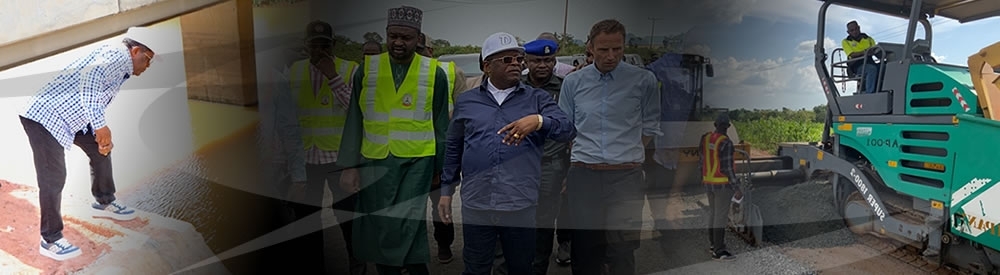
The Honourable Minister of Works, Senator Engr. David Nweze Umahi, CON, has directed the immediate deployment of major contractors to all three sections of the Benin-Asaba Federal Road to restore the failed sections and bring an end to the suffering of motorists and other road users.
This is because, the situation on the concessioned Benin-Asaba Road has reached a point where the overall public interest must take precedence over the existing concession agreement.
Recall that the Honourable Minister of Works was on the Benin-Asaba Road about seven days ago, where he assembled a number of contractors and directed them to prepare for immediate palliative intervention on the affected sections of the road at no cost to the concessionaire. In line with the Concession agreement which requires that before the Federal Government could intervene, the permission of the concessionaire must be required, and that permission was not granted to federal government.
The Minister subsequently proposed three options to the concessionaire, any one of which would have enabled the Federal Government to move in and address the worsening condition of the road. Unfortunately, none of the options was accepted by the concessionaire. Immediately after the Minister left Asaba, the already limited equipment deployed to the road by the concessionaire was further reduced to just one, worsening the situation and increasing the suffering of motorists and other road users.
While the Minister takes responsibility for the concerns and suffering of Nigerians using the road, it is important to state that the concessionaire has also not taken the suffering of Edo people and travelling public sufficiently into consideration by declining all the options put forward by the Federal Government. The concessionaire continues to rely on the terms of the concession agreement entered into by the previous administration, an agreement which weighs heavily against the Federal Government’s ability to intervene quickly in the interest of the public in a situation like this.
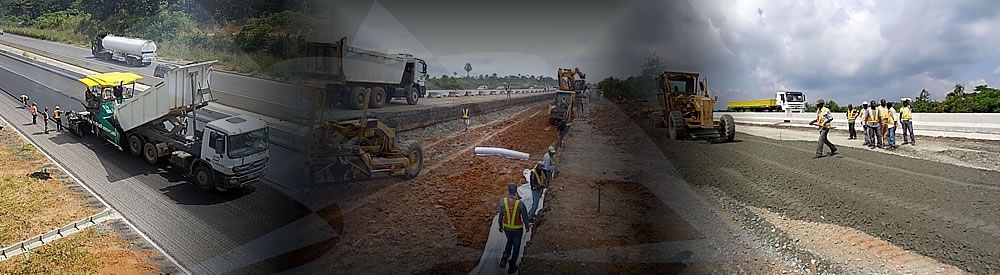
In view of this situation, the Honourable Minister of Works has directed the immediate deployment of major contractors within the corridor to all three sections of the Benin-Asaba Road to restore the failed sections and bring relief to the people, with the cost of the emergency intervention being borne by the Federal Government. The Honourable Minister has also directed immediate redesign of the entire route to be rebuilt with reinforced concrete pavement. The public should therefore take note that immediate action is underway to restore every failed section of the Benin-Asaba Road and subsequently rehabilitate the entire sections of the road using reinforced concrete pavement.
2. On the Benin-Sapele Road:
The Governors of Edo and Delta States, the Niger Delta Development Commission (NDDC), and the Federal Government are currently engaged in interventions on different sections of the road to restore the entire route. While some sections are receiving palliative attention, permanent works are also ongoing on other sections.
3. On Ifaki(Ekiti) - Kabba (Kogi) Road:
The Federal Government is engaging both the contractor; Gamji Nigeria Company Limited, and Dangote PLC on immediate emergency and permanent intervention on the most failed sections of the road, while efforts are being made to financially mobilise the company for more extensive permanent work to commence on the axis.
4. On the Sokoto-Zamfara-Katsina Road: This is an inherited project involving the dualisation of approximately 350 kilometres, which translates to about 700 kilometers. The project has since been redesigned and is currently ongoing and most sections are being reconstructed using reinforced concrete pavement. From the Sokoto axis towards Zamfara, over 50 kilometres of one carriageway have been fully completed with reinforced concrete pavement. From Zamfara to Katsina, some sections have been completed and palliative works have been ordered over the sections that have not been reconstructed. However, the pace of work slowed down due to the redesign and rephasing of the project. The contractors currently engaged on the road include CBC, SETRACO, Triacta and Mothercat. They are being remobilised to return to site and complete the outstanding works.
5. On the Abuja-Kaduna-Zaria-Kano Road: The Federal Government took over the Road project and has currently completed the 118-kilometer mostly on reinforced concrete pavement on lot 1. The Lot 2, which covers 164 kilometres, is over 60 percent completed on reinforced concrete pavement. The Federal Government has also introduced solar-powered light on the entire route of Abuja-Kaduna-Zaria - Kano to improve visibility during night travel and enhance the overall security situation on the route. The entire project is scheduled for completion by December 2026.
6. On Bauchi-Jigawa Road: Triacta Nigeria Limited has been mobilised to carry out the necessary interventions on some failed sections and work is currently ongoing in those failed sections.
7. On the Sagamu-Ore Road: 48 Kilometers of the 96-kilometre road have already been completed using reinforced concrete pavement. There is also a 24-kilometre section around Ore which was abandoned by the previous contractor. The Federal Government has directed its immediate restoration to ensure seamless travel. Solar lights are being installed in the entire 96kilometer of the road.
8. On Flooded Sections on Sagamu-Ore-Benin Road: The flooded sections on the same corridor between Sagamu-Ore-Benin Road, as well as other flooded sections in Ondo State, are being designed for emergency procurement and intervention.
9. On the East-West Road:
Some failed and critical sections, including defective sections of bridges along the East-West Road, are being marked out for emergency procurement and intervention.
10. On the Abuja-Lokoja Road:
Several contracts are ongoing along the route, while the three critical sections currently without contracts are being procured for emergency intervention.
11. On the Lokoja-Benin-Warri Road: The President has directed a complete redesign and procurement of the 400-kilometre dualised route covering the uncompleted sections, using reinforced concrete pavement, while palliative works will continue with the contractors currently on the road.
12. On Carter Bridge:
While the Federal Government continues to undertake weekly maintenance of the underwater elements of the bridge. The site has also been handed over to the contractor, CCECC, for the construction of a permanent new bridge, and work has commenced.
13. On the Third Mainland Bridge:
With regard to the defective underwater structural elements, the Federal Government is at the final stage of determining the appropriate intervention for the repair of the affected elements.
14. On the flooded section of the Lagos-Ibadan Road: Work has commenced on the affected section. There are also several flooded sections on federal roads across the six geopolitical zones, largely occasioned by excessive flooding and the effects of climate change. The Federal Government is identifying and marking these sections for immediate attention.
15. On the First and Second Niger Bridges:
Intervention work is ongoing on the approach roads to the Second Niger Bridge damaged by flood and the work is progressing very well. The First Niger Bridge has been closed to traffic to enable immediate repair works. Contractor has mobilized to site and comprehensive rehabilitation of the bridge has started. From Summit Junction to the First Niger Bridge, massive rehabilitation work is also ongoing using reinforced concrete pavement.
16. The Honourable Minister wishes to commend the President of the Federal Republic of Nigeria, His Excellency Bola Ahmed Tinubu, GCFR, for the massive work being undertaken on the nation’s roads since the administration assumed office in 2023.
17. It is important to state that when the present administration came into office, there was hardly any part of the country where one could travel for an hour without encountering significant challenges on the road network. The condition of the country’s roads and bridges was a major national infrastructure challenge.
18. Rather than shy away from the problem, the administration of President Bola Ahmed Tinubu made the nation’s road network a priority. Virtually every part of the country became a priority, and the Federal Government, through the Federal Ministry of Works, Regional Commissions, Parastatals and other MDA’s has continued to respond extensively to these challenges.
19. The Federal Government is currently working on over 80 percent of the inherited federal roads, an unprecedented level of intervention in the country’s road infrastructure.
20. We ask the public to understand the enormous challenges inherited on our roads and bridges and to take note not only of the problems being solved, but also of the permanent solutions being introduced.
21. A major part of this new approach is the use of reinforced concrete pavement, designed to significantly extend the lifespan of major roads. These roads are expected to last between 50 and 100 years. This means that roads being constructed under President Bola Ahmed Tinubu’s administration are being designed with future generations in mind, rather than simply providing temporary solutions to today’s problems. And this is a complete departure from the past, when roads often deteriorated only a few years after completion, resulting in a continuous cycle of reconstruction and expenditure.
22. We appreciate the concerns of Nigerians over the condition of some roads presently and the difficulties faced by motorists and commuters who cannot move easily from one point to another. Those concerns are legitimate, and the Federal Government is listening. But Nigerians should also recognise the enormous scale of the problems inherited and the amount of work currently being undertaken across the country.
23. It is simply impossible to resolve every road challenge accumulated over many years of neglect by the past administrations within three years. What is important is that the government is working, the government is responding, and the government is putting permanent solutions in place.
25. We appreciate members of the public who send situation reports on failed roads and other infrastructure challenges. These reports help the Ministry identify areas requiring urgent attention. However, we also appeal to members of the public to report when such problems have been addressed, just as they report when they occur.
24. We are aware of situations where photographs and reports of road challenges continue to circulate on social media even after the Federal Government has intervened and resolved the particular problem.
25. However, the Ministry will continue to respond as rapidly as possible to genuine reports and concerns from Nigerians.
26. It is also important to note that we have compiled a comprehensive record of all inherited, ongoing and intervention projects across the country which is available to the public. This is to ensure that Nigerians have access to information on the infrastructure projects being undertaken nationwide and can fully participate in and appreciate the infrastructure revolution of President Bola Ahmed Tinubu’s administration.

UMAHI ORDERS IMMEDIATE EMERGENCY INTERVENTION ON BENIN-ASABA ROAD, AND SOME OTHER CRITICAL FEDERAL ROADS The Honourable Minister of Works, Senator Engr. David Nweze Umahi, CON, has directed the immediate deployment of major contractors to all three sections of the Benin-Asaba Federal Road to restore the failed sections and bring an end to the suffering of motorists and other road users. This is because, the situation on the concessioned Benin-Asaba Road has reached a point where the overall public interest must take precedence over the existing concession agreement. Recall that the Honourable Minister of Works was on the Benin-Asaba Road about seven days ago, where he assembled a number of contractors and directed them to prepare for immediate palliative intervention on the affected sections of the road at no cost to the concessionaire. In line with the Concession agreement which requires that before the Federal Government could intervene, the permission of the concessionaire must be required, and that permission was not granted to federal government. The Minister subsequently proposed three options to the concessionaire, any one of which would have enabled the Federal Government to move in and address the worsening condition of the road. Unfortunately, none of the options was accepted by the concessionaire. Immediately after the Minister left Asaba, the already limited equipment deployed to the road by the concessionaire was further reduced to just one, worsening the situation and increasing the suffering of motorists and other road users. While the Minister takes responsibility for the concerns and suffering of Nigerians using the road, it is important to state that the concessionaire has also not taken the suffering of Edo people and travelling public sufficiently into consideration by declining all the options put forward by the Federal Government. The concessionaire continues to rely on the terms of the concession agreement entered into by the previous administration, an agreement which weighs heavily against the Federal Government’s ability to intervene quickly in the interest of the public in a situation like this. In view of this situation, the Honourable Minister of Works has directed the immediate deployment of major contractors within the corridor to all three sections of the Benin-Asaba Road to restore the failed sections and bring relief to the people, with the cost of the emergency intervention being borne by the Federal Government. The Honourable Minister has also directed immediate redesign of the entire route to be rebuilt with reinforced concrete pavement. The public should therefore take note that immediate action is underway to restore every failed section of the Benin-Asaba Road and subsequently rehabilitate the entire sections of the road using reinforced concrete pavement. 2. On the Benin-Sapele Road: 3. On Ifaki(Ekiti) - Kabba (Kogi) Road: 4. On the Sokoto-Zamfara-Katsina Road: This is an inherited project involving the dualisation of approximately 350 kilometres, which translates to about 700 kilometers. The project has since been redesigned and is currently ongoing and most sections are being reconstructed using reinforced concrete pavement. From the Sokoto axis towards Zamfara, over 50 kilometres of one carriageway have been fully completed with reinforced concrete pavement. From Zamfara to Katsina, some sections have been completed and palliative works have been ordered over the sections that have not been reconstructed. However, the pace of work slowed down due to the redesign and rephasing of the project. The contractors currently engaged on the road include CBC, SETRACO, Triacta and Mothercat. They are being remobilised to return to site and complete the outstanding works. 5. On the Abuja-Kaduna-Zaria-Kano Road: The Federal Government took over the Road project and has currently completed the 118-kilometer mostly on reinforced concrete pavement on lot 1. The Lot 2, which covers 164 kilometres, is over 60 percent completed on reinforced concrete pavement. The Federal Government has also introduced solar-powered light on the entire route of Abuja-Kaduna-Zaria - Kano to improve visibility during night travel and enhance the overall security situation on the route. The entire project is scheduled for completion by December 2026. 6. On Bauchi-Jigawa Road: Triacta Nigeria Limited has been mobilised to carry out the necessary interventions on some failed sections and work is currently ongoing in those failed sections. 7. On the Sagamu-Ore Road: 48 Kilometers of the 96-kilometre road have already been completed using reinforced concrete pavement. There is also a 24-kilometre section around Ore which was abandoned by the previous contractor. The Federal Government has directed its immediate restoration to ensure seamless travel. Solar lights are being installed in the entire 96kilometer of the road. 8. On Flooded Sections on Sagamu-Ore-Benin Road: The flooded sections on the same corridor between Sagamu-Ore-Benin Road, as well as other flooded sections in Ondo State, are being designed for emergency procurement and intervention. 9. On the East-West Road: 10. On the Abuja-Lokoja Road: 11. On the Lokoja-Benin-Warri Road: The President has directed a complete redesign and procurement of the 400-kilometre dualised route covering the uncompleted sections, using reinforced concrete pavement, while palliative works will continue with the contractors currently on the road. 12. On Carter Bridge: 13. On the Third Mainland Bridge: 14. On the flooded section of the Lagos-Ibadan Road: Work has commenced on the affected section. There are also several flooded sections on federal roads across the six geopolitical zones, largely occasioned by excessive flooding and the effects of climate change. The Federal Government is identifying and marking these sections for immediate attention. 15. On the First and Second Niger Bridges: 16. The Honourable Minister wishes to commend the President of the Federal Republic of Nigeria, His Excellency Bola Ahmed Tinubu, GCFR, for the massive work being undertaken on the nation’s roads since the administration assumed office in 2023. 17. It is important to state that when the present administration came into office, there was hardly any part of the country where one could travel for an hour without encountering significant challenges on the road network. The condition of the country’s roads and bridges was a major national infrastructure challenge. 18. Rather than shy away from the problem, the administration of President Bola Ahmed Tinubu made the nation’s road network a priority. Virtually every part of the country became a priority, and the Federal Government, through the Federal Ministry of Works, Regional Commissions, Parastatals and other MDA’s has continued to respond extensively to these challenges. 19. The Federal Government is currently working on over 80 percent of the inherited federal roads, an unprecedented level of intervention in the country’s road infrastructure. 20. We ask the public to understand the enormous challenges inherited on our roads and bridges and to take note not only of the problems being solved, but also of the permanent solutions being introduced. 21. A major part of this new approach is the use of reinforced concrete pavement, designed to significantly extend the lifespan of major roads. These roads are expected to last between 50 and 100 years. This means that roads being constructed under President Bola Ahmed Tinubu’s administration are being designed with future generations in mind, rather than simply providing temporary solutions to today’s problems. And this is a complete departure from the past, when roads often deteriorated only a few years after completion, resulting in a continuous cycle of reconstruction and expenditure. 22. We appreciate the concerns of Nigerians over the condition of some roads presently and the difficulties faced by motorists and commuters who cannot move easily from one point to another. Those concerns are legitimate, and the Federal Government is listening. But Nigerians should also recognise the enormous scale of the problems inherited and the amount of work currently being undertaken across the country. 23. It is simply impossible to resolve every road challenge accumulated over many years of neglect by the past administrations within three years. What is important is that the government is working, the government is responding, and the government is putting permanent solutions in place. 25. We appreciate members of the public who send situation reports on failed roads and other infrastructure challenges. These reports help the Ministry identify areas requiring urgent attention. However, we also appeal to members of the public to report when such problems have been addressed, just as they report when they occur. 24. We are aware of situations where photographs and reports of road challenges continue to circulate on social media even after the Federal Government has intervened and resolved the particular problem.
The Governors of Edo and Delta States, the Niger Delta Development Commission (NDDC), and the Federal Government are currently engaged in interventions on different sections of the road to restore the entire route. While some sections are receiving palliative attention, permanent works are also ongoing on other sections.
The Federal Government is engaging both the contractor; Gamji Nigeria Company Limited, and Dangote PLC on immediate emergency and permanent intervention on the most failed sections of the road, while efforts are being made to financially mobilise the company for more extensive permanent work to commence on the axis.
Some failed and critical sections, including defective sections of bridges along the East-West Road, are being marked out for emergency procurement and intervention.
Several contracts are ongoing along the route, while the three critical sections currently without contracts are being procured for emergency intervention.
While the Federal Government continues to undertake weekly maintenance of the underwater elements of the bridge. The site has also been handed over to the contractor, CCECC, for the construction of a permanent new bridge, and work has commenced.
With regard to the defective underwater structural elements, the Federal Government is at the final stage of determining the appropriate intervention for the repair of the affected elements.
Intervention work is ongoing on the approach roads to the Second Niger Bridge damaged by flood and the work is progressing very well. The First Niger Bridge has been closed to traffic to enable immediate repair works. Contractor has mobilized to site and comprehensive rehabilitation of the bridge has started. From Summit Junction to the First Niger Bridge, massive rehabilitation work is also ongoing using reinforced concrete pavement.
25. However, the Ministry will continue to respond as rapidly as possible to genuine reports and concerns from Nigerians.
26. It is also important to note that we have compiled a comprehensive record of all inherited, ongoing and intervention projects across the country which is available to the public. This is to ensure that Nigerians have access to information on the infrastructure projects being undertaken nationwide and can fully participate in and appreciate the infrastructure revolution of President Bola Ahmed Tinubu’s administration.
Senate Committee Members Applaud As Fashola Reports 71.58% Q2 Performance For 2017 Budget * ’’I will like to say here that I have not seen any Budget of that magnitude funded up to 71 per cent; never’’, says Member * Members agree on necessity for bulk budgeting to fund roads but ask that the current budget plan continue until the process is changed The Senate Committee on Works Tuesday applauded as the Minister of Power, Works and Housing, Mr Babatunde Fashola SAN, reported that the 2017 Budget for his Ministry has achieved 71.58 per cent implementation as at December 2017. Fashola, who had gone to the Committee Meeting to defend the 2018 Budget proposal for his Ministry, told Members of the Committee that based on all the payments made to contractors for all the works done since the commencement of the projects to date, the current Budget Performance for the second release of the Budget year now stood at 71.58 per cent. Recalling that he first reported a performance of 15.3 per cent based on payments of N57Billion made after the first release of money, the Minister, who explained that he could not quote the full performance then because, although the works had been completed and the certificates in, they were yet to be paid for, pointed out that based on some payments that were made between December 2017 and January 2018, the Performance had now gone up to 71.58 per cent. He told the Committee, ’’As I said in my introductory remarks, as at December 2017, we could only report what we had paid for, which was a lot less than the work that had actually been done; because the releases that we had for first release under 2017, was made in August 2017 and it was for N57Billion as you could see. So it was not until December 2017 that we got the second allocation of N120Billion and we also got some disbursements from the SUKUK in the sum of N57Billion’’. ’’Now, based on some payments that have been made between December 2017 and now (January 17th 2018), after the second release came to hand, we have paid out N57Billion as I said in the first release, N57.4Billion also released under the SUKUK and N120Billion. So this takes the Budget Performance up from 15.3 per cent in Q1 to 71.58 per cent as at today’’, he said eliciting applause from the Committee Members. He noted that this is the first time the Federal Government has recorded such impressive performance. The Minister, who noted that the budget has run just a little above two Quarters (June 2017 – January 2018), declared, ’’Our new performance now is 71.58 per cent. The details of those payments are what is broken down in Annex 1 covering, I believe, about 526 projects at various levels’’. He added that the Overhead Costs of the Ministry and its Parastatals currently stood at 62 per cent while the Personnel Cost which, according to him, was being implemented would be reported through the Office of the Accountant General of the Federation. Referring the Members to Annexure 1 of the document, Fashola said it contains details of the 526 projects listed there and various roads across the six geopolitical zones including breakdown of payments, physical progress of work, the certificates and the amount that have been paid, the budget performance and the progress of work achieved. The Minister reiterated that the 2017 Budget was in the sum of N586.535Billion for the Ministry of Power, Works and Housing and its parastatals. Also contained in Annexure 1, he said, were Overhead Costs in the sum of N15.047Billion, broken down in Paragraph B for the main Ministry, Parastatals and Agencies like FERMA and so on and so forth, the Personnel Costs amounting to N13,556,553,547 also itemized for the three sectors of the Ministry as well as the breakdown between the Main Ministry and the other sectors. Responding to questions from members, especially on the status of roads in the 2017 Budget which were not awarded in the Budget year, Fashola reiterated his earlier call for a bulk amount to be provided in the annual budget to fund roads adding that it would make for the continuous funding of the roads not awarded during the budget year. According to the Minister, this would also solve the recurring problem of a project meant for one annual budget reappearing in the budget for the following year or being abandoned adding that the present process whereby the Procurement Law stipulates a process that takes up to six months as well as other processes involved before the award of a contract was responsible for the aforementioned situation. ’’The truth is that I don’t see any self-respecting public officer, not the least of the people who are with me here, that want to start a project and not complete it; that I can say on their behalf, they don’t want to abandon any project. But from their experience, which I have come to share, is that in some budget years, when budget is passed they find zero location for some projects. So their enthusiasm is lost if their tool is taken away”, he said adding, however, that things have changed in the last two years. The Minister continued, “The question we must ask ourselves is, can we finance new projects every year? We are constructing roads in a very limited weather window and a very long drawn Procurement process of about six months every year and without completing one, we go to another because our constituents want them”. Fashola, who also noted that some of the roads being constructed run from 50km to about 500 kilometres, added that if in a state where they have three to five kilometre roads, it usually took 24 months to finish. Would it be physically possible to expect such lengthy roads to start and finish in one budget year? He advised that that it was necessary to adopt a process that would work for the country. “Our resources are not increasing in the same exponential manner in which we are committing to new projects and we have projects that will have to be completed”, the Minister said. Commenting on the budget performance, Chairman of the Committee Senator Kabir Gaya, commended the Minister for the performance saying in the history of budget performance in the country in the last ten years there has not been such achievement adding that the budget for Works in 2014, which, according to him was much smaller than the 2017 budget could not achieve up to half performance while the 2017 budget of over N500Billion had performed so much in just two quarters. “I want to say that in the history of our budget performance for the last ten years we have not seen such but in just two years we are seeing systematic progress. There was a budget of N20Billion I think in 2015 and the budget in the last two years has tripled that. This shows that this Government is concerned about improving the state of infrastructure”, the Chairman said. Noting that there have been some projects abandoned for 10 years before the coming of the present administration, the Chairman declared, “This administration has graciously put money into them. So I think Honourable Minister, I believe you are equal to the task you will continue to handle it and we know you are capable”. Also commenting on the performance, another member of the Committee, Sen. Barnabas Gemade, from Benue State, described it as something that had never happened before in the country. His words, ’’In line with the Chairman’s comments, I will like to say here that I have not seen any Budget of that magnitude funded up to 71 per cent; never’’. Most of the Committee members were, however, agreed that although the idea of creating a bulk budget to fund roads was good, it was necessary that the Government continued to function with the existing Procurement Law, Budget practice until such a time a new and acceptable Budget plan would be put in place. With the Minister at the Budget Defense were the Permanent Secretary, Works and Housing, Mr Muhammed Bukar, the Director, Finance and Accounts, Mr Ibrahim Tumsah, the Director, Public Procurement, Mr Ibrahim Badeiri, the Director Highways, Planning and Development, Engr. Chuks Uzo, and the Director Highways, Construction and Rehabilitation, Engr. Yemi Oguntominiyi among other senior officials of the Ministry. ...
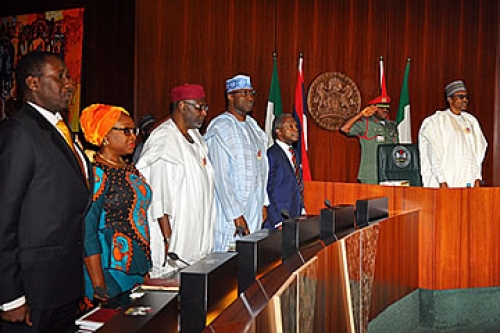
FEC Approves Projects in Water, Aviation and Power Sectors The Federal Executive Council (FEC) has approved N3.7 billion for the rehabilitation of Kazaure water project and N656 million for upgrading of obsolete Flight Safety Laboratory and framework for investment in the nation’s power sector. Minister of Water Resources, Alhaji Suleiman Adamu, who alongside the Minister of State for Aviation, Sen. Hadi Sirika, and the Minister of Power, Works and Housing, Babatunde Fashola, made this known while briefing State House correspondents on the outcome of the Council’s meeting. He said the Kazaure water project which was started in 1997 and abandoned in 2000 would soon be resuscitated under the on-going Federal Government’s programme of resuscitating all irrigable land across the country. Minister of State for Aviation, Hadi Sirika, said that the upgrading of the flight laboratory was necessitated by the fact that the equipment which was established in 2012 had become obsolete. Babatunde Fashola, the Minister of Power, Works and Housing said the Council approved a framework of investment at the 33KVA and 11KVA line in expanding the national distribution network, to deliver an extra 2000Megawatts of electricity (to consumers) which is currently not getting to the grid. ...
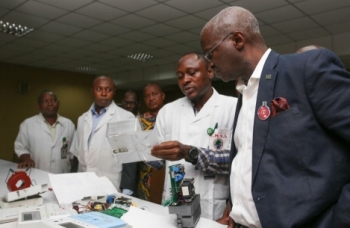
FG to involve more Nigerians in Meter Manufacturing – Fashola The Minister of Power, Works and Housing, Mr Babatunde Fashola on Thursday said the Federal Government had concluded plans to involve more Nigerians in meter manufacturing. Fashola spoke while inspecting the National Meter Test Station in Oshodi, Lagos. He said that the measure would reduce the pressure on Electricity Distribution Companies (DISCOs) on meter supply. “The core business of DISCOs is to transport energy; their business is not to supply meters. “The government will address metering more vigorously this year with regulations which will open up business in metering to more investors. “This will reduce the pressure on DISCOs so that they can concentrate more on their core business. “So, we will open up the business to other people who want to play in the sector once the meter regulations are completed this year,” he said. Fashola said that Nigeria’s meter journey from 1950 showed that consumers depend on meters from foreign countries. “We have seen Nigeria’s meter journey; the meters from 1950 to date, meters from Greece, Japan, Britain and China. This has shown that how our industry totally depends on meters from foreign countries. “But now, we are beginning to see meters from local manufacturers like Mojec and Moman; that is a good place to be. “At present, we have over 100 million telephone subscribers in Nigeria, but let me ask you, how many telephones are made in Nigeria? “We spend millions of naira to buy telephone from China and still we will go back and borrow money from China. “So, we want to change that in the meter industry; we are happy that some Nigerians are manufacturing meter in Nigeria and we promise to support them,” he said. He added that the National Meter Test, under Nigerian Electricity Management Service Agency (NEMSA) was to test the accuracy of meters before installation. According to him, the accuracy tests are in two steps, so that the DISCOs will not cheat consumers and consumers do not cheat DISCOs. The minister reiterated the FG’s plan to roll out meters to Nigerian consumers soon. He said: “We plan to roll out meters, and we must”. The Managing Director/Chief Executive Officer of NEMSA and Chief Electrical Inspector of the Federation, Mr Peter Ewesor, said all meters being used by the DISCOs passed through the centre before installation. According to him, it is not possible for the meters that passed through the centre to shortchange consumers. (NAN) Source: (NAN) ...
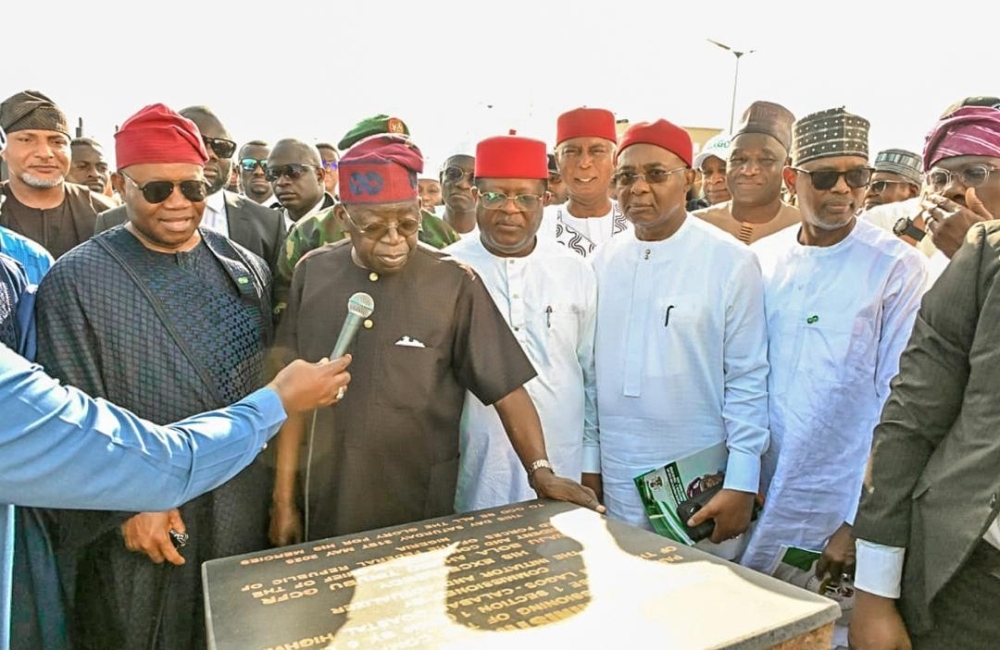
DRIVING NIGERIA’S FUTURE: CELEBRATING TWO YEARS OF TRANSFORMATIVE LEADERSHIP AND THE LAGOS-CALABAR COASTAL HIGHWAY MILESTONE
DRIVING NIGERIA’S FUTURE: CELEBRATING TWO YEARS OF TRANSFORMATIVE LEADERSHIP AND THE LAGOS-CALABAR COASTAL HIGHWAY MILESTONE
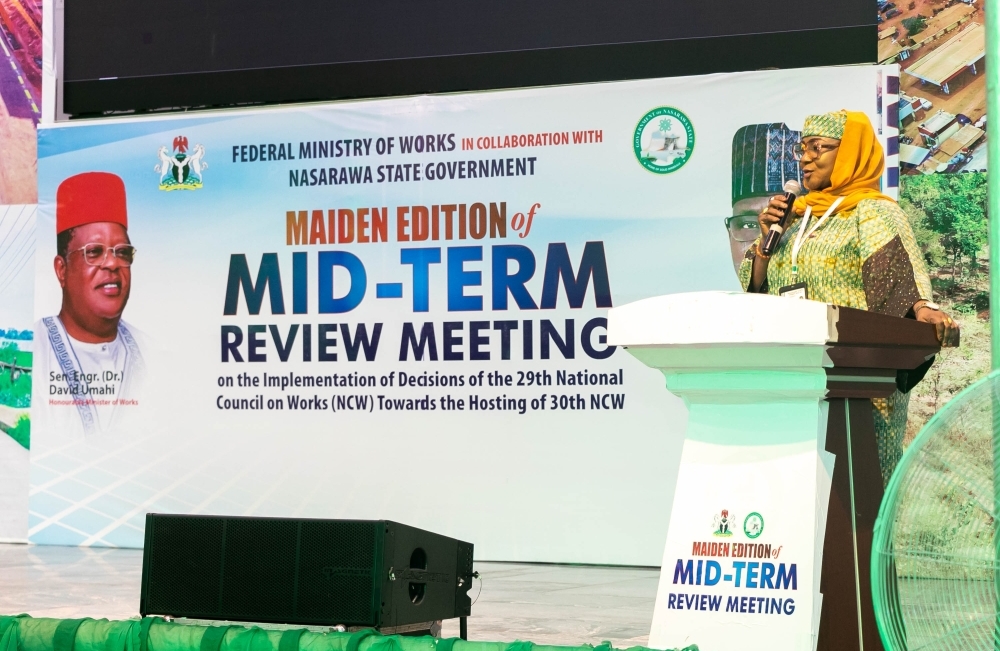
MID -TERM REVIEW MEETING ON THE IMPLIMENTATION OF THE DECISIONS REACHED AT THE 29TH NATIONAL COUNCIL ON WORKS (NCW) DAY 1
MID -TERM REVIEW MEETING ON THE IMPLIMENTATION OF THE DECISIONS REACHED AT THE 29TH NATIONAL COUNCIL ON WORKS (NCW) DAY 1