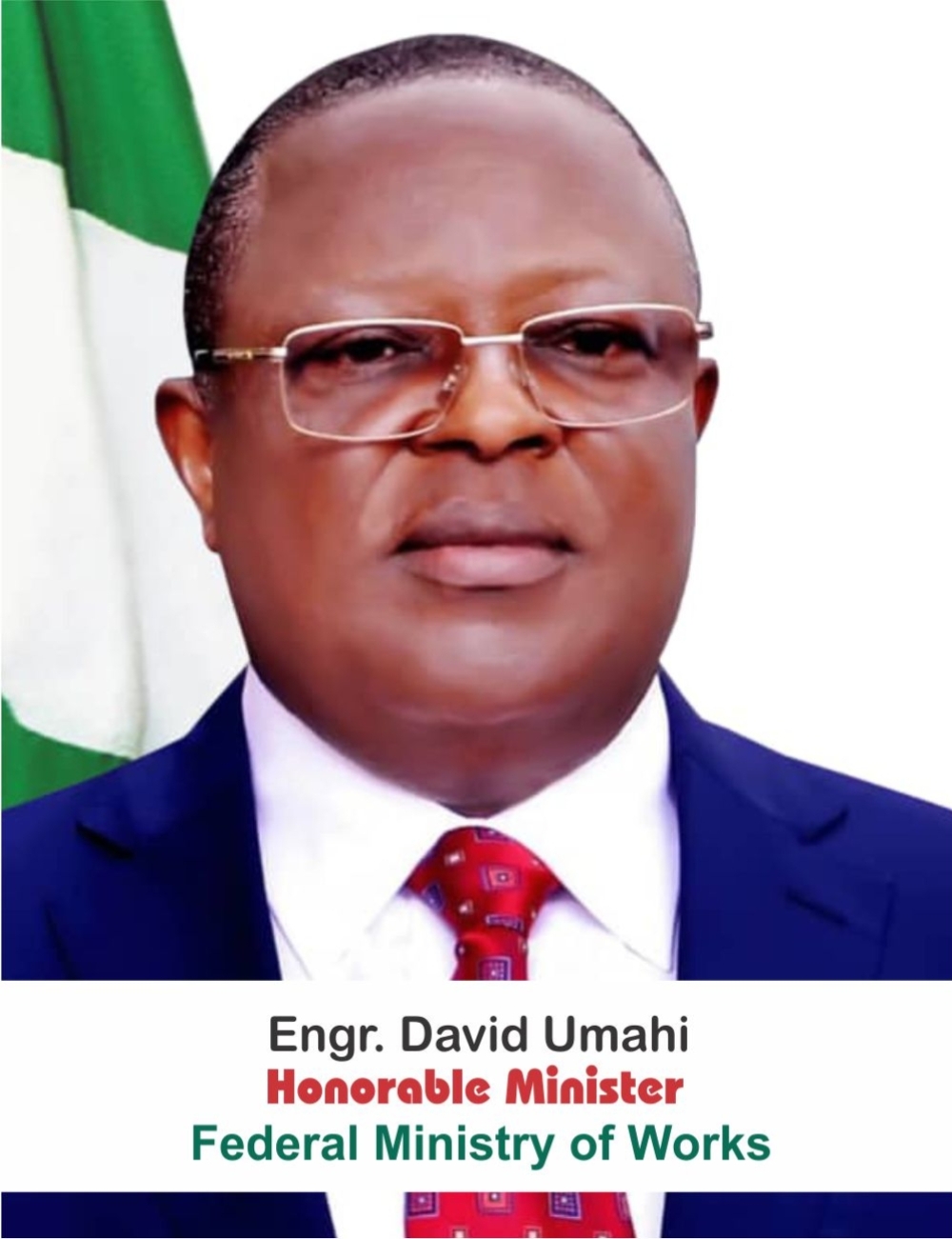
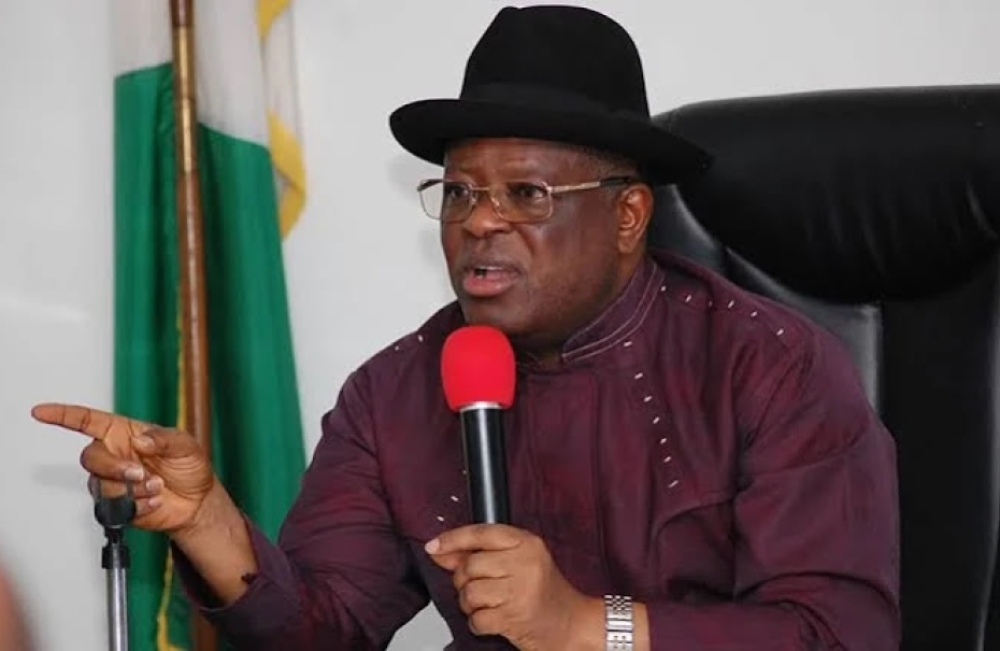
UMAHI ORDERS IMMEDIATE EMERGENCY INTERVENTION ON BENIN-ASABA ROAD, AND SOME OTHER CRITICAL FEDERAL ROADS
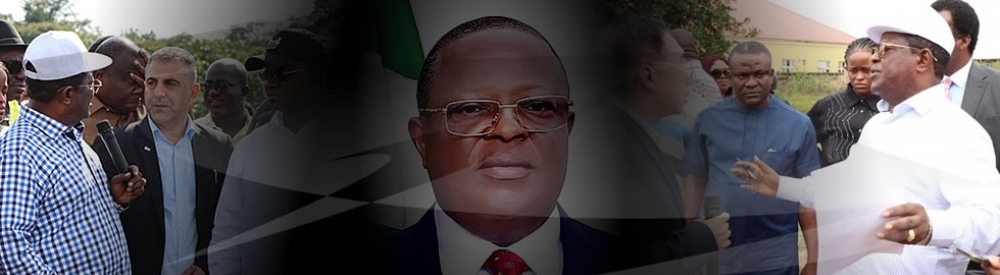
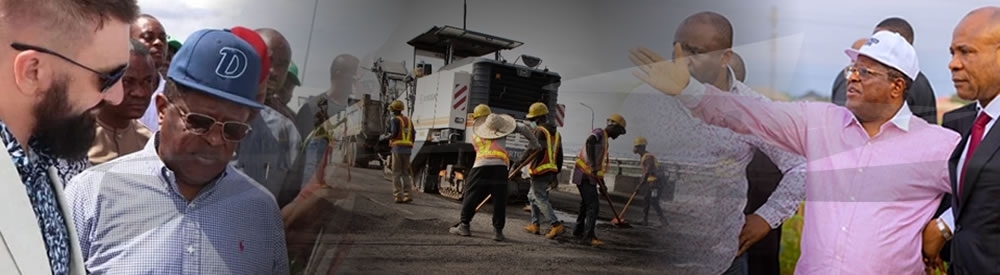
The Honourable Minister of Works, Senator Engr. David Nweze Umahi, CON, has directed the immediate deployment of major contractors to all three sections of the Benin-Asaba Federal Road to restore the failed sections and bring an end to the suffering of motorists and other road users.
This is because, the situation on the concessioned Benin-Asaba Road has reached a point where the overall public interest must take precedence over the existing concession agreement.
Recall that the Honourable Minister of Works was on the Benin-Asaba Road about seven days ago, where he assembled a number of contractors and directed them to prepare for immediate palliative intervention on the affected sections of the road at no cost to the concessionaire. In line with the Concession agreement which requires that before the Federal Government could intervene, the permission of the concessionaire must be required, and that permission was not granted to federal government.
The Minister subsequently proposed three options to the concessionaire, any one of which would have enabled the Federal Government to move in and address the worsening condition of the road. Unfortunately, none of the options was accepted by the concessionaire. Immediately after the Minister left Asaba, the already limited equipment deployed to the road by the concessionaire was further reduced to just one, worsening the situation and increasing the suffering of motorists and other road users.
While the Minister takes responsibility for the concerns and suffering of Nigerians using the road, it is important to state that the concessionaire has also not taken the suffering of Edo people and travelling public sufficiently into consideration by declining all the options put forward by the Federal Government. The concessionaire continues to rely on the terms of the concession agreement entered into by the previous administration, an agreement which weighs heavily against the Federal Government’s ability to intervene quickly in the interest of the public in a situation like this.
In view of this situation, the Honourable Minister of Works has directed the immediate deployment of major contractors within the corridor to all three sections of the Benin-Asaba Road to restore the failed sections and bring relief to the people, with the cost of the emergency intervention being borne by the Federal Government. The Honourable Minister has also directed immediate redesign of the entire route to be rebuilt with reinforced concrete pavement. The public should therefore take note that immediate action is underway to restore every failed section of the Benin-Asaba Road and subsequently rehabilitate the entire sections of the road using reinforced concrete pavement.
2. On the Benin-Sapele Road:
The Governors of Edo and Delta States, the Niger Delta Development Commission (NDDC), and the Federal Government are currently engaged in interventions on different sections of the road to restore the entire route. While some sections are receiving palliative attention, permanent works are also ongoing on other sections.
3. On Ifaki(Ekiti) - Kabba (Kogi) Road:
The Federal Government is engaging both the contractor; Gamji Nigeria Company Limited, and Dangote PLC on immediate emergency and permanent intervention on the most failed sections of the road, while efforts are being made to financially mobilise the company for more extensive permanent work to commence on the axis.
4. On the Sokoto-Zamfara-Katsina Road: This is an inherited project involving the dualisation of approximately 350 kilometres, which translates to about 700 kilometers. The project has since been redesigned and is currently ongoing and most sections are being reconstructed using reinforced concrete pavement. From the Sokoto axis towards Zamfara, over 50 kilometres of one carriageway have been fully completed with reinforced concrete pavement. From Zamfara to Katsina, some sections have been completed and palliative works have been ordered over the sections that have not been reconstructed. However, the pace of work slowed down due to the redesign and rephasing of the project. The contractors currently engaged on the road include CBC, SETRACO, Triacta and Mothercat. They are being remobilised to return to site and complete the outstanding works.
5. On the Abuja-Kaduna-Zaria-Kano Road: The Federal Government took over the Road project and has currently completed the 118-kilometer mostly on reinforced concrete pavement on lot 1. The Lot 2, which covers 164 kilometres, is over 60 percent completed on reinforced concrete pavement. The Federal Government has also introduced solar-powered light on the entire route of Abuja-Kaduna-Zaria - Kano to improve visibility during night travel and enhance the overall security situation on the route. The entire project is scheduled for completion by December 2026.
6. On Bauchi-Jigawa Road: Triacta Nigeria Limited has been mobilised to carry out the necessary interventions on some failed sections and work is currently ongoing in those failed sections.
7. On the Sagamu-Ore Road: 48 Kilometers of the 96-kilometre road have already been completed using reinforced concrete pavement. There is also a 24-kilometre section around Ore which was abandoned by the previous contractor. The Federal Government has directed its immediate restoration to ensure seamless travel. Solar lights are being installed in the entire 96kilometer of the road.
8. On Flooded Sections on Sagamu-Ore-Benin Road: The flooded sections on the same corridor between Sagamu-Ore-Benin Road, as well as other flooded sections in Ondo State, are being designed for emergency procurement and intervention.
9. On the East-West Road:
Some failed and critical sections, including defective sections of bridges along the East-West Road, are being marked out for emergency procurement and intervention.
10. On the Abuja-Lokoja Road:
Several contracts are ongoing along the route, while the three critical sections currently without contracts are being procured for emergency intervention.
11. On the Lokoja-Benin-Warri Road: The President has directed a complete redesign and procurement of the 400-kilometre dualised route covering the uncompleted sections, using reinforced concrete pavement, while palliative works will continue with the contractors currently on the road.
12. On Carter Bridge:
While the Federal Government continues to undertake weekly maintenance of the underwater elements of the bridge. The site has also been handed over to the contractor, CCECC, for the construction of a permanent new bridge, and work has commenced.
13. On the Third Mainland Bridge:
With regard to the defective underwater structural elements, the Federal Government is at the final stage of determining the appropriate intervention for the repair of the affected elements.
14. On the flooded section of the Lagos-Ibadan Road: Work has commenced on the affected section. There are also several flooded sections on federal roads across the six geopolitical zones, largely occasioned by excessive flooding and the effects of climate change. The Federal Government is identifying and marking these sections for immediate attention.
15. On the First and Second Niger Bridges:
Intervention work is ongoing on the approach roads to the Second Niger Bridge damaged by flood and the work is progressing very well. The First Niger Bridge has been closed to traffic to enable immediate repair works. Contractor has mobilized to site and comprehensive rehabilitation of the bridge has started. From Summit Junction to the First Niger Bridge, massive rehabilitation work is also ongoing using reinforced concrete pavement.
16. The Honourable Minister wishes to commend the President of the Federal Republic of Nigeria, His Excellency Bola Ahmed Tinubu, GCFR, for the massive work being undertaken on the nation’s roads since the administration assumed office in 2023.
17. It is important to state that when the present administration came into office, there was hardly any part of the country where one could travel for an hour without encountering significant challenges on the road network. The condition of the country’s roads and bridges was a major national infrastructure challenge.
18. Rather than shy away from the problem, the administration of President Bola Ahmed Tinubu made the nation’s road network a priority. Virtually every part of the country became a priority, and the Federal Government, through the Federal Ministry of Works, Regional Commissions, Parastatals and other MDA’s has continued to respond extensively to these challenges.
19. The Federal Government is currently working on over 80 percent of the inherited federal roads, an unprecedented level of intervention in the country’s road infrastructure.
20. We ask the public to understand the enormous challenges inherited on our roads and bridges and to take note not only of the problems being solved, but also of the permanent solutions being introduced.
21. A major part of this new approach is the use of reinforced concrete pavement, designed to significantly extend the lifespan of major roads. These roads are expected to last between 50 and 100 years. This means that roads being constructed under President Bola Ahmed Tinubu’s administration are being designed with future generations in mind, rather than simply providing temporary solutions to today’s problems. And this is a complete departure from the past, when roads often deteriorated only a few years after completion, resulting in a continuous cycle of reconstruction and expenditure.
22. We appreciate the concerns of Nigerians over the condition of some roads presently and the difficulties faced by motorists and commuters who cannot move easily from one point to another. Those concerns are legitimate, and the Federal Government is listening. But Nigerians should also recognise the enormous scale of the problems inherited and the amount of work currently being undertaken across the country.
23. It is simply impossible to resolve every road challenge accumulated over many years of neglect by the past administrations within three years. What is important is that the government is working, the government is responding, and the government is putting permanent solutions in place.
25. We appreciate members of the public who send situation reports on failed roads and other infrastructure challenges. These reports help the Ministry identify areas requiring urgent attention. However, we also appeal to members of the public to report when such problems have been addressed, just as they report when they occur.
24. We are aware of situations where photographs and reports of road challenges continue to circulate on social media even after the Federal Government has intervened and resolved the particular problem.
25. However, the Ministry will continue to respond as rapidly as possible to genuine reports and concerns from Nigerians.
26. It is also important to note that we have compiled a comprehensive record of all inherited, ongoing and intervention projects across the country which is available to the public. This is to ensure that Nigerians have access to information on the infrastructure projects being undertaken nationwide and can fully participate in and appreciate the infrastructure revolution of President Bola Ahmed Tinubu’s administration.

UMAHI ORDERS IMMEDIATE EMERGENCY INTERVENTION ON BENIN-ASABA ROAD, AND SOME OTHER CRITICAL FEDERAL ROADS The Honourable Minister of Works, Senator Engr. David Nweze Umahi, CON, has directed the immediate deployment of major contractors to all three sections of the Benin-Asaba Federal Road to restore the failed sections and bring an end to the suffering of motorists and other road users. This is because, the situation on the concessioned Benin-Asaba Road has reached a point where the overall public interest must take precedence over the existing concession agreement. Recall that the Honourable Minister of Works was on the Benin-Asaba Road about seven days ago, where he assembled a number of contractors and directed them to prepare for immediate palliative intervention on the affected sections of the road at no cost to the concessionaire. In line with the Concession agreement which requires that before the Federal Government could intervene, the permission of the concessionaire must be required, and that permission was not granted to federal government. The Minister subsequently proposed three options to the concessionaire, any one of which would have enabled the Federal Government to move in and address the worsening condition of the road. Unfortunately, none of the options was accepted by the concessionaire. Immediately after the Minister left Asaba, the already limited equipment deployed to the road by the concessionaire was further reduced to just one, worsening the situation and increasing the suffering of motorists and other road users. While the Minister takes responsibility for the concerns and suffering of Nigerians using the road, it is important to state that the concessionaire has also not taken the suffering of Edo people and travelling public sufficiently into consideration by declining all the options put forward by the Federal Government. The concessionaire continues to rely on the terms of the concession agreement entered into by the previous administration, an agreement which weighs heavily against the Federal Government’s ability to intervene quickly in the interest of the public in a situation like this. In view of this situation, the Honourable Minister of Works has directed the immediate deployment of major contractors within the corridor to all three sections of the Benin-Asaba Road to restore the failed sections and bring relief to the people, with the cost of the emergency intervention being borne by the Federal Government. The Honourable Minister has also directed immediate redesign of the entire route to be rebuilt with reinforced concrete pavement. The public should therefore take note that immediate action is underway to restore every failed section of the Benin-Asaba Road and subsequently rehabilitate the entire sections of the road using reinforced concrete pavement. 2. On the Benin-Sapele Road: 3. On Ifaki(Ekiti) - Kabba (Kogi) Road: 4. On the Sokoto-Zamfara-Katsina Road: This is an inherited project involving the dualisation of approximately 350 kilometres, which translates to about 700 kilometers. The project has since been redesigned and is currently ongoing and most sections are being reconstructed using reinforced concrete pavement. From the Sokoto axis towards Zamfara, over 50 kilometres of one carriageway have been fully completed with reinforced concrete pavement. From Zamfara to Katsina, some sections have been completed and palliative works have been ordered over the sections that have not been reconstructed. However, the pace of work slowed down due to the redesign and rephasing of the project. The contractors currently engaged on the road include CBC, SETRACO, Triacta and Mothercat. They are being remobilised to return to site and complete the outstanding works. 5. On the Abuja-Kaduna-Zaria-Kano Road: The Federal Government took over the Road project and has currently completed the 118-kilometer mostly on reinforced concrete pavement on lot 1. The Lot 2, which covers 164 kilometres, is over 60 percent completed on reinforced concrete pavement. The Federal Government has also introduced solar-powered light on the entire route of Abuja-Kaduna-Zaria - Kano to improve visibility during night travel and enhance the overall security situation on the route. The entire project is scheduled for completion by December 2026. 6. On Bauchi-Jigawa Road: Triacta Nigeria Limited has been mobilised to carry out the necessary interventions on some failed sections and work is currently ongoing in those failed sections. 7. On the Sagamu-Ore Road: 48 Kilometers of the 96-kilometre road have already been completed using reinforced concrete pavement. There is also a 24-kilometre section around Ore which was abandoned by the previous contractor. The Federal Government has directed its immediate restoration to ensure seamless travel. Solar lights are being installed in the entire 96kilometer of the road. 8. On Flooded Sections on Sagamu-Ore-Benin Road: The flooded sections on the same corridor between Sagamu-Ore-Benin Road, as well as other flooded sections in Ondo State, are being designed for emergency procurement and intervention. 9. On the East-West Road: 10. On the Abuja-Lokoja Road: 11. On the Lokoja-Benin-Warri Road: The President has directed a complete redesign and procurement of the 400-kilometre dualised route covering the uncompleted sections, using reinforced concrete pavement, while palliative works will continue with the contractors currently on the road. 12. On Carter Bridge: 13. On the Third Mainland Bridge: 14. On the flooded section of the Lagos-Ibadan Road: Work has commenced on the affected section. There are also several flooded sections on federal roads across the six geopolitical zones, largely occasioned by excessive flooding and the effects of climate change. The Federal Government is identifying and marking these sections for immediate attention. 15. On the First and Second Niger Bridges: 16. The Honourable Minister wishes to commend the President of the Federal Republic of Nigeria, His Excellency Bola Ahmed Tinubu, GCFR, for the massive work being undertaken on the nation’s roads since the administration assumed office in 2023. 17. It is important to state that when the present administration came into office, there was hardly any part of the country where one could travel for an hour without encountering significant challenges on the road network. The condition of the country’s roads and bridges was a major national infrastructure challenge. 18. Rather than shy away from the problem, the administration of President Bola Ahmed Tinubu made the nation’s road network a priority. Virtually every part of the country became a priority, and the Federal Government, through the Federal Ministry of Works, Regional Commissions, Parastatals and other MDA’s has continued to respond extensively to these challenges. 19. The Federal Government is currently working on over 80 percent of the inherited federal roads, an unprecedented level of intervention in the country’s road infrastructure. 20. We ask the public to understand the enormous challenges inherited on our roads and bridges and to take note not only of the problems being solved, but also of the permanent solutions being introduced. 21. A major part of this new approach is the use of reinforced concrete pavement, designed to significantly extend the lifespan of major roads. These roads are expected to last between 50 and 100 years. This means that roads being constructed under President Bola Ahmed Tinubu’s administration are being designed with future generations in mind, rather than simply providing temporary solutions to today’s problems. And this is a complete departure from the past, when roads often deteriorated only a few years after completion, resulting in a continuous cycle of reconstruction and expenditure. 22. We appreciate the concerns of Nigerians over the condition of some roads presently and the difficulties faced by motorists and commuters who cannot move easily from one point to another. Those concerns are legitimate, and the Federal Government is listening. But Nigerians should also recognise the enormous scale of the problems inherited and the amount of work currently being undertaken across the country. 23. It is simply impossible to resolve every road challenge accumulated over many years of neglect by the past administrations within three years. What is important is that the government is working, the government is responding, and the government is putting permanent solutions in place. 25. We appreciate members of the public who send situation reports on failed roads and other infrastructure challenges. These reports help the Ministry identify areas requiring urgent attention. However, we also appeal to members of the public to report when such problems have been addressed, just as they report when they occur. 24. We are aware of situations where photographs and reports of road challenges continue to circulate on social media even after the Federal Government has intervened and resolved the particular problem.
The Governors of Edo and Delta States, the Niger Delta Development Commission (NDDC), and the Federal Government are currently engaged in interventions on different sections of the road to restore the entire route. While some sections are receiving palliative attention, permanent works are also ongoing on other sections.
The Federal Government is engaging both the contractor; Gamji Nigeria Company Limited, and Dangote PLC on immediate emergency and permanent intervention on the most failed sections of the road, while efforts are being made to financially mobilise the company for more extensive permanent work to commence on the axis.
Some failed and critical sections, including defective sections of bridges along the East-West Road, are being marked out for emergency procurement and intervention.
Several contracts are ongoing along the route, while the three critical sections currently without contracts are being procured for emergency intervention.
While the Federal Government continues to undertake weekly maintenance of the underwater elements of the bridge. The site has also been handed over to the contractor, CCECC, for the construction of a permanent new bridge, and work has commenced.
With regard to the defective underwater structural elements, the Federal Government is at the final stage of determining the appropriate intervention for the repair of the affected elements.
Intervention work is ongoing on the approach roads to the Second Niger Bridge damaged by flood and the work is progressing very well. The First Niger Bridge has been closed to traffic to enable immediate repair works. Contractor has mobilized to site and comprehensive rehabilitation of the bridge has started. From Summit Junction to the First Niger Bridge, massive rehabilitation work is also ongoing using reinforced concrete pavement.
25. However, the Ministry will continue to respond as rapidly as possible to genuine reports and concerns from Nigerians.
26. It is also important to note that we have compiled a comprehensive record of all inherited, ongoing and intervention projects across the country which is available to the public. This is to ensure that Nigerians have access to information on the infrastructure projects being undertaken nationwide and can fully participate in and appreciate the infrastructure revolution of President Bola Ahmed Tinubu’s administration.
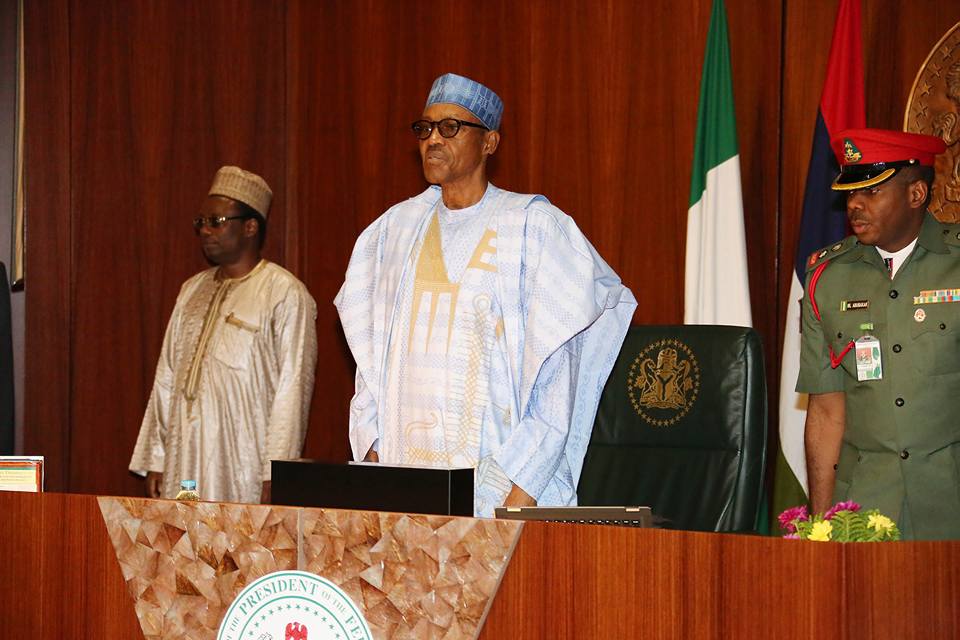
Federal Executive Council approves N27billion for reconstruction of Gombe – Biu road The Federal Executive Council today approved the sum of N27billion for reconstruction of Gombe – Biu road. The Council also approved N458million as consultancy fee for implementation of the National Economic Recovery and Growth Plan and the endorsement of the Nigeria National Building Code. These were the decisions taken by the Federal Executive Council today which held under Vice-President Yemi Osinbajo today. Briefing State State House correspondents after the meeting, Minister of Power, Works and Housing, Mr Babatunde Fashola, disclosed that the Gombe-Biu 117 kilometres road project which connects Gombe,Yobe, Adamawa and Borno states, will boost agricultural activities and power supply in the affected states. Mr Fashola however stated that the road project excluded the nine kilo metres already constructed by the Gombe state government. The Minister also disclosed that the Nigeria National Building Code, which was approved by the National Council on Housing, Land and Urban Development, was also endorsed by the council. Minister of Budget and National Planning Udoma Udo Udoma, who also briefed alongside Mr Fashola, told the correspondents that the Council approved the engagement of Malaysian based consultants to conduct a study that would aid the implementation of the National Economic Recovery and Growth Plan at the cost of (N458Million) 1.5 million dollars. ...
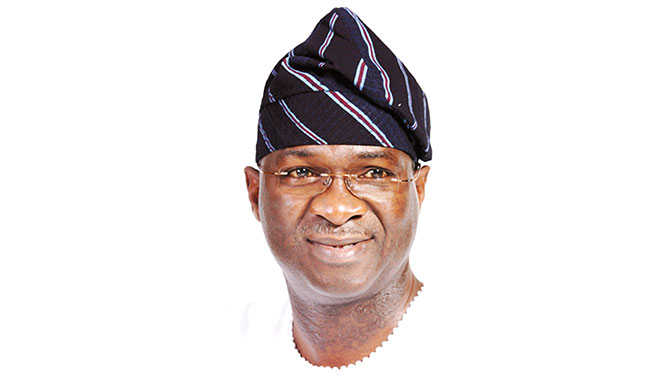
FG Recovers $64.6m Electricity Debt From International Customers The Federal Government on Monday announced that it had recovered 64.6 million dollars electricity debt from its international customers. Minster of Power, Works and Housing, Babatunde Fashola announced this at the 21st monthly power sector meeting in Asaba. Fashola, in a text of his opening remark made available to the News Agency of Nigeria (NAN) in Abuja, said that the money recovered was from Benin and Niger Republics. He said that Nigerian Bulk Electricity Trader (NBET) would work out modalities for distribution of the fund to the value chain operators. The minister also announced that Rural Electrification Agency (REA) had completed guidelines for the operation of the rural electrification fund. He said that the fund would help vulnerable groups and communities to gain access to funding to support their electricity development programme. “By way of explanation, the rural electrification fund was created by section 88 of the Electric Power Sector Reform Act (EPSRA) of 2005 to promote support and provide rural electrification access. “The fund will provide a partial single payment capital subsidy and or technical assistance to eligible private Rural Power Developers, NGOs or communities to invest in options such as hybrid mini grids or solar home systems to scale up rural access to electricity. “What they are likely to get are minimum amounts of N3.5m and maximum amounts of N106m or 75 per cent of project cost whichever is less,” he said. According to him, REA will publish details of the guidelines and eligibility. These, he said, were only headline items of developments that characterised the progress the government was making month after month, especially since March 2017. He said that progress was also being recorded at the distribution levels. He listed the recent achievements in the franchise areas of the Benin DisCo to include the newly completed Asaba main 2x15MVA injection substation commissioned on Monday. Fashola said the completion of the substation was expected to improve service by reduction of load shedding and increase power supply to Okwe, Akuebulu, Jarret, Ogbeofu, Osadebe way, Okwe housing estate and Oduke. “Minute by minute, hour by hour, day by day, week by week and month by month we have not only gained momentum, we are seeing progress that inspires us to continue, because the power problem can be successfully managed by Nigerians.” On further measures to improve power supply in the coverage areas of the Benin DisCos, Fashola said Asaba – Benin 330KV line was energized to service on Nov. 3. Asaba 330kv substation is now being fed from both Benin and Onitsha. “The line also raised the number of circuits from Onitsha to Benin to three. According to him, a 40mva 132/33kv mobile transformer is undergoing installation at Auchi with in-house capacity to be commissioned in two weeks time. Fashola also disclosed that a new 330/ 132kv substation would be constructed at Okpai with a 132kv line from the station to service a proposed 132/33kv substation at Kwale. He also hinted that installation of a new 60mva 132/33kv transformer would commence at Irrua transmission station any time from now. The minster thanked well-meaning Nigerians who acknowledged that their experience on the power supply had improved, adding that their honesty inspired government and the operators to continue the improvement. He, however, admitted that there were other challenges that must be collectively addressed. On estimated billing and metering, he also explained that government and sector operators were anxiously awaiting for the regulation from NERC to open up meter supply business. ...
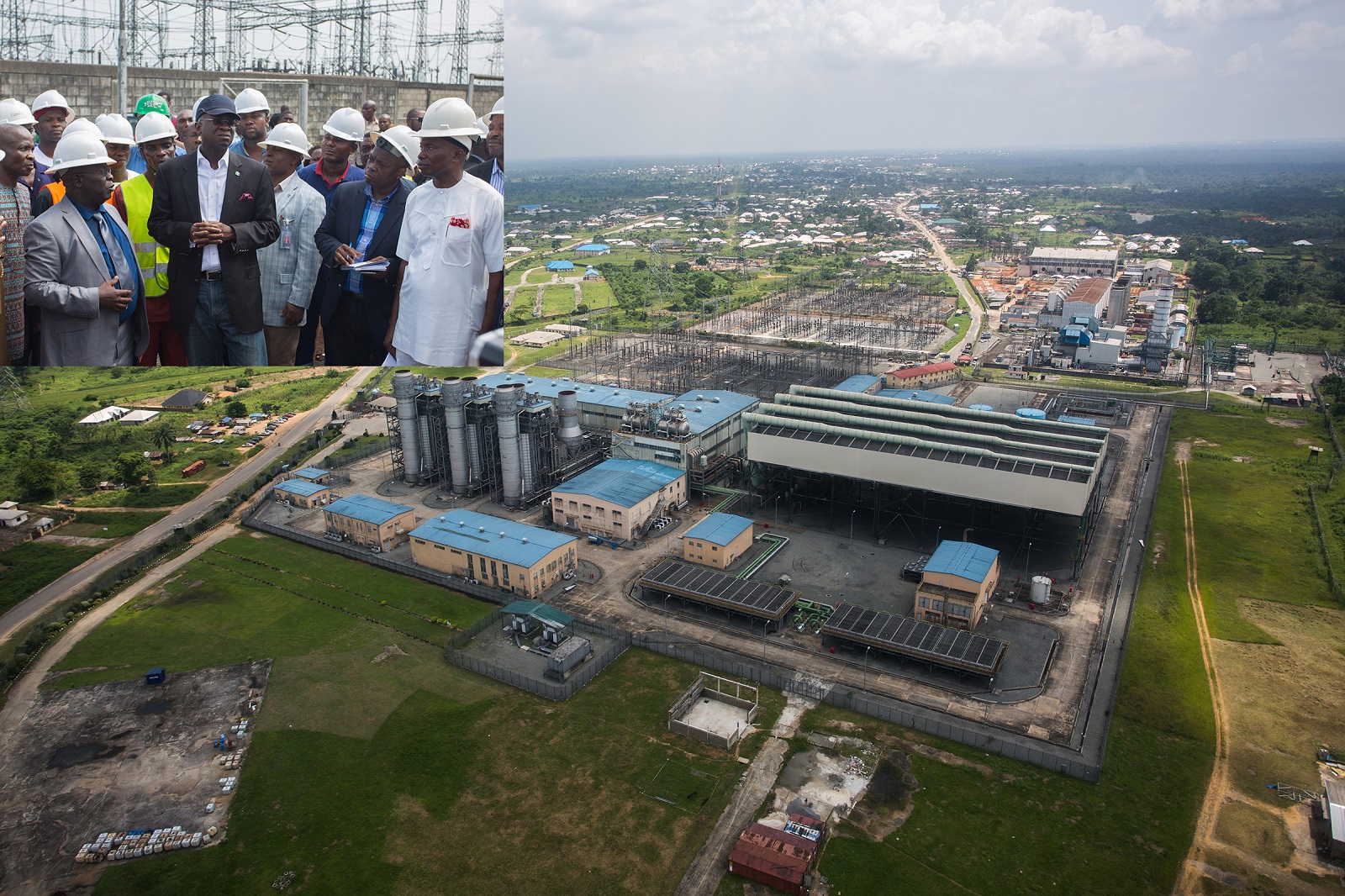
Before Perception Becomes Reality A Statement By The Hon. Minister Of Power, Works And Housing, Mr Babatunde Raji Fashola, SAN Before perception becomes reality, I feel compelled to make this Statement in response to allegations bordering on financial impropriety raised on the Floor of the Senate against the Ministry of Power, Works and Housing, my Office as Minister, the staff of the Ministry and by extension my person. The sum and substance of the allegations to which the Ministry will provide full, factual and detailed response when formally invited are that: 1. An amount in the region of $350million being part of a $1billion Eurobond facility taken in 2013 has gone missing or has been diverted. 2. That the Ministry, had procured a contract for Afam Fast Power and paid $26million or thereabout for it. With all emphasis, I state that there is no factual basis for the allegations. The Ministry, my staff and I have done nothing wrong and we will collaborate fully with the Investigating Committee when called upon. For now, it suffices for members of the public to note that I wasn’t a Minister in 2013, and that when Government raises a Debt like the Eurobond, it is the Debt Management Office that manages the Debt and not the Ministry. The Nigeria Sovereign Investment Authority (NSIA) had on Monday, 6th November 2017 issued a Statement on the Front Page of The Nation Newspaper explaining that the money was not missing, stating also that the $350 million had been invested and that interest had even accrued on the money. If there was no ulterior motive for the allegation, this was enough reason for a reconsideration of the presentation of the Motion on the Floor of the Senate on the 8th of November 2017. But the story seemed to have changed from “missing money” last week, to a “desperate attempt to retrieve the money “, this week. As for the Afam Fast Power, the sum and substance of it is that , it was an investment by the General Electric, a globally reputed Original Equipment Manufacturer (OEM), to invest in our country and support our effort to get good quick power under our Roadmap of Incremental, Steady and Uninterrupted power. They offered to do this by providing Nigeria with mobile turbines of 600MW if we could find a location with Gas and Transmission evacuation infrastructure. The Afam Power Station fitted because it had transmission and evacuation facilities but all its turbines had been virtually run down. The investment was contingent on paying $27,990,000 million which was 15% of 8 (eight) units of 30MW turbines each totaling 240MW valued at about $186,600,000:00. This payment of $27.9m was made without breaching any law. At this moment, the turbines have arrived Nigeria and currently at the Onne Port. This is verifiable just as works are on going on the site – civil and engineering – preparing to receive the turbines , and install other equipment already at site. All of these are verifiable by all well meaning Nigerians who may want to undertake the inspection. We expect that the project will be commissioned soon enough to add 240MW to the Grid. This will be one of the fastest power projects when delivered, compared to inherited power projects before this Administration. Investors to the best of my knowledge do not require Parliamentary approval to invest in our Country. All of these facts could have been easily verifiable by a simple letter from the Senator to the Ministry without the furore and suggestions of wrong doing and malfeasance. We must be careful about what we say and do with regards to investments and investors which we clearly need in all sectors of our developmental life and in particular in infrastructure and power. Unverified allegations such as the ones under discussion constitute an imminent threat to our investment climate. For the avoidance of doubt, there has been no wrong doing whatsoever. ...
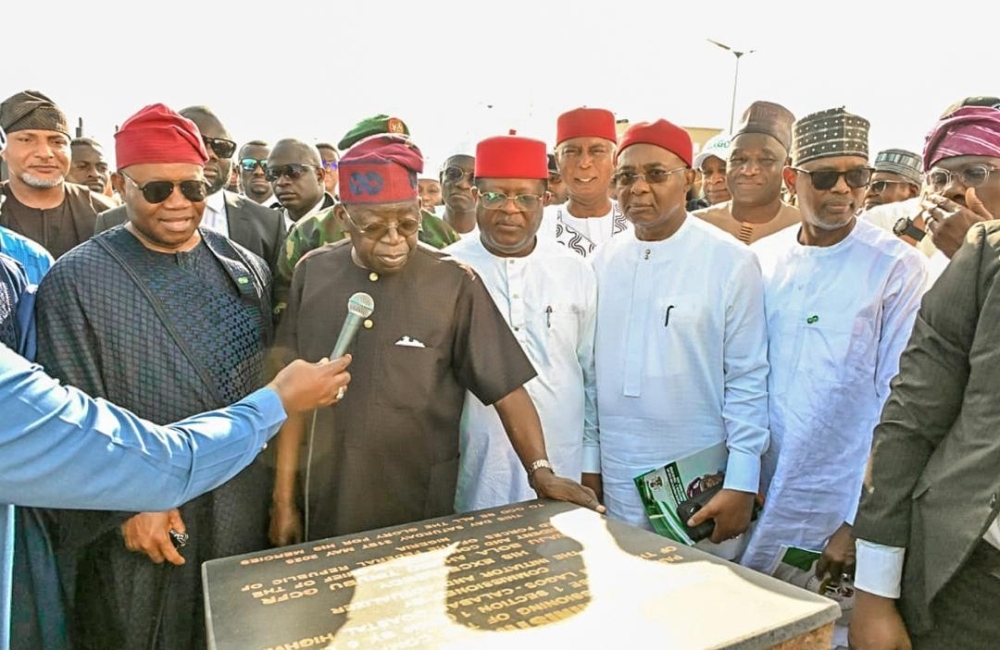
DRIVING NIGERIA’S FUTURE: CELEBRATING TWO YEARS OF TRANSFORMATIVE LEADERSHIP AND THE LAGOS-CALABAR COASTAL HIGHWAY MILESTONE
DRIVING NIGERIA’S FUTURE: CELEBRATING TWO YEARS OF TRANSFORMATIVE LEADERSHIP AND THE LAGOS-CALABAR COASTAL HIGHWAY MILESTONE
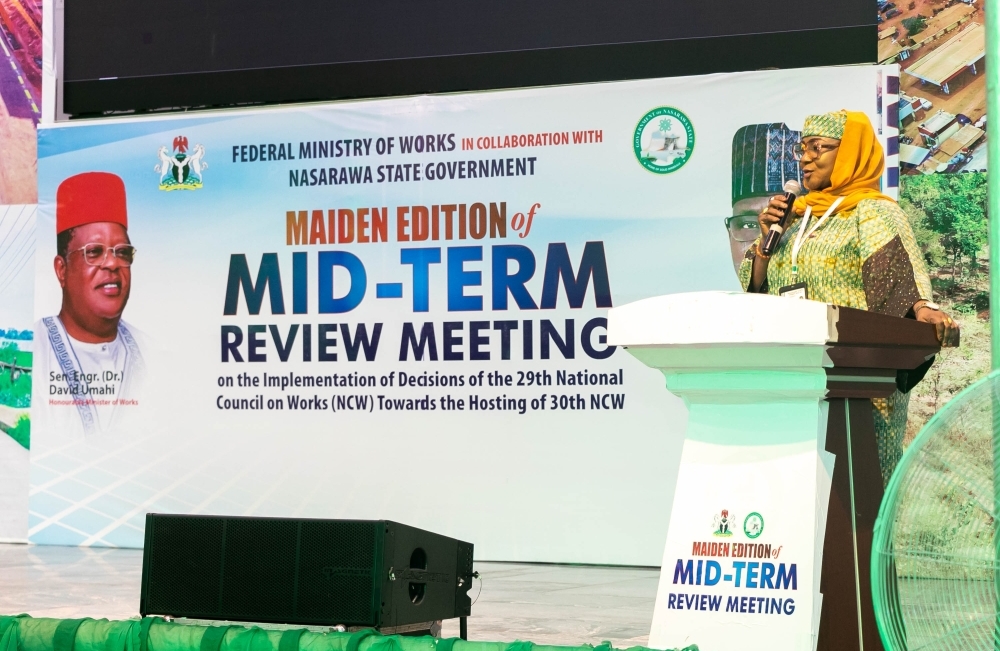
MID -TERM REVIEW MEETING ON THE IMPLIMENTATION OF THE DECISIONS REACHED AT THE 29TH NATIONAL COUNCIL ON WORKS (NCW) DAY 1
MID -TERM REVIEW MEETING ON THE IMPLIMENTATION OF THE DECISIONS REACHED AT THE 29TH NATIONAL COUNCIL ON WORKS (NCW) DAY 1