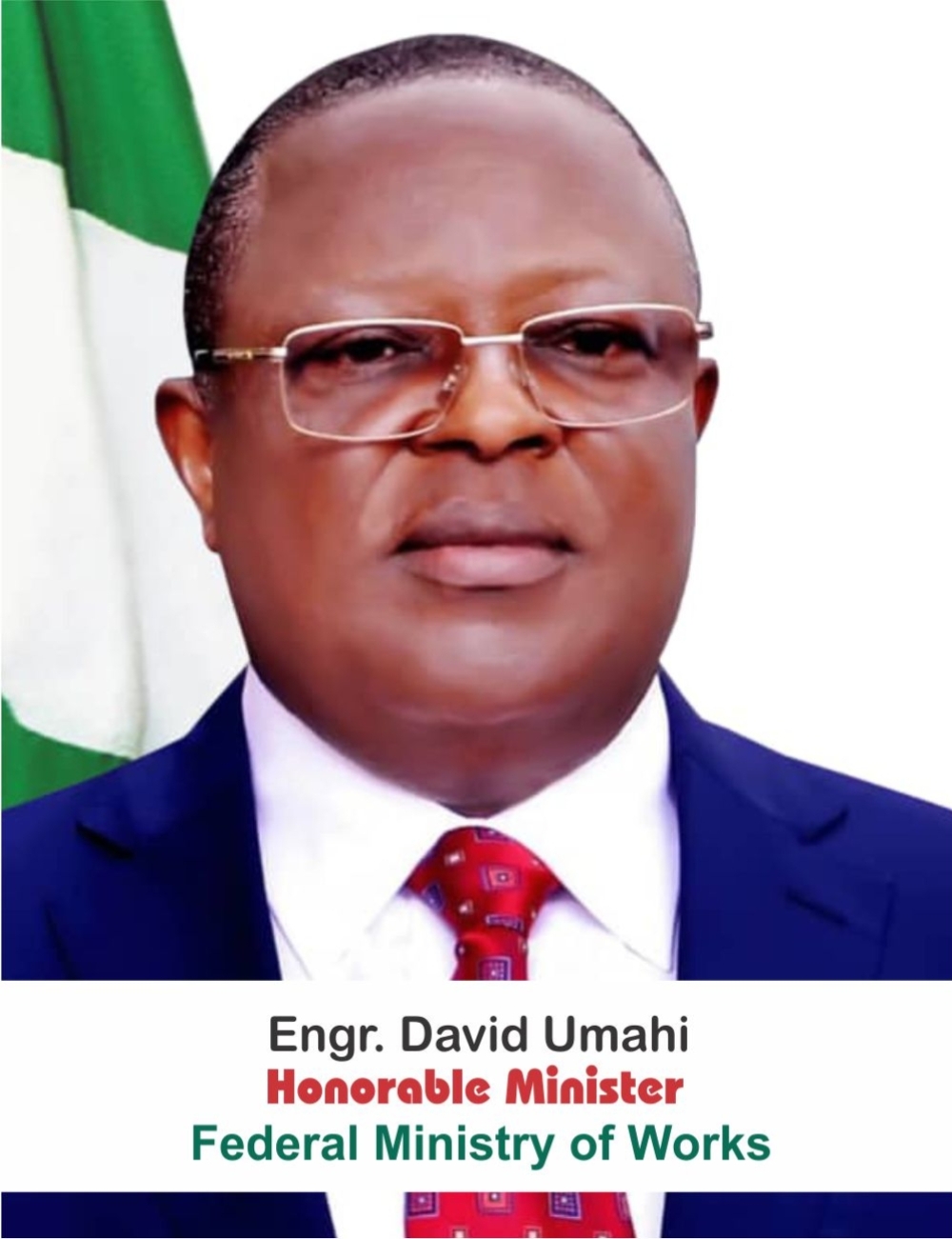
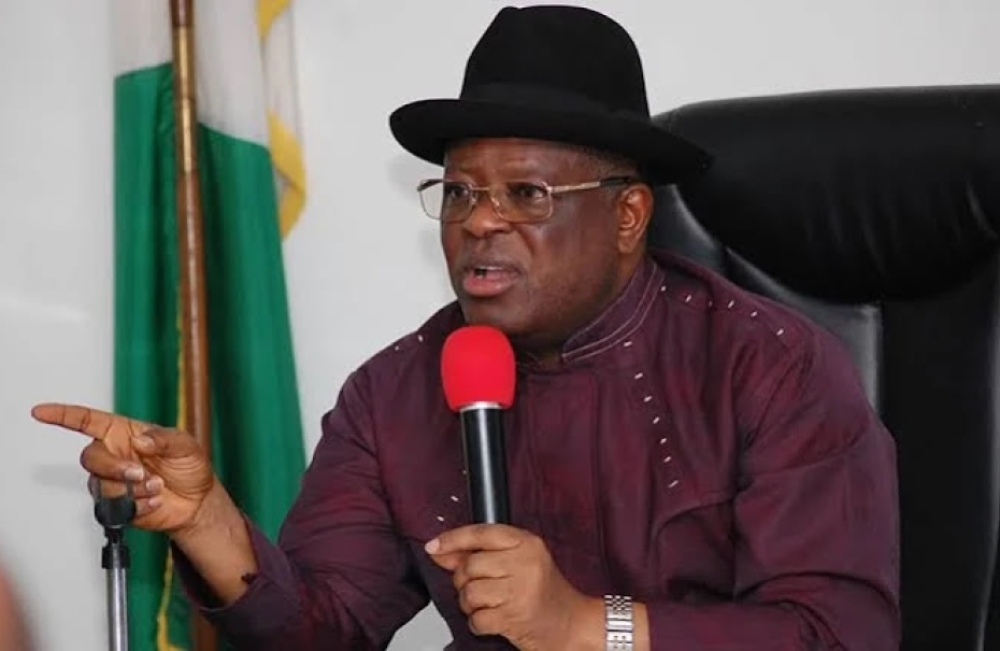
UMAHI ORDERS IMMEDIATE EMERGENCY INTERVENTION ON BENIN-ASABA ROAD, AND SOME OTHER CRITICAL FEDERAL ROADS
The Honourable Minister of Works, Senator Engr. David Nweze Umahi, CON, has directed the immediate deployment of major contractors to all three sections of the Benin-Asaba Federal Road to restore the failed sections and bring an end to the suffering of motorists and other road users.
This is because, the situation on the concessioned Benin-Asaba Road has reached a point where the overall public interest must take precedence over the existing concession agreement.
Recall that the Honourable Minister of Works was on the Benin-Asaba Road about seven days ago, where he assembled a number of contractors and directed them to prepare for immediate palliative intervention on the affected sections of the road at no cost to the concessionaire. In line with the Concession agreement which requires that before the Federal Government could intervene, the permission of the concessionaire must be required, and that permission was not granted to federal government.
The Minister subsequently proposed three options to the concessionaire, any one of which would have enabled the Federal Government to move in and address the worsening condition of the road. Unfortunately, none of the options was accepted by the concessionaire. Immediately after the Minister left Asaba, the already limited equipment deployed to the road by the concessionaire was further reduced to just one, worsening the situation and increasing the suffering of motorists and other road users.
While the Minister takes responsibility for the concerns and suffering of Nigerians using the road, it is important to state that the concessionaire has also not taken the suffering of Edo people and travelling public sufficiently into consideration by declining all the options put forward by the Federal Government. The concessionaire continues to rely on the terms of the concession agreement entered into by the previous administration, an agreement which weighs heavily against the Federal Government’s ability to intervene quickly in the interest of the public in a situation like this.
In view of this situation, the Honourable Minister of Works has directed the immediate deployment of major contractors within the corridor to all three sections of the Benin-Asaba Road to restore the failed sections and bring relief to the people, with the cost of the emergency intervention being borne by the Federal Government. The Honourable Minister has also directed immediate redesign of the entire route to be rebuilt with reinforced concrete pavement. The public should therefore take note that immediate action is underway to restore every failed section of the Benin-Asaba Road and subsequently rehabilitate the entire sections of the road using reinforced concrete pavement.
2. On the Benin-Sapele Road:
The Governors of Edo and Delta States, the Niger Delta Development Commission (NDDC), and the Federal Government are currently engaged in interventions on different sections of the road to restore the entire route. While some sections are receiving palliative attention, permanent works are also ongoing on other sections.
3. On Ifaki(Ekiti) - Kabba (Kogi) Road:
The Federal Government is engaging both the contractor; Gamji Nigeria Company Limited, and Dangote PLC on immediate emergency and permanent intervention on the most failed sections of the road, while efforts are being made to financially mobilise the company for more extensive permanent work to commence on the axis.
4. On the Sokoto-Zamfara-Katsina Road: This is an inherited project involving the dualisation of approximately 350 kilometres, which translates to about 700 kilometers. The project has since been redesigned and is currently ongoing and most sections are being reconstructed using reinforced concrete pavement. From the Sokoto axis towards Zamfara, over 50 kilometres of one carriageway have been fully completed with reinforced concrete pavement. From Zamfara to Katsina, some sections have been completed and palliative works have been ordered over the sections that have not been reconstructed. However, the pace of work slowed down due to the redesign and rephasing of the project. The contractors currently engaged on the road include CBC, SETRACO, Triacta and Mothercat. They are being remobilised to return to site and complete the outstanding works.
5. On the Abuja-Kaduna-Zaria-Kano Road: The Federal Government took over the Road project and has currently completed the 118-kilometer mostly on reinforced concrete pavement on lot 1. The Lot 2, which covers 164 kilometres, is over 60 percent completed on reinforced concrete pavement. The Federal Government has also introduced solar-powered light on the entire route of Abuja-Kaduna-Zaria - Kano to improve visibility during night travel and enhance the overall security situation on the route. The entire project is scheduled for completion by December 2026.
6. On Bauchi-Jigawa Road: Triacta Nigeria Limited has been mobilised to carry out the necessary interventions on some failed sections and work is currently ongoing in those failed sections.
7. On the Sagamu-Ore Road: 48 Kilometers of the 96-kilometre road have already been completed using reinforced concrete pavement. There is also a 24-kilometre section around Ore which was abandoned by the previous contractor. The Federal Government has directed its immediate restoration to ensure seamless travel. Solar lights are being installed in the entire 96kilometer of the road.
8. On Flooded Sections on Sagamu-Ore-Benin Road: The flooded sections on the same corridor between Sagamu-Ore-Benin Road, as well as other flooded sections in Ondo State, are being designed for emergency procurement and intervention.
9. On the East-West Road:
Some failed and critical sections, including defective sections of bridges along the East-West Road, are being marked out for emergency procurement and intervention.
10. On the Abuja-Lokoja Road:
Several contracts are ongoing along the route, while the three critical sections currently without contracts are being procured for emergency intervention.
11. On the Lokoja-Benin-Warri Road: The President has directed a complete redesign and procurement of the 400-kilometre dualised route covering the uncompleted sections, using reinforced concrete pavement, while palliative works will continue with the contractors currently on the road.
12. On Carter Bridge:
While the Federal Government continues to undertake weekly maintenance of the underwater elements of the bridge. The site has also been handed over to the contractor, CCECC, for the construction of a permanent new bridge, and work has commenced.
13. On the Third Mainland Bridge:
With regard to the defective underwater structural elements, the Federal Government is at the final stage of determining the appropriate intervention for the repair of the affected elements.
14. On the flooded section of the Lagos-Ibadan Road: Work has commenced on the affected section. There are also several flooded sections on federal roads across the six geopolitical zones, largely occasioned by excessive flooding and the effects of climate change. The Federal Government is identifying and marking these sections for immediate attention.
15. On the First and Second Niger Bridges:
Intervention work is ongoing on the approach roads to the Second Niger Bridge damaged by flood and the work is progressing very well. The First Niger Bridge has been closed to traffic to enable immediate repair works. Contractor has mobilized to site and comprehensive rehabilitation of the bridge has started. From Summit Junction to the First Niger Bridge, massive rehabilitation work is also ongoing using reinforced concrete pavement.
16. The Honourable Minister wishes to commend the President of the Federal Republic of Nigeria, His Excellency Bola Ahmed Tinubu, GCFR, for the massive work being undertaken on the nation’s roads since the administration assumed office in 2023.
17. It is important to state that when the present administration came into office, there was hardly any part of the country where one could travel for an hour without encountering significant challenges on the road network. The condition of the country’s roads and bridges was a major national infrastructure challenge.
18. Rather than shy away from the problem, the administration of President Bola Ahmed Tinubu made the nation’s road network a priority. Virtually every part of the country became a priority, and the Federal Government, through the Federal Ministry of Works, Regional Commissions, Parastatals and other MDA’s has continued to respond extensively to these challenges.
19. The Federal Government is currently working on over 80 percent of the inherited federal roads, an unprecedented level of intervention in the country’s road infrastructure.
20. We ask the public to understand the enormous challenges inherited on our roads and bridges and to take note not only of the problems being solved, but also of the permanent solutions being introduced.
21. A major part of this new approach is the use of reinforced concrete pavement, designed to significantly extend the lifespan of major roads. These roads are expected to last between 50 and 100 years. This means that roads being constructed under President Bola Ahmed Tinubu’s administration are being designed with future generations in mind, rather than simply providing temporary solutions to today’s problems. And this is a complete departure from the past, when roads often deteriorated only a few years after completion, resulting in a continuous cycle of reconstruction and expenditure.
22. We appreciate the concerns of Nigerians over the condition of some roads presently and the difficulties faced by motorists and commuters who cannot move easily from one point to another. Those concerns are legitimate, and the Federal Government is listening. But Nigerians should also recognise the enormous scale of the problems inherited and the amount of work currently being undertaken across the country.
23. It is simply impossible to resolve every road challenge accumulated over many years of neglect by the past administrations within three years. What is important is that the government is working, the government is responding, and the government is putting permanent solutions in place.
25. We appreciate members of the public who send situation reports on failed roads and other infrastructure challenges. These reports help the Ministry identify areas requiring urgent attention. However, we also appeal to members of the public to report when such problems have been addressed, just as they report when they occur.
24. We are aware of situations where photographs and reports of road challenges continue to circulate on social media even after the Federal Government has intervened and resolved the particular problem.
25. However, the Ministry will continue to respond as rapidly as possible to genuine reports and concerns from Nigerians.
26. It is also important to note that we have compiled a comprehensive record of all inherited, ongoing and intervention projects across the country which is available to the public. This is to ensure that Nigerians have access to information on the infrastructure projects being undertaken nationwide and can fully participate in and appreciate the infrastructure revolution of President Bola Ahmed Tinubu’s administration.

UMAHI ORDERS IMMEDIATE EMERGENCY INTERVENTION ON BENIN-ASABA ROAD, AND SOME OTHER CRITICAL FEDERAL ROADS The Honourable Minister of Works, Senator Engr. David Nweze Umahi, CON, has directed the immediate deployment of major contractors to all three sections of the Benin-Asaba Federal Road to restore the failed sections and bring an end to the suffering of motorists and other road users. This is because, the situation on the concessioned Benin-Asaba Road has reached a point where the overall public interest must take precedence over the existing concession agreement. Recall that the Honourable Minister of Works was on the Benin-Asaba Road about seven days ago, where he assembled a number of contractors and directed them to prepare for immediate palliative intervention on the affected sections of the road at no cost to the concessionaire. In line with the Concession agreement which requires that before the Federal Government could intervene, the permission of the concessionaire must be required, and that permission was not granted to federal government. The Minister subsequently proposed three options to the concessionaire, any one of which would have enabled the Federal Government to move in and address the worsening condition of the road. Unfortunately, none of the options was accepted by the concessionaire. Immediately after the Minister left Asaba, the already limited equipment deployed to the road by the concessionaire was further reduced to just one, worsening the situation and increasing the suffering of motorists and other road users. While the Minister takes responsibility for the concerns and suffering of Nigerians using the road, it is important to state that the concessionaire has also not taken the suffering of Edo people and travelling public sufficiently into consideration by declining all the options put forward by the Federal Government. The concessionaire continues to rely on the terms of the concession agreement entered into by the previous administration, an agreement which weighs heavily against the Federal Government’s ability to intervene quickly in the interest of the public in a situation like this. In view of this situation, the Honourable Minister of Works has directed the immediate deployment of major contractors within the corridor to all three sections of the Benin-Asaba Road to restore the failed sections and bring relief to the people, with the cost of the emergency intervention being borne by the Federal Government. The Honourable Minister has also directed immediate redesign of the entire route to be rebuilt with reinforced concrete pavement. The public should therefore take note that immediate action is underway to restore every failed section of the Benin-Asaba Road and subsequently rehabilitate the entire sections of the road using reinforced concrete pavement. 2. On the Benin-Sapele Road: 3. On Ifaki(Ekiti) - Kabba (Kogi) Road: 4. On the Sokoto-Zamfara-Katsina Road: This is an inherited project involving the dualisation of approximately 350 kilometres, which translates to about 700 kilometers. The project has since been redesigned and is currently ongoing and most sections are being reconstructed using reinforced concrete pavement. From the Sokoto axis towards Zamfara, over 50 kilometres of one carriageway have been fully completed with reinforced concrete pavement. From Zamfara to Katsina, some sections have been completed and palliative works have been ordered over the sections that have not been reconstructed. However, the pace of work slowed down due to the redesign and rephasing of the project. The contractors currently engaged on the road include CBC, SETRACO, Triacta and Mothercat. They are being remobilised to return to site and complete the outstanding works. 5. On the Abuja-Kaduna-Zaria-Kano Road: The Federal Government took over the Road project and has currently completed the 118-kilometer mostly on reinforced concrete pavement on lot 1. The Lot 2, which covers 164 kilometres, is over 60 percent completed on reinforced concrete pavement. The Federal Government has also introduced solar-powered light on the entire route of Abuja-Kaduna-Zaria - Kano to improve visibility during night travel and enhance the overall security situation on the route. The entire project is scheduled for completion by December 2026. 6. On Bauchi-Jigawa Road: Triacta Nigeria Limited has been mobilised to carry out the necessary interventions on some failed sections and work is currently ongoing in those failed sections. 7. On the Sagamu-Ore Road: 48 Kilometers of the 96-kilometre road have already been completed using reinforced concrete pavement. There is also a 24-kilometre section around Ore which was abandoned by the previous contractor. The Federal Government has directed its immediate restoration to ensure seamless travel. Solar lights are being installed in the entire 96kilometer of the road. 8. On Flooded Sections on Sagamu-Ore-Benin Road: The flooded sections on the same corridor between Sagamu-Ore-Benin Road, as well as other flooded sections in Ondo State, are being designed for emergency procurement and intervention. 9. On the East-West Road: 10. On the Abuja-Lokoja Road: 11. On the Lokoja-Benin-Warri Road: The President has directed a complete redesign and procurement of the 400-kilometre dualised route covering the uncompleted sections, using reinforced concrete pavement, while palliative works will continue with the contractors currently on the road. 12. On Carter Bridge: 13. On the Third Mainland Bridge: 14. On the flooded section of the Lagos-Ibadan Road: Work has commenced on the affected section. There are also several flooded sections on federal roads across the six geopolitical zones, largely occasioned by excessive flooding and the effects of climate change. The Federal Government is identifying and marking these sections for immediate attention. 15. On the First and Second Niger Bridges: 16. The Honourable Minister wishes to commend the President of the Federal Republic of Nigeria, His Excellency Bola Ahmed Tinubu, GCFR, for the massive work being undertaken on the nation’s roads since the administration assumed office in 2023. 17. It is important to state that when the present administration came into office, there was hardly any part of the country where one could travel for an hour without encountering significant challenges on the road network. The condition of the country’s roads and bridges was a major national infrastructure challenge. 18. Rather than shy away from the problem, the administration of President Bola Ahmed Tinubu made the nation’s road network a priority. Virtually every part of the country became a priority, and the Federal Government, through the Federal Ministry of Works, Regional Commissions, Parastatals and other MDA’s has continued to respond extensively to these challenges. 19. The Federal Government is currently working on over 80 percent of the inherited federal roads, an unprecedented level of intervention in the country’s road infrastructure. 20. We ask the public to understand the enormous challenges inherited on our roads and bridges and to take note not only of the problems being solved, but also of the permanent solutions being introduced. 21. A major part of this new approach is the use of reinforced concrete pavement, designed to significantly extend the lifespan of major roads. These roads are expected to last between 50 and 100 years. This means that roads being constructed under President Bola Ahmed Tinubu’s administration are being designed with future generations in mind, rather than simply providing temporary solutions to today’s problems. And this is a complete departure from the past, when roads often deteriorated only a few years after completion, resulting in a continuous cycle of reconstruction and expenditure. 22. We appreciate the concerns of Nigerians over the condition of some roads presently and the difficulties faced by motorists and commuters who cannot move easily from one point to another. Those concerns are legitimate, and the Federal Government is listening. But Nigerians should also recognise the enormous scale of the problems inherited and the amount of work currently being undertaken across the country. 23. It is simply impossible to resolve every road challenge accumulated over many years of neglect by the past administrations within three years. What is important is that the government is working, the government is responding, and the government is putting permanent solutions in place. 25. We appreciate members of the public who send situation reports on failed roads and other infrastructure challenges. These reports help the Ministry identify areas requiring urgent attention. However, we also appeal to members of the public to report when such problems have been addressed, just as they report when they occur. 24. We are aware of situations where photographs and reports of road challenges continue to circulate on social media even after the Federal Government has intervened and resolved the particular problem.
The Governors of Edo and Delta States, the Niger Delta Development Commission (NDDC), and the Federal Government are currently engaged in interventions on different sections of the road to restore the entire route. While some sections are receiving palliative attention, permanent works are also ongoing on other sections.
The Federal Government is engaging both the contractor; Gamji Nigeria Company Limited, and Dangote PLC on immediate emergency and permanent intervention on the most failed sections of the road, while efforts are being made to financially mobilise the company for more extensive permanent work to commence on the axis.
Some failed and critical sections, including defective sections of bridges along the East-West Road, are being marked out for emergency procurement and intervention.
Several contracts are ongoing along the route, while the three critical sections currently without contracts are being procured for emergency intervention.
While the Federal Government continues to undertake weekly maintenance of the underwater elements of the bridge. The site has also been handed over to the contractor, CCECC, for the construction of a permanent new bridge, and work has commenced.
With regard to the defective underwater structural elements, the Federal Government is at the final stage of determining the appropriate intervention for the repair of the affected elements.
Intervention work is ongoing on the approach roads to the Second Niger Bridge damaged by flood and the work is progressing very well. The First Niger Bridge has been closed to traffic to enable immediate repair works. Contractor has mobilized to site and comprehensive rehabilitation of the bridge has started. From Summit Junction to the First Niger Bridge, massive rehabilitation work is also ongoing using reinforced concrete pavement.
25. However, the Ministry will continue to respond as rapidly as possible to genuine reports and concerns from Nigerians.
26. It is also important to note that we have compiled a comprehensive record of all inherited, ongoing and intervention projects across the country which is available to the public. This is to ensure that Nigerians have access to information on the infrastructure projects being undertaken nationwide and can fully participate in and appreciate the infrastructure revolution of President Bola Ahmed Tinubu’s administration.
Public Private Partnership, A Panacea to Housing Deficit in Nigeria- FASHOLA The Honorable Minister for Power, Works and Housing, Mr. Babatunde Fashola, SAN has reiterated the importance of synergy between the Federal Government and the Private sector in the built industry in the provision of mass housing to Nigerians. He said the Federal government must find a way to exploit the Private Sector participation in the industry especially in the area of local content manufacturing of building materials, noting that it would aid in the reduction of prices of the materials and subsequently the cost of the houses. He made this known during an inspection visit to some selected sites and Polystyrene manufacturing company in Abuja. He said the visit was a follow up to the claims by some sponsors in the built industry during the Affordable Housing Summit held in Abuja earlier in the year that they had all the machineries to partner with the Federal Government in delivering affordable mass housing to Nigerians. The Minister who expressed satisfaction with what he saw on ground, noted that the concepts of acceptability and affordability were significant and must be factored into any system the Federal Government intends to adopt in the sector, adding that the low and middle income earners in Nigeria may not be interested in most of the houses available on ground at the moment, though beautiful and accepted but because they are mostly not affordable and said government was committed to initiate policies that would address the situation. At the Citec building and manufacturing factory in Mbora District, Abuja, The minister who was ushered round the factory by the Managing Director, Engineer Bello inspected EPS Polystyrene, a building raw material made from petrochemical products, is a lightweight, rigid, closed-cell insulation available in various densities to withstand load and back-fill forces and is being used to construct facials used in decking for storey buildings. The Minister said more companies using polystyrene would be encouraged as houses built with it are cheaper, noise proof, self fire extinguishing and does not need the use of air conditioners because it regulates the weather, adding that for the concept of acceptability and affordability to be meaningful to Nigerians, government must do its best to bring down the cost of owning a house. He said as part of efforts to assist Nigerians own houses with less burdens, the Federal Mortgage Bank has been repositioned to better perform its statutory function so that government on its part would concentrate more on ensuring the provision of acceptable housing designs. The Minister also visited building sites including: Braines and Hammers at Life Camp and Galadimawa, Sunny Vale at Logokoma and Rockvale at Gudu. He expressed satisfaction that Nigerian youths were being engaged at the sites in various trades such as masons, building sewage plants, iron mongering, and so on, noting that it has shown that the built sector is important in reducing the unemployment rate in the country. ...
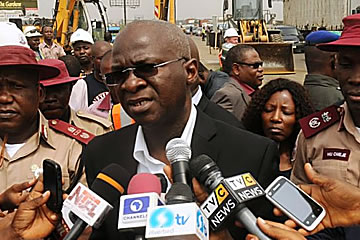
No To Premium Times’ New Found Love For Fiction As Journalism The attention of the Office of the Hon. Minister of Power, Works and Housing, Mr. Babatunde Fashola SAN has been drawn to another sensational offering from the platform of the Premium Times. Without doubt, the so called “Special Report” with the screaming headline “Works Minister, Fashola, in N166 billion contract mess” fits perfectly into an emerging pattern by Premium Times to create fiction, avoid obvious facts and sensationalise headlines in order to draw attention and sell its struggling platform. Barely two weeks ago, the same Premium Times published a similarly fabricated report with the mischievous headline, “EXCLUSIVE: Buhari administration plotting to break Nigerian law in award of $800 million contract.” It is a known fact that the media industry, like other sectors, in the economy, faces challenges thrown up by the recession. Indeed, the challenges of the media industry precede the recession. However, while the Federal Government and well meaning Stakeholders, including the media, are working assiduously to address the challenges, constantly muckraking and deliberately maligning public officials and institutions should not replace the age long responsibility of the media to hold government accountable to the populace. Examining the mischievous report published by Premium Times readily shows the obvious contradictions and the less than altruistic intentions therein. To start with, the report established the fact that there was an Evaluation Committee made up of a Chairman and Members who are ranking professionals in their own right. Even by its own admission, the report that went to the Bureau of Public Procurement (BPP) was the work of the Evaluation Committee which does not have the Hon. Minister as member. Except the publication was insinuating that the Committee colluded to perpetrate fraud for itself and the Ministry, which is not the case, then going to town about “Fashola” being in a “contract mess” leaves much to be desired. The Premium Times contradicted itself by alleging a “contract mess” and yet admitted that the Ministry of Power, Works and Housing followed Due Process by advertising projects to be awarded and sending the list of selected contractors to the Bureau of Public Procurement. If the Ministry does what is expected of it by law and the institution of Government that it went to did its job, in what way does it amount to a “mess”? It is pertinent to inform Nigerians that as at this moment, no new contracts have been awarded to date based on the 2016 Appropriation and as such no single kobo has been paid. The ‘contract mess’ which Premium Timessought to mislead Nigerian citizens with is an exchange of correspondence between two government institutions to which the Ministry has adequately responded. It is worrisome that whilst Premium Times devoted its journalistic energy to the correspondence from the Bureau of Public Procurement, it failed to inform its readers of the response of the Ministry which comprehensively addressed all the issues raised in the Bureau’s referenced report. Is journalism now a one-way traffic? For the avoidance of doubt, the statutory role of the Bureau of Public Procurement is to vet contracts to be awarded depending on the threshold. At the end of its work, it either issues a Due Process Certificate of ‘No Objection’ or withholds it. Indeed, even if it issues a Certificate of No Objection, the last approving authority for the threshold of jobs so sensationally reported by Premium Times is the Federal Executive Council and not the Hon. Minister or the Permanent Secretary of the Awarding Ministry. It should be noted that the BPP has the final decision on contract prices and in previous memos from the Ministry, the Bureau had reviewed the cost of contracts. In a regime emphasising Due Process and underscoring efficient institutions, it should be a source of worry if the BPP certifies every piece of document that goes to it as being okay. So rather than sensationalise public institutions doing its job, it would be advisable for media organisations to educate its personnel on how the procurement system works. Indeed, it is curious to note, that the frivolous allegations being published by Premium Times and most times often instantly “boosted” across social media platforms seems to have gained currency with the resolve of the Federal Government under the leadership of President Muhammdu Buhari to make budgets work for the people through faithful execution of projects across the country. In the locust years of miserable budgetary allocations to capital development, with scant regard for Due Process, it would seem all was well. A question that should aptly end this clarification meant to set the records straight is: “What do ‘they‘ want?” ...
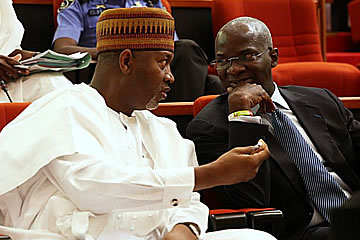
Proposed Closure Of Abuja Airport To Effect Runway Repairs, A Matter Of Immense Public Safety, Says Fashola At Senate Briefing * As Minister explains FEC’s option as best in terms of time, cost, enduring solution * Says globally closure of airports accord with the uncompromising safety standards in the Aviation Industry * Kaduna Airport was chosen as alternative airport because condition of Abuja-Kaduna road lends itself to emergency repairs The Minister of Power, Works and Housing, Mr. Babatunde Fashola SAN, Tuesday appeared before the Senate lending support to the decision for a closure of the Nnamdi Azikiwe International Airport, Abuja, for the repair of the runway, saying of all the choices available in the matter, safety consideration was paramount. Fashola, who said his Ministry came into the matter of the airport closure to play a supportive and complementary role, told the Senate that although there would be inconveniences in the six weeks it would take to complete the rehabilitation of the runway, but where there were choices between safety and inconvenience, safety must take precedence. Explaining that the runway of the airport needed repairs, Fashola declared, “By extension, therefore, it means that the airport cannot be used. It seems to be a very simple point but it is a point that members of the public should be made aware of that the runway is no longer safe. So this is a matter of immense public safety. This is the primary purpose for which governments exist”. Noting that the intention of the Executive arm was neither to present a fait accompli nor an immutable position to the public, the Minister further explained that having deeply explored the positions, the Ministry of Aviation was able to convince the Federal Executive Council that given the many existing options, each of which, according to him, has consequences, total closure was the best solution also in terms of cost, in terms of time and in terms of an enduring solution. Acknowledging that one of the issues that have agitated the minds of Nigerians, especially regular users of the airport, was the inconveniences that would result during the period of closure, Fashola added, “Let me say very clearly that I sympathise with those who will be affected, including not the least many of us who travel. But nevertheless my view is that where there are choices between inconvenience and safety, that safety must prevail”. The Minister, who listed the Philippines, India, Kenya and Sri Lanka as countries that have closed their airports for various reasons in the past, added, “Nigeria is not the first country to close an airport and to divert traffic either to another airport or another city”, adding, “This accord with the uncompromising safety standards in the Aviation Industry that has made flying the safest form of travelling when operators play by the rules”. He commended the Minister of State for Aviation, Senator Hadi Sirika, who, according to him, is a certified Pilot, “for his openness and commitment to the safety of life” adding that the Minister of State deserved all the support he could get in accomplishing the project. “And I couldn’t be happier than to hear the President of the Senate saying this morning that the decision whether to repair the runway is now a moot point, that the decision really was what the best approach would be”, Fashola said adding, “I like to emphasized also that the right to life, and this is important also in making the ultimate decision, that the right to life guaranteed in the constitution means nothing if Government does not take this kind of pre-emptive actions to forestall and prevent loss of life”. The Minister also commended the Senators for their intervention in discharging their representational duties to their various constituents, reiterating that it was important that members of the public get the right information that planes could no longer land safely on the runway until after the necessary rehabilitations. Fashola also used the opportunity to clarify the role being played by the Ministry of Power, Works and Housing as totally supportive. “It is not that there are no alternatives, but we have to make those choices and my role in my Ministry is totally supportive. We are not leading them so if they say that they want us to stop, we have no interest in the matter beyond the way the Police will come to give collaboration, beyond the way other agencies are coming to give collaboration. We were called into the meeting when this problem became a matter of urgent national consideration and we volunteered that we would give all the support to restore the road.” On the choice of Kaduna, instead of Minna Airport, as the alternative airport while the rehabilitation lasts, Fashola explained that given the current conditions of both roads, the Kaduna-Abuja Highway currently lent itself more to the kind of emergency intervention to restore it to motorability within the short time assigned for the completion of the rehabilitation. The Minister explained, “While the road distance from Minna to Abuja is about 156 kilometres and Kaduna to Abuja is about 186 kilometres (a difference of 30 kilometres or thereabouts), I have driven on both roads recently and the Kaduna-Abuja road is in much better condition than Minna-Abuja, and lends itself more quickly to the implementation of this kind of emergency repairs”. The Minister, who reiterated that his Ministry came into the matter in a complementary and supportive role also added that the Abuja-Minna Road was also currently under procurement. He explained that though the contractor was currently having difficulty with his financing, the issues would eventually be resolved and the road fixed. The Minister also disclosed that in anticipation that Kaduna Airport would be the alternative airport, his Ministry utilized the provisions of the emergency provisions of the Public Procurement Act to seek and obtain the approval of the Bureau of Public Procurement for the emergency rehabilitation of the bad sections of the Kaduna-Abuja Highway at a cost of N1.058Billion. He said although the contractor, Messrs CGC Nigeria Limited, has moved to site since the 7th of January 2017 and has proposed that it would be finished in 50 days ending thereabouts on the 28th of February from the work plan that they have submitted to the Ministry, they have not yet been paid but their presence was already visible on that road. “They have moved men and materials to site and this is the consequence of the confidence that has begun to come back to the construction industry since the implementation of the 2016 Budget that you passed”, he told the Senate adding, however that they were asking for a 50 per cent down payment which, which according to him, “the Procurement Law does not permit to make; which is also a matter that is pending before different Committees of the House to amend the Procurement Act”. “As to the choice between Kaduna and Minna Airports, I believe that the Minister of State for Aviation has explained that Kaduna is the default alternative Airport for Abuja bound flights when a fight plan was being considered for approval. I think he made that point from what I heard”, he said. Also acknowledging the inconveniences that Nigerian will experience during the period, Fashola, however advised, “This is also perhaps a time for us to adapt so that we can be safe”, suggesting that the eight-weeks’ notice given by the Ministry of Aviation should be utilised for the Airport users to , alter some of their prescheduled programmes ahead of the closure or until after the closure adding that they could also employ available technology such as skype or e-mail, sms and teleconferencing among others ...
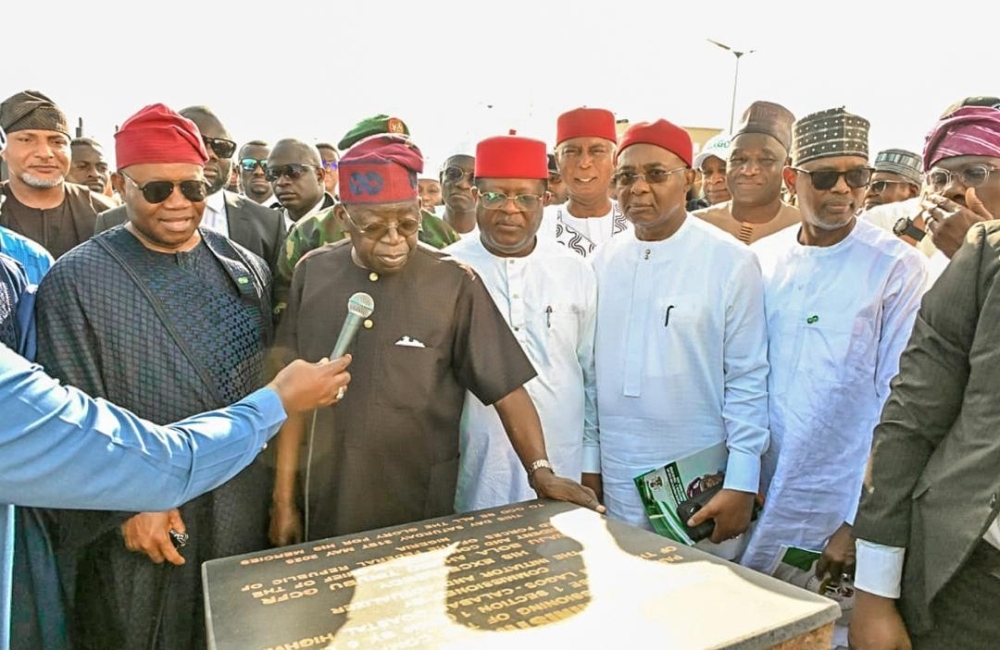
DRIVING NIGERIA’S FUTURE: CELEBRATING TWO YEARS OF TRANSFORMATIVE LEADERSHIP AND THE LAGOS-CALABAR COASTAL HIGHWAY MILESTONE
DRIVING NIGERIA’S FUTURE: CELEBRATING TWO YEARS OF TRANSFORMATIVE LEADERSHIP AND THE LAGOS-CALABAR COASTAL HIGHWAY MILESTONE
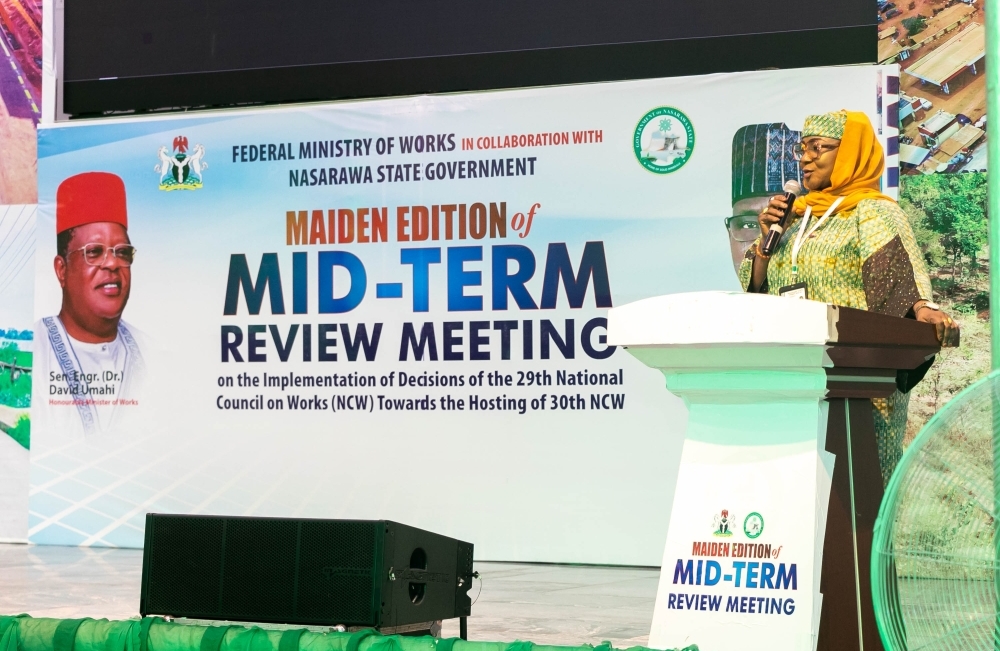
MID -TERM REVIEW MEETING ON THE IMPLIMENTATION OF THE DECISIONS REACHED AT THE 29TH NATIONAL COUNCIL ON WORKS (NCW) DAY 1
MID -TERM REVIEW MEETING ON THE IMPLIMENTATION OF THE DECISIONS REACHED AT THE 29TH NATIONAL COUNCIL ON WORKS (NCW) DAY 1