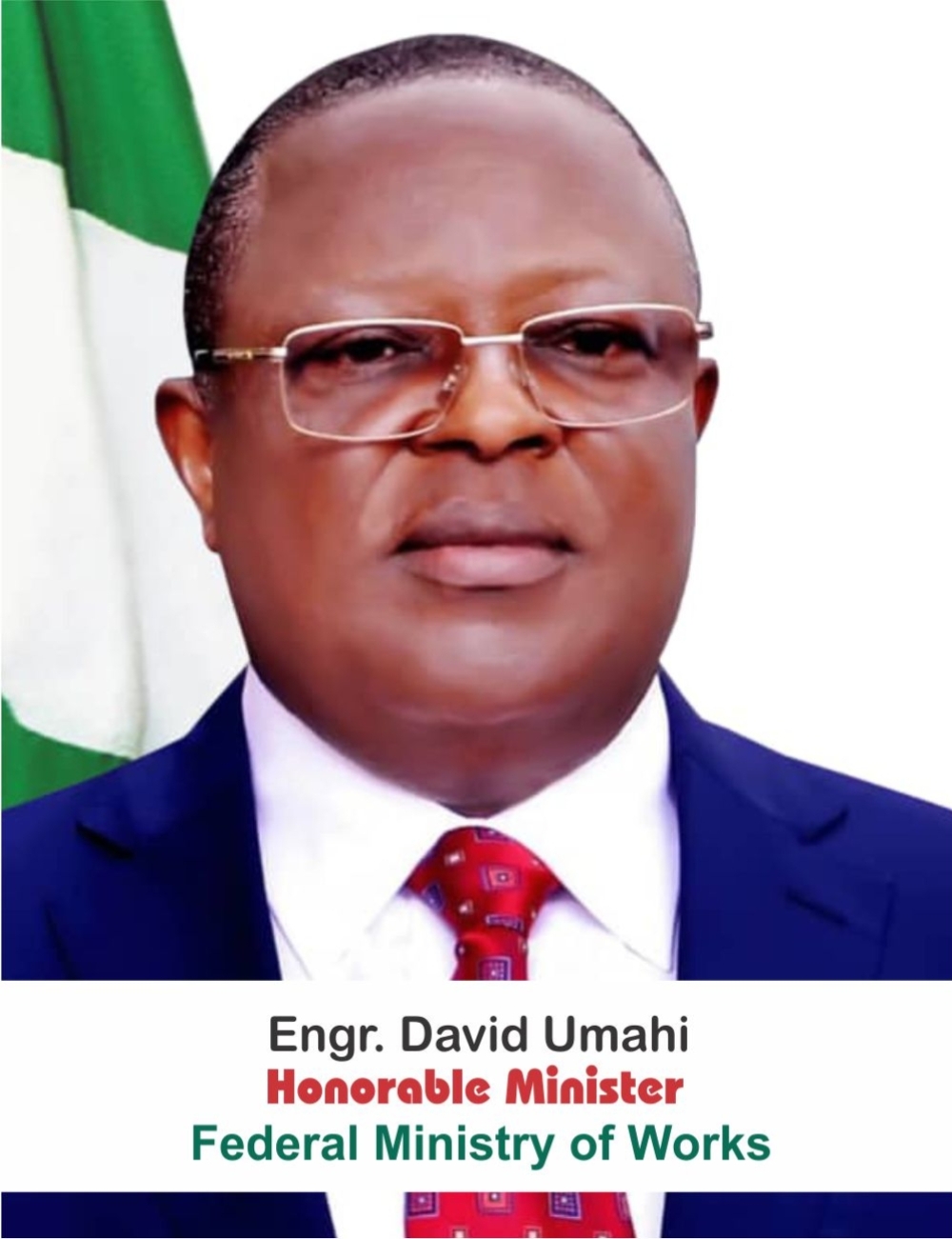
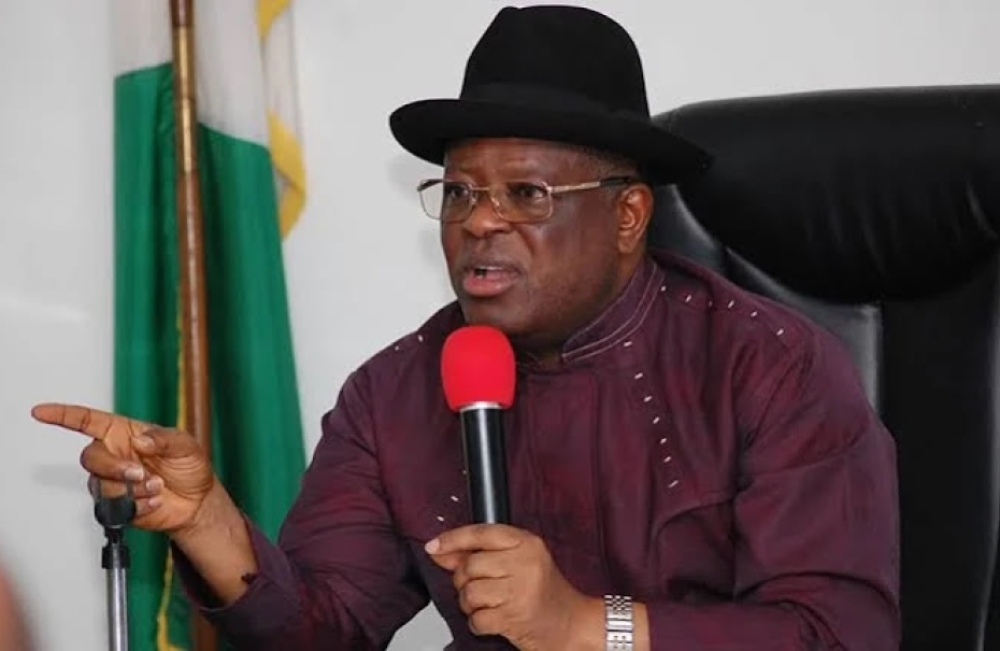
UMAHI ORDERS IMMEDIATE EMERGENCY INTERVENTION ON BENIN-ASABA ROAD, AND SOME OTHER CRITICAL FEDERAL ROADS
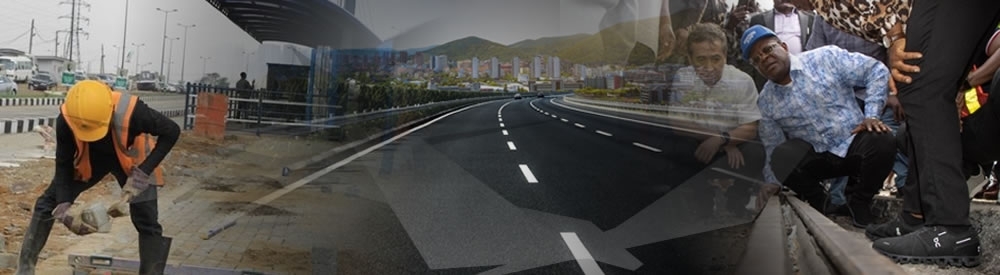
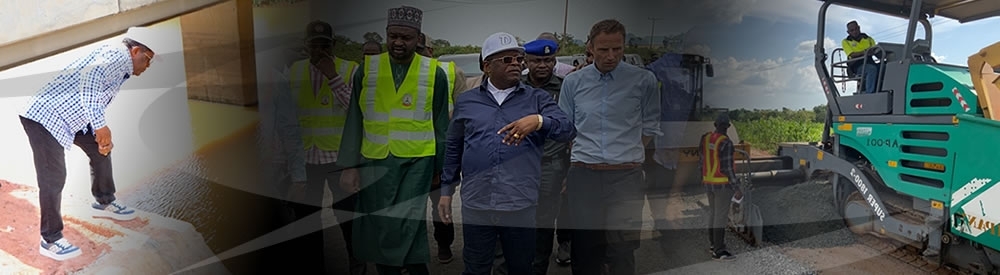
The Honourable Minister of Works, Senator Engr. David Nweze Umahi, CON, has directed the immediate deployment of major contractors to all three sections of the Benin-Asaba Federal Road to restore the failed sections and bring an end to the suffering of motorists and other road users.
This is because, the situation on the concessioned Benin-Asaba Road has reached a point where the overall public interest must take precedence over the existing concession agreement.
Recall that the Honourable Minister of Works was on the Benin-Asaba Road about seven days ago, where he assembled a number of contractors and directed them to prepare for immediate palliative intervention on the affected sections of the road at no cost to the concessionaire. In line with the Concession agreement which requires that before the Federal Government could intervene, the permission of the concessionaire must be required, and that permission was not granted to federal government.
The Minister subsequently proposed three options to the concessionaire, any one of which would have enabled the Federal Government to move in and address the worsening condition of the road. Unfortunately, none of the options was accepted by the concessionaire. Immediately after the Minister left Asaba, the already limited equipment deployed to the road by the concessionaire was further reduced to just one, worsening the situation and increasing the suffering of motorists and other road users.
While the Minister takes responsibility for the concerns and suffering of Nigerians using the road, it is important to state that the concessionaire has also not taken the suffering of Edo people and travelling public sufficiently into consideration by declining all the options put forward by the Federal Government. The concessionaire continues to rely on the terms of the concession agreement entered into by the previous administration, an agreement which weighs heavily against the Federal Government’s ability to intervene quickly in the interest of the public in a situation like this.
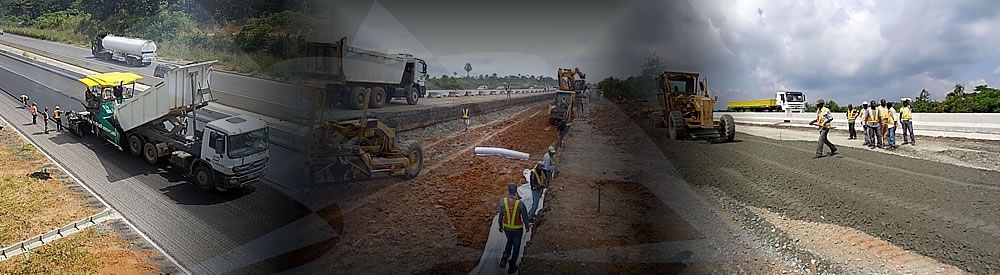
In view of this situation, the Honourable Minister of Works has directed the immediate deployment of major contractors within the corridor to all three sections of the Benin-Asaba Road to restore the failed sections and bring relief to the people, with the cost of the emergency intervention being borne by the Federal Government. The Honourable Minister has also directed immediate redesign of the entire route to be rebuilt with reinforced concrete pavement. The public should therefore take note that immediate action is underway to restore every failed section of the Benin-Asaba Road and subsequently rehabilitate the entire sections of the road using reinforced concrete pavement.
2. On the Benin-Sapele Road:
The Governors of Edo and Delta States, the Niger Delta Development Commission (NDDC), and the Federal Government are currently engaged in interventions on different sections of the road to restore the entire route. While some sections are receiving palliative attention, permanent works are also ongoing on other sections.
3. On Ifaki(Ekiti) - Kabba (Kogi) Road:
The Federal Government is engaging both the contractor; Gamji Nigeria Company Limited, and Dangote PLC on immediate emergency and permanent intervention on the most failed sections of the road, while efforts are being made to financially mobilise the company for more extensive permanent work to commence on the axis.
4. On the Sokoto-Zamfara-Katsina Road: This is an inherited project involving the dualisation of approximately 350 kilometres, which translates to about 700 kilometers. The project has since been redesigned and is currently ongoing and most sections are being reconstructed using reinforced concrete pavement. From the Sokoto axis towards Zamfara, over 50 kilometres of one carriageway have been fully completed with reinforced concrete pavement. From Zamfara to Katsina, some sections have been completed and palliative works have been ordered over the sections that have not been reconstructed. However, the pace of work slowed down due to the redesign and rephasing of the project. The contractors currently engaged on the road include CBC, SETRACO, Triacta and Mothercat. They are being remobilised to return to site and complete the outstanding works.
5. On the Abuja-Kaduna-Zaria-Kano Road: The Federal Government took over the Road project and has currently completed the 118-kilometer mostly on reinforced concrete pavement on lot 1. The Lot 2, which covers 164 kilometres, is over 60 percent completed on reinforced concrete pavement. The Federal Government has also introduced solar-powered light on the entire route of Abuja-Kaduna-Zaria - Kano to improve visibility during night travel and enhance the overall security situation on the route. The entire project is scheduled for completion by December 2026.
6. On Bauchi-Jigawa Road: Triacta Nigeria Limited has been mobilised to carry out the necessary interventions on some failed sections and work is currently ongoing in those failed sections.
7. On the Sagamu-Ore Road: 48 Kilometers of the 96-kilometre road have already been completed using reinforced concrete pavement. There is also a 24-kilometre section around Ore which was abandoned by the previous contractor. The Federal Government has directed its immediate restoration to ensure seamless travel. Solar lights are being installed in the entire 96kilometer of the road.
8. On Flooded Sections on Sagamu-Ore-Benin Road: The flooded sections on the same corridor between Sagamu-Ore-Benin Road, as well as other flooded sections in Ondo State, are being designed for emergency procurement and intervention.
9. On the East-West Road:
Some failed and critical sections, including defective sections of bridges along the East-West Road, are being marked out for emergency procurement and intervention.
10. On the Abuja-Lokoja Road:
Several contracts are ongoing along the route, while the three critical sections currently without contracts are being procured for emergency intervention.
11. On the Lokoja-Benin-Warri Road: The President has directed a complete redesign and procurement of the 400-kilometre dualised route covering the uncompleted sections, using reinforced concrete pavement, while palliative works will continue with the contractors currently on the road.
12. On Carter Bridge:
While the Federal Government continues to undertake weekly maintenance of the underwater elements of the bridge. The site has also been handed over to the contractor, CCECC, for the construction of a permanent new bridge, and work has commenced.
13. On the Third Mainland Bridge:
With regard to the defective underwater structural elements, the Federal Government is at the final stage of determining the appropriate intervention for the repair of the affected elements.
14. On the flooded section of the Lagos-Ibadan Road: Work has commenced on the affected section. There are also several flooded sections on federal roads across the six geopolitical zones, largely occasioned by excessive flooding and the effects of climate change. The Federal Government is identifying and marking these sections for immediate attention.
15. On the First and Second Niger Bridges:
Intervention work is ongoing on the approach roads to the Second Niger Bridge damaged by flood and the work is progressing very well. The First Niger Bridge has been closed to traffic to enable immediate repair works. Contractor has mobilized to site and comprehensive rehabilitation of the bridge has started. From Summit Junction to the First Niger Bridge, massive rehabilitation work is also ongoing using reinforced concrete pavement.
16. The Honourable Minister wishes to commend the President of the Federal Republic of Nigeria, His Excellency Bola Ahmed Tinubu, GCFR, for the massive work being undertaken on the nation’s roads since the administration assumed office in 2023.
17. It is important to state that when the present administration came into office, there was hardly any part of the country where one could travel for an hour without encountering significant challenges on the road network. The condition of the country’s roads and bridges was a major national infrastructure challenge.
18. Rather than shy away from the problem, the administration of President Bola Ahmed Tinubu made the nation’s road network a priority. Virtually every part of the country became a priority, and the Federal Government, through the Federal Ministry of Works, Regional Commissions, Parastatals and other MDA’s has continued to respond extensively to these challenges.
19. The Federal Government is currently working on over 80 percent of the inherited federal roads, an unprecedented level of intervention in the country’s road infrastructure.
20. We ask the public to understand the enormous challenges inherited on our roads and bridges and to take note not only of the problems being solved, but also of the permanent solutions being introduced.
21. A major part of this new approach is the use of reinforced concrete pavement, designed to significantly extend the lifespan of major roads. These roads are expected to last between 50 and 100 years. This means that roads being constructed under President Bola Ahmed Tinubu’s administration are being designed with future generations in mind, rather than simply providing temporary solutions to today’s problems. And this is a complete departure from the past, when roads often deteriorated only a few years after completion, resulting in a continuous cycle of reconstruction and expenditure.
22. We appreciate the concerns of Nigerians over the condition of some roads presently and the difficulties faced by motorists and commuters who cannot move easily from one point to another. Those concerns are legitimate, and the Federal Government is listening. But Nigerians should also recognise the enormous scale of the problems inherited and the amount of work currently being undertaken across the country.
23. It is simply impossible to resolve every road challenge accumulated over many years of neglect by the past administrations within three years. What is important is that the government is working, the government is responding, and the government is putting permanent solutions in place.
25. We appreciate members of the public who send situation reports on failed roads and other infrastructure challenges. These reports help the Ministry identify areas requiring urgent attention. However, we also appeal to members of the public to report when such problems have been addressed, just as they report when they occur.
24. We are aware of situations where photographs and reports of road challenges continue to circulate on social media even after the Federal Government has intervened and resolved the particular problem.
25. However, the Ministry will continue to respond as rapidly as possible to genuine reports and concerns from Nigerians.
26. It is also important to note that we have compiled a comprehensive record of all inherited, ongoing and intervention projects across the country which is available to the public. This is to ensure that Nigerians have access to information on the infrastructure projects being undertaken nationwide and can fully participate in and appreciate the infrastructure revolution of President Bola Ahmed Tinubu’s administration.

UMAHI ORDERS IMMEDIATE EMERGENCY INTERVENTION ON BENIN-ASABA ROAD, AND SOME OTHER CRITICAL FEDERAL ROADS The Honourable Minister of Works, Senator Engr. David Nweze Umahi, CON, has directed the immediate deployment of major contractors to all three sections of the Benin-Asaba Federal Road to restore the failed sections and bring an end to the suffering of motorists and other road users. This is because, the situation on the concessioned Benin-Asaba Road has reached a point where the overall public interest must take precedence over the existing concession agreement. Recall that the Honourable Minister of Works was on the Benin-Asaba Road about seven days ago, where he assembled a number of contractors and directed them to prepare for immediate palliative intervention on the affected sections of the road at no cost to the concessionaire. In line with the Concession agreement which requires that before the Federal Government could intervene, the permission of the concessionaire must be required, and that permission was not granted to federal government. The Minister subsequently proposed three options to the concessionaire, any one of which would have enabled the Federal Government to move in and address the worsening condition of the road. Unfortunately, none of the options was accepted by the concessionaire. Immediately after the Minister left Asaba, the already limited equipment deployed to the road by the concessionaire was further reduced to just one, worsening the situation and increasing the suffering of motorists and other road users. While the Minister takes responsibility for the concerns and suffering of Nigerians using the road, it is important to state that the concessionaire has also not taken the suffering of Edo people and travelling public sufficiently into consideration by declining all the options put forward by the Federal Government. The concessionaire continues to rely on the terms of the concession agreement entered into by the previous administration, an agreement which weighs heavily against the Federal Government’s ability to intervene quickly in the interest of the public in a situation like this. In view of this situation, the Honourable Minister of Works has directed the immediate deployment of major contractors within the corridor to all three sections of the Benin-Asaba Road to restore the failed sections and bring relief to the people, with the cost of the emergency intervention being borne by the Federal Government. The Honourable Minister has also directed immediate redesign of the entire route to be rebuilt with reinforced concrete pavement. The public should therefore take note that immediate action is underway to restore every failed section of the Benin-Asaba Road and subsequently rehabilitate the entire sections of the road using reinforced concrete pavement. 2. On the Benin-Sapele Road: 3. On Ifaki(Ekiti) - Kabba (Kogi) Road: 4. On the Sokoto-Zamfara-Katsina Road: This is an inherited project involving the dualisation of approximately 350 kilometres, which translates to about 700 kilometers. The project has since been redesigned and is currently ongoing and most sections are being reconstructed using reinforced concrete pavement. From the Sokoto axis towards Zamfara, over 50 kilometres of one carriageway have been fully completed with reinforced concrete pavement. From Zamfara to Katsina, some sections have been completed and palliative works have been ordered over the sections that have not been reconstructed. However, the pace of work slowed down due to the redesign and rephasing of the project. The contractors currently engaged on the road include CBC, SETRACO, Triacta and Mothercat. They are being remobilised to return to site and complete the outstanding works. 5. On the Abuja-Kaduna-Zaria-Kano Road: The Federal Government took over the Road project and has currently completed the 118-kilometer mostly on reinforced concrete pavement on lot 1. The Lot 2, which covers 164 kilometres, is over 60 percent completed on reinforced concrete pavement. The Federal Government has also introduced solar-powered light on the entire route of Abuja-Kaduna-Zaria - Kano to improve visibility during night travel and enhance the overall security situation on the route. The entire project is scheduled for completion by December 2026. 6. On Bauchi-Jigawa Road: Triacta Nigeria Limited has been mobilised to carry out the necessary interventions on some failed sections and work is currently ongoing in those failed sections. 7. On the Sagamu-Ore Road: 48 Kilometers of the 96-kilometre road have already been completed using reinforced concrete pavement. There is also a 24-kilometre section around Ore which was abandoned by the previous contractor. The Federal Government has directed its immediate restoration to ensure seamless travel. Solar lights are being installed in the entire 96kilometer of the road. 8. On Flooded Sections on Sagamu-Ore-Benin Road: The flooded sections on the same corridor between Sagamu-Ore-Benin Road, as well as other flooded sections in Ondo State, are being designed for emergency procurement and intervention. 9. On the East-West Road: 10. On the Abuja-Lokoja Road: 11. On the Lokoja-Benin-Warri Road: The President has directed a complete redesign and procurement of the 400-kilometre dualised route covering the uncompleted sections, using reinforced concrete pavement, while palliative works will continue with the contractors currently on the road. 12. On Carter Bridge: 13. On the Third Mainland Bridge: 14. On the flooded section of the Lagos-Ibadan Road: Work has commenced on the affected section. There are also several flooded sections on federal roads across the six geopolitical zones, largely occasioned by excessive flooding and the effects of climate change. The Federal Government is identifying and marking these sections for immediate attention. 15. On the First and Second Niger Bridges: 16. The Honourable Minister wishes to commend the President of the Federal Republic of Nigeria, His Excellency Bola Ahmed Tinubu, GCFR, for the massive work being undertaken on the nation’s roads since the administration assumed office in 2023. 17. It is important to state that when the present administration came into office, there was hardly any part of the country where one could travel for an hour without encountering significant challenges on the road network. The condition of the country’s roads and bridges was a major national infrastructure challenge. 18. Rather than shy away from the problem, the administration of President Bola Ahmed Tinubu made the nation’s road network a priority. Virtually every part of the country became a priority, and the Federal Government, through the Federal Ministry of Works, Regional Commissions, Parastatals and other MDA’s has continued to respond extensively to these challenges. 19. The Federal Government is currently working on over 80 percent of the inherited federal roads, an unprecedented level of intervention in the country’s road infrastructure. 20. We ask the public to understand the enormous challenges inherited on our roads and bridges and to take note not only of the problems being solved, but also of the permanent solutions being introduced. 21. A major part of this new approach is the use of reinforced concrete pavement, designed to significantly extend the lifespan of major roads. These roads are expected to last between 50 and 100 years. This means that roads being constructed under President Bola Ahmed Tinubu’s administration are being designed with future generations in mind, rather than simply providing temporary solutions to today’s problems. And this is a complete departure from the past, when roads often deteriorated only a few years after completion, resulting in a continuous cycle of reconstruction and expenditure. 22. We appreciate the concerns of Nigerians over the condition of some roads presently and the difficulties faced by motorists and commuters who cannot move easily from one point to another. Those concerns are legitimate, and the Federal Government is listening. But Nigerians should also recognise the enormous scale of the problems inherited and the amount of work currently being undertaken across the country. 23. It is simply impossible to resolve every road challenge accumulated over many years of neglect by the past administrations within three years. What is important is that the government is working, the government is responding, and the government is putting permanent solutions in place. 25. We appreciate members of the public who send situation reports on failed roads and other infrastructure challenges. These reports help the Ministry identify areas requiring urgent attention. However, we also appeal to members of the public to report when such problems have been addressed, just as they report when they occur. 24. We are aware of situations where photographs and reports of road challenges continue to circulate on social media even after the Federal Government has intervened and resolved the particular problem.
The Governors of Edo and Delta States, the Niger Delta Development Commission (NDDC), and the Federal Government are currently engaged in interventions on different sections of the road to restore the entire route. While some sections are receiving palliative attention, permanent works are also ongoing on other sections.
The Federal Government is engaging both the contractor; Gamji Nigeria Company Limited, and Dangote PLC on immediate emergency and permanent intervention on the most failed sections of the road, while efforts are being made to financially mobilise the company for more extensive permanent work to commence on the axis.
Some failed and critical sections, including defective sections of bridges along the East-West Road, are being marked out for emergency procurement and intervention.
Several contracts are ongoing along the route, while the three critical sections currently without contracts are being procured for emergency intervention.
While the Federal Government continues to undertake weekly maintenance of the underwater elements of the bridge. The site has also been handed over to the contractor, CCECC, for the construction of a permanent new bridge, and work has commenced.
With regard to the defective underwater structural elements, the Federal Government is at the final stage of determining the appropriate intervention for the repair of the affected elements.
Intervention work is ongoing on the approach roads to the Second Niger Bridge damaged by flood and the work is progressing very well. The First Niger Bridge has been closed to traffic to enable immediate repair works. Contractor has mobilized to site and comprehensive rehabilitation of the bridge has started. From Summit Junction to the First Niger Bridge, massive rehabilitation work is also ongoing using reinforced concrete pavement.
25. However, the Ministry will continue to respond as rapidly as possible to genuine reports and concerns from Nigerians.
26. It is also important to note that we have compiled a comprehensive record of all inherited, ongoing and intervention projects across the country which is available to the public. This is to ensure that Nigerians have access to information on the infrastructure projects being undertaken nationwide and can fully participate in and appreciate the infrastructure revolution of President Bola Ahmed Tinubu’s administration.
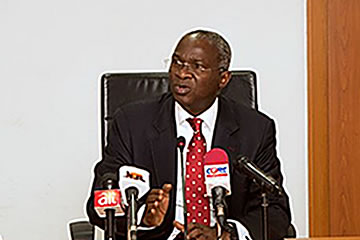
Fashola To Nigerian Youths: Don’T Despair, There Is Hope, Recovery Ahead Calls for patience, hard work as panacea for economic recovery "With what I am seeing in the seven months of implementing a budget, recovery is on the way", he says Urges Nigerian youths to be prepared to play bigger roles as results of budget implementation, steps to stimulate local production begin to manifest more forcefully The Minister of Power, Works and Housing, Mr. Babatunde Fashola SAN, Tuesday participated in a Special Town Meeting with Youths in Abuja bearing an unmistakable message of hope even as he called for patience and hard work among Nigerians as the panacea for the much desired national economic recovery. Fashola, who spoke at the Town Hall Meeting with Nigerian Youths in Abuja organised by the Federal Ministry of Information and Culture, prefaced his contribution with an acknowledgement of his age and some of his colleagues as being beyond the youth bracket but quickly added that he has useful experience to share with the gathering. His words: " The point really is that as unyouthful as I am there is a lot of story and history there. For the very, very young people, the first thing I’ll like to say to you is don’t despair. There is hope and there is light at the end of the tunnel. I have seen Nigeria like this before, even worse…I want to say to you don’t lose faith." The Minister also urged the young people to be patient and hopeful assuring that government policies and actions being implemented across the country from the 2016 budget had given the indication that economic recovery was on the way. Addressing the capacity audience of youths, representatives of youth organisations, Ministers and top government functionaries, Fashola said because recession came about when the country stopped producing and started having negative growth the only means of recovery was for all, especially the youths, to roll up their sleeves and "work very hard to take back our economy". The Minister said the 2017 Budget was appropriately named, "Budget of Recovery and Growth" by President Muhammadu Buhari, adding, however, that although the President has set all the parameters for economic recovery and growth, the President can neither recover nor grow back the economy alone. He declared, "It is the sum total of what all of us do that the National Bureau of Statistics will record and that is when the numbers come out. It is either a plus or a minus. To everybody here and to those who are watching us at home, you must understand that this is the time when we must work our hardest". "I don’t pretend that it is easy. I don’t assume that people are not facing difficult times, I am mindful of it; I see it up close. I know those who are struggling to pay rent; I know those who are struggling to pay fees, those who are withdrawing their children from school. I have relations, but I know that we can turn this corner together", the Minister said. Predicating his stance on the implementation of the 2017 Budget proposals, Fashola said as more money became available for the country, Nigerians would feel it in the quality of infrastructure; in railway projects being completed, electricity installations being expanded and liabilities in electricity being cleared, pointing out that there were "quite a number of liabilities there that have to be paid off". Appealing to people engaged in counterproductive activities against the economy to stop, the Minister declared, "As money moves around, if I pay A, A can buy sugar and milk. The sugar and milk seller can pay for her children’s school fees, the school fees can pay salaries of teachers. That is how money moves around in an economy". "It is important for us, especially those who are sabotaging this economy, breaking pipelines, that this is time to stop if we must recover; because the price of oil is going to go up but we will not benefit from it if we don’t produce; that was why I talked about working hard and producing because that is still a major source of our income. It is also the major source of our foreign exchange", he said adding that selling more oil would also reduce the pressure on Dollar to Naira for the benefits of all Nigerians. On the role of his Ministry in achieving a turn around for the economy, Fashola, who recalled his earlier addresses in which he had disclosed the realities he met on assumption of duties, pointed out that for upwards of two to three years, the contractors in Power and in Works were not paid while nothing except Public Private Partnership (PPP) was happening in Housing. According to the Minister, "As contractors started losing income, the net effect was to start shedding jobs. So the first thing that we have started doing is to recover those jobs by starting to pay contractors. The first disbursements were made, I think, in June, the second disbursements were made between October and November". The Minister, who also noted Ministers have spent one year, one month and nine days in office during which period they have implemented the 2016 budget for roughly seven months, added that in seven months, the government has quarter by quarter, as confirmed by Minister of Finance and Minister of Economic Planning and Development, been able to put contractors back to work. "Contractors who haven’t worked for three years are back to work. Those are the first steps to recovery, getting those who have lost their jobs back to work and I am optimistic that if what I see, what’s being reported to me, and we are not by any means near to where we want to be, with what I am seeing in the seven months of implementing a budget, recovery is on the way", he said. Tracing the recession to what government did and failed to do in the past as well as unavoidable global events, Fashola recalled that between 1979 and 1984 Nigeria had much money but wasted it all in importation of frivolities adding that by 1984, most of the imported things had disappeared. "By 1985, in my University, recession meant we could not go to the cafeteria again. We used to eat a meal at 50 kobo; eggs, coffee and tea in this country, chicken at lunch, 50k per meal... That disappeared. But, you know what? Nigeria did not disappear", he said. Saying the scenario of those years were almost similar to what is happening again today, Fashola urged Nigerian youths not to despair "because there is hope" adding that the best thing for them to do was not to "check out" as was popular in his time, but to stay put and take the opportunities emerging in the economy to build the nation up to international standard and acceptability. Responding to a question on the supply of prepaid meters and ending estimated bills, the Minister assured that his Ministry was doing all in its power to end the vexed issue adding, however, that it was better to come to the public with results than speak of the efforts being made now for which it would receive no credit. He, however, noted that if the Government of Nigeria could not meter all Nigerians in the 63 years it was in full control of electricity generation, transmission and distribution, it would be unfair to expect that private companies that took over ownership of generation and distribution three years ago would perform that feat. "The point to make, therefore, is that the Power Sector in private hands is a three-year transition thus far. We are doing a lot of things and one of the things we are trying to ensure does not happen again is massive importation of meters because the more meters we import the more jobs we take away from you", he told the youths. The Minister said government was trying to encourage local meter manufacturing companies to produce the meters here adding, however, that because there were still components that still technologically were not produced in the country, government was trying to get support for the companies to access funds. "Just yesterday, I signed a letter to the Governor of CBN supporting the request of the two meter manufacturing companies to access foreign exchange which had been denied them in the past", he said adding, "But that is one half of the story. The other half of the story is also the liquidity issue in the Power Sector which I have alluded to and which makes it difficult for the DisCos to access funds to buy meters and supply you". He said in order to avoid the mistrust between the DisCos and consumers over supply of meters, government has advised the DisCos that their responsibility was to provide the meters and stop passing the burden to consumers adding, "Their (customers’) burden is to pay bills for energy consumed". Expressing the commitment of the present administration to the local manufacture and supply of meters, Fashola declared, "This administration is determined that the mistake we made in the telecommunications sector will not be repeated in the same way that we are trying to localise our opportunities for producing what we eat". He added, "So bear with us. Step by step, but very progressively and assuredly we will reach you and in the fullness of time". Earlier, in his opening remarks, the Minister of Information, Alhaji Lai Mohammed, said the present administration headed by President Muhammadu Buhari, was very concerned about youth empowerment in the country adding that in the first phase of the N-Power programme government created 200,000 jobs pointing out that it was the greatest number of jobs created in one swoop by any administration in the country. According to him, another 300, 000 jobs were next in line to bring the number to the 500,000 which the administration promised adding that most of the jobs, which he said would be from Education, Health and Agriculture programmes, would benefit the youths. Noting that the school feeding had taken off in Anambra, Kaduna and Osun States and was being scaled up now to 11 of the 18 states designated for the first phase of the programme, the Minister added that some 45,000 cooks had been trained in all the states. Urging the youths to cooperate with government in achieving the set goals, the Minister said the data for cash transfers for nine states of the country was now ready and the payment processes in those states were already in top gear adding that for the micro-credit scheme, more than 1,000,000 Nigerians were set to get loans at low interest rates through the Bank of Industries. Other Ministers that addressed the youths and answered questions during the robust interactive sessions were, the Minister of Labour and Productivity, Minister of Sports and Youths Development, Minister of Finance and Minister of State for Trade and Commerce. ...
Fashola Adds 700MW To National Grid The Minister of Power, Works and Housing, Babatunde Raji Fashola has disclosed that the on-going construction work on the Zungeru Hydroelectric Power Plant Project would add 700MW to the national grid when completed. This is as a result of the pursuit for regular and reliable electricity supply nationwide. The Minister who was represented by the Director, Energy Resources in the Ministry, Engr. Emmanuel Ajayi made this disclosure recently during the River Closure Ceremony of the project at Zungeru, Niger State. He described the project being carried out in conjunction with a consortium of major Chinese Companies as one of the biggest hydro-electric power projects in the country. He said that it is a great and feasible feat that would boost the provision of electricity supply nation-wide. He also pointed out that it is a good omen for the attainment of the present administration’s thrust of providing incremental, sustainable and uninterrupted power supply which Nigerians are yeaming for. The Minister commended the efforts of those who contributed to the construction of the project and advised the host communities to maintain peace as government has put in place modalities to ensure adequate compensations and resettlement of the affected people around the project site. The Governor of Niger State, Alhaji Abubakar Sani Bello, represented by the Commissioner for Works and Transport, Abdulmalik Usman Cheche stated that Niger State is housing yet another power project of 700MW apart from the 3 other power projects already sited in the State. He commended the federal government for creating mass employment to their people, he also noted that the project has already created over 5,000 employments to the host communities. The Governor gave assurance of the safety of the contractors and workers on the site, saying that the deployment of soldiers to the station is government’s proactive response to its citizenry as no responsible government will fold its arms on security of such a huge investment. The Vice President of SinoHydro Consortuim, one of the contracting companies handling the project, Xiao Jun pledged his company’s readiness to promote the project in line with the contract agreement, he gave assurance that the project would be realized on record time. The Project Director of employers’ Representative (Engr. (Dr.) Adewumi); the Project Director of CNEEC-SinoHydro Consortium (Wu Guisheng) and the Vice President of PowerChina International Group Limited (Tian Haha) also graced the ceremony. ...
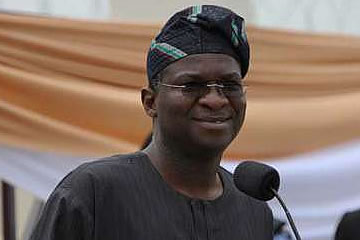
Public Private Partnership, A Panacea To Housing Deficit In Nigeria- Fashola The Honourable Minister for Power, Works and Housing, Mr. Babatunde Fashola, SAN has reiterated the importance of synergy between the Federal Government and the Private sector in the built industry in the provision of mass housing to Nigerians. He said the Federal government must find a way to exploit the Private Sector participation in the industry especially in the area of local content manufacturing of building materials, noting that it would aid in the reduction of prices of the materials and subsequently the cost of the houses. He made this known during an inspection visit to some selected sites and Polysterene manufacturing company in Abuja. He said the visit was a follow up to the claims by some sponsors in the built industry during the Affordable Housing Summit held in Abuja earlier in the year that they had all the machineries to partner with the Federal Government in delivering affordable mass housing to Nigerians. The Minister who expressed satisfaction with what he saw on ground, noted that the concepts of acceptability and affordability were significant and must be factored into any system the Federal Government intends to adopt in the sector, adding that the low and middle income earners in Nigeria may not be interested in most of the houses available on ground at the moment, though beautiful and accepted but because they are mostly not affordable and said government was committed to initiate policies that would address the situation. At the Citec building and manufacturing factory in Mbora district, Abuja. The minister who was conducted round the factory by the Managing Director, Barrister Oluwadare Bello, inspected EPS Polystyerene, a building raw material made from petrochemical products and is being used to construct facials used in deckings for storey buildings. Other building materials included, wire mesh which acts as load bearing on the wall and sandwich for constructing portakabins. The company also manufactures doors and windows. The Minister said more companies using polystyerene would be encouraged as houses built with it are cheaper, noise proof, self fire extinguishing and does not need the use of air conditioners because it regulates the weather, adding that for the concept of acceptability and affordability to be meaningful to Nigerians, government must do its best to bring down the cost of owning a house. He said as part of efforts to assist Nigerians own houses with less burdens, the Federal Mortgage Bank has been repositioned to better perform its statutory function so that government on its part would concentrate more on ensuring the provision of acceptable housing designs. The Minister also visited building sites including: Braines and Hammers at Life Camp and Galadimawa, Sunny Vale at Logokoma and Rockvale at Gudu. He expressed satisfaction that Nigerian youths were being engaged at the sites in various trades such as masons, building sewage plants, iron mongering, and so on, noting that it has shown that the built sector is important in reducing the unemployment rate in the country. ...
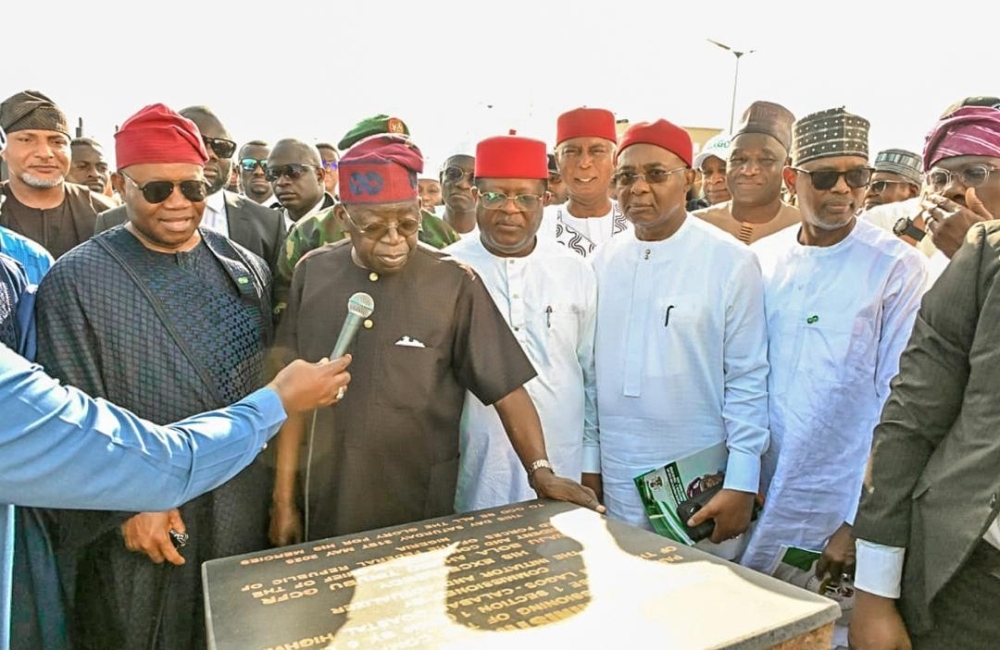
DRIVING NIGERIA’S FUTURE: CELEBRATING TWO YEARS OF TRANSFORMATIVE LEADERSHIP AND THE LAGOS-CALABAR COASTAL HIGHWAY MILESTONE
DRIVING NIGERIA’S FUTURE: CELEBRATING TWO YEARS OF TRANSFORMATIVE LEADERSHIP AND THE LAGOS-CALABAR COASTAL HIGHWAY MILESTONE
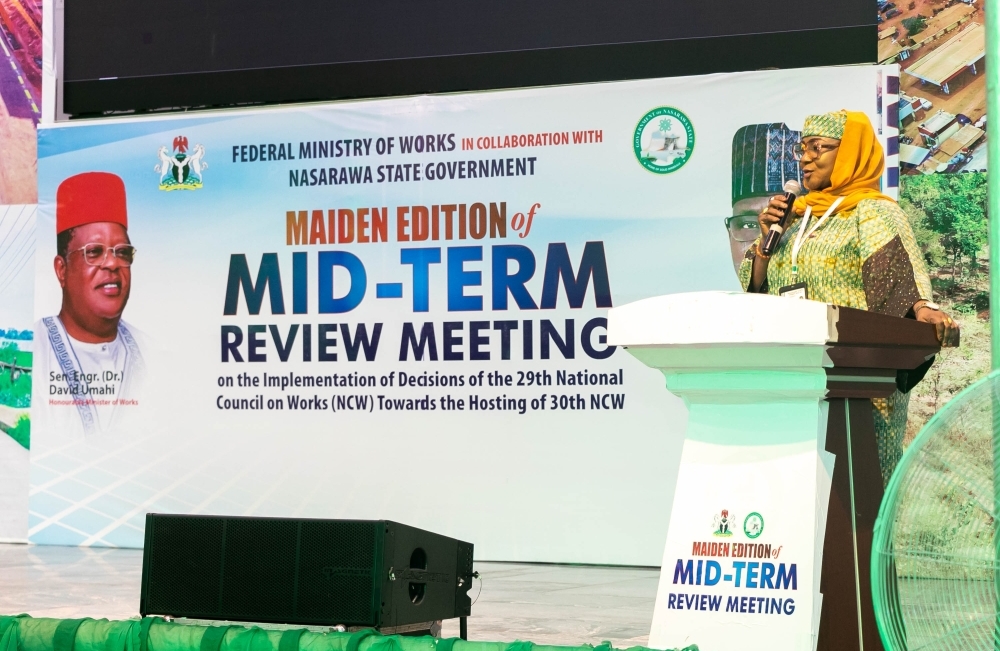
MID -TERM REVIEW MEETING ON THE IMPLIMENTATION OF THE DECISIONS REACHED AT THE 29TH NATIONAL COUNCIL ON WORKS (NCW) DAY 1
MID -TERM REVIEW MEETING ON THE IMPLIMENTATION OF THE DECISIONS REACHED AT THE 29TH NATIONAL COUNCIL ON WORKS (NCW) DAY 1