GORONYO COMMENDS SOKOTO GOVERNOR FOR DONATING 10 HILUX VEHICLES TO STRENGTHEN SECURITY ALONG SOKOTO–BADAGRY SUPERHIGHWAY
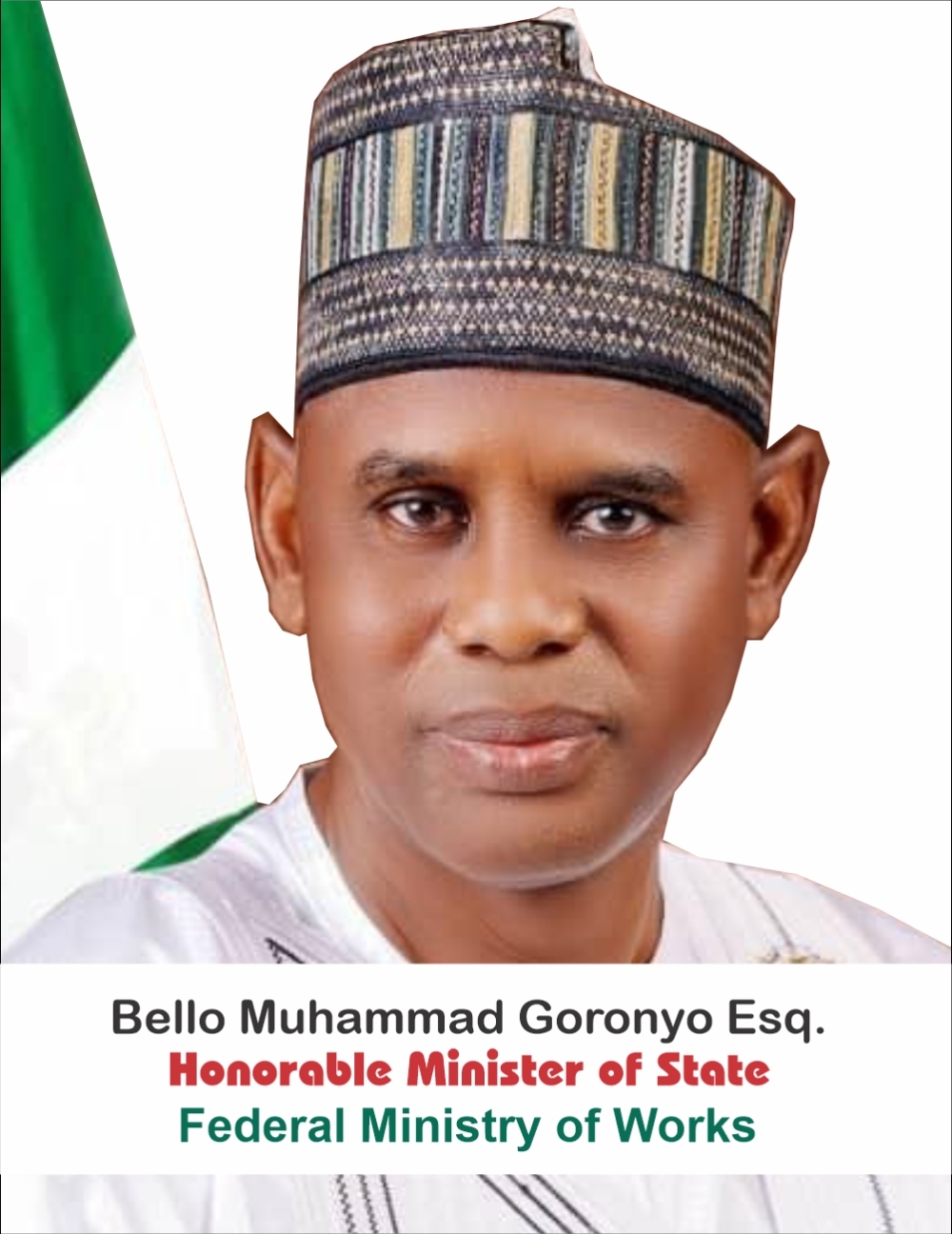
The Honourable Minister of State for Works, Rt. Hon. Bello Muhammad Goronyo, Esq., has commended the Governor of Sokoto State, Dr. Ahmed Aliyu Sokoto, PhD, for donating 10 operational Toyota Hilux vehicles to strengthen security operations along the Sokoto–Badagry Superhighway and other strategic infrastructure corridors.
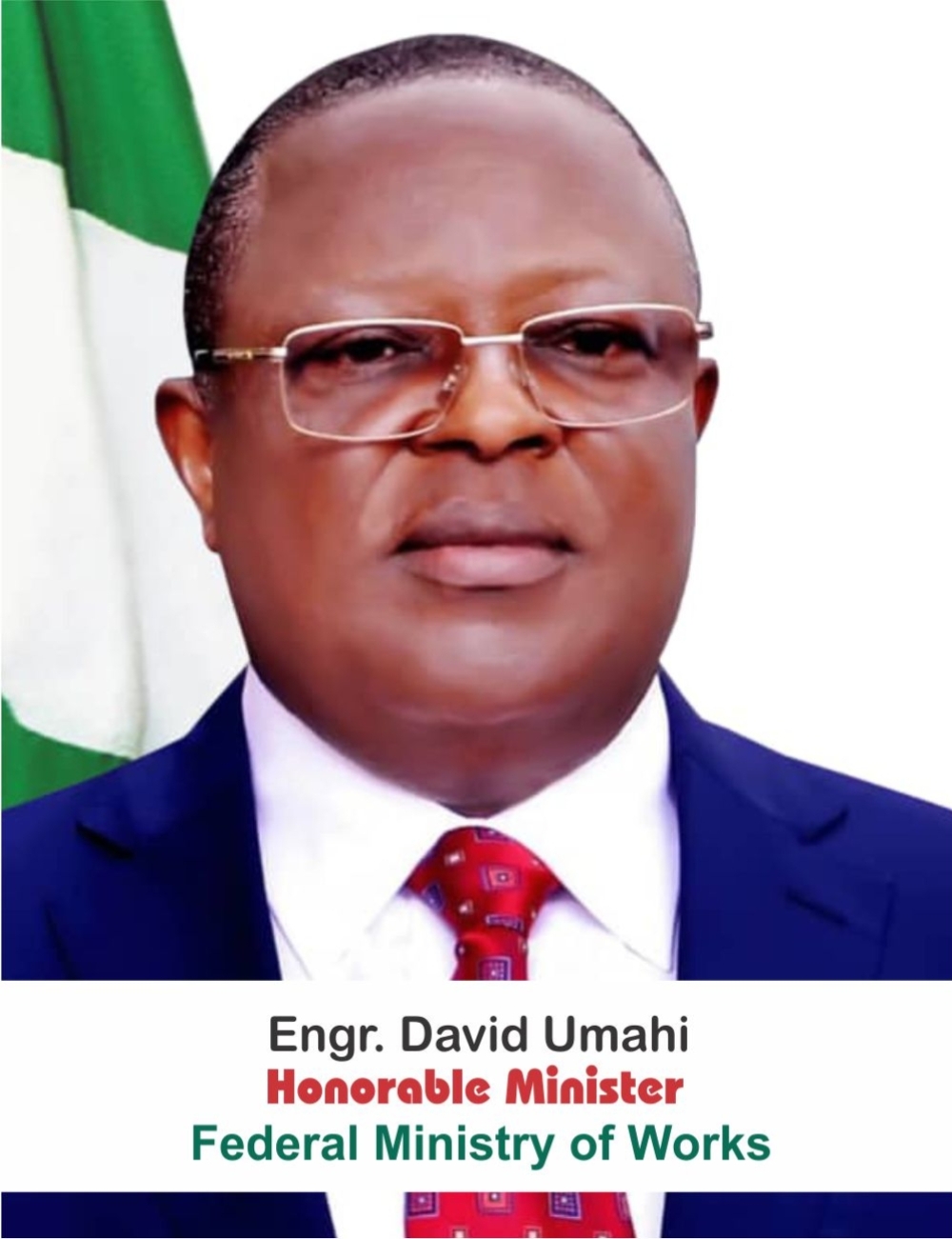
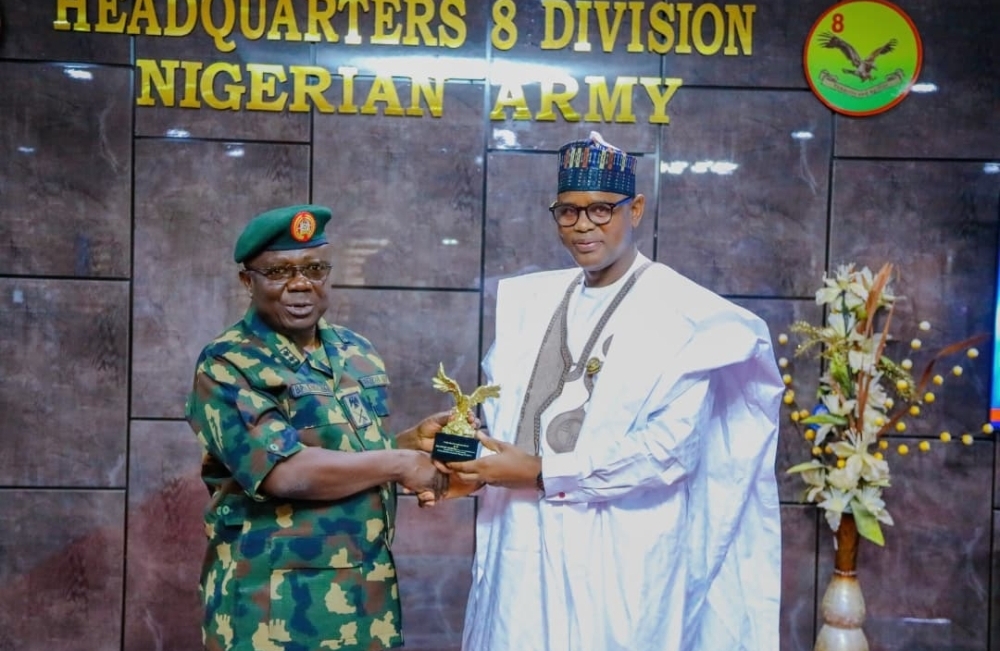
The vehicles were formally commissioned and handed over to the Nigerian Army at the Headquarters of the 8 Division, Nigerian Army, Sokoto, on Thursday, October 8, 2026, by the Honourable Minister of State for Works, on behalf of the Honourable Minister of Works, Engr. David Nweze Umahi, CON, FNSE.
The donation is expected to enhance the operational capacity of military personnel and other security agencies responsible for protecting construction workers, contractors, equipment and host communities along the highway corridor.
Speaking during the ceremony, Goronyo described the donation as a demonstration of the Sokoto State Government’s commitment to national development and the successful implementation of President Bola Ahmed Tinubu, GCFR’s Renewed Hope Agenda, particularly its landmark infrastructure projects.
The Minister emphasised that the Sokoto–Badagry Superhighway represents a long-standing national infrastructure vision that dates back several decades, with its conception traced to the era of former President Shehu Shagari in the 1970s. However, the vision remained unrealised for decades until the administration of President Bola Ahmed Tinubu, GCFR, initiated the construction of the 1,068-kilometre highway in October 2024.
He described the project as a significant step towards translating a historic aspiration into tangible infrastructure that will connect communities, expand economic opportunities and strengthen national integration.
According to Goronyo, President Tinubu’s commitment to the project demonstrates the Federal Government’s determination to bridge critical infrastructure gaps and improve connectivity between northern and southern Nigeria.
He noted that the superhighway, which traverses Sokoto, Kebbi, Niger, Kwara, Oyo, Ogun and Lagos states, is designed to facilitate the movement of people and goods, reduce transportation costs, stimulate trade, create employment and open up new economic opportunities along its route.
The Minister added that the highway would improve access to markets, schools, healthcare facilities and other essential services while supporting agriculture, commerce, industry and the development of communities across the corridor.
He stressed that the successful delivery of the project would require sustained commitment, effective coordination and cooperation among the Federal Government, state governments, security agencies, contractors and host communities.
Goronyo maintained that effective security remained essential to the timely and successful completion of the Sokoto–Badagry Superhighway. He explained that the provision of operational vehicles would strengthen the mobility and response capabilities of security personnel deployed to safeguard the project and its surrounding communities.
The Minister highlighted other strategic infrastructure projects being undertaken by the Federal Government, including the Lagos–Calabar Coastal Highway, the Calabar–Abuja/Trans-Saharan corridor, the Akwanga–Jos–Bauchi–Gombe corridor, the Abuja–Kaduna–Zaria–Kano route and the Zaria–Gusau–Sokoto corridor.
He explained that these projects form part of the Federal Government’s broader commitment to developing an integrated road network capable of supporting commerce, strengthening inter-state connections and accelerating national economic growth.
Rt. Hon. Goronyo further noted that the use of continuously reinforced concrete pavement on the Sokoto–Badagry Superhighway was intended to provide durable road infrastructure capable of serving Nigerians for decades. He added that complementary environmental and safety measures, including tree planting and solar-powered street lighting where provided for in the project, would contribute to environmental sustainability, visibility and road safety.
Goronyo commended the Nigerian Army and other security agencies for their resilience, professionalism and sacrifices in protecting lives, property and critical national infrastructure. He acknowledged the difficult conditions under which security personnel operate and urged them to remain steadfast in carrying out their constitutional responsibilities.
The Honourable Minister also expressed deep condolences to the Nigerian military over the reported loss of personnel in a bandit attack while on official duty the previous day. He described the loss as painful and extended his sympathy to the affected personnel, their colleagues and bereaved families, while praying for the peaceful repose of the departed and strength for their loved ones.
He further acknowledged the support of the National Security Adviser in addressing security challenges associated with the project, particularly through assistance and coordination aimed at strengthening security operations along the highway corridor.
Reaffirming his commitment to the Federal Government’s infrastructure development agenda, Goronyo said the Ministry of Works would continue to support the implementation of strategic projects under President Tinubu’s leadership, working in collaboration with relevant stakeholders to ensure their successful delivery.
He expressed optimism that the continued implementation of the Federal Government’s development programmes would bring lasting benefits to Nigerians, while acknowledging the complementary role of the Sokoto State Government in supporting infrastructure development and security.
In his remarks, the General Officer Commanding (GOC), 8 Division, Nigerian Army, Sokoto, Major General Bengba Paul Koughna, expressed appreciation to the Federal Government, the Federal Ministry of Works and the Sokoto State Government for the donation of the 10 Hilux vehicles.
The GOC noted that the vehicles would significantly enhance the operational mobility and response capabilities of troops deployed along the highway corridor, particularly across the approximately 440-kilometre section extending through Sokoto and Kebbi states.
He explained that troops conduct regular patrols and maintain multiple deployment points along the corridor, making the additional vehicles a valuable boost to their operational effectiveness.
He assured the Minister that the vehicles would be deployed appropriately to support security operations and protect construction workers, contractors, equipment and other stakeholders involved in the project.
The GOC also commended the representative of Hitech Construction Company, retired General Sa'ad Abubakar, for the company's involvement in the project.
The event was attended by retired Assistant Inspector-General of Police (AIG) Aliyu Garba, officials of the Federal Ministry of Works, representatives of the Sokoto State Government and other stakeholders.
The donation underscores the importance of sustained collaboration among the Federal Government, state governments, security agencies, contractors and host communities in addressing security challenges and ensuring the safe and timely delivery of strategic infrastructure projects.
The Federal Ministry of Works reiterates its commitment to working with all relevant stakeholders to protect national infrastructure and advance the objectives of President Bola Ahmed Tinubu, GCFR’s Renewed Hope Agenda for sustainable economic growth and development.

GORONYO COMMENDS SOKOTO GOVERNOR FOR DONATING 10 HILUX VEHICLES TO STRENGTHEN SECURITY ALONG SOKOTO–BADAGRY SUPERHIGHWAY The Honourable Minister of State for Works, Rt. Hon. Bello Muhammad Goronyo, Esq., has commended the Governor of Sokoto State, Dr. Ahmed Aliyu Sokoto, PhD, for donating 10 operational Toyota Hilux vehicles to strengthen security operations along the Sokoto–Badagry Superhighway and other strategic infrastructure corridors. The vehicles were formally commissioned and handed over to the Nigerian Army at the Headquarters of the 8 Division, Nigerian Army, Sokoto, on Thursday, October 8, 2026, by the Honourable Minister of State for Works, on behalf of the Honourable Minister of Works, Engr. David Nweze Umahi, CON, FNSE. Speaking during the ceremony, Goronyo described the donation as a demonstration of the Sokoto State Government’s commitment to national development and the successful implementation of President Bola Ahmed Tinubu, GCFR’s Renewed Hope Agenda, particularly its landmark infrastructure projects. The Minister emphasised that the Sokoto–Badagry Superhighway represents a long-standing national infrastructure vision that dates back several decades, with its conception traced to the era of former President Shehu Shagari in the 1970s. However, the vision remained unrealised for decades until the administration of President Bola Ahmed Tinubu, GCFR, initiated the construction of the 1,068-kilometre highway in October 2024. He described the project as a significant step towards translating a historic aspiration into tangible infrastructure that will connect communities, expand economic opportunities and strengthen national integration. According to Goronyo, President Tinubu’s commitment to the project demonstrates the Federal Government’s determination to bridge critical infrastructure gaps and improve connectivity between northern and southern Nigeria. The Minister added that the highway would improve access to markets, schools, healthcare facilities and other essential services while supporting agriculture, commerce, industry and the development of communities across the corridor. Goronyo maintained that effective security remained essential to the timely and successful completion of the Sokoto–Badagry Superhighway. He explained that the provision of operational vehicles would strengthen the mobility and response capabilities of security personnel deployed to safeguard the project and its surrounding communities. The Minister highlighted other strategic infrastructure projects being undertaken by the Federal Government, including the Lagos–Calabar Coastal Highway, the Calabar–Abuja/Trans-Saharan corridor, the Akwanga–Jos–Bauchi–Gombe corridor, the Abuja–Kaduna–Zaria–Kano route and the Zaria–Gusau–Sokoto corridor. Rt. Hon. Goronyo further noted that the use of continuously reinforced concrete pavement on the Sokoto–Badagry Superhighway was intended to provide durable road infrastructure capable of serving Nigerians for decades. He added that complementary environmental and safety measures, including tree planting and solar-powered street lighting where provided for in the project, would contribute to environmental sustainability, visibility and road safety. Goronyo commended the Nigerian Army and other security agencies for their resilience, professionalism and sacrifices in protecting lives, property and critical national infrastructure. He acknowledged the difficult conditions under which security personnel operate and urged them to remain steadfast in carrying out their constitutional responsibilities. The Honourable Minister also expressed deep condolences to the Nigerian military over the reported loss of personnel in a bandit attack while on official duty the previous day. He described the loss as painful and extended his sympathy to the affected personnel, their colleagues and bereaved families, while praying for the peaceful repose of the departed and strength for their loved ones. He further acknowledged the support of the National Security Adviser in addressing security challenges associated with the project, particularly through assistance and coordination aimed at strengthening security operations along the highway corridor. Reaffirming his commitment to the Federal Government’s infrastructure development agenda, Goronyo said the Ministry of Works would continue to support the implementation of strategic projects under President Tinubu’s leadership, working in collaboration with relevant stakeholders to ensure their successful delivery. He expressed optimism that the continued implementation of the Federal Government’s development programmes would bring lasting benefits to Nigerians, while acknowledging the complementary role of the Sokoto State Government in supporting infrastructure development and security. In his remarks, the General Officer Commanding (GOC), 8 Division, Nigerian Army, Sokoto, Major General Bengba Paul Koughna, expressed appreciation to the Federal Government, the Federal Ministry of Works and the Sokoto State Government for the donation of the 10 Hilux vehicles. The GOC noted that the vehicles would significantly enhance the operational mobility and response capabilities of troops deployed along the highway corridor, particularly across the approximately 440-kilometre section extending through Sokoto and Kebbi states. He explained that troops conduct regular patrols and maintain multiple deployment points along the corridor, making the additional vehicles a valuable boost to their operational effectiveness. He assured the Minister that the vehicles would be deployed appropriately to support security operations and protect construction workers, contractors, equipment and other stakeholders involved in the project. The GOC also commended the representative of Hitech Construction Company, retired General Sa'ad Abubakar, for the company's involvement in the project. The event was attended by retired Assistant Inspector-General of Police (AIG) Aliyu Garba, officials of the Federal Ministry of Works, representatives of the Sokoto State Government and other stakeholders. The Federal Ministry of Works reiterates its commitment to working with all relevant stakeholders to protect national infrastructure and advance the objectives of President Bola Ahmed Tinubu, GCFR’s Renewed Hope Agenda for sustainable economic growth and development.
The donation is expected to enhance the operational capacity of military personnel and other security agencies responsible for protecting construction workers, contractors, equipment and host communities along the highway corridor.
He noted that the superhighway, which traverses Sokoto, Kebbi, Niger, Kwara, Oyo, Ogun and Lagos states, is designed to facilitate the movement of people and goods, reduce transportation costs, stimulate trade, create employment and open up new economic opportunities along its route.
He stressed that the successful delivery of the project would require sustained commitment, effective coordination and cooperation among the Federal Government, state governments, security agencies, contractors and host communities.
He explained that these projects form part of the Federal Government’s broader commitment to developing an integrated road network capable of supporting commerce, strengthening inter-state connections and accelerating national economic growth.
The donation underscores the importance of sustained collaboration among the Federal Government, state governments, security agencies, contractors and host communities in addressing security challenges and ensuring the safe and timely delivery of strategic infrastructure projects.
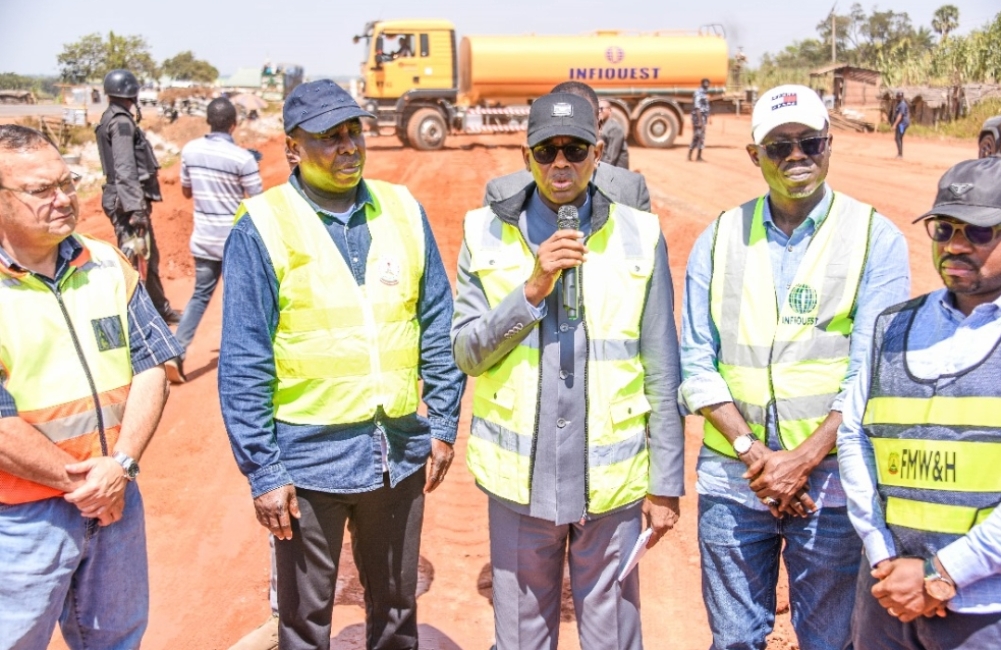
FG Decries Road Vandalism, Reaffirms Commitment to Record Completion of Abuja-Kano Expressway The Federal Government has expressed deep concern over the rising cases of vandalism and misuse of newly constructed and ongoing road projects across the country, warning that such irresponsible acts threaten the lifespan and safety of critical national infrastructure. Minister of State for Works, Hon. Bello Muhammad Goronyo, Esq., issued the warning on Saturday, 8th November 2025, during a holistic inspection visit to the Outstanding Sections of the Abuja–Kaduna–Zaria–Kano Expressway project, where he condemned the destructive activities of some hoodlums along the completed and active sections of the road. The Minister, in particular, decried instances of individuals removing safety railings, damaging concrete pavements, or converting portions of the highway into refuse dumps and drying grounds—especially around the Jaji Bridge corridor in Kaduna State. “Maintenance begins with discipline and public responsibility,” Goronyo stated. “We have observed people cutting through newly completed road sections or tampering with vital components. These acts of vandalism must stop immediately,” he warned. In this vein, he urged traditional rulers, community leaders, and residents to take collective ownership of public infrastructure and ensure that such national assets are protected from misuse, adding that the government’s huge investments in road development must be safeguarded for future generations. “The Renewed Hope Administration of His Excellency, Asiwaju Bola Ahmed Tinubu is committing enormous resources to the building of durable roads across the country. Every act of vandalism or road abuse undermines national progress and the deployment of taxpayers’ money to other critical national priorities,” the Minister emphasised. Reaffirming the government’s resolve to complete the Abuja–Kaduna–Zaria–Kano Expressway within record time, Goronyo described the project as a flagship of President Tinubu’s Renewed Hope Agenda, designed to enhance trade, promote unity, and strengthen economic integration between the Northern and Southern regions of the country. He disclosed that the Section I (Abuja-Kaduna) of the project, spanning 144 kilometres, is progressing steadily across several active sections - from Tungan Maje and Jere to Katari, Kakau, Gonigora, and Agogo Junction—with significant work already completed in drainage, reinforcement, and the construction of the shoulders. “So far, about 26 kilometres of continuous rigid concrete pavement and 15 kilometres of binder and wearing course have been completed,” the Minister revealed. “The President has made it clear that funding will not be a constraint. It is now a matter of work and getting paid,” he informed the contractor, Messrs. Infiouest International Limited. In line with the President’s directive for durable infrastructure, the Acting Director, Highways, Bridges and Design at the Ministry, Engr. Musa Sa’idu explained that the project design was upgraded from flexible (asphalt) to rigid (concrete) pavement, capable of lasting for about a century and withstanding the stress of heavy-duty and overloaded vehicles. He further disclosed that a recycling approach is being used to strengthen the substructure, by mixing milled asphalt with stone base and cement to improve durability and minimize environmental impact. Mr. Robert Turner, Senior Project Manager of the company, reaffirmed their commitment to engineering excellence and set a target, adding that work is progressing seven days a week, with plans to introduce night shifts to accelerate completion. “We are determined to deliver this project ahead of schedule. The government has demonstrated exceptional consistency in funding, and we are matching that commitment with performance,” Turner assured. Concluding the inspection tour at the additional location of the Kano end of the alignment, the Minister reiterated that the Abuja–Kano Expressway remains one of the most strategic road corridors in the nation, symbolising Mr. President’s unwavering commitment to infrastructural renewal, national security, and economic prosperity. “This project is dear to the President’s heart. It is not just a road - it is a lifeline for trade, social and political integration, as well as national unity. Every Nigerian must play a part in protecting it,” Goronyo declared. Earlier at the end of Section II (Kaduna-Zaria), which has been completed and handed over by the previous contractor, the Minister detoured to inspect another ongoing construction work on the Unguwar Iliya-Bagudu-Kwantakaran-Tsiga-Bakori Road with Kadabo Bridge in Kafur Local Government Area of Katsina State. He expressed satisfaction with the progress of work, which has an approximate length of 17.3 kilometres, starting from Tsiga Town and passing through the Barde community. The scope of work includes the construction of a single carriageway and three reinforced concrete bridges. Briefing the Minister on the Project, the Federal Controller/Engineers’ Representative, Engr. Muhammad I. Matinja and the Project Manager for Messrs. Halis Matrix Limited, Engr. David Omotosho expressed optimism about the progress of work, assuring that it will be completed on time and according to its design. **Mohammed A Ahmed, ** Director Press and Public Relations. 9th November 2025. ...
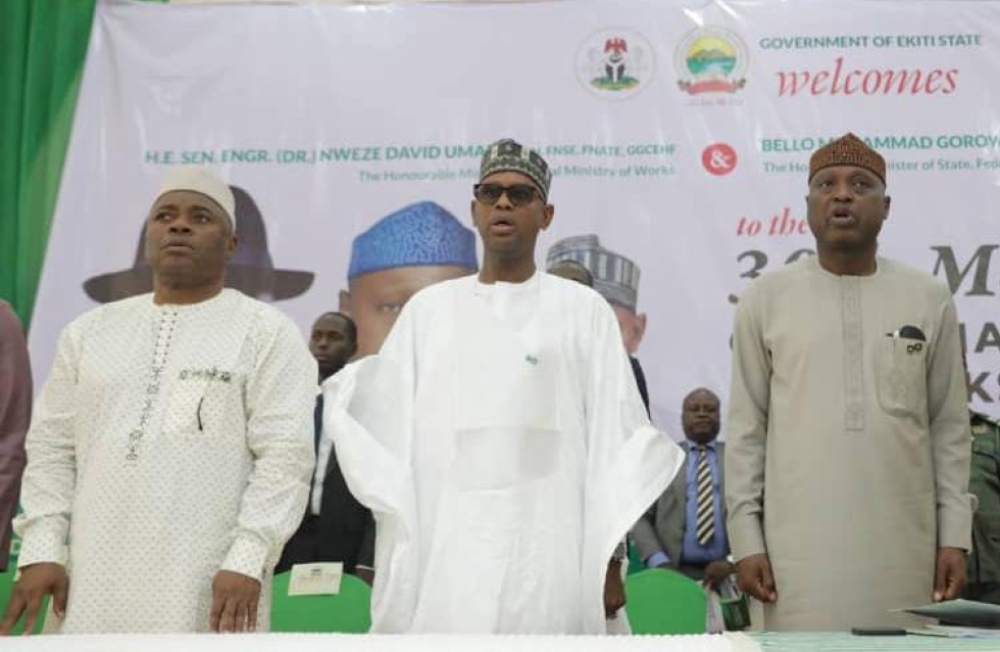
OYEBANJI DECLARES OPEN 30TH NATIONAL COUNCIL ON WORKS - MINISTER COMMENDS PRESIDENT TINUBU AND EKITI GOVERNOR FOR INFRASTRUCTURE STRIDES The 30th Meeting of the National Council on Works (NCW) officially commenced in Ado-Ekiti, Ekiti State, with Governor Biodun Abayomi Oyebanji declaring the event open on Thursday, 4th November 2025. The Council, which drew participation from Honourable Commissioners of Works and Permanent Secretaries from the 36 States of the Federation, focused on advancing transparency, innovation, and sustainable infrastructure delivery across Nigeria. In his address, Governor Oyebanji expressed satisfaction with the remarkable progress recorded by his administration in road construction and rehabilitation, describing it as a “road revolution” that has opened up communities, enhanced connectivity, and improved access to markets, schools, and healthcare facilities. He reaffirmed Ekiti State’s commitment to infrastructural excellence and inclusive development, noting that hosting the NCW was a recognition of the State’s growing reputation for innovation and good governance. “Since inception, our administration has made deliberate efforts to invest in infrastructure as a key driver of economic growth and social development,” he stated. “We appreciate President Bola Ahmed Tinubu for his interventions on Federal roads in our State, which we have complemented through the repair of the Ado–Iworoko–Ifaki dual carriageway,” he added. The Minister of Works, Engr. David Umahi, CON, FNSE, FANTE, represented by the Minister of State, Mohammed Bello Goronyo, Esq., commended both President Tinubu and Governor Oyebanji for their shared commitment to infrastructure renewal. He described their collaboration as a reflection of the Renewed Hope Agenda’s success in fostering synergy between the Federal and State Governments for sustainable national development. The Minister expressed profound appreciation to the Government and the good people of Ekiti State for graciously hosting the 30th Council. He commended the Governor for providing an enabling environment for collaboration and dialogue, describing Ekiti as a hub of responsible governance and infrastructural innovation. He also acknowledged the unwavering commitment of President Bola Ahmed Tinubu, GCFR, to infrastructure renewal under the Renewed Hope Agenda, which has empowered the Ministry to deliver transformative projects that enhance connectivity, stimulate economic growth, and restore public confidence. He particularly applauded Governor Oyebanji for the successful completion of the Ekiti Agro-Allied International Airport, describing it as a landmark project that has repositioned the State for economic growth and investment. Reflecting on the Council’s theme, “Discipline, Transparency and Innovation in Engineering Practice,” the Minister emphasised the need for a renewed mindset in public service and infrastructure delivery. He stressed that discipline builds trust, transparency ensures accountability, and innovation drives sustainability in modern engineering. He further revealed that the Ministry is adopting advanced technologies, including digital project monitoring, geotechnical mapping, drone-assisted planning, and the use of climate-resilient materials, to meet Nigeria’s evolving infrastructure needs. “Infrastructure is more than concrete and steel or asphalt, it is the backbone of our economy and a bridge to opportunities. “Through discipline, transparency, and innovation, we will deliver roads that reflect our people’s aspirations,” he promised. The Council, chaired by the Minister of State reviewed 67 memoranda, out of which 62 were adopted. These memoranda had undergone robust deliberations during the three-day Technical Sessions preceding the main event, which included Meetings of Directors and other Stakeholders, as well as those of the Permanent Secretaries. The meetings underscored enhanced policy coordination, institutional strengthening, innovation-driven engineering, and transparency in project delivery. Among key resolutions reached were: * Adoption of a National Monitoring, Evaluation and Control (MEC) Framework to ensure value-for-money and accountability. * Directive for Ministries, Departments, and Agencies (MDAs) to publish project details and progress updates on official websites for transparency. * Approval for the constitution of a National Road Infrastructure Coordination Committee (NRICC) to harmonize efforts across agencies and prevent duplication of contracts. * Recommendation for increased adoption of Public-Private Partnership (PPP) models in road and bridge infrastructure. * Endorsement of the use of solar street lighting and climate-resilient construction materials in line with national sustainability goals. * Call for inter-ministerial collaboration between the Federal Ministries of Works, Transportation, and that of Innovation, Science, and Technology to drive digital innovation and smart transport systems and * Support for FERMA’s Direct Labour Unit to strengthen rapid road maintenance response nationwide. In a Vote of Thanks, the Permanent Secretary, Federal Ministry of Works, Engr. Olufunsho Adebiyi, FNSE expressed profound appreciation to the Governor for hosting the high-level meetings. He also expressed gratitude to the Minister of Works and the Minister of State for making the NCW a reality. He also commended the latter for his exceptional dedication in presiding over the final session and lauded the Commissioners of Works and Infrastructure Development, their Permanent Secretaries, and all Stakeholders for the constructive engagements and teamwork exhibited throughout the week-long event. The 30th National Council on Works concluded with stakeholders reaffirming their commitment to promoting transparency, fostering innovation, and strengthening discipline in the delivery of sustainable infrastructure across Nigeria. “The NCW has come up with far-reaching resolutions that will reposition the road sector for greater efficiency and accountability,” he concluded. The Council announced that the 31st National Council on Works will be hosted by Sokoto State in 2026, subject to confirmation. Mohammed A. Ahmed Director, Press and Public Relations. 7th November 2025. ...

95% OF NIGERIANS DEPEND ON ROAD TRANSPORT — PERMANENT SECRETARY The Permanent Secretary, Federal Ministry of Works, Engr. Olufunsho Adebiyi, FNSE, has disclosed that approximately 95 percent of Nigerians rely on road transport for their movement and the transportation of goods and services across the country. Engr. Adebiyi made this known, while delivering his Address at the 30th Meeting of the National Council on Works, which opened today, 3rd November 2025, at the Adetiloye Hall, Trade Fair Complex, Ado-Ekiti, Ekiti State. He explained that despite the development of other modes of transportation such as rail, air, and water, road transport remains the dominant means of mobility in Nigeria — a situation that places enormous pressure on the nation’s road infrastructure. “The resultant effect is heavy traffic volume and rapid deterioration of our pavements caused by heavy-duty vehicles and cargo movements,” he stated. The Permanent Secretary emphasised that the completion and effective utilisation of the national rail network would significantly reduce road congestion, improve safety, and enhance economic efficiency. “If rail transport becomes fully operational and reliable, many Nigerians would prefer to travel by train. It is cheaper, safer, faster, and less stressful,” he disclosed. Engr. Adebiyi expressed appreciation to the Governor of Ekiti State, His Excellency, Mr. Biodun Abayomi Oyebanji, for hosting the milestone event and for the warm hospitality extended to delegates. He noted that holding the Council meeting in Ado Ekiti was symbolic, as it provides an opportunity to showcase the state’s infrastructure development strides. He also lauded the Honourable Minister of Works, Sen. (Engr.) David Umahi, CON, FNSE, FNATE, and the Honourable Minister of State for Works, Bello M. Goronyo, Esq., for their exceptional leadership and untiring commitment to improving the nation’s road network, ensuring transparency in project implementation and management, and upholding professional standards in engineering practice. The theme of the 30th National Council on Works, “Discipline, Transparency, and Innovation in Engineering Practice,” underscores the Federal Government’s resolve to entrench integrity, accountability, and creativity in infrastructure management and delivery. According to Engr. Adebiyi, the theme reflects the nation’s commitment to ensuring value for money in public projects through ethical practices, openness in procurement, and the adoption of modern technologies to achieve durable and sustainable infrastructure. He further called on all delegates and other stakeholders to engage in constructive deliberations during the Technical Sessions to develop practical strategies that will enhance service delivery, strengthen institutional capacity, and promote economic diversification through efficient road networks. The meeting brought together Commissioners for Works from all the 36 States of the Federation and the Federal Capital Territory (FCT), Permanent Secretaries, Directors, representatives of professional bodies, contractors, and other key stakeholders in the works and infrastructure sectors. In her remarks, the Director of Planning, Research and Statistics, Federal Ministry of Works, Mrs. Emily I. Sounde, also expressed heartfelt appreciation to the Government and good people of Ekiti State for hosting this important national event in such a calm, secure, and beautiful environment. She described Ekiti State as “a wonderful land, where nature’s beauty meets tranquility,” noting that the hospitality extended to delegates made the state a truly fitting venue for this year’s Council meeting. Mrs. Sounde emphasised that the National Council on Works remains a veritable platform for formulating policies and strategies that guide the growth and performance of Nigeria’s infrastructure sector. She reaffirmed the Ministry’s commitment to evidence-based policy formulation, robust data systems, continuous research, and stakeholder engagement — all in line with national priorities and global best practices. She encouraged delegates to use the opportunity of the forum to evaluate current policies, identify implementation gaps, and propose actionable strategies to improve service delivery and sustainability in the works sector. The Director further commended the Honourable Ministers of Works, the Permanent Secretary, and all delegates for their leadership, vision, and dedication to advancing the nation’s infrastructure development. Speaking earlier, the Director of Civil Engineering, Ekiti State Ministry of Works, Engr. B. J. Oke, reaffirmed the State Government’s commitment to ethical governance, transparent procurement processes, and sustainable infrastructure delivery. He stated that “As we commence this important engagement, let us approach our deliberations with discipline in thought, transparency in purpose, and innovation in action — for these remain the enduring foundations of progress in Nigeria’s engineering and works sector,” he stressed. The 30th National Council on Works will continue in Ekiti State tomorrow through Friday, with active participation from Commissioners of Works and Infrastructure Development, Permanent Secretaries, Directors, Engineers, Contractors, and other key stakeholders from across the Federation. Mohammed A. Ahmed Director, Press and Public Relations. 3rd November 2025. ...
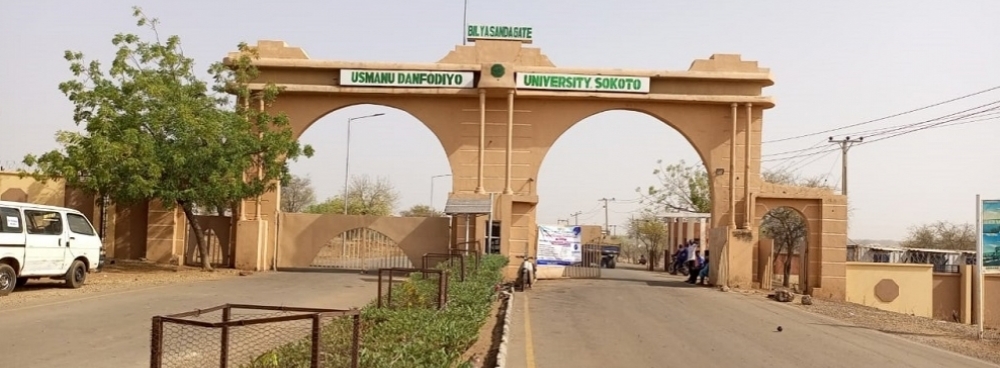
Varsity Lauds Fashola Over 2.0 km Internal Road Intervention
• Minister of Works and Housing, Babatunde Raji Fashola has been commended for the 2.0 kilimeters road Intervention project done in the Usmanu Danfodio University, Sokoto (UDUS)
Vice Chancellor of the University, Prof. Lawal Sulaiman Bilbis gave the commendation during the official handover of the completed road to the University, Wednesday, March 9, 2022.
The Minister, represented by the Federal Controller of Works in Sokoto State, Engr Akintunde Akintade, said that the Ministry is working on 76 road projects in selected Federal Tertiary Institutions across the nation.
"We have successfully intervened in the internal road networks of 46 tertiary institutions and handed over 29 as at 2021 and we now have another 17 ready to be handed over, while we are currently attending to 30 roads in similar institutions across the country making a total of 76," he said
Fashola explained that there were clear indications that responses from institutions who benefited with the intervention revealed that the gap of the infrastructure needs is steadily being bridged by a gradual process of repairs and construction on the major highways and schools.
Accordingly, he added that the construction of the internal roads in the tertiary institutions by the Federal Government has enormously helped the students' renewed enthusiasm to attend classes because bad roads across the tertiary institutions have been restored to good condition.
Similarly, the Minister explained the project has created jobs for no less than ninety (90) people during the execution which contributed tremendously to the job creation initiatives of Buhari’s administration.
In his response the Vice Chancellor of UDUS, Prof. Lawal Sulaiman Bilbis, who was represented by the Deputy Vice Chancellor (Academic), Prof. Garba Mahuta applauded the Minister His Excellency Babatunde Fashola for the intervention, describing it as a giant stride in the course of humanity
Prof Bilbis stated that the rehabilitation of the road commenced last year and was completed 100 percent by the Federal Ministry of Works and Housing under the able leadership of Minister Fashola
The President of the Students Union Government (SUG), Umar Shamsudeen, said he was so delighted with the road project and under his tenure the project would be protected and maintained, adding that the road would enhance the environment and improve teaching and learning.
While speaking, the Sector Commandant of 10.1 of Federal Road Safety Commission (FRSC), Sokoto State, Muhammad Kabo, appreciated the effort of the Federal Government in putting the road in good condition and appealed to the road users to always observe road signage and speed limit.
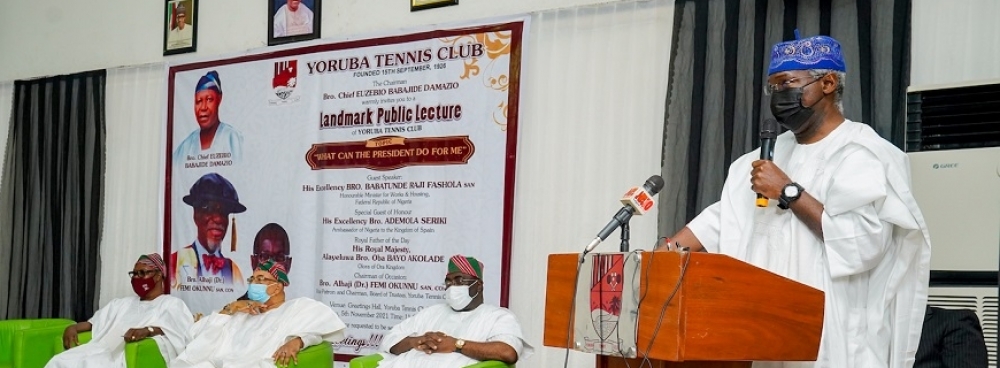
WHAT CAN THE PRESIDENT DO FOR ME? BEING THE TEXT OF A KEYNOTE DELIVERED BY H.E BABATUNDE RAJI FASHOLA, SAN AT THE YORUBA TENNIS CLUB ANNUAL LECTURE
Distinguished Ladies and Gentlemen:
At the onset of the protest against the Special Anti-Robbery Squad (SARS) when five demands were made in respect of the police and SARS, President Muhammadu Buhari weighed in on the side of the protesters when he said:
“On Monday 12th October, I acknowledged the genuine concerns and agitations of members of the public regarding the excessive use of force by some members of SARS…As a democratic government, we listened to, and carefully evaluated the five-point demands of the protesters. And, having accepted them, we immediately scrapped SARS, and put measures in place to address the other demands of our youth.”
To some of the protesters this was not enough action. In my interaction with some of them, young and not so young they wanted the President to sack some policemen, in some cases even the Inspector General of Police.
During this interaction I referred them to the provisions of the 1999 Constitution as amended, that I pointed out to them that:
* The President of Nigeria cannot sack a policeman because a policeman is not the employee of the President but rather the employee of the Police Service Commission;
* The President can only sack Ministers, and other appointees that he personally appoints to assist him and not any civil servant deployed to work for him such as a cook, driver, or administrative staff who are ordinary employees of the Civil Service Commission.
Not a few persons were surprised to hear this.
Indeed, I have discovered that a sizeable number of our people express surprise when I explain the structure of Government to them.
For example, when I explain to people that as Governor or Minister I do not sign cheques, vouchers or documents that directly involve the transfer of money.
On the contrary, at certain levels of payment under the financial regulation, my powers as Governor or Minister are limited to approving recommendations for payment made to me through the Permanent Secretary; after he and I have satisfied ourselves that the Government has received value for the payment or will do so.
Although the Federal Ministry of Works and Housing has several directorates such as Construction and Rehabilitation, Planning and Development, Bridges and Design, Materials Geotechnics and Quality Control, Finance and Accounts, Legal and Procurement, many openly express surprise when I tell them that only Engineers, Architects, Valuers, Builders, Town Planners and those involved in the built industry are staff of the Ministry of Works and Housing.
Those in Legal Department are lawyers seconded from the Ministry of Justice to whom they report, Finance and Accounts are staff of the Accountant General/Ministry of Finance, to whom they report, and procurement personnel are staff of the Bureau of Public Procurement to whom they report; while those in administration are staff of the Head of Service/Public Service Office to whom they report.
And this is true of all ministries, in a system of checks and balances.
Similarly of course, in the engineering sections of other ministries, the Ministry of Works also seconds engineers to support those ministries and they report to their parent ministry.
What is true of the Federal civil service system in this regard is largely true of the state civil service systems.
This in part is why the public service is a bureaucracy, which has been defined as:
“…a complex organization that has multi-layered systems and processes.” (Source - Investopedia)
I am surprised that this surprises people and this is a part of the reason for choosing to discuss it at this public forum.
So very often, I hear general statements that the President of Nigeria is very powerful, sometimes they say the office is too powerful in some cases they even ascribe more powers to him than the United States President.
Therefore I have decided, in responding to the invitation of Chief Babajide Damazio, the Chairman of the Yoruba Tennis Club, to interrogate the matter publicly by titling my speech “What can the President do for me?”
The flip side is also that some of our public discourse is coloured with general statements that are not factual such as some statements to the effect that the Vice President is in their words “just a spare tyre” suggesting that he has no powers or functions except those assigned to him by the President.
These statements betray a lack of knowledge about the Constitution and I intend to discuss them here within the reasonable limits of time.
If one looks through the length and breadth of the constitution as I have, you will find that the office of the President is referred to 48 (FORTY-EIGHT) times.
A closer look at the details for those who have read the constitution, will suggest possibly an error in mixing up or conflating “powers” with “function” and the difference is significant.
“Whereas ‘power’ is the legal right or authorisation to act or not to act, it is the ability conferred on a person by law to alter, by an act of will, the rights, duties liabilities and other relations, either of that person or another. On the other hand, the term “function” is the duty of the office.
In the 48 mentions of the Office of the President in the Constitution:
* 23 instances refer to powers exercisable by the President;
* 9 instances refer to powers exercisable by the President subject to the National Assembly;
* 4 instances refer to powers exercisable by the President subject to other institutions;
* 9 instances refer to the President’s functions and duties; and
* 3 instances refer to restrictions on the powers of the President.
Yes, the “all powerful,” “too powerful” President that we generalise about his powers, has restrictions on his powers.
I have provided a table of all the references in the Constitution below:
Part A: Powers exercisable by the President
| Section | ||
| 1 | The executive powers of the Federation is vested in the President | Section 5(1)(a) |
| 2 | The executive powers include the power to execute and maintain the Constitution | Section 5(1)(b) |
| 3 | Power to execute and maintain all laws made by the National Assembly | Section 5(1)(b) |
| 4 | Power to make treaties [Power conferred on the Federation] | Section 12 |
| 5 | Power to deprive registered or naturalized citizens of their citizenship | Section 30 |
| 6 | Authorization of qualified private persons to establish a television or wireless broadcast station | Section 39 |
| 7 | Power to assent (or withhold assent) to bills passed by both the Senate and the House of Representatives | Section 58 |
| 8 | Power to decide whether or not it is practicable to hold elections | Section 64 |
| 9 | Power to issue proclamation for the holding of the first session of the National Assembly | Section 64 |
| 10 | Right to attend joint meetings of the National Assembly or of either the Senate or the House of Representatives to deliver an address on national affairs or to make statement on government policies | Section 67 |
| 11 | Power to order withdrawal of moneys from the Consolidated Revenue Fund of the Federation for the purpose of meeting expenditure necessary to carry on the services of the Government | Section 82 |
| 12 | Establishment of offices of Ministers of the Government of the Federation | Section 147 |
| 13 | Assignment of responsibilities to the Vice President and Ministers | Section 148(1) |
| 14 | Power to appoint or remove Chairman and members of Federal Executive Bodies established by section 153 of the Constitution | Section 154 |
| 15 | Approval of rules of procedure made by the Federal Executive Bodies established by section 153 of the Constitution | Section 160 |
| 16 | Power to approve delegation by the Federal Civil Service Commission of its power to any of its members or to any officer in the civil service of the Federation | Section 170 |
| 17 | Power to appoint and remove the following officers: Secretary to the Government of the Federation, Head of Service, Ambassadors, High Commissioners and Permanent Secretary, etc | Section 171 |
| 18 | Power to give approval to a State body where it is intended by the body to confer power or impose duties to any officer or authority of the Federation | Section 204 |
| 19 | Power to give lawful directions to the Inspector General of Police with respect to the maintenance and securing of public safety and public order | Section 215(3) |
| 20 | Power to direct the armed forces to suppress insurrection and acting in aid of civil authorities to restore order | Section 217(2)(c) |
| 21 | The President is the Commander-in-Chief of the armed forces of the Federation and as such is empowered to: * determine the operational use of the armed forces of the Federation; * appoint the Chiefs of Staff of Defence, Army, Navy, and Air Force; and * appoint heads of any other branches of the armed forces of the Federation. |
Section 218 |
| 22 | The Constitution vests the Executive power for the administration of the Federal Capital Territory in the President | Section 299 |
| 23 | Power to appoint a Minister for the Federal Capital Territory | Section 302 |
| 24 | As the Appropriate Authority, the President is authorized to make modifications in the text of any existing law as he considers necessary to bring the law into conformity with the provisions of the Constitution | Section 315(2) |
Part B: Power subject to the National Assembly
| 1 | Power to declare a state of war between the Federation and another country [subject to the sanction of the National Assembly] | Section 5(4) |
| 2 | Deployment of members of the armed forces of the Federation on combat duty outside Nigeria. [subject to approval of the Senate] | Section 5(5) |
| 3 | Making regulations to prescribe matters which are required to give effect to constitutional provisions on citizenship [subject to laying before the National Assembly] | Section 32 |
| 4 | Appointment and removal of the Auditor-General for the Federation | Section 86 |
| 5 | Appointment of Ministers | Section 147 |
| 6 | Power to appoint Special Advisers to assist the President in the performance of his functions. [Their number is to be determined by the National Assembly] | Section 151 |
| 7 | Power to appoint the Chief Justice of the Federation, Justices of the Supreme Court of Nigeria, President of the Court of Appeal, Justices of the Court of Appeal, Chief Judge and Justices of the Federal High Court and Justices of other Federal Courts. [Subject to confirmation by the Senate] | Sections 231, 238, 250, 254B, etc |
| 8 | Power to remove the Justices and Judges appointed by him [Acting on address supported by 2/3 majority of the Senate or NJC] | Section 292 |
| 9 | Power to issue a proclamation of a state of emergency in the Federation or any part thereof in the circumstances listed in section 305(3) and (4) of the Constitution | Section 305(1) |
Part C: Power subject to other institution
| 1 | Deployment of members of the armed forces of the Federation on a limited combat duty outside Nigeria. [in consultation with the National Defence Council] | Section 5(5) |
| 2 | Power to grant a pardon to any person convicted of any offence created by an Act of National Assembly (Prerogative of mercy) [This power is to be exercised by the President after consultation with the Council of State] |
Section 175 |
| 3 | Power to accept or reject report of population census conducted by the National Population Commission. [This power is subject to the advice of the Council of State] |
Section 213 |
| 4 | Appointment of the Inspector General of Police [This power is to be exercised on the advice of Nigeria Police Council] |
Section 215(1)(a) |
Part D: Functions and Duties
| 1 | Considering recommendations from a body set up to review ownership and control of business enterprises operating in Nigeria | Section 16(3) |
| 2 | Approving the registration of persons who apply to be registered as citizens of Nigeria | Section 26 |
| 3 | Granting of certificate of naturalization to persons who are qualified | Section 27 |
| 4 | The President has the responsibility to cause budget to be prepared and laid before the National Assembly | Section 81 |
| 5 | Duty to hold regular meetings with the Vice President and the Ministers of the Government of the Federation | Section 148(2) |
| 6 | Tabling of proposals for revenue allocation from the Federation Account to the National Assembly | Section 162(2) |
| 7 | Duty to transmit copies of official gazette containing emergency proclamation to the President of the Senate and the Speaker of the House of Representatives | Section 305(2) |
| 8 | The President is the chairman of the following constitutional bodies: The Council of State * National Defence Council * National Security Council * Nigeria Police Council |
|
| 9 | Duty to lay accepted report of population census conducted by the National Population Commission before the National Assembly. [This power is subject to the advice of the Council of State] |
Section 213 |
Part E: Restriction
| 1 | Prohibition from holding any other executive office or paid employment | Section 138 |
| 2 | Prohibition from maintaining or operating a bank account in a country outside Nigeria | Fifth Schedule to the Constitution |
| 3 | Prohibition from being employed by foreign company or foreign enterprises after leaving office | Fifth Schedule to the Constitution |
Is the Vice President really without responsibilities, duties and functions unless the President assigns them to him?
Certainly not. Those who assert that position tell a big lie. A lie born either out of ignorance at the best or mischief at the worst.
The framers of the Nigerian Constitution and our legislators seem to have deliberately attempted to entrust matters relating to its security with the President by making him chairman of the National Councils such as the Security Council, Defence Council and the Police Council, while entrusting the Vice President with matters relating to the economy by making him the Chairman of the National Council on Privatization and the National Economic Council.
Although they did not say the President cannot deal with economic matters, it is my view that he cannot chair the Economic Council or National council on privatization without violating/breaching the constitution with its attendant constitutional risks and consequences.
So much for the “all-powerful” President.
As for the Vice President, his other constitutional functions include:
|
SECTION A Constitutional Function and Duty of the Vice President |
Constitutional Provision | |
| 1 | Exercise of Executive Powers of the Federation as delegated by the President | Section 5(1)(a) |
| 2 | Power to perform the functions of the President as Acting President during temporary absence of the President | Section 145(1) |
| 3 | Power to hold the office of the President if the office of the President becomes vacant by Section 146 | Section 146(1) |
| 4 | Performance of ‘responsibility for any business of the Government of the Federation’ as may be assigned by the President | Section 148(1) |
| SECTION B Constitutional Appointment/Position |
Constitutional Provision | |
| 1 | Deputy Chairman of the Council of State | Third Schedule, Part I, Paragraph B (5) |
| 2 | Chairman of the National Economic Council | Third Schedule, Part I, Paragraph H (18) |
| 3 | Deputy Chairman of the National Defence Council | Third Schedule, Part I, Paragraph G (16) |
| 4 | Deputy Chairman of the National Security Council | Third Schedule, Part I, Paragraph K (25) |
| SECTION C Statutory Function/Position |
Statutory Provision | |
| 1 | Chairman of the Governing Council of the National Emergency Management Agency | Section of National Emergency Management Agency Act |
| 2 | Chairman of the Governing Board of the Border Communities Development Agency | Section 2 Border Communities Development Agency (Establishment, etc.) Act |
| 3 | Chairman of the National Boundary Commission | Section 4 National Boundary Commission (Establishment) Act |
| 4 | The Vice President may represent the President of the Federal Republic of Nigeria as the Chairman of the Governing Council) | Section 8 Nigeria Sovereign Investment Authority (Establishment etc.) Act 2011 |
| 5 | Chairman of the National Planning Commission | Section 3 National Planning Commission Act |
| 6 | Vice Chairman of the Council of the National Space Research Development Agency | Section 2 National Space Research and Development Agency Act |
| 7 | Chairman of the Supervisory Board of the Debt Management Bureau | Section 2 Debt Management Bureau (Establishment) Act |
| 8 | Chairman of the National Council on Privatisation | Section 9(2) Public Enterprises (Privatisation and Commercialisation) Act |
Which brings me to the heart of the matter, as to why a significant number of Nigerians place their hopes and expectation for a better life on their President rather than their Governors and Local Government Chairmen.
Or put differently, why do we seem to only like our Presidents after they have left office and not while in office or after they have died, like “the best President we never had.”
Again, after a very deep interrogation, my answer to this question is traceable to the constitution. And this is not a concession to the advocates of restructuring, but rather a clear lack of relationship by many of us with the constitution.
In other words, we are not fully or sufficiently familiar with our constitution and the roles it ascribes to the different levels of government, at local, state and federal, and the officers attaching to them such as Local Government Chairman, State Governor and the President.
And the related question, to the question what can the president do for me, is to ask ourselves: how the office of the President make my life better?
Before I offer an answer, let me share with you the feedback of a survey that I commissioned to gauge the sense of what the Nigerians who were polled desired most.
The common thread in the responses were: security, education, healthcare, transportation, water supply, employment, housing and electricity. Of course, there are others, which time and space will not permit me to interrogate.
In understanding what the President can do, we must bear in mind the nature of our political arrangement where the President as head of the country, also leads the executive arm of the Federal Government and projects our sovereign status, but shares power and responsibility with 36 states headed by Governors, and 774 Local Government headed by Local Government chairmen.
If we go through our constitution, (and I urge everybody to get a copy and read it if only casually) we will find two (2) lists of responsibilities in the schedule to the constitution.
They are:
* The Exclusive list
* The Concurrent list
The first list contains matters over which only the National Assembly, as the custodian of legislative power of the Federal Government can make laws and over which the President as the head of the executive arm can take action. This list contains 68 (SIXTY-EIGHT) items and includes matters like the banking, currency, police, the military, customs, immigration, citizenship etc.
The second list, which is called the concurrent list, means exactly what it says. A concurrence of authority where the Federal and State governments share power and therefore the state houses of assembly as well as the National Assembly can make laws over these matters; while the Governors, as well as the President, can act in these areas.
This list contains 12 (TWELVE) items and includes matters like Education (secondary and university including polytechnics) Health (secondary and tertiary), Electricity (generation, transmission and distribution).
This list does not include primary education or primary health or sanitation or markets which are expressly left for the Local Governments in the 4th schedule of the constitution.
All matters not listed in these two lists or in the fourth schedule to the constitution such as magistrate courts, consumption tax, rent control, local levies and non-specified taxes, are regarded as RESIDUAL, and the sole preserve of the state governments.
Manifestly and contrary to the view that everything revolves around the President or the Federal Government, what is obvious from the Nigerian constitution and political arrangement, what we really have is an arrangement of shared powers, and I might add, shared responsibility. The question then must be, whether all those who bear responsibility actually discharge them; and I will come back to this in some comparative examination of some of the problems identified earlier that people seek government action for.
But before I do so, I need to quickly shed light on even the nature of the Federal Government.
The Executive arm, such as the Federal Executive Council, has the President and Vice-President elected by the people of Nigeria, and at least 36 ministers appointed from each state as prescribed by the constitution that every state must have a Minister. It also then prescribes that the ministerial nominee must be cleared and approved by the Senate.
And who is the Senate? 109 people, elected by you and I, whether you voted or not, 3 from each state to represent us in the Federal Government because there is no building big enough to accommodate us so we send representatives.
The FCT also has one Senator. The House of Representatives, the other arm of the National Assembly has 360 members from all the 36 states who act to exercise legislative powers over the exclusive list, to determine what the Federal Executive can act upon.
When you see how the structure is laid out, what is obvious to me and hopefully to you, is that it is the people of Nigeria, rather than one man, (the President), who truly have powers and responsibility over our affairs.
Let us now then look at a few examples, because there are many, to examine how these powers have been exercised.
Let me start with electricity. As I said it is a concurrent power by the federal and state. The Federal Government since 2013 has chosen to privatize its own responsibility by selling the generating and distribution assets, while managing the transmission side with varying degrees of success.
The question to ask is what is happening at state level across Nigeria with electricity generation, transmission and distribution.
This question cannot be posed to the President. He is not in charge of any state. He did not elect or appoint a Governor. You and I did.
So I am not suggesting that all electricity problems are the responsibility of the state Governors, but if you have an electricity problem in your states please ask your Governor what he plans to do about it, and your House of Assembly lawmaker which law he will support if you vote for him to give you electricity.
The same applies to primary education and primary health. The Federal Government does not and should not own a primary school or primary healthcare centre. But these are the most defining centres for quality education and preventive health. The foundations of young life are defined here. Basic literacy and numeracy, ante-natal care and life protecting immunization are delivered here.
Please ask your Local Government chairman not the Governor or the President.
Sanitation, characterized by water supply and proper refuse management and civic education are not the constitutional responsibility of the Federal Government, your Senator, house of representative member or the President.
It is our state representatives who have constitutional mandate to deliver water to our homes, move our refuse and make sure our surroundings are clean and we do not suffer from disease and epidemics.
Because I expect that there will be responses, whether informed or uninformed to what I already said and will say, let me be clear that I have not come to absolve the Ministers, the Senators, House of Rep, Federal Civil servants and the President of responsibility.
We have our responsibilities and can do a lot more, but I first sought to clear the air and state the facts for those right thinking and indeed well-meaning Nigerians who honestly want a better life and do not know who is responsible for the problems they face.
So, let me go to a contentious area, like Security.
Section 14.2 (b) of the Constitution provides that:
“the security and the welfare of the people shall be the primary purpose of government…”
Interestingly, it does not say which government. My view is that security is an all government responsibility not a Federal Government responsibility alone.
Yes, the Federal Government controls the apparatus of coercive law-enforcement prescribed in the constitution like the military and police, but it has not precluded states from setting up certain types of law enforcement for traffic, sanitation etc.
I am also a public advocate for states to control their own law enforcement apparatus in other extensive areas where they have powers to make laws.
However, I hold the view that security, which is a concern of some of the people, is not guaranteed by having a state law enforcement apparatus.
Indeed, it is more than a government affair.
In my view, it is an all nation affair as contemplated in section 24(e) which provides that:
“It shall be the duty of every citizen to…render assistance to appropriate and lawful agencies in the maintenance of law and order…”
It seems to me that the road to resolving our security problems, starts with a resolution to prevent or resolve the existence of conflict, eliminate the opportunities for crime to happen, and this requires effort from the family unit to the schools, religious institutions, to all levels of government.
It requires a reset of our values for hard work, a love for one another as a keeper of each other, brothers and sisters, a commitment to peaceful cohabitation and the mustering of the capacity to ensure that no conflict lasts to the next day, whenever any occurs.
This will reduce the need for law-enforcement and put less pressure on them.
It is more than a job for a President, Governor, Local Government chairman, or legislator at any level. It is a job that requires parents at home, teachers in schools, religious leaders in places of worship, title holders like Obas, Emirs, Chiefs like Obis, Baloguns, Turakis, Asiwajus, Bashoruns, Galadimas, Ezes and many more.
This again does not absolve the need for well-equipped law enforcement or excuse those responsible, as it does not absolve the need to stem and stop drug abuse in our society, and the need to reduce or eliminate abandoned buildings where suspicious people thrive in our society and need for street lighting at night to deter criminal atrocity.
I cannot conclude this intervention without mentioning road infrastructure.
Nigeria as a country has 200,000 plus kilometres of roads. But they belong to different levels of government.
Federal trunk roads, mentioned in item 11 of the executive legislative list is the one the Federal Government is responsible for
These are the roads that connect one state to the other, interstate roads. These account for 35,000km out of the 200,000km representing 17.5 %.
The state government roads are 17.5% of the 200,000 km and these are the roads that connect one Local Government to another; while the Local Governments have responsibility for the balance, representing 65% of roads that connect one ward to another.
I cannot of course ignore the fact that the Federal Government has a big and important role to play in respect of fiscal and monetary policy that impacts exchange rate, interest rate and inflation.
But there are legitimate questions to ask about how many local businesses need foreign exchange to operate as much as they need water, electricity and skilled personnel and lower levies and non-state actors from extorting them.
There is a legitimate question to ask about whether those of us who keep bank accounts are ready to accept lower deposit rates as a measure to induce lower lending rates, because high interest rates affect our people.
And of course, with housing on the rental side, how many of us who own houses are ready to accept monthly payments as rent paid in arrears as against two (2) years rent paid in advance, which is a point of pain and stress for many people.
While the properties for which these rents are charged largely belong to individuals and companies, not to government, there is also the question to ask whether or not our legislators at state levels can make laws to control rent. This is not a matter for the president because the federal legislator has no powers over rent.
On the construction side of housing, we must remember that it is the state Governors who control land, not the Federal Government. While the Federal Government is currently constructing houses in 34 states, and developing site and service schemes on land provided by state governments and using employee’s contribution to fund mortgages to help some people buy houses, there is a legitimate question to ask whether your state government is building houses and ready to create a mortgage funding institution.
Ladies and gentlemen, there is a lot to expect of a President, there is perhaps much more to ask of State and Local Government actors.
After all, the projection of national might and success on the international stage by heads of Governments such as Presidents, whether in terms of cuisine, technology, sports or the economy, is the projection of the aggregate of what happens at their sub-national entities.
Now that you know who to ask about primary education, primary health, water supply, refuse management, electricity, security, interest rate, roads and a lot more, please know that candidates will soon begin to emerge as 2023 beckons. Do not keep quiet.
Ask them what they will do to make your life better.
Thank you for listening.
Babatunde Raji Fashola, SAN
Honourable Minister of Works and Housing
Friday 5th November 2021
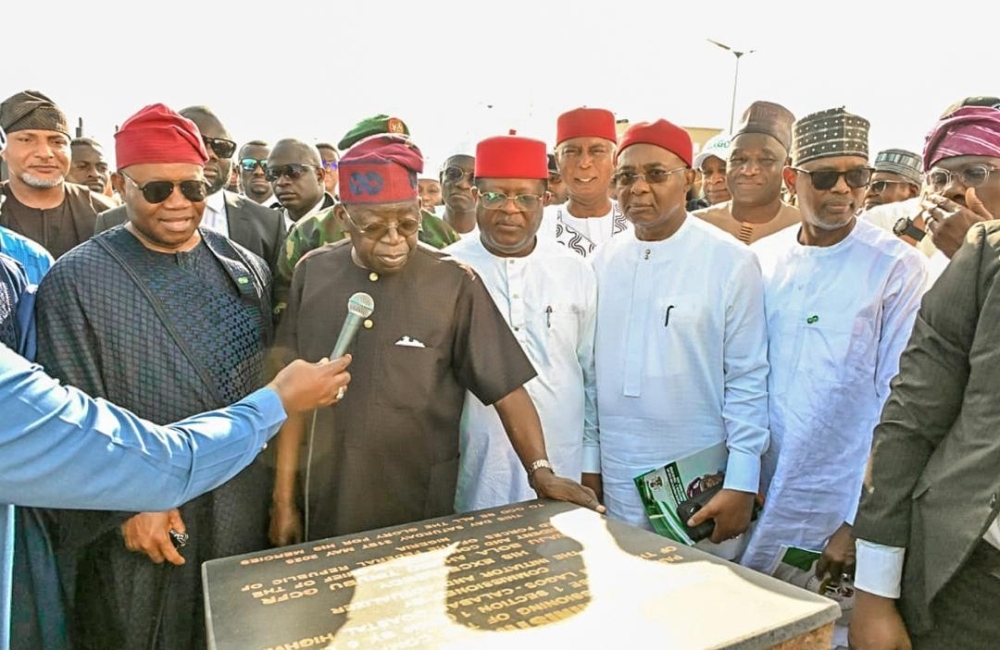
DRIVING NIGERIA’S FUTURE: CELEBRATING TWO YEARS OF TRANSFORMATIVE LEADERSHIP AND THE LAGOS-CALABAR COASTAL HIGHWAY MILESTONE
DRIVING NIGERIA’S FUTURE: CELEBRATING TWO YEARS OF TRANSFORMATIVE LEADERSHIP AND THE LAGOS-CALABAR COASTAL HIGHWAY MILESTONE
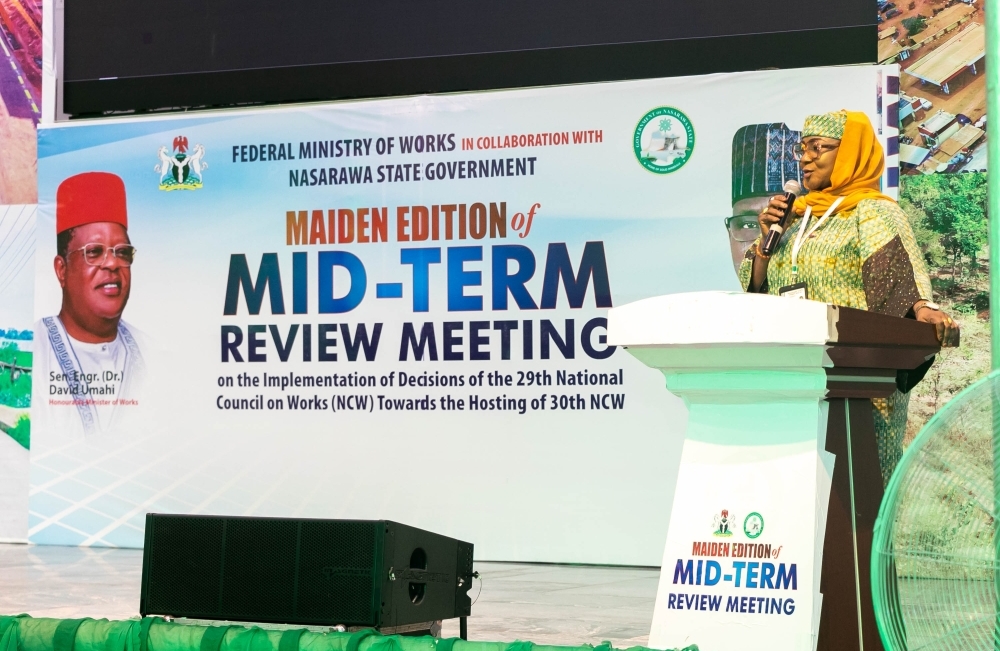
MID -TERM REVIEW MEETING ON THE IMPLIMENTATION OF THE DECISIONS REACHED AT THE 29TH NATIONAL COUNCIL ON WORKS (NCW) DAY 1
MID -TERM REVIEW MEETING ON THE IMPLIMENTATION OF THE DECISIONS REACHED AT THE 29TH NATIONAL COUNCIL ON WORKS (NCW) DAY 1