GORONYO COMMENDS SOKOTO GOVERNOR FOR DONATING 10 HILUX VEHICLES TO STRENGTHEN SECURITY ALONG SOKOTO–BADAGRY SUPERHIGHWAY
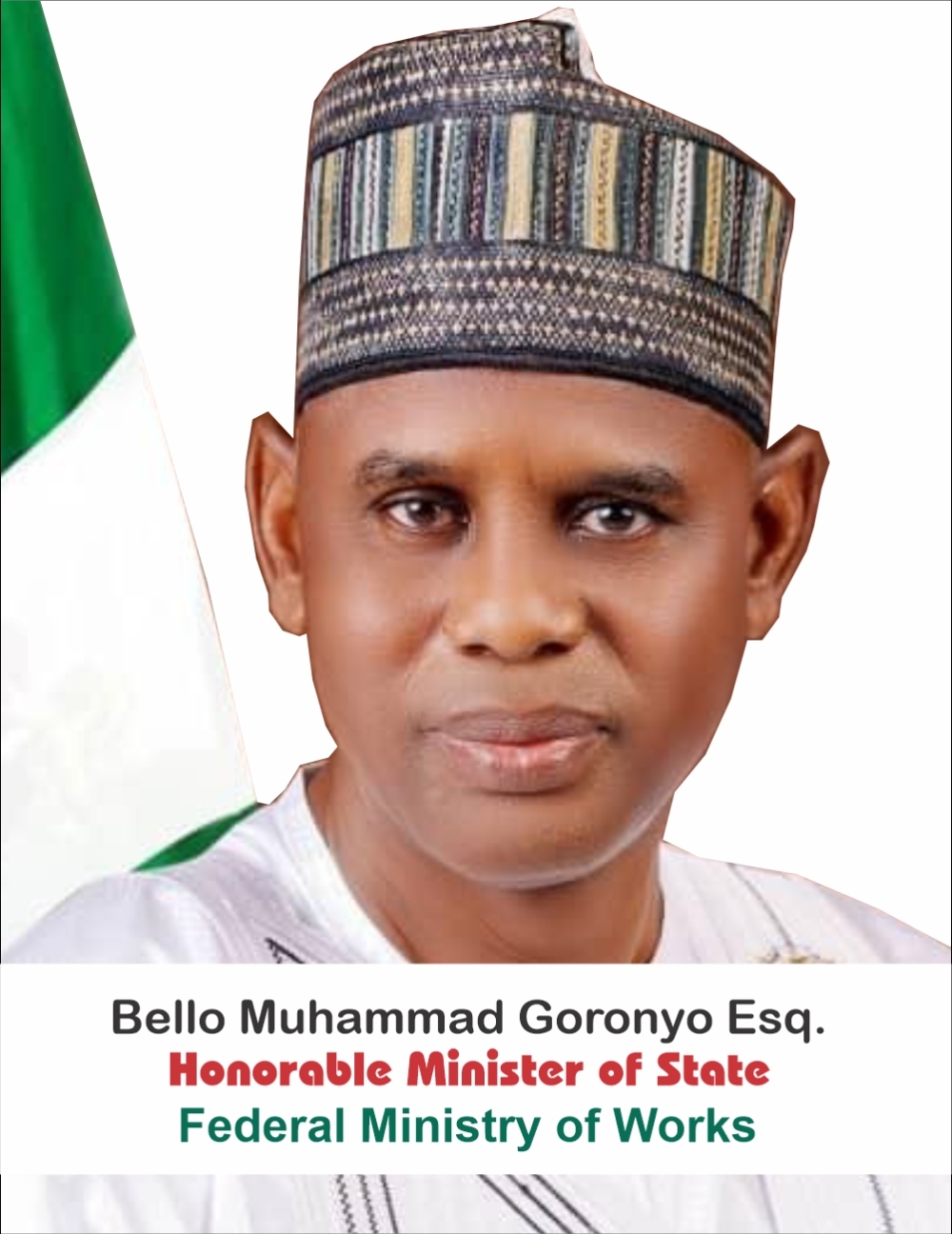
The Honourable Minister of State for Works, Rt. Hon. Bello Muhammad Goronyo, Esq., has commended the Governor of Sokoto State, Dr. Ahmed Aliyu Sokoto, PhD, for donating 10 operational Toyota Hilux vehicles to strengthen security operations along the Sokoto–Badagry Superhighway and other strategic infrastructure corridors.
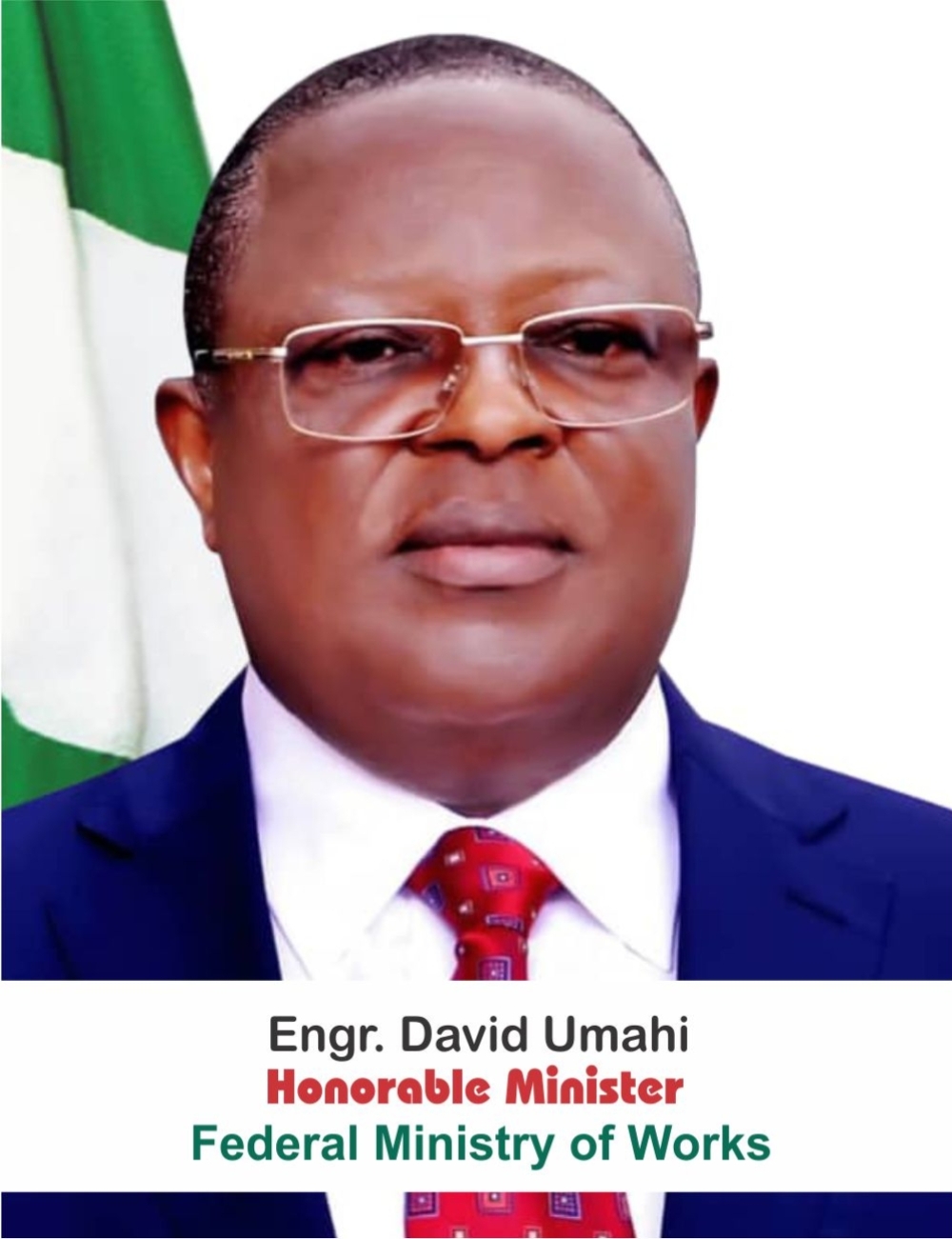
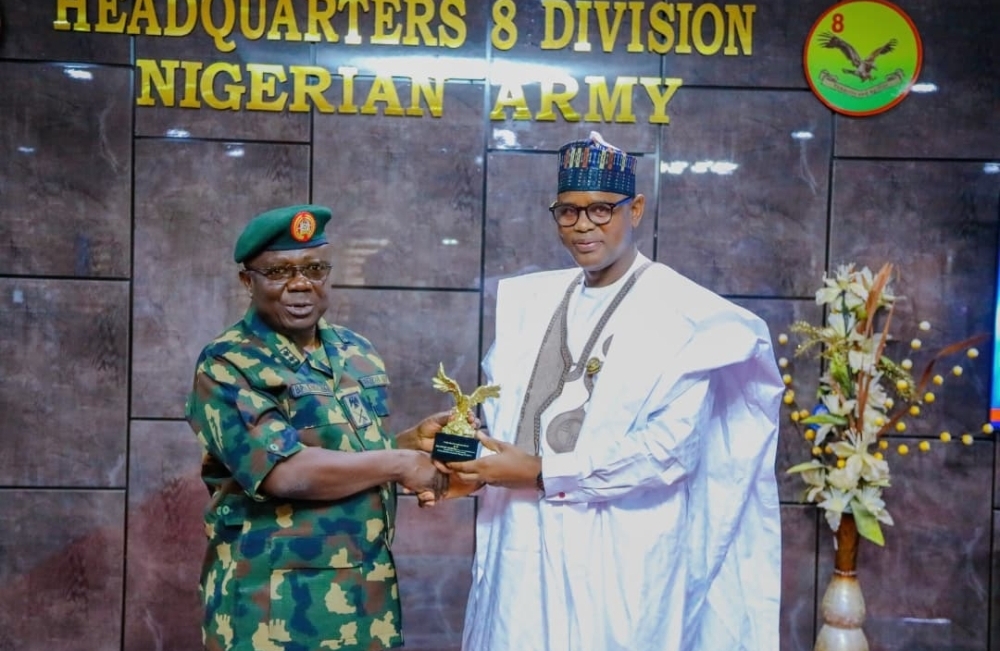
The vehicles were formally commissioned and handed over to the Nigerian Army at the Headquarters of the 8 Division, Nigerian Army, Sokoto, on Thursday, October 8, 2026, by the Honourable Minister of State for Works, on behalf of the Honourable Minister of Works, Engr. David Nweze Umahi, CON, FNSE.
The donation is expected to enhance the operational capacity of military personnel and other security agencies responsible for protecting construction workers, contractors, equipment and host communities along the highway corridor.
Speaking during the ceremony, Goronyo described the donation as a demonstration of the Sokoto State Government’s commitment to national development and the successful implementation of President Bola Ahmed Tinubu, GCFR’s Renewed Hope Agenda, particularly its landmark infrastructure projects.
The Minister emphasised that the Sokoto–Badagry Superhighway represents a long-standing national infrastructure vision that dates back several decades, with its conception traced to the era of former President Shehu Shagari in the 1970s. However, the vision remained unrealised for decades until the administration of President Bola Ahmed Tinubu, GCFR, initiated the construction of the 1,068-kilometre highway in October 2024.
He described the project as a significant step towards translating a historic aspiration into tangible infrastructure that will connect communities, expand economic opportunities and strengthen national integration.
According to Goronyo, President Tinubu’s commitment to the project demonstrates the Federal Government’s determination to bridge critical infrastructure gaps and improve connectivity between northern and southern Nigeria.
He noted that the superhighway, which traverses Sokoto, Kebbi, Niger, Kwara, Oyo, Ogun and Lagos states, is designed to facilitate the movement of people and goods, reduce transportation costs, stimulate trade, create employment and open up new economic opportunities along its route.
The Minister added that the highway would improve access to markets, schools, healthcare facilities and other essential services while supporting agriculture, commerce, industry and the development of communities across the corridor.
He stressed that the successful delivery of the project would require sustained commitment, effective coordination and cooperation among the Federal Government, state governments, security agencies, contractors and host communities.
Goronyo maintained that effective security remained essential to the timely and successful completion of the Sokoto–Badagry Superhighway. He explained that the provision of operational vehicles would strengthen the mobility and response capabilities of security personnel deployed to safeguard the project and its surrounding communities.
The Minister highlighted other strategic infrastructure projects being undertaken by the Federal Government, including the Lagos–Calabar Coastal Highway, the Calabar–Abuja/Trans-Saharan corridor, the Akwanga–Jos–Bauchi–Gombe corridor, the Abuja–Kaduna–Zaria–Kano route and the Zaria–Gusau–Sokoto corridor.
He explained that these projects form part of the Federal Government’s broader commitment to developing an integrated road network capable of supporting commerce, strengthening inter-state connections and accelerating national economic growth.
Rt. Hon. Goronyo further noted that the use of continuously reinforced concrete pavement on the Sokoto–Badagry Superhighway was intended to provide durable road infrastructure capable of serving Nigerians for decades. He added that complementary environmental and safety measures, including tree planting and solar-powered street lighting where provided for in the project, would contribute to environmental sustainability, visibility and road safety.
Goronyo commended the Nigerian Army and other security agencies for their resilience, professionalism and sacrifices in protecting lives, property and critical national infrastructure. He acknowledged the difficult conditions under which security personnel operate and urged them to remain steadfast in carrying out their constitutional responsibilities.
The Honourable Minister also expressed deep condolences to the Nigerian military over the reported loss of personnel in a bandit attack while on official duty the previous day. He described the loss as painful and extended his sympathy to the affected personnel, their colleagues and bereaved families, while praying for the peaceful repose of the departed and strength for their loved ones.
He further acknowledged the support of the National Security Adviser in addressing security challenges associated with the project, particularly through assistance and coordination aimed at strengthening security operations along the highway corridor.
Reaffirming his commitment to the Federal Government’s infrastructure development agenda, Goronyo said the Ministry of Works would continue to support the implementation of strategic projects under President Tinubu’s leadership, working in collaboration with relevant stakeholders to ensure their successful delivery.
He expressed optimism that the continued implementation of the Federal Government’s development programmes would bring lasting benefits to Nigerians, while acknowledging the complementary role of the Sokoto State Government in supporting infrastructure development and security.
In his remarks, the General Officer Commanding (GOC), 8 Division, Nigerian Army, Sokoto, Major General Bengba Paul Koughna, expressed appreciation to the Federal Government, the Federal Ministry of Works and the Sokoto State Government for the donation of the 10 Hilux vehicles.
The GOC noted that the vehicles would significantly enhance the operational mobility and response capabilities of troops deployed along the highway corridor, particularly across the approximately 440-kilometre section extending through Sokoto and Kebbi states.
He explained that troops conduct regular patrols and maintain multiple deployment points along the corridor, making the additional vehicles a valuable boost to their operational effectiveness.
He assured the Minister that the vehicles would be deployed appropriately to support security operations and protect construction workers, contractors, equipment and other stakeholders involved in the project.
The GOC also commended the representative of Hitech Construction Company, retired General Sa'ad Abubakar, for the company's involvement in the project.
The event was attended by retired Assistant Inspector-General of Police (AIG) Aliyu Garba, officials of the Federal Ministry of Works, representatives of the Sokoto State Government and other stakeholders.
The donation underscores the importance of sustained collaboration among the Federal Government, state governments, security agencies, contractors and host communities in addressing security challenges and ensuring the safe and timely delivery of strategic infrastructure projects.
The Federal Ministry of Works reiterates its commitment to working with all relevant stakeholders to protect national infrastructure and advance the objectives of President Bola Ahmed Tinubu, GCFR’s Renewed Hope Agenda for sustainable economic growth and development.

GORONYO COMMENDS SOKOTO GOVERNOR FOR DONATING 10 HILUX VEHICLES TO STRENGTHEN SECURITY ALONG SOKOTO–BADAGRY SUPERHIGHWAY The Honourable Minister of State for Works, Rt. Hon. Bello Muhammad Goronyo, Esq., has commended the Governor of Sokoto State, Dr. Ahmed Aliyu Sokoto, PhD, for donating 10 operational Toyota Hilux vehicles to strengthen security operations along the Sokoto–Badagry Superhighway and other strategic infrastructure corridors. The vehicles were formally commissioned and handed over to the Nigerian Army at the Headquarters of the 8 Division, Nigerian Army, Sokoto, on Thursday, October 8, 2026, by the Honourable Minister of State for Works, on behalf of the Honourable Minister of Works, Engr. David Nweze Umahi, CON, FNSE. Speaking during the ceremony, Goronyo described the donation as a demonstration of the Sokoto State Government’s commitment to national development and the successful implementation of President Bola Ahmed Tinubu, GCFR’s Renewed Hope Agenda, particularly its landmark infrastructure projects. The Minister emphasised that the Sokoto–Badagry Superhighway represents a long-standing national infrastructure vision that dates back several decades, with its conception traced to the era of former President Shehu Shagari in the 1970s. However, the vision remained unrealised for decades until the administration of President Bola Ahmed Tinubu, GCFR, initiated the construction of the 1,068-kilometre highway in October 2024. He described the project as a significant step towards translating a historic aspiration into tangible infrastructure that will connect communities, expand economic opportunities and strengthen national integration. According to Goronyo, President Tinubu’s commitment to the project demonstrates the Federal Government’s determination to bridge critical infrastructure gaps and improve connectivity between northern and southern Nigeria. The Minister added that the highway would improve access to markets, schools, healthcare facilities and other essential services while supporting agriculture, commerce, industry and the development of communities across the corridor. Goronyo maintained that effective security remained essential to the timely and successful completion of the Sokoto–Badagry Superhighway. He explained that the provision of operational vehicles would strengthen the mobility and response capabilities of security personnel deployed to safeguard the project and its surrounding communities. The Minister highlighted other strategic infrastructure projects being undertaken by the Federal Government, including the Lagos–Calabar Coastal Highway, the Calabar–Abuja/Trans-Saharan corridor, the Akwanga–Jos–Bauchi–Gombe corridor, the Abuja–Kaduna–Zaria–Kano route and the Zaria–Gusau–Sokoto corridor. Rt. Hon. Goronyo further noted that the use of continuously reinforced concrete pavement on the Sokoto–Badagry Superhighway was intended to provide durable road infrastructure capable of serving Nigerians for decades. He added that complementary environmental and safety measures, including tree planting and solar-powered street lighting where provided for in the project, would contribute to environmental sustainability, visibility and road safety. Goronyo commended the Nigerian Army and other security agencies for their resilience, professionalism and sacrifices in protecting lives, property and critical national infrastructure. He acknowledged the difficult conditions under which security personnel operate and urged them to remain steadfast in carrying out their constitutional responsibilities. The Honourable Minister also expressed deep condolences to the Nigerian military over the reported loss of personnel in a bandit attack while on official duty the previous day. He described the loss as painful and extended his sympathy to the affected personnel, their colleagues and bereaved families, while praying for the peaceful repose of the departed and strength for their loved ones. He further acknowledged the support of the National Security Adviser in addressing security challenges associated with the project, particularly through assistance and coordination aimed at strengthening security operations along the highway corridor. Reaffirming his commitment to the Federal Government’s infrastructure development agenda, Goronyo said the Ministry of Works would continue to support the implementation of strategic projects under President Tinubu’s leadership, working in collaboration with relevant stakeholders to ensure their successful delivery. He expressed optimism that the continued implementation of the Federal Government’s development programmes would bring lasting benefits to Nigerians, while acknowledging the complementary role of the Sokoto State Government in supporting infrastructure development and security. In his remarks, the General Officer Commanding (GOC), 8 Division, Nigerian Army, Sokoto, Major General Bengba Paul Koughna, expressed appreciation to the Federal Government, the Federal Ministry of Works and the Sokoto State Government for the donation of the 10 Hilux vehicles. The GOC noted that the vehicles would significantly enhance the operational mobility and response capabilities of troops deployed along the highway corridor, particularly across the approximately 440-kilometre section extending through Sokoto and Kebbi states. He explained that troops conduct regular patrols and maintain multiple deployment points along the corridor, making the additional vehicles a valuable boost to their operational effectiveness. He assured the Minister that the vehicles would be deployed appropriately to support security operations and protect construction workers, contractors, equipment and other stakeholders involved in the project. The GOC also commended the representative of Hitech Construction Company, retired General Sa'ad Abubakar, for the company's involvement in the project. The event was attended by retired Assistant Inspector-General of Police (AIG) Aliyu Garba, officials of the Federal Ministry of Works, representatives of the Sokoto State Government and other stakeholders. The Federal Ministry of Works reiterates its commitment to working with all relevant stakeholders to protect national infrastructure and advance the objectives of President Bola Ahmed Tinubu, GCFR’s Renewed Hope Agenda for sustainable economic growth and development.
The donation is expected to enhance the operational capacity of military personnel and other security agencies responsible for protecting construction workers, contractors, equipment and host communities along the highway corridor.
He noted that the superhighway, which traverses Sokoto, Kebbi, Niger, Kwara, Oyo, Ogun and Lagos states, is designed to facilitate the movement of people and goods, reduce transportation costs, stimulate trade, create employment and open up new economic opportunities along its route.
He stressed that the successful delivery of the project would require sustained commitment, effective coordination and cooperation among the Federal Government, state governments, security agencies, contractors and host communities.
He explained that these projects form part of the Federal Government’s broader commitment to developing an integrated road network capable of supporting commerce, strengthening inter-state connections and accelerating national economic growth.
The donation underscores the importance of sustained collaboration among the Federal Government, state governments, security agencies, contractors and host communities in addressing security challenges and ensuring the safe and timely delivery of strategic infrastructure projects.
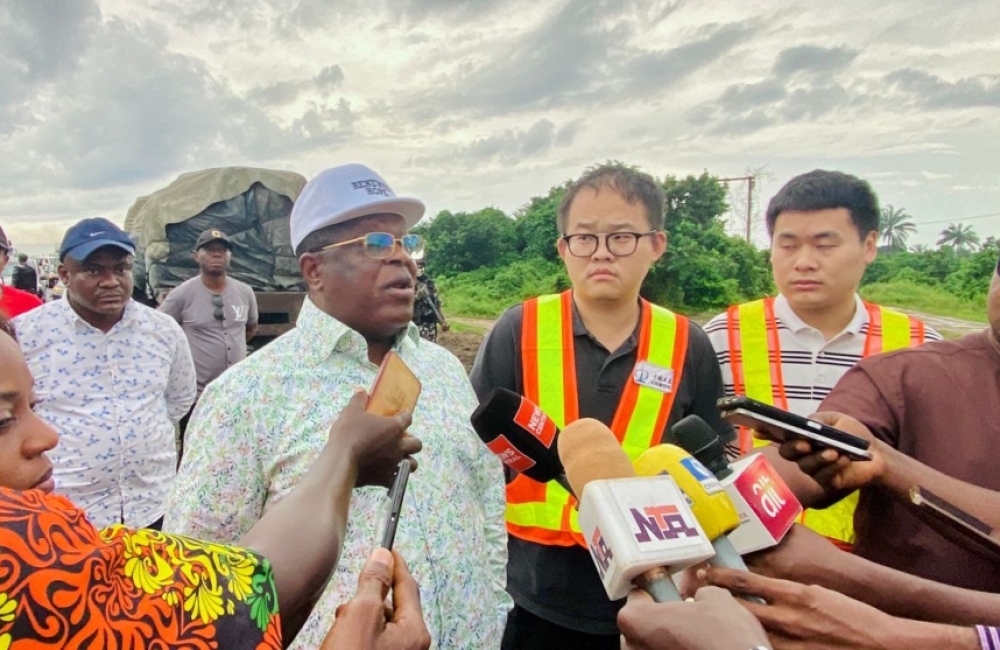
WORKS MINISTER,SEN. UMAHI REPRIMANDS CCECC NIGERIA LIMITED OVER POOR CONSTRUCTION METHODOLOGY ON ABA BOUND OF ENUGU-PORT HARCOURT EXPRESSWAY, DESCOPES PORT HARCOURT BOUND,ISSUES 14 DAYS TERMINATION NOTICE FOR SUB-STANDARD PERFORMANCE In his avowed determination to entrench the new construction codes and regulations in the method statement of construction works under the Federal Ministry of Works, the Honourable Minister of Works, His Excellency, Sen Engr. Nweze David Umahi,CON, has reprimanded the poor construction methodology deployed by China Civil Engineering Construction Company Limited on the rehabilitation works on the Aba bound of the Rehabilitation of Enugu-Port Harcourt Expressway, contract No. 6252. The Honourable Minister, who was on a routine supervision of ongoing road projects within South South and South East on Sunday 19th October 2025, expressed displeasure over the recalcitrance of the contractor in complying with the new construction codes and regulations which are aimed at building enduring road infrastructure for the nation. Speaking during the inspection visit, the Honourable Minister decried the state of the 43-km Aba-Port Harcourt inherited ongoing project handled by CCECC, which he said was on the verge of total collapse. He directed that a 14-day notice of termination be issued to the contractor, having regard to the various warning letters issued to the contractor over their poor construction performance on the said job. He further directed that the Port Harcourt bound of the project be descoped and reawarded to a competent contractor. "If you get to Port Harcourt end, which they did about two years or thereabout, the entire road has almost totally failed. We have been writing them to maintain this road. They have refused, and so I have to take responsibility and take decision. Number one, the Port Harcourt bound is descoped, no longer going to be done by CCECC.I will direct the Ministry of Works to scout out for very qualified indigenous contractors to handle the Port Harcourt bound. *They should be the contractor that will start work immediately while we sort out for funds for them._Number two, for the site handled by CCECC, they should issue them 14 days notice of termination of the job. And I want this directive to go very wide. After 14 days, they fail to mill out the binder and replace it properly,the job will be terminated; they have to initiate it; they have to commit to doing that. Even if they are going to do it during the dry season, they have to maintain the ones that they have done and they put in writing that they're going to mill out the binder at their own cost, and then be able to put a new binder, which we have paid for. He reiterated that putting binder for a stretch of the project without putting wearing is unacceptable. On another development, the Hounourable Minister has commended the quality of work on the Rehabilitation and Reconstruction of Enugu-Port Harcourt Dual Carriageway, Section II - Umuahia Tower-Aba Rail/ Road crossing in Abia State, Contract No. 6209 handled by M/S Arab Contractors O. A. O Nigeria Limited. The 56-km inherited ongoing project was noted to have reached 85% completion. "They are one of our best, the first five. Even we want them to maintain from Aba to Umuahia, the completed section. So they're working very hard. The controller is also doing very well. I wish the controller to visit all the projects of the Federal Government in Abia State. He should be able to visit all the projects in Abia State at least once a week, so that if there is a problem of impending danger, impending of problem of cost, you let us know. The Honourable Minister noted the terrible situation of inherited road projects nationwide, which are all receiving priority intervention by the Renewed Hope administration of the President of Nigeria,His Excellency, Bola Ahmed Tinubu GCFR He thanked Mr. President for the encouragement given to the Federal Ministry of Works to turn around the road development trajectory of Nigeria. _"In Nigeria, all the roads became a priority because of the terrible situation of the roads that the President inherited. But he's doing his best. And we are also working with him to offer our best in the country. We feel so bad when our people can't move from one point to the other all over the country. I feel so sad. That is usually my lowest moment. But, I'm still encouraged with the support the president is giving on roads and bridges because that is the basis of economic activities, and I think that we are very lucky to have him because the economy is breaking now. We are the third largest growing economy in the whole world, so we will get there" Hon. Barr. Orji Uchenna Orji Special Adviser ( Media) to the Honourable Minister of Works 20th October 2025 ...
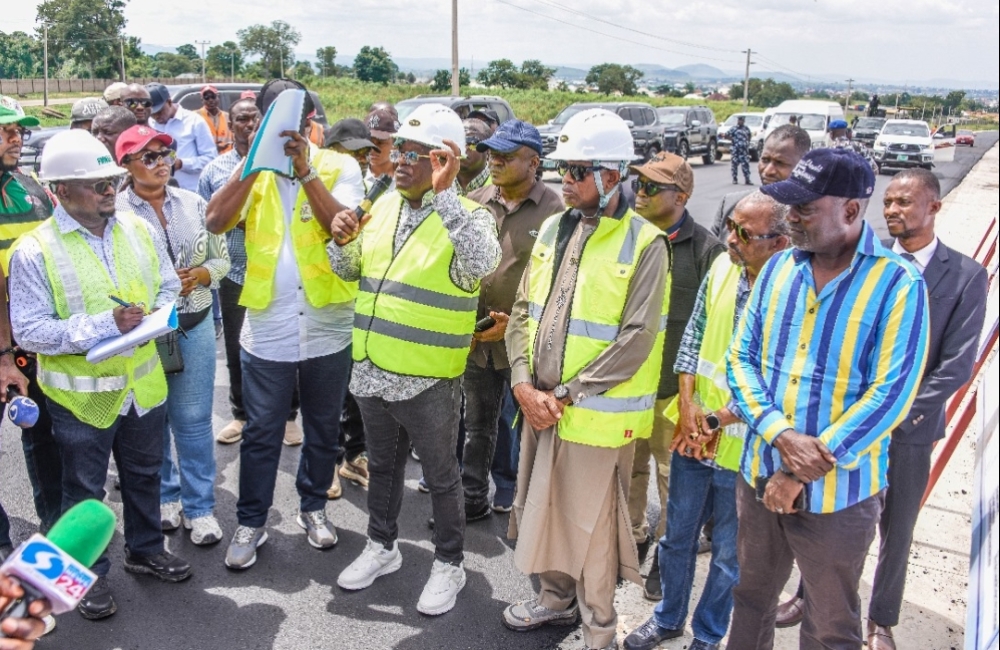
Umahi Inspects Mararaba–Keffi Carriageway, Keffi Flyover Project, Visits Keffi-Nasarawan Toto–Abaji Road The Honourable Minister of Works, Sen. (Engr.) David Umahi, CON, FNSE, FNATE led a high-powered delegation from the Ministry on an inspection tour of key road projects in Nasarawa State. At the site of the Reconstruction and Expansion of Mararraba-Keffi Dual Carriageway, the Minister expressed serious concerns about the pace of work and lack of adherence to engineering specifications. He informed the contractor, China Harbour Engineering Company that after several warnings, the Ministry is left with no choice but to revoke the contract for the Abuja-bound carriageway. He further directed that it should be awarded to a local contractor with a proven track record, who will be mobilised to complete the concrete shoulders and other pending works. The slow pace of construction had been causing considerable hardship for road users and residents along the corridor. The Minister was accompanied by the Minister of State for Works, Bello Muhammad Goronyo, Esq, Directors and other staff of the Ministry, representatives of the construction firms handling the various projects, and was met at the Keffi Flyover by the Governor of Nasarawa State, His Excellency, Engr. Abdullahi Sule, Sen. Ahmed Wadata, officials of the State Government, and other stakeholders. Engr. Umahi emphasised that the Federal Government is committed to delivering high-quality and durable road infrastructure, meeting global engineering standards and capable of serving Nigerians for decades. “We cannot continue to tolerate uncooperative contractors, who delay projects and ignore directives,” he declares. The Minister reiterated his faith in Nigerian Engineers and contractors, guaranteeing that they would deliver quality jobs comparable to international standards, when given the opportunity. He also warned that any contractor who fails to meet deadlines or flouts directives would have their contracts terminated. Engr. Umahi cautioned that “If by the 15th of December, you do not finish the scope of work, I will terminate the whole contract. We must begin to trust our local contractors. This is about discipline, quality, and integrity,” he stressed. He went further to say that “when we came on board, we reviewed the method statement for this project because we could not accept a design that would destroy an already consolidated subgrade,” Umahi explained. “We changed the design to include 20 cm of concrete on the inner shoulder and reinforced the stone base with 3.5% cement content. The sections already completed are excellent and will last for a minimum of 50 years.” The Minister of State for Works, Bello Muhammad Goronyo, Esq, also admonished contractors to show greater seriousness and commitment to the timely completion of projects. He restated that the present administration is determined to deliver quality infrastructure that will stand the test of time, as well as improve the quality of life of Nigerians. Goronyo added that we must all take our responsibilities seriously. “Contractors must adhere strictly to specifications and timelines, as the Ministry will not compromise on quality and accountability,” the Minister disclosed. The Director, Highways, Construction and Rehabilitation, Engr. Clement Ogbuagu reported that about 50% of the project has been completed and assured that the first phase will be delivered by December 15, 2025. At the site of the Emergency Repairs of the Damaged Keffi Flyover, the Minister, accompanied by the Nasarawa State Governor, said that “two months ago, a tragic accident damaged part of this flyover, leading to loss of lives. We reported it to Mr. President, who immediately approved funds for its repairs.” “Today, we can see the quality of work being done. They are recasting the entire slab, not just the affected part at a very conservative cost of ₦1.5 billion,” he added. On the soon-to-be-awarded rescoped Keffi-Nasarawan Toto-Abaji Road, the Minister informed the Governor and his entourage that the original contract sum of ₦73 billion covered an initial 43.65 km stretch. However, the initial scope has now been reviewed and extended to 137 km, reaching Abaji town in the FCT, following the directive of President Bola Ahmed Tinubu, GCFR, under a special funding arrangement. In his remarks, His Excellency, Engr. Abdullahi Sule commended President Tinubu and the Minister of Works for their interventions in the State, especially the Keffi Flyover, which was recently damaged by an overloaded truck. The Governor further noted that the Keffi–Nasarawan Toto-Abaji road is crucial to the economic development of both Nasarawa State and the Federal Capital Territory, as it serves as a major gateway for goods, services, and people. It also serves the biggest Lithium Factory in Africa, recently commissioned by Mr. President. Senator Wadada, representing Nasarawa West and other stakeholders commended the Minister for his dedication, describing him as an “uncommon performer,” whose hands-on approach reflects the Renewed Hope Agenda of President Tinubu. They also applauded the President for being “a leader for all.” Engr. Umahi reaffirmed that all ongoing Federal projects will now adopt the revised engineering method statement, which emphasises, complete milling of old pavement, reinforcement of subgrade with stone base and cement, 20 cm concrete shoulders, and proper drainage and slope control. He also stressed that these specifications are designed to guarantee a minimum lifespan of 50 years for the reconstructed roads. “No contractor, no matter how connected, will be allowed to compromise on quality. Mr. President has done his part by approving funding; it is now our duty to ensure delivery,” the Minister emphasised. Mohammed A. Ahmed, Director, Press and Public Relations. 12th October 2025. ...

OUSTANDING WORKS ON ABUJA-KADUNA-ZARIA-KANO ROAD PROJECT GET EXPEDITIOUS DELIVERY BOOST, AS WORKS MINISTER, SEN DAVID UMAHI AND KADUNA STATE GOVERNOR,SEN. UBA SANI MEET ON MODALITIES TO FASTRACK DELIVERY OF PROJECT. In the commitment of the Renewed Hope administration towards achieving timeous completion of the outstanding works on Abuja-Kaduna-Zaria-Kano road project, handled by Messrs Infiouest International Limited, the Hoonourable Minister of Works, His Excellency, Sen. Engr. Nweze David Umahi CON has directed the contractor to fastrack the delivery of the two sections of the road project particularly by increasing the number of work zones between Jere and kaduna in Kaduna State and ensuring that the project is delivered in record time. The Honourable Minister of Works gave this directive after a meeting he had with the Governor of Kaduna State, His Excellency, Sen. Uba Sani CON together with the contractor handling the project, held at the Honourable Minister’s office, Federal Ministry of Works, Mabushi, Abuja on 10th October, 2025. Speaking on the importance and priority accorded to the project by the President of the Federal Republic of Nigeria, His Excellency, Bola Ahmed Tinubu GCFR, the Hounourable Minister stated; “We have been monitoring this project almost every week, and so we insisted that we must do a meeting with the MD of Infiouest who has the contract of these sections, lot 1, which is N252,000,000,000.00 (Two Hundred and Fifty Two Billion Naira), and lot 2 which is basically in Kaduna, 82 kilometres by 2 that is 164 kilometres costing Federal Government N502,000,000,000.00 (Five Hundred and Two Billion Naira), so altogether to complete all the sections from Abuja down to Kaduna, down Kano is costing the Federal Government N754,000,000,000.00 (Seven Hundred and Fifty Four Billion). Lot 1 is 118 kilometres, costing N252,000,000,000.00 (Two Hundred and Fifty Two Billion Naira), and lot 2 is 164 kilometres, costing N502,000,000,000.00 (Five Hundred and Two Billion)”. He directed the contractor, Infiouest, to deploy on 4 sections and ensure steady work progress, and the Engineer Representative to relocate to Kaduna and monitor strictly the progress of the project and feed him back on daily basis. He assured the Governor that the progress and quality of work would be tracked with a view to achieving delivery in record time. " I want to assure you that the President is very highly concerned to get this project done. But the quality of using the same standard of coastal highway is something that our brothers and sisters in the North will never forget President Bola Ahmed Tinubu for his love and commitment towards the development of every part of this country ." Also, speaking on the outcome of the meeting, the Governor of Kaduna State expressed satisfaction with the outcome of the meeting and the quality of the job being done on the project. He said that he had no doubt that in the next two weeks, the contractor should be able to record commendable milestones given the quality of the meeting held with the Honourable Minister of Works and the contractor handling the job.He further stated that the road is a very important transport corridor that connects not only the economic corridors of the North West but also that of the North Central and the North East " What is more important for us here is for you to understand that Abuja, Kaduna, Kano road connects about 12 States. States from North West, as well as some States from North Central and North East. So it is a very important road that I believe that by the time you complete this project, many people, apart from Kaduna, will be very happy." He commended the professionalism, passion, and innovation brought to bare by the Honourable Minister of Works, whom he described as a rare gem in public service delivery." We are proud to have a Minister of the caliber of Engr. David Umahi, who is of very top profession. I am surprised, when I came here he had to break down the entire project ( off hand) from the size of the project to the level of the project as well as the quality of what is going on there, and I can say that if we have a lot of Honourable Ministers like him in Nigeria,we have to go to sleep without having any problems " In the response of the contractor handling the project, the Managing Director of Infiouest International Limited, Mr. Joseph Abou Jaounde assured of keeping to the directive of the Honourable Minister. “ I am here to assure you, even though we have some little challenges in Kaduna, but from now to 2 weeks, we are going to have a visit a site and to make sure that this portion of the road will be joined with Zuba to Kaduna, and all the sections will be joined together to make sure that the work will be done on time in the right way and quality required ”. This collaborative support and encouragement from the Governor of Kaduna State is made possible because of his interest to tap into the massive infrastructural development programmes of the federal government across the Geo-Political Zones of Nigeria. He is a visionary leader and development advocate who is widely recognized for his contributions to democracy, governance, and social transformation. He is a product of Nigeria’s diverse educational system, a financial guru, business administrator, and engineer in thought. He played a frontline role in the struggle against the military rule in Nigeria. He was a courageous pro-democracy activist, organizing and mobilizing citizens in Northern Nigeria against military dictatorship. Today, he is on the saddle as the Governor of Kaduna State and he is one of the serving Governors in Nigeria who have shown untiring determination to right the wrong in the socio-economic conditions of their people and he is achieving progressive and exponential result given the unprecedented wave of support and leverage provided by the Renewed Hope administration of President Tinubu to the sub-national governments. Hon. Barr. Orji Uchenna Orji Special Adviser (Media) to the Honourable Minister of Works. ...
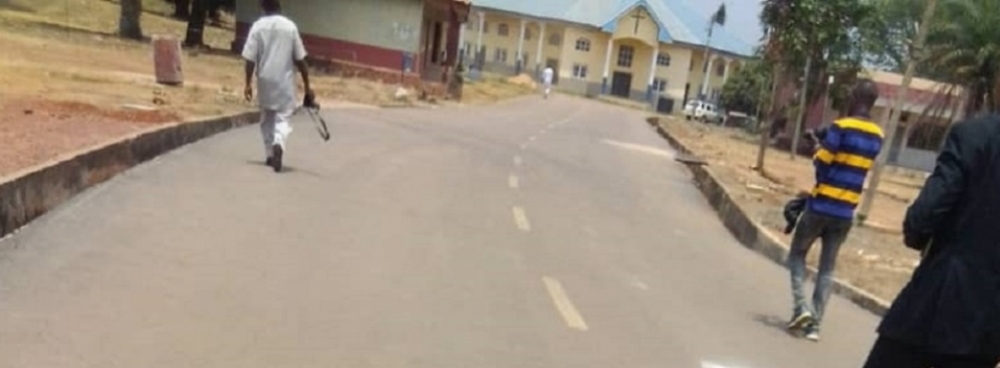
FG COMMITTED TO BRIDGING INFRASTRUCTURE GAP IN TERTIARY INSTITUTIONS - FASHOLA
The Honourable Minister of Works and Housing, Babatunde Raji Fashola, SAN has restated Federal Government’s commitment to bridging the road infrastructure challenges in tertiary institutions across the country.
The Minister who spoke in Enugu at the official commissioning and handover ceremony of the 1.0 kilometre road project constructed at the Federal College of Dental Technology and Therapy Enugu State by his Ministry said the gap of the nation's infrastructure needs is steadily being bridged by a gradual process of rehabilitations and constructions and it has reached the tertiary institutions.
Fashola, who was represented at the occasion by the Federal Controller of Works in Enugu State, Engr. Olufemi Oyekanmi explained that the intervention by the Federal Government was to boost quality of education and renewed hope and enthusiasm with regards to attending classes as defective roads have been been restored to motorability.
"It's undebatable that the quality of education will be impacted by the quality of infrastructure and the learning environment and those who doubt it should simply listen to some feedbacks from the students of the schools where this type of intervention have taken place" the Minister said.
He disclosed that under the Tertiary Institutions road Intervention Programme initiated by his Ministry, the Federal Government is currently working on 76 roads projects in selected Federal Tertiary Institutions across the nation.
" We have successfully intervened in the internal Road networks of 46 Tertiary Federal Institutions and handed over 29 as at 2021and we now have another 17 ready to be handed over while we are currently attending to 30 roads in similar institutions across the country, making a total of 76", Fashola said.
The Minister described the construction of the internal roads by the Federal Government in the federal tertiary institutions as a pointer to President Muhammadu Buhari's administration's progressive ideal of improving the human condition by supporting education.
In his response, the Rector Federal College of Dental Technology and Therapy, Dr. John Emaimo thanked the Honourable Minister and Federal Ministry of Works and Housing for selecting the college to benefit from this laudable Government Intervention in bringing infrastructural development gap saying that it is a dream fulfilled bearing in mind the deplorable state of the roads before the intervention.
According to Dr Emaimo, infrastructure is critical to the progress of stakeholders it can attract.
He added that with this kind gesture from the Ministry, the institution wears a new look making it conducive for both teaching and learning.
The Rector appreciated the Honourable Minister yet for another project currently being executed by the Ministry which he said is the provision of street lights to illuminate the campus during night hours.
Emaimo however, requested for the Ministry's intervention in the construction of two more roads in the school premises which are in a deplorable condition.
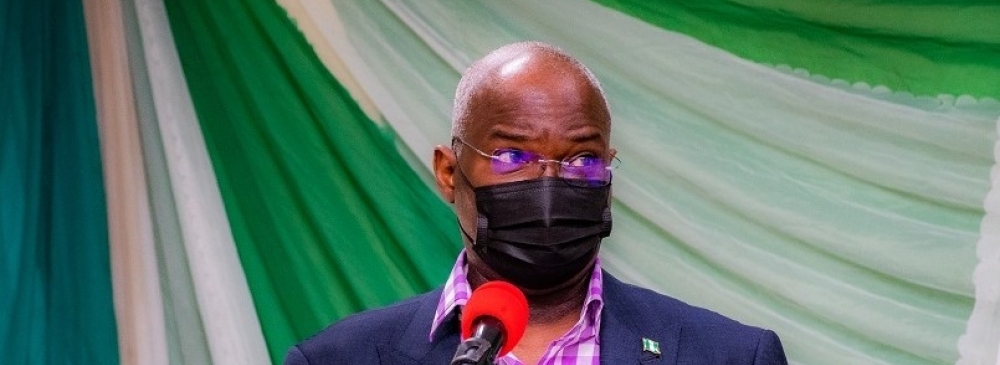
KEYNOTE SPEECH BY H.E BABATUNDE RAJI FASHOLA, SAN AT LAGOS BUSINESS SCHOOL EVENING WITH THE MINISTERS SERIES HELD ON SEPTEMBER 29, 2021
Distinguished Ladies and Gentlemen:
The compelling part of the LBS’ invitation letter to me dated August 31st 2021 signed by Dr. Franklin N. Ngwu is the part which talks about:
“…the need for more public/private sector dialogue and collaboration for Nigeria’s inclusive and sustainable economic growth and development.”
It is about those 3 (three) things: inclusiveness, sustainable growth and development that I wish to focus my intervention today.
But before I do so, let me push back against the part of the letter that says that:
“Some key constraints such as limited trust, lack of information on the opportunities available, impact of policies and business and operational frameworks of engagement limit their collaboration.”
The first question I wish to ask is “limited trust” on whose part?
My appeal to those who have a one-sided view of the public sector is to stand back and take a hard look at the antecedents of many of those who now occupy leadership positions in the public sector.
What you will see is that many of them, including me, spent a sizable part of their careers in the private sector.
Have we become unworthy of trust because we chose to serve?
And speaking of information or lack thereof about opportunities and policies, I recall that it was to this business school that we came for the launch of the Highway Development and Management Initiative (HDMI) to share information and opportunities regarding the planned concession of 12 highways spanning over 1,000 km of federal road network, and the opportunity for investment growth and job creation.
It is the largest highway concession ever undertaken on the African continent with the potential to create 5,000 direct jobs and 200,000 indirect jobs if successful.
We did not go to a foreign business school to launch the initiative; and there are many we could have gone to, if we so desired. We came to the Lagos Business School, because we wanted a homegrown success.
By way of updates, even though LBS has not come back to ask for one, I can report that out of 75 applicants, 18 have been prequalified, and will soon be requested to submit requests for proposals, environmental and social impact studies are concurrently being undertaken and the national tolling policy has been approved to guide the development of business plans.
Of course, as far as providing information about development and growth goes, many of us regularly brief the public about projects, I go on many project inspection tours to highlight what is going on.
Every quarter, the National Bureau of Statistics (NBS) releases reports about the growth situations in the economy.
What I have observed of course is that the negative results are readily acceptable and pleasing to some people, while they question the data when the same Bureau announces positive quarterly economic performances.
I will now return to the 3 (THREE) issues of:
a) inclusiveness;
b) sustainable growth and
c) development
But first, I must set the context.
Between the period 2012 to 2015 Nigeria‘s economy was reportedly growing at between 5% to 7%. But if we all take time to go back to the reviews and reports in the media at the time, the overwhelming response was that it was “jobless growth or “non-inclusive growth.”
This was the story then and it is not a new story. The other context before we proceed is to remind ourselves that at the peak of that growth, sometime in 2014, the then Minister of Finance issued a statement that Nigeria was heading towards a recession.
These were her words:
“There are some difficult moments out there in the international economy and we have noticed a downward slide in oil prices in recent weeks. Nigeria may not be so lucky to avoid recession this time as it did during the last economic meltdown.”
The question to ask is a recession under who’s watch?
My response is that it did not matter who was managing the economy, the recession was inevitable. We had consumed all the prolific and extraordinary income we earned from high prices of crude oil sales.
We did not invest them in infrastructure, new hospitals, universities, rail, bridges, broadband rollout, airports etc.
So the logical issue would be, what is the plan to get out of the recession?
Before I proceed let me quickly deal in broad strokes with some of the things that happen during a recession.
One of them is that it is the “services sector” that first feels the pinch, and when growth returns the services sector is the last to recover and that is when the feel-good factor returns. I will come back to this.
So in deciding what to do when the recession beckons or happens, the first thing to look at is who is managing the economy and what views do they espouse, because this is likely to shape the choices they will make.
Regrettably, many have again fallen into the error of believing the one-sided story that there is no ideology in Nigerian politics or in the political parties.
Nothing could be further from the truth and any worthy scholar who goes through the various party manifestoes will find not only differences but also similarities and this is one thing I commend for further study and analysis by this business school.
Whilst I will do my best not to be overly partisan, I find it difficult to effectively discharge my task without linking policy to politics.
For example, my party professes a progressive ideology and what this simply means is a “commitment to improving the human condition” and this is one difference between us and the others.
Ask them what they profess?
The other difference is that in 6 (SIX) years we have ensured that the average Nigerian remembers what we committed to: anti-corruption; economic development and security. This is a major reason why we have been held accountable.
You have to go back to 1993, (28 years ago); or further back to 1978 (43years), to find a political era where the public remembers what the parties promised during the campaign.
In MKO Abiola’s SDP, the party manifesto hinged on Energy, Rural Development, Education and Defence. In UPN, Awolowo’s 4 (FOUR) cardinal points (Free Education, Free Health Services, Integrated rural development, Employment) were examples of political promises or ideology so clearly articulated and retained.
This is another difference between us and them, and I challenge many here to ask themselves if they can remember two or three things they were promised in the 16 years before us.
With this background I will now go back to the choices for getting out of recession; because we inherited the doomsday which was foretold.
As I have said earlier, in over five years when oil sold about $100 per barrel, we did not invest in infrastructure.
The 2015 Federal Government budget left by our predecessors for Nigeria’s road network was N18 billion, less than the 2015 budget for roads in Lagos State of N31 billion. (Office of Infrastructure budget)
The said budget had a 15% capital component and 85% of the recurrent component. A budget says a lot about what the Government wants to do. Consume 85% and invest 15%, at the time that oil prices were high.
This is another area of vast policy difference between us and them because from the first budget of 2016 we committed to a minimum of 30% capital investment in the annual budget and an expansive infrastructure investment to boost growth, facilitate development and create jobs.
With oil revenues averaging $43 per barrel in 2016, the works budget for roads was cast at N200 Billion naira, an increase of 1011%.
This pattern has continued to date, where we are spending even more on infrastructure with far less resources.
We must remember that with very high oil prices the total FGN budget in 2015 was N4.4 Trillion while the first budget passed under this administration was N6.06 Trillion.
The Economic Recovery and Growth Plan (ERGP) 2017 - 2020 which was developed as the pathway to recovery from recession was underpinned by infrastructure investment as it committed to:
a) Achieving a stable microeconomic environment;
b) Creating a globally competitive economy and
c) Investing in the Nigerian people.
Apart from over 13,000 km of roads and bridges now under construction or rehabilitation nationwide, hitherto very difficult projects, like Bodo-Bonny Bridge, Lagos-Ibadan Expressway, Abuja-Kano Expressway and Second Niger Bridge now underway and heading towards completion before 2023, a generation of Nigerians can now travel by rail in their own country from Lagos to Ibadan and Abuja to Kano for the first time after a very long hiatus.
This did not happen in 16 years before us.
You may not like how we look or what we say, you may even disbelieve what we say but you cannot disbelieve what we have done with limited income on infrastructure.
This is another difference between us and them.
There is yet another difference and it relates to how we the progressives have chosen to deploy resources.
Between 1999 and 2015 all the infrastructure we are talking about today were crying out for attention.
In spite of prolific oil resources in between that period, I ask anyone to show one bridge, major highway, airport or a rail project that our country built.
I will remind you that in 2005 we choose to pay $12.09 billion to negotiate a Paris debt forgiveness when there was infrastructure crying out for attention.
However, by 2015 the debt stock we inherited was $10.3 Billion in spite of prolific oil resources.
That was a policy choice. No debt, no infrastructure while population grows.
On the contrary, with limited resources and commitment to expansionary fiscal investment and infrastructure to improve the living conditions of Nigeria, our budgets have been deficit budgets funded by debts to invest in infrastructure.
It is our belief that instead of increasing the tax burden of Nigerians, if we borrow to build infrastructure, small businesses who need broadband, rail, roads, bridges and other infrastructure will improve their efficiency and create opportunities.
This can only lead to the inclusiveness, sustainable Growth and development that my invitation letter speaks about.
The Economic Recovery and Growth Plan that we developed to address the recession that our predecessors predicted has worked.
By the second quarter of 2017 we were out of the recession that started in Quarter 2 of 2016 and we recorded 12 consecutive quarters of growth until COVID-19 struck.
By staying true to our core beliefs and by developing the Economic Sustainability Plan to deal with the COVID-19 impact, we came out of a second recession which was global and we now have a 5.1 GDP growth in Quarter 2 with services sector growing at 2.8%.
Remember I told you that the services sector is the last sector to recover after recession and this result is therefore clear evidence that the economy is on the mend and we must sustain it and expand it. In this regard I urge cautious optimism.
If you still think we are the same, let me share with you two different quotes from two sides of the divide to disabuse your minds.
The first is by the Vice-Presidential candidate of the main opposition party during the last elections in 2019.
This is what he said on August 8th 2021 about how to grow the economy.
“You cannot use infrastructure to drive economic growth…taking people out of poverty is not magic.”
But contrast President Buhari’s views expressed in Owerri on 9th September 2021 when he said:
“If we fix infrastructure, people will get on with their businesses.”
I am persuaded that President Buhari gets it.
His contemporary in the USA (a country held out as the example to follow) also gets it when he said:
“The American Jobs Plan will generate historic job growth, historic economic growth, help businesses to compete internationally, create more revenue as well. They are among the highest-value investments we can make in the nation — investing in our infrastructure.”
What limits or enhances the capacity of business is the infrastructure in the environment they operate.
The better the infrastructure the more efficient business becomes and the more productive and prosperous they will be.
If they can move goods and services in quicker time, through ports, rail and road, if they can transact financial services through reliable broadband, move fuel through new pipelines like the Ajaokuta-Kaduna pipeline project, if they can traverse about 40 kilometres on the Bodo-Bonny Bridge on land rather on canoes through the creeks, businesses will prosper and the economy will grow.
This in part is what the enablement of this private sector by the public sector means; in addition to fiscal and monetary policy.
This is a clear road to sustainable growth; and it is growth that will need more people to manage it thereby achieving inclusiveness.
Thank you for listening.
Babatunde Raji Fashola, SAN
Honourable Minister of Works and Housing
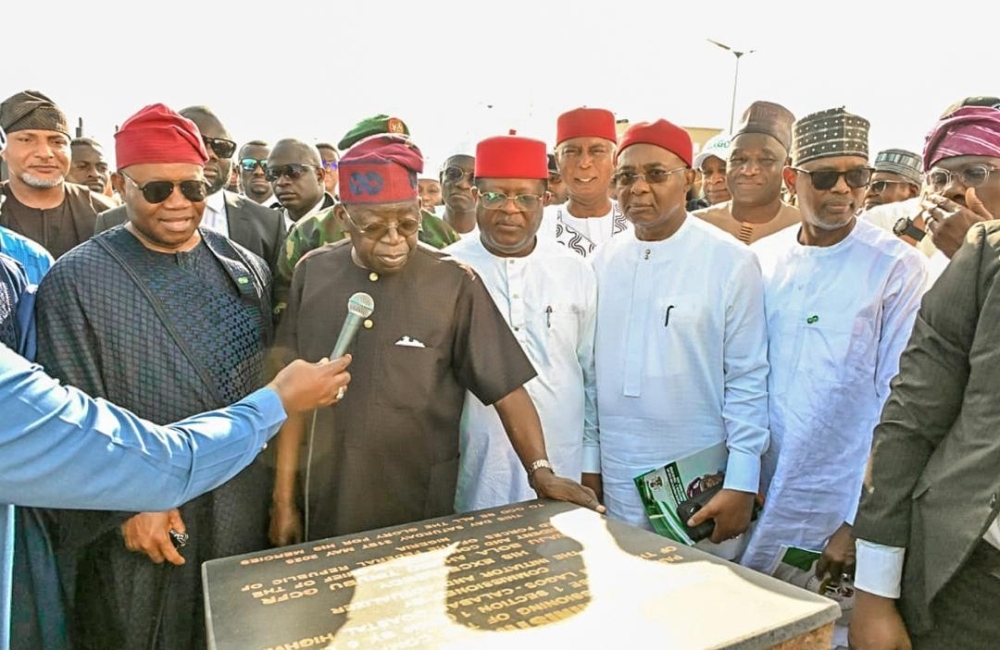
DRIVING NIGERIA’S FUTURE: CELEBRATING TWO YEARS OF TRANSFORMATIVE LEADERSHIP AND THE LAGOS-CALABAR COASTAL HIGHWAY MILESTONE
DRIVING NIGERIA’S FUTURE: CELEBRATING TWO YEARS OF TRANSFORMATIVE LEADERSHIP AND THE LAGOS-CALABAR COASTAL HIGHWAY MILESTONE
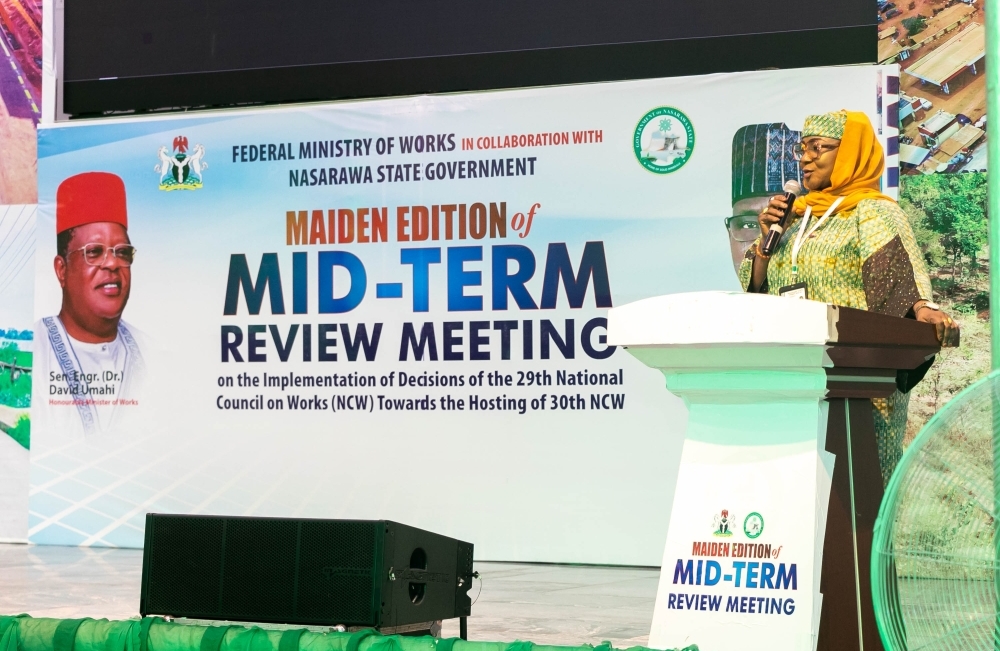
MID -TERM REVIEW MEETING ON THE IMPLIMENTATION OF THE DECISIONS REACHED AT THE 29TH NATIONAL COUNCIL ON WORKS (NCW) DAY 1
MID -TERM REVIEW MEETING ON THE IMPLIMENTATION OF THE DECISIONS REACHED AT THE 29TH NATIONAL COUNCIL ON WORKS (NCW) DAY 1