GORONYO COMMENDS SOKOTO GOVERNOR FOR DONATING 10 HILUX VEHICLES TO STRENGTHEN SECURITY ALONG SOKOTO–BADAGRY SUPERHIGHWAY
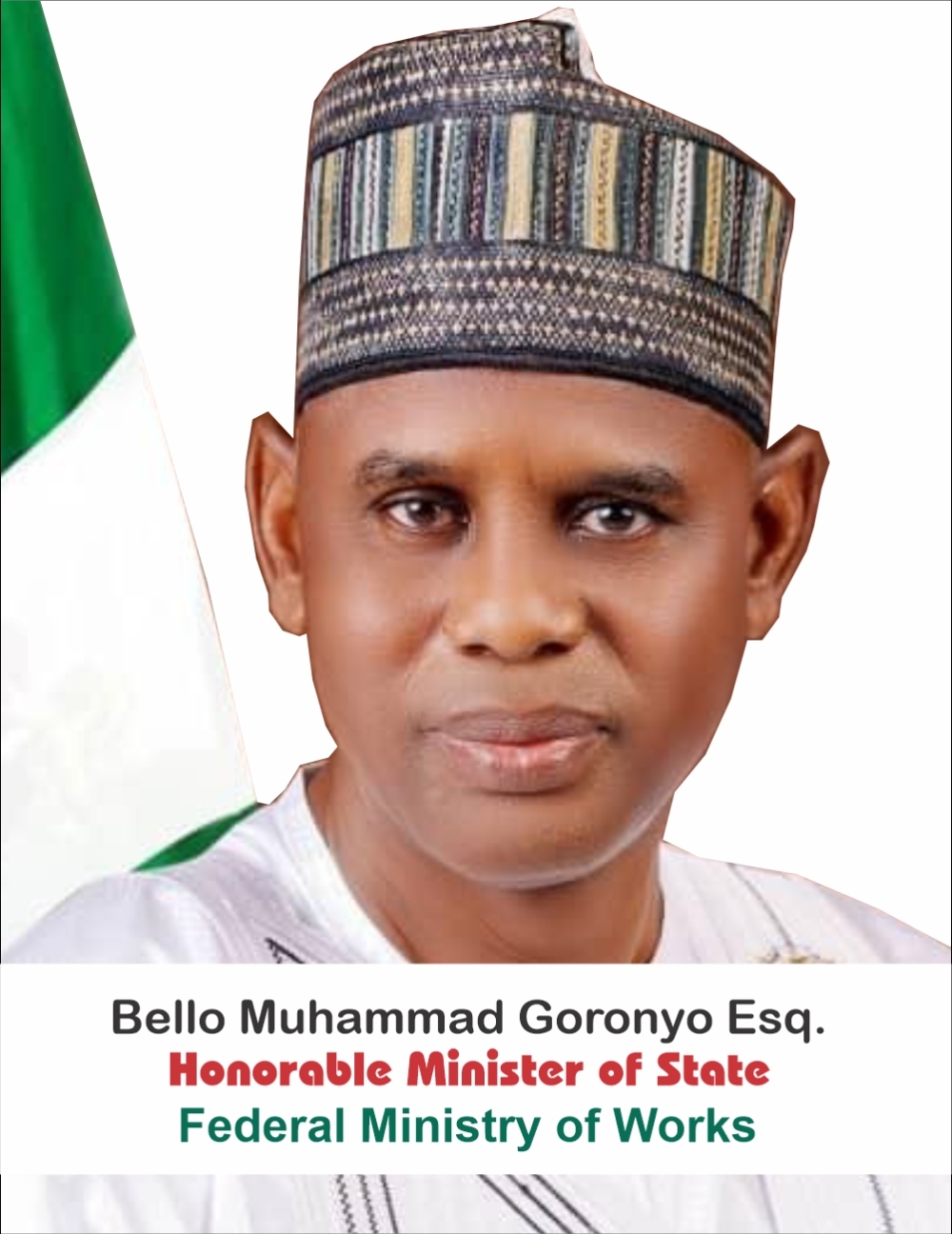
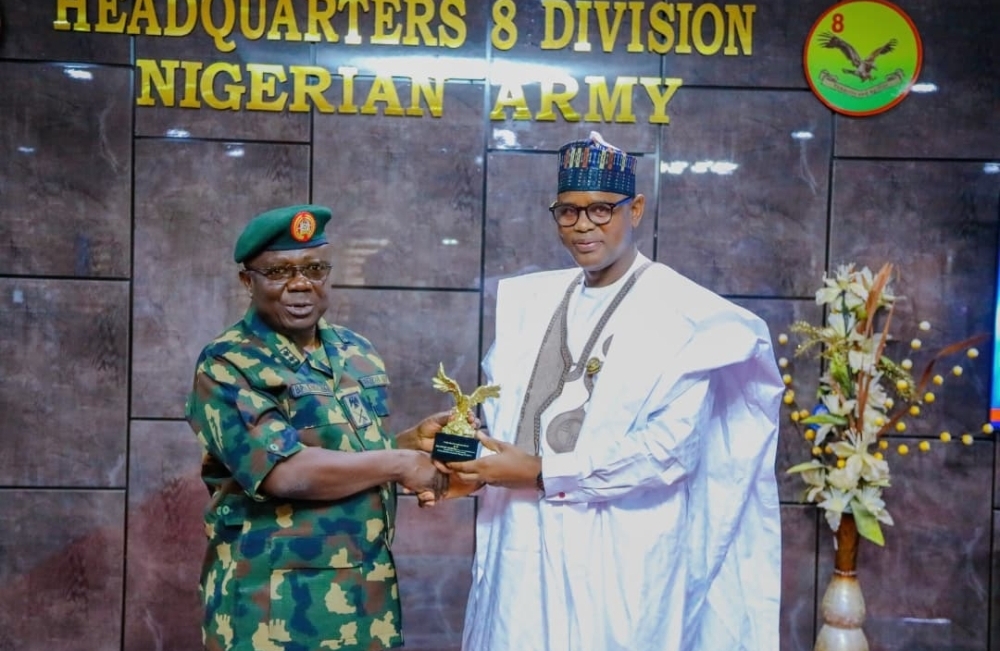
The Honourable Minister of State for Works, Rt. Hon. Bello Muhammad Goronyo, Esq., has commended the Governor of Sokoto State, Dr. Ahmed Aliyu Sokoto, PhD, for donating 10 operational Toyota Hilux vehicles to strengthen security operations along the Sokoto–Badagry Superhighway and other strategic infrastructure corridors.
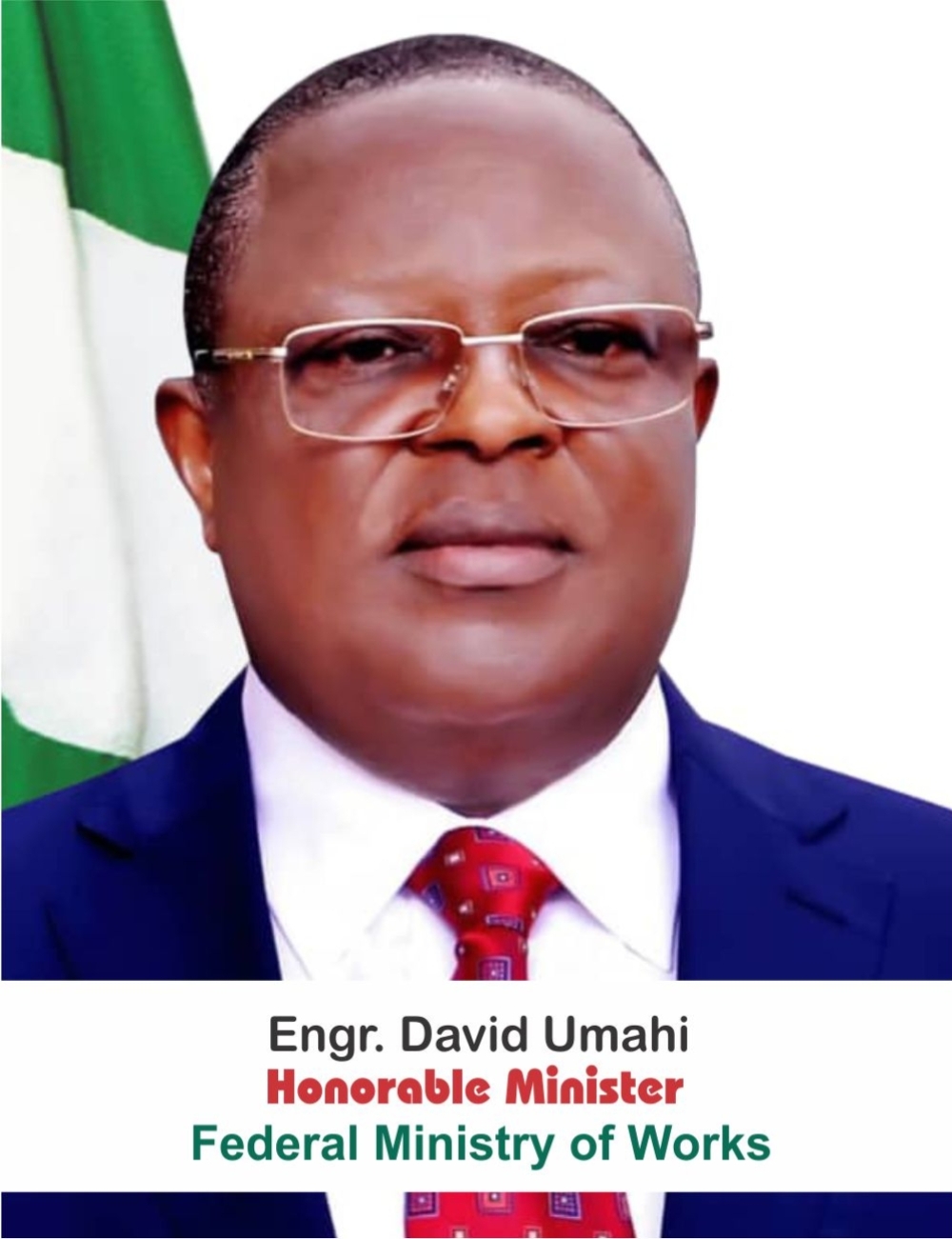
The vehicles were formally commissioned and handed over to the Nigerian Army at the Headquarters of the 8 Division, Nigerian Army, Sokoto, on Thursday, October 8, 2026, by the Honourable Minister of State for Works, on behalf of the Honourable Minister of Works, Engr. David Nweze Umahi, CON, FNSE.
The donation is expected to enhance the operational capacity of military personnel and other security agencies responsible for protecting construction workers, contractors, equipment and host communities along the highway corridor.
Speaking during the ceremony, Goronyo described the donation as a demonstration of the Sokoto State Government’s commitment to national development and the successful implementation of President Bola Ahmed Tinubu, GCFR’s Renewed Hope Agenda, particularly its landmark infrastructure projects.
The Minister emphasised that the Sokoto–Badagry Superhighway represents a long-standing national infrastructure vision that dates back several decades, with its conception traced to the era of former President Shehu Shagari in the 1970s. However, the vision remained unrealised for decades until the administration of President Bola Ahmed Tinubu, GCFR, initiated the construction of the 1,068-kilometre highway in October 2024.
He described the project as a significant step towards translating a historic aspiration into tangible infrastructure that will connect communities, expand economic opportunities and strengthen national integration.
According to Goronyo, President Tinubu’s commitment to the project demonstrates the Federal Government’s determination to bridge critical infrastructure gaps and improve connectivity between northern and southern Nigeria.
He noted that the superhighway, which traverses Sokoto, Kebbi, Niger, Kwara, Oyo, Ogun and Lagos states, is designed to facilitate the movement of people and goods, reduce transportation costs, stimulate trade, create employment and open up new economic opportunities along its route.
The Minister added that the highway would improve access to markets, schools, healthcare facilities and other essential services while supporting agriculture, commerce, industry and the development of communities across the corridor.
He stressed that the successful delivery of the project would require sustained commitment, effective coordination and cooperation among the Federal Government, state governments, security agencies, contractors and host communities.
Goronyo maintained that effective security remained essential to the timely and successful completion of the Sokoto–Badagry Superhighway. He explained that the provision of operational vehicles would strengthen the mobility and response capabilities of security personnel deployed to safeguard the project and its surrounding communities.
The Minister highlighted other strategic infrastructure projects being undertaken by the Federal Government, including the Lagos–Calabar Coastal Highway, the Calabar–Abuja/Trans-Saharan corridor, the Akwanga–Jos–Bauchi–Gombe corridor, the Abuja–Kaduna–Zaria–Kano route and the Zaria–Gusau–Sokoto corridor.
He explained that these projects form part of the Federal Government’s broader commitment to developing an integrated road network capable of supporting commerce, strengthening inter-state connections and accelerating national economic growth.
Rt. Hon. Goronyo further noted that the use of continuously reinforced concrete pavement on the Sokoto–Badagry Superhighway was intended to provide durable road infrastructure capable of serving Nigerians for decades. He added that complementary environmental and safety measures, including tree planting and solar-powered street lighting where provided for in the project, would contribute to environmental sustainability, visibility and road safety.
Goronyo commended the Nigerian Army and other security agencies for their resilience, professionalism and sacrifices in protecting lives, property and critical national infrastructure. He acknowledged the difficult conditions under which security personnel operate and urged them to remain steadfast in carrying out their constitutional responsibilities.
The Honourable Minister also expressed deep condolences to the Nigerian military over the reported loss of personnel in a bandit attack while on official duty the previous day. He described the loss as painful and extended his sympathy to the affected personnel, their colleagues and bereaved families, while praying for the peaceful repose of the departed and strength for their loved ones.
He further acknowledged the support of the National Security Adviser in addressing security challenges associated with the project, particularly through assistance and coordination aimed at strengthening security operations along the highway corridor.
Reaffirming his commitment to the Federal Government’s infrastructure development agenda, Goronyo said the Ministry of Works would continue to support the implementation of strategic projects under President Tinubu’s leadership, working in collaboration with relevant stakeholders to ensure their successful delivery.
He expressed optimism that the continued implementation of the Federal Government’s development programmes would bring lasting benefits to Nigerians, while acknowledging the complementary role of the Sokoto State Government in supporting infrastructure development and security.
In his remarks, the General Officer Commanding (GOC), 8 Division, Nigerian Army, Sokoto, Major General Bengba Paul Koughna, expressed appreciation to the Federal Government, the Federal Ministry of Works and the Sokoto State Government for the donation of the 10 Hilux vehicles.
The GOC noted that the vehicles would significantly enhance the operational mobility and response capabilities of troops deployed along the highway corridor, particularly across the approximately 440-kilometre section extending through Sokoto and Kebbi states.
He explained that troops conduct regular patrols and maintain multiple deployment points along the corridor, making the additional vehicles a valuable boost to their operational effectiveness.
He assured the Minister that the vehicles would be deployed appropriately to support security operations and protect construction workers, contractors, equipment and other stakeholders involved in the project.
The GOC also commended the representative of Hitech Construction Company, retired General Sa'ad Abubakar, for the company's involvement in the project.
The event was attended by retired Assistant Inspector-General of Police (AIG) Aliyu Garba, officials of the Federal Ministry of Works, representatives of the Sokoto State Government and other stakeholders.
The donation underscores the importance of sustained collaboration among the Federal Government, state governments, security agencies, contractors and host communities in addressing security challenges and ensuring the safe and timely delivery of strategic infrastructure projects.
The Federal Ministry of Works reiterates its commitment to working with all relevant stakeholders to protect national infrastructure and advance the objectives of President Bola Ahmed Tinubu, GCFR’s Renewed Hope Agenda for sustainable economic growth and development.

GORONYO COMMENDS SOKOTO GOVERNOR FOR DONATING 10 HILUX VEHICLES TO STRENGTHEN SECURITY ALONG SOKOTO–BADAGRY SUPERHIGHWAY The Honourable Minister of State for Works, Rt. Hon. Bello Muhammad Goronyo, Esq., has commended the Governor of Sokoto State, Dr. Ahmed Aliyu Sokoto, PhD, for donating 10 operational Toyota Hilux vehicles to strengthen security operations along the Sokoto–Badagry Superhighway and other strategic infrastructure corridors. The vehicles were formally commissioned and handed over to the Nigerian Army at the Headquarters of the 8 Division, Nigerian Army, Sokoto, on Thursday, October 8, 2026, by the Honourable Minister of State for Works, on behalf of the Honourable Minister of Works, Engr. David Nweze Umahi, CON, FNSE. Speaking during the ceremony, Goronyo described the donation as a demonstration of the Sokoto State Government’s commitment to national development and the successful implementation of President Bola Ahmed Tinubu, GCFR’s Renewed Hope Agenda, particularly its landmark infrastructure projects. The Minister emphasised that the Sokoto–Badagry Superhighway represents a long-standing national infrastructure vision that dates back several decades, with its conception traced to the era of former President Shehu Shagari in the 1970s. However, the vision remained unrealised for decades until the administration of President Bola Ahmed Tinubu, GCFR, initiated the construction of the 1,068-kilometre highway in October 2024. He described the project as a significant step towards translating a historic aspiration into tangible infrastructure that will connect communities, expand economic opportunities and strengthen national integration. According to Goronyo, President Tinubu’s commitment to the project demonstrates the Federal Government’s determination to bridge critical infrastructure gaps and improve connectivity between northern and southern Nigeria. The Minister added that the highway would improve access to markets, schools, healthcare facilities and other essential services while supporting agriculture, commerce, industry and the development of communities across the corridor. Goronyo maintained that effective security remained essential to the timely and successful completion of the Sokoto–Badagry Superhighway. He explained that the provision of operational vehicles would strengthen the mobility and response capabilities of security personnel deployed to safeguard the project and its surrounding communities. The Minister highlighted other strategic infrastructure projects being undertaken by the Federal Government, including the Lagos–Calabar Coastal Highway, the Calabar–Abuja/Trans-Saharan corridor, the Akwanga–Jos–Bauchi–Gombe corridor, the Abuja–Kaduna–Zaria–Kano route and the Zaria–Gusau–Sokoto corridor. Rt. Hon. Goronyo further noted that the use of continuously reinforced concrete pavement on the Sokoto–Badagry Superhighway was intended to provide durable road infrastructure capable of serving Nigerians for decades. He added that complementary environmental and safety measures, including tree planting and solar-powered street lighting where provided for in the project, would contribute to environmental sustainability, visibility and road safety. Goronyo commended the Nigerian Army and other security agencies for their resilience, professionalism and sacrifices in protecting lives, property and critical national infrastructure. He acknowledged the difficult conditions under which security personnel operate and urged them to remain steadfast in carrying out their constitutional responsibilities. The Honourable Minister also expressed deep condolences to the Nigerian military over the reported loss of personnel in a bandit attack while on official duty the previous day. He described the loss as painful and extended his sympathy to the affected personnel, their colleagues and bereaved families, while praying for the peaceful repose of the departed and strength for their loved ones. He further acknowledged the support of the National Security Adviser in addressing security challenges associated with the project, particularly through assistance and coordination aimed at strengthening security operations along the highway corridor. Reaffirming his commitment to the Federal Government’s infrastructure development agenda, Goronyo said the Ministry of Works would continue to support the implementation of strategic projects under President Tinubu’s leadership, working in collaboration with relevant stakeholders to ensure their successful delivery. He expressed optimism that the continued implementation of the Federal Government’s development programmes would bring lasting benefits to Nigerians, while acknowledging the complementary role of the Sokoto State Government in supporting infrastructure development and security. In his remarks, the General Officer Commanding (GOC), 8 Division, Nigerian Army, Sokoto, Major General Bengba Paul Koughna, expressed appreciation to the Federal Government, the Federal Ministry of Works and the Sokoto State Government for the donation of the 10 Hilux vehicles. The GOC noted that the vehicles would significantly enhance the operational mobility and response capabilities of troops deployed along the highway corridor, particularly across the approximately 440-kilometre section extending through Sokoto and Kebbi states. He explained that troops conduct regular patrols and maintain multiple deployment points along the corridor, making the additional vehicles a valuable boost to their operational effectiveness. He assured the Minister that the vehicles would be deployed appropriately to support security operations and protect construction workers, contractors, equipment and other stakeholders involved in the project. The GOC also commended the representative of Hitech Construction Company, retired General Sa'ad Abubakar, for the company's involvement in the project. The event was attended by retired Assistant Inspector-General of Police (AIG) Aliyu Garba, officials of the Federal Ministry of Works, representatives of the Sokoto State Government and other stakeholders. The Federal Ministry of Works reiterates its commitment to working with all relevant stakeholders to protect national infrastructure and advance the objectives of President Bola Ahmed Tinubu, GCFR’s Renewed Hope Agenda for sustainable economic growth and development.
The donation is expected to enhance the operational capacity of military personnel and other security agencies responsible for protecting construction workers, contractors, equipment and host communities along the highway corridor.
He noted that the superhighway, which traverses Sokoto, Kebbi, Niger, Kwara, Oyo, Ogun and Lagos states, is designed to facilitate the movement of people and goods, reduce transportation costs, stimulate trade, create employment and open up new economic opportunities along its route.
He stressed that the successful delivery of the project would require sustained commitment, effective coordination and cooperation among the Federal Government, state governments, security agencies, contractors and host communities.
He explained that these projects form part of the Federal Government’s broader commitment to developing an integrated road network capable of supporting commerce, strengthening inter-state connections and accelerating national economic growth.
The donation underscores the importance of sustained collaboration among the Federal Government, state governments, security agencies, contractors and host communities in addressing security challenges and ensuring the safe and timely delivery of strategic infrastructure projects.
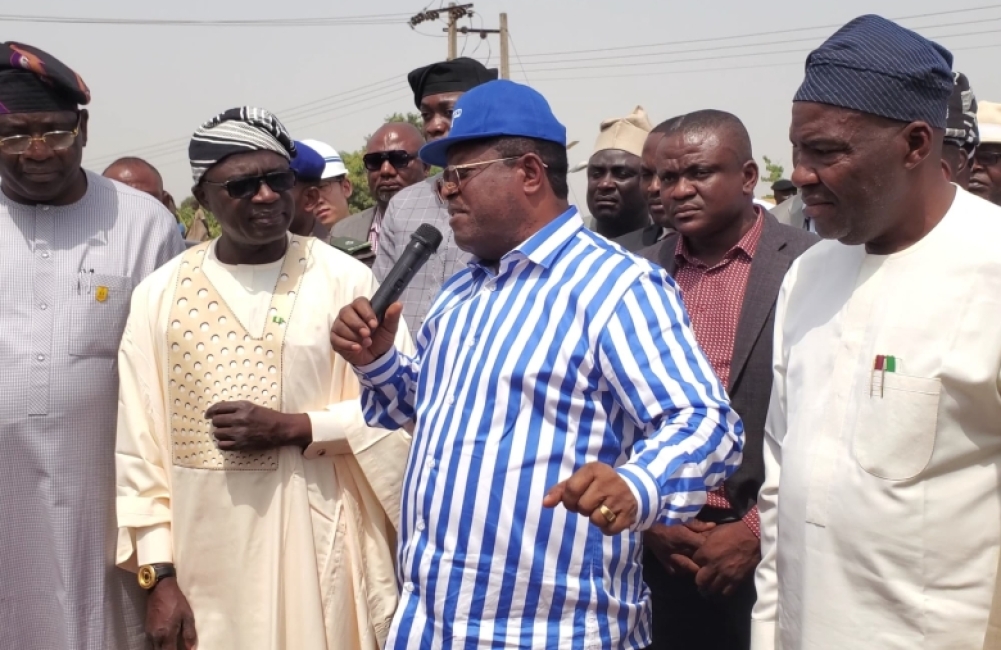
PRESIDENT TINUBU'S ROAD INFRASTRUCTURE REVOLUTION ON COURSE, DIRECTS RELEASE OF FUND TO TACKLE CRITICAL ROADS IN ALL THE GEO-POLITICAL ZONES OF THE FEDERATION The Hon. Minister of Works has reassured Nigerians that the Renewed Hope administration of the President of Nigeria, His Excellency President Asiwaju Bola Ahmed Tinubu GCFR, is on course in it's determination to rejig the road infrastructure which is a key catalyst for the actualization of the needed economic growth and development of our nation. The Hon Minister gave this indication in Markurdi, Benue State on 25th January 2024 during his inspection visit to the Keffi- Akwanga- Lafia-Makurdi road reconstruction project via Maraba, New karu, Asokoro, Ado, Goran road, the Lafia By-pass and the dualization of the Markurdi- Otukpo - 9th Mile Enugu road projects. He thanked the President of Nigeria for approving the release of funds for the commencement of work on the critical highways across the six goe-political zones, including the Abuja- Kaduna- Zaria - Kano highway, the Lagos- Ibadan expressway and the two by-pass roads at the 2nd Niger Bridge. ”So let me use this opportunity to also thank Mr. President. Just about three days ago, he approved that work should immediately commence in many sections; in Abuja,- Kaduna,-Zaria- Kano road. It's a very good and cheering news for me. We were having some problems with funding. But Mr. President has solved that problem and directed the immediate release of funds so that the projects will continue. The same thing is applicable to the Lagos Ibadan and the 2nd Niger Bridge two bypasses. Mr. President has directed the immediate release of money for the projects. As you see me, I am rejoicing like a newborn baby.” Speaking during the inspection visit to the Markurdi axis of the road, the Governor of Benue State, His Excellency, Fr. Hyacinth Alia called for support to the administration of President Bola Ahmed Tinubu.He described the President's national development plan as purposeful and progressive and with the propensity of promoting sustainable and stable national development. He praised the new spirit of dedication and quality service delivery in the Federal Ministry of Works and expressed hope that Nigeria would experience a new dawn in road infrastructure development under the Renewed Hope administration. ”We are quite pleased that you are beginning the second phase of Abuja- Keffi - Lafia 9th Mile Enugu road. I'm very excited to hear that you have already incorporated the prayers we presented to you" "We thank Mr. President for his thoughtfulness and good heart for the common masses. He's someone who doesn't like to see people suffer. He spends sleepless nights to ensure that we get it right at this administration. We remain quite indebted to him.” The Honourable Minister of Works undertook a driving distance of about 446 Km from Abuja to Enugu through the bad spots of Otukpo- Nsukka- Uboloafor Enugu road and that afforded him the opportunity to give policy direction to the Engineers and contractors on site on the new initiatives on scopping and construction and on the dimensions of Highway Development and Management Initiative (HDMI). He also identified areas within the major junctions of the road project that require flyovers, especially the axis after Abacha Barracks in Abuja and the Markurdi axis of the road project, where road users experience heavy traffic. ...
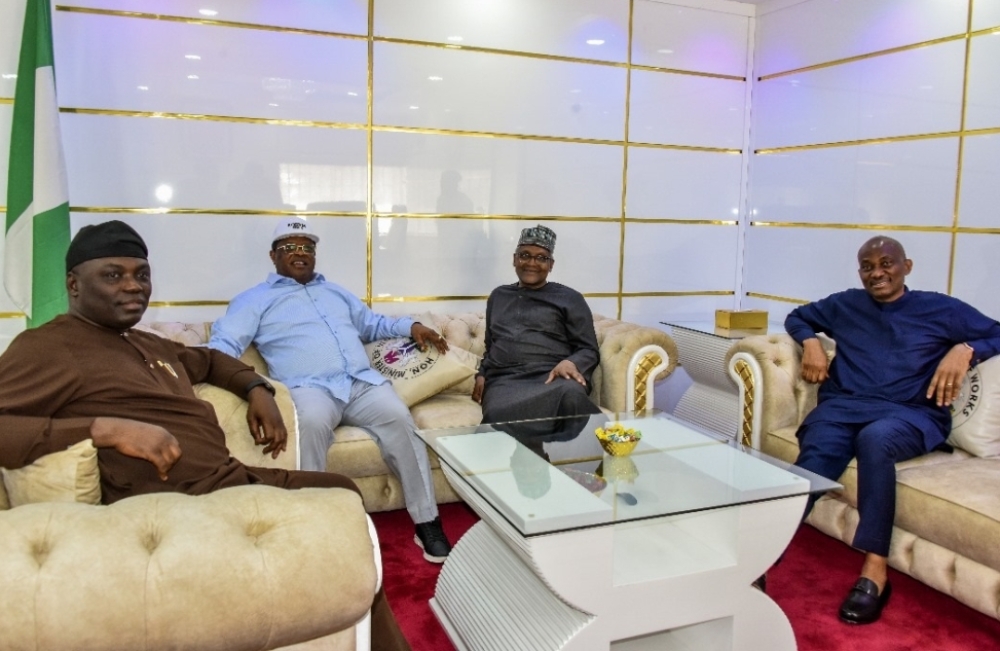
WORKS MINISTER, SEN UMAHI HARPS ON PUBLIC PRIVATE PARTNERSHIP IN BRIDGING THE GAP ON FINANCING OF NIGERIA'S ROAD INFRASTRUCTURE, MEETS GOVERNOR KEFAS OF TARABA STATE, ALHAJI ALIKO DANGOTE AND HON. NDUDI GODWIN ELUMELU In keeping with the road infrastructure initiatives of the Renewed Hope administration of the President of the Federal Republic of Nigeria, His Excellency President Asiwaju Bola Ahmed Tinubu GCFR, the Hon. Minister of Works, His Excellency, Sen. Engr. Nweze David Umahi CON has been engaging with concessionaires and other private sector organizations on the need for private sector investment on our road infrastructure as done in advanced economies of the world. This informed the closed door meeting the Hon. Minister of Works had with the Governor of Taraba State, His Excellency, Dr. Agbu Kefas, the founder and CEO of Dangote Group of Conglomerates, Alhaji Aliko Dangote GCON, and Hon. Ndudi Godwin Elumelu, former Minority Leader, Federal House of Representatives. It would be recalled that the Hon. Minister of Works in his zeal to change the ugly narrative of road infrastructure in Nigeria had set up three committees to work on the contracts executed by some concessionaires with the Federal Ministry of Works with a view to reviewing the scope and cost implications of the projects they undertook to execute under the Highway Development and Management Initiative (HDMI). This private sector initiative will fastrack road infrastructure revolution and bring order, accountability, and profitable entrepreneurship to the operations, management, and maintenance of Federal Highways. The Governor of Taraba who retired as a military professional was a one-time chairman Governing Board of Directors Nigerian Maritime Administration and Safety Agency (NIMASA) before he became Governor. The founder and CEO Dangote Group is one of Africa's foremost captains of industry who have made ambitious investments in the development of infrastructure in Nigeria and he has shown manifest commitment in the transformation of Nigeria's infrastructure through long- term investment in strategic sectors of Nigeria's economy, including financial services, and infrastructure development. Hon Ndudi G. Elumelu is a well-travelled politician and contemporary public administrator, and also a product of Harvard Business School, Boston. It is hoped that investors, local and international, and other organized bodies would take advantage of the will power of the President Asiwaju Bola Ahmed Tinubu's Renewed Hope administration and the private sector experience and professional capacities of the Hon. Minister of Works to invest in the over 35,000 Km of the national road network being managed by Federal Government of Nigeria as this road network carries more than 70% of the vehicular traffic, making it a critical infrastructure for the movement of goods and services across the nation. This initiative will trigger economic development, job creation, local content development and wealth creation for Nigerian population. Mr. President mean business with his efforts to prosper our country and make it the pride of the African continent. Your support is critical. ...
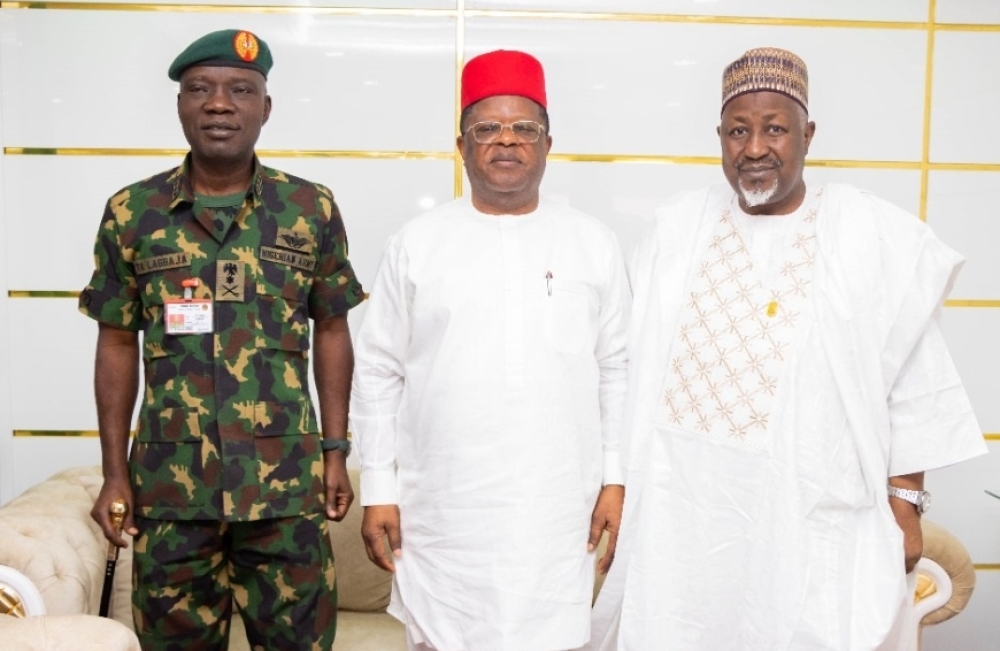
Hon. Ministers of Works, Defence, and Chief of Army Staff meet on areas of Collaboration to Improve Internal Security, Focus on Road Infrastructure as an Important Predictor ...ACTIVITIES OF CONTRACTORS TO FOCUS IN THIS DIRECTION As part of the strategic and holistic security roadmap of the Federal Government under His Excellency, President Asiwaju Bola Ahmed Tinubu GCFR, the Hon. Minister of Works, His Excellency Sen. Engr Nweze David Umahi, CON had a closed door meeting with his counterpart, the Hon. Minister of Defence, His Excellency, Mohammed Badaru Abubarkar,CON, and the Chief of Army Staff (COAS) Lieutenant General Taoreed Lagbaja in his office at the Federal Ministry of Works, this 19th January 2024, and the focus was on strengthening collaborations towards improving the nation’s internal security through revolutionalizing road infrastructure development. The Hon. Minister of Works praised the interactive meeting as a Renewed Hope initiative that would add value to the implementation of the security roadmap of the present administration. He commended the President of the Federal Republic of Nigeria for appointing men of proven professional capacities and passion for service delivery to tackle the security challenges facing our country, and expressed hope that with the interventions of Mr. President towards rejiging the nation’s road infrastructure, military operations across the nation would assume greater imptetus. "I commend Mr. President very highly, and I thank members of the public who have also supported in different dimensions. Yes, we have discussed certain infrastructure as it concerns my ministry to enhance their performances, and our minds are working together. The main focus of Mr. President, when it comes to road infrastructure, is the interstate routes that are linked to security operations nationwide, the palliative jobs, and the roads that are linked to markets, industries, and factories etc. And so, this is one of the mandates that Mr. President has given to us. And so, we are going to hasten this mandate and to ensure that the desire of Mr. President, as far as road infrastructure is concerned, is achieved" "Road is everything. If you improve the roads, you have improved security, agriculture, education, and commerce, and you have improved the happiness of people. And this is just what Mr. President is doing. We have started to be in the field to repair over 320 roads that Mr. President directed us to do." Speaking on behalf of the visiting team, the Chief of Army Staff said that the essence of the meeting was to discuss with the Hon. Minister of Works elements of national power support to the military field operations with a focus on the role of infrastructural upgrade in the enhancement of military operations across the country. "We have discussed extensively, and we are glad that the Hon. Minister of Works is disposed to some of the suggestions that we have made on the need to focus on some critical roads that will impact positively on military operations across the country. And so, the Minister of Works has made some promises, and we look forward to seeing activities of contractors and other agents focus in this direction in the field, and the military will support them going forward. Overall, improved security is our objective, and we will continue to pursue that." ...
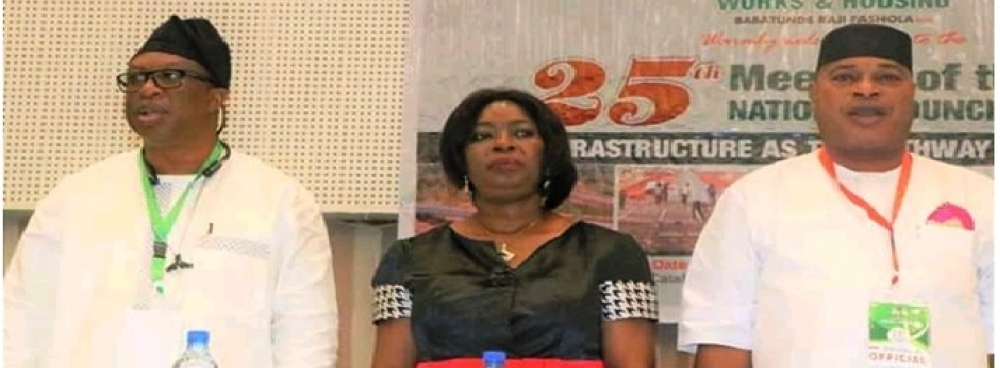
25th Meeting Of The National Council On Works Commences In Calabar
The activities heralding the commencement of the National Council on Works and Housing had kick-started in Calabar, the Cross River State Capital with the arrival and Registration of the Stakeholders.The theme of the meeting is Infrastructure as the Pathway for Prosperity.
While welcoming officials and Delegates to the Council, the Director of Planning, Research and Statistics, Federal Ministry of Works and Housing, Dr Famous Esewudo stated that the meeting of the National Council of Works is an annual event and the highest policy formulating organ of the Works Sector where stakeholders deliberate on issues concerning the sector.
He expressed profound gratitude to the Executive Governor of Cross River State, His Excellency, Prof. Ben. Ayade for creating a conclusive environment for the commencement of the Council. He also expressed immense gratitude to the Minister of Works and Housing, Mr Babatunde Raji Fashola SAN, the Minister of State for Works and Housing, Engr. Abubakar Aliyu, the Permanent Secretary, Mohammed Bukar, the Directors and the entire staff of the Ministry for organising the meeting.
Eseduwo urged all Stakeholders in the Works sector to present and own up to the process and show the right attitude and commitment towards a successful council.
Speaking earlier and declearing the technical session of the Council open, Permanent Secretary,Cross River State Ministry of Works, Dr (Mrs) Ihort Achu revealed that Cross River State Government and indeed, the entire “Cross Riverians” have beenlooking forward for an opportunity to be part and parcel of meeting where policies and hypothesis on how to discuss the dilapidated roads in Cross River and Nigeria in general would be addressed.
Dr. Achu enjoined officials and delegates to the Council to take advantage of the serene atmosphere of Calabar, the hospitality of her people and enjoy themselves

Mr Babatunde Raji Fashola, SAN At The 6th National Council On Land, Housing And Urban Development
I welcome you all very warmly to this 6th meeting of the National Council on Lands, Housing and Urban Development.
I am enthused to speak to you because of the progress we have made from our last meeting in 2016 in Ilorin, Kwara State.
My enthusiasm derives from simple but very profoundly impactful things that we committed to do last year in Kwara and which we have done.
The first is that we resolved to facilitate the use of Exchange of letters for the Transfer of title to land when states are transferring land to the Federal Government.
I am happy to report that there has been very inspiring compliance based on the several letters of exchange that I have received and which I have duly signed.
All I need say about this in terms of compliance is that if there is still any state yet to comply they should please do so very quickly.
This is an important matter to report to the public. It shows that we do not gather at this Council just to talk. It shows that we have the capacity to act. It shows that change is possible when people commit themselves and that Governments in Nigeria can get things done.
The other matter that enthuses me, is the progress report on our National Housing Programme about which I briefed this Council last year.
At the time of the Council meeting in August 2016, I reported that we were finalizing designs to accommodate our cultural, climactic and other diversities and that when the designs were completed we would commence construction to pilot the designs and test them for affordability and acceptability.
I am pleased to report that construction has started in 33 states where land has been made available.
This is fulfilment of another commitment made at last year’s council by at least 90%.
This must give a lot of hope to our people that this Government will do what it says, and I want to thank all the states who gave us land, the staff of the Ministry who have worked hard to drive the programme, and the Honourable Minister of State, Mustapha Baba Shehuri who has been visiting and inspecting project sites.
I have myself made whistle stop visits to our sites in Taraba, Gombe, Ekiti, Oyo, and what I saw demonstrates to me very clearly how impactful the National Housing Programme has been, even at the pilot and inception stage.
The bricklayers I met in Taraba, Gombe and Ekiti, Rilwanu Adamu and Abubakar Umar, who asked me to thank President Buhari, for putting them back to work, the owners of the cement mixer in Oyo who said that his equipment has been idle for 2 years but was now earning N20,000 daily on our site in Oyo.
And of course, Mr and Mrs Emmanuel, a builder and caterer respectively who live in Lagos, but who now find dignity, labour and employment at our Oyo site, by participating in building and food supply.
And this brings me to the theme of this year’s Council meeting which is “Building for Inclusion, Growth and Prosperity”.
Yes, it is true that we have a National Housing deficit, and while some choose to engage themselves by discussing about the size of the deficit, we choose to engage ourselves by doing something about the deficit.
This is because, every building we start and ultimately complete is a blow to the size of the deficit which no amount of talk can inflict.
We understand that every nation has a housing deficit and the bigger the size of the population, the size of the growth rate and the size of the urbanization rate, the bigger the size of the deficit.
But while we commit to the National policy of delivering affordable housing, we must look at short, medium and intermediate streams of opportunities for employment, productivity, skill development, restoration of dignity of our people which lie within the housing delivery value chain.
This is consistent with one of the Pillars of the Economic Theory and Growth Launched by President Buhari, which is “investing in our people.”
Apart from the artisans that I have spoken about, it might interest you to also know that 653 contractors were engaged in the pilot scheme to deliver 2,736 units. A total of 54,680 people were employed in the process.
The opportunities for inclusion will include masonry, electrical, plumbing, welding, supplies of materials, transportation and many more.
Our desire is to multiply these opportunities this year and beyond.
One of the directives that I have given to our staff is to review the procurement requirements and guidelines in consultation with our legal department, to ensure that we open the opportunities for participation.
Yes, I understand the need to get value for money and the processes that have been put in place by previous administrations to guide procurement.
The question we must ask ourselves then is whether we have truly saved money and whether we have developed?
On the evidence that is available, the country has clearly made more money from oil sales in the last decade that cannot be accounted for by way of project delivery and infrastructure development.
But if this was not enough problem, the procurement requirements then limits the amount of advance payment Government can pay to 15% and sets conditions that overlook the level of literacy of the vast majority of our people and the nature of small businesses that they run.
My experience in the last 20 months is that small businesses have difficulty complying with our procurement process and this requires not only policy reviews as I have ordered, but also legislative intervention by parliament.
This is one of the actions we must take to fulfil the objectives of the theme of this Council so that we can build for inclusion, for growth and for prosperity.
While our National Housing Programme, is the first of its type on a National scale in many decades that seeks to respond to the deficit, government agencies such as the Federal Mortgage Bank, Federal Housing Authority are being repositioned to play their role more effectively to address the Housing problem.
For example, the Federal Housing Authority has been mandated by the ministry to reposition herself to be one of our champions of housing delivery based on her previous track record.
Similarly, the Federal Mortgage Bank continues to deepen participation in the National Housing Fund which forms a reliable pool of funding from which she lends money to contributors by way of mortgage loans to acquire houses.
In addition, the bank has granted loans to estate developers to build houses; and from their recent report to me, they currently have 3,823 housing units available for sale in various states of the Federation.
The ministry has directed that these units, their prices, description, location and eligibility criteria be widely publicized in transparent offers to Interested members of the public.
The next level of intervention which the ministry is developing is the use of co-operatives.
This is very important to the theme and purpose of this year's Council meeting which centers around inclusion.
Our experience has shown that very sizable parts of our population who are productive and self-employed have been excluded from formal processes that regulate access to Funding, land or housing.
However, these large number of people operate successfully by themselves, in groups which they form as co-operatives to protect their common interests and pursue their developmental objectives.
Co-operatives have been very prolific and successful in sectors like agriculture and market organizations where the vulnerability of an individual is transformed into the strength of a group.
Our Government sees no reason why the successes of co-operatives in these sectors cannot be utilized to facilitate housing delivery, access and inclusion.
We are determined to place the might of government at the disposal of groups who can form themselves into co-operatives, as enabling capacity to acquire the land, take loans, build for themselves and operate a rent to own policy for those who cannot pay full ownership cost at start.
When our work on the review of the existing laws, and the processes for eligibility are completed, we will undertake a national launch and enlightenment program to kick the active use of co-operatives in housing delivery.
I have chosen to speak about this plan at this meeting because the success of this initiative will depend on what is done at state level; and many, if not all, states are represented here.
Your readiness and willingness to give land to well constituted cooperatives will be a critical determinant to success and inclusion.
So, this serves as notice for you to start thinking ahead about what your respective states can offer to the initiative.
Before I conclude, I will like to go back to the issue of the deficit in housing and set the context, not only how it has grown with our size but also why some seem so terrified of approaching it.
When we started this national housing program, my attention was brought to the fact that there had been no national housing program since the end of the second republic in 1983, which is about 34 years ago.
I must of course not be mistaken for saying that there were no housing interventions. There were. But they were neither sustained nor were they implemented on a national scale.
This omission is a big contributing factor to the size of the deficit and the exclusion of people.
Of course, there has always been a National Housing Policy, which seeks to deliver affordable housing, but as I said there is no program to implement and actualize the policy.
This government has now formulated that national program by concept, design and now pilot stage implementation which in the early stages has already created opportunities for 653 contractors, and created 13,680 direct jobs and 41,000 indirect jobs.
What we must do therefore is to repeat this program year on year, not only at federal level but also at state level.
Ladies and gentlemen, if we do this and also successfully implement the housing cooperatives, leverage private sector capacity, strengthen FHA and FMBN to play their roles, we will be creating a housing economy that will irreversibly and positively transform our nation forever.
Not only will we be addressing one of the problems of urbanization, we will unleash the capacity to build for inclusion, for growth and prosperity.
In this way, the size of the deficit of housing will become an economic opportunity to immense proportions rather than a social burden to be scared of.
Thank you very much for your attention.
Babatunde Raji Fashola, SAN
Honourable Minister of Power, Works and Housing
Thursday 24th August 2017
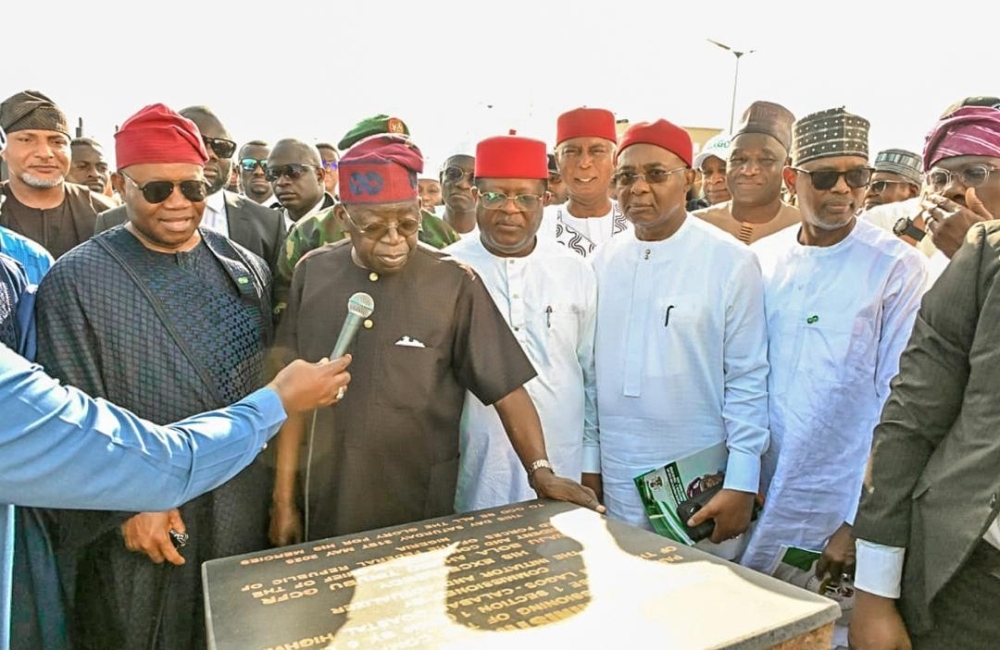
DRIVING NIGERIA’S FUTURE: CELEBRATING TWO YEARS OF TRANSFORMATIVE LEADERSHIP AND THE LAGOS-CALABAR COASTAL HIGHWAY MILESTONE
DRIVING NIGERIA’S FUTURE: CELEBRATING TWO YEARS OF TRANSFORMATIVE LEADERSHIP AND THE LAGOS-CALABAR COASTAL HIGHWAY MILESTONE
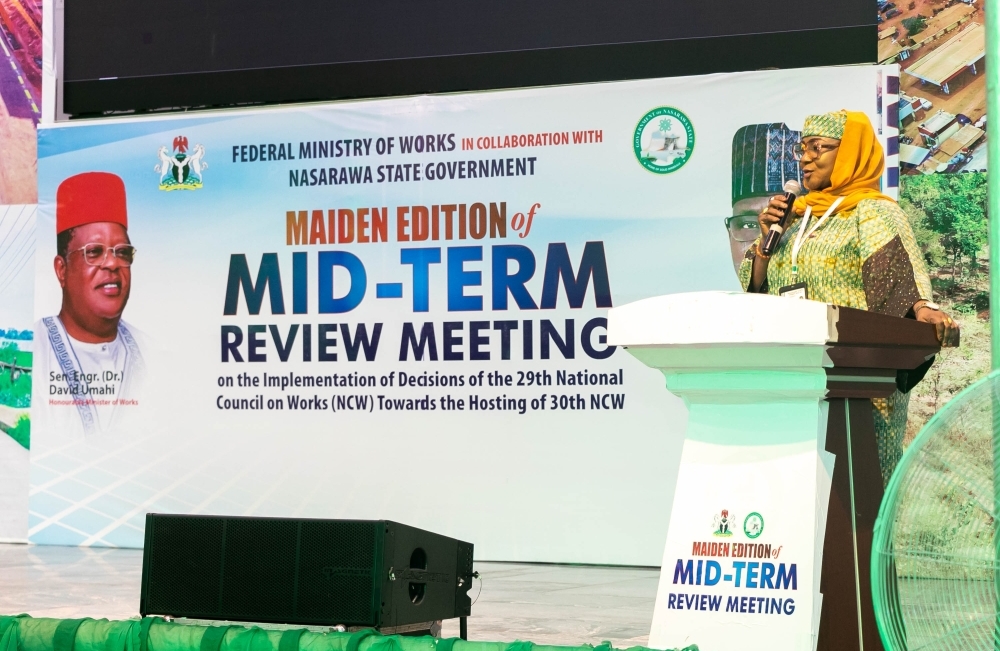
MID -TERM REVIEW MEETING ON THE IMPLIMENTATION OF THE DECISIONS REACHED AT THE 29TH NATIONAL COUNCIL ON WORKS (NCW) DAY 1
MID -TERM REVIEW MEETING ON THE IMPLIMENTATION OF THE DECISIONS REACHED AT THE 29TH NATIONAL COUNCIL ON WORKS (NCW) DAY 1