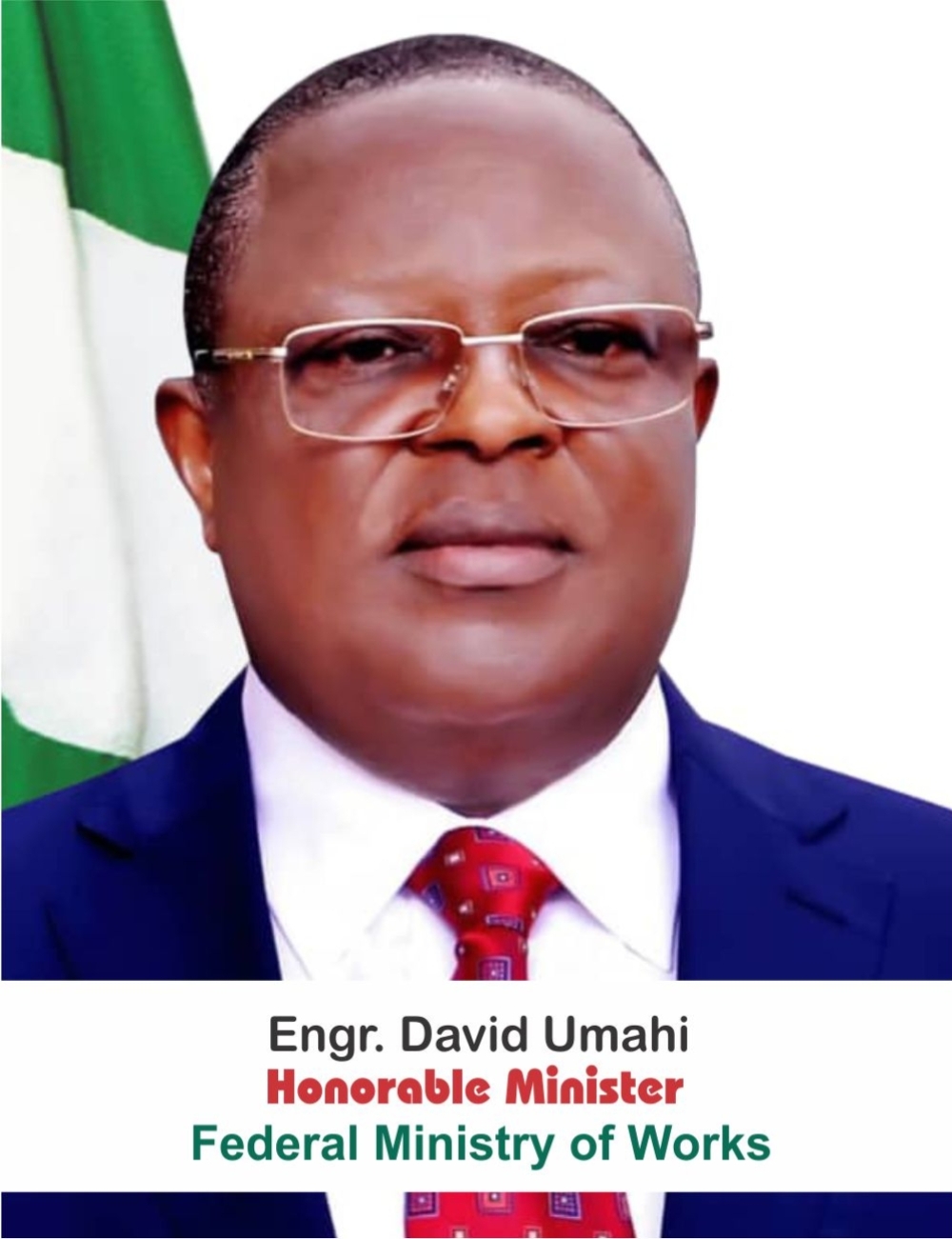
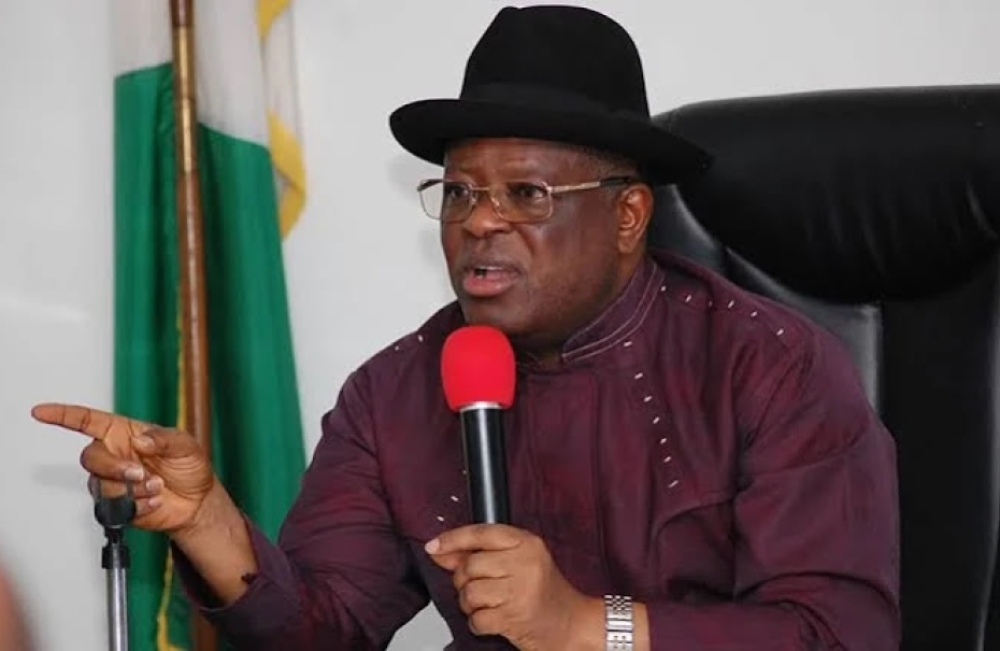
UMAHI ORDERS IMMEDIATE EMERGENCY INTERVENTION ON BENIN-ASABA ROAD, AND SOME OTHER CRITICAL FEDERAL ROADS
The Honourable Minister of Works, Senator Engr. David Nweze Umahi, CON, has directed the immediate deployment of major contractors to all three sections of the Benin-Asaba Federal Road to restore the failed sections and bring an end to the suffering of motorists and other road users.
This is because, the situation on the concessioned Benin-Asaba Road has reached a point where the overall public interest must take precedence over the existing concession agreement.
Recall that the Honourable Minister of Works was on the Benin-Asaba Road about seven days ago, where he assembled a number of contractors and directed them to prepare for immediate palliative intervention on the affected sections of the road at no cost to the concessionaire. In line with the Concession agreement which requires that before the Federal Government could intervene, the permission of the concessionaire must be required, and that permission was not granted to federal government.
The Minister subsequently proposed three options to the concessionaire, any one of which would have enabled the Federal Government to move in and address the worsening condition of the road. Unfortunately, none of the options was accepted by the concessionaire. Immediately after the Minister left Asaba, the already limited equipment deployed to the road by the concessionaire was further reduced to just one, worsening the situation and increasing the suffering of motorists and other road users.
While the Minister takes responsibility for the concerns and suffering of Nigerians using the road, it is important to state that the concessionaire has also not taken the suffering of Edo people and travelling public sufficiently into consideration by declining all the options put forward by the Federal Government. The concessionaire continues to rely on the terms of the concession agreement entered into by the previous administration, an agreement which weighs heavily against the Federal Government’s ability to intervene quickly in the interest of the public in a situation like this.
In view of this situation, the Honourable Minister of Works has directed the immediate deployment of major contractors within the corridor to all three sections of the Benin-Asaba Road to restore the failed sections and bring relief to the people, with the cost of the emergency intervention being borne by the Federal Government. The Honourable Minister has also directed immediate redesign of the entire route to be rebuilt with reinforced concrete pavement. The public should therefore take note that immediate action is underway to restore every failed section of the Benin-Asaba Road and subsequently rehabilitate the entire sections of the road using reinforced concrete pavement.
2. On the Benin-Sapele Road:
The Governors of Edo and Delta States, the Niger Delta Development Commission (NDDC), and the Federal Government are currently engaged in interventions on different sections of the road to restore the entire route. While some sections are receiving palliative attention, permanent works are also ongoing on other sections.
3. On Ifaki(Ekiti) - Kabba (Kogi) Road:
The Federal Government is engaging both the contractor; Gamji Nigeria Company Limited, and Dangote PLC on immediate emergency and permanent intervention on the most failed sections of the road, while efforts are being made to financially mobilise the company for more extensive permanent work to commence on the axis.
4. On the Sokoto-Zamfara-Katsina Road: This is an inherited project involving the dualisation of approximately 350 kilometres, which translates to about 700 kilometers. The project has since been redesigned and is currently ongoing and most sections are being reconstructed using reinforced concrete pavement. From the Sokoto axis towards Zamfara, over 50 kilometres of one carriageway have been fully completed with reinforced concrete pavement. From Zamfara to Katsina, some sections have been completed and palliative works have been ordered over the sections that have not been reconstructed. However, the pace of work slowed down due to the redesign and rephasing of the project. The contractors currently engaged on the road include CBC, SETRACO, Triacta and Mothercat. They are being remobilised to return to site and complete the outstanding works.
5. On the Abuja-Kaduna-Zaria-Kano Road: The Federal Government took over the Road project and has currently completed the 118-kilometer mostly on reinforced concrete pavement on lot 1. The Lot 2, which covers 164 kilometres, is over 60 percent completed on reinforced concrete pavement. The Federal Government has also introduced solar-powered light on the entire route of Abuja-Kaduna-Zaria - Kano to improve visibility during night travel and enhance the overall security situation on the route. The entire project is scheduled for completion by December 2026.
6. On Bauchi-Jigawa Road: Triacta Nigeria Limited has been mobilised to carry out the necessary interventions on some failed sections and work is currently ongoing in those failed sections.
7. On the Sagamu-Ore Road: 48 Kilometers of the 96-kilometre road have already been completed using reinforced concrete pavement. There is also a 24-kilometre section around Ore which was abandoned by the previous contractor. The Federal Government has directed its immediate restoration to ensure seamless travel. Solar lights are being installed in the entire 96kilometer of the road.
8. On Flooded Sections on Sagamu-Ore-Benin Road: The flooded sections on the same corridor between Sagamu-Ore-Benin Road, as well as other flooded sections in Ondo State, are being designed for emergency procurement and intervention.
9. On the East-West Road:
Some failed and critical sections, including defective sections of bridges along the East-West Road, are being marked out for emergency procurement and intervention.
10. On the Abuja-Lokoja Road:
Several contracts are ongoing along the route, while the three critical sections currently without contracts are being procured for emergency intervention.
11. On the Lokoja-Benin-Warri Road: The President has directed a complete redesign and procurement of the 400-kilometre dualised route covering the uncompleted sections, using reinforced concrete pavement, while palliative works will continue with the contractors currently on the road.
12. On Carter Bridge:
While the Federal Government continues to undertake weekly maintenance of the underwater elements of the bridge. The site has also been handed over to the contractor, CCECC, for the construction of a permanent new bridge, and work has commenced.
13. On the Third Mainland Bridge:
With regard to the defective underwater structural elements, the Federal Government is at the final stage of determining the appropriate intervention for the repair of the affected elements.
14. On the flooded section of the Lagos-Ibadan Road: Work has commenced on the affected section. There are also several flooded sections on federal roads across the six geopolitical zones, largely occasioned by excessive flooding and the effects of climate change. The Federal Government is identifying and marking these sections for immediate attention.
15. On the First and Second Niger Bridges:
Intervention work is ongoing on the approach roads to the Second Niger Bridge damaged by flood and the work is progressing very well. The First Niger Bridge has been closed to traffic to enable immediate repair works. Contractor has mobilized to site and comprehensive rehabilitation of the bridge has started. From Summit Junction to the First Niger Bridge, massive rehabilitation work is also ongoing using reinforced concrete pavement.
16. The Honourable Minister wishes to commend the President of the Federal Republic of Nigeria, His Excellency Bola Ahmed Tinubu, GCFR, for the massive work being undertaken on the nation’s roads since the administration assumed office in 2023.
17. It is important to state that when the present administration came into office, there was hardly any part of the country where one could travel for an hour without encountering significant challenges on the road network. The condition of the country’s roads and bridges was a major national infrastructure challenge.
18. Rather than shy away from the problem, the administration of President Bola Ahmed Tinubu made the nation’s road network a priority. Virtually every part of the country became a priority, and the Federal Government, through the Federal Ministry of Works, Regional Commissions, Parastatals and other MDA’s has continued to respond extensively to these challenges.
19. The Federal Government is currently working on over 80 percent of the inherited federal roads, an unprecedented level of intervention in the country’s road infrastructure.
20. We ask the public to understand the enormous challenges inherited on our roads and bridges and to take note not only of the problems being solved, but also of the permanent solutions being introduced.
21. A major part of this new approach is the use of reinforced concrete pavement, designed to significantly extend the lifespan of major roads. These roads are expected to last between 50 and 100 years. This means that roads being constructed under President Bola Ahmed Tinubu’s administration are being designed with future generations in mind, rather than simply providing temporary solutions to today’s problems. And this is a complete departure from the past, when roads often deteriorated only a few years after completion, resulting in a continuous cycle of reconstruction and expenditure.
22. We appreciate the concerns of Nigerians over the condition of some roads presently and the difficulties faced by motorists and commuters who cannot move easily from one point to another. Those concerns are legitimate, and the Federal Government is listening. But Nigerians should also recognise the enormous scale of the problems inherited and the amount of work currently being undertaken across the country.
23. It is simply impossible to resolve every road challenge accumulated over many years of neglect by the past administrations within three years. What is important is that the government is working, the government is responding, and the government is putting permanent solutions in place.
25. We appreciate members of the public who send situation reports on failed roads and other infrastructure challenges. These reports help the Ministry identify areas requiring urgent attention. However, we also appeal to members of the public to report when such problems have been addressed, just as they report when they occur.
24. We are aware of situations where photographs and reports of road challenges continue to circulate on social media even after the Federal Government has intervened and resolved the particular problem.
25. However, the Ministry will continue to respond as rapidly as possible to genuine reports and concerns from Nigerians.
26. It is also important to note that we have compiled a comprehensive record of all inherited, ongoing and intervention projects across the country which is available to the public. This is to ensure that Nigerians have access to information on the infrastructure projects being undertaken nationwide and can fully participate in and appreciate the infrastructure revolution of President Bola Ahmed Tinubu’s administration.

UMAHI ORDERS IMMEDIATE EMERGENCY INTERVENTION ON BENIN-ASABA ROAD, AND SOME OTHER CRITICAL FEDERAL ROADS The Honourable Minister of Works, Senator Engr. David Nweze Umahi, CON, has directed the immediate deployment of major contractors to all three sections of the Benin-Asaba Federal Road to restore the failed sections and bring an end to the suffering of motorists and other road users. This is because, the situation on the concessioned Benin-Asaba Road has reached a point where the overall public interest must take precedence over the existing concession agreement. Recall that the Honourable Minister of Works was on the Benin-Asaba Road about seven days ago, where he assembled a number of contractors and directed them to prepare for immediate palliative intervention on the affected sections of the road at no cost to the concessionaire. In line with the Concession agreement which requires that before the Federal Government could intervene, the permission of the concessionaire must be required, and that permission was not granted to federal government. The Minister subsequently proposed three options to the concessionaire, any one of which would have enabled the Federal Government to move in and address the worsening condition of the road. Unfortunately, none of the options was accepted by the concessionaire. Immediately after the Minister left Asaba, the already limited equipment deployed to the road by the concessionaire was further reduced to just one, worsening the situation and increasing the suffering of motorists and other road users. While the Minister takes responsibility for the concerns and suffering of Nigerians using the road, it is important to state that the concessionaire has also not taken the suffering of Edo people and travelling public sufficiently into consideration by declining all the options put forward by the Federal Government. The concessionaire continues to rely on the terms of the concession agreement entered into by the previous administration, an agreement which weighs heavily against the Federal Government’s ability to intervene quickly in the interest of the public in a situation like this. In view of this situation, the Honourable Minister of Works has directed the immediate deployment of major contractors within the corridor to all three sections of the Benin-Asaba Road to restore the failed sections and bring relief to the people, with the cost of the emergency intervention being borne by the Federal Government. The Honourable Minister has also directed immediate redesign of the entire route to be rebuilt with reinforced concrete pavement. The public should therefore take note that immediate action is underway to restore every failed section of the Benin-Asaba Road and subsequently rehabilitate the entire sections of the road using reinforced concrete pavement. 2. On the Benin-Sapele Road: 3. On Ifaki(Ekiti) - Kabba (Kogi) Road: 4. On the Sokoto-Zamfara-Katsina Road: This is an inherited project involving the dualisation of approximately 350 kilometres, which translates to about 700 kilometers. The project has since been redesigned and is currently ongoing and most sections are being reconstructed using reinforced concrete pavement. From the Sokoto axis towards Zamfara, over 50 kilometres of one carriageway have been fully completed with reinforced concrete pavement. From Zamfara to Katsina, some sections have been completed and palliative works have been ordered over the sections that have not been reconstructed. However, the pace of work slowed down due to the redesign and rephasing of the project. The contractors currently engaged on the road include CBC, SETRACO, Triacta and Mothercat. They are being remobilised to return to site and complete the outstanding works. 5. On the Abuja-Kaduna-Zaria-Kano Road: The Federal Government took over the Road project and has currently completed the 118-kilometer mostly on reinforced concrete pavement on lot 1. The Lot 2, which covers 164 kilometres, is over 60 percent completed on reinforced concrete pavement. The Federal Government has also introduced solar-powered light on the entire route of Abuja-Kaduna-Zaria - Kano to improve visibility during night travel and enhance the overall security situation on the route. The entire project is scheduled for completion by December 2026. 6. On Bauchi-Jigawa Road: Triacta Nigeria Limited has been mobilised to carry out the necessary interventions on some failed sections and work is currently ongoing in those failed sections. 7. On the Sagamu-Ore Road: 48 Kilometers of the 96-kilometre road have already been completed using reinforced concrete pavement. There is also a 24-kilometre section around Ore which was abandoned by the previous contractor. The Federal Government has directed its immediate restoration to ensure seamless travel. Solar lights are being installed in the entire 96kilometer of the road. 8. On Flooded Sections on Sagamu-Ore-Benin Road: The flooded sections on the same corridor between Sagamu-Ore-Benin Road, as well as other flooded sections in Ondo State, are being designed for emergency procurement and intervention. 9. On the East-West Road: 10. On the Abuja-Lokoja Road: 11. On the Lokoja-Benin-Warri Road: The President has directed a complete redesign and procurement of the 400-kilometre dualised route covering the uncompleted sections, using reinforced concrete pavement, while palliative works will continue with the contractors currently on the road. 12. On Carter Bridge: 13. On the Third Mainland Bridge: 14. On the flooded section of the Lagos-Ibadan Road: Work has commenced on the affected section. There are also several flooded sections on federal roads across the six geopolitical zones, largely occasioned by excessive flooding and the effects of climate change. The Federal Government is identifying and marking these sections for immediate attention. 15. On the First and Second Niger Bridges: 16. The Honourable Minister wishes to commend the President of the Federal Republic of Nigeria, His Excellency Bola Ahmed Tinubu, GCFR, for the massive work being undertaken on the nation’s roads since the administration assumed office in 2023. 17. It is important to state that when the present administration came into office, there was hardly any part of the country where one could travel for an hour without encountering significant challenges on the road network. The condition of the country’s roads and bridges was a major national infrastructure challenge. 18. Rather than shy away from the problem, the administration of President Bola Ahmed Tinubu made the nation’s road network a priority. Virtually every part of the country became a priority, and the Federal Government, through the Federal Ministry of Works, Regional Commissions, Parastatals and other MDA’s has continued to respond extensively to these challenges. 19. The Federal Government is currently working on over 80 percent of the inherited federal roads, an unprecedented level of intervention in the country’s road infrastructure. 20. We ask the public to understand the enormous challenges inherited on our roads and bridges and to take note not only of the problems being solved, but also of the permanent solutions being introduced. 21. A major part of this new approach is the use of reinforced concrete pavement, designed to significantly extend the lifespan of major roads. These roads are expected to last between 50 and 100 years. This means that roads being constructed under President Bola Ahmed Tinubu’s administration are being designed with future generations in mind, rather than simply providing temporary solutions to today’s problems. And this is a complete departure from the past, when roads often deteriorated only a few years after completion, resulting in a continuous cycle of reconstruction and expenditure. 22. We appreciate the concerns of Nigerians over the condition of some roads presently and the difficulties faced by motorists and commuters who cannot move easily from one point to another. Those concerns are legitimate, and the Federal Government is listening. But Nigerians should also recognise the enormous scale of the problems inherited and the amount of work currently being undertaken across the country. 23. It is simply impossible to resolve every road challenge accumulated over many years of neglect by the past administrations within three years. What is important is that the government is working, the government is responding, and the government is putting permanent solutions in place. 25. We appreciate members of the public who send situation reports on failed roads and other infrastructure challenges. These reports help the Ministry identify areas requiring urgent attention. However, we also appeal to members of the public to report when such problems have been addressed, just as they report when they occur. 24. We are aware of situations where photographs and reports of road challenges continue to circulate on social media even after the Federal Government has intervened and resolved the particular problem.
The Governors of Edo and Delta States, the Niger Delta Development Commission (NDDC), and the Federal Government are currently engaged in interventions on different sections of the road to restore the entire route. While some sections are receiving palliative attention, permanent works are also ongoing on other sections.
The Federal Government is engaging both the contractor; Gamji Nigeria Company Limited, and Dangote PLC on immediate emergency and permanent intervention on the most failed sections of the road, while efforts are being made to financially mobilise the company for more extensive permanent work to commence on the axis.
Some failed and critical sections, including defective sections of bridges along the East-West Road, are being marked out for emergency procurement and intervention.
Several contracts are ongoing along the route, while the three critical sections currently without contracts are being procured for emergency intervention.
While the Federal Government continues to undertake weekly maintenance of the underwater elements of the bridge. The site has also been handed over to the contractor, CCECC, for the construction of a permanent new bridge, and work has commenced.
With regard to the defective underwater structural elements, the Federal Government is at the final stage of determining the appropriate intervention for the repair of the affected elements.
Intervention work is ongoing on the approach roads to the Second Niger Bridge damaged by flood and the work is progressing very well. The First Niger Bridge has been closed to traffic to enable immediate repair works. Contractor has mobilized to site and comprehensive rehabilitation of the bridge has started. From Summit Junction to the First Niger Bridge, massive rehabilitation work is also ongoing using reinforced concrete pavement.
25. However, the Ministry will continue to respond as rapidly as possible to genuine reports and concerns from Nigerians.
26. It is also important to note that we have compiled a comprehensive record of all inherited, ongoing and intervention projects across the country which is available to the public. This is to ensure that Nigerians have access to information on the infrastructure projects being undertaken nationwide and can fully participate in and appreciate the infrastructure revolution of President Bola Ahmed Tinubu’s administration.
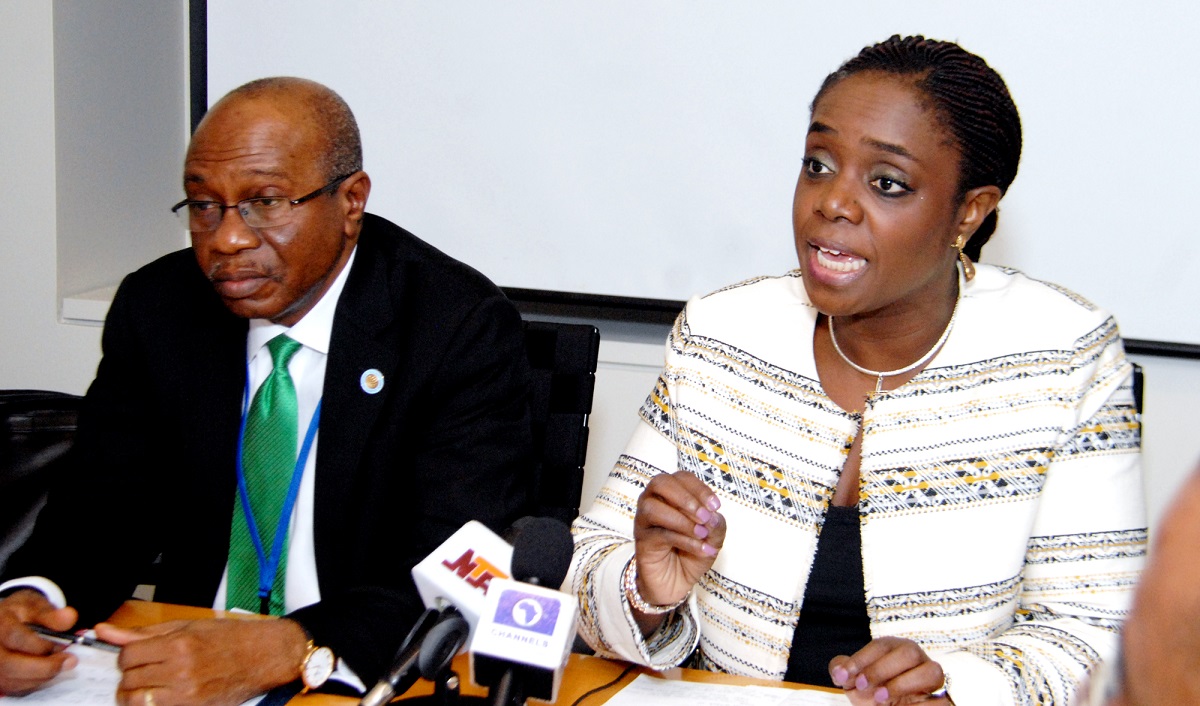
Nigeria won’t be reckless with foreign borrowings – Adeosun ….IMF, World Bank project higher growth for Sub-Saharan Africa, Global Economy in 2018 The Honourable Minister of Finance, Mrs. Kemi Adeosun, disclosed on Sunday that the Federal Government would not be reckless with foreign borrowings as it maintains an expansionary fiscal policy. The Minister also revealed that the International Monetary Fund (IMF) and the World Bank Group have projected a positive outlook of higher growth for the Sub-Saharan Africa and global economy in 2018. Adeosun made this known in Washington D.C. at a Joint Media Briefing with the Governor of the Central Bank of Nigeria, Mr. Godwin Emefiele, at the end of the 2017 Annual Meetings of the International Monetary Fund and the World Bank Group. She stated that the Federal Government adopted an expansionary fiscal policy with an enlarged budget in order to deliver a fundamental structural change to the economy, thereby reducing the country’s exposure to crude oil. “Why are we borrowing? Mobilising revenue aggressively was not advisable, nor indeed possible, in a recessed economy. But as Nigeria now reverts to growth, our revenue strategy will be accelerated. “This is being complimented by a medium-term debt strategy that is focusing more on external borrowings to avoid crowding out the private sector. “This would also reduce the cost of debt servicing and shift the balance of our debt portfolio from short-term to longer-term instruments. This Government will be very prudent around debt. We won’t borrow irresponsibly,” said Adeosun, who led the Nigerian delegation to the 2017 Annual Meetings of the IMF and the World Bank. The Minister participated in both the International Monetary and Financial Committee (IMFC) and Development Committee (DC) meetings, the two highest decision making organs of the Bretton-woods Institutions. She revealed that developments in the global economy since the Spring meetings were reviewed, noting that growth had picked up in 2017 even though not even. “Global growth is estimated to be 3.6 per cent for Fiscal Year 2017, while Sub-Saharan Africa (SSA) is projected to grow at 2.6 per cent and outlook is for higher growth in Fiscal Year 2018. “However, down side risks remain in the medium-term with high policy uncertainty, geopolitical tensions. Inflation remains subdued,” she added. Providing further details on the IMF and World Bank meeting, Minister Adeosun said the overarching policy priorities for the entire membership was to boost potential output and improve income distribution while improving financial sector resilience. The two Bretton-wood institutions, according to her, urged commodity exporters like Nigeria, to pursue structural policy reforms to unlock the country’s potentials and stimulate aggregate supply as well as enhance the diversification process. On the Development Committee (DC) meeting, she said members discussed the need to enhance the capacity of the International Bank for Reconstruction and Development (IBRD) and International Finance Corporation (IFC) to meet their obligations of supporting the financing needs of client countries and to prevent a slowdown in lending. “At the DC where I spoke on behalf of Angola, Nigeria and South Africa, I urged the international community particularly the Bretton-wood Institutions to change the narrative on Africa which always portray the continent as Low Income Countries (LIC). “Indeed, there are some Middle Income Countries represented by this constituency and so there is the need for the Bank to deploy instruments, policies and programs that will address the peculiar needs of these countries,” she said. Responding on the issue of investing in women, Adeosun remarked that the women remained the best investment any nation could make. “The multiplier effect of such investment is significant. We need to make more opportunities available to our women. They are the economic drivers of our nation. We have enormous talents in Nigeria, and the Federal Government will invest in human capital,” she added. The CBN Governor, Mr. Godwin Emefiele, who also participated at the IMF and World Bank meetings, confirmed improvement in the Nigerian economy. “The fundamentals we are seeing show that there is a lot of stability in the foreign exchange market, and having come down from high level to the level we are now, and the currency is just fluctuating between N359/N365 to dollar. “We think it is good level compared to where we are coming from. We think it is important to note that as reserves get stronger, as economic fundamentals get stronger, there is no doubt that the naira will get stronger and we will see more appreciation in the currency,” Emefiele said. He assured that the CBN would continue to focus on the banking system to ensure there were no significant threats that would affect the strategic health of the banking system. He further said that the CBN would continue to support the Federal Government’s efforts to reduce unemployment and create jobs. END ...
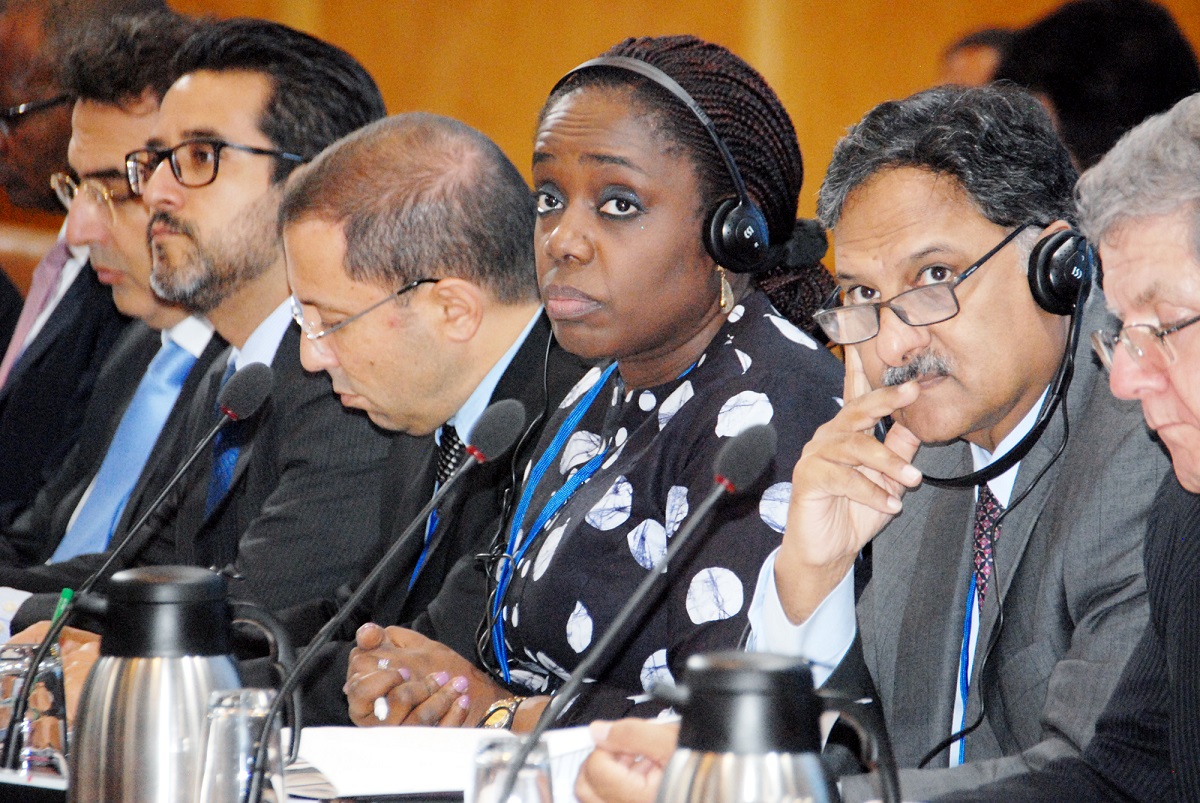
Infrastructural Devt: Nigeria asks World Bank, IMF to scale up Renewable Energy Nigeria has asked the World Bank Group and the International Monetary Fund (IMF) to scale up the provision of and access to renewable energy in order to deliver development results and meet global climate goals. Nigeria’s position on renewable energy and regional integration was presented by the Honourable Minister of Finance, Mrs. Kemi Adeosun, during the G24 Finance Ministers and Central Bank Governors meeting in Washington D.C., United States. Adeosun stated that scaling up renewable energy was a “win-win area” to deliver development results and contribute to the global climate goals. She said, “We have a major energy infrastructure gap to meet the needs of industrialization. Providing access to energy to all parts of Nigeria, both urban and rural, is a priority. “If we succeed, we estimate that this could unleash the development potentials of two-third of our population of 180 million.” The Minister added that generation of renewable energy was a financially attractive option for reaching rural populations. She further emphasized the need for business models from other countries to serve as a template in the provision of affordable energy. While canvassing the reinforcement of regional integration process by the World Bank and the IMF, Adeosun said the process would boost trade between countries and serve as a potential growth driver. “We believe that part of the solution must be regional, multi-country initiatives on infrastructure development. Though complex and often not easy to undertake, there are also successful cases of such projects. “For instance, a coastal super highway from Lagos to Dakar in West Africa would cut across 11 economic territories. Another Trans-Sahel highway from Northwest Nigeria to Mauritania would provide access and boost economic activities of land-lock countries like Niger, Burkina Faso and Mali,” stated Adeosun while speaking on behalf of Nigeria and 30 other countries during the G24 Ministers and Governors meeting. The IMF Managing Director, Christine Lagarde, advised low-income countries to be very cautious in dealing with investors, noting that there was a huge surge yields on the path of investors. The Chief Executive Officer of the World Bank, Kristalina Georgieva, urged developing countries to look at other sources of finance rather than dependence on the Paris Club. Georgieva said, “It is imperative for us to maximize finance for development and also critical for us think of comparative strength for significant finance to flow into developing countries.” On energy deficiency, she counselled developing countries to identify what could be done to create favourable environment for renewable energy. In a communiqué at the end of its meeting, the G24 Ministers and Governors urged the World Bank Group and the IMF to continue strengthening their assistance in improving domestic resource mobilisation and enhancing its contribution to inclusive growth through progressive tax policies, as well as more efficient and better targeted public spending. The Body reiterated the importance of scaling up infrastructure investments to achieve sustainable development goals. “We welcome the support of the IMF, the World Bank and other international Financial Institutions in increasing the efficiency of public investments in infrastructure, as well as their impact in improving connectivity, including at the regional level, and addressing distributional and climate objectives,” it stated. The G24 Ministers and Governors also called on Multilateral Development Banks (MDBs) to deliver on their ‘Joint Declaration of Aspirations on Actions to Support Infrastructure Investments’, including through concrete and time-bound actions. This, it added, will help to develop new risk mitigation instruments and infrastructure investment as an asset class. “We support a quota-based, adequately-resourced IMF that is less dependent on borrowed resources. We call for at least maintaining the current lending capacity of the IMF,” the group said. The group also called for strengthening the efforts of the IMF and the World Bank towards greater representation of under-represented regions and countries in recruitment and career progression, including at the managerial levels. END ...
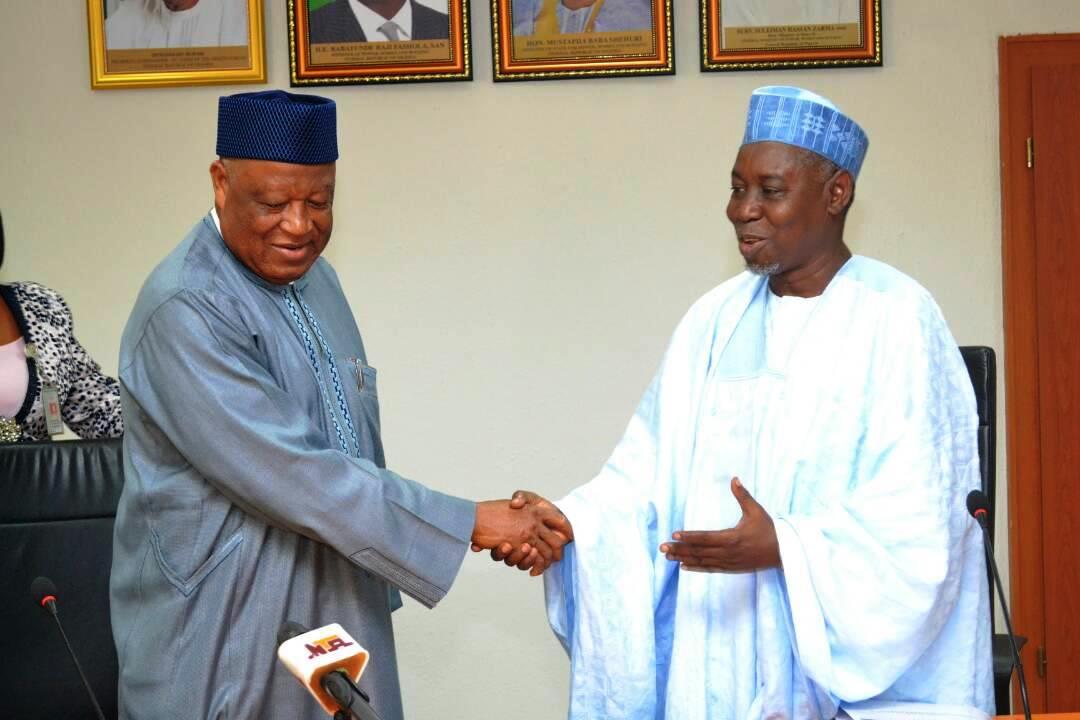
Senate Committee Appraises 2016 Budget Implementation Of The Housing Sector The Senate Committee on Lands, Housing and Urban Development paid an oversight visit to the Ministry’s Headquarters in Abuja to appraise the level of implementation of the 2016 budgetary provision to the Ministry. This is however the first time the Committee is visiting the Ministry to carry over its constitutional responsibilities of oversight of the Ministry’s operations of year 2016. The Honourable Minister of Power, Works and Housing, Babatunde Raji Fashola, SAN, who was represented by the Minister of State II, Surv. Suleiman Hassan Zarma, mnis, received and welcomed the Senate Committee to the Ministry. Suleiman expressed pleasure of the Ministry to have the Chairman, Senator Barnabas Gemade and other members of the committee on the oversight visit and solicited for their cooperation to guide and correct appropriately where necessary, so that the Nigerian electorates will enjoy the dividends of democracy under the present administration. He enjoined the Upper and Lower Chambers of the National Assembly to work in synergy on the implementation of Special Intervention of Constituency Projects in their various localities. In his remarks, the Chairman of the Senate Committee on Lands, Housing and Urban Development of the 8th Assembly, Senator Barnabas Gemade, thanked the Ministry for the warmth reception given to them. He stated that the principle of separation of powers in a constitutional democracy requires that law makers carry out this oversight function regularly on the Executive Branch of the Government. The chairman added that this vital function of the Parliament with the cooperation of the Executive arm of government will no doubt boost development and good governance in the country. According to him, ‘’our nation is in dire need of improved level of housing delivery to our people as the need remains enormous. We are keenly looking at how you are implementing new policies in enhancing this’’. Gemade also said that the Committee have paid similar visits to Federal Mortgage Bank of Nigeria (FMBN) and Federal Housing Authority (FHA) as Agencies under the supervision of the Ministry and stated the need for higher support to boost their operations in order to achieve their mandates. The Permanent Secretary (Works & Housing) Mohammed Bukar informed the Senate Committee that presentation of the 2016 budget implantation reports are segmented into seven parts and presented by directors and heads of the various units as follows: 2016 Budget Performance by the Director (Finance & Accounts), National Housing Programme by Director (Public Building), Provision of Infrastructure to the National Housing Programme by Director (Construction). Others are Public-Private Partnerships (PPP) in Housing Development by Head (PPP Unit), Lands under the Ministry’s Sites and Services Programme and the List of Titles issued by the Ministry Nationwide by Director (Lands & Housing) and Status of the Implementation of Special Projects by Head (Special Projects Units). In his presentation, the Director, Finance and Accounts, Ibrahim Tumsal informed the Senate Committee that only 43.7 per cent of budget implementation was recorded in 2016 based on funds released to the Housing sector of the Ministry. The Committee members took time to asked questions and clarifications on some grey areas of the budget implementation and necessary recommendations were made by the law makers for further improvement in subsequent budgetary provisions. Olatunji John Principal Information Officer (Housing) For: Director (Information) ...
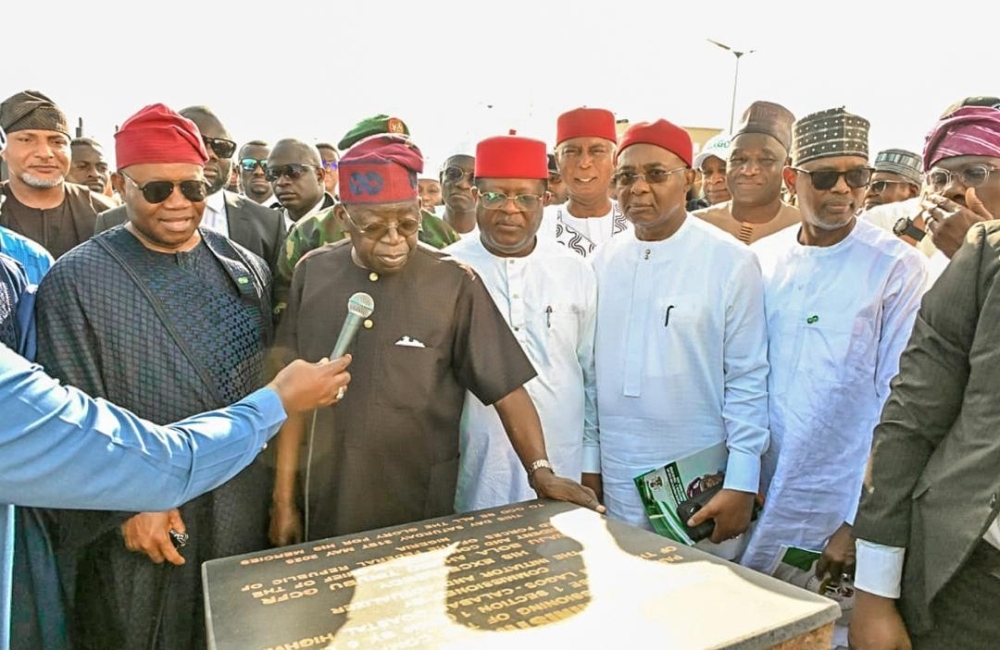
DRIVING NIGERIA’S FUTURE: CELEBRATING TWO YEARS OF TRANSFORMATIVE LEADERSHIP AND THE LAGOS-CALABAR COASTAL HIGHWAY MILESTONE
DRIVING NIGERIA’S FUTURE: CELEBRATING TWO YEARS OF TRANSFORMATIVE LEADERSHIP AND THE LAGOS-CALABAR COASTAL HIGHWAY MILESTONE
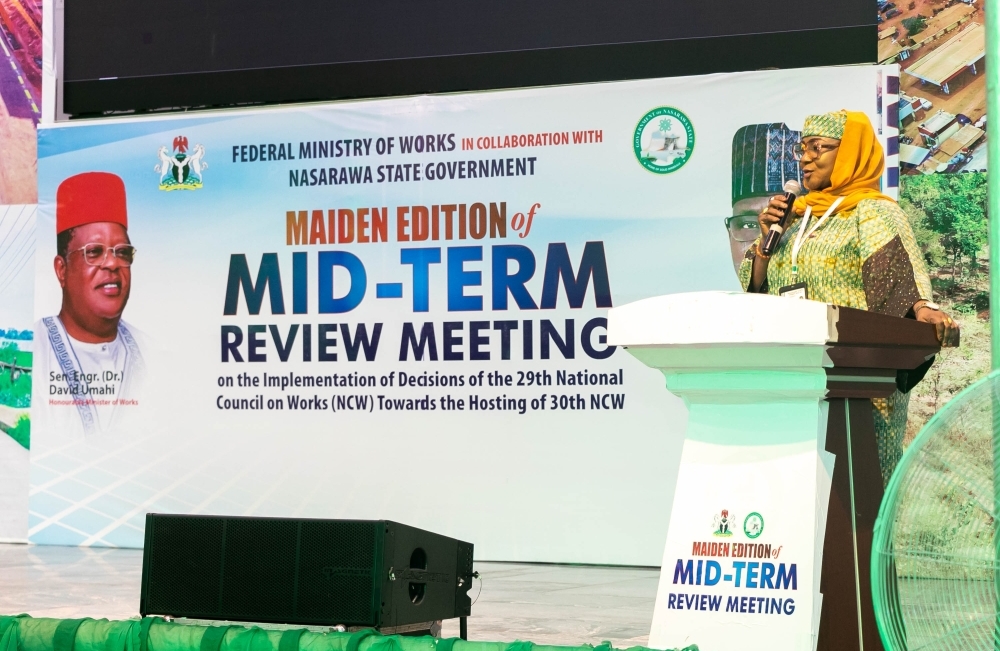
MID -TERM REVIEW MEETING ON THE IMPLIMENTATION OF THE DECISIONS REACHED AT THE 29TH NATIONAL COUNCIL ON WORKS (NCW) DAY 1
MID -TERM REVIEW MEETING ON THE IMPLIMENTATION OF THE DECISIONS REACHED AT THE 29TH NATIONAL COUNCIL ON WORKS (NCW) DAY 1