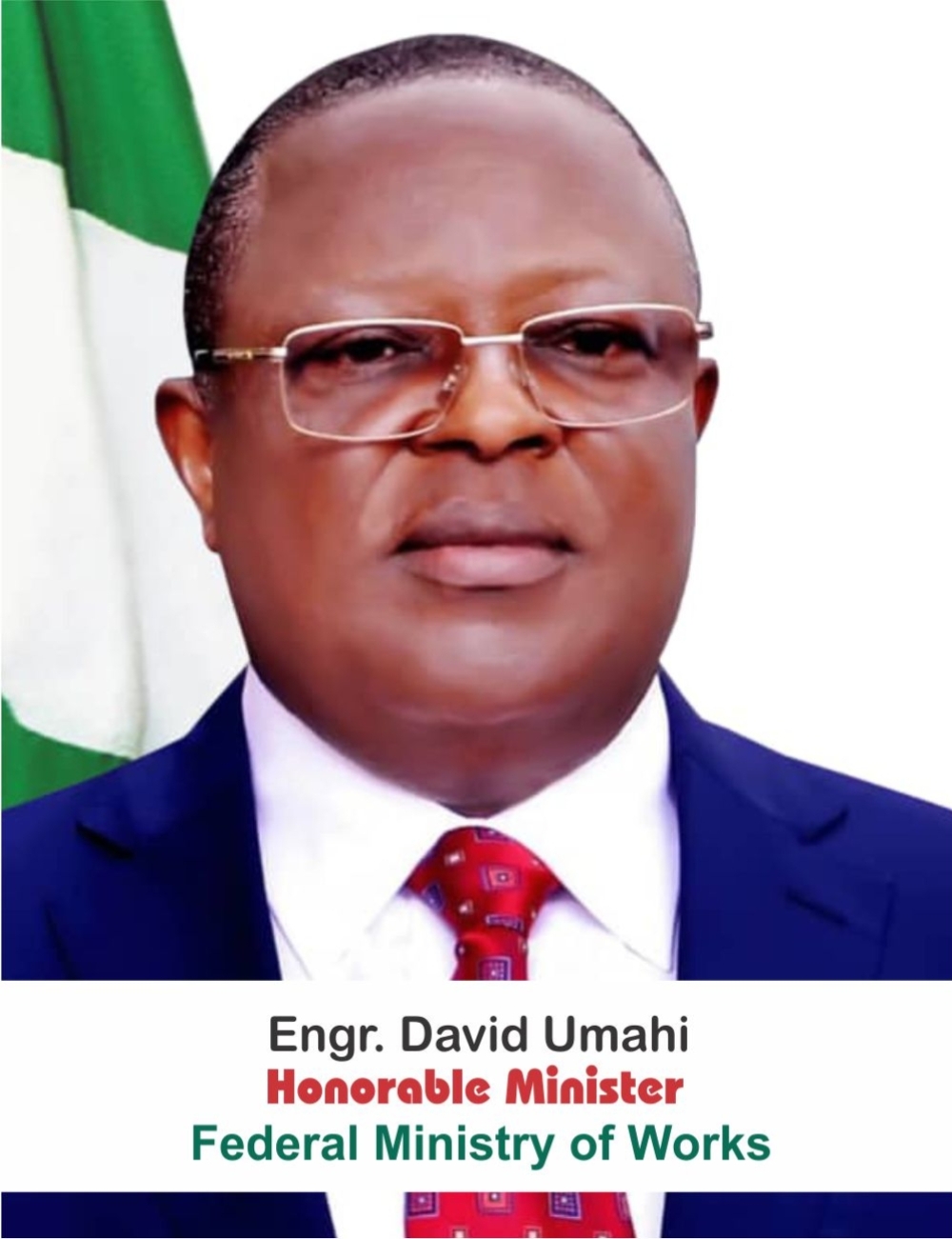
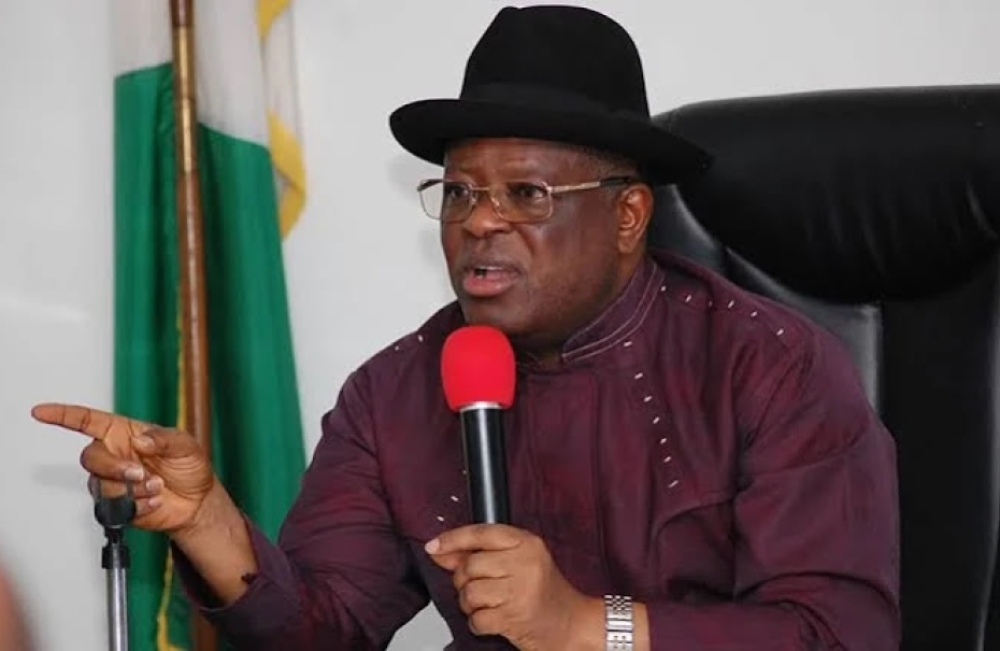
UMAHI ORDERS IMMEDIATE EMERGENCY INTERVENTION ON BENIN-ASABA ROAD, AND SOME OTHER CRITICAL FEDERAL ROADS
The Honourable Minister of Works, Senator Engr. David Nweze Umahi, CON, has directed the immediate deployment of major contractors to all three sections of the Benin-Asaba Federal Road to restore the failed sections and bring an end to the suffering of motorists and other road users.
This is because, the situation on the concessioned Benin-Asaba Road has reached a point where the overall public interest must take precedence over the existing concession agreement.
Recall that the Honourable Minister of Works was on the Benin-Asaba Road about seven days ago, where he assembled a number of contractors and directed them to prepare for immediate palliative intervention on the affected sections of the road at no cost to the concessionaire. In line with the Concession agreement which requires that before the Federal Government could intervene, the permission of the concessionaire must be required, and that permission was not granted to federal government.
The Minister subsequently proposed three options to the concessionaire, any one of which would have enabled the Federal Government to move in and address the worsening condition of the road. Unfortunately, none of the options was accepted by the concessionaire. Immediately after the Minister left Asaba, the already limited equipment deployed to the road by the concessionaire was further reduced to just one, worsening the situation and increasing the suffering of motorists and other road users.
While the Minister takes responsibility for the concerns and suffering of Nigerians using the road, it is important to state that the concessionaire has also not taken the suffering of Edo people and travelling public sufficiently into consideration by declining all the options put forward by the Federal Government. The concessionaire continues to rely on the terms of the concession agreement entered into by the previous administration, an agreement which weighs heavily against the Federal Government’s ability to intervene quickly in the interest of the public in a situation like this.
In view of this situation, the Honourable Minister of Works has directed the immediate deployment of major contractors within the corridor to all three sections of the Benin-Asaba Road to restore the failed sections and bring relief to the people, with the cost of the emergency intervention being borne by the Federal Government. The Honourable Minister has also directed immediate redesign of the entire route to be rebuilt with reinforced concrete pavement. The public should therefore take note that immediate action is underway to restore every failed section of the Benin-Asaba Road and subsequently rehabilitate the entire sections of the road using reinforced concrete pavement.
2. On the Benin-Sapele Road:
The Governors of Edo and Delta States, the Niger Delta Development Commission (NDDC), and the Federal Government are currently engaged in interventions on different sections of the road to restore the entire route. While some sections are receiving palliative attention, permanent works are also ongoing on other sections.
3. On Ifaki(Ekiti) - Kabba (Kogi) Road:
The Federal Government is engaging both the contractor; Gamji Nigeria Company Limited, and Dangote PLC on immediate emergency and permanent intervention on the most failed sections of the road, while efforts are being made to financially mobilise the company for more extensive permanent work to commence on the axis.
4. On the Sokoto-Zamfara-Katsina Road: This is an inherited project involving the dualisation of approximately 350 kilometres, which translates to about 700 kilometers. The project has since been redesigned and is currently ongoing and most sections are being reconstructed using reinforced concrete pavement. From the Sokoto axis towards Zamfara, over 50 kilometres of one carriageway have been fully completed with reinforced concrete pavement. From Zamfara to Katsina, some sections have been completed and palliative works have been ordered over the sections that have not been reconstructed. However, the pace of work slowed down due to the redesign and rephasing of the project. The contractors currently engaged on the road include CBC, SETRACO, Triacta and Mothercat. They are being remobilised to return to site and complete the outstanding works.
5. On the Abuja-Kaduna-Zaria-Kano Road: The Federal Government took over the Road project and has currently completed the 118-kilometer mostly on reinforced concrete pavement on lot 1. The Lot 2, which covers 164 kilometres, is over 60 percent completed on reinforced concrete pavement. The Federal Government has also introduced solar-powered light on the entire route of Abuja-Kaduna-Zaria - Kano to improve visibility during night travel and enhance the overall security situation on the route. The entire project is scheduled for completion by December 2026.
6. On Bauchi-Jigawa Road: Triacta Nigeria Limited has been mobilised to carry out the necessary interventions on some failed sections and work is currently ongoing in those failed sections.
7. On the Sagamu-Ore Road: 48 Kilometers of the 96-kilometre road have already been completed using reinforced concrete pavement. There is also a 24-kilometre section around Ore which was abandoned by the previous contractor. The Federal Government has directed its immediate restoration to ensure seamless travel. Solar lights are being installed in the entire 96kilometer of the road.
8. On Flooded Sections on Sagamu-Ore-Benin Road: The flooded sections on the same corridor between Sagamu-Ore-Benin Road, as well as other flooded sections in Ondo State, are being designed for emergency procurement and intervention.
9. On the East-West Road:
Some failed and critical sections, including defective sections of bridges along the East-West Road, are being marked out for emergency procurement and intervention.
10. On the Abuja-Lokoja Road:
Several contracts are ongoing along the route, while the three critical sections currently without contracts are being procured for emergency intervention.
11. On the Lokoja-Benin-Warri Road: The President has directed a complete redesign and procurement of the 400-kilometre dualised route covering the uncompleted sections, using reinforced concrete pavement, while palliative works will continue with the contractors currently on the road.
12. On Carter Bridge:
While the Federal Government continues to undertake weekly maintenance of the underwater elements of the bridge. The site has also been handed over to the contractor, CCECC, for the construction of a permanent new bridge, and work has commenced.
13. On the Third Mainland Bridge:
With regard to the defective underwater structural elements, the Federal Government is at the final stage of determining the appropriate intervention for the repair of the affected elements.
14. On the flooded section of the Lagos-Ibadan Road: Work has commenced on the affected section. There are also several flooded sections on federal roads across the six geopolitical zones, largely occasioned by excessive flooding and the effects of climate change. The Federal Government is identifying and marking these sections for immediate attention.
15. On the First and Second Niger Bridges:
Intervention work is ongoing on the approach roads to the Second Niger Bridge damaged by flood and the work is progressing very well. The First Niger Bridge has been closed to traffic to enable immediate repair works. Contractor has mobilized to site and comprehensive rehabilitation of the bridge has started. From Summit Junction to the First Niger Bridge, massive rehabilitation work is also ongoing using reinforced concrete pavement.
16. The Honourable Minister wishes to commend the President of the Federal Republic of Nigeria, His Excellency Bola Ahmed Tinubu, GCFR, for the massive work being undertaken on the nation’s roads since the administration assumed office in 2023.
17. It is important to state that when the present administration came into office, there was hardly any part of the country where one could travel for an hour without encountering significant challenges on the road network. The condition of the country’s roads and bridges was a major national infrastructure challenge.
18. Rather than shy away from the problem, the administration of President Bola Ahmed Tinubu made the nation’s road network a priority. Virtually every part of the country became a priority, and the Federal Government, through the Federal Ministry of Works, Regional Commissions, Parastatals and other MDA’s has continued to respond extensively to these challenges.
19. The Federal Government is currently working on over 80 percent of the inherited federal roads, an unprecedented level of intervention in the country’s road infrastructure.
20. We ask the public to understand the enormous challenges inherited on our roads and bridges and to take note not only of the problems being solved, but also of the permanent solutions being introduced.
21. A major part of this new approach is the use of reinforced concrete pavement, designed to significantly extend the lifespan of major roads. These roads are expected to last between 50 and 100 years. This means that roads being constructed under President Bola Ahmed Tinubu’s administration are being designed with future generations in mind, rather than simply providing temporary solutions to today’s problems. And this is a complete departure from the past, when roads often deteriorated only a few years after completion, resulting in a continuous cycle of reconstruction and expenditure.
22. We appreciate the concerns of Nigerians over the condition of some roads presently and the difficulties faced by motorists and commuters who cannot move easily from one point to another. Those concerns are legitimate, and the Federal Government is listening. But Nigerians should also recognise the enormous scale of the problems inherited and the amount of work currently being undertaken across the country.
23. It is simply impossible to resolve every road challenge accumulated over many years of neglect by the past administrations within three years. What is important is that the government is working, the government is responding, and the government is putting permanent solutions in place.
25. We appreciate members of the public who send situation reports on failed roads and other infrastructure challenges. These reports help the Ministry identify areas requiring urgent attention. However, we also appeal to members of the public to report when such problems have been addressed, just as they report when they occur.
24. We are aware of situations where photographs and reports of road challenges continue to circulate on social media even after the Federal Government has intervened and resolved the particular problem.
25. However, the Ministry will continue to respond as rapidly as possible to genuine reports and concerns from Nigerians.
26. It is also important to note that we have compiled a comprehensive record of all inherited, ongoing and intervention projects across the country which is available to the public. This is to ensure that Nigerians have access to information on the infrastructure projects being undertaken nationwide and can fully participate in and appreciate the infrastructure revolution of President Bola Ahmed Tinubu’s administration.

UMAHI ORDERS IMMEDIATE EMERGENCY INTERVENTION ON BENIN-ASABA ROAD, AND SOME OTHER CRITICAL FEDERAL ROADS The Honourable Minister of Works, Senator Engr. David Nweze Umahi, CON, has directed the immediate deployment of major contractors to all three sections of the Benin-Asaba Federal Road to restore the failed sections and bring an end to the suffering of motorists and other road users. This is because, the situation on the concessioned Benin-Asaba Road has reached a point where the overall public interest must take precedence over the existing concession agreement. Recall that the Honourable Minister of Works was on the Benin-Asaba Road about seven days ago, where he assembled a number of contractors and directed them to prepare for immediate palliative intervention on the affected sections of the road at no cost to the concessionaire. In line with the Concession agreement which requires that before the Federal Government could intervene, the permission of the concessionaire must be required, and that permission was not granted to federal government. The Minister subsequently proposed three options to the concessionaire, any one of which would have enabled the Federal Government to move in and address the worsening condition of the road. Unfortunately, none of the options was accepted by the concessionaire. Immediately after the Minister left Asaba, the already limited equipment deployed to the road by the concessionaire was further reduced to just one, worsening the situation and increasing the suffering of motorists and other road users. While the Minister takes responsibility for the concerns and suffering of Nigerians using the road, it is important to state that the concessionaire has also not taken the suffering of Edo people and travelling public sufficiently into consideration by declining all the options put forward by the Federal Government. The concessionaire continues to rely on the terms of the concession agreement entered into by the previous administration, an agreement which weighs heavily against the Federal Government’s ability to intervene quickly in the interest of the public in a situation like this. In view of this situation, the Honourable Minister of Works has directed the immediate deployment of major contractors within the corridor to all three sections of the Benin-Asaba Road to restore the failed sections and bring relief to the people, with the cost of the emergency intervention being borne by the Federal Government. The Honourable Minister has also directed immediate redesign of the entire route to be rebuilt with reinforced concrete pavement. The public should therefore take note that immediate action is underway to restore every failed section of the Benin-Asaba Road and subsequently rehabilitate the entire sections of the road using reinforced concrete pavement. 2. On the Benin-Sapele Road: 3. On Ifaki(Ekiti) - Kabba (Kogi) Road: 4. On the Sokoto-Zamfara-Katsina Road: This is an inherited project involving the dualisation of approximately 350 kilometres, which translates to about 700 kilometers. The project has since been redesigned and is currently ongoing and most sections are being reconstructed using reinforced concrete pavement. From the Sokoto axis towards Zamfara, over 50 kilometres of one carriageway have been fully completed with reinforced concrete pavement. From Zamfara to Katsina, some sections have been completed and palliative works have been ordered over the sections that have not been reconstructed. However, the pace of work slowed down due to the redesign and rephasing of the project. The contractors currently engaged on the road include CBC, SETRACO, Triacta and Mothercat. They are being remobilised to return to site and complete the outstanding works. 5. On the Abuja-Kaduna-Zaria-Kano Road: The Federal Government took over the Road project and has currently completed the 118-kilometer mostly on reinforced concrete pavement on lot 1. The Lot 2, which covers 164 kilometres, is over 60 percent completed on reinforced concrete pavement. The Federal Government has also introduced solar-powered light on the entire route of Abuja-Kaduna-Zaria - Kano to improve visibility during night travel and enhance the overall security situation on the route. The entire project is scheduled for completion by December 2026. 6. On Bauchi-Jigawa Road: Triacta Nigeria Limited has been mobilised to carry out the necessary interventions on some failed sections and work is currently ongoing in those failed sections. 7. On the Sagamu-Ore Road: 48 Kilometers of the 96-kilometre road have already been completed using reinforced concrete pavement. There is also a 24-kilometre section around Ore which was abandoned by the previous contractor. The Federal Government has directed its immediate restoration to ensure seamless travel. Solar lights are being installed in the entire 96kilometer of the road. 8. On Flooded Sections on Sagamu-Ore-Benin Road: The flooded sections on the same corridor between Sagamu-Ore-Benin Road, as well as other flooded sections in Ondo State, are being designed for emergency procurement and intervention. 9. On the East-West Road: 10. On the Abuja-Lokoja Road: 11. On the Lokoja-Benin-Warri Road: The President has directed a complete redesign and procurement of the 400-kilometre dualised route covering the uncompleted sections, using reinforced concrete pavement, while palliative works will continue with the contractors currently on the road. 12. On Carter Bridge: 13. On the Third Mainland Bridge: 14. On the flooded section of the Lagos-Ibadan Road: Work has commenced on the affected section. There are also several flooded sections on federal roads across the six geopolitical zones, largely occasioned by excessive flooding and the effects of climate change. The Federal Government is identifying and marking these sections for immediate attention. 15. On the First and Second Niger Bridges: 16. The Honourable Minister wishes to commend the President of the Federal Republic of Nigeria, His Excellency Bola Ahmed Tinubu, GCFR, for the massive work being undertaken on the nation’s roads since the administration assumed office in 2023. 17. It is important to state that when the present administration came into office, there was hardly any part of the country where one could travel for an hour without encountering significant challenges on the road network. The condition of the country’s roads and bridges was a major national infrastructure challenge. 18. Rather than shy away from the problem, the administration of President Bola Ahmed Tinubu made the nation’s road network a priority. Virtually every part of the country became a priority, and the Federal Government, through the Federal Ministry of Works, Regional Commissions, Parastatals and other MDA’s has continued to respond extensively to these challenges. 19. The Federal Government is currently working on over 80 percent of the inherited federal roads, an unprecedented level of intervention in the country’s road infrastructure. 20. We ask the public to understand the enormous challenges inherited on our roads and bridges and to take note not only of the problems being solved, but also of the permanent solutions being introduced. 21. A major part of this new approach is the use of reinforced concrete pavement, designed to significantly extend the lifespan of major roads. These roads are expected to last between 50 and 100 years. This means that roads being constructed under President Bola Ahmed Tinubu’s administration are being designed with future generations in mind, rather than simply providing temporary solutions to today’s problems. And this is a complete departure from the past, when roads often deteriorated only a few years after completion, resulting in a continuous cycle of reconstruction and expenditure. 22. We appreciate the concerns of Nigerians over the condition of some roads presently and the difficulties faced by motorists and commuters who cannot move easily from one point to another. Those concerns are legitimate, and the Federal Government is listening. But Nigerians should also recognise the enormous scale of the problems inherited and the amount of work currently being undertaken across the country. 23. It is simply impossible to resolve every road challenge accumulated over many years of neglect by the past administrations within three years. What is important is that the government is working, the government is responding, and the government is putting permanent solutions in place. 25. We appreciate members of the public who send situation reports on failed roads and other infrastructure challenges. These reports help the Ministry identify areas requiring urgent attention. However, we also appeal to members of the public to report when such problems have been addressed, just as they report when they occur. 24. We are aware of situations where photographs and reports of road challenges continue to circulate on social media even after the Federal Government has intervened and resolved the particular problem.
The Governors of Edo and Delta States, the Niger Delta Development Commission (NDDC), and the Federal Government are currently engaged in interventions on different sections of the road to restore the entire route. While some sections are receiving palliative attention, permanent works are also ongoing on other sections.
The Federal Government is engaging both the contractor; Gamji Nigeria Company Limited, and Dangote PLC on immediate emergency and permanent intervention on the most failed sections of the road, while efforts are being made to financially mobilise the company for more extensive permanent work to commence on the axis.
Some failed and critical sections, including defective sections of bridges along the East-West Road, are being marked out for emergency procurement and intervention.
Several contracts are ongoing along the route, while the three critical sections currently without contracts are being procured for emergency intervention.
While the Federal Government continues to undertake weekly maintenance of the underwater elements of the bridge. The site has also been handed over to the contractor, CCECC, for the construction of a permanent new bridge, and work has commenced.
With regard to the defective underwater structural elements, the Federal Government is at the final stage of determining the appropriate intervention for the repair of the affected elements.
Intervention work is ongoing on the approach roads to the Second Niger Bridge damaged by flood and the work is progressing very well. The First Niger Bridge has been closed to traffic to enable immediate repair works. Contractor has mobilized to site and comprehensive rehabilitation of the bridge has started. From Summit Junction to the First Niger Bridge, massive rehabilitation work is also ongoing using reinforced concrete pavement.
25. However, the Ministry will continue to respond as rapidly as possible to genuine reports and concerns from Nigerians.
26. It is also important to note that we have compiled a comprehensive record of all inherited, ongoing and intervention projects across the country which is available to the public. This is to ensure that Nigerians have access to information on the infrastructure projects being undertaken nationwide and can fully participate in and appreciate the infrastructure revolution of President Bola Ahmed Tinubu’s administration.
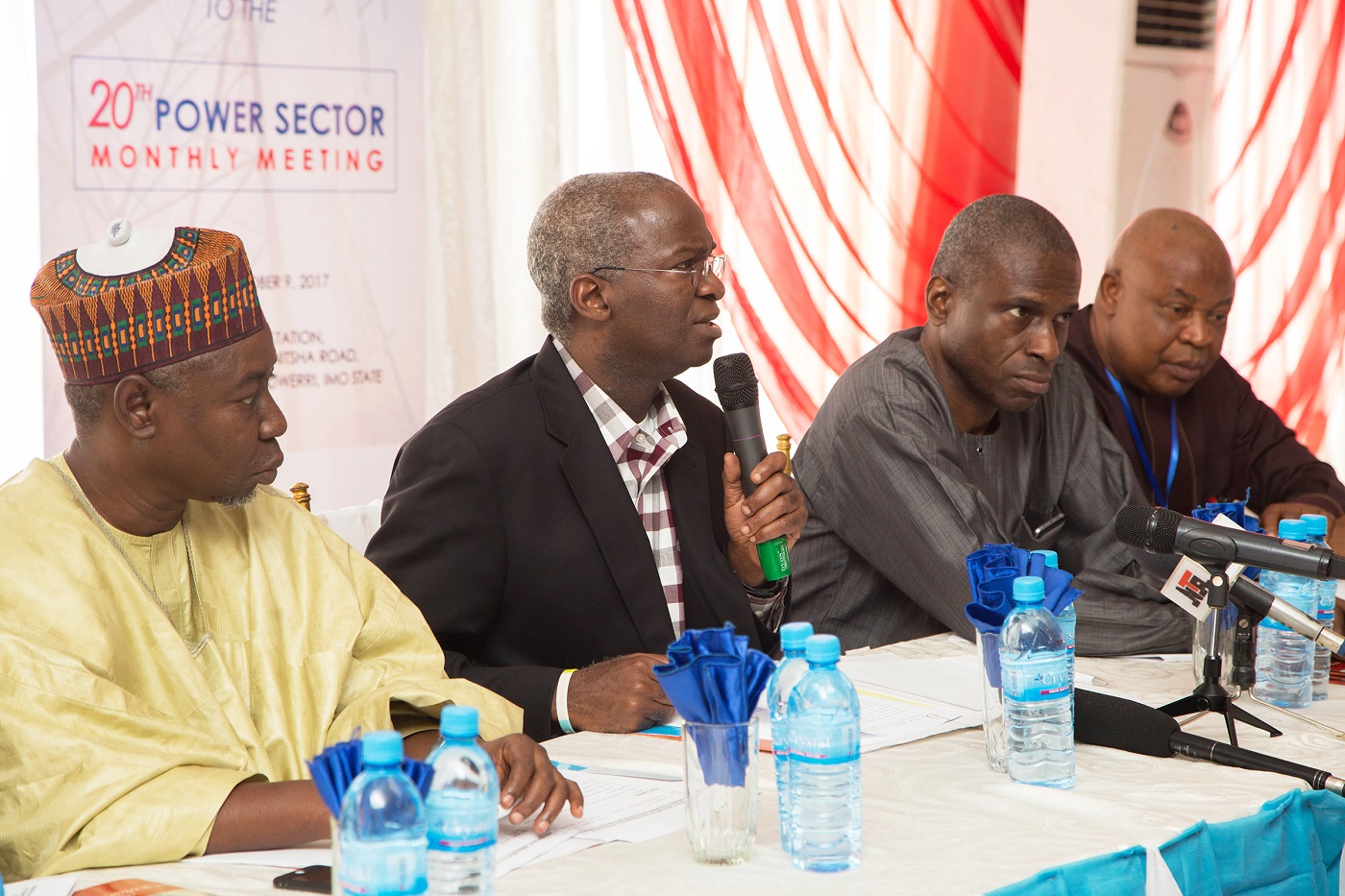
Fashola Allays Fears Of Discos About Investments In Solar, Other FG Policy Initiatives To Improve Service In The Power Sector As Minister chairs the 20th Monthly Meeting of Power Sector Operators in Owerri. Says initiatives, including outsourcing of meter supply, licensing of eligible customers, and others are aimed at improving service to Nigerians. Reports recovery of 100MW from the damaged Afam IV Power Plant, energizing of Jebba-Kainji 2nd 330KV line and the 2nd Ajaokuta-Abuja 330KV line by TCN, others. Gives kudos to Judiciary for various interventions and support toward development of Sector The Minister of Power Works and Housing, Mr. Babatunde Fashola SAN, has allayed the fears of the Electricity Distribution Companies (DisCos) over the promotion of the deployment of more solar power through mini-grids and other Federal Government initiatives aimed at improving service in the Power Sector. Fashola, who spoke while presiding at the 20th Monthly Meeting of Power Sector Operators in Owerri, Imo State, said that the Sector had made noteworthy progress since the 19th Meeting held in Lagos and collectively the challenges that lay ahead in the roadmap to incremental, stable and uninterrupted power would be engaged. The initiatives over which the DisCos wrote a letter to the Government dated 27thSeptember 2017 and titled, “Federal Government of Nigeria’s Initiatives in the Electricity Sector and the Impact on Electricity Distribution Company Activities”, include the provision of meters to consumers through licensing of meter suppliers and provision of more power to consumers through licensing of eligible customers. Other initiatives are the provision of Independent dedicated Power to Universities, promotion of the deployment of more solar power through mini-grids and expansion of the Distribution Network of the DisCos so that they can take additional 2,000 MW of power now available for supply. Fashola, who noted the concern of the DisCos about the impact of the initiatives on their businesses, however, pointed out that the initiatives were targeted at improving service to the people. He, however, commended them for the decision to channel their complaints to the Nigerian Electricity Regulatory Commission (NERC) by a jointly signed letter, a decision he described as “a welcome departure from the previous order”, which should to be encouraged. “It is my understanding that you fear that you will lose some income or some customers if Government proceeds; and on the question of meters, you seek to have technical compatibility with what the licencee will operate. In respect of possible investment in Distribution equipment you seek that Government should route the investment through the DisCos. Understandably you are concerned about investment recovery and in your views, the solution is a tariff review”, the Minister noted. He, however, pointed out that while their concerns about business viability, financial stability and cost recovery were well understood and indeed supported by the Electric Power Sector Perform Act of 2005 (EPSRA) which Government would respect, Government’s focus was also strong on the issue of service to the people, adding, “There must be a balance somewhere in the middle”. Fashola said as far as the promotion of solar and other sources of independent power was concerned, they were not only supported by the ESPRA, but were “consistent with our Paris Climate Change Agreement Obligations and with emerging global practice”. Pointing out that Government was yet to take position on the best way forward on the issue of channelling investment into Distribution assets through the DisCos, the Minister declared, “DisCos have nothing to fear about solar. It is a space in which they are entitled to play but in which they cannot exclude others from playing”. He added, “The ESPRA did not contemplate a monopoly for any licensee, unless it is expressly stated in the license”, pointing out, however, that Government was clear that a solution must be found quickly to the inability of DisCos to take about 2000 MW of power that would imminently increase as the sector got more incremental power. Fashola, who maintained that the concerns contained in the letter under reference could and would be managed through consultations by NERC “ to help to build consensus about how best to serve customers, instead of festering gulfs of Disagreement”, added, however, that as a 40 per cent shareholder of the DisCos (on behalf of the Federal, State, Local Governments and Workers), “Government has a self-benefitting interest in the wellbeing and efficiency of the DisCos”. The Minister noted that while the letter and concerns of the DisCos focussed first on their business, the Government initiatives focussed more on service, adding, “Consensus should give us both the service and the business”. Reviewing the progress made in the sector in the last one month, Fashola informed the meeting that in the last month the sector has recovered 100Megawatts from the damaged Afam IV Power Plant, which he recalled, had been inoperative since January 2015. The Minister also reported that the Transmission Company of Nigeria (TCN) has energized the Jebba-Kainji 2nd 330KV line and the 2nd Ajaokuta-Abuja 330KV line both of which were inoperative since 2015 while in the last one month, “specifically on Wednesday 4th October 2017”, the Federal Executive Council has approved the verified sum of Federal Government MDA debts of N25.9Billion, and its payment by setting it off against the debts owed by the DisCos to the Nigerian Bulk Electricity Trader (NBET). The Minister, who promised to communicate soon to the Meeting how the amount has been applied to reduce debts owed by DisCos to NBET, informed also that promising progress was being made in recovering debts due from international Customers adding that the Meeting would also “be notified of how much has been received when the appropriate accounts confirm that they have received value for the credits we have been notified of”. Also recalling the progress report of the last meeting, Fashola listed the successful connection of power to Magboro, Ibafo and neighbouring communities in Ogun State, the metering of 196 out of 244 customers on Ajijedidun, Adamolekun and Abiola Alao Streets in Ijeshatedo in Lagos, particularly and the progress made to restore power to 16 out of 36 communities in Ondo North (Akoko Communities) and the challenges in Okitipupa. The Minister gave kudos to the Judiciary for its various interventions and support towards the development of the Power Sector, particularly commending it for its judicial support to stop corruption, enforce the law and promote liquidity in the sector as well as the recent practice directions issued by the Chief Justice of Nigeria for the full enforcement of Arbitration clauses in power contracts. Noting that the practice direction would take such Arbitration cases out of the tedium of regular trial and place them in the hands of commercially sensitive adjudicators, Fashola also welcomed with delight the conviction and sentencing to three years’ imprisonment by the Federal High Court, Abakaliki, Ebonyi State, of one Okechukwu Anoke for tampering with electricity fittings. Also welcomed with delight by the Minister was the intervention in the Court of Appeal in the case involving the tariff review, which the Trial Court had earlier set aside declaring the tariff setting process illegal, but which, according to him, the Appeal Court has reversed and ordered that the case be tried afresh. Emphasizing the critical role of the judiciary and law enforcement in the power sector, Fashola pointed out that the efficacy of the practice directions issued by the CJN for the strict enforcement of Arbitration clauses did not rest with the Judicial officers alone adding the Nigerian Bar Association has a pivotal role to play in ensuring that Arbitration clauses were enforced. “This is because it is often the Lawyers, not the clients that file and initiate processes that invoke the jurisdiction of the Court”, the Minister said, adding, “It seems to me that there might be something that potentially crosses the line of ethics which should arouse the interest of the Bar Association if one of its members fails to avail a client of his rights under an Arbitration agreement”. On the report that the Yola DisCo has not been actively participating in the affairs of the Association of Electricity Distribution Companies, the Minister, who reiterated his position about the right and freedom of individual DisCos to associate, pointed out that Government also has the right to associate or dissociate with the DisCos “by lack of recognition or grant of recognition; because rights are not absolute and because they impose duties”. “All I need say is that we must respect the right of Yola DisCo to also choose whether it wants to associate or not. That is a duty we all have if we must enjoy the freedom and right to associate”, he said. Thanking the Plateau State Governor, Mr Simon Lalong for hosting and the Operators for participating in the 3rd National Council on Power, which he described as very successful, Fashola, noted that the State used the opportunity offered by the occasion to present its Rural Electrification Roadmap to all. He urged the Operators to “follow up with the State Governments to assist you in enforcing the law against energy theft, right of way protection, metering of state government offices and buildings, the verification and prompt settlement of bills”. On the Order signed by the Nigerian Electricity Regulatory Commission (NERC) which reduced the timeline for making (New) Electricity connections from 145 days to 40 days, the Minister declared, “While DisCos are also expected to comply and file reports of compliance to NERC and copied to my office, the Presidential Enabling Business Environment Council (PEBEC) has advised that the focal DisCos that will affect Nigeria’s ease of doing business rating will be Lagos, Ikeja, Kano and Kaduna because of the sample size that the population they serve represent”. ...
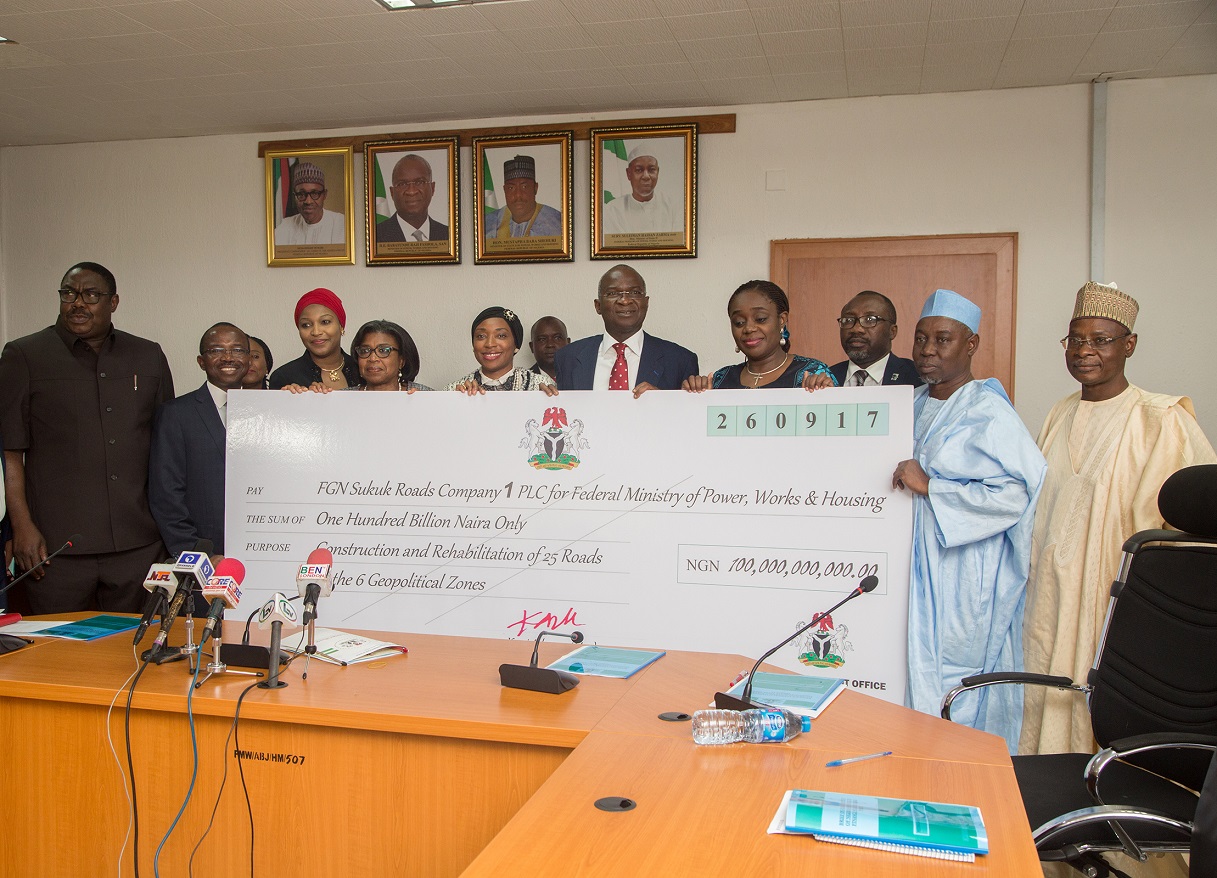
Presentation of N100 Billion DMO Sovereign SUKUK; Each Geo- Political Zone to Receive About N16.67Billion, 25 Road Projects to Benefit The much –awaited N100 billion Debt Management Office (DMO) subscribed Sovereign SUKUK (bond) cheque has been presented to the Minister of Power, Works and Housing, Babatunde Raji Fashola, SAN by the Minister of Finance, Mrs Kemi Adeosun. While presenting the cheque, the Minister of Finance disclosed that the Sovereign SUKUK is the first of its kind to be floated in Nigeria adding that the United Kingdom and South Africa had in past used such SUKUK bonds as a financing option. 2. The Minister of Power, Works, and Housing stated that during his maiden meeting with Contractors handling various projects for the Ministry, on assumption of duty, lack of funds and vagaries of weather were identified as major stumbling blocks to the delivery of projects. The introduction of this novel idea in project financing, apart from the annual budgetary allocation to the Works sector, is, therefore, a panacea to bridging the funding gap, according to the Minister. 3. Fashola who received the cheque, on behalf of the Contractors, hailed the over subscription of the bond as a clear demonstration of investor –confidence in the Nigeria’s economy and, most importantly, exponteneous economic growth to be recorded with the successful delivery of the affected projects which will open vistas of economic activities. 4. The Director General of the Debt Management Office (DMO), midwife of the process, Mrs. Patience Oniha alluded the success of the offer to the support and commitment of all the parties involved, especially the unrelenting efforts of the Ministers of Power, Works and Housing, as well as, Finance. She identified it as an example of “how we, Nigerians, can make things work”, adding that the only viable option is to invest in infrastructure. 5. The Financial Advisers to theFacility, Messrs FBN Capital and Lotus Capital, while thanking the Federal Government for the opportunity to participate in the process, assured Nigerians that the additional funding will unlock potentials for economic growth. 6. A breakdown of the 25 prioritized road projectsto benefit from the additional funds, as given by the Director, Highways, Planning and Development, Engr. Chukwunwike Ogonna Uzo, are as follows; i. Rehabilitation and Reconstruction of Enugu-Port Harcourt Dual Carriageway, Section II (Umuahia Tower-Aba Township Rail/Road Bridge Crossing in Abia State) - Arab Contractor Nigeria Limited, N3,750,000,000.00 ii. Dualization of Lokoja-Benin Road: Obajana Junction-Benin, Section I Phase I (Obajana – Okene in Kogi State) - CGC Nigeria Limited, N2,500,000,000.00 iii. Dualization of Kano - Katsina Road Phase I: Kano Town at Dawanau(round about to Katsina State Border with Kano State.)- CCECC (Nigeria) Limited, N 3,000,000,000.00 vi. Rehabilitation Of Enugu-Port Harcourt Road Section IV,(Aba-Port Harcourt in Rivers State) - CCECC Nigeria Limited , N 3,500,000,000.00 V. Dualization of Yenegwe Road Junction-Kolo - Otuoke - Bayelsa Palm in Bayelsa State. –CCECC (Nigeria) Limited, N 3,500,000,000.00 vi. Dualisation of Kano-Maiduguri Road linking Kano-Jigawa – Bauchi - Yobe and Borno States, Section V,(Damaturu -Maiduguri)- CCECC Nigeria Limited, N 5,000,000,000.00 vii. Dualisation of Suleja-Minna Road in Niger State, Phase II, Salini (Nigeria) Limited, N3,521,958,532.49 viii Reconstruction and Asphalt Overlay of Benin-Ofosu-Ore-Ajebandele-Shagamu Dual Carriageway Phase IV, ( Ajebandele-Shagamu) in Ondo and Ogun States) - Reynolds Construction Company (Nig) Limited, NN6,000,000,000.00 xi. Reconstruction of the Outstanding Sections of the Benin – Ofusu – Ore –Ajebandele - Shagamu Expressway, Phase III, Reynolds Construction Company (Nig) Limited, N 5,000,000,000.00 x. Dualisation of Ibadan - Ilorin Rd Section II, (Oyo-Ogbomosho Road in Oyo State- Reynolds Construction Company (Nig) Limited, N5,666,666,666.67 xi. Rehabilitation Of Outstanding Section Of Onitsha - Enugu Expressway: Amansea - Enugu State Border - Reynolds Construction Company (Nig) Limited, N 5,166,666,666.67 xii. Rehabilitation and Reconstruction of Enugu-Port Harcourt Dual Carriageway Section I,( Lokpanta - Umuahia Tower ) in Abia State, Setraco (Nigeria) Limited , N 4,000,000,000.00 xiii. Dualization of Abuja- Abaji - Lokoja Road Section I (International Airport link Road Junction - Sheda Village Junction) - Dantata & Sawoe Construction Company (Nig) Limited, N 3,000,000,000.00 xiv. Dualisation of Kano-Maiduguri Road linking Kano - Jigawa –Bauchi - Yobe and Borno States, Section I, (Kano - Wudil -Shuari) in Kano and Jigawa States-Dantata&Sawoe Construction Company (Nig) Limited, N5,000,000,000.00 xv. Construction of Kano Western Bypass as an Extension of Dualisation of Kano - Maiduriguri Road Section 1-Dantata&Sawoe Construction Company (Nig) Limited , N 4,000,000,000.00 xvi. Dualization of Lokoja-Benin Road, Obajana Junction -Benin Section III Phase I, (Auchi - Ehor, Edo States) - Dantata & Sawoe Construction Company (Nig) Limited, N 3,166,666,666.67 xvii. Rehabilitation Of Enugu-Port Harcourt Road Section III ( Enugu-Lokpanta, Enugu State) - CGC (Nigeria) Limited, N 3,750,000,000.00 Xviii Construction of Kaduna Eastern By-pass in Kaduna State -Eksiogullari Nigeria Limited, N4,666,666,666.67 xix Dualization of Lokoja-Benin Road: Obajana Junction-Benin Section IV, Phase I,(Ehor-Benin City, Edo States)- Reynolds Construction Company (Nig) Limited, N 3,500,000,000.00 xx. Dualization of Lokoja-Benin Road: Obajana Junction-Benin Section II Phase I, (Okene-Auchi, Kogi and Edo States)-Mothercat Limited, N3,000,000,000.00 xxi. Dualisation of Kano-Maiduguri Road linking Kano-Jigawa-Bauchi-Yobe and Borno States. Section II, Shuari-Azare (Bauchi State)-Setraco (Nigeria) Limited, N 4,166,666,666.67 xxii. Dualisation of Kano-Maiduguri Road linking Kano-Jigawa-Bauchi-Yobe and Borno States. Section III, (Azare-Potiskum, Bauchi and Yobe States) Mothercat Limited, N3,500,000,000.00 xxiii. Dualization of Kano-Maiduguri Road linking Kano-Jigawa-Bauchi-Yobe and Borno States. Section IV, Potiskum-Damaturu Road (Yobe State)- CGC Nigeria Limited, N 4,000,000,000.00 xxiv. Construction of Oju/Loko - Oweto Bridge over River Benue to link Loko (Nasarawa State) and Oweto (Benue State)- Reynolds Construction Company (Nig) Limited, N 4,144,708,134.18 xxv. Dualization of Abuja - Abaji-Lokoja Road Sect. IV (Koton Karfe-Lokoja), (Kogi State)-Gitto Constrizion Generali Ltd, N3,500,000,000.00 7. Giving a Vote of Thanks at the Presentation Ceremony, the Permanent Secretary, Federal Ministry of Power, Works and Housing (Works and Housing Sectors), Alhaji Mohammed Bukar expressed appreciation to the drivers of the process, while admonishing the Contractors to make judicious use of the money, insisting that they will be closely monitored. ...
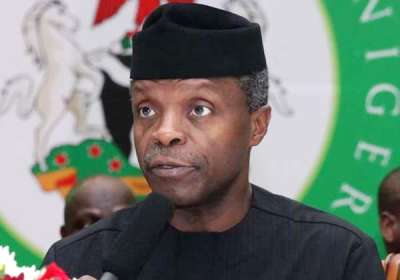
FG Pledges Partnership with Investors to Address Housing Deficit Vice President Yemi Osinbajo says the Federal Government will partner with genuine investors in the housing sector to bridge the country’s housing deficit. Osinbajo made the pledge in Abuja on Tuesday at the opening ceremony of a Housing Summit with the theme: “Addressing Housing Stock Deficit in Nigeria: A Holistic View.” The summit was organised by the Housing Circuit Magazine in collaboration with the Senate Committee on Land, Housing and Urban Development. The vice president, represented by Mr Suleiman Hassan, the Minister of State, Power, Works and Housing assured Nigerians that the government would continue to provide enabling environment for investment in the housing sector. He said that the Federal Government, through the Ministry of Power, Works and Housing was leading the drive on land and housing reform to ensure easy access to land for housing. According to him, the ministry has produced the revised and updated National Housing and Urban Development Policies as well as the National Building Code. He said the National Housing Programme of the Federal Government through the construction of houses across the country was a commitment to make significant and lasting changes in the sector. Osinbajo said the adoption of the National Housing Policy for sustainable housing delivery and the Housing Development Programme facilitated under the public private partnership were other interventions of the Federal Government. In his remark, Sen. Barnabas Gemade, the Chairman, Senate Committee on Housing said the theme of the summit was appropriate in view of the increased mass housing programme of the Federal Government. He said the upward review from N35 billion in 2016 to N40 billion in the 2017 budget was a clear demonstration of the Federal Government commitment to tackle housing challenges in the country. He pledged the commitment of his committee to fast track the reform and commercialization of the Federal Housing Authority through legislative process. Gemade said the delay in the release of budget resulting to frustration of work because of lack of funds and clear mortgage system were the major challenges facing the nation’s housing sector. “In addressing some of these challenges, we must take a critical look at the mortgage system. “We must also seek ways of how funds can be freed from certain sectors of the economy with much capital that can be deployed to the housing sector,” he said. ...
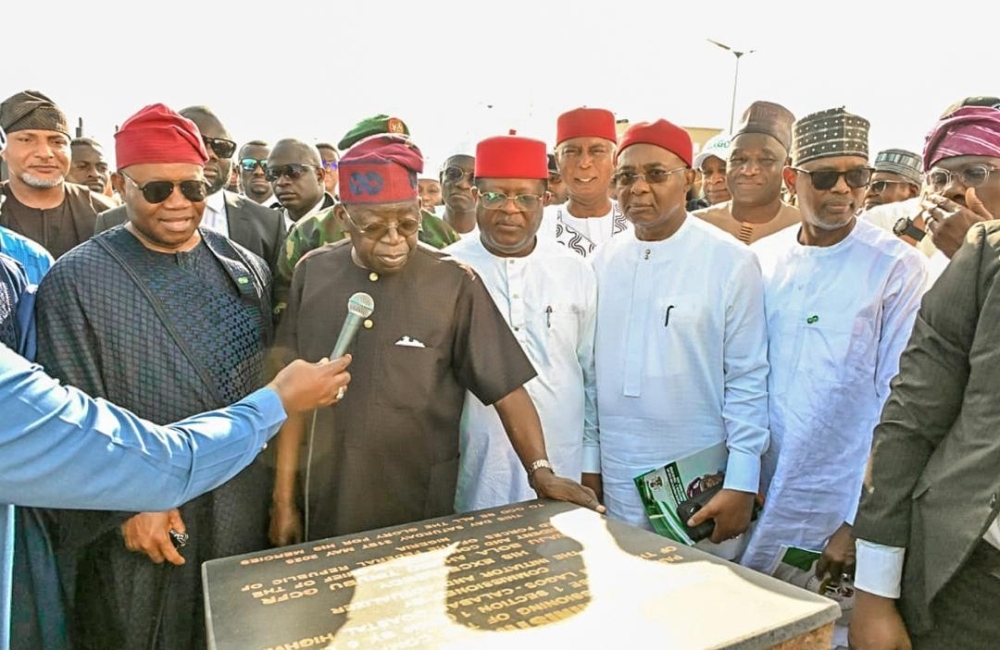
DRIVING NIGERIA’S FUTURE: CELEBRATING TWO YEARS OF TRANSFORMATIVE LEADERSHIP AND THE LAGOS-CALABAR COASTAL HIGHWAY MILESTONE
DRIVING NIGERIA’S FUTURE: CELEBRATING TWO YEARS OF TRANSFORMATIVE LEADERSHIP AND THE LAGOS-CALABAR COASTAL HIGHWAY MILESTONE
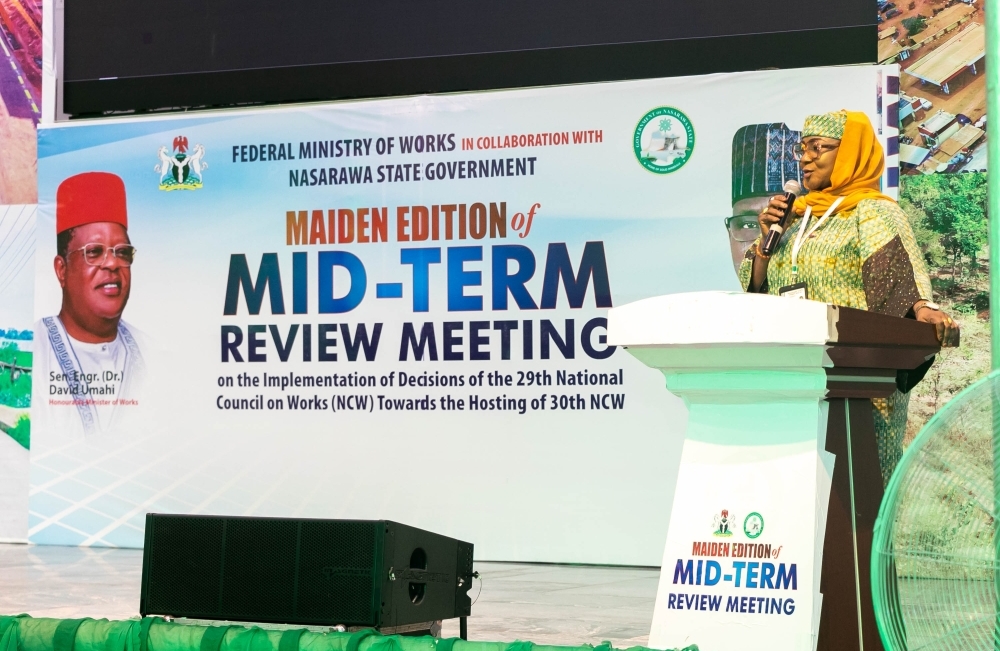
MID -TERM REVIEW MEETING ON THE IMPLIMENTATION OF THE DECISIONS REACHED AT THE 29TH NATIONAL COUNCIL ON WORKS (NCW) DAY 1
MID -TERM REVIEW MEETING ON THE IMPLIMENTATION OF THE DECISIONS REACHED AT THE 29TH NATIONAL COUNCIL ON WORKS (NCW) DAY 1