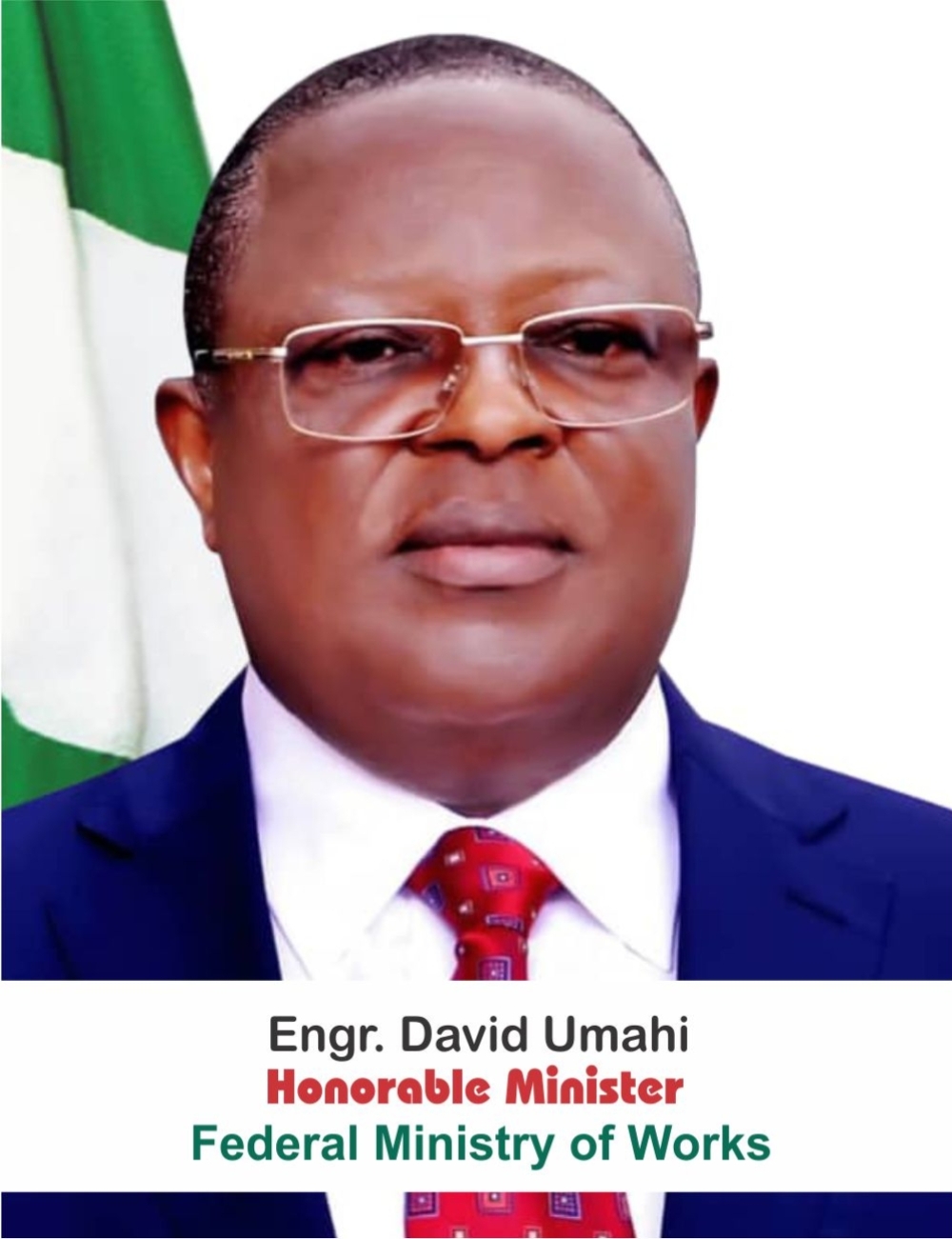
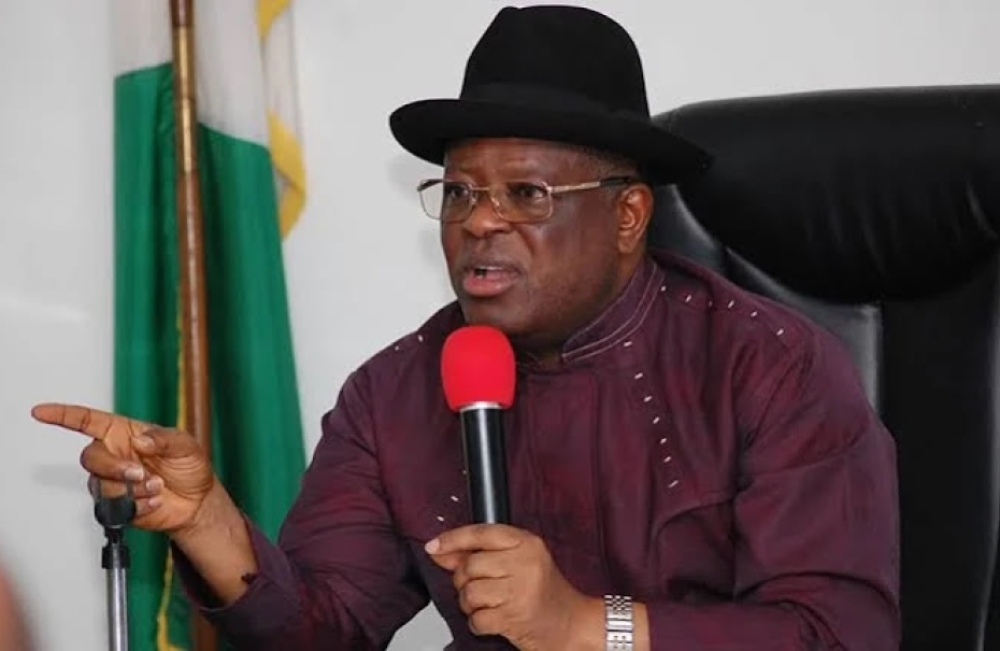
UMAHI ORDERS IMMEDIATE EMERGENCY INTERVENTION ON BENIN-ASABA ROAD, AND SOME OTHER CRITICAL FEDERAL ROADS
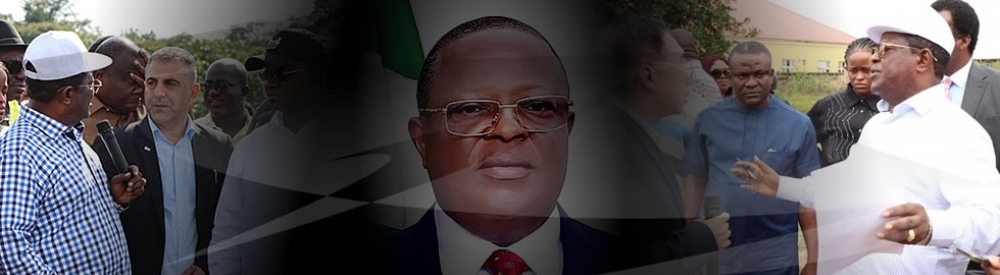
The Honourable Minister of Works, Senator Engr. David Nweze Umahi, CON, has directed the immediate deployment of major contractors to all three sections of the Benin-Asaba Federal Road to restore the failed sections and bring an end to the suffering of motorists and other road users.
This is because, the situation on the concessioned Benin-Asaba Road has reached a point where the overall public interest must take precedence over the existing concession agreement.
Recall that the Honourable Minister of Works was on the Benin-Asaba Road about seven days ago, where he assembled a number of contractors and directed them to prepare for immediate palliative intervention on the affected sections of the road at no cost to the concessionaire. In line with the Concession agreement which requires that before the Federal Government could intervene, the permission of the concessionaire must be required, and that permission was not granted to federal government.
The Minister subsequently proposed three options to the concessionaire, any one of which would have enabled the Federal Government to move in and address the worsening condition of the road. Unfortunately, none of the options was accepted by the concessionaire. Immediately after the Minister left Asaba, the already limited equipment deployed to the road by the concessionaire was further reduced to just one, worsening the situation and increasing the suffering of motorists and other road users.
While the Minister takes responsibility for the concerns and suffering of Nigerians using the road, it is important to state that the concessionaire has also not taken the suffering of Edo people and travelling public sufficiently into consideration by declining all the options put forward by the Federal Government. The concessionaire continues to rely on the terms of the concession agreement entered into by the previous administration, an agreement which weighs heavily against the Federal Government’s ability to intervene quickly in the interest of the public in a situation like this.
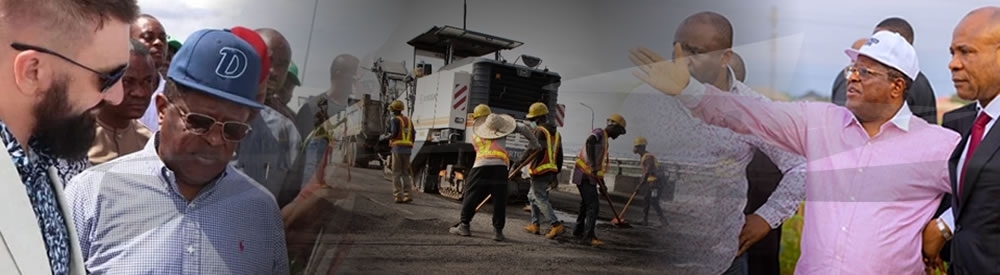
In view of this situation, the Honourable Minister of Works has directed the immediate deployment of major contractors within the corridor to all three sections of the Benin-Asaba Road to restore the failed sections and bring relief to the people, with the cost of the emergency intervention being borne by the Federal Government. The Honourable Minister has also directed immediate redesign of the entire route to be rebuilt with reinforced concrete pavement. The public should therefore take note that immediate action is underway to restore every failed section of the Benin-Asaba Road and subsequently rehabilitate the entire sections of the road using reinforced concrete pavement.
2. On the Benin-Sapele Road:
The Governors of Edo and Delta States, the Niger Delta Development Commission (NDDC), and the Federal Government are currently engaged in interventions on different sections of the road to restore the entire route. While some sections are receiving palliative attention, permanent works are also ongoing on other sections.
3. On Ifaki(Ekiti) - Kabba (Kogi) Road:
The Federal Government is engaging both the contractor; Gamji Nigeria Company Limited, and Dangote PLC on immediate emergency and permanent intervention on the most failed sections of the road, while efforts are being made to financially mobilise the company for more extensive permanent work to commence on the axis.
4. On the Sokoto-Zamfara-Katsina Road: This is an inherited project involving the dualisation of approximately 350 kilometres, which translates to about 700 kilometers. The project has since been redesigned and is currently ongoing and most sections are being reconstructed using reinforced concrete pavement. From the Sokoto axis towards Zamfara, over 50 kilometres of one carriageway have been fully completed with reinforced concrete pavement. From Zamfara to Katsina, some sections have been completed and palliative works have been ordered over the sections that have not been reconstructed. However, the pace of work slowed down due to the redesign and rephasing of the project. The contractors currently engaged on the road include CBC, SETRACO, Triacta and Mothercat. They are being remobilised to return to site and complete the outstanding works.
5. On the Abuja-Kaduna-Zaria-Kano Road: The Federal Government took over the Road project and has currently completed the 118-kilometer mostly on reinforced concrete pavement on lot 1. The Lot 2, which covers 164 kilometres, is over 60 percent completed on reinforced concrete pavement. The Federal Government has also introduced solar-powered light on the entire route of Abuja-Kaduna-Zaria - Kano to improve visibility during night travel and enhance the overall security situation on the route. The entire project is scheduled for completion by December 2026.
6. On Bauchi-Jigawa Road: Triacta Nigeria Limited has been mobilised to carry out the necessary interventions on some failed sections and work is currently ongoing in those failed sections.
7. On the Sagamu-Ore Road: 48 Kilometers of the 96-kilometre road have already been completed using reinforced concrete pavement. There is also a 24-kilometre section around Ore which was abandoned by the previous contractor. The Federal Government has directed its immediate restoration to ensure seamless travel. Solar lights are being installed in the entire 96kilometer of the road.
8. On Flooded Sections on Sagamu-Ore-Benin Road: The flooded sections on the same corridor between Sagamu-Ore-Benin Road, as well as other flooded sections in Ondo State, are being designed for emergency procurement and intervention.
9. On the East-West Road:
Some failed and critical sections, including defective sections of bridges along the East-West Road, are being marked out for emergency procurement and intervention.
10. On the Abuja-Lokoja Road:
Several contracts are ongoing along the route, while the three critical sections currently without contracts are being procured for emergency intervention.
11. On the Lokoja-Benin-Warri Road: The President has directed a complete redesign and procurement of the 400-kilometre dualised route covering the uncompleted sections, using reinforced concrete pavement, while palliative works will continue with the contractors currently on the road.
12. On Carter Bridge:
While the Federal Government continues to undertake weekly maintenance of the underwater elements of the bridge. The site has also been handed over to the contractor, CCECC, for the construction of a permanent new bridge, and work has commenced.
13. On the Third Mainland Bridge:
With regard to the defective underwater structural elements, the Federal Government is at the final stage of determining the appropriate intervention for the repair of the affected elements.
14. On the flooded section of the Lagos-Ibadan Road: Work has commenced on the affected section. There are also several flooded sections on federal roads across the six geopolitical zones, largely occasioned by excessive flooding and the effects of climate change. The Federal Government is identifying and marking these sections for immediate attention.
15. On the First and Second Niger Bridges:
Intervention work is ongoing on the approach roads to the Second Niger Bridge damaged by flood and the work is progressing very well. The First Niger Bridge has been closed to traffic to enable immediate repair works. Contractor has mobilized to site and comprehensive rehabilitation of the bridge has started. From Summit Junction to the First Niger Bridge, massive rehabilitation work is also ongoing using reinforced concrete pavement.
16. The Honourable Minister wishes to commend the President of the Federal Republic of Nigeria, His Excellency Bola Ahmed Tinubu, GCFR, for the massive work being undertaken on the nation’s roads since the administration assumed office in 2023.
17. It is important to state that when the present administration came into office, there was hardly any part of the country where one could travel for an hour without encountering significant challenges on the road network. The condition of the country’s roads and bridges was a major national infrastructure challenge.
18. Rather than shy away from the problem, the administration of President Bola Ahmed Tinubu made the nation’s road network a priority. Virtually every part of the country became a priority, and the Federal Government, through the Federal Ministry of Works, Regional Commissions, Parastatals and other MDA’s has continued to respond extensively to these challenges.
19. The Federal Government is currently working on over 80 percent of the inherited federal roads, an unprecedented level of intervention in the country’s road infrastructure.
20. We ask the public to understand the enormous challenges inherited on our roads and bridges and to take note not only of the problems being solved, but also of the permanent solutions being introduced.
21. A major part of this new approach is the use of reinforced concrete pavement, designed to significantly extend the lifespan of major roads. These roads are expected to last between 50 and 100 years. This means that roads being constructed under President Bola Ahmed Tinubu’s administration are being designed with future generations in mind, rather than simply providing temporary solutions to today’s problems. And this is a complete departure from the past, when roads often deteriorated only a few years after completion, resulting in a continuous cycle of reconstruction and expenditure.
22. We appreciate the concerns of Nigerians over the condition of some roads presently and the difficulties faced by motorists and commuters who cannot move easily from one point to another. Those concerns are legitimate, and the Federal Government is listening. But Nigerians should also recognise the enormous scale of the problems inherited and the amount of work currently being undertaken across the country.
23. It is simply impossible to resolve every road challenge accumulated over many years of neglect by the past administrations within three years. What is important is that the government is working, the government is responding, and the government is putting permanent solutions in place.
25. We appreciate members of the public who send situation reports on failed roads and other infrastructure challenges. These reports help the Ministry identify areas requiring urgent attention. However, we also appeal to members of the public to report when such problems have been addressed, just as they report when they occur.
24. We are aware of situations where photographs and reports of road challenges continue to circulate on social media even after the Federal Government has intervened and resolved the particular problem.
25. However, the Ministry will continue to respond as rapidly as possible to genuine reports and concerns from Nigerians.
26. It is also important to note that we have compiled a comprehensive record of all inherited, ongoing and intervention projects across the country which is available to the public. This is to ensure that Nigerians have access to information on the infrastructure projects being undertaken nationwide and can fully participate in and appreciate the infrastructure revolution of President Bola Ahmed Tinubu’s administration.

UMAHI ORDERS IMMEDIATE EMERGENCY INTERVENTION ON BENIN-ASABA ROAD, AND SOME OTHER CRITICAL FEDERAL ROADS The Honourable Minister of Works, Senator Engr. David Nweze Umahi, CON, has directed the immediate deployment of major contractors to all three sections of the Benin-Asaba Federal Road to restore the failed sections and bring an end to the suffering of motorists and other road users. This is because, the situation on the concessioned Benin-Asaba Road has reached a point where the overall public interest must take precedence over the existing concession agreement. Recall that the Honourable Minister of Works was on the Benin-Asaba Road about seven days ago, where he assembled a number of contractors and directed them to prepare for immediate palliative intervention on the affected sections of the road at no cost to the concessionaire. In line with the Concession agreement which requires that before the Federal Government could intervene, the permission of the concessionaire must be required, and that permission was not granted to federal government. The Minister subsequently proposed three options to the concessionaire, any one of which would have enabled the Federal Government to move in and address the worsening condition of the road. Unfortunately, none of the options was accepted by the concessionaire. Immediately after the Minister left Asaba, the already limited equipment deployed to the road by the concessionaire was further reduced to just one, worsening the situation and increasing the suffering of motorists and other road users. While the Minister takes responsibility for the concerns and suffering of Nigerians using the road, it is important to state that the concessionaire has also not taken the suffering of Edo people and travelling public sufficiently into consideration by declining all the options put forward by the Federal Government. The concessionaire continues to rely on the terms of the concession agreement entered into by the previous administration, an agreement which weighs heavily against the Federal Government’s ability to intervene quickly in the interest of the public in a situation like this. In view of this situation, the Honourable Minister of Works has directed the immediate deployment of major contractors within the corridor to all three sections of the Benin-Asaba Road to restore the failed sections and bring relief to the people, with the cost of the emergency intervention being borne by the Federal Government. The Honourable Minister has also directed immediate redesign of the entire route to be rebuilt with reinforced concrete pavement. The public should therefore take note that immediate action is underway to restore every failed section of the Benin-Asaba Road and subsequently rehabilitate the entire sections of the road using reinforced concrete pavement. 2. On the Benin-Sapele Road: 3. On Ifaki(Ekiti) - Kabba (Kogi) Road: 4. On the Sokoto-Zamfara-Katsina Road: This is an inherited project involving the dualisation of approximately 350 kilometres, which translates to about 700 kilometers. The project has since been redesigned and is currently ongoing and most sections are being reconstructed using reinforced concrete pavement. From the Sokoto axis towards Zamfara, over 50 kilometres of one carriageway have been fully completed with reinforced concrete pavement. From Zamfara to Katsina, some sections have been completed and palliative works have been ordered over the sections that have not been reconstructed. However, the pace of work slowed down due to the redesign and rephasing of the project. The contractors currently engaged on the road include CBC, SETRACO, Triacta and Mothercat. They are being remobilised to return to site and complete the outstanding works. 5. On the Abuja-Kaduna-Zaria-Kano Road: The Federal Government took over the Road project and has currently completed the 118-kilometer mostly on reinforced concrete pavement on lot 1. The Lot 2, which covers 164 kilometres, is over 60 percent completed on reinforced concrete pavement. The Federal Government has also introduced solar-powered light on the entire route of Abuja-Kaduna-Zaria - Kano to improve visibility during night travel and enhance the overall security situation on the route. The entire project is scheduled for completion by December 2026. 6. On Bauchi-Jigawa Road: Triacta Nigeria Limited has been mobilised to carry out the necessary interventions on some failed sections and work is currently ongoing in those failed sections. 7. On the Sagamu-Ore Road: 48 Kilometers of the 96-kilometre road have already been completed using reinforced concrete pavement. There is also a 24-kilometre section around Ore which was abandoned by the previous contractor. The Federal Government has directed its immediate restoration to ensure seamless travel. Solar lights are being installed in the entire 96kilometer of the road. 8. On Flooded Sections on Sagamu-Ore-Benin Road: The flooded sections on the same corridor between Sagamu-Ore-Benin Road, as well as other flooded sections in Ondo State, are being designed for emergency procurement and intervention. 9. On the East-West Road: 10. On the Abuja-Lokoja Road: 11. On the Lokoja-Benin-Warri Road: The President has directed a complete redesign and procurement of the 400-kilometre dualised route covering the uncompleted sections, using reinforced concrete pavement, while palliative works will continue with the contractors currently on the road. 12. On Carter Bridge: 13. On the Third Mainland Bridge: 14. On the flooded section of the Lagos-Ibadan Road: Work has commenced on the affected section. There are also several flooded sections on federal roads across the six geopolitical zones, largely occasioned by excessive flooding and the effects of climate change. The Federal Government is identifying and marking these sections for immediate attention. 15. On the First and Second Niger Bridges: 16. The Honourable Minister wishes to commend the President of the Federal Republic of Nigeria, His Excellency Bola Ahmed Tinubu, GCFR, for the massive work being undertaken on the nation’s roads since the administration assumed office in 2023. 17. It is important to state that when the present administration came into office, there was hardly any part of the country where one could travel for an hour without encountering significant challenges on the road network. The condition of the country’s roads and bridges was a major national infrastructure challenge. 18. Rather than shy away from the problem, the administration of President Bola Ahmed Tinubu made the nation’s road network a priority. Virtually every part of the country became a priority, and the Federal Government, through the Federal Ministry of Works, Regional Commissions, Parastatals and other MDA’s has continued to respond extensively to these challenges. 19. The Federal Government is currently working on over 80 percent of the inherited federal roads, an unprecedented level of intervention in the country’s road infrastructure. 20. We ask the public to understand the enormous challenges inherited on our roads and bridges and to take note not only of the problems being solved, but also of the permanent solutions being introduced. 21. A major part of this new approach is the use of reinforced concrete pavement, designed to significantly extend the lifespan of major roads. These roads are expected to last between 50 and 100 years. This means that roads being constructed under President Bola Ahmed Tinubu’s administration are being designed with future generations in mind, rather than simply providing temporary solutions to today’s problems. And this is a complete departure from the past, when roads often deteriorated only a few years after completion, resulting in a continuous cycle of reconstruction and expenditure. 22. We appreciate the concerns of Nigerians over the condition of some roads presently and the difficulties faced by motorists and commuters who cannot move easily from one point to another. Those concerns are legitimate, and the Federal Government is listening. But Nigerians should also recognise the enormous scale of the problems inherited and the amount of work currently being undertaken across the country. 23. It is simply impossible to resolve every road challenge accumulated over many years of neglect by the past administrations within three years. What is important is that the government is working, the government is responding, and the government is putting permanent solutions in place. 25. We appreciate members of the public who send situation reports on failed roads and other infrastructure challenges. These reports help the Ministry identify areas requiring urgent attention. However, we also appeal to members of the public to report when such problems have been addressed, just as they report when they occur. 24. We are aware of situations where photographs and reports of road challenges continue to circulate on social media even after the Federal Government has intervened and resolved the particular problem.
The Governors of Edo and Delta States, the Niger Delta Development Commission (NDDC), and the Federal Government are currently engaged in interventions on different sections of the road to restore the entire route. While some sections are receiving palliative attention, permanent works are also ongoing on other sections.
The Federal Government is engaging both the contractor; Gamji Nigeria Company Limited, and Dangote PLC on immediate emergency and permanent intervention on the most failed sections of the road, while efforts are being made to financially mobilise the company for more extensive permanent work to commence on the axis.
Some failed and critical sections, including defective sections of bridges along the East-West Road, are being marked out for emergency procurement and intervention.
Several contracts are ongoing along the route, while the three critical sections currently without contracts are being procured for emergency intervention.
While the Federal Government continues to undertake weekly maintenance of the underwater elements of the bridge. The site has also been handed over to the contractor, CCECC, for the construction of a permanent new bridge, and work has commenced.
With regard to the defective underwater structural elements, the Federal Government is at the final stage of determining the appropriate intervention for the repair of the affected elements.
Intervention work is ongoing on the approach roads to the Second Niger Bridge damaged by flood and the work is progressing very well. The First Niger Bridge has been closed to traffic to enable immediate repair works. Contractor has mobilized to site and comprehensive rehabilitation of the bridge has started. From Summit Junction to the First Niger Bridge, massive rehabilitation work is also ongoing using reinforced concrete pavement.
25. However, the Ministry will continue to respond as rapidly as possible to genuine reports and concerns from Nigerians.
26. It is also important to note that we have compiled a comprehensive record of all inherited, ongoing and intervention projects across the country which is available to the public. This is to ensure that Nigerians have access to information on the infrastructure projects being undertaken nationwide and can fully participate in and appreciate the infrastructure revolution of President Bola Ahmed Tinubu’s administration.
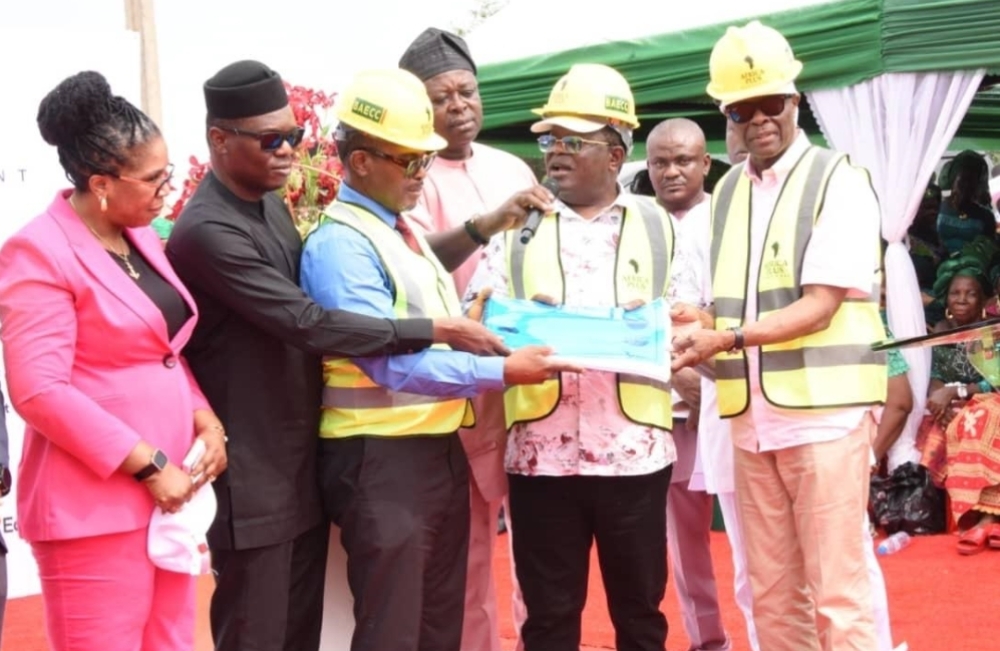
Flag-off of the 125-KM Benin-Asaba Dual Carriageway: A Game Changer in Road Development The Federal Government has officially flagged off the reconstruction of the 125-kilometre Benin-Asaba Expressway, a vital road corridor in the southern part of the country. The event, which took place on Sunday, 21st March 2025, was performed on behalf of the President, His Excellency Bola Ahmed Tinubu, GCFR, by the Edo State Governor, His Excellency Sen. Monday Okpebholo. In his Address, the Honourable Minister of Works, Engr. (Sen.) David Umahi, CON, FNSE, FNATE disclosed the project's significance in enhancing transportation, economic growth, and regional integration. He highlighted the Federal Government's commitment to improving road infrastructure as a means of boosting national development and integration, noting that the partnership driving the project would enhance the safety and efficiency of travel while unlocking the economic potential of the region. “This project will generate significant economic benefits, including job creation and an improved standard of living for the people. I urge all stakeholders to work, collaboratively, to ensure the successful and timely completion of this critical infrastructure,” the Minister stated. He also added that "The Benin–Asaba Expressway Project, is more than a road. It is an ambitious Dual Carriage, solar-lit that is to be fully funded by the private sector under a Public-Private Partnership (PPP) agreement." On behalf of the government and good people of Edo and Delta States, the Minister expressed deep appreciation to His Excellency, President Bola Ahmed Tinubu, GCFR for his leadership and unwavering support for infrastructure development in the region and the nation, at large. He also commended the Minister of Finance and Coordinating Minister for the Economy, Chief Wale Edun, and the Infrastructure Concession and Regulatory Commission (ICRC) for modifying an alternative funding option, outside the national budget, that would guarantee the timely execution of Federal road projects. He officially handed over the Engineering Design and Instruments of Authority for the contract to the Concessionaire, Africa Plus Partners (Nigeria) Limited, while canvassing for support in the 2027 Presidential polls. In their various Goodwill Messages at the epoch-making ceremony, the Governor of Delta State, represented by his Deputy, His Excellency Monday Onyeme, the Senator representing Edo North and former Governor, H.E. Adams Oshiomole, the Commissioner of Police, Edo State and representative of the Transport Union, eulogised Mr. President for the life-changing project, promising to vote for him in 2027, overwhelmingly. The Governor also pleaded with Mr President to extend the alignment to the Onitsha Bridge. In his closing remarks, the Governor of Edo State commended the Federal Government's commitment to infrastructure development, noting that the Renewed Hope Administration of President Tinubu has prioritised road construction as a catalyst for economic transformation. He acknowledged the efforts of the Ministries of Works and Finance in driving infrastructure renewal across the country. “The impact of quality infrastructure cannot be overstated. It is the foundation upon which socio-economic growth and development are built. I commend President Tinubu’s administration for its visionary leadership in making this project a reality,” the Governor stressed. The flag-off of the Benin-Asaba Expressway is a giant leap in Nigeria’s journey towards bequeathing a modern, efficient, and well-maintained road infrastructure to the citizenry. The Federal Government remains resolute in completing this project on schedule, ensuring that citizens and businesses benefit from improved connectivity and its associated economic opportunities. The Highway Development and Management Initiative (HDMI) is a strategic infrastructure development programme of the Federal Ministry of Works designed to encourage private sector participation in the development, rehabilitation, and maintenance of Federal highways across the country. Through this Initiative, the government aims to enhance operational efficiency, accountability, and financial sustainability, ensuring that all stakeholders - the government, private investors, and road users - benefit from improved road networks. As a Public-Private Partnership (PPP) model, HDMI is structured to attract long-term sustainable investments for the expansion, modernisation, and effective utilisation of Nigeria's road infrastructure. It facilitates the design, construction, operation, management, and maintenance of Federal highways, ensuring that all infrastructure and assets within the designated rights of way are efficiently developed and maintained, leveraging private sector expertise and funding. It further seeks to enhance road quality, improve connectivity, boost economic activities, and ultimately create a safer and more reliable road transportation network for Nigerians and other users. The Benin-Asaba alignment, a 125-kilometre Dual Carriageway beginning from AIF Roundabout in Benin City, Edo State, and terminating at Summit Junction in Asaba, Delta State, serves as a major link between the South-East, the South-South and some parts of the South-West of Nigeria. It is a vital artery connecting vibrant economic regions of the country. The total project cost required for the rehabilitation and value-added concession of the Expressway will be funded by the Benin - Asaba Expressway Concession Company Limited - Africa Plus Partners (Nigeria) Limited Consortium (APPNLC) with a 30-month completion period. In attendance were many stakeholders, including the Permanent Secretary, Federal Ministry of Works, Engr. Olufunsho Adebiyi, FNSE, Directors-General of the Infrastructure Concession and Regulatory Commission (ICRC) and the Bureau for Public Enterprises (BPE), members of the National and State Assemblies, members of the Edo State Executive Council, Traditional Rulers, Party and Opinion Leaders, Market Women, Transport Workers, to mention but a few. ...
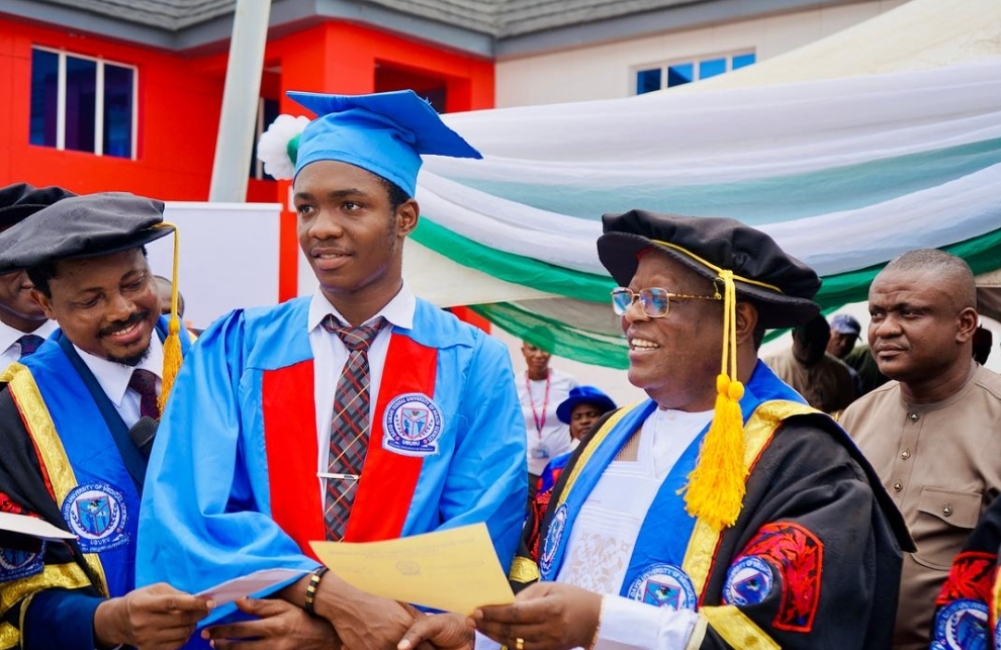
WORKS MINISTER UMAHI COMMENDS HEALTH INFRASTRUCTURE INITIATIVES OF PRESIDENT TINUBU, TASKS STAKEHOLDERS ON COLLABORATIVE SUPPORT TO ACHIEVE SHARED GOALS. CONGRATULATES SSA TO PRESIDENT ON COMMUNITY ENGAGEMENT, SOUTH-EAST FOR HER COMMITMENT TO ENHANCING HUMAN EMPOWERMENT AND PROMOTING HEALTHY COMMUNITIES The Honourable Minister of Works, Sen. Engr. Nweze David Umahi CON has praised the efforts of the President of the Federal Republic of Nigeria, His Excellency, Bola Ahmed Tinubu GCFR in developing critical competencies that will improve health care and other service delivery in Nigeria's health care related academic institutions. The Honourable Minister made this commendation during the flag-off of a health care programme on free cancer screening, free eye testing, free dialysis, and skills up empowerment programme for the people and residents of South East organized by the Senior Special Assistant to the President on Community Engagement South East, Barr. (Mrs) Chioma Nweze, in conjunction with David Umahi Federal University of Health Sciences Uburu, held at the university premises on 8th March 2025. The Honourable Minister, who represented the President of Nigeria during the event, said the Federal Government was committed to providing enabling infrastructure and the most conducive learning environment in our universities. He recounted the various interventions of Mr. President to David Umahi Federal University of Health Sciences, which was incidentally built by the Honourable Minister when he was the Governor of Ebonyi State and which law establishing it and naming it after the founder, David Umahi, was passed by the 10th National Assembly under the Renewed Hope administration. He said, "I thank Mr. President, so much for the asphalting of this institution, the building of the hall that is here, and so many things, including the uninterrupted power supply enjoyed by the university." He expressed appreciation to the Governor of Ebonyi State, His Excellency, Rt. Hon.Prince Bldr Francis Ogbonna Nwifuru, FNIOB GGCEHF and his dear wife, Her Excellency, Chief (Mrs) Uzoamaka Mary-Maudline Ogbonna Nwifuru for their commitments to the advancement of learning and excellence in the university. "Greet the Governor and his dear wife for me." I am going to support their commitments to this institution when I make my donation. Tell the Governor that I appreciate his subvention to this federal institution, which he gives every month." The Honourable Minister commended the SSA to the President on Community Engagement, South-East for the thoughtful motivations of her programme which he said was a wakeup call to all stakeholders, public and private institutions to show collaborative support to the government to achieve shared goals in health care delivery. "And so, what you are doing beyond Ebonyi State for the entire South-East and extending it to the entire Nigeria is commendable. Congratulations on your commitment. Congratulations on this programme" He pledged his continual support to the university to enable it to realize its goals of achieving unmatched excellence in their health care facilities such as Radiology Centre, Cancer Centre, Eye Centre, Kidney Centre, Maternal and Childbirth Centre. Speaking during the event, the representative of the Governor of Ebonyi State, Her Excellency, Princess Patricia Obila, who is also the Deputy Governor of Ebonyi State, extolled the initiative of the SSA on Community Engagement to give the people access to quality health care and life changing empowerment and assured of the commitment of the State Government in supporting the Federal University of Health Sciences in the State in realizing the objectives of its establishment. "We have committed so much, both money, a lot of commitment, and still, this government is also highly determined and committed to giving all the enabling environment to make sure that any programme concerning health is given the total support it deserves." Earlier in her address, the SSA to the President on Community Engagement said she initiated the health care outreach and skill up empowerment programme for South-East communities to add value to the laudable initiatives of Mr. President's administration, which is aimed at stimulating economic growth and enhancing the quality of life for all Nigerians. She said, "I recognize that access to quality health care is a fundamental human right, and it is our responsibility to ensure that every individual in the South-East has access to it, regardless of their background or financial situation. Our medical outreach initiative, which we have earlier started, is a multifaceted programme that will provide a range of free medical services, including cancer screening, free eye screening, and medical classes to the first 200 patients. We have also provided dialysis treatment for one year for all the 97 Local Government Areas in the South-East. My office will equally be flagging off the skill up South-East programme, which focuses on empowerment of the people and residents of South-East through fashion and entrepreneurship." She further assured, "Our participants will have access to modern tailoring facilities, mentorship, and guidance from industrial experts. We are not only empowering our youths through skill acquisition, but we are also providing them with the opportunity to develop their business plans and pitch their ideas. This will enable them to become entrepreneurs and job creators, contributing to the economic growth and development of our region." She thanked immensely the collaborations of David Umahi Federal University of Health Sciences and solicited for more collaborations from public spirited individuals and bodies to enable her to attain the aspirations of her office in raising capacities and enhancing self reliance in South-East ...
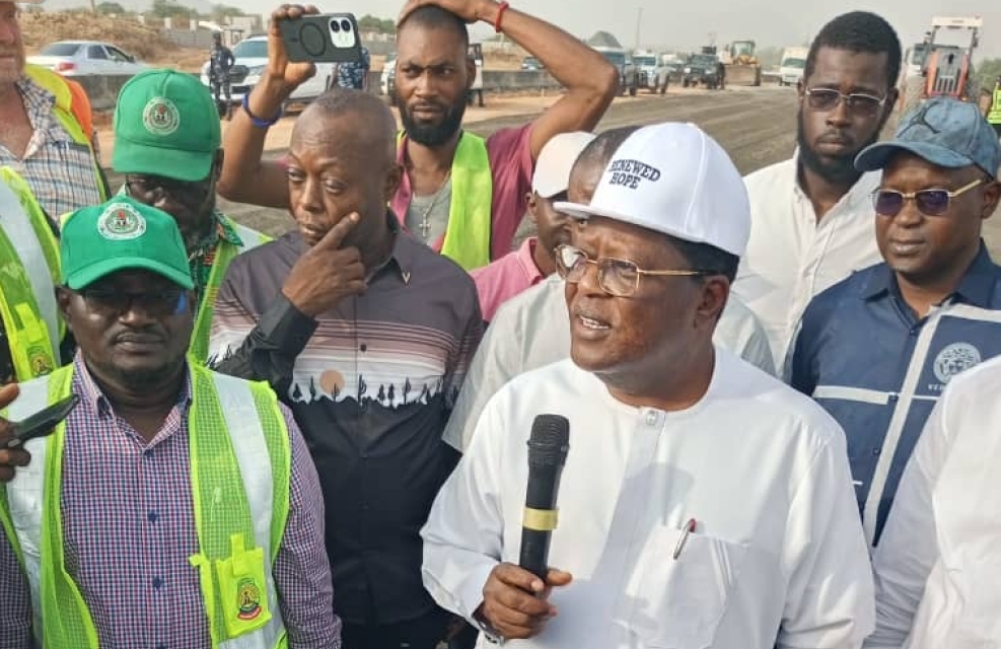
**FEDERAL MINISTRY OF WORKS’ POLICY YIELDING RESULTS ** — Mobilise to Site for 2 Weeks Before Payment of Mobilisation Fees - Umahi* The Honourable Minister of Works, His Excellency, Engr. (Sen.) David Umahi, CON, FNSE, FNATE has continued to insist that only contractors, who can deliver are needed to work on Nigeria roads. This is to guarantee that road projects are not abandoned by recalcitrant contractors. He stated this while inspecting ongoing works on the Abuja-Kaduna-Zaria-Kano Dual Carriageway, Section I (Abuja-Kaduna) that starts from the Zuba Interchange (CH0+000) and ends at the Western Bypass (CH165+500) in Kaduna, the Kaduna State Capital with an additional four (4) kilometres from Zuba towards Gwagwalada on the Abuja-Lokoja Expressway. Forty (40) kilometres (dual) will be on rigid pavement (concrete). According to the Minister, the company, Messrs Infoquest International (Nig.) Limited has proven its capacity to deliver quality jobs on record time, seeing how far they have gone within a month of signing the contract. “This is without being paid the initial 30% mobilisation fee as against what has been the previous practice,” he emphasised. He stressed that the Ministry’s decision that every contractor must be at the site and working for at least two weeks before the mobilisation fee is paid, is the way to go for sustainable project development and delivery. Commending the quality of work, the Minister urged Resident Engineers/Engineer’s Representatives on other projects, across the country, to be vigilant in ensuring that the correct composition of the stone base is achieved, stressing that a standard stone base must contain at least 70% stone, hence the name and 30% dust. “Any deviation from this ratio will compromise the road’s structural integrity, leading to premature failure,” he observed. Engr. Umahi also reiterated that the Abuja-Kano Dual Carriageway is so dear to Mr. President’s heart, being a vital corridor linking the North to the southern parts of the country, as well as neighbouring countries of Cameroun, Niger, and Benin Republics. While promising that the remaining portion of the entire alignment, Section III (Zaria-Kano), which is at the Kano end of the project, will soon be approved and awarded, he advised that reinforced concrete overlay be completed on the underlying structures before the commencement of the rainy season. It would be recalled that this was the project that was unnecessarily delayed for many years by Messrs Julius Berger (Nig.) PLC (JBN) and courageously terminated by the Ministry, some months ago, Umahi explained. "This project is the heartbeat of Mr. President because of its economic value. We are committed to ensuring its timely completion, and by the first week of March, we will begin laying an eight-inch continuous reinforced concrete pavement," the Minister stated. He reiterated that “The Federal Government remains resolute in its commitment to quality infrastructure development, ensuring that all projects under the Ministry’s supervision must meet the highest standards and be completed on schedule.” He added that interested companies must adhere to international standards and recommended practices in road construction or exit the scene. The Managing Director /Chief Executive Officer of the construction firm, Mr. Joseph Abougaoude disclosed that the company took the challenge to start the work without any payment of mobilisation fees because it is capable and, most importantly, its belief in the Renewed Hope Administration of President Bola Ahmed Tinubu, GCFR. He promised to deliver the contract following standards and on record time. He went further to acknowledge the Minister’s proactive leadership, adding "My promise is that I will not let you down. I take this project as a challenge and accept my role in ensuring its success. I am fully committed to this project and will push ahead to meet expectations." While fielding questions from reporters on the Lagos-Calabar Coastal Highway and the status of Julius Berger vis-a-vis contract with the Ministry, the Minister confirmed that before the end of the year, the entire first section of the Highway will be completed and that JBN is not sidelined from the Ministry’s contracts but, on the contrary, they are still working for the Ministry on other road infrastructure projects like the Bodo-Bonny Road, some major bridges in Lagos, as well as other places in Nigeria. He commended the new leadership of the company for aligning with the policies of the Ministry and respecting professional engineering standards. ...
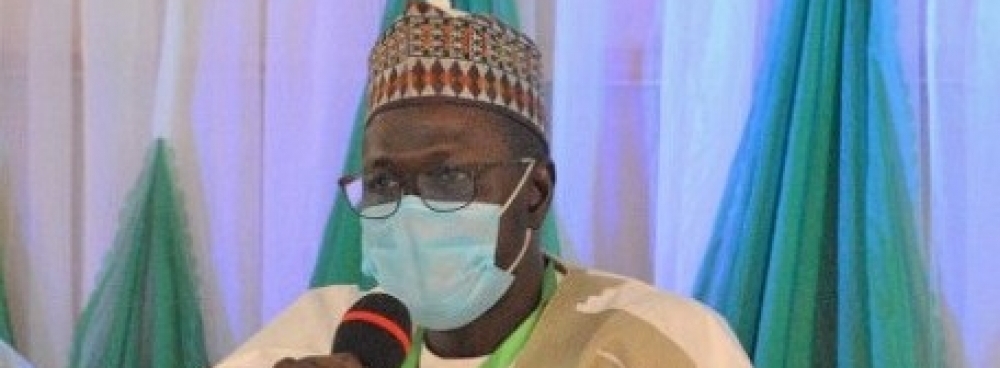
FG Assures Motorists Of Commitment To Road Infrastructure
The Federal Government has assured the Public of its commitment to infrastructure development in the country, adding that all roads affected by flash floods are noted and are receiving required attention.
Speaking in the Ministry after receiving an interim report of on- the -spot assessment of the Abuja -Lokoja flash flood and the bridge in Gwaram Local Government Area of Jigawa State, The Permanent Secretary, Federal Ministry of Works and Housing Babangida Hussaini, stated that the Ministry was looking into all the issues of flooding on the nation’s roads
On the Abuja -Lokoja road , he said the flash flood at the weekend was caused by excessive rain and that as soon as the rain subsided , the flood receded, and the road has been opened to traffic since Saturday.
On the bridge in Gwaram Local Government Area of Jigawa State the Permanent Secretary noted the prompt response of Jigawa State by diverting traffic to an alternative route and commenced repair works on the bridge immediately, he therefore commended the state governments and the stakeholders for their efforts in supporting Mr. President’s commitment to road and infrastructure development.
He assured the Jigawa State Government of the Ministry’s technical support as at when needed. He said the professionals in the Federal Ministry of Works and Housing are always available to provide technical support to states in all the roads and bridges construction activities.
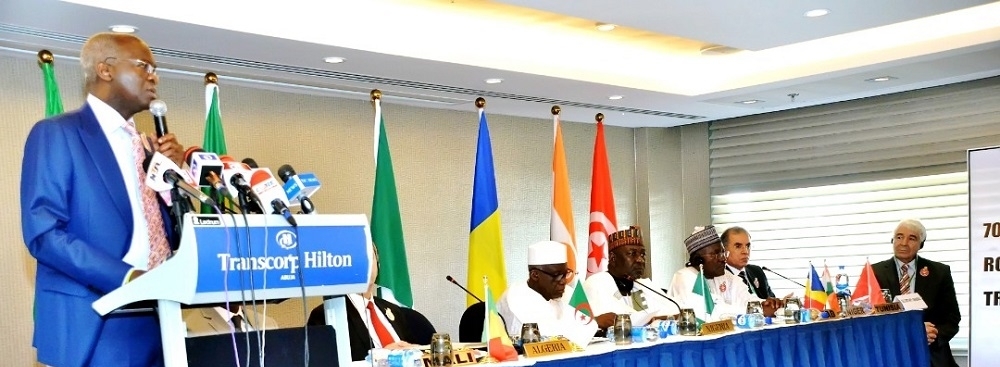
Speech Delivered By The Honourable Minister Of Works And Housing, Babatunde Raji Fashola, SAN At The Opening Ceremony Of The 70th Session Of The Trans Sahara Road Liaison Committee (TRLC)
PROTOCOLS
I am pleased to welcome the President of the Federal Republic of Nigeria, His Excellency, Muhammadu Buhari, who is represented by Muhammad Maigari Dingyadi, Hon. Minister of Police Affairs to the 70th Session of the Trans Sahara Road Liaison Committee. I especially thank his Excellency, on behalf of the Trans Sahara Road Liaison Committee for granting us the approval to host this Session in Nigeria.
2. I will also like to extend a special welcome to Member Country Ministers in charge of road infrastructure from Republic of Tunisia, Peoples Democratic Republic of Algeria, Republic of Mali, Republic of T’chad and Republic of the Niger. The last Ministerial meeting of the TRLC was held in 2014 in Algiers, Algeria therefore I believe there is a lot of information the Secretariat and the Experts will be sharing with us over the next two days.
3. Every session of the TRLC has the objective of discussing issues relating to the route, the financing and relationship with continental organisations such as the African Union Commission (AUC), African Development Bank (AfDB), New Partnership for African Development (NEPAD), Arab Bank for Economic Development in Africa (BADEA) and Organisation of Petroleum Exporting Countries (OPEC) who are our partners in the development of the Trans Sahara Road (TSR).
4. In this light, the TRLC member countries would like to appreciate the contributions of these organisations in no small measure towards the development of the route.
5. Before going into some of the details, I believe that Nigeria’s hosting of this event, necessitates that we provide some background information about what this is about and what it means for ordinary Nigerians:
* To start with it is useful for every African to be aware of the existence of a Trans African Highway Plan seeking to connect Africa from Cape Town to Tunisia either by driving through East Africa Border, the West African Border or through the Centre of Africa.
* There is also a Coast to Coast connectivity from West to East Africa, North East Africa to North West Africa and South West Africa to East Africa.
* A total of 9 (Nine) Highways at different stages of construction are meant to achieve this connectivity. Three of these Highways pass through the Territory of Nigeria, namely:
(a) Lagos – Dakar (through Seme in Benin Republic);
(b) Lagos – Mombasa (through Yaoundè in Cameroon); and
(c) Lagos – Algiers, which is the one supported by this Committee and this is the subject of our meeting.
* This road covers 9,022km (7,171km 80%) is asphalt while 1,851km (20%) is earth road.
* It serves 37 regions, 74 urban centres with 60 million inhabitants in 6 (six) Countries who are members of this Committee. It is important to underscore here that the critical part of the Trans Sahara Highway which in centuries past is plied by Camels and Horses for trade has now developed for use by vehicles.
* For Nigerians it is important to know that 1,131km of the 9,022km passes through our country from Lagos to Ibadan, Ilorin – Jebba, Kaduna – Kano – Kongolam where we have a border with Niger Republic.
6. The development of the Trans Sahara Route is to ensure integration, improvement of economic activities and cooperation between Member Countries. This will provide the business community access to explore and maximise the enormous economic opportunities available within member countries. There are immense possibilities from Fashion, Agriculture, Technology, Energy to Film and Music.The journey from 1960 when the Trans Sahara Route (TSR) was established till date has not been easy, but concerted efforts must be made at realising the objectives of the TSR.
7. The entire section of the 1,131km long Trans Sahara Route in Nigeria from Lagos – Ibadan – Ilorin – Kaduna – Kano – Kongolam Niger Republic Border has asphalt surfacing. The current activity on the various section of the route are as follows:
* The Lagos-Ibadan road is 127km long. The Lagos-Shagamu section (43.6Km) is being developed into a 3-lane dual carriageway while the Shagamu-Ibadan section (83.4Km) is being reconstructed as a 2-lane dual carriageway.
* The Ibadan-Ilorin section of the road is a dual carriageway of 160km long out of which 105.5km has been dualised leaving only 54.2km that is in progress of being dualised. The old alignment is being maintained to ensure free flow of traffic at all times.
* The Ilorin-Jebba-Birnin Gwari-Kaduna section of the route is 458km long single lane carriageway. The Ilorin-Jebba section that is 105km long has been fully rehabilitated and is currently being dualised while the Jebba-Mokwa-Birnin Gwari-Kaduna section (353km) is also being considered for future dualisation.
* Kaduna – Kano dual carriageway which is 230km long is under reconstruction and the work is currently being executed in three sections to enable speedy completion.
* Kano – Kazaure – Kongolam Section is 133km long and is a single lane carriageway.
8. The progress of works that we are achieving on these routes in the coming weeks and months will strengthen integration, cultural cooperation and economic trade and competition in the African Continental Free Trade Area.
9. The importance of the Trans Sahara Route to the Nigeria economy is underlined by the priority Mr. President has placed on the funding, wherein, the reconstruction of the Lagos – Ibadan Section and the Kaduna – Kano Section is included under Presidential Infrastructure Development Fund (PIDF) to ensure that there is no funding gap associated with the execution of the works, and the recent signing of the African Continental Free Trade Area (ACFTA) Treaty.
10. While Trade and cultural integration are important, safety is also paramount and I am delighted to announce that just last Wednesday the Federal Executive Council approved that Nigeria should ratify and domesticate the African Road Safety Charter adopted at 26th ordinary session of the African Union Commission in January 2016 in Addis Ababa.
11. Once more, my gratitude goes to His Excellency, President Muhammadu Buhari for hosting of the 70th session of the TRLC in Nigeria and the support given to the development of the section of the Trans Sahara road in Nigeria, to the Member Country Ministers for the support they have given to the development of the Trans Sahara Road within their respective countries and for the support of our financial partners over the years.
12. I also congratulate Member Country Experts and the Secretary General for a job well done and to remind you that there is still a lot of work that is yet to be accomplished.
13. You are all welcome to the 70th Session of the Trans Sahara Road Liaison Committee, you are most welcome to Abuja, the capital city of Nigeria, and you are especially welcome to Nigeria.
Thank you.
Babatunde Raji Fashola, SAN
Honourable Minister
November, 2019
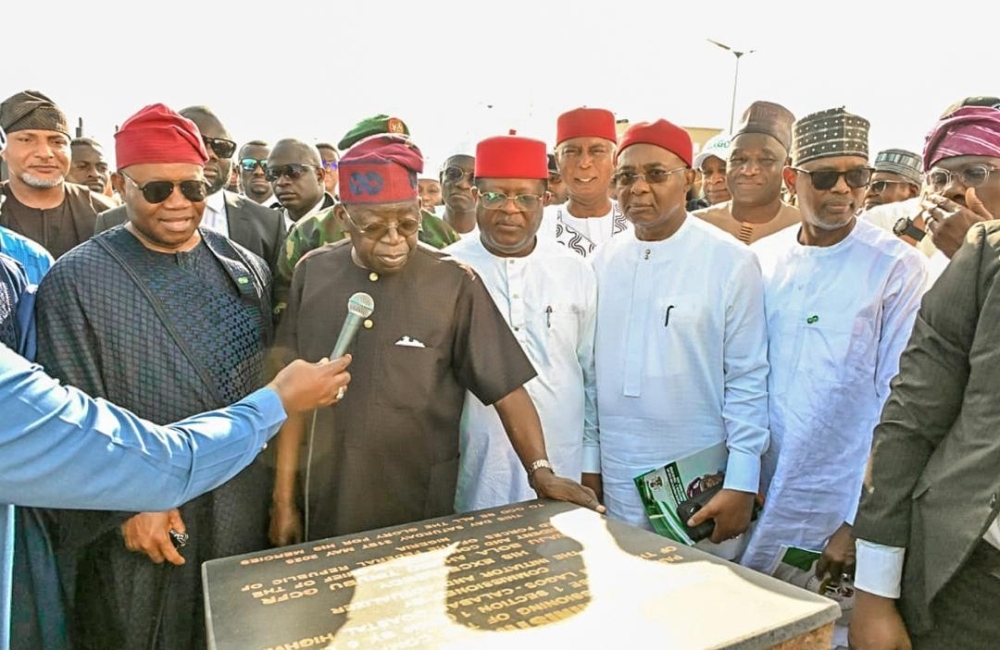
DRIVING NIGERIA’S FUTURE: CELEBRATING TWO YEARS OF TRANSFORMATIVE LEADERSHIP AND THE LAGOS-CALABAR COASTAL HIGHWAY MILESTONE
DRIVING NIGERIA’S FUTURE: CELEBRATING TWO YEARS OF TRANSFORMATIVE LEADERSHIP AND THE LAGOS-CALABAR COASTAL HIGHWAY MILESTONE
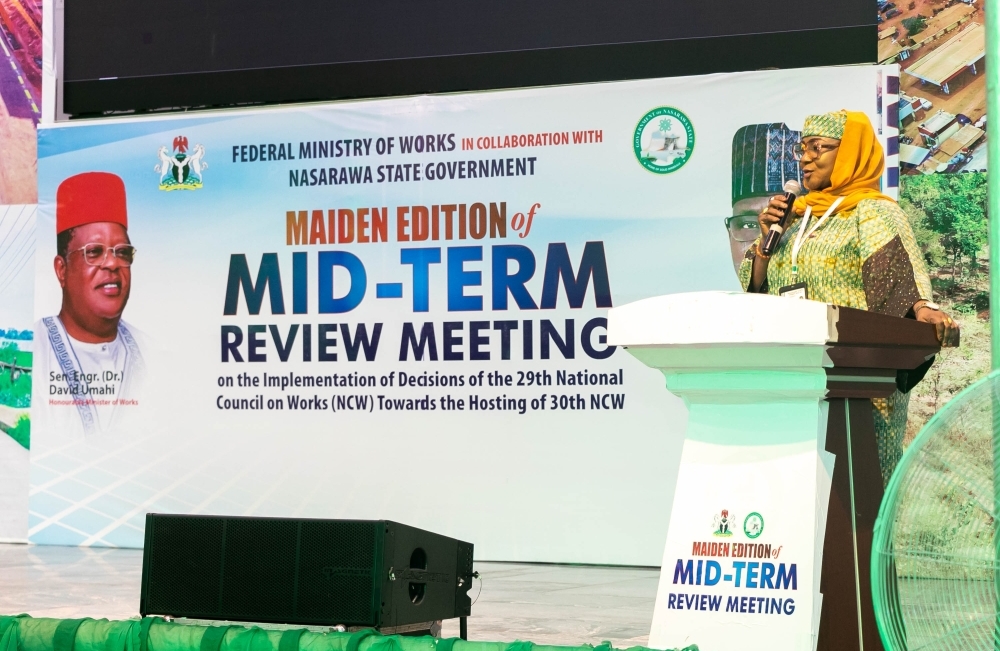
MID -TERM REVIEW MEETING ON THE IMPLIMENTATION OF THE DECISIONS REACHED AT THE 29TH NATIONAL COUNCIL ON WORKS (NCW) DAY 1
MID -TERM REVIEW MEETING ON THE IMPLIMENTATION OF THE DECISIONS REACHED AT THE 29TH NATIONAL COUNCIL ON WORKS (NCW) DAY 1