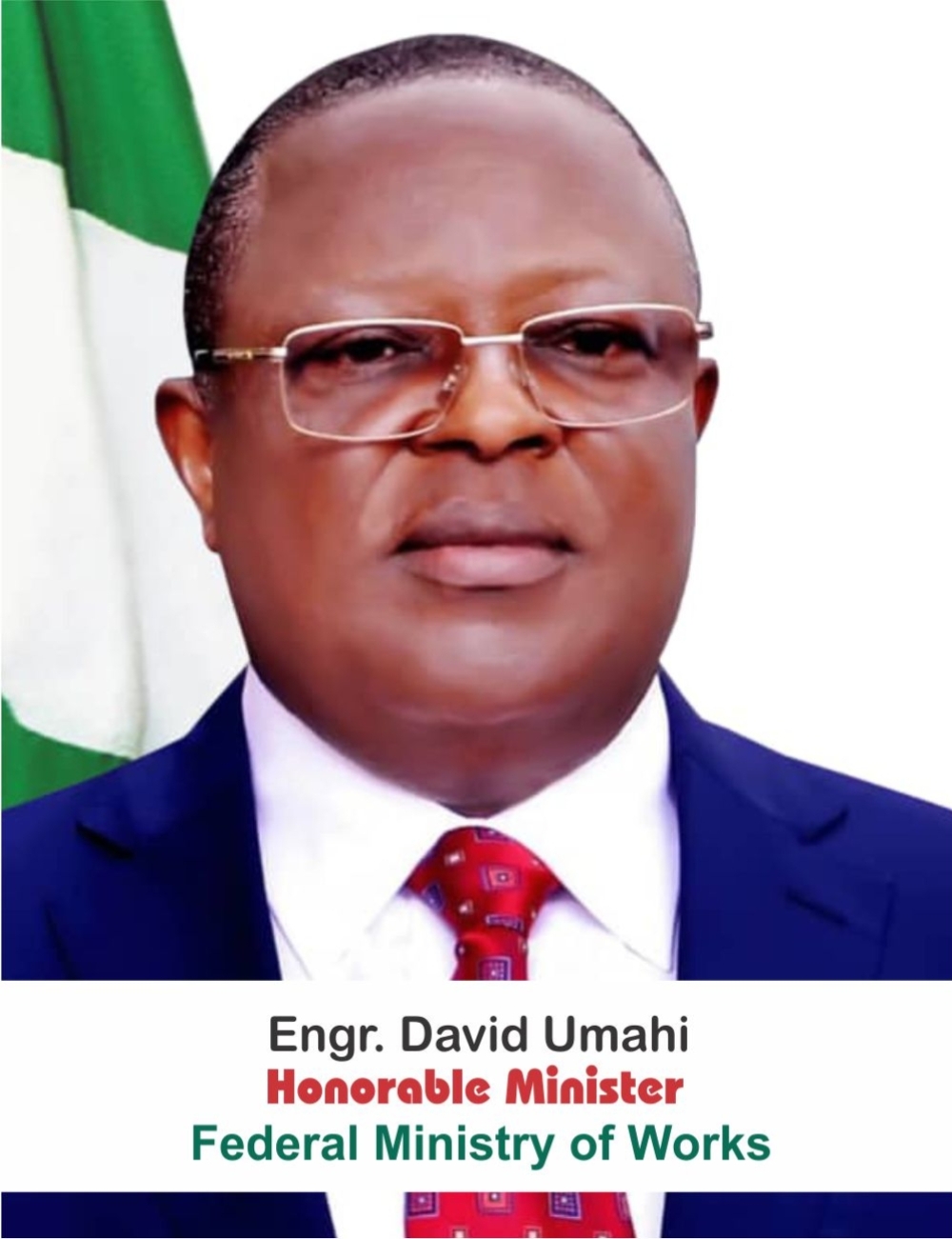
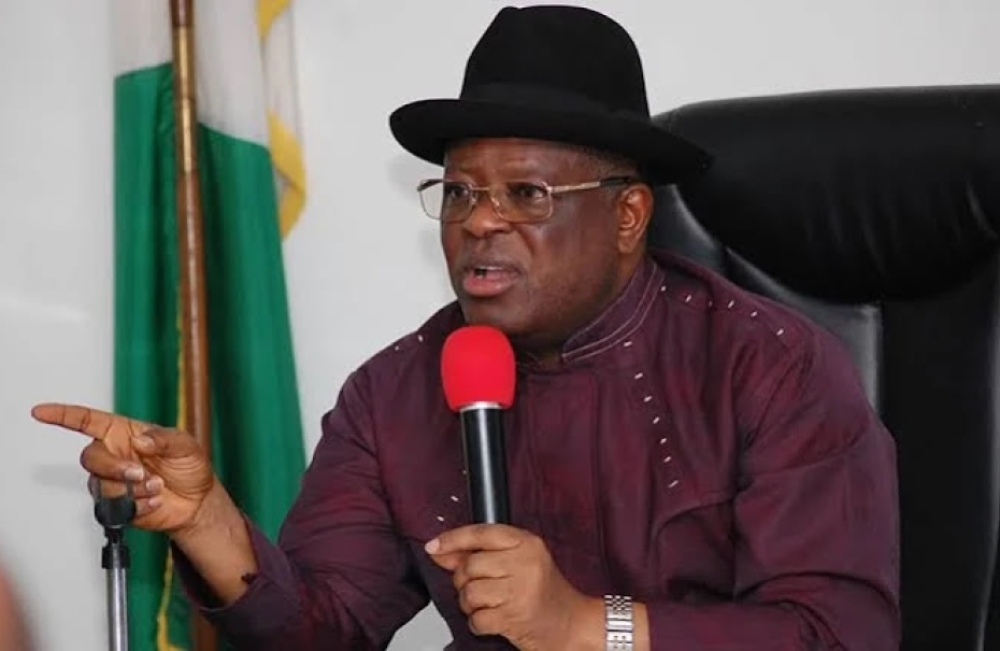
UMAHI ORDERS IMMEDIATE EMERGENCY INTERVENTION ON BENIN-ASABA ROAD, AND SOME OTHER CRITICAL FEDERAL ROADS
The Honourable Minister of Works, Senator Engr. David Nweze Umahi, CON, has directed the immediate deployment of major contractors to all three sections of the Benin-Asaba Federal Road to restore the failed sections and bring an end to the suffering of motorists and other road users.
This is because, the situation on the concessioned Benin-Asaba Road has reached a point where the overall public interest must take precedence over the existing concession agreement.
Recall that the Honourable Minister of Works was on the Benin-Asaba Road about seven days ago, where he assembled a number of contractors and directed them to prepare for immediate palliative intervention on the affected sections of the road at no cost to the concessionaire. In line with the Concession agreement which requires that before the Federal Government could intervene, the permission of the concessionaire must be required, and that permission was not granted to federal government.
The Minister subsequently proposed three options to the concessionaire, any one of which would have enabled the Federal Government to move in and address the worsening condition of the road. Unfortunately, none of the options was accepted by the concessionaire. Immediately after the Minister left Asaba, the already limited equipment deployed to the road by the concessionaire was further reduced to just one, worsening the situation and increasing the suffering of motorists and other road users.
While the Minister takes responsibility for the concerns and suffering of Nigerians using the road, it is important to state that the concessionaire has also not taken the suffering of Edo people and travelling public sufficiently into consideration by declining all the options put forward by the Federal Government. The concessionaire continues to rely on the terms of the concession agreement entered into by the previous administration, an agreement which weighs heavily against the Federal Government’s ability to intervene quickly in the interest of the public in a situation like this.
In view of this situation, the Honourable Minister of Works has directed the immediate deployment of major contractors within the corridor to all three sections of the Benin-Asaba Road to restore the failed sections and bring relief to the people, with the cost of the emergency intervention being borne by the Federal Government. The Honourable Minister has also directed immediate redesign of the entire route to be rebuilt with reinforced concrete pavement. The public should therefore take note that immediate action is underway to restore every failed section of the Benin-Asaba Road and subsequently rehabilitate the entire sections of the road using reinforced concrete pavement.
2. On the Benin-Sapele Road:
The Governors of Edo and Delta States, the Niger Delta Development Commission (NDDC), and the Federal Government are currently engaged in interventions on different sections of the road to restore the entire route. While some sections are receiving palliative attention, permanent works are also ongoing on other sections.
3. On Ifaki(Ekiti) - Kabba (Kogi) Road:
The Federal Government is engaging both the contractor; Gamji Nigeria Company Limited, and Dangote PLC on immediate emergency and permanent intervention on the most failed sections of the road, while efforts are being made to financially mobilise the company for more extensive permanent work to commence on the axis.
4. On the Sokoto-Zamfara-Katsina Road: This is an inherited project involving the dualisation of approximately 350 kilometres, which translates to about 700 kilometers. The project has since been redesigned and is currently ongoing and most sections are being reconstructed using reinforced concrete pavement. From the Sokoto axis towards Zamfara, over 50 kilometres of one carriageway have been fully completed with reinforced concrete pavement. From Zamfara to Katsina, some sections have been completed and palliative works have been ordered over the sections that have not been reconstructed. However, the pace of work slowed down due to the redesign and rephasing of the project. The contractors currently engaged on the road include CBC, SETRACO, Triacta and Mothercat. They are being remobilised to return to site and complete the outstanding works.
5. On the Abuja-Kaduna-Zaria-Kano Road: The Federal Government took over the Road project and has currently completed the 118-kilometer mostly on reinforced concrete pavement on lot 1. The Lot 2, which covers 164 kilometres, is over 60 percent completed on reinforced concrete pavement. The Federal Government has also introduced solar-powered light on the entire route of Abuja-Kaduna-Zaria - Kano to improve visibility during night travel and enhance the overall security situation on the route. The entire project is scheduled for completion by December 2026.
6. On Bauchi-Jigawa Road: Triacta Nigeria Limited has been mobilised to carry out the necessary interventions on some failed sections and work is currently ongoing in those failed sections.
7. On the Sagamu-Ore Road: 48 Kilometers of the 96-kilometre road have already been completed using reinforced concrete pavement. There is also a 24-kilometre section around Ore which was abandoned by the previous contractor. The Federal Government has directed its immediate restoration to ensure seamless travel. Solar lights are being installed in the entire 96kilometer of the road.
8. On Flooded Sections on Sagamu-Ore-Benin Road: The flooded sections on the same corridor between Sagamu-Ore-Benin Road, as well as other flooded sections in Ondo State, are being designed for emergency procurement and intervention.
9. On the East-West Road:
Some failed and critical sections, including defective sections of bridges along the East-West Road, are being marked out for emergency procurement and intervention.
10. On the Abuja-Lokoja Road:
Several contracts are ongoing along the route, while the three critical sections currently without contracts are being procured for emergency intervention.
11. On the Lokoja-Benin-Warri Road: The President has directed a complete redesign and procurement of the 400-kilometre dualised route covering the uncompleted sections, using reinforced concrete pavement, while palliative works will continue with the contractors currently on the road.
12. On Carter Bridge:
While the Federal Government continues to undertake weekly maintenance of the underwater elements of the bridge. The site has also been handed over to the contractor, CCECC, for the construction of a permanent new bridge, and work has commenced.
13. On the Third Mainland Bridge:
With regard to the defective underwater structural elements, the Federal Government is at the final stage of determining the appropriate intervention for the repair of the affected elements.
14. On the flooded section of the Lagos-Ibadan Road: Work has commenced on the affected section. There are also several flooded sections on federal roads across the six geopolitical zones, largely occasioned by excessive flooding and the effects of climate change. The Federal Government is identifying and marking these sections for immediate attention.
15. On the First and Second Niger Bridges:
Intervention work is ongoing on the approach roads to the Second Niger Bridge damaged by flood and the work is progressing very well. The First Niger Bridge has been closed to traffic to enable immediate repair works. Contractor has mobilized to site and comprehensive rehabilitation of the bridge has started. From Summit Junction to the First Niger Bridge, massive rehabilitation work is also ongoing using reinforced concrete pavement.
16. The Honourable Minister wishes to commend the President of the Federal Republic of Nigeria, His Excellency Bola Ahmed Tinubu, GCFR, for the massive work being undertaken on the nation’s roads since the administration assumed office in 2023.
17. It is important to state that when the present administration came into office, there was hardly any part of the country where one could travel for an hour without encountering significant challenges on the road network. The condition of the country’s roads and bridges was a major national infrastructure challenge.
18. Rather than shy away from the problem, the administration of President Bola Ahmed Tinubu made the nation’s road network a priority. Virtually every part of the country became a priority, and the Federal Government, through the Federal Ministry of Works, Regional Commissions, Parastatals and other MDA’s has continued to respond extensively to these challenges.
19. The Federal Government is currently working on over 80 percent of the inherited federal roads, an unprecedented level of intervention in the country’s road infrastructure.
20. We ask the public to understand the enormous challenges inherited on our roads and bridges and to take note not only of the problems being solved, but also of the permanent solutions being introduced.
21. A major part of this new approach is the use of reinforced concrete pavement, designed to significantly extend the lifespan of major roads. These roads are expected to last between 50 and 100 years. This means that roads being constructed under President Bola Ahmed Tinubu’s administration are being designed with future generations in mind, rather than simply providing temporary solutions to today’s problems. And this is a complete departure from the past, when roads often deteriorated only a few years after completion, resulting in a continuous cycle of reconstruction and expenditure.
22. We appreciate the concerns of Nigerians over the condition of some roads presently and the difficulties faced by motorists and commuters who cannot move easily from one point to another. Those concerns are legitimate, and the Federal Government is listening. But Nigerians should also recognise the enormous scale of the problems inherited and the amount of work currently being undertaken across the country.
23. It is simply impossible to resolve every road challenge accumulated over many years of neglect by the past administrations within three years. What is important is that the government is working, the government is responding, and the government is putting permanent solutions in place.
25. We appreciate members of the public who send situation reports on failed roads and other infrastructure challenges. These reports help the Ministry identify areas requiring urgent attention. However, we also appeal to members of the public to report when such problems have been addressed, just as they report when they occur.
24. We are aware of situations where photographs and reports of road challenges continue to circulate on social media even after the Federal Government has intervened and resolved the particular problem.
25. However, the Ministry will continue to respond as rapidly as possible to genuine reports and concerns from Nigerians.
26. It is also important to note that we have compiled a comprehensive record of all inherited, ongoing and intervention projects across the country which is available to the public. This is to ensure that Nigerians have access to information on the infrastructure projects being undertaken nationwide and can fully participate in and appreciate the infrastructure revolution of President Bola Ahmed Tinubu’s administration.

UMAHI ORDERS IMMEDIATE EMERGENCY INTERVENTION ON BENIN-ASABA ROAD, AND SOME OTHER CRITICAL FEDERAL ROADS The Honourable Minister of Works, Senator Engr. David Nweze Umahi, CON, has directed the immediate deployment of major contractors to all three sections of the Benin-Asaba Federal Road to restore the failed sections and bring an end to the suffering of motorists and other road users. This is because, the situation on the concessioned Benin-Asaba Road has reached a point where the overall public interest must take precedence over the existing concession agreement. Recall that the Honourable Minister of Works was on the Benin-Asaba Road about seven days ago, where he assembled a number of contractors and directed them to prepare for immediate palliative intervention on the affected sections of the road at no cost to the concessionaire. In line with the Concession agreement which requires that before the Federal Government could intervene, the permission of the concessionaire must be required, and that permission was not granted to federal government. The Minister subsequently proposed three options to the concessionaire, any one of which would have enabled the Federal Government to move in and address the worsening condition of the road. Unfortunately, none of the options was accepted by the concessionaire. Immediately after the Minister left Asaba, the already limited equipment deployed to the road by the concessionaire was further reduced to just one, worsening the situation and increasing the suffering of motorists and other road users. While the Minister takes responsibility for the concerns and suffering of Nigerians using the road, it is important to state that the concessionaire has also not taken the suffering of Edo people and travelling public sufficiently into consideration by declining all the options put forward by the Federal Government. The concessionaire continues to rely on the terms of the concession agreement entered into by the previous administration, an agreement which weighs heavily against the Federal Government’s ability to intervene quickly in the interest of the public in a situation like this. In view of this situation, the Honourable Minister of Works has directed the immediate deployment of major contractors within the corridor to all three sections of the Benin-Asaba Road to restore the failed sections and bring relief to the people, with the cost of the emergency intervention being borne by the Federal Government. The Honourable Minister has also directed immediate redesign of the entire route to be rebuilt with reinforced concrete pavement. The public should therefore take note that immediate action is underway to restore every failed section of the Benin-Asaba Road and subsequently rehabilitate the entire sections of the road using reinforced concrete pavement. 2. On the Benin-Sapele Road: 3. On Ifaki(Ekiti) - Kabba (Kogi) Road: 4. On the Sokoto-Zamfara-Katsina Road: This is an inherited project involving the dualisation of approximately 350 kilometres, which translates to about 700 kilometers. The project has since been redesigned and is currently ongoing and most sections are being reconstructed using reinforced concrete pavement. From the Sokoto axis towards Zamfara, over 50 kilometres of one carriageway have been fully completed with reinforced concrete pavement. From Zamfara to Katsina, some sections have been completed and palliative works have been ordered over the sections that have not been reconstructed. However, the pace of work slowed down due to the redesign and rephasing of the project. The contractors currently engaged on the road include CBC, SETRACO, Triacta and Mothercat. They are being remobilised to return to site and complete the outstanding works. 5. On the Abuja-Kaduna-Zaria-Kano Road: The Federal Government took over the Road project and has currently completed the 118-kilometer mostly on reinforced concrete pavement on lot 1. The Lot 2, which covers 164 kilometres, is over 60 percent completed on reinforced concrete pavement. The Federal Government has also introduced solar-powered light on the entire route of Abuja-Kaduna-Zaria - Kano to improve visibility during night travel and enhance the overall security situation on the route. The entire project is scheduled for completion by December 2026. 6. On Bauchi-Jigawa Road: Triacta Nigeria Limited has been mobilised to carry out the necessary interventions on some failed sections and work is currently ongoing in those failed sections. 7. On the Sagamu-Ore Road: 48 Kilometers of the 96-kilometre road have already been completed using reinforced concrete pavement. There is also a 24-kilometre section around Ore which was abandoned by the previous contractor. The Federal Government has directed its immediate restoration to ensure seamless travel. Solar lights are being installed in the entire 96kilometer of the road. 8. On Flooded Sections on Sagamu-Ore-Benin Road: The flooded sections on the same corridor between Sagamu-Ore-Benin Road, as well as other flooded sections in Ondo State, are being designed for emergency procurement and intervention. 9. On the East-West Road: 10. On the Abuja-Lokoja Road: 11. On the Lokoja-Benin-Warri Road: The President has directed a complete redesign and procurement of the 400-kilometre dualised route covering the uncompleted sections, using reinforced concrete pavement, while palliative works will continue with the contractors currently on the road. 12. On Carter Bridge: 13. On the Third Mainland Bridge: 14. On the flooded section of the Lagos-Ibadan Road: Work has commenced on the affected section. There are also several flooded sections on federal roads across the six geopolitical zones, largely occasioned by excessive flooding and the effects of climate change. The Federal Government is identifying and marking these sections for immediate attention. 15. On the First and Second Niger Bridges: 16. The Honourable Minister wishes to commend the President of the Federal Republic of Nigeria, His Excellency Bola Ahmed Tinubu, GCFR, for the massive work being undertaken on the nation’s roads since the administration assumed office in 2023. 17. It is important to state that when the present administration came into office, there was hardly any part of the country where one could travel for an hour without encountering significant challenges on the road network. The condition of the country’s roads and bridges was a major national infrastructure challenge. 18. Rather than shy away from the problem, the administration of President Bola Ahmed Tinubu made the nation’s road network a priority. Virtually every part of the country became a priority, and the Federal Government, through the Federal Ministry of Works, Regional Commissions, Parastatals and other MDA’s has continued to respond extensively to these challenges. 19. The Federal Government is currently working on over 80 percent of the inherited federal roads, an unprecedented level of intervention in the country’s road infrastructure. 20. We ask the public to understand the enormous challenges inherited on our roads and bridges and to take note not only of the problems being solved, but also of the permanent solutions being introduced. 21. A major part of this new approach is the use of reinforced concrete pavement, designed to significantly extend the lifespan of major roads. These roads are expected to last between 50 and 100 years. This means that roads being constructed under President Bola Ahmed Tinubu’s administration are being designed with future generations in mind, rather than simply providing temporary solutions to today’s problems. And this is a complete departure from the past, when roads often deteriorated only a few years after completion, resulting in a continuous cycle of reconstruction and expenditure. 22. We appreciate the concerns of Nigerians over the condition of some roads presently and the difficulties faced by motorists and commuters who cannot move easily from one point to another. Those concerns are legitimate, and the Federal Government is listening. But Nigerians should also recognise the enormous scale of the problems inherited and the amount of work currently being undertaken across the country. 23. It is simply impossible to resolve every road challenge accumulated over many years of neglect by the past administrations within three years. What is important is that the government is working, the government is responding, and the government is putting permanent solutions in place. 25. We appreciate members of the public who send situation reports on failed roads and other infrastructure challenges. These reports help the Ministry identify areas requiring urgent attention. However, we also appeal to members of the public to report when such problems have been addressed, just as they report when they occur. 24. We are aware of situations where photographs and reports of road challenges continue to circulate on social media even after the Federal Government has intervened and resolved the particular problem.
The Governors of Edo and Delta States, the Niger Delta Development Commission (NDDC), and the Federal Government are currently engaged in interventions on different sections of the road to restore the entire route. While some sections are receiving palliative attention, permanent works are also ongoing on other sections.
The Federal Government is engaging both the contractor; Gamji Nigeria Company Limited, and Dangote PLC on immediate emergency and permanent intervention on the most failed sections of the road, while efforts are being made to financially mobilise the company for more extensive permanent work to commence on the axis.
Some failed and critical sections, including defective sections of bridges along the East-West Road, are being marked out for emergency procurement and intervention.
Several contracts are ongoing along the route, while the three critical sections currently without contracts are being procured for emergency intervention.
While the Federal Government continues to undertake weekly maintenance of the underwater elements of the bridge. The site has also been handed over to the contractor, CCECC, for the construction of a permanent new bridge, and work has commenced.
With regard to the defective underwater structural elements, the Federal Government is at the final stage of determining the appropriate intervention for the repair of the affected elements.
Intervention work is ongoing on the approach roads to the Second Niger Bridge damaged by flood and the work is progressing very well. The First Niger Bridge has been closed to traffic to enable immediate repair works. Contractor has mobilized to site and comprehensive rehabilitation of the bridge has started. From Summit Junction to the First Niger Bridge, massive rehabilitation work is also ongoing using reinforced concrete pavement.
25. However, the Ministry will continue to respond as rapidly as possible to genuine reports and concerns from Nigerians.
26. It is also important to note that we have compiled a comprehensive record of all inherited, ongoing and intervention projects across the country which is available to the public. This is to ensure that Nigerians have access to information on the infrastructure projects being undertaken nationwide and can fully participate in and appreciate the infrastructure revolution of President Bola Ahmed Tinubu’s administration.
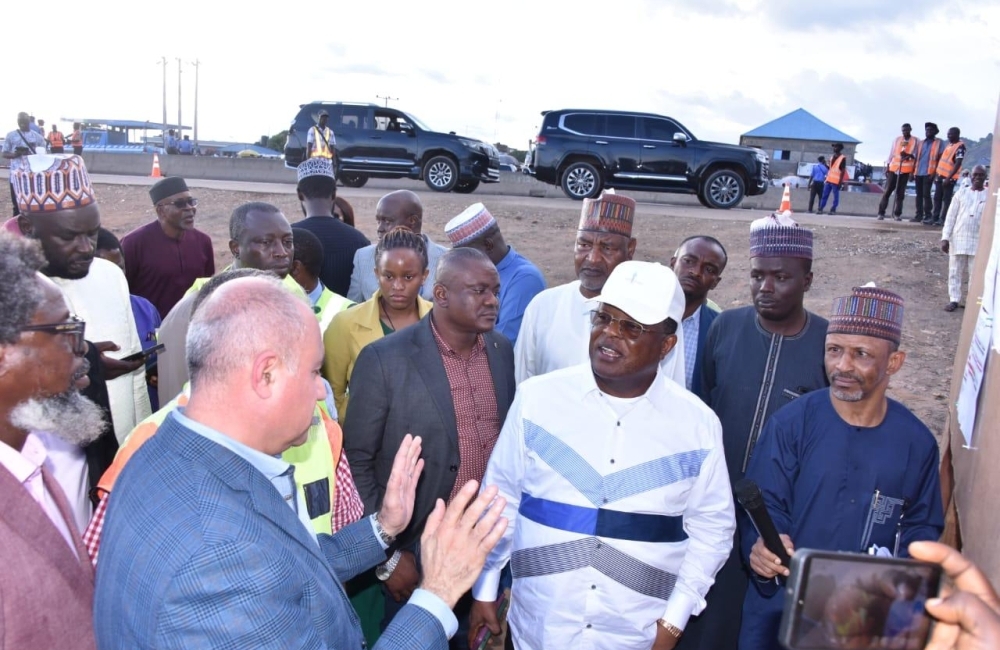
UMAHI FORMALLY FLAGS OFF REHABILITATION WORKS ON SECTION I OF THE ABUJA - KANO DUAL CARRIAGEWAY One of the key areas of focus under the Renewed Hope Agenda of His Excellency, President Bola Ahmed Tinubu, GCFR is the construction, reconstruction and rehabilitation of road infrastructure to enhance economic growth and social development. One such road projects is the Abuja - Kaduna Dual Carriageway, which has been under construction for many years. The economic importance of this road cannot be over emphasised, as it links the Federal Capital, Abuja to the Northern part of the country, as well as facilitate the movement of people, goods and services. To this end, the Honourable Minister of Works, His Excellency, Sen. (Engr.) Nweze David UMAHI, CON, FNSE, FNATE officially flags off the rehabilitation works on the Abuja - Kaduna road on Thursday, 17th October, 2024. Speaking at the epoch-making event, the Minister stated that the road project is in three sections: Abuja - Kaduna (Section I), Kaduna - Zaria (Section II) and Zaria - Kano (Section III). The Zaria - Kano section is substantially completed with about 17 kilometres remaining and has recently been expanded by about 5.3 kilometres to the Malam Aminu Kano International Airport, Kano with solar street lightings. This is being handled by BUA (Nig.) Plc. The Kaduna - Zaria section is being handled by Messrs Julius Berger (Nig.) Plc. However, due to the slow pace of work on Section I, Engr. Umahi admonished the original contractor, Messrs Julius Berger (Nig.) Plc to stop playing games and pushing the Administration around but concentrate on delivering the project according to the reviewed contract sum of N740 billion, insisting that no further review would be entertained. The Minister further disclosed that if Messrs Julius Berger (Nig.) Plc are not willing to continue with the project at the agreed amount, they may as well come out plain, as the Ministry is ready to do it on concrete, while maintaining the same quality with that of the Lagos – Calabar Coastal Highway or the Apapa - Oworonshoki Expressway, which is built to last for between 50 - 100 years. Engr. Umahi also maintained that President Bola Ahmed Tinubu, GCFR has directed two prompt actions to be taken on the road to ease the plight of road users: palliative works to be effected on the failed portions, and the contractor have since mobilised to site and is expected to finish by the middle of November, as well as its total rehabilitation. “When completed, you can travel from here to Kaduna with your eyes closed," he humorously remarked. A portion of Section I of the road is awarded to Messrs Dangote Industries Plc, who sub- contracted it to Messrs Hitech (Nig.). The Minister, while flagging off the project, appealed to them to commence the work in three sections and, most importantly from the end where the road is critically bad. He commended the infrastructural initiative of Mr. President, stating that infrastructure, nationwide, was in a terrible state of decay on his assumption of office. In his welcome address, the Director, Highways, Construction and Rehabilitation, Engr. Umar Bakare, disclosed that the original contract was awarded to Julius Berger PLC. in 2018 and was divided into three (3) sections for ease of construction. Section II is substantially completed, while Section III is at an advanced stage of completion but Section I is only about 27% completed. Due to the importance of the road as a major link to the FCT and its economic importance to the country, it has become imperative to fast track the completion of the outstanding sections of the Dual Carriageway. Engr. Bakare also informed that the length of the project is 38 kilometres (dual) within the Section I of the original contract. The scope of work consists of scarification, pulverization and compaction of the existing distressed pavement as sub- base. Provision of new stone- based to be stabilised with cement (3%) and provision of CRCP (continuously reinforced concrete pavement) on both the carriageway and the shoulders. It also includes the provision of hydraulic structures (culverts, lined drains etc.) The amount for the contact is N145. 8 billion and it is expected to be completed within fourteen (14) months. The financing model is under the Tax Credit Scheme of the Federal Government of Nigeria. Speaking at the ceremony, the representative of Dangote Group, Alh. Bukar Abba, thanked the Federal Government and, particularly the Minister for the confidence reposed in the Dangote Industries Ltd., while assuring that they would align very well with the project’s specifications and the proposed completion period. The Deputy Chief Whip of the Senate, Sen. Onyekachi Nwebonyi and His Excellency, Sen. Adamu Aliero were full of praises for the Administration for coming to the aid of road users, while urging the contractor to deliver according to specifications, as well as the dateline. Other dignitaries at the flag off ceremony include, Senator (Prof) Anthony Annie and the SSA to Mr President on Stakeholder Engagement, South East, Barrister Chioma Nweze. ...
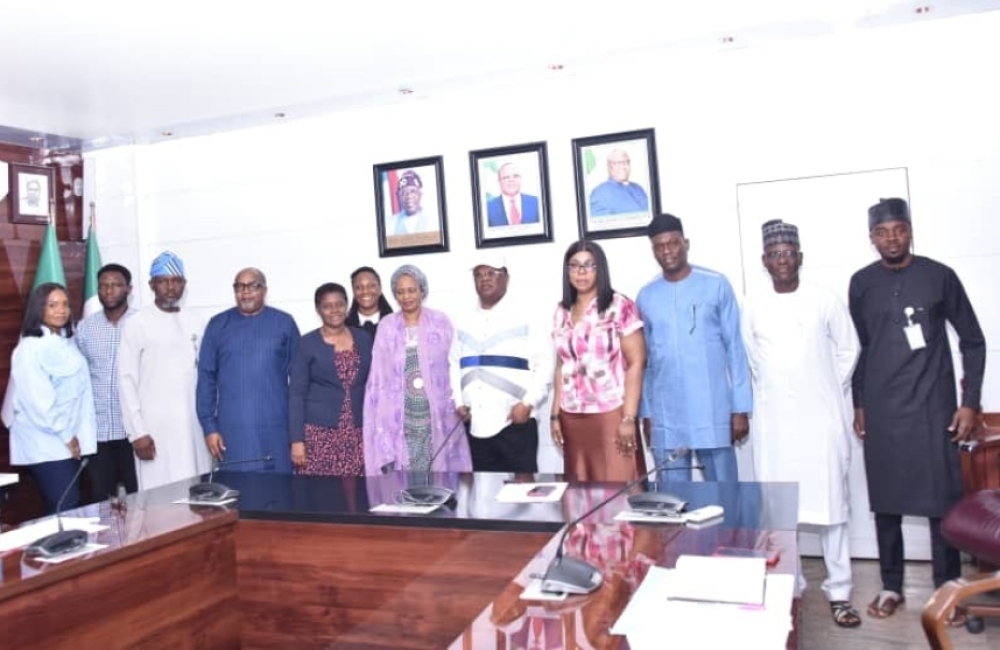
FG SET TO IMPLEMENT CASHLESS TOLLING SYSTEM FOR ABUJA-KEFFI EXPRESSWAY AND DUALIZATION OF KEFFI-AKWANGA-MARKURDI ROAD, INAUGURATES COMMITTEE FOR IMPLEMENTATION FRAMEWORK. As part of measures of the Renewed Hope administration to revolutionize road infrastructure development and stimulate economic growth, the Honourable Minister of Works, His Excellency, Sen. Engr. Nweze David Umahi CON has inaugurated a committee on the implementation of Cashless Tolling System for Abuja-Keffi Expressway and Dualization of Keffi-Akwanga-Markurdi road. Speaking during the inauguration ceremony held at the Ministry’s headquarters, Mabushi, Abuja on 17th October 2024, the Honourable Minister of Works stated that the cashless tolling system was a strategic programme under the Highway Development and Management Initiative aimed at promoting strong and sustainable transportation ecosystem. He said “This is one of the cardinal strategies of President Bola Ahmed Tinubu towards realizing the desires of our people in the road sector development. Recall that a point of Keffi-Akwanga-Markurdi was done on EPC + F, and funded up to 85% by China Exim Bank, and the Federal Government paid 15% counterpart funding and the job was executed satisfactorily by China Harbour Ltd. Part of the agreement is that they will toll the road and then recoup the money for the Federal Government to pay back the loan segment of the project. Inaugurating the committee, the Honourable Minister commended very highly the President of Nigeria, His Excellency, President Bola Ahmed Tinubu, GCFR for the vast strategic economic recovery initiatives of the Renewed Hope administration, and expressed hope that the committee would leverage on ideals of the Terms Of Reference handed to them to develop a robust implementation Master plan that would lead to the realization of the economic and social objectives of the Highway Development and Management Initiative which is institutionalized to ensure sustainable private sector investment and to improve the quality and quantity of the road assets in Nigeria with a view to propelling rapid economic development. He tasked the committee on the Terms Of Reference which among other things are to develop the cashless tolling system implementation framework, make appropriate recommendation as to the potentials of relief stations and good physical environment along the corridors and profer practical solution to the challenges of implementing cashless toll collection in Nigerian environment. He said “We must also, as part of the assignment, develop relief stations. Relief stations is what you see in overseas' expressways, where you have a lot of stations where you have a supermarket, you have a small clinic, you have also security outfits, and a number of other facilities, including parks, wheel lorries, and vehicles park, and tow vans. The idea of Mr. President is that we should have a maximum of 10 minutes of response time on our Highways, meaning that in the full development of this route, part of the assignment will be how we can install CCTV cameras, and also have solar light all through the entire route of the project. And so, we will be able to put security on our roads, and then we have a station at the relief center, where they will stay and watch the vehicles, so that within 10 minutes of any incident along the route, the security people will be able to be there within 10 minutes response time. This is the idea of Mr. President, and for our major highways.” Earlier in her welcome remarks, the Head PPP Unit, Federal Ministry of Works, Mrs. Ugwu-Chima Nnennaya stated that the inauguration was part of the statutory responsibilities of the Federal Ministry of Works which has the mandate to attract private sector funding for the development and management of Federal road network through the Highways Development and Management Initiative (HDMI). She said, "The HDMI is expected to, among others, bring order, accountability, and profitable entrepreneurship to the operations, management, and maintenance of Federal Highways. This is consistent with the provisions of the ICRC Establishment Act 2005; National Policy on Public-Private Partnership (“N4P”); Federal Roads and Bridges Tolling Policy of August 2021 and Federal Highways Act CAP. 135, 1971, which grants the Honourable Minister of Works the power to administer Tolls on Federal Highways." In her acceptance speech on behalf of the committee on the implementation of Cashless Tolling System, the Chairman of the committee thanked the Honourable Ministry of Works for the opportunity to serve the nation in that capacity. She noted the scope of the assignment, which she said was onerous and assured of profound commitment of the committee to the assignment given to them. She said, "We thank you, Honourable Minister, for giving us this opportunity to serve our nation. As we all know, infrastructure is the root for development, and amongst the sectors of infrastructure, transportation is one of the most important sectors. Without transportation, things would slow down, and we need to open up roads everywhere as we all know that, particularly in Nigeria, transportation is one of the main means of movement for people, goods, animals and everything. So, it's a sector that is very important in the development of a nation. I would like to thank the Ministry of Works for giving us the opportunity to serve, and we will do our very best to make sure that we contribute to the success of this project." The committee which comprises members drawn from the Federal Ministries of Works, Finance, Budget and National Planning, Justice as well as Infrastructure Concession Regulatory Commission (ICRC) has the Head, PPP Federal Ministry of Finance, Haj. Jummai Katagum and the Head PPP Unit, Federal Ministry of Works, Mrs. Ugwu-Chima Nnennaya as Chairman and Secretary, respectively. The committee has within two (2) weeks to submit its report. ...
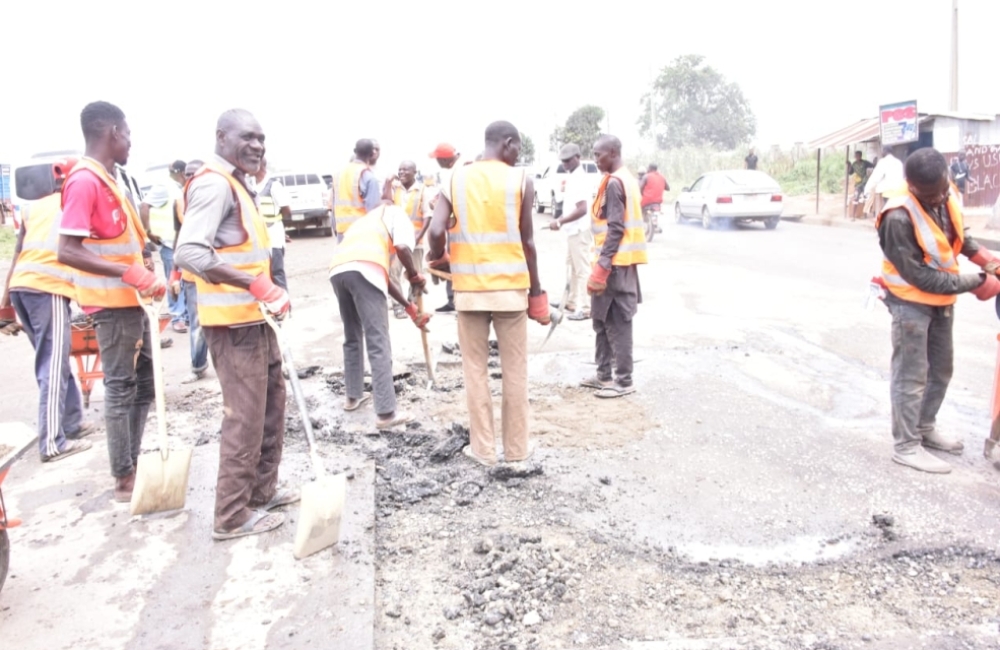
FG Begins Phased Palliative Works on Abuja - Kaduna Dual Carriageway In order to bring succour to road users, the Federal Ministry of Works has commenced emergency repairs of failed portions of the Abuja - Kaduna Dual Carriageway. The contractor, Messrs H&M (Nig.) Ltd mobilised to site on Wednesday, 2nd October, 2024. The contract for the Section I of the Expressway starts at kilometre 0 + 00 (Zuba, FCT) and ends at kilometre 31 + 200 (Tafa, Niger/Kaduna States’ border) with a two (2) weeks completion period. The scope of the contract consists of patching of existing potholes, as well as the reinstatement of critically failed sections of the said alignment. And the approved contract sum is N366 million (Three Hundred and Sixty-Six Million Naira). Speaking during an inspection tour of the project on Saturday, 5th October, 2024, the Directors, Highways, North East Zone I, Engr. Mohammed Goni and Special Projects (North), Engr. Olufemi Adetunji urged the contractor to adhere with the terms of the contract, as no extension of the completion period will be entertained. They described the project as a catalyst to economic growth and a vital artery connecting the Northern and Southern parts of the country. Engr. Goni promised Nigerians that with the successful completion of the contract, the remaining failed parts from Tafa - Kaduna will also be awarded, reiterating the resolve of the present administration to the provision of critical road infrastructure. The Project Supervisor, H&M (Nig.) Ltd, Mr. Lawrence Emmanuel disclosed that work is ongoing with the cutting and shaping of the failed portions reaching Dikko Junction in Niger State, while the asphalting of the cut points is expected to start on Monday, 7th October, 2024. While complaining about the high volume of traffic on the road, which is slowing the pace of work, he promised its delivery on the scheduled date. Also on the inspection visit was the Federal Controller of Works, FCT, Engr. Yakubu Usman, who promised daily inspections and diligent supervision of the project, while it lasts. ...
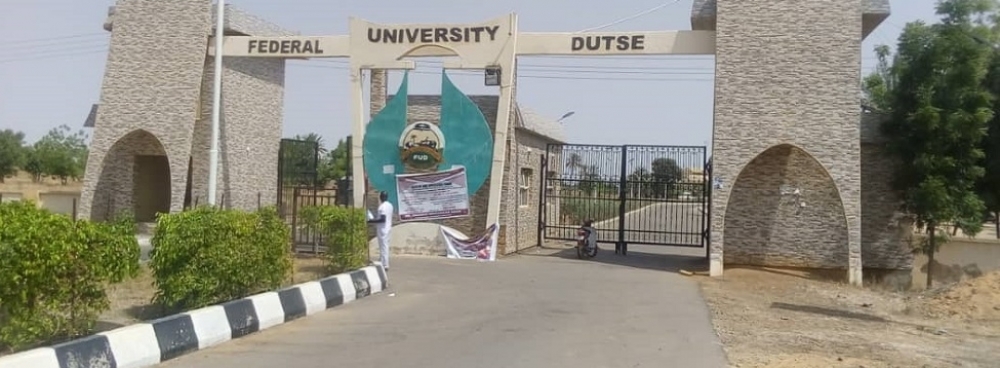
University Commends Works Ministry’s Field Officers In Jigawa State
The Management of the Federal University of Dutse , Jigawa State has applauded the synergy between Field Officers of the Federal Ministry of Works and Housing in Dutse , Jigawa State and the University community during the rehabilitation of 800 metres road within the institution.
The Director Physical Planning, Works and Maintenance Federal University, Dutse, Jigawa State, Arc. Biliaminu Hassan made the remark at the handing and taking over ceremony of the 800 kilometres road rehabilitated by the Federal Ministry of Works and Housing at the institution.
Arc. Hassan said: ‘’The synergy between the Jigawa State Field officers of Federal Ministry of Works and Housing and the University’s Management facilitated the project to the commissioning point, and that such working relationship would be sustained.’’
Arc. Hassan expressed sincere appreciation to the Honourable Minister, Babatunde Fashola, SAN for the timely interventions which he said had greatly eased movement in the university.
Speaking earlier, the Vice Chancellor of the Federal University, Dutse, Jigawa State, Prof. Fatima Batul Muktar said, "This road is not actually the first road intervention by the Federal Ministry of Works and Housing, it is the second. The first road to be constructed on the new campus was a 2 kilometres road and drainages from the main gate to the junction of the faculty of agriculture. So, when you put it together with this the Federal Ministry of Works and Housing had intervened with 3kilometres road project in the university."
Professor Fatima explained that before the rehabilitation of the road students and parents had to park their vehicles outside to work down to the school in the pool of water, pointing out that the relief brought to the school by the Ministry of Works and Housing cannot be under estimated.
Speaking further, she said, " This is not to say that the problems have been overcome totally because there are still many areas that will become inaccessible during the rainy season, obviously the university has expanded rapidly and there are many buildings that are ongoing with many more to commence, the need for more roads and drainages cannot be overemphasized."
In his remarks, the Honourable Minister of Works and Housing, Mr. Babatunde Raji Fashola SAN , who was represented by the Federal Controller of Works Jigawa State, Engr. Oladele Atewolara said, "Currently, there are 43 number of road interventions within tertiary institutions across Nigeria, to date 29 number of the road intervention projects have been completed with 17 number already handed over in 2020. Today, we hand over this one in Federal University, Dutse, Jigawa state as a critical intervention to support education."
The Minister also said, " With the current intervention in the tertiary institutions quality of education will be impacted by the quality of infrastructure and the learning environment, and it will renew students' enthusiasm to attend classes, because some deplorable roads have become motorable. "
Buttressing on the economic importance of the project, he revealed that no less than 200 (two hundred) people were employed during the execution of the project which contributed hugely to the job creation initiatives of the President Muhammadu Buhari's led administration.
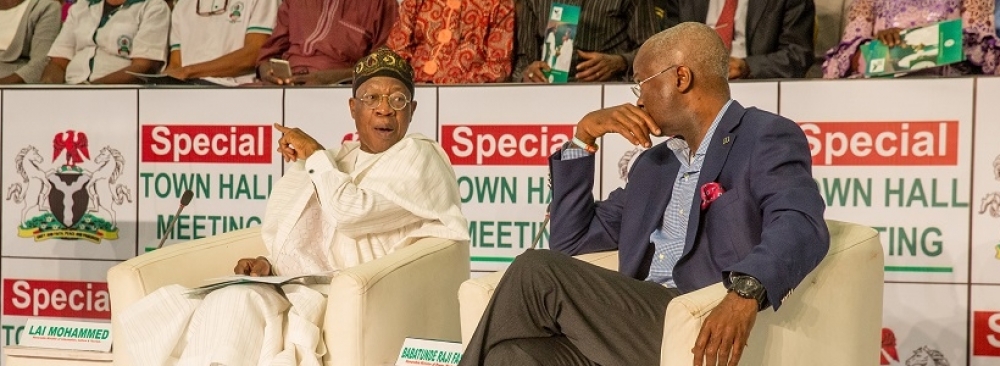
Speech Delivered By H.E, Babatunde Raji Fashola, SAN At The South West Town Hall Meeting
We must first commend the Hon. Minister of Information and Culture for inaugurating this series of town hall meetings that have been held across Nigeria over the past 3 years.
This in itself is something that has changed in how the FGN communicates with citizens and is quite different from the previous attempts that were targeted to react to crisis or to catch votes at the 11th hour.
I will start my presentation by giving you an overview of what the government of Nigeria is getting done through my ministry (Power, Works and Housing) across the country and then I will come to the specifics as it affects the South West zone.
Of course, I cannot pretend that politics is not in the air, and that elections are a few weeks away. This means that all Nigerians including those of us in the Southwest have to make a choice about who to choose and which party to vote for.
I am mindful of the fact that this is the first time where we have had two major parties manage our affairs.
One for 16 years and another for 3 and a half years thus far.
I am aware that we still want more service from Government, and therefore decision-making will require deep reflection.
Do we go back to those who have served you for 16 years since 1999; or do we move forward with this government that has had only three years and five months to serve us?
So the next election might well be a choice between going back and moving forward.
Let me start by saying that my ministry is responsible for delivering some of Nigeria’s critical infrastructure for transport, electricity and housing.
In 2015 when you elected this government, the budget for these three ministries, left behind by the previous government, was N19 billion for works, N5 Billion for power, and N1.2 Billion for housing making a total of N25.2 Billion.
In the year 2017, the budget for works was N394 Billion; Power was N69.96 Billion and Housing was N64.9 Billion (Total N529 Billion).
In a country where the population is growing faster than the infrastructure, the difference between these budgets must tell you that this government is more serious about providing infrastructure to support you.
So, if you need more roads, more bridges, more power, more housing and the Job opportunities and prosperity that their delivery will bring, your choice in the next election should be easier.
Don’t go back to a budget of N25.2 Billion for Infrastructure , move forward with a budget for Infrastructure which has grown to N543 Billion in 2018.
Another feature of the difference between these two budget sizes is that the last government was spending less on infrastructure for almost one decade when oil prices stayed at $100 per barrel during that decade.
This government is spending more on infrastructure when oil prices largely hovered between $40-$60.
So, in making your choice, please consider who is the better manager. The one who did less with more or the one who did more with less.
Again I urge you to reflect. Do you want to go back to doing less with more, or move forward with doing more with less.
And before I leave this point, let me just inform you that over the last 10 years, from the proceeds of oil, Saudi Arabia spent $420 billion on infrastructure.
But it is not about spending money alone, it is about what we did with it; and what was left behind for us.
What was left behind were massive debts owed to contractors who had not been paid for 3 to 5 years and who had laid off thousands of workers and shut down equipment and plants.
That was one of the reasons why the economy first went into recession, and, I suspect, one of the reasons they quickly conceded defeat.
They also left behind debts owed to state governments who were forced to intervene on federal infrastructure especially roads and bridges. That figure stands at about N450 Billion.
What we spent the money on, was to pay contractors and today I can tell you that there is no state in Nigeria where we are not building at least one Federal Road.
We are constructing houses in 34 states in a pilot scheme to determine affordability and acceptability; and we have 90 transmission projects aimed at improving connectivity between the GenCos and the DisCos who serve you.
Those 90 projects are largely resuscitated because this government has recovered 690 containers of power equipment out of over 800 containers left at the Port for almost a decade because they did not pay contractors, who then could not pay the shippers and warehouse companies.
The Buhari government has paid, the projects are making progress. (Adamawa) (Odogunyan) (Ejigbo) (Apo) (Damaturu) are some of those completed Transmission Sub-stations.
Those of you from Ondo and environs will agree that although the work is not finished, your travel time on the Benin-Ore-Sagamu road has reduced.
Our contractor is on site and has to work while you use the road.
The same is true of the Lagos-Ibadan expressway that connects 3 states of Lagos, Ogun and Oyo; and links to Ondo and beyond.
Those of you who use the road will acknowledge that you no longer have to spend the night on the road.
You can go to Ibadan from Lagos and be sure that you can return on the same day.
Yet we have not finished. Please as you prepare to choose next year, remember those long hours on Benin-Ore, Lagos-Ibadan that sometimes stretched into the Night. Do you want to go back ?
Ask yourself if progress on these roads in 3 years is better than what you have seen over 16 years.
It will help you decide who to choose to ensure that the road is finished, and you can move forward.
Also remember those who presided over the cuts in the budget of these roads in the 2017 budget.
As they plan to frustrate and slow down the Buhari government, the president innovates and finds solutions.
There is now a Presidential Infrastructure Development Fund to ensure that the Second Niger bridge, the Abuja-Kaduna-Kano Road, Lagos-Ibadan expressway and some other projects are not deprived of funding again.
Major roads in the Southwest like the Lagos-Otta-Abeokuta Road, the Ikorodu-Sagamu road, which had been deserted and left to decay, now have contractors at work. Do you want to go back to that ?
The Apapa- TinCan - Mile 2 -Oshodi- Oworonshoki road has been awarded and work should start sometime in November this year as the construction equipment are being readied.
This will give a final solution for the gridlock that was inherited from the last government.
These are some of the examples of what has changed and is changing for the better.
Those who ran it aground for 16 years now say we are not quick enough.
The question you right thinking and well-meaning citizens should ask is which Nation has been rebuilt in 4 years?
It is going to take more than one election cycle to consolidate on the progress I have shared with you; and if you do not choose wisely you can reverse it.
A choice to go back is a choice to reverse this progress and a choice to move forward is a sensible choice to consolidate and progress.
Those same people who caused the problem cannot now be trusted to fix it.
You will hear from them that the country has problems as they try to weaponise our challenges to deceive Nigerians.
The infrastructure decayed under their watch; insurgency and bombings started under their watch; the grand corruption under their watch makes it impossible to identify one item of critical infrastructure that Nigeria can point to in a decade during which oil price averaged over $100 per barrel. (1976; 1980s)
On the housing side, as I said we are in every state including all the states of the South West except Lagos. Each site employs not less than 1,000 people made up of builders, artisans, fabricators, and vendors and we plan to do much more.
Through this infrastructure commitment, the President and the government is driving the economy vehicle in the right direction.
The last quarter report of the National Bureau of Statistics for Q2 of 2018 shows the following rate of growth in sectors affected by my ministry:
Transportation – (Road, rail, water and air) – 21.76%
Construction – 7.66%
Electricity- 7.59%
But it is not just travel time reduction, and economic growth that is impacted, the number of road traffic accidents, injuries and loss of lives are reducing month by month as FRSC figures from June and July 2018 show. While the biggest cause of accidents remains speed violations.
Let me close with some specific comments on power in the South West :- Magboro, Mowe, Ibafo, Ondo (North and South) are communities who were never connected to power supply before.
That story has changed. They are now connected and experiencing power supply. That is change.
This is because we increased generation from 4,000 to 7,000 MW; averaging 1,000 MW per annum; Transmission from 5,000 to 7,000MW averaging 660MW per annum, and distribution from 2,690 MW in May 2015 to 5,222MW in January 2018, averaging 844 MW per annum.
We have not finished and we have not reached everybody yet; but many of you can tell the difference now and attest to the fact that things have changed for the better.
Ask yourself if you use your generator longer today than in 2015 or if you spend less money on diesel today than in 2015, or if you are getting power supply longer today than in 2015.
Please choose next year according to that answer.
Also ask yourself who has done better: 4,000 MW over 16 years at an average 250 MW per annum? Or 3000 MW over 3 years at an average of 1000 MW per annum?
I have addressed the choice before you between going back and moving forward.
Let me end my contribution on another issue that is critical to the decision you have to make about your future.
That issue is TRUST.
Who will you trust to better manage your affairs . The one who did less with more; or the one that is doing more with less.
Without a doubt, we have done more with less time and with less money. That is change and we remain committed to doing more.
Babatunde Raji Fashola, SAN
Honourable Minister of Power, Works and Housing
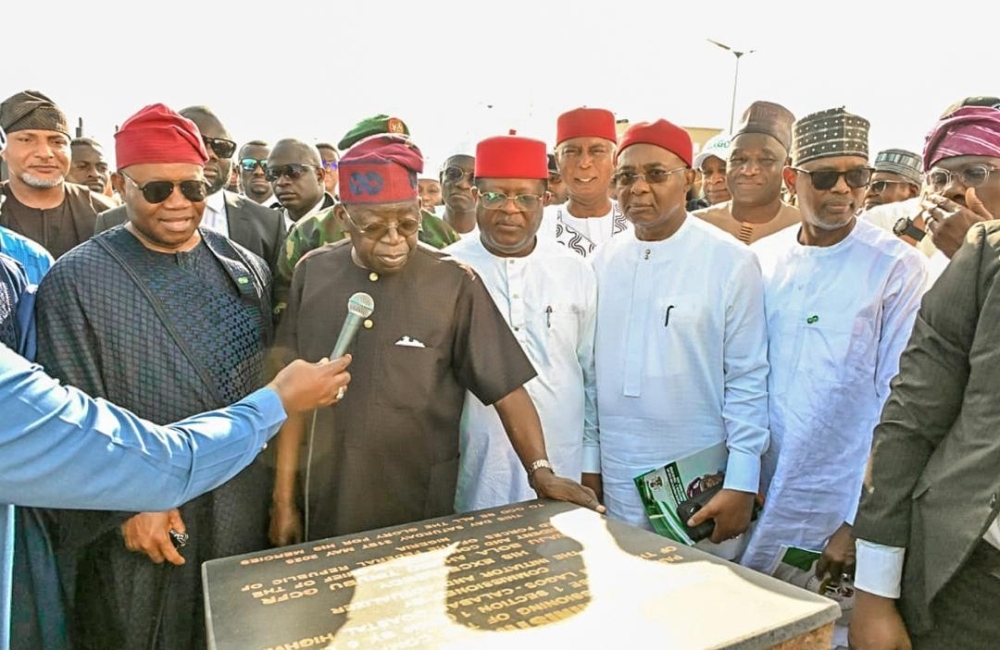
DRIVING NIGERIA’S FUTURE: CELEBRATING TWO YEARS OF TRANSFORMATIVE LEADERSHIP AND THE LAGOS-CALABAR COASTAL HIGHWAY MILESTONE
DRIVING NIGERIA’S FUTURE: CELEBRATING TWO YEARS OF TRANSFORMATIVE LEADERSHIP AND THE LAGOS-CALABAR COASTAL HIGHWAY MILESTONE
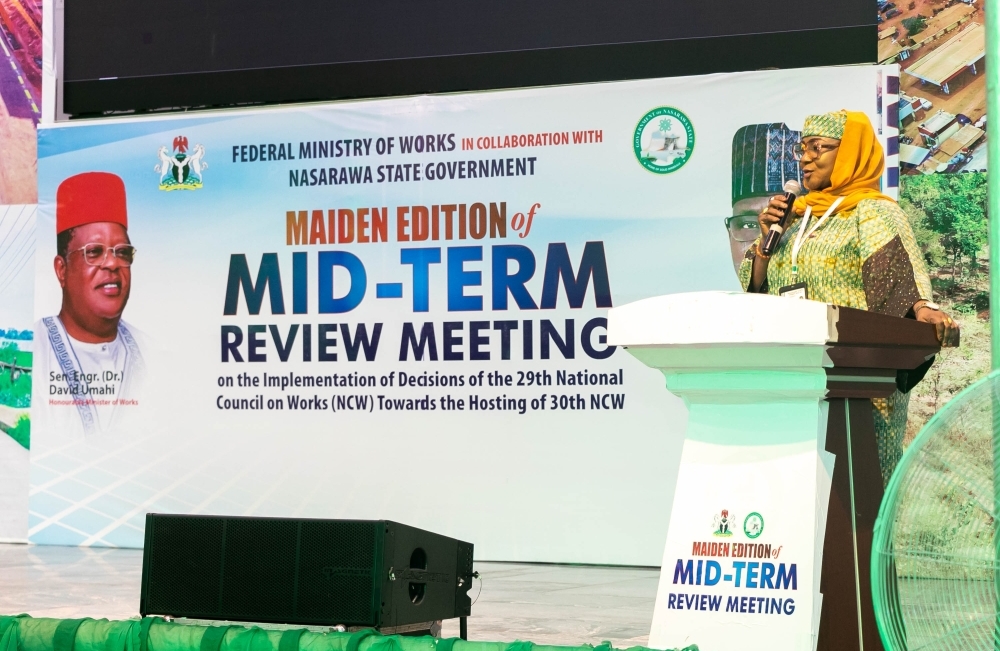
MID -TERM REVIEW MEETING ON THE IMPLIMENTATION OF THE DECISIONS REACHED AT THE 29TH NATIONAL COUNCIL ON WORKS (NCW) DAY 1
MID -TERM REVIEW MEETING ON THE IMPLIMENTATION OF THE DECISIONS REACHED AT THE 29TH NATIONAL COUNCIL ON WORKS (NCW) DAY 1