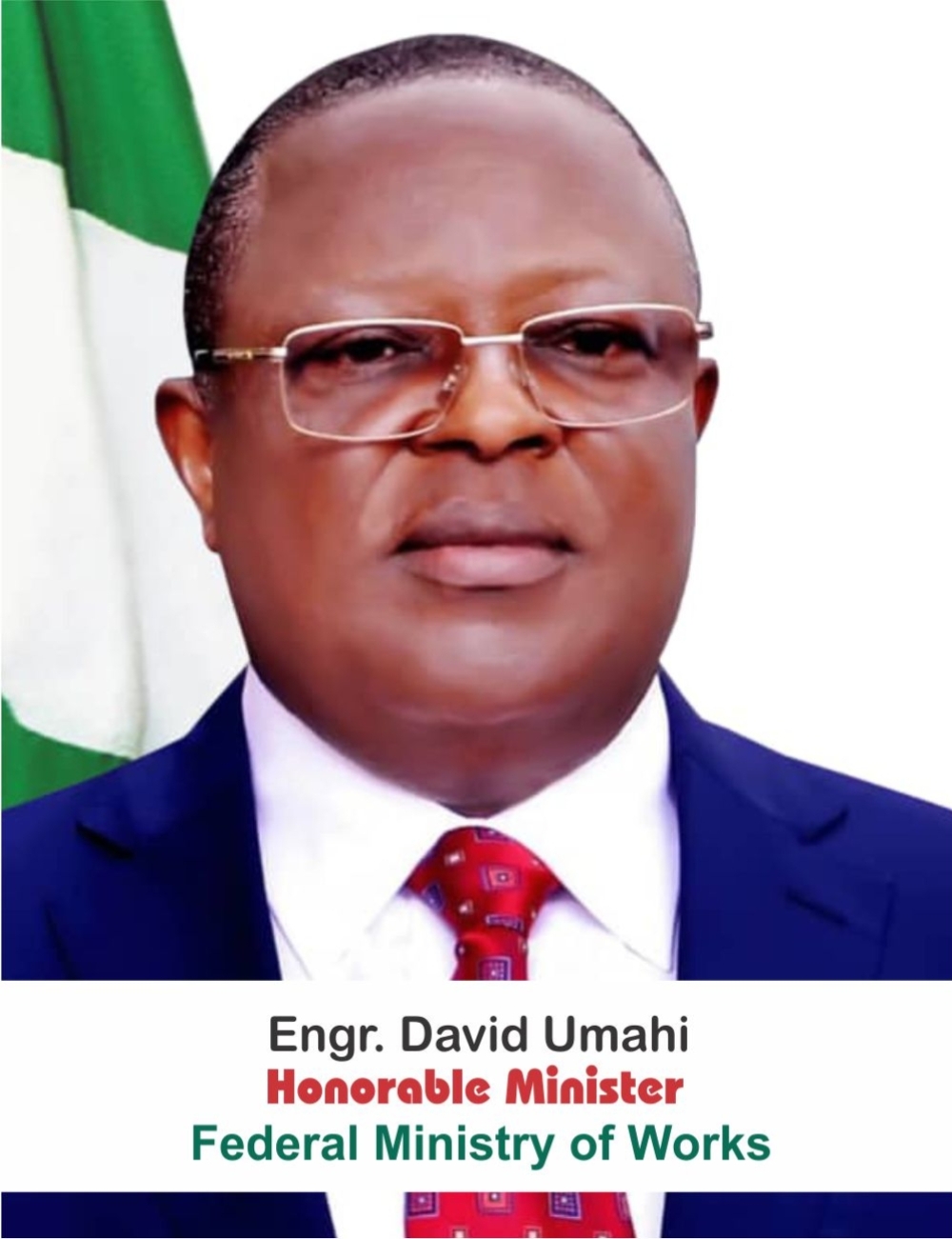
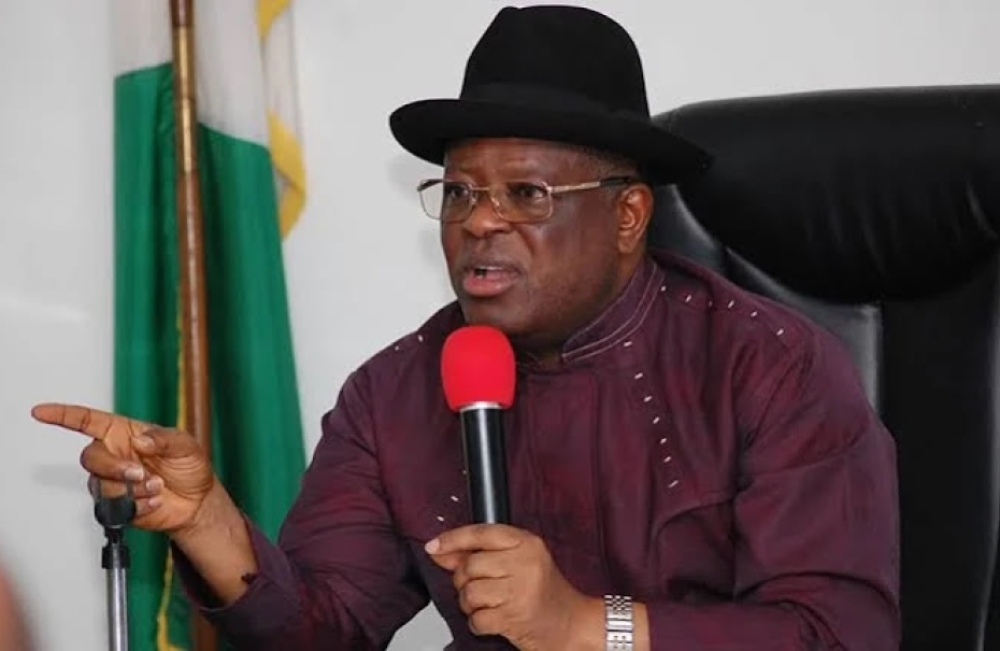
UMAHI ORDERS IMMEDIATE EMERGENCY INTERVENTION ON BENIN-ASABA ROAD, AND SOME OTHER CRITICAL FEDERAL ROADS
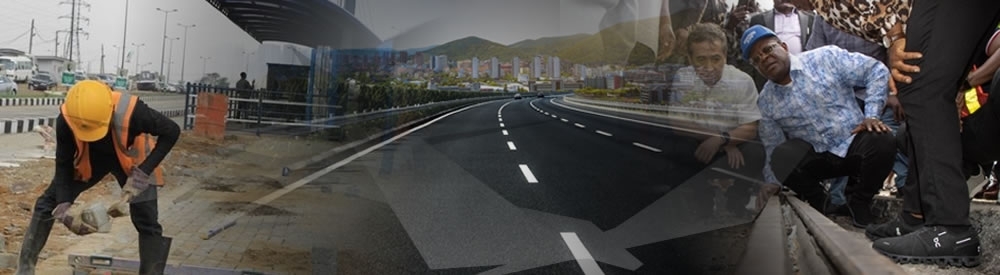
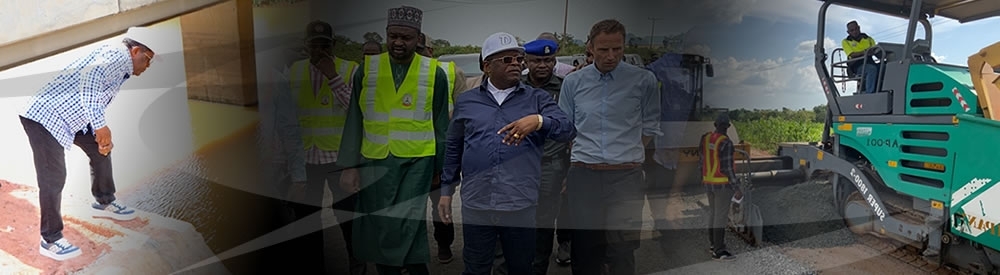
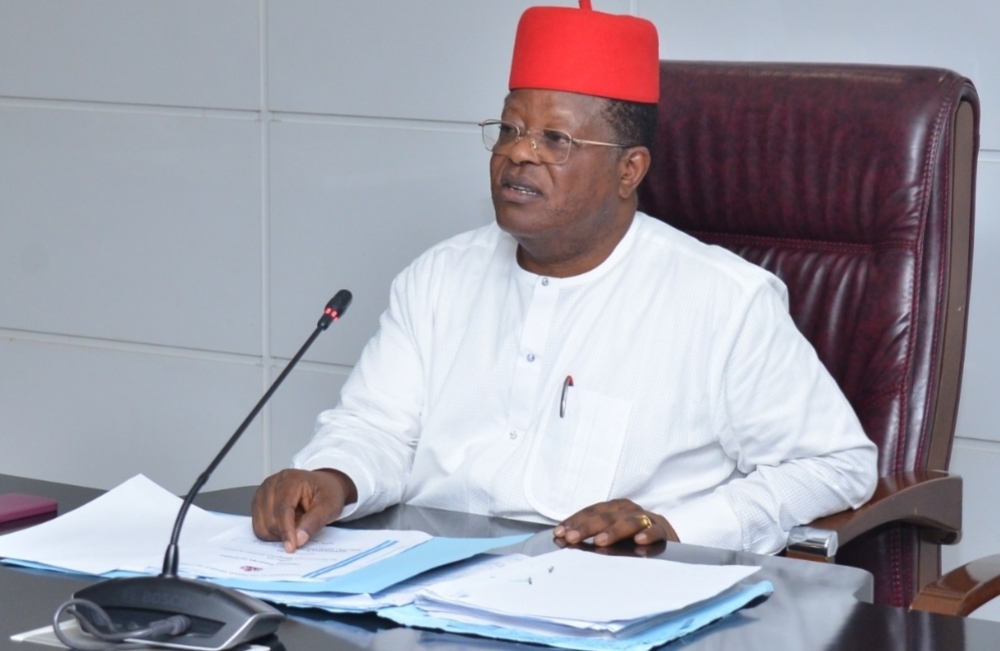
The Honourable Minister of Works, Senator Engr. David Nweze Umahi, CON, has directed the immediate deployment of major contractors to all three sections of the Benin-Asaba Federal Road to restore the failed sections and bring an end to the suffering of motorists and other road users.
This is because, the situation on the concessioned Benin-Asaba Road has reached a point where the overall public interest must take precedence over the existing concession agreement.
Recall that the Honourable Minister of Works was on the Benin-Asaba Road about seven days ago, where he assembled a number of contractors and directed them to prepare for immediate palliative intervention on the affected sections of the road at no cost to the concessionaire. In line with the Concession agreement which requires that before the Federal Government could intervene, the permission of the concessionaire must be required, and that permission was not granted to federal government.
The Minister subsequently proposed three options to the concessionaire, any one of which would have enabled the Federal Government to move in and address the worsening condition of the road. Unfortunately, none of the options was accepted by the concessionaire. Immediately after the Minister left Asaba, the already limited equipment deployed to the road by the concessionaire was further reduced to just one, worsening the situation and increasing the suffering of motorists and other road users.
While the Minister takes responsibility for the concerns and suffering of Nigerians using the road, it is important to state that the concessionaire has also not taken the suffering of Edo people and travelling public sufficiently into consideration by declining all the options put forward by the Federal Government. The concessionaire continues to rely on the terms of the concession agreement entered into by the previous administration, an agreement which weighs heavily against the Federal Government’s ability to intervene quickly in the interest of the public in a situation like this.
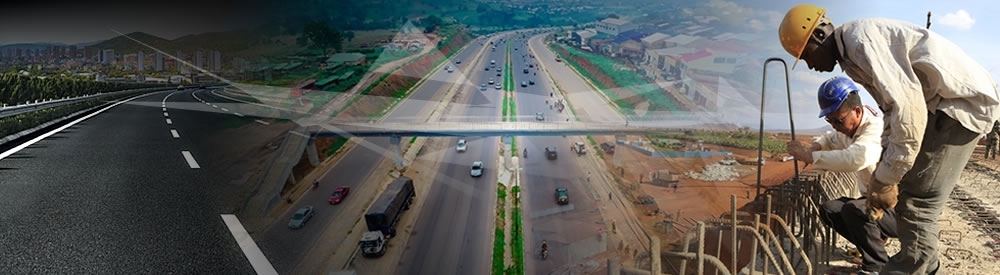
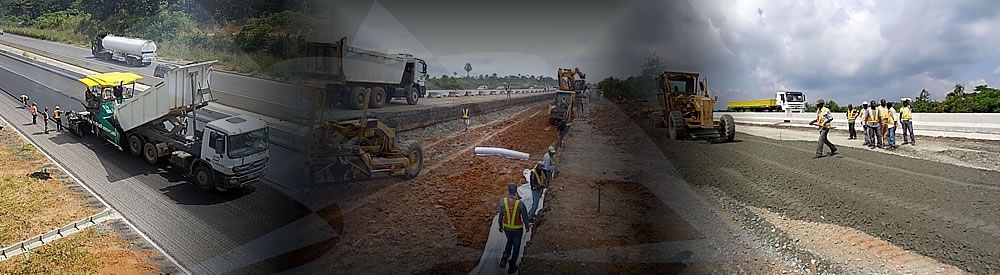
In view of this situation, the Honourable Minister of Works has directed the immediate deployment of major contractors within the corridor to all three sections of the Benin-Asaba Road to restore the failed sections and bring relief to the people, with the cost of the emergency intervention being borne by the Federal Government. The Honourable Minister has also directed immediate redesign of the entire route to be rebuilt with reinforced concrete pavement. The public should therefore take note that immediate action is underway to restore every failed section of the Benin-Asaba Road and subsequently rehabilitate the entire sections of the road using reinforced concrete pavement.
2. On the Benin-Sapele Road:
The Governors of Edo and Delta States, the Niger Delta Development Commission (NDDC), and the Federal Government are currently engaged in interventions on different sections of the road to restore the entire route. While some sections are receiving palliative attention, permanent works are also ongoing on other sections.
3. On Ifaki(Ekiti) - Kabba (Kogi) Road:
The Federal Government is engaging both the contractor; Gamji Nigeria Company Limited, and Dangote PLC on immediate emergency and permanent intervention on the most failed sections of the road, while efforts are being made to financially mobilise the company for more extensive permanent work to commence on the axis.
4. On the Sokoto-Zamfara-Katsina Road: This is an inherited project involving the dualisation of approximately 350 kilometres, which translates to about 700 kilometers. The project has since been redesigned and is currently ongoing and most sections are being reconstructed using reinforced concrete pavement. From the Sokoto axis towards Zamfara, over 50 kilometres of one carriageway have been fully completed with reinforced concrete pavement. From Zamfara to Katsina, some sections have been completed and palliative works have been ordered over the sections that have not been reconstructed. However, the pace of work slowed down due to the redesign and rephasing of the project. The contractors currently engaged on the road include CBC, SETRACO, Triacta and Mothercat. They are being remobilised to return to site and complete the outstanding works.
5. On the Abuja-Kaduna-Zaria-Kano Road: The Federal Government took over the Road project and has currently completed the 118-kilometer mostly on reinforced concrete pavement on lot 1. The Lot 2, which covers 164 kilometres, is over 60 percent completed on reinforced concrete pavement. The Federal Government has also introduced solar-powered light on the entire route of Abuja-Kaduna-Zaria - Kano to improve visibility during night travel and enhance the overall security situation on the route. The entire project is scheduled for completion by December 2026.
6. On Bauchi-Jigawa Road: Triacta Nigeria Limited has been mobilised to carry out the necessary interventions on some failed sections and work is currently ongoing in those failed sections.
7. On the Sagamu-Ore Road: 48 Kilometers of the 96-kilometre road have already been completed using reinforced concrete pavement. There is also a 24-kilometre section around Ore which was abandoned by the previous contractor. The Federal Government has directed its immediate restoration to ensure seamless travel. Solar lights are being installed in the entire 96kilometer of the road.
8. On Flooded Sections on Sagamu-Ore-Benin Road: The flooded sections on the same corridor between Sagamu-Ore-Benin Road, as well as other flooded sections in Ondo State, are being designed for emergency procurement and intervention.
9. On the East-West Road:
Some failed and critical sections, including defective sections of bridges along the East-West Road, are being marked out for emergency procurement and intervention.
10. On the Abuja-Lokoja Road:
Several contracts are ongoing along the route, while the three critical sections currently without contracts are being procured for emergency intervention.
11. On the Lokoja-Benin-Warri Road: The President has directed a complete redesign and procurement of the 400-kilometre dualised route covering the uncompleted sections, using reinforced concrete pavement, while palliative works will continue with the contractors currently on the road.
12. On Carter Bridge:
While the Federal Government continues to undertake weekly maintenance of the underwater elements of the bridge. The site has also been handed over to the contractor, CCECC, for the construction of a permanent new bridge, and work has commenced.
13. On the Third Mainland Bridge:
With regard to the defective underwater structural elements, the Federal Government is at the final stage of determining the appropriate intervention for the repair of the affected elements.
14. On the flooded section of the Lagos-Ibadan Road: Work has commenced on the affected section. There are also several flooded sections on federal roads across the six geopolitical zones, largely occasioned by excessive flooding and the effects of climate change. The Federal Government is identifying and marking these sections for immediate attention.
15. On the First and Second Niger Bridges:
Intervention work is ongoing on the approach roads to the Second Niger Bridge damaged by flood and the work is progressing very well. The First Niger Bridge has been closed to traffic to enable immediate repair works. Contractor has mobilized to site and comprehensive rehabilitation of the bridge has started. From Summit Junction to the First Niger Bridge, massive rehabilitation work is also ongoing using reinforced concrete pavement.
16. The Honourable Minister wishes to commend the President of the Federal Republic of Nigeria, His Excellency Bola Ahmed Tinubu, GCFR, for the massive work being undertaken on the nation’s roads since the administration assumed office in 2023.
17. It is important to state that when the present administration came into office, there was hardly any part of the country where one could travel for an hour without encountering significant challenges on the road network. The condition of the country’s roads and bridges was a major national infrastructure challenge.
18. Rather than shy away from the problem, the administration of President Bola Ahmed Tinubu made the nation’s road network a priority. Virtually every part of the country became a priority, and the Federal Government, through the Federal Ministry of Works, Regional Commissions, Parastatals and other MDA’s has continued to respond extensively to these challenges.
19. The Federal Government is currently working on over 80 percent of the inherited federal roads, an unprecedented level of intervention in the country’s road infrastructure.
20. We ask the public to understand the enormous challenges inherited on our roads and bridges and to take note not only of the problems being solved, but also of the permanent solutions being introduced.
21. A major part of this new approach is the use of reinforced concrete pavement, designed to significantly extend the lifespan of major roads. These roads are expected to last between 50 and 100 years. This means that roads being constructed under President Bola Ahmed Tinubu’s administration are being designed with future generations in mind, rather than simply providing temporary solutions to today’s problems. And this is a complete departure from the past, when roads often deteriorated only a few years after completion, resulting in a continuous cycle of reconstruction and expenditure.
22. We appreciate the concerns of Nigerians over the condition of some roads presently and the difficulties faced by motorists and commuters who cannot move easily from one point to another. Those concerns are legitimate, and the Federal Government is listening. But Nigerians should also recognise the enormous scale of the problems inherited and the amount of work currently being undertaken across the country.
23. It is simply impossible to resolve every road challenge accumulated over many years of neglect by the past administrations within three years. What is important is that the government is working, the government is responding, and the government is putting permanent solutions in place.
25. We appreciate members of the public who send situation reports on failed roads and other infrastructure challenges. These reports help the Ministry identify areas requiring urgent attention. However, we also appeal to members of the public to report when such problems have been addressed, just as they report when they occur.
24. We are aware of situations where photographs and reports of road challenges continue to circulate on social media even after the Federal Government has intervened and resolved the particular problem.
25. However, the Ministry will continue to respond as rapidly as possible to genuine reports and concerns from Nigerians.
26. It is also important to note that we have compiled a comprehensive record of all inherited, ongoing and intervention projects across the country which is available to the public. This is to ensure that Nigerians have access to information on the infrastructure projects being undertaken nationwide and can fully participate in and appreciate the infrastructure revolution of President Bola Ahmed Tinubu’s administration.

UMAHI ORDERS IMMEDIATE EMERGENCY INTERVENTION ON BENIN-ASABA ROAD, AND SOME OTHER CRITICAL FEDERAL ROADS The Honourable Minister of Works, Senator Engr. David Nweze Umahi, CON, has directed the immediate deployment of major contractors to all three sections of the Benin-Asaba Federal Road to restore the failed sections and bring an end to the suffering of motorists and other road users. This is because, the situation on the concessioned Benin-Asaba Road has reached a point where the overall public interest must take precedence over the existing concession agreement. Recall that the Honourable Minister of Works was on the Benin-Asaba Road about seven days ago, where he assembled a number of contractors and directed them to prepare for immediate palliative intervention on the affected sections of the road at no cost to the concessionaire. In line with the Concession agreement which requires that before the Federal Government could intervene, the permission of the concessionaire must be required, and that permission was not granted to federal government. The Minister subsequently proposed three options to the concessionaire, any one of which would have enabled the Federal Government to move in and address the worsening condition of the road. Unfortunately, none of the options was accepted by the concessionaire. Immediately after the Minister left Asaba, the already limited equipment deployed to the road by the concessionaire was further reduced to just one, worsening the situation and increasing the suffering of motorists and other road users. While the Minister takes responsibility for the concerns and suffering of Nigerians using the road, it is important to state that the concessionaire has also not taken the suffering of Edo people and travelling public sufficiently into consideration by declining all the options put forward by the Federal Government. The concessionaire continues to rely on the terms of the concession agreement entered into by the previous administration, an agreement which weighs heavily against the Federal Government’s ability to intervene quickly in the interest of the public in a situation like this. In view of this situation, the Honourable Minister of Works has directed the immediate deployment of major contractors within the corridor to all three sections of the Benin-Asaba Road to restore the failed sections and bring relief to the people, with the cost of the emergency intervention being borne by the Federal Government. The Honourable Minister has also directed immediate redesign of the entire route to be rebuilt with reinforced concrete pavement. The public should therefore take note that immediate action is underway to restore every failed section of the Benin-Asaba Road and subsequently rehabilitate the entire sections of the road using reinforced concrete pavement. 2. On the Benin-Sapele Road: 3. On Ifaki(Ekiti) - Kabba (Kogi) Road: 4. On the Sokoto-Zamfara-Katsina Road: This is an inherited project involving the dualisation of approximately 350 kilometres, which translates to about 700 kilometers. The project has since been redesigned and is currently ongoing and most sections are being reconstructed using reinforced concrete pavement. From the Sokoto axis towards Zamfara, over 50 kilometres of one carriageway have been fully completed with reinforced concrete pavement. From Zamfara to Katsina, some sections have been completed and palliative works have been ordered over the sections that have not been reconstructed. However, the pace of work slowed down due to the redesign and rephasing of the project. The contractors currently engaged on the road include CBC, SETRACO, Triacta and Mothercat. They are being remobilised to return to site and complete the outstanding works. 5. On the Abuja-Kaduna-Zaria-Kano Road: The Federal Government took over the Road project and has currently completed the 118-kilometer mostly on reinforced concrete pavement on lot 1. The Lot 2, which covers 164 kilometres, is over 60 percent completed on reinforced concrete pavement. The Federal Government has also introduced solar-powered light on the entire route of Abuja-Kaduna-Zaria - Kano to improve visibility during night travel and enhance the overall security situation on the route. The entire project is scheduled for completion by December 2026. 6. On Bauchi-Jigawa Road: Triacta Nigeria Limited has been mobilised to carry out the necessary interventions on some failed sections and work is currently ongoing in those failed sections. 7. On the Sagamu-Ore Road: 48 Kilometers of the 96-kilometre road have already been completed using reinforced concrete pavement. There is also a 24-kilometre section around Ore which was abandoned by the previous contractor. The Federal Government has directed its immediate restoration to ensure seamless travel. Solar lights are being installed in the entire 96kilometer of the road. 8. On Flooded Sections on Sagamu-Ore-Benin Road: The flooded sections on the same corridor between Sagamu-Ore-Benin Road, as well as other flooded sections in Ondo State, are being designed for emergency procurement and intervention. 9. On the East-West Road: 10. On the Abuja-Lokoja Road: 11. On the Lokoja-Benin-Warri Road: The President has directed a complete redesign and procurement of the 400-kilometre dualised route covering the uncompleted sections, using reinforced concrete pavement, while palliative works will continue with the contractors currently on the road. 12. On Carter Bridge: 13. On the Third Mainland Bridge: 14. On the flooded section of the Lagos-Ibadan Road: Work has commenced on the affected section. There are also several flooded sections on federal roads across the six geopolitical zones, largely occasioned by excessive flooding and the effects of climate change. The Federal Government is identifying and marking these sections for immediate attention. 15. On the First and Second Niger Bridges: 16. The Honourable Minister wishes to commend the President of the Federal Republic of Nigeria, His Excellency Bola Ahmed Tinubu, GCFR, for the massive work being undertaken on the nation’s roads since the administration assumed office in 2023. 17. It is important to state that when the present administration came into office, there was hardly any part of the country where one could travel for an hour without encountering significant challenges on the road network. The condition of the country’s roads and bridges was a major national infrastructure challenge. 18. Rather than shy away from the problem, the administration of President Bola Ahmed Tinubu made the nation’s road network a priority. Virtually every part of the country became a priority, and the Federal Government, through the Federal Ministry of Works, Regional Commissions, Parastatals and other MDA’s has continued to respond extensively to these challenges. 19. The Federal Government is currently working on over 80 percent of the inherited federal roads, an unprecedented level of intervention in the country’s road infrastructure. 20. We ask the public to understand the enormous challenges inherited on our roads and bridges and to take note not only of the problems being solved, but also of the permanent solutions being introduced. 21. A major part of this new approach is the use of reinforced concrete pavement, designed to significantly extend the lifespan of major roads. These roads are expected to last between 50 and 100 years. This means that roads being constructed under President Bola Ahmed Tinubu’s administration are being designed with future generations in mind, rather than simply providing temporary solutions to today’s problems. And this is a complete departure from the past, when roads often deteriorated only a few years after completion, resulting in a continuous cycle of reconstruction and expenditure. 22. We appreciate the concerns of Nigerians over the condition of some roads presently and the difficulties faced by motorists and commuters who cannot move easily from one point to another. Those concerns are legitimate, and the Federal Government is listening. But Nigerians should also recognise the enormous scale of the problems inherited and the amount of work currently being undertaken across the country. 23. It is simply impossible to resolve every road challenge accumulated over many years of neglect by the past administrations within three years. What is important is that the government is working, the government is responding, and the government is putting permanent solutions in place. 25. We appreciate members of the public who send situation reports on failed roads and other infrastructure challenges. These reports help the Ministry identify areas requiring urgent attention. However, we also appeal to members of the public to report when such problems have been addressed, just as they report when they occur. 24. We are aware of situations where photographs and reports of road challenges continue to circulate on social media even after the Federal Government has intervened and resolved the particular problem.
The Governors of Edo and Delta States, the Niger Delta Development Commission (NDDC), and the Federal Government are currently engaged in interventions on different sections of the road to restore the entire route. While some sections are receiving palliative attention, permanent works are also ongoing on other sections.
The Federal Government is engaging both the contractor; Gamji Nigeria Company Limited, and Dangote PLC on immediate emergency and permanent intervention on the most failed sections of the road, while efforts are being made to financially mobilise the company for more extensive permanent work to commence on the axis.
Some failed and critical sections, including defective sections of bridges along the East-West Road, are being marked out for emergency procurement and intervention.
Several contracts are ongoing along the route, while the three critical sections currently without contracts are being procured for emergency intervention.
While the Federal Government continues to undertake weekly maintenance of the underwater elements of the bridge. The site has also been handed over to the contractor, CCECC, for the construction of a permanent new bridge, and work has commenced.
With regard to the defective underwater structural elements, the Federal Government is at the final stage of determining the appropriate intervention for the repair of the affected elements.
Intervention work is ongoing on the approach roads to the Second Niger Bridge damaged by flood and the work is progressing very well. The First Niger Bridge has been closed to traffic to enable immediate repair works. Contractor has mobilized to site and comprehensive rehabilitation of the bridge has started. From Summit Junction to the First Niger Bridge, massive rehabilitation work is also ongoing using reinforced concrete pavement.
25. However, the Ministry will continue to respond as rapidly as possible to genuine reports and concerns from Nigerians.
26. It is also important to note that we have compiled a comprehensive record of all inherited, ongoing and intervention projects across the country which is available to the public. This is to ensure that Nigerians have access to information on the infrastructure projects being undertaken nationwide and can fully participate in and appreciate the infrastructure revolution of President Bola Ahmed Tinubu’s administration.
FEDERAL GOVERNMENT APPRAISES PERFORMANCE OF ALL ON GOING PROJECTS AWARDED TO JULIUS BERGER, TASKS THEM ON TIMELY PROJECT DELIVERY In keeping with the directive of the Federal Executive Council with respect to all inherited and new projects being handled by a number of multinational companies being delayed due to issues of price differentials or poor funding, the Federal Ministry of Works has opened a decisive discussion with Julius Berger Plc on all the inherited and new projects handled by them with a view to appraising their performance and take decisions on funding and milestones completion of all such awarded projects, as part of the measures of the Renewed Hope administration to mitigate the sufferings of road users at this moment of economic challenges. This was the outcome of the crucial meeting of the Ministry with the management of Julius Berger Plc held at the Ministry's Headquarters, Mabushi-Abuja on 7th August 2024. Speaking on the resolutions reached during the meeting, the Honourable Minister of Works, His Excellency, Sen. Engr. Nweze David Umahi, CON reiterated the firmness of the Ministry on issues of price control, commitment of contractors to project execution, value for money, and uniform pricing location by location. He decried the unacceptable conditions of some of the inherited and new projects of all ongoing federal roads awarded to Julius Berger Plc, which are within the economic corridor of the nation and which were being delayed due to issues of price differentials or lack of effective funding. He listed the projects affected to include: the 82km by 2 dualization of section of Abuja-Kaduna- Zaria- Kano Highway currently handled by Julius Berger; phase 2 of Lagos-Ibadan expressway, whose pavement elements had been changed from asphalt to concrete; section 2A bypass at the 2nd Niger Bridge whose pavement element was changed to concrete; the Bodo-bonny road funded by NLNG Tax Credit; the under deck structural works at 3rd Mainland bridge, Iddo bridge and Carter Bridge. The Honourable Minister urged the contractor to be open to a mutually agreed modality for milestone execution and funding of the projects at reviewed rates as may be agreed upon and approved by Federal Executive Council. He said," Our job is to develop this mechanism based on FEC directives, and engage with the Honourable Minister of Finance and Coordinating Minister of the Economy, and finally we take our recommendations back to Mr. President, and of course FEC for consideration." On the section of Abuja Kaduna- Zaria-Kano road agreed to be handled by Julius Berger Plc, he commended the quality of work being done but directed the contractor to stick to one carriageway at a time within the scope and conclude their works. The contractor was further directed to, within three weeks, fill the two carriageways with stone base and level it to alleviate the sufferings of road users. He further said, "We agreed that this project, within their own corridor, will last for 14 months. Project execution should be deployed in four sections, and we'll be paying Berger ₦20 billion every month to get the job completed. On the Lagos-Ibadan Expressway, phase 2, he said the Ministry had no choice but to determine the contract and ask Bureau of Public Procurement for No Objection for selective tendering. He recalled, "We changed the elements of the pavement from asphalt to concrete, and the total cost we came up with based on prevailing cost is ₦153 billion. But they are offering ₦258 billion. Since we've been on this since September 2023, we have no choice but to determine this contract. And then we ask BPP for No Objection for selective tendering, whereby we will be sending our own advice of ₦153 billion to BPP, and we send their own of ₦258 billion to BPP, and then we invite other contractors to also bid. This we will conclude within the next one month so that we can get that job concluded". On the Second Niger Bridge Bypass handled by Julius Berger Plc, he said, "one of the bypasses, which is 17.27kilometer by two on asphalt was awarded to Julius Berger. We changed the pavement elements to concrete and the cost that we came up with was ₦133 billion. Berger almost gave us more than twice our cost, which is ₦279 billion. We have disagreed with this cost at the time of negotiation since September 2023. We've also decided to get the project back to BPP and invite more contractors to bid because this is public fund". On the Bodo-Bonny project being funded by NLNG Tax Credit, the Honourable Minister expressed concerns that Julius Berger Plc, though had mobilized back to site after additional cost of N80 billon was approved for the work, but reports showed that their pace of work was slow. He was further worried that they came up with a longer timeline of 16 months within which to deliver the project against the December 2024 deadline proposed by the Ministry. He said, "Finally, we agreed on an additional cost of ₦80 billion, which will bring the project to about ₦280 billion fixed and non-varying with the unit rates agreed, and we agreed that this project will not increase in cost beyond ₦280 billion". He urged the contractor to shift ground to a shorter timeline for the sake of the people. Concerning the under deck structural works at 3rd Mainland Bridge, Iddo bridge, Carter Bridge in Lagos State, he commended the contractor for doing fantastic work. He said," We have no problems on pricing. We've paid 30% due to the intervention of Mr. President. They're working, and we've directed that each time they put a certificate and we still have funds, we will pay within seven days because this job they're doing is very critical. For 53 years, those bridges were constructed, no maintenance, and so the deterioration is so horrible and frightening. Right now, we've closed the 3rd Mainland Bridge against big trucks. On the Odukpani road in Cross River State, he said, "We have got approval from Federal Executive Council to increase their project by ₦36 billion, thereby raising the project cost from ₦54 billion to ₦90 billion. This was just approved for a few days ago. We want to know their response on that. Yes, we have agreed to change the pavement to concrete, and our position is that they have to engage on one carriageway when we agree on this. It is when we agree on all these ones where that we do not have complete funding that we can enter into the second phase of what FEC directed, and that is to discuss the mechanism". In his remarks, the Permanent Secretary of the Ministry, Yakubu Adam Kofarmata, PhD, stated that some of the ongoing road projects handled by contractors required emergency works to alleviate the sufferings of road users and assured that all the supervising engineers would be on their toes to ensure that the Ministry's policy of Operation Free our Roads was carried out by all the contractors handling federal government roads nationwide. On the section of Abuja-Kaduna-Zaria-Kano Highway handled by Julius Berger Plc, He said, "we have requested this emergency work due to the flow of information and the requests that we've been getting from Nigerians plying Abuja to Kano, more especially Abuja to Kaduna road, where a number of big craters have been created on that road". Hon. Barr. Orji Uchenna Orji Special Adviser (Media) to the Honourable Minister of Works ...
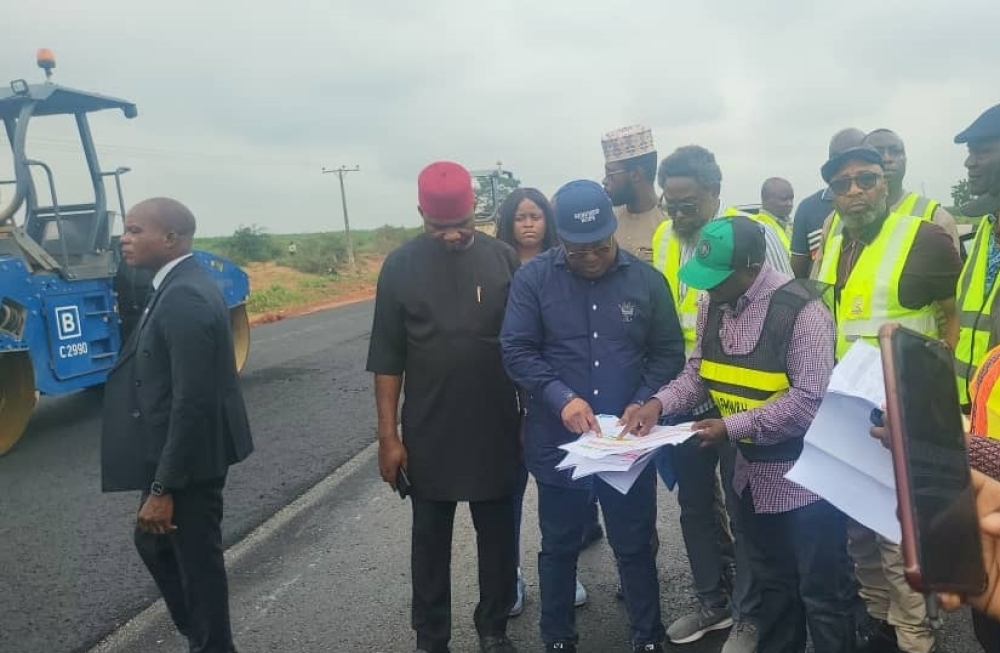
FG COMMENCES WORK ON THE ABUJA- KADUNA- ZARIA- KANO HIGHWAY AND SETS TIMELINE FOR COMPLETION, LAUNCHES NATIONWIDE OPERATION FREE OUR ROADS In the avowed determination of the Renewed Hope administration of the President of the Federal Republic of Nigeria, His Excellency, President Bola Ahmed Tinubu GCFR to complete the dualization of the 375.9 km Abuja - Kaduna - Zaria - Kano Federal Highway, the federal government has commenced immediate work on the dualization of the uncompleted sections of the Highway from Abuja to Kano in North West Geo-Political Zone of the country. The Honourable Minister of Works, His Excellency, Sen Engr. Nweze David Umahi CON stated this during the flag- off of the completion of the Abuja- Kaduna - Zaria - Kano Highway and the site handover of the 38km dual carriageway section of the road to Dangote Group of Companies at chainage 0+000 Zuba on 27th July 2024. Speaking during the flag - off and handover ceremony, the Honourable Minister charged the three companies handling the three sections of the project to show absolute devotion to the completion of the project, noting that the Ministry would look at the need for project rate review to cushion the effects of the increase in material costs, given the last review that was done about 9 months ago . He said, "So the first section is 38 kilometers by two, which is 76 kilometers. The work is starting today, with palliatives and earthworks, and then they will now start to put reinforced concrete pavement" The Honourable Minister used the opportunity to launch the federal government's 'Operation Free our Roads', which is aimed at making sure that all the Federal Roads under rehabilitation are made motorable starting from this rainy season. He said, ".So we are using this as a point of contact to flag off Free our Roads all over the country. And so, they will use stone base to put and free all the potholes. In failed portions or where we have potholes, they will all be filled, both carriageways. Then, they will continue to maintain one carriageway for vehicles to follow while they consistently walk on one carriageway. He emphasized the need for the Ministry's engineers to take the task seriously, including those of FERMA" He stated, "And this operation, Free Our Roads, is not only for the Ministry of Works, but also for FERMA. We're going to put our eyes, all the directors, and all the Zonal engineers of FERMA must take this thing very seriously." And so I will, on behalf of Mr. President, with all gratitude to God and the cooperation of everybody, flag off Operation Free Our Roads and flag off the completion of Abuja to Kaduna, to Zaria, to Kano road, to the glory of God. Amen. While at the section handledby Julius Berger Plc, the Honourable Minister commended the contractor for already starting work and doing a good job, and maintained that the federal government expected the entire project to be completed and delivered by May 2025. He said, "So what we will be discussing with Berger is what can we do to finish this job within May 29th. This is very important because we don't want to stay here beyond May 29th, 2025. And so what Berger cannot finish, we would also have to take it over and give to Dangote under Tax Credit and for reinforced concrete pavement." ...
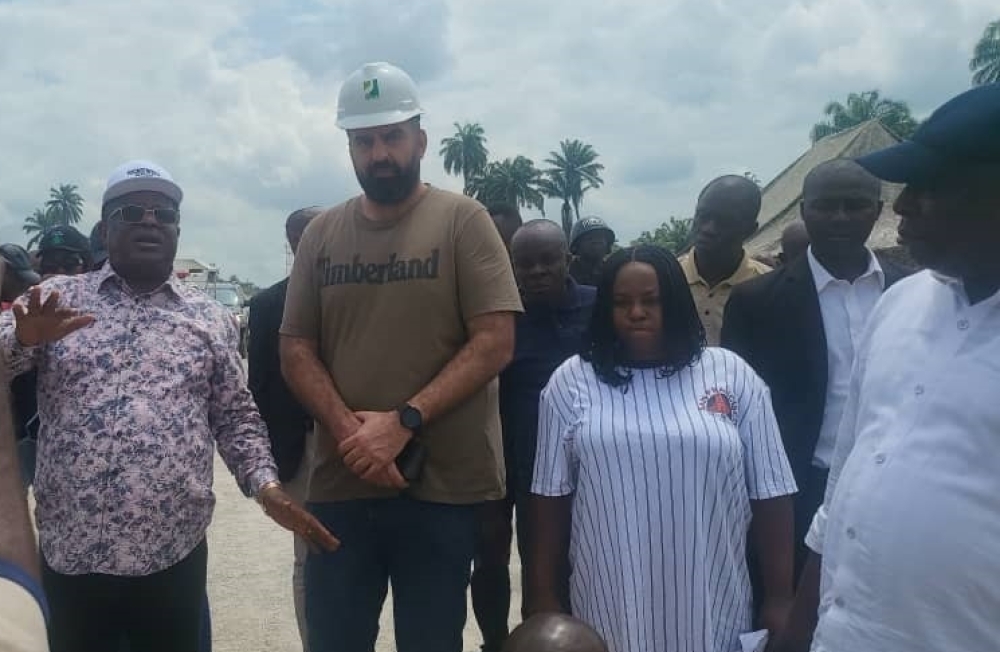
EAST WEST ROAD: PRESIDENT TINUBU'S ADMINISTRATION COMMITTED TO ENDING PAVEMENT FAILURES AND YEARS OF ROAD INFRASTRUCTURE NEGLECT IN THE REGION, SET TO DELIVER POPULAR ROAD INFRASTRUCTURE THAT WILL STAND THE TEST OF TIME In keeping with the Renewed Hope agenda of giving all regions the environment to attain their full economic potentials and guarantee a sense of self-actualization among Nigerians, the administration of His Excellency President Asiwaju Bola Ahmed Tinubu GCFR has introduced a more formidable measure of construction to end pavement failures and years of infrastructural neglect on the East West Road of South-South Nigeria. This was revealed by the Honourable Minister of Works, His Excellency, Sen. Engr. Nweze David Umahi CON during his visit to the project sites at East West Road section II: Kaiama-Ahoada in Rivers/ Bayelsa States; the construction of Multiple Box Culverts at flood damaged locations along the dualization of East West Road handled by Messrs Rock Results Nigeria Ltd and the dualization of East West Road, Section II ( sub section II) handled by SETRACO Nigeria Ltd dated 22nd July 2024. Speaking after the inspection of work progress, the Honourable Minister said that Federal Government redesigned the inherited ongoing project, using reinforced concrete technology to end the perennial pavement failures and years of road neglect across the wetland Niger Delta. He said that some sections of the East-West Road starting from Lokoja to Benin were also rescoped and redesigned in reinforced concrete, and that the height of the road was increased above the flood level, and that the redesign factored the peculiar environment, geomorphology and soil characteristics which were responsible for the failures of flexible pavement used over the years by successive administrations. On the Kaiama-Ahoada section, he said, "When we came on board, the job was already awarded by the past administration. And so, the only new thing in all these locations under President Tinubu is the relief culverts that these two local contractors are putting and are proving themselves to be of a very high reputation in terms of their works. We are encouraging many more local contractors to come and work, because there's so much to work." He observed that the impact of climate change was largely responsible for the flood that came over the two sections of the road but commended the two contractors handling the relief culverts for their deep commitment to the intervention work despite having not been paid. He stated, "And so our directive is that the contractor shouldn't open more relief culverts. Let us contain the floods by working with NDDC. And I commend the MD of NDDC for the fantastic work they are doing." He thanked Rock Results, who also did emergency works, even though it's outside the scope and the 29 Battalion with other paramilitary outfits for the management of the traffic which he said would continue for the next two to four weeks. While seeking for patience on the side of the road users, he assured that permanent solution was underway as the project was being procured to raise the road above the flood level while reinforced concrete of 12 inches would be used to do the overlay. The Honourable Minister who also visited the KM 15 Section 3A of the East- West road (from Eleme Junction to Onne Port Junction) handled by Messrs RCC Nigeria Ltd, commended the quality of work being done but urged the contractor to re-mobilize at least in 6 sections of the project to ensure timely project delivery or be prepared to relinquish the other carriageway for award to another contractor. He stated, "It is Presidential order that this road should be given the maximum attention, and that's why he asked me to come and look at it, and then give him a report. So, we're looking at December for project delivery, but certainly not at the pace that RCC is going." While reacting to the statement credited to a Clergy, Buba Isa on the state of some federal roads, the Honourable Minister reiterated the commitment of the Renewed Hope administration in fixing all the inherited ongoing projects and backlogs of road infrastructure deficits nationwide orchestrated by many years of neglect. While commending President Tinubu for the glaring deference in road infrastructure under his administration which road users are attesting to, he called for patience and understanding as enduring solution to road failures had been reinvented by the Renewed Hope administration and very soon Nigerians would enjoy sustainable infrastructure delivery. ...
FG’S Intervention On Roads Has Improved The Quality Of Learning In Our Institutions- Prof. Angela Miri
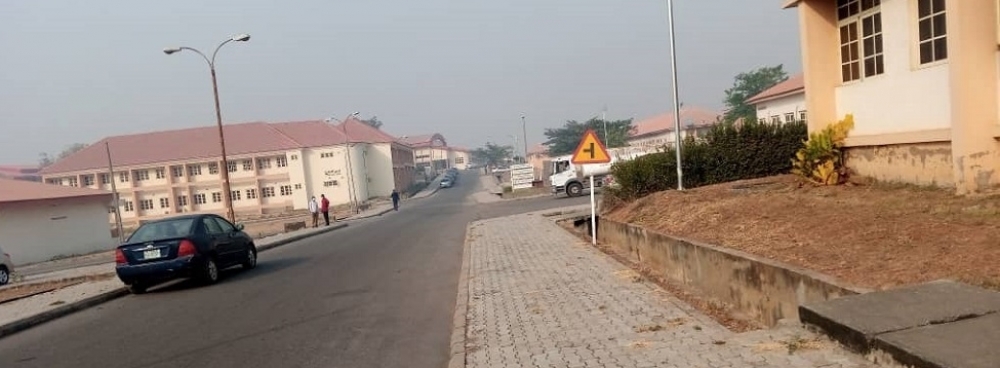
The Vice Chancellor of Federal University, Lokoja, Prof. Angela Miri, has lauded Federal Government for the construction of internal road in the University which she said had improved the quality of learning in the institution.
Speaking at the handing over ceremony of the roads to the institution by the Honourable Minister of Works and Housing, Mr. Babatunde Fashola, SAN on Tuesday 26th January, 2021 in Lokoja, Miri said that the road has not only made vehicular and human movement within the university easy but added value as well as placing it above its equals within the country in terms of provision of infrastructure.
The Vice Chancellor, who was represented by the University Librarian to the institution, Mrs. Sarah Daura Yank, further requested that the Minister of Works and Housing should consider replicating this gesture of constructing internal roads network at the University’s Permanent site at Felele Lokoja, Kogi State.
“The extension of roads infrastructure in Nigerian tertiary institutions by the Federal government will create a conducive learning environment that will improve attainment of qualitative education in Nigeria.” She added.
In his speech, the Minister of Works and Housing, Mr. Babatunde Fashola, SAN disclosed that the 1.67 kilometers road was constructed by his ministry at the institution to improve learning.
Mr. Fashola, who was represented by the Federal Controller of Works Kogi State, Engr. Kajogbola Olatunde, said that availability of good infrastructure in a learning environment would enhance students’ morale towards learning and the quality of education acquired by them.
He said: "It is un- debatable that quality of education will be impacted by the quality of infrastructure and the learning environment and those who doubt it should simply listen to some of the feedbacks from the students in the schools where this type of intervention has taken place."
He noted that though the road projects might be civil works, they are investment in education, adding that the students' zeal to attend classes have been renewed because of the restoration of the deplorable roads within the institutions.
"A point must be made that although this is a civil works project, it is an investment in education and the students are expressing renewed enthusiasm with regards to attending classes because some defective roads have been restored to good condition," Fashola stated.
He explained: "Currently, there are 43 number of road interventions within tertiary institution across Nigeria" and "to date 29 No. of the road intervention projects have been completed with 17 already handed over in 2020. Today we handover this one in Federal University Lokoja, Kogi State as a critical intervention to support education."
According to Fashola, the Infrastructure gap in the country was steadily being bridged by a gradual process of repairs, renewal and construction on major highways and now it had reached the schools. Pointing out that the road construction was part of the Federal Government’s Tertiary Institutions Internal Road Intervention Programme and was supervised by the Federal Ministry of Works and Housing.
The Minister said that the construction work was not only impactful on the learning environment but had also provided employment opportunities for Nigerians in line with the present administration's vision of creating jobs for Nigerians.
"During the construction 25 people were employed in the process thereby contributing to the job creation initiative of the present government," he said.
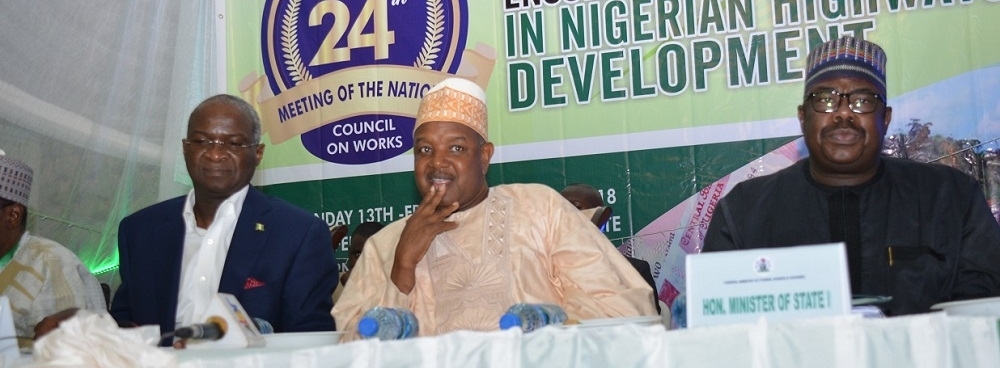
Ensuring Value For Money In Nigerian Highways Development Being Remarks By Babatunde Raji Fashola, San At The National Council On Works, Held In Kebbi
On behalf of the State Commissioners and other Members of Council, I express the appreciation of the Federal Government of Nigeria to the Government and People of Kebbi State for hosting our Council Meeting and for doing so under very hospitable circumstances, in Birnin Kebbi.
Apart from being the home of famous Emirates like Gwandu, Yauri, Zuru, Argungu to mention a few, Kebbi State has come to the centre stage in Nigeria’s developmental history, especially at this time when Governor Atiku Bagudu is providing visionary, developmental and progressive leadership.
Statesmen, not big men, as former Governors, former Chief Judges have rallied around their Governor and Government to pursue a common goal of development.
From Agriculture, to Roads, Housing to Power, whenever it is partnership for Development, Atiku Bagudu will be found making the strongest case for why Kebbi must be involved. This remarkable and inspiring leadership must be acknowledged.
It is in this environment of developmental focus that we converge for the 24th National Council for Works to discuss development around getting “Value for Money in Nigerian Highways”.
Ladies and gentlemen, I found this topic appealing to this Council because of some of the assumptions that have been made about Cost of Roads in Nigeria, the questions I have had to answer, posed by people who ought to know, and because I hope to generate a more informed conversation about the matter.
It is my expectation that in each State, we will be sufficiently interested to interrogate issues like the source of value, where it lies and how to get the best out of it.
Therefore, I would like to start by asking the question why Nigeria has bad roads after almost a decade of prolific receipts from oil boom when oil prices were at $100 per barrel.
The answer is partly because we did not invest our money in Roads in the way that the United Arab Emirates, Qatar, Saudi Arabia and Brazil, to mention a few oil-exporting countries, have done.
To the extent that Roads are assets that live for longer periods of time and deliver collective National Benefit in terms of movement of goods and services and contribution to the GDP, clearly, it is doubtful that we got optimum value for those oil incomes between 2007 and 2015.
In other words, instead of investing our oil receipts in Roads, and long-term assets, of infrastructure, we spent the money on recurrent items of expenditure.
This is clearly discernible from the Annual Federal Budgets of that era, where the maximum provision for Capital Expenditure struggled to exceed 20%, when they seldom went beyond the threshold of 15%; and what was ultimately released by way of cash was scarcely ever in excess of 50%.
The result of these, of course was that by 2015 when I took office, there were over 200 roads whose contract values were in excess of N2 trillion and for which payments had only cumulated to about N500 billion.
Some of these roads had been awarded for upwards of 10 (ten) years. Inadequate budget and funding had delayed their completion. Many sites had been abandoned, workers laid off, equipment grounded.
This was where the Buhari Government picked up. With significantly lower oil incomes, we got the contractors back to site one after the other. We raised the budget size from N4 Trillion to N6 Trillion in 2016 and increased capital spending to 30%; which was funded by borrowing to finance the deficit.
For those who wanted roads to be fixed and those who did not want the nation to borrow, there is no middle ground. You either borrow to invest in tomorrow’s infrastructure at today’s prices, or wait until you can do it tomorrow at tomorrow’s price.
Our reality today is that the roads that were awarded 10 years ago and were not funded then have to be funded at today’s prices of money, interest rates, and at today’s prices of cement, iron rod, laterite and labour wages.
Clearly, we lost not only the value of money not properly invested, we lost value in the cost of doing business without good roads. We lost value in productivity by men and machine that became redundant.
While we cannot recover what is lost, we must not lose what is ahead; in this regard, I am happy to say that the Buhari Government is investing wisely and sensibly in the infrastructure that will drive Nigeria’s tomorrow.
From Rail to Ports, Power and Roads, this administration is resolute in its determination to complete ongoing or abandoned projects. Today, there is no State in Nigeria where the Federal Government of Nigeria is not executing one Road Project.
Hon. Commissioner has confirmed in his address Roads being executed in Kebbi. He wants more , the Buhari Government is ready to do more. It is in your hands to bring him back.
Undoubtedly, we have done more with less. This is the meaning of value. But there are other challenges that we must work together to improve upon in order to remove avoidable costs from Road and related infrastructure development.
A) Land issues, compensation, and court cases compound the cost of construction.
B) Conflicts, security breaches, pose risks to construction workers, which escalates costs in many ways, such as insurance, payment of security personnel, delays to project completion, to mention a few;
C) The absence of uniform Public Sector Procurement Prices;
D) Proper project planning, development and supervision;
E) Post-construction maintenance of scheduled and unscheduled natures to achieve asset life cycle expectation and performance; ( Bridges – Tamburawa, Tatabu, Third Mainland, Niger Bridge, Koton Karfe , Ijora, Isaac Boro).
F) Dispute resolution mechanisms as a means of achieving cost efficiency in road construction and achieving value for money, must be interrogated;
G) Government Treasury Operations and Payment Systems, review and reform will contribute to achieving better value for money in Road Development Project.
H) Increasing local content in Nigeria Road Construction and implementing Presidential Order 5.
Ladies and Gentlemen, these are only some of the items of avoidable costs around which we should have a conversation and a resolution if we are to achieve better value for money.
Each one of them is a full subject of debate in itself.
It is my expectation that many sections of the construction industry will rise up to the challenges inherent in improving each of the areas I have highlighted.
I make myself ready to contribute and participate upon reasonable notice.
Thank you for listening and I wish us very fruitful deliberations.
Babatunde Raji Fashola, SAN
Honourable Minister of Power, Works, and Housing
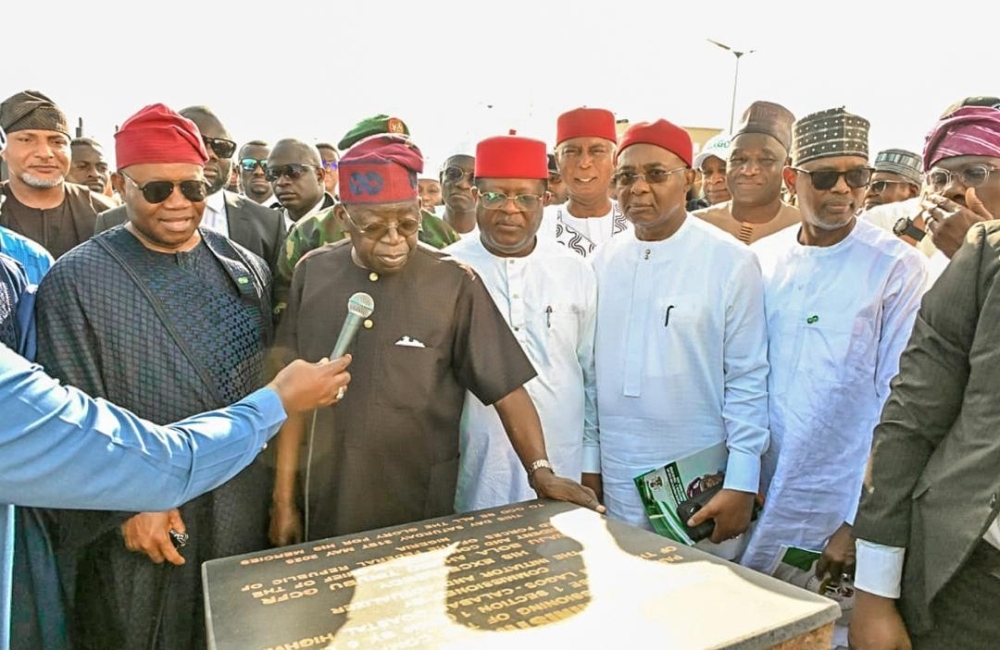
DRIVING NIGERIA’S FUTURE: CELEBRATING TWO YEARS OF TRANSFORMATIVE LEADERSHIP AND THE LAGOS-CALABAR COASTAL HIGHWAY MILESTONE
DRIVING NIGERIA’S FUTURE: CELEBRATING TWO YEARS OF TRANSFORMATIVE LEADERSHIP AND THE LAGOS-CALABAR COASTAL HIGHWAY MILESTONE
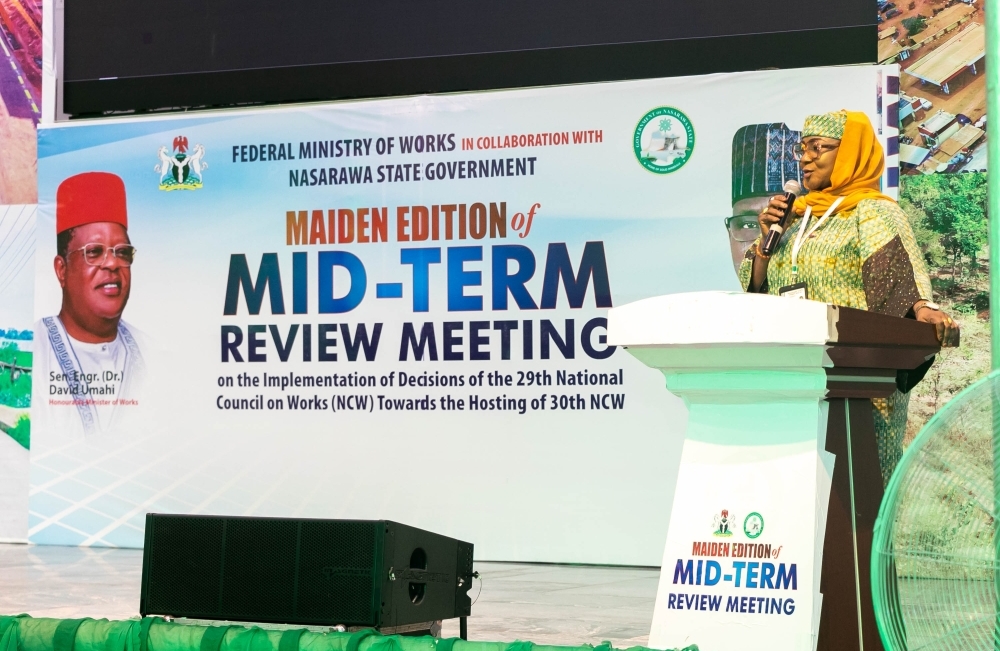
MID -TERM REVIEW MEETING ON THE IMPLIMENTATION OF THE DECISIONS REACHED AT THE 29TH NATIONAL COUNCIL ON WORKS (NCW) DAY 1
MID -TERM REVIEW MEETING ON THE IMPLIMENTATION OF THE DECISIONS REACHED AT THE 29TH NATIONAL COUNCIL ON WORKS (NCW) DAY 1