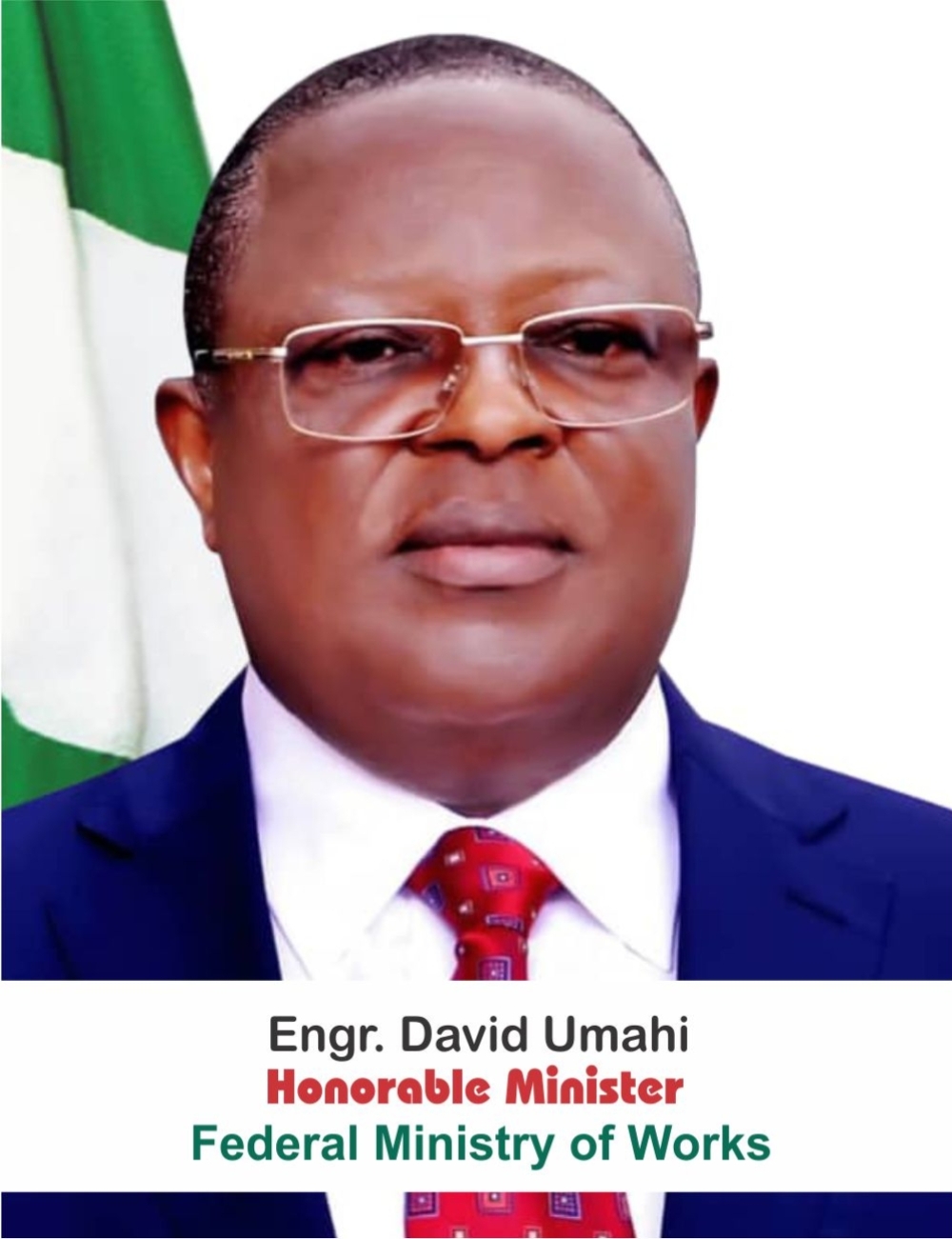
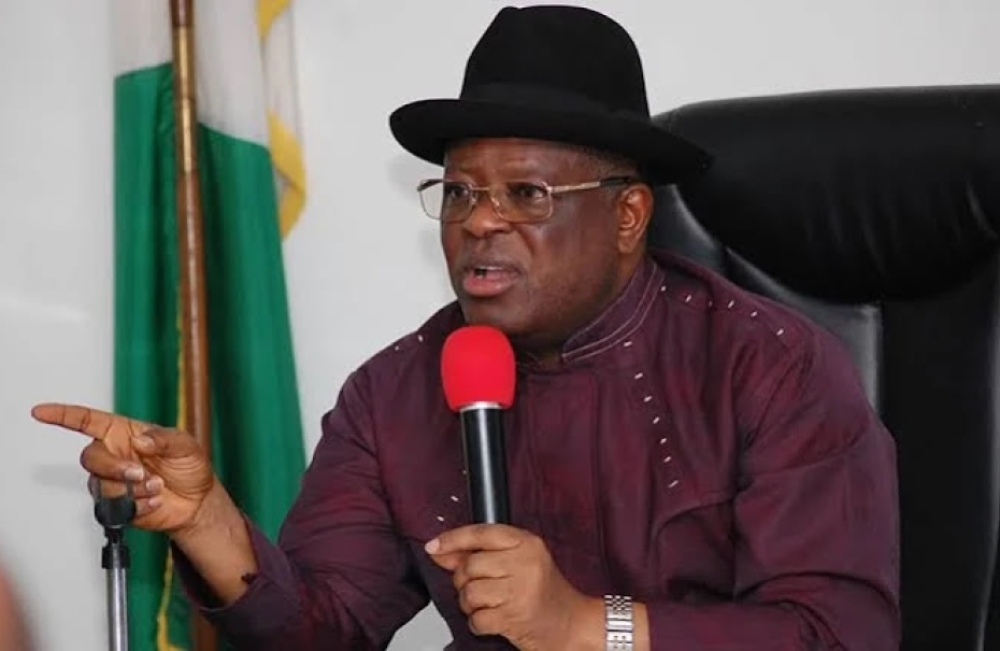
UMAHI ORDERS IMMEDIATE EMERGENCY INTERVENTION ON BENIN-ASABA ROAD, AND SOME OTHER CRITICAL FEDERAL ROADS
The Honourable Minister of Works, Senator Engr. David Nweze Umahi, CON, has directed the immediate deployment of major contractors to all three sections of the Benin-Asaba Federal Road to restore the failed sections and bring an end to the suffering of motorists and other road users.
This is because, the situation on the concessioned Benin-Asaba Road has reached a point where the overall public interest must take precedence over the existing concession agreement.
Recall that the Honourable Minister of Works was on the Benin-Asaba Road about seven days ago, where he assembled a number of contractors and directed them to prepare for immediate palliative intervention on the affected sections of the road at no cost to the concessionaire. In line with the Concession agreement which requires that before the Federal Government could intervene, the permission of the concessionaire must be required, and that permission was not granted to federal government.
The Minister subsequently proposed three options to the concessionaire, any one of which would have enabled the Federal Government to move in and address the worsening condition of the road. Unfortunately, none of the options was accepted by the concessionaire. Immediately after the Minister left Asaba, the already limited equipment deployed to the road by the concessionaire was further reduced to just one, worsening the situation and increasing the suffering of motorists and other road users.
While the Minister takes responsibility for the concerns and suffering of Nigerians using the road, it is important to state that the concessionaire has also not taken the suffering of Edo people and travelling public sufficiently into consideration by declining all the options put forward by the Federal Government. The concessionaire continues to rely on the terms of the concession agreement entered into by the previous administration, an agreement which weighs heavily against the Federal Government’s ability to intervene quickly in the interest of the public in a situation like this.
In view of this situation, the Honourable Minister of Works has directed the immediate deployment of major contractors within the corridor to all three sections of the Benin-Asaba Road to restore the failed sections and bring relief to the people, with the cost of the emergency intervention being borne by the Federal Government. The Honourable Minister has also directed immediate redesign of the entire route to be rebuilt with reinforced concrete pavement. The public should therefore take note that immediate action is underway to restore every failed section of the Benin-Asaba Road and subsequently rehabilitate the entire sections of the road using reinforced concrete pavement.
2. On the Benin-Sapele Road:
The Governors of Edo and Delta States, the Niger Delta Development Commission (NDDC), and the Federal Government are currently engaged in interventions on different sections of the road to restore the entire route. While some sections are receiving palliative attention, permanent works are also ongoing on other sections.
3. On Ifaki(Ekiti) - Kabba (Kogi) Road:
The Federal Government is engaging both the contractor; Gamji Nigeria Company Limited, and Dangote PLC on immediate emergency and permanent intervention on the most failed sections of the road, while efforts are being made to financially mobilise the company for more extensive permanent work to commence on the axis.
4. On the Sokoto-Zamfara-Katsina Road: This is an inherited project involving the dualisation of approximately 350 kilometres, which translates to about 700 kilometers. The project has since been redesigned and is currently ongoing and most sections are being reconstructed using reinforced concrete pavement. From the Sokoto axis towards Zamfara, over 50 kilometres of one carriageway have been fully completed with reinforced concrete pavement. From Zamfara to Katsina, some sections have been completed and palliative works have been ordered over the sections that have not been reconstructed. However, the pace of work slowed down due to the redesign and rephasing of the project. The contractors currently engaged on the road include CBC, SETRACO, Triacta and Mothercat. They are being remobilised to return to site and complete the outstanding works.
5. On the Abuja-Kaduna-Zaria-Kano Road: The Federal Government took over the Road project and has currently completed the 118-kilometer mostly on reinforced concrete pavement on lot 1. The Lot 2, which covers 164 kilometres, is over 60 percent completed on reinforced concrete pavement. The Federal Government has also introduced solar-powered light on the entire route of Abuja-Kaduna-Zaria - Kano to improve visibility during night travel and enhance the overall security situation on the route. The entire project is scheduled for completion by December 2026.
6. On Bauchi-Jigawa Road: Triacta Nigeria Limited has been mobilised to carry out the necessary interventions on some failed sections and work is currently ongoing in those failed sections.
7. On the Sagamu-Ore Road: 48 Kilometers of the 96-kilometre road have already been completed using reinforced concrete pavement. There is also a 24-kilometre section around Ore which was abandoned by the previous contractor. The Federal Government has directed its immediate restoration to ensure seamless travel. Solar lights are being installed in the entire 96kilometer of the road.
8. On Flooded Sections on Sagamu-Ore-Benin Road: The flooded sections on the same corridor between Sagamu-Ore-Benin Road, as well as other flooded sections in Ondo State, are being designed for emergency procurement and intervention.
9. On the East-West Road:
Some failed and critical sections, including defective sections of bridges along the East-West Road, are being marked out for emergency procurement and intervention.
10. On the Abuja-Lokoja Road:
Several contracts are ongoing along the route, while the three critical sections currently without contracts are being procured for emergency intervention.
11. On the Lokoja-Benin-Warri Road: The President has directed a complete redesign and procurement of the 400-kilometre dualised route covering the uncompleted sections, using reinforced concrete pavement, while palliative works will continue with the contractors currently on the road.
12. On Carter Bridge:
While the Federal Government continues to undertake weekly maintenance of the underwater elements of the bridge. The site has also been handed over to the contractor, CCECC, for the construction of a permanent new bridge, and work has commenced.
13. On the Third Mainland Bridge:
With regard to the defective underwater structural elements, the Federal Government is at the final stage of determining the appropriate intervention for the repair of the affected elements.
14. On the flooded section of the Lagos-Ibadan Road: Work has commenced on the affected section. There are also several flooded sections on federal roads across the six geopolitical zones, largely occasioned by excessive flooding and the effects of climate change. The Federal Government is identifying and marking these sections for immediate attention.
15. On the First and Second Niger Bridges:
Intervention work is ongoing on the approach roads to the Second Niger Bridge damaged by flood and the work is progressing very well. The First Niger Bridge has been closed to traffic to enable immediate repair works. Contractor has mobilized to site and comprehensive rehabilitation of the bridge has started. From Summit Junction to the First Niger Bridge, massive rehabilitation work is also ongoing using reinforced concrete pavement.
16. The Honourable Minister wishes to commend the President of the Federal Republic of Nigeria, His Excellency Bola Ahmed Tinubu, GCFR, for the massive work being undertaken on the nation’s roads since the administration assumed office in 2023.
17. It is important to state that when the present administration came into office, there was hardly any part of the country where one could travel for an hour without encountering significant challenges on the road network. The condition of the country’s roads and bridges was a major national infrastructure challenge.
18. Rather than shy away from the problem, the administration of President Bola Ahmed Tinubu made the nation’s road network a priority. Virtually every part of the country became a priority, and the Federal Government, through the Federal Ministry of Works, Regional Commissions, Parastatals and other MDA’s has continued to respond extensively to these challenges.
19. The Federal Government is currently working on over 80 percent of the inherited federal roads, an unprecedented level of intervention in the country’s road infrastructure.
20. We ask the public to understand the enormous challenges inherited on our roads and bridges and to take note not only of the problems being solved, but also of the permanent solutions being introduced.
21. A major part of this new approach is the use of reinforced concrete pavement, designed to significantly extend the lifespan of major roads. These roads are expected to last between 50 and 100 years. This means that roads being constructed under President Bola Ahmed Tinubu’s administration are being designed with future generations in mind, rather than simply providing temporary solutions to today’s problems. And this is a complete departure from the past, when roads often deteriorated only a few years after completion, resulting in a continuous cycle of reconstruction and expenditure.
22. We appreciate the concerns of Nigerians over the condition of some roads presently and the difficulties faced by motorists and commuters who cannot move easily from one point to another. Those concerns are legitimate, and the Federal Government is listening. But Nigerians should also recognise the enormous scale of the problems inherited and the amount of work currently being undertaken across the country.
23. It is simply impossible to resolve every road challenge accumulated over many years of neglect by the past administrations within three years. What is important is that the government is working, the government is responding, and the government is putting permanent solutions in place.
25. We appreciate members of the public who send situation reports on failed roads and other infrastructure challenges. These reports help the Ministry identify areas requiring urgent attention. However, we also appeal to members of the public to report when such problems have been addressed, just as they report when they occur.
24. We are aware of situations where photographs and reports of road challenges continue to circulate on social media even after the Federal Government has intervened and resolved the particular problem.
25. However, the Ministry will continue to respond as rapidly as possible to genuine reports and concerns from Nigerians.
26. It is also important to note that we have compiled a comprehensive record of all inherited, ongoing and intervention projects across the country which is available to the public. This is to ensure that Nigerians have access to information on the infrastructure projects being undertaken nationwide and can fully participate in and appreciate the infrastructure revolution of President Bola Ahmed Tinubu’s administration.

UMAHI ORDERS IMMEDIATE EMERGENCY INTERVENTION ON BENIN-ASABA ROAD, AND SOME OTHER CRITICAL FEDERAL ROADS The Honourable Minister of Works, Senator Engr. David Nweze Umahi, CON, has directed the immediate deployment of major contractors to all three sections of the Benin-Asaba Federal Road to restore the failed sections and bring an end to the suffering of motorists and other road users. This is because, the situation on the concessioned Benin-Asaba Road has reached a point where the overall public interest must take precedence over the existing concession agreement. Recall that the Honourable Minister of Works was on the Benin-Asaba Road about seven days ago, where he assembled a number of contractors and directed them to prepare for immediate palliative intervention on the affected sections of the road at no cost to the concessionaire. In line with the Concession agreement which requires that before the Federal Government could intervene, the permission of the concessionaire must be required, and that permission was not granted to federal government. The Minister subsequently proposed three options to the concessionaire, any one of which would have enabled the Federal Government to move in and address the worsening condition of the road. Unfortunately, none of the options was accepted by the concessionaire. Immediately after the Minister left Asaba, the already limited equipment deployed to the road by the concessionaire was further reduced to just one, worsening the situation and increasing the suffering of motorists and other road users. While the Minister takes responsibility for the concerns and suffering of Nigerians using the road, it is important to state that the concessionaire has also not taken the suffering of Edo people and travelling public sufficiently into consideration by declining all the options put forward by the Federal Government. The concessionaire continues to rely on the terms of the concession agreement entered into by the previous administration, an agreement which weighs heavily against the Federal Government’s ability to intervene quickly in the interest of the public in a situation like this. In view of this situation, the Honourable Minister of Works has directed the immediate deployment of major contractors within the corridor to all three sections of the Benin-Asaba Road to restore the failed sections and bring relief to the people, with the cost of the emergency intervention being borne by the Federal Government. The Honourable Minister has also directed immediate redesign of the entire route to be rebuilt with reinforced concrete pavement. The public should therefore take note that immediate action is underway to restore every failed section of the Benin-Asaba Road and subsequently rehabilitate the entire sections of the road using reinforced concrete pavement. 2. On the Benin-Sapele Road: 3. On Ifaki(Ekiti) - Kabba (Kogi) Road: 4. On the Sokoto-Zamfara-Katsina Road: This is an inherited project involving the dualisation of approximately 350 kilometres, which translates to about 700 kilometers. The project has since been redesigned and is currently ongoing and most sections are being reconstructed using reinforced concrete pavement. From the Sokoto axis towards Zamfara, over 50 kilometres of one carriageway have been fully completed with reinforced concrete pavement. From Zamfara to Katsina, some sections have been completed and palliative works have been ordered over the sections that have not been reconstructed. However, the pace of work slowed down due to the redesign and rephasing of the project. The contractors currently engaged on the road include CBC, SETRACO, Triacta and Mothercat. They are being remobilised to return to site and complete the outstanding works. 5. On the Abuja-Kaduna-Zaria-Kano Road: The Federal Government took over the Road project and has currently completed the 118-kilometer mostly on reinforced concrete pavement on lot 1. The Lot 2, which covers 164 kilometres, is over 60 percent completed on reinforced concrete pavement. The Federal Government has also introduced solar-powered light on the entire route of Abuja-Kaduna-Zaria - Kano to improve visibility during night travel and enhance the overall security situation on the route. The entire project is scheduled for completion by December 2026. 6. On Bauchi-Jigawa Road: Triacta Nigeria Limited has been mobilised to carry out the necessary interventions on some failed sections and work is currently ongoing in those failed sections. 7. On the Sagamu-Ore Road: 48 Kilometers of the 96-kilometre road have already been completed using reinforced concrete pavement. There is also a 24-kilometre section around Ore which was abandoned by the previous contractor. The Federal Government has directed its immediate restoration to ensure seamless travel. Solar lights are being installed in the entire 96kilometer of the road. 8. On Flooded Sections on Sagamu-Ore-Benin Road: The flooded sections on the same corridor between Sagamu-Ore-Benin Road, as well as other flooded sections in Ondo State, are being designed for emergency procurement and intervention. 9. On the East-West Road: 10. On the Abuja-Lokoja Road: 11. On the Lokoja-Benin-Warri Road: The President has directed a complete redesign and procurement of the 400-kilometre dualised route covering the uncompleted sections, using reinforced concrete pavement, while palliative works will continue with the contractors currently on the road. 12. On Carter Bridge: 13. On the Third Mainland Bridge: 14. On the flooded section of the Lagos-Ibadan Road: Work has commenced on the affected section. There are also several flooded sections on federal roads across the six geopolitical zones, largely occasioned by excessive flooding and the effects of climate change. The Federal Government is identifying and marking these sections for immediate attention. 15. On the First and Second Niger Bridges: 16. The Honourable Minister wishes to commend the President of the Federal Republic of Nigeria, His Excellency Bola Ahmed Tinubu, GCFR, for the massive work being undertaken on the nation’s roads since the administration assumed office in 2023. 17. It is important to state that when the present administration came into office, there was hardly any part of the country where one could travel for an hour without encountering significant challenges on the road network. The condition of the country’s roads and bridges was a major national infrastructure challenge. 18. Rather than shy away from the problem, the administration of President Bola Ahmed Tinubu made the nation’s road network a priority. Virtually every part of the country became a priority, and the Federal Government, through the Federal Ministry of Works, Regional Commissions, Parastatals and other MDA’s has continued to respond extensively to these challenges. 19. The Federal Government is currently working on over 80 percent of the inherited federal roads, an unprecedented level of intervention in the country’s road infrastructure. 20. We ask the public to understand the enormous challenges inherited on our roads and bridges and to take note not only of the problems being solved, but also of the permanent solutions being introduced. 21. A major part of this new approach is the use of reinforced concrete pavement, designed to significantly extend the lifespan of major roads. These roads are expected to last between 50 and 100 years. This means that roads being constructed under President Bola Ahmed Tinubu’s administration are being designed with future generations in mind, rather than simply providing temporary solutions to today’s problems. And this is a complete departure from the past, when roads often deteriorated only a few years after completion, resulting in a continuous cycle of reconstruction and expenditure. 22. We appreciate the concerns of Nigerians over the condition of some roads presently and the difficulties faced by motorists and commuters who cannot move easily from one point to another. Those concerns are legitimate, and the Federal Government is listening. But Nigerians should also recognise the enormous scale of the problems inherited and the amount of work currently being undertaken across the country. 23. It is simply impossible to resolve every road challenge accumulated over many years of neglect by the past administrations within three years. What is important is that the government is working, the government is responding, and the government is putting permanent solutions in place. 25. We appreciate members of the public who send situation reports on failed roads and other infrastructure challenges. These reports help the Ministry identify areas requiring urgent attention. However, we also appeal to members of the public to report when such problems have been addressed, just as they report when they occur. 24. We are aware of situations where photographs and reports of road challenges continue to circulate on social media even after the Federal Government has intervened and resolved the particular problem.
The Governors of Edo and Delta States, the Niger Delta Development Commission (NDDC), and the Federal Government are currently engaged in interventions on different sections of the road to restore the entire route. While some sections are receiving palliative attention, permanent works are also ongoing on other sections.
The Federal Government is engaging both the contractor; Gamji Nigeria Company Limited, and Dangote PLC on immediate emergency and permanent intervention on the most failed sections of the road, while efforts are being made to financially mobilise the company for more extensive permanent work to commence on the axis.
Some failed and critical sections, including defective sections of bridges along the East-West Road, are being marked out for emergency procurement and intervention.
Several contracts are ongoing along the route, while the three critical sections currently without contracts are being procured for emergency intervention.
While the Federal Government continues to undertake weekly maintenance of the underwater elements of the bridge. The site has also been handed over to the contractor, CCECC, for the construction of a permanent new bridge, and work has commenced.
With regard to the defective underwater structural elements, the Federal Government is at the final stage of determining the appropriate intervention for the repair of the affected elements.
Intervention work is ongoing on the approach roads to the Second Niger Bridge damaged by flood and the work is progressing very well. The First Niger Bridge has been closed to traffic to enable immediate repair works. Contractor has mobilized to site and comprehensive rehabilitation of the bridge has started. From Summit Junction to the First Niger Bridge, massive rehabilitation work is also ongoing using reinforced concrete pavement.
25. However, the Ministry will continue to respond as rapidly as possible to genuine reports and concerns from Nigerians.
26. It is also important to note that we have compiled a comprehensive record of all inherited, ongoing and intervention projects across the country which is available to the public. This is to ensure that Nigerians have access to information on the infrastructure projects being undertaken nationwide and can fully participate in and appreciate the infrastructure revolution of President Bola Ahmed Tinubu’s administration.
Civil Servants in the Federal Ministry of Works Celebrate Sen. Umahi For Quality Leadership and Commitment to the Welfare of Workers 1. It was a day of joy, eulogies and encomiums as civil servants in the Federal Ministry of Works, Mabushi-Abuja rolled out their drums to celebrate and honour the Honourable Minister of Works, His Excellency Sen Engr Nweze David Umahi CON for his quality leadership and sense of devotion to the welfare of the workers of the Ministry. The workers under the aegis of Joint Union, Federal Ministry of Works took the Honourable Minister by surprise as they converged at the Ministry’s Main Hall on Tuesday, 20th February 2024 and sought an audience with him through their Permanent Secretary, Dr. Yakubu Adam Kofaramata. 2. The Honourable Minister, in his usual unassuming mannerism and deep sense of responsiveness, came down to see his workers and behold it was a mammoth crowd of over 1500 workers in the Ministry's headquarters who were seated to thank him for the quality leadership and devotion to the workers well-being which they have continued to enjoy since he came on board as Hon. Minister of Works. 3. The Honourable Minister was honoured with a 'Pragmatic Leadership Award' by the Joint Union of the Ministry. The workers also danced a treat with the Honourable Minister in demonstration of their love for his leadership style, which they said was unprecedented in the history of the establishment of the Federal Ministry of Works. 4. Speaking during the event, the Honourable Minister of Works thanked the workers for the surprise reception by the workers and the award of honour given to him by the workers. He particularly thanked the leadership of the Joint Union of the Ministry for their sense of happiness and thankfulness, which they demonstrated through their surprise reception. He promised to continue to serve the purpose of his appointment with the deepest sense of responsibility and in undiluted collaboration with the workforce. He announced the commencement of training programmes for the Ministry's workers from grade level 14 and above and the establishment of the Ministry's Welfare Fund for the staff to enhance their happiness, effective March 2024. He also announced the involvement of the Ministry's staff in the monitoring and evaluation of the projects executed by the Ministry nationwide and the reactivation of the whistle blowers’ desk of the Ministry to assist in reporting jobs not done in accordance with the Ministry's specifications. He urged civil servants all over the country to take Nigeria first in the dispensation of their public duties, adding that the Renewed Hope administration of His Excellency President Asiwaju Bola Ahmed Tinubu GCFR means well for Nigeria and deserves from all the support and cooperation needed for him to achieve enduring solutions to our socio-economic problems. He said, "I want to assure you that Mr. President feels your problems, and he's working out something day and night to give a solution to the teething problems facing the country. You see, the problem of our country is the problem of all of us. We need to bring back to society what we've taken from society. We need to do that. It's not the blame of the President, it's not the blame of the past President. Americans will always say America first". 5. Speaking on behalf of the entire staff, the Permanent Secretary praised the professional and administrative capacities of the Hon. Minister of Works. The Permanent Secretary described him as a super intelligent, action-packed, and vision -driven Minister who recognizes and values the potential of the workers. He said, “The workers, and indeed, Nigerians, are happy with Mr. President for appointing a round peg to head the Federal Ministry of Works. We assure you that we will continue to work loyally with the core values of honesty, integrity, industry, and objectivity for the good of our Ministry. 6. Presenting the award of honour to the Honourable Minister, the Chairman of the Joint Union, Mr. Omobolanle Kuti stated that the event was organized for all the workers to give honour to whom honour is due. He stated that the Hon. Minister has shown a good example of a compassionate leader who cares for the welfare of his people and the progress of his fatherland. He continued" You have shown a great difference in the way you care for our welfare, in the way you attend to mails, in supervising the projects executed under the Ministry, in your power of contract negotiations and assuring best standards in the delivery of road projects. You even supervise projects on weekends and public holidays, you come to the office early and go very late. No mail delays in your office for more than 24 hours. We are proud of you. " 7. In his vote of thanks, the Director, Human Resources Mr. Aliyu Abdallahi appreciated the Hon. Minister for his selfless service and care for the wellbeing of the civil servants in the Ministry and described him as a special breed of politician who works for the good of all persons despite their place of origin. He also described him as a leader who builds the capacities of workers irrespective of their grade levels or competences. He prayed God to continue to prosper the Hon. Minister with greater innovative powers and benevolence of heart as he works to actualize the mandate of the Federal Ministry of Works. ...
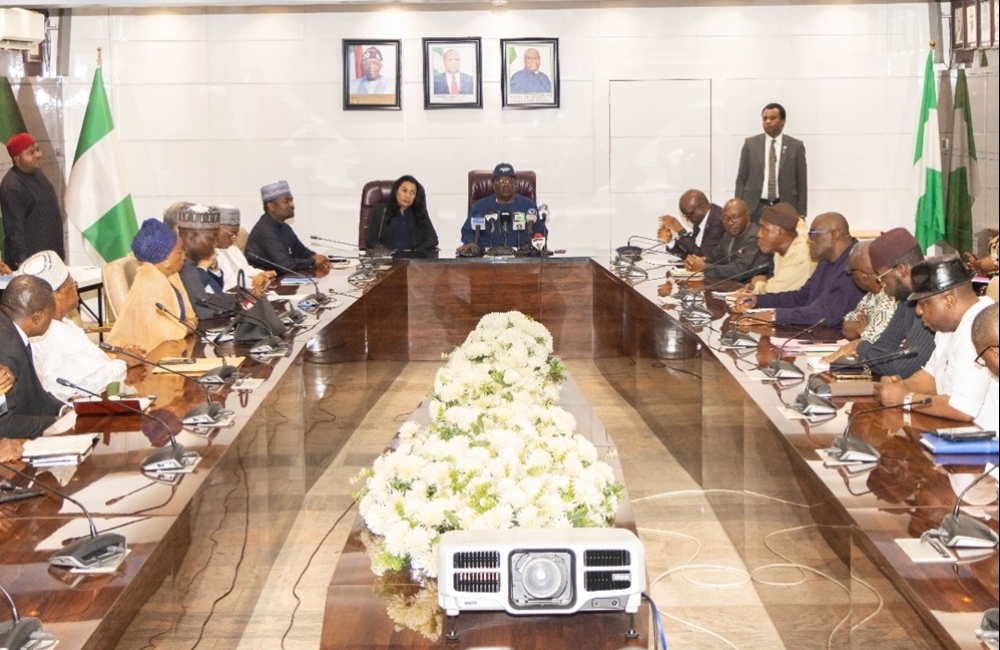
Federal Government and Cement Manufacturers Meet Over Escalating Price of Cement, Brainstorm on Challenges Facing Cement Manufacturing, Agree on a Price Range of N7,000- N8,000/ 50 Kg Bag 1. The Federal Government has agreed with the cement manufacturers on the modalities to tackle the escalating price of cement in Nigeria. This was the outcome of the meeting of the Honourable Minister of Works, His Excellency, Sen. Engr. Nweze David Umahi GON the Honourable Minister of Industry, Trade and Investment, Dr. Doris Uzoka-Anite, the cement manufacturers and the Cement Producers Association. The meeting held closed door at the office of the Honourable Minister of Works. Mabushi, Abuja, had in attendance, the representatives of Dangote Cement Plc, BUA Cement Plc, Larfage Africa Plc and Cement Producers Association. 2. In their separate remarks, the Honourable Minister of Works said the meeting was aimed at addressing the concerns of Nigerians on the escalating cost of cement in Nigeria marked by the disparities between the ex-factory price and the market price of cement. He expressed hope that the meeting would proffer enduring solutions to the unabating increase in cement price. 3. Also in her remarks, the Honourable Minister of Industry, Trade and Investment said it was worrisome that the price of cement was surging despite her Ministry's regulatory policies and the Backward Integration Programme (BIP) introduced to manage cement price and development, and expressed surprise that the whole idea of the BIP on the management and development of cement manufacturing industry is not bearing the desired fruit. 4. A communique was issued after the meeting and was read by the Honourable Minister of Works as contained in the appendix hereunder. The two Honourable Ministers also used the opportunity to re-assure Nigerians that the Renewed Hope Administration of His Excellency, President Asiwaju Ahmed Bola Tinubu, GCFR is committed to addressing the economic challenges facing the country and shall leave no stone unturned in addressing the escalating prices of commodities, including the price of cement in Nigeria. 5. Confirming the communique as the true reflection of their deliberations, the spokespersons to the cement manufacturers and the Cement Producers Association thanked the two Honourable Ministers for their sense of devotion to the cause of national development and expressed their confidence in the timely intervention of the Federal Government to the challenges facing cement manufacturing in Nigeria. The spokesperson of Dangote Cement Plc and GMD/CEO, Mr Arvind Pathak added, "the Honourable Ministers gave us a kind hearing, and we have agreed for a window of 30 days in which we re-assemble and see how best we can move on that." The spokesperson of BUA Cement Plc and Group Executive Director, Mr. Kabiru Rabiu said. "And another thing that I need to also add is that BUA is committed to bringing an additional 6 million tons of cement in the next few weeks, and that will seriously dampen the pressure of supply in the market, and we will continue to commit to this engagement." The spokesperson to Lafarge Africa Plc and Commercial Director Mr. Gbenga Onimowo said " it was very timely, honestly, listening towards the challenges that we all face as manufacturers, I think we appreciate that, and we do look forward to the solutions coming, the support they're going to give within the next coming days." The President of Cement Producers Association, Prince David Aweta, added. "I am actually here to advocate for the six other players to join in the industry because practically, we can feel that the operators in the cement industry at the moment are so few and that is why we are having this perennial problem of cement hikes particularly during dry seasons." DETAILS OF THE COMMUNIQUE Meeting of Cement Manufacturers – Dangote Cement Plc, Bua Cement Plc, Larfarge Africa Plc & Cement Producers Association with the Honourable Minister of Industry, Trade & Investment, Dr. Doris Uzoka-Anite and the Honourable Minister of Works, Sen. Engr. Nweze David Umahi, CON Held at the Office of the Honourable Minister of Works, Mabushi, Abuja on Monday, 19th February, 2024 1. The meeting noted the challenges of the manufacturers like: a. Cost of gas; b. High import duty on spare parts; c. Bad road network; d. High foreign exchange; and e. Smuggling of cement to neighbouring nations. 2. The government noted the challenges and reacted as follows: a. Federal Ministry of Industry, Trade and Investment to seek some remedies from Mr. President on cost of gas and import duties. b. Federal Ministry of Works to give more attention to fixing of the roads, especially around the locations of the manufacturers. c. On the issue of smuggling cement, the Federal Ministry of Industry, Trade and Investment to deepen the already started engagement with the National Security Adviser on how to stop the smuggling. 3. The cement manufacturers and the Government noted that the current high price of cement is abnormal in some locations nationwide. Ideally, cement retail prices should not cost more than ₦7,000.00 to ₦8,000.00/ 50kg bag of cement. Therefore, the three cement manufacturers: Dangote Cement Plc, BUA Cement Plc and Larfarge Africa Plc have agreed that cement cost will not be more than between ₦7,000.00 and ₦8,000.00/50kg bag depending on the location. 4. Going forward, Government advised cement manufacturers to set up a price monitoring mechanism to ensure compliance, and manufacturers have willingly accepted to do so and to sanction any of her distributors or retailers found wanting. 5. Government expects the agreed price to drop after securing government's interventions on the challenges of the manufacturers on gas, import duty, smuggling, and better road network. 6. The meeting agreed to reconvene in 30 days to review progress made. ...
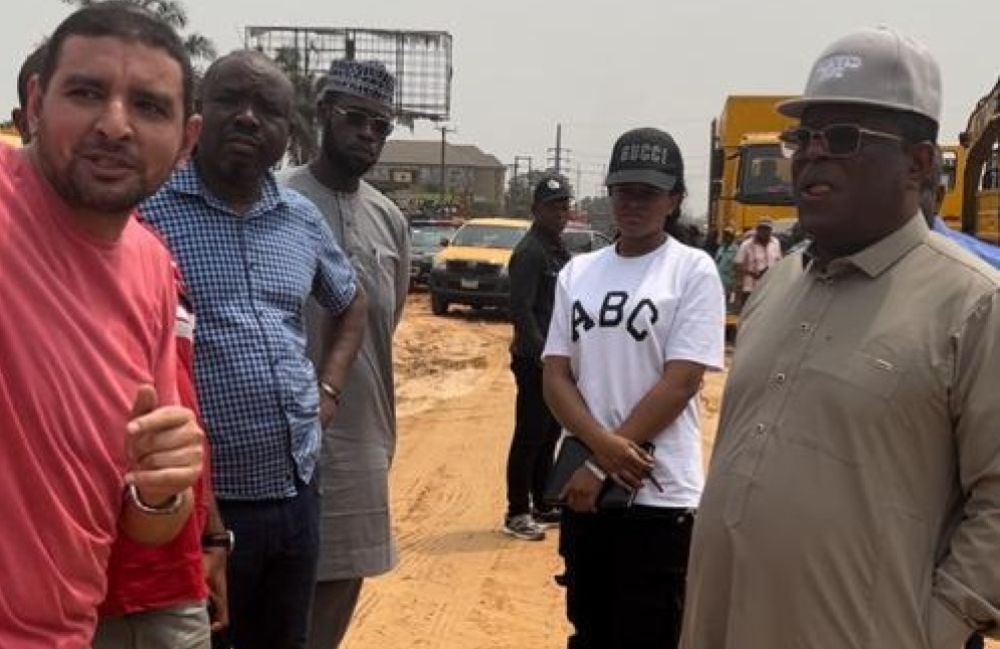
Umahi Gives Termination Notice to Contractor Handling a Section of Enugu-Port Harcourt Highway for Non-Performance ....Minister commends President Tinubu for funding highway rehabilitation, construction projects. The Honourable Minister of Works, Sen. Engr. Nweze David Umahi, CON, has directed that 14 days termination notice be issued to Messrs. China Civil Engineering Construction (CECC) which is handling the Abia Section of Enugu-Port Harcourt Highway currently undergoing rehabilitation for reason of non-performance. The Honourable Minister gave the directive this Sunday when he inspected the progress of work at Ozuaku, after Imo bridge along Enugu- Port Harcourt expressway. According to Sen. Umahi “I've just directed that they should issue them 14 days termination notice using all due process on construction. After 14 days, if they fail to do what we have asked them to do, then we will have to do the termination notice.” Adding “We will no longer tolerate the situation where contractors will put blank ranks on site. And they will be escalating construction costs by delaying the completion of project date.” Continuing, he said “and we have reached an agreement in Ministry of Works that in the coming weeks, all non-performing contracts using due process will be terminated and re-awarded.”, he disclosed. The Honourable Minister explaining the reason why contractors should demonstrate commitment said, “We let them know the suffering of Nigerians. We are here to help them, and we will do everything to help them,” he stressed. Sen. Umahi then observed that “the cost of non-completion of this project has a lot to do with contractors. Where contractors stay on projects over and over and be pretending, thereafter, they come to request for augmentation every year refusing to leave the site.” He however assured that “we will force them out of site either on the terms of completion or on the terms of termination.This is what we are going to do.” Stressing the imperative for the Ministry to deliver quality and good highways to Nigerians, the Honourable Minister averred that “it is very important to appreciate all the efforts of Mr. President who has been providing funds for our road infrastructure projects; which is very, very good.” Sen. Umahi added that despite over 3,000 road projects inherited by this administration, President Tinubu must be commended for providing huge resources for our road network stating, “so it's kudos to Mr. President and it shows that Mr. President is very, very sensitive to our road infrastructure needs. And so we must do everything to support the Renewed Hope Agenda of Mr. President, irrespective or notwithstanding any blackmail,” he declared. Meanwhile, the Honourable Minister has lauded Arab Contractors, the contractor carrying out the ongoing rehabilitation of work on the 56km Abia State section of the Enugu -Port Harcourt highway for quality of work done with words of encouragement. He said “the moment a contractor is performing very well, then you are a friend and that's the bottom line,” he submitted. In the same vein, the Honourable Minister has described as excellent the job performance of Messrs CGC Nig. Ltd handling Enugu State axis of the dual carriage after his inspection of the roads. While commending the contractor, consultant and the Controller of Works for job quality, Sen. Umahi praised the contractor for the quality of work and equipment, while requesting that the ongoing work on one section of the highway must be completed by middle of March as agreed. ...
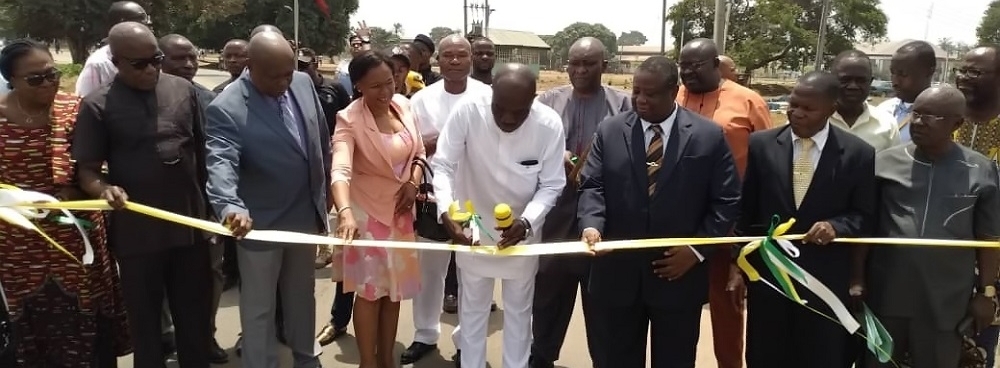
FG Hands Over Some Internal Road Projects To FUT, Owerri
The Federal Government through the Federal Ministry of Works and Housing has handed some internal roads projects to Federal University of Technology Owerri, Imo State.
The roads projects are among the 18 roads interventional project to tertiary institutions awarded in 2018 and completed that same year.
The 1.72km roads project in FUT Owerri includes; Construction and Asphalting of Health Centre and Hostel Roads, and Rehabilitation of Smat Road.
According to the Honourable Minister of Works and Housing, Mr. Babatunde Raji Fashola who was represented by the Federal Controller of Works, Imo State, Engineer Anthony Animaku, the roads are now completed and ready for formal handing over to the Vice Chancellor of FUT Owerri.
Fashola said "our gap of our infrastructure needs is steadily being bridged by a gradual process of repair, renewal and construction on major highways and it has reached schools”.
Buttressing the importance of infrastructure development in educational institutions, the Minister stated that the quality of education would be impacted by the quality of infrastructure and the learning environments.
“And those who doubt it should simply listen to some of the feedbacks from students where this type of infrastructure has taken place”, he said.
Accordingly, Fashola further explained that the interventions in the various tertiary institutions would have a critical contribution to support education.
“The intervention by Federal Government would improve the ambience and environment of Federal Tertiary Institutions to enhance academic activities" he said.
Responding, the Vice Chancellor of the institution, Professor Francis Chukwuemeka Eze represented by the Deputy Vice Chancellor academics, Professor Ndukwe James Okeudo commended the
Federal Government for choosing Federal University of Technology, Owerri as one of the beneficiaries of Federal Government laudable intervention.
He said, "the senate, council and the entire management are very grateful that FUTO was singled out as a beneficiary. We thank Mr. President and the Minister for this honour done to us,"
He stated that the roads are of great importance to the institution as it would aid access to movement around the school, adding that they would maintain the projects.
Also, a student of the institution, Donald Anarado said that hitherto the roads were not passable especially during raining season.
“When rain falls, we cannot move easily from our hostels to classes, but now that the roads have been fixed we can move easily to our classes. We are very grateful to Federal Government, “he said.
Keynote Speech By Babatunde Raji Fashola, SAN At United Nations Sponsored FRSC Capacity Building For Implementation Of The United Nations Road Safety Legal Instruments
I welcome this opportunity to be your Keynote Speaker at the United Nations-sponsored Capacity Building Program for the Federal Road Safety Corps (FRSC).
This opportunity provides me with a very important public platform to share my thoughts about the direction in which I think FRSC should be heading, and what we, the Government of Nigeria, should be doing to enable her towards that direction.
I will also use this opportunity to address some assumptions and explode some myths about road traffic accidents in Nigeria, and what we should be doing to reduce the incidents of road traffic accidents, and the attendant loss of life, limb and property.
The technical capacity which the facilitators from the United Nations Economic Commission for Europe Road Safety Secretariat will offer the FRSC is only one side of the capacity issues that FRSC needs.
The other side of FRSC’s needs is in the nature of equipment, tools, infrastructure and financial resources necessary to give them a visible and responsive presence on all Federal Highways in Nigeria.
Thankfully, the Corps Marshal, Mr. Boboye Oyeyemi, who is very passionate about his work, has responded to my request to him to submit an inventory of needs like bikes, patrol vehicles, and medical equipment that can help save lives. This is in the region of N16 billion in the first instance, and I have directed our Ministry to send this to the office of the Secretary to the Government, who supervises the FRSC on behalf of the Presidency, to whom FRSC reports.
I made a case for support for this funding to the Senate Committee on FERMA when I appeared before them recently, and not only are they well-disposed to the idea of appropriately resourcing FRSC, they expressly committed to taking action to sensitise their colleagues to the necessity.
This is as it should be, because if security and safety of lives and property is a most important duty, agencies like FRSC, who are our first responders at scenes of road accidents must be well-equipped to respond within the Medical Golden Hour, to ensure that accidents, when they inevitably occur, do not result in loss of life.
Not only must FRSC therefore have the necessary complement of vehicles and bikes to track down over-speeding drivers and bring them within control, they must have Mobile Intensive Care Units on wheels (not mere ambulances), with doctors, nurses, paramedics and other medical personnel at strategic points nationwide, to administer First Aid , and other life saving measures until victims are successfully moved to proper hospitals.
Really and truly, investing in at least one helicopter with medical evacuation capacity and well-trained staff for FRSC in each geo-political zone, if it is just to save one Nigerian life (which may be anybody), is consistent with one of the 3 (three) pillars of the Economic Recovery and Growth Plan (ERGP) which is “To invest in our people”.
While there is a lot more that can be said about building the capacity of FRSC, I will leave the details to the FRSC. I think the most important point has been made: we must invest to save lives.
The other point, which lies at the heart of FRSC’s existence, the UN capacity building program, and everything that FRSC stands for, is Road Safety, Road Traffic Accidents, the causes, and what we must do more of to reduce the incidents.
First, let me speak to the conditions of our roads.
I will classify them into 3 (three) broad categories, namely:
A. Those that have outlived their design life;
B. Those that are within their design life; and
C. Those that are just being built.
For those that have outlived their design life, they should have been replaced and rebuilt, but they have not. Roads like the Calabar-Itu-Odukpani fall within this category.
They were built in the 1970s, and not only have they outlived their design life, they have had to deal with tonnage and capacities well beyond what their design intended.
Can such a road be truly expected to stay intact and deliver a pleasant motoring experience? Put differently, can anyone of us today wear the same clothes we wore as teenagers and expect it to fit and not rip apart?
Thankfully, these type of roads are now receiving attention under President Buhari, as the Calabar-Itu-Odukpani, Gombe-Biu, Ilorin-Jebba and other roads that fall within this category are being awarded for reconstruction, along with the third class of roads which are just being built (like Oyo-Ogbomosho Bye pass, Loko-Oweto Bridge, 2nd Niger Bridge, Kaduna Bye pass, Kano Bye pass), where contractors have returned to site, after demobilizing for non-payment for up to 3 years.
As for the second category of roads, which are within their design life, they have been victims of overloading, right of way abuse, and lack of maintenance as depreciation sets in.
Members of the public must know that roads are depreciating assets. They do not last forever, and require regular maintenance and, with time, replacement, if they are to serve their intended purpose.
These factors of abuse and lack of maintenance combine to reduce the quality of our motoring experience on the roads. With this background, I will now pose the questions: How bad are our roads?
Some have repeatedly said, “All the roads are bad.”
That is not true.
We have good parts, and bad parts caused by abuse and lack of maintenance.
Can you sleep in your office suit and shirts, refuse to wash and iron them, and really expect them to look good on you?
A recent survey that I directed should be conducted produced instructive and educating results about the degree and extent of bad portions of our roads.
Otta-Abeokuta road in Ogun State, with a length of 64km, has failures at:
A. KM 20 + 775 to 23+275 (2,500 metres) at Sango-Otta flyover to Tipper Garage;
B. KM 24+275 to 24+725 (550 metres) at Owode to Ifo;
C. KM 44+113 to 53+147 (9,034 metres) at Papalanto to Itori
A total failure length of 12,084 m out of 64,000 metres, which is 18.75%
While 1 meter of failure is not acceptable, and we are mobilizing the contractor back to this road shortly after 4 years without a budget, the point is that 18.75% out of 64KM does not support the conclusion that “all” of the road is bad.
A similar survey on the Asaba-bound sections and Benin-bound sections which I asked to be carried out on the Benin-Asaba Dual Carriageway last week, also showed that the total aggregate of potholes and failures on the Asaba-bound section amounts to 3.02% of the total road length, while the total aggregate of potholes and failures on the Benin-bound section is 1.51%.
We are preparing remedial action to restore these sections.
The same is true of the Asaba-Illa-Ebu-Edo State border road, which is one of 44 roads across Nigeria and the 6 (six) geo-political zones where remedial work will start in a few weeks time once we conclude procurement.
These roads are the inherited legacy of road abuse and lack of maintenance, which President Buhari intends to change. This is why President Buhari has recently reconstituted the management of FERMA, the statutory agency responsible for maintenance of our roads.
They assumed office in the first week of October 2017, and from my interactions with the team, I am optimistic that Nigerians will experience change on their roads when they begin to implement their maintenance plan, which they constantly review with the Ministry.
Many of us, some of whom have not used the roads, readily describe our roads as a Death Trap. Really?
I undertook a tour of our roads earlier this year to see things for myself. We went by road and travelled in two coaster buses, driving for at least twelve hours everyday. We left at 8a.m daily and drove until 8p.m at the least. On one occasion, we drove for 18 hours, from 8a.m to 2a.m the following day.
We drove through different sections of roads that had outlived their design life, those that are within their design life with failures in some cases, and those that are currently under construction, where the drive was smooth.
We were not trapped, and we did not die. The only incident we had as we traversed 34 states (with Jigawa and Kebbi left to tour) was a tyre change on the Numan-Jalingo road. We drove at a maximum of 100km per hour. We had no accident.
How many people remember that there is a speed limit on our roads, in spite of FRSC’s efforts to introduce speed-limiting devices? How many people know or remember that there is a braking distance in driving?
FRSC will be 30 years next year, and they have acquired enormous experience and data that we must use if we are to reduce road traffic accidents and save lives.
Every month, my office receives a copy of the road traffic incidents Report across the country from FRSC, which I read, and direct that the Ministry respond to the findings and recommendations as they relate to road conditions, and causes of accidents.
Between June 2015 and August 2017, the report and data gathered by FRSC reveals indisputably that the biggest causes of Road Traffic Accidents on our roads are as follows.
A. Speed violation - 26.63%
B. Loss of Control - 23.04%
C. Dangerous Driving – 9.37%
D. Sign light violation – 9.57%
E. Tyre Burst – 6.25%
F. Wrongful overtaking – 5.92%
G. Bad road – 0.55%
Of course there are other causes like Brake failure, sleeping on the steering, poor weather, overloading, which are not indexed above because they are not necessary to make the point that bad roads are not the primary cause of accidents.
Based on this data collated by FRSC, whose sector commanders in all 36 states and the FCT are our first responders at accident scenes, can anybody still make the argument that bad roads are the cause of Road Traffic Accidents? It seems not.
However, while I am willing to agree that bad roads may contribute, an unlicensed driver (and, presumably, an incompetent one); a driver with bad sight (without corrective glasses); an over-speeding driver; one who does not know the appropriate pressure to inflate his tyre; or who does not know that he should not overtake at a bend, does not help his own safety or that of the other road users.
Poor sight and these other factors must be addressed as we saw recently at the accident scene that occurred on Kara Bridge in Lagos, where there was no pothole and people still died in an accident.
Ladies and Gentlemen, I will now conclude by restating some of the things that we need to do, which are easy, in order to reduce incidents of Road Traffic Accidents and loss of lives.
As we prepare for the high volume of traffic that will characterize end of year movement for Christmas, FRSC has been mandated to undertake random checks for drivers without driver’s license, who must be taken off the roads to reduce the threat they constitute to themselves and other road users.
FRSC will also take steps to curtail over-speeding and reduce incidents caused by over-speeding. They will also, within the limit of their resources, ensure observance of traffic rules, restrict drivers to their lanes, reduce incidents of wrongful overtaking, and, hopefully, reduce accidents.
This undertaking of protecting lives and preventing loss of property is not that of FRSC alone. All of us, as road users, employers, have a role to play.
It will help us if those who own transport businesses play their part by ensuring that all their drivers undertake mandatory eye test and get corrective glasses to help their vision, improve their judgment, and reduce driver errors.
All my own drivers have been subjected to those tests and so have I. I do not need my glasses to read.
I need them to see better because I am short-sighted.
All those who drive over long distances must invest in their own safety and get enough rest before undertaking long journeys; and where necessary, fleet operators must recruit relief drivers.
Finally, in all that FRSC has to do, I have met with all the sector commanders and impressed upon them the ‘S’ in their name is the most important reason for their existence.
It stands for ‘Safety’.
They must remember that whatever they do must be in aid of safety and not contrary to it.
I wish you all a safe motoring experience and a Merry Christmas, as our Government continues to improve safety on our roads and give you a better motoring experience.
Babatunde Raji Fashola, SAN
Honourable Minister of Power, Works and Housing
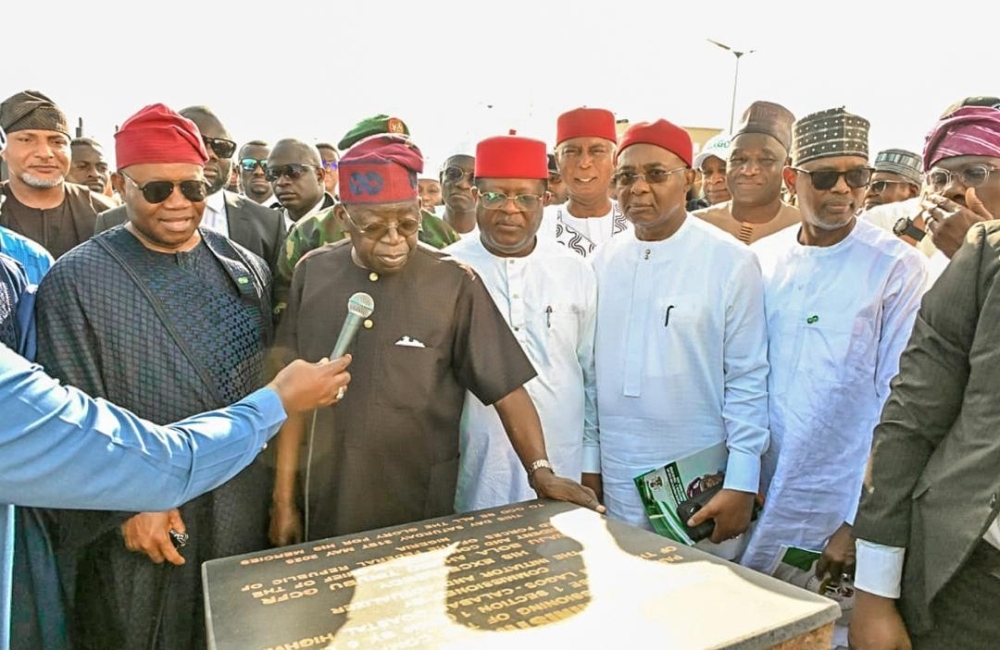
DRIVING NIGERIA’S FUTURE: CELEBRATING TWO YEARS OF TRANSFORMATIVE LEADERSHIP AND THE LAGOS-CALABAR COASTAL HIGHWAY MILESTONE
DRIVING NIGERIA’S FUTURE: CELEBRATING TWO YEARS OF TRANSFORMATIVE LEADERSHIP AND THE LAGOS-CALABAR COASTAL HIGHWAY MILESTONE
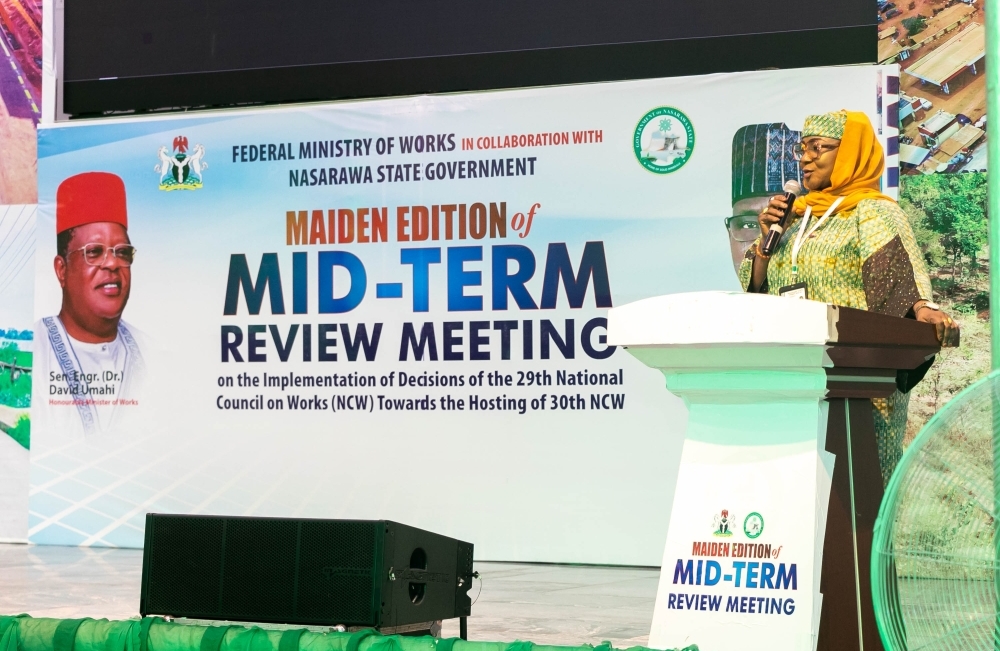
MID -TERM REVIEW MEETING ON THE IMPLIMENTATION OF THE DECISIONS REACHED AT THE 29TH NATIONAL COUNCIL ON WORKS (NCW) DAY 1
MID -TERM REVIEW MEETING ON THE IMPLIMENTATION OF THE DECISIONS REACHED AT THE 29TH NATIONAL COUNCIL ON WORKS (NCW) DAY 1