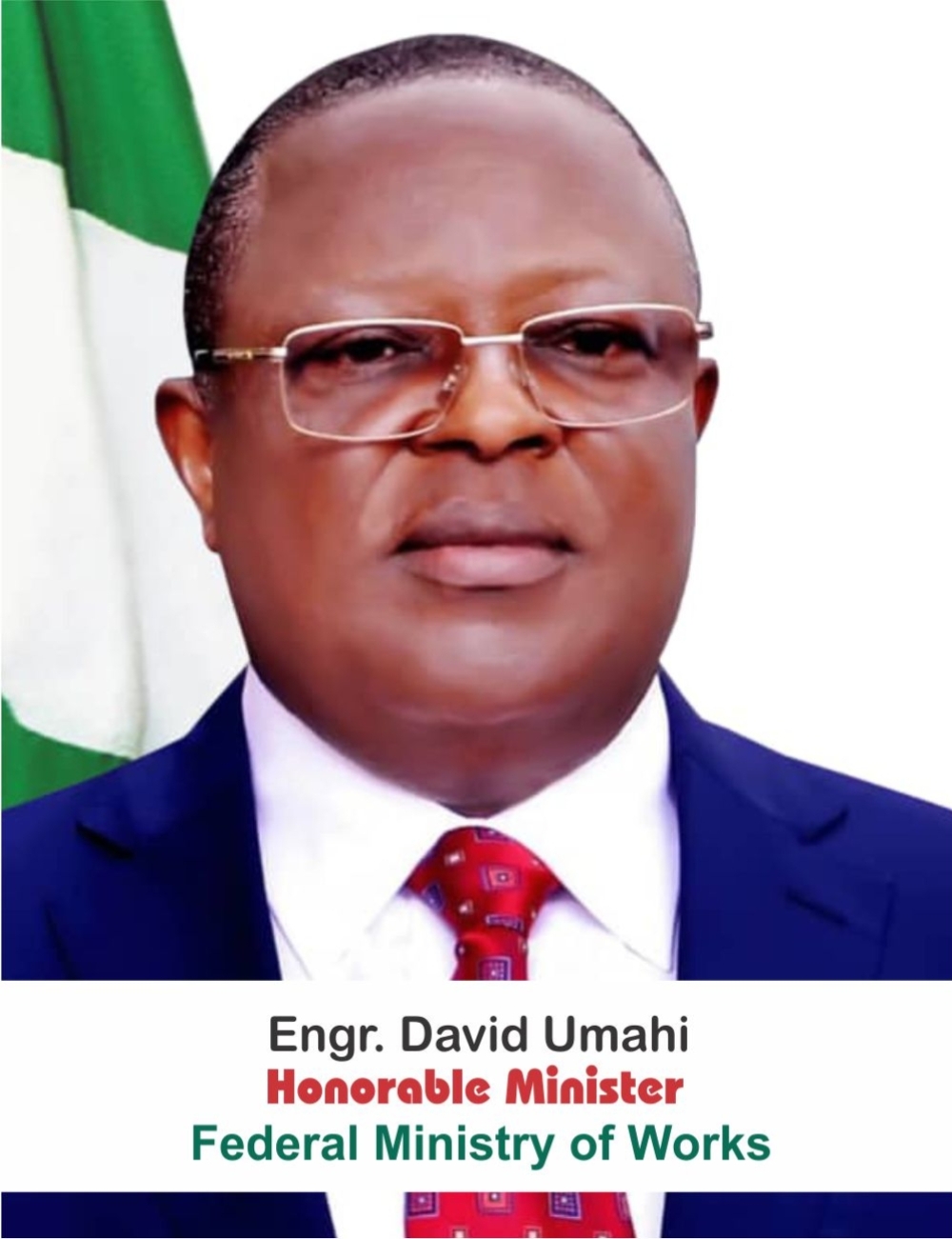
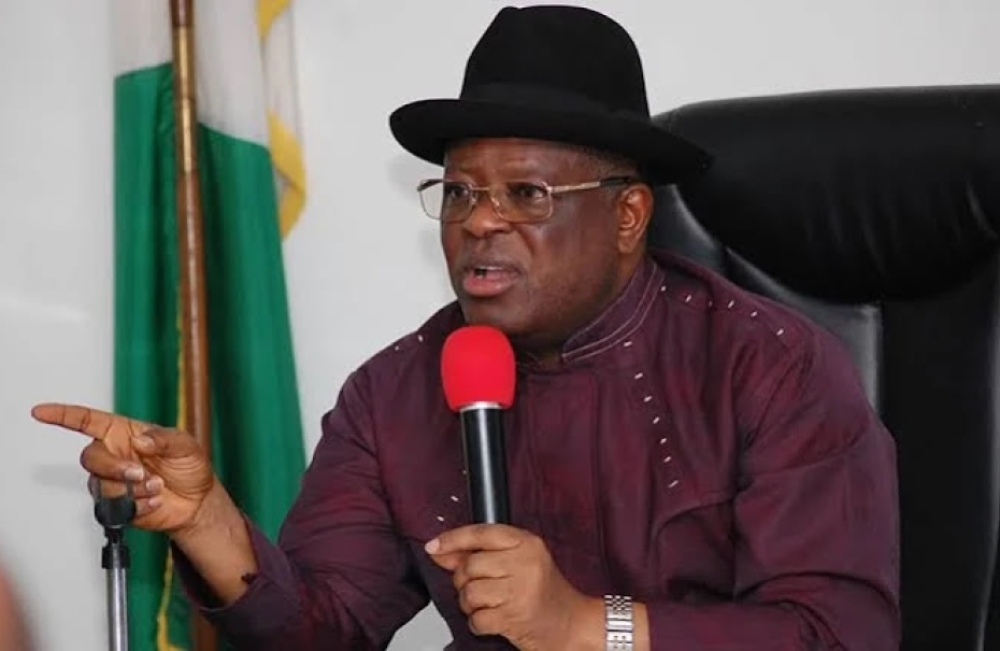
UMAHI ORDERS IMMEDIATE EMERGENCY INTERVENTION ON BENIN-ASABA ROAD, AND SOME OTHER CRITICAL FEDERAL ROADS
The Honourable Minister of Works, Senator Engr. David Nweze Umahi, CON, has directed the immediate deployment of major contractors to all three sections of the Benin-Asaba Federal Road to restore the failed sections and bring an end to the suffering of motorists and other road users.
This is because, the situation on the concessioned Benin-Asaba Road has reached a point where the overall public interest must take precedence over the existing concession agreement.
Recall that the Honourable Minister of Works was on the Benin-Asaba Road about seven days ago, where he assembled a number of contractors and directed them to prepare for immediate palliative intervention on the affected sections of the road at no cost to the concessionaire. In line with the Concession agreement which requires that before the Federal Government could intervene, the permission of the concessionaire must be required, and that permission was not granted to federal government.
The Minister subsequently proposed three options to the concessionaire, any one of which would have enabled the Federal Government to move in and address the worsening condition of the road. Unfortunately, none of the options was accepted by the concessionaire. Immediately after the Minister left Asaba, the already limited equipment deployed to the road by the concessionaire was further reduced to just one, worsening the situation and increasing the suffering of motorists and other road users.
While the Minister takes responsibility for the concerns and suffering of Nigerians using the road, it is important to state that the concessionaire has also not taken the suffering of Edo people and travelling public sufficiently into consideration by declining all the options put forward by the Federal Government. The concessionaire continues to rely on the terms of the concession agreement entered into by the previous administration, an agreement which weighs heavily against the Federal Government’s ability to intervene quickly in the interest of the public in a situation like this.
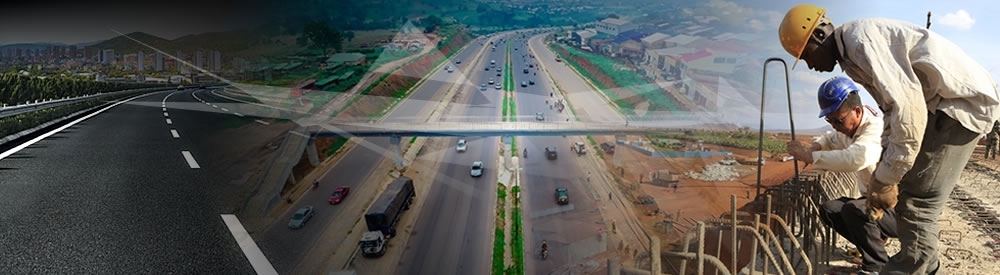
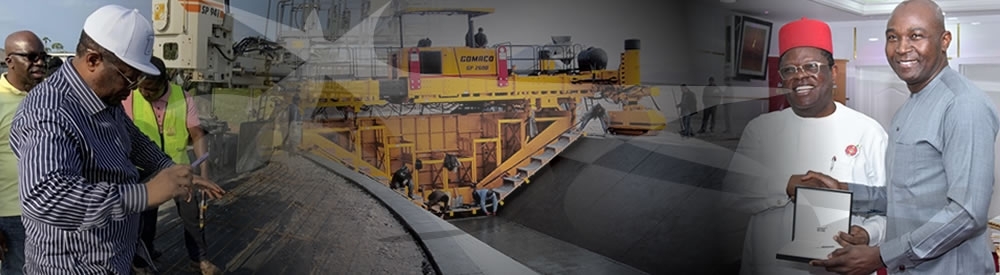
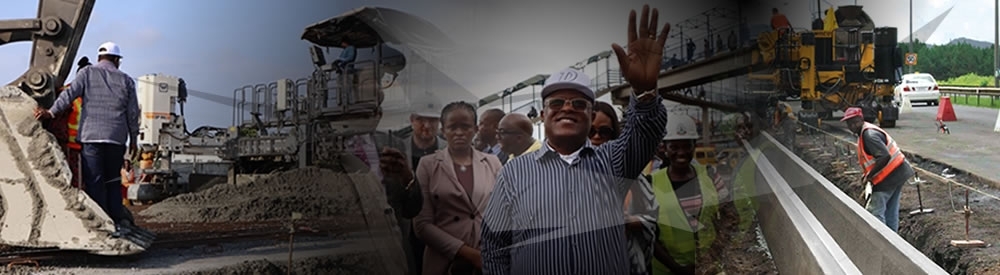
In view of this situation, the Honourable Minister of Works has directed the immediate deployment of major contractors within the corridor to all three sections of the Benin-Asaba Road to restore the failed sections and bring relief to the people, with the cost of the emergency intervention being borne by the Federal Government. The Honourable Minister has also directed immediate redesign of the entire route to be rebuilt with reinforced concrete pavement. The public should therefore take note that immediate action is underway to restore every failed section of the Benin-Asaba Road and subsequently rehabilitate the entire sections of the road using reinforced concrete pavement.
2. On the Benin-Sapele Road:
The Governors of Edo and Delta States, the Niger Delta Development Commission (NDDC), and the Federal Government are currently engaged in interventions on different sections of the road to restore the entire route. While some sections are receiving palliative attention, permanent works are also ongoing on other sections.
3. On Ifaki(Ekiti) - Kabba (Kogi) Road:
The Federal Government is engaging both the contractor; Gamji Nigeria Company Limited, and Dangote PLC on immediate emergency and permanent intervention on the most failed sections of the road, while efforts are being made to financially mobilise the company for more extensive permanent work to commence on the axis.
4. On the Sokoto-Zamfara-Katsina Road: This is an inherited project involving the dualisation of approximately 350 kilometres, which translates to about 700 kilometers. The project has since been redesigned and is currently ongoing and most sections are being reconstructed using reinforced concrete pavement. From the Sokoto axis towards Zamfara, over 50 kilometres of one carriageway have been fully completed with reinforced concrete pavement. From Zamfara to Katsina, some sections have been completed and palliative works have been ordered over the sections that have not been reconstructed. However, the pace of work slowed down due to the redesign and rephasing of the project. The contractors currently engaged on the road include CBC, SETRACO, Triacta and Mothercat. They are being remobilised to return to site and complete the outstanding works.
5. On the Abuja-Kaduna-Zaria-Kano Road: The Federal Government took over the Road project and has currently completed the 118-kilometer mostly on reinforced concrete pavement on lot 1. The Lot 2, which covers 164 kilometres, is over 60 percent completed on reinforced concrete pavement. The Federal Government has also introduced solar-powered light on the entire route of Abuja-Kaduna-Zaria - Kano to improve visibility during night travel and enhance the overall security situation on the route. The entire project is scheduled for completion by December 2026.
6. On Bauchi-Jigawa Road: Triacta Nigeria Limited has been mobilised to carry out the necessary interventions on some failed sections and work is currently ongoing in those failed sections.
7. On the Sagamu-Ore Road: 48 Kilometers of the 96-kilometre road have already been completed using reinforced concrete pavement. There is also a 24-kilometre section around Ore which was abandoned by the previous contractor. The Federal Government has directed its immediate restoration to ensure seamless travel. Solar lights are being installed in the entire 96kilometer of the road.
8. On Flooded Sections on Sagamu-Ore-Benin Road: The flooded sections on the same corridor between Sagamu-Ore-Benin Road, as well as other flooded sections in Ondo State, are being designed for emergency procurement and intervention.
9. On the East-West Road:
Some failed and critical sections, including defective sections of bridges along the East-West Road, are being marked out for emergency procurement and intervention.
10. On the Abuja-Lokoja Road:
Several contracts are ongoing along the route, while the three critical sections currently without contracts are being procured for emergency intervention.
11. On the Lokoja-Benin-Warri Road: The President has directed a complete redesign and procurement of the 400-kilometre dualised route covering the uncompleted sections, using reinforced concrete pavement, while palliative works will continue with the contractors currently on the road.
12. On Carter Bridge:
While the Federal Government continues to undertake weekly maintenance of the underwater elements of the bridge. The site has also been handed over to the contractor, CCECC, for the construction of a permanent new bridge, and work has commenced.
13. On the Third Mainland Bridge:
With regard to the defective underwater structural elements, the Federal Government is at the final stage of determining the appropriate intervention for the repair of the affected elements.
14. On the flooded section of the Lagos-Ibadan Road: Work has commenced on the affected section. There are also several flooded sections on federal roads across the six geopolitical zones, largely occasioned by excessive flooding and the effects of climate change. The Federal Government is identifying and marking these sections for immediate attention.
15. On the First and Second Niger Bridges:
Intervention work is ongoing on the approach roads to the Second Niger Bridge damaged by flood and the work is progressing very well. The First Niger Bridge has been closed to traffic to enable immediate repair works. Contractor has mobilized to site and comprehensive rehabilitation of the bridge has started. From Summit Junction to the First Niger Bridge, massive rehabilitation work is also ongoing using reinforced concrete pavement.
16. The Honourable Minister wishes to commend the President of the Federal Republic of Nigeria, His Excellency Bola Ahmed Tinubu, GCFR, for the massive work being undertaken on the nation’s roads since the administration assumed office in 2023.
17. It is important to state that when the present administration came into office, there was hardly any part of the country where one could travel for an hour without encountering significant challenges on the road network. The condition of the country’s roads and bridges was a major national infrastructure challenge.
18. Rather than shy away from the problem, the administration of President Bola Ahmed Tinubu made the nation’s road network a priority. Virtually every part of the country became a priority, and the Federal Government, through the Federal Ministry of Works, Regional Commissions, Parastatals and other MDA’s has continued to respond extensively to these challenges.
19. The Federal Government is currently working on over 80 percent of the inherited federal roads, an unprecedented level of intervention in the country’s road infrastructure.
20. We ask the public to understand the enormous challenges inherited on our roads and bridges and to take note not only of the problems being solved, but also of the permanent solutions being introduced.
21. A major part of this new approach is the use of reinforced concrete pavement, designed to significantly extend the lifespan of major roads. These roads are expected to last between 50 and 100 years. This means that roads being constructed under President Bola Ahmed Tinubu’s administration are being designed with future generations in mind, rather than simply providing temporary solutions to today’s problems. And this is a complete departure from the past, when roads often deteriorated only a few years after completion, resulting in a continuous cycle of reconstruction and expenditure.
22. We appreciate the concerns of Nigerians over the condition of some roads presently and the difficulties faced by motorists and commuters who cannot move easily from one point to another. Those concerns are legitimate, and the Federal Government is listening. But Nigerians should also recognise the enormous scale of the problems inherited and the amount of work currently being undertaken across the country.
23. It is simply impossible to resolve every road challenge accumulated over many years of neglect by the past administrations within three years. What is important is that the government is working, the government is responding, and the government is putting permanent solutions in place.
25. We appreciate members of the public who send situation reports on failed roads and other infrastructure challenges. These reports help the Ministry identify areas requiring urgent attention. However, we also appeal to members of the public to report when such problems have been addressed, just as they report when they occur.
24. We are aware of situations where photographs and reports of road challenges continue to circulate on social media even after the Federal Government has intervened and resolved the particular problem.
25. However, the Ministry will continue to respond as rapidly as possible to genuine reports and concerns from Nigerians.
26. It is also important to note that we have compiled a comprehensive record of all inherited, ongoing and intervention projects across the country which is available to the public. This is to ensure that Nigerians have access to information on the infrastructure projects being undertaken nationwide and can fully participate in and appreciate the infrastructure revolution of President Bola Ahmed Tinubu’s administration.

UMAHI ORDERS IMMEDIATE EMERGENCY INTERVENTION ON BENIN-ASABA ROAD, AND SOME OTHER CRITICAL FEDERAL ROADS The Honourable Minister of Works, Senator Engr. David Nweze Umahi, CON, has directed the immediate deployment of major contractors to all three sections of the Benin-Asaba Federal Road to restore the failed sections and bring an end to the suffering of motorists and other road users. This is because, the situation on the concessioned Benin-Asaba Road has reached a point where the overall public interest must take precedence over the existing concession agreement. Recall that the Honourable Minister of Works was on the Benin-Asaba Road about seven days ago, where he assembled a number of contractors and directed them to prepare for immediate palliative intervention on the affected sections of the road at no cost to the concessionaire. In line with the Concession agreement which requires that before the Federal Government could intervene, the permission of the concessionaire must be required, and that permission was not granted to federal government. The Minister subsequently proposed three options to the concessionaire, any one of which would have enabled the Federal Government to move in and address the worsening condition of the road. Unfortunately, none of the options was accepted by the concessionaire. Immediately after the Minister left Asaba, the already limited equipment deployed to the road by the concessionaire was further reduced to just one, worsening the situation and increasing the suffering of motorists and other road users. While the Minister takes responsibility for the concerns and suffering of Nigerians using the road, it is important to state that the concessionaire has also not taken the suffering of Edo people and travelling public sufficiently into consideration by declining all the options put forward by the Federal Government. The concessionaire continues to rely on the terms of the concession agreement entered into by the previous administration, an agreement which weighs heavily against the Federal Government’s ability to intervene quickly in the interest of the public in a situation like this. In view of this situation, the Honourable Minister of Works has directed the immediate deployment of major contractors within the corridor to all three sections of the Benin-Asaba Road to restore the failed sections and bring relief to the people, with the cost of the emergency intervention being borne by the Federal Government. The Honourable Minister has also directed immediate redesign of the entire route to be rebuilt with reinforced concrete pavement. The public should therefore take note that immediate action is underway to restore every failed section of the Benin-Asaba Road and subsequently rehabilitate the entire sections of the road using reinforced concrete pavement. 2. On the Benin-Sapele Road: 3. On Ifaki(Ekiti) - Kabba (Kogi) Road: 4. On the Sokoto-Zamfara-Katsina Road: This is an inherited project involving the dualisation of approximately 350 kilometres, which translates to about 700 kilometers. The project has since been redesigned and is currently ongoing and most sections are being reconstructed using reinforced concrete pavement. From the Sokoto axis towards Zamfara, over 50 kilometres of one carriageway have been fully completed with reinforced concrete pavement. From Zamfara to Katsina, some sections have been completed and palliative works have been ordered over the sections that have not been reconstructed. However, the pace of work slowed down due to the redesign and rephasing of the project. The contractors currently engaged on the road include CBC, SETRACO, Triacta and Mothercat. They are being remobilised to return to site and complete the outstanding works. 5. On the Abuja-Kaduna-Zaria-Kano Road: The Federal Government took over the Road project and has currently completed the 118-kilometer mostly on reinforced concrete pavement on lot 1. The Lot 2, which covers 164 kilometres, is over 60 percent completed on reinforced concrete pavement. The Federal Government has also introduced solar-powered light on the entire route of Abuja-Kaduna-Zaria - Kano to improve visibility during night travel and enhance the overall security situation on the route. The entire project is scheduled for completion by December 2026. 6. On Bauchi-Jigawa Road: Triacta Nigeria Limited has been mobilised to carry out the necessary interventions on some failed sections and work is currently ongoing in those failed sections. 7. On the Sagamu-Ore Road: 48 Kilometers of the 96-kilometre road have already been completed using reinforced concrete pavement. There is also a 24-kilometre section around Ore which was abandoned by the previous contractor. The Federal Government has directed its immediate restoration to ensure seamless travel. Solar lights are being installed in the entire 96kilometer of the road. 8. On Flooded Sections on Sagamu-Ore-Benin Road: The flooded sections on the same corridor between Sagamu-Ore-Benin Road, as well as other flooded sections in Ondo State, are being designed for emergency procurement and intervention. 9. On the East-West Road: 10. On the Abuja-Lokoja Road: 11. On the Lokoja-Benin-Warri Road: The President has directed a complete redesign and procurement of the 400-kilometre dualised route covering the uncompleted sections, using reinforced concrete pavement, while palliative works will continue with the contractors currently on the road. 12. On Carter Bridge: 13. On the Third Mainland Bridge: 14. On the flooded section of the Lagos-Ibadan Road: Work has commenced on the affected section. There are also several flooded sections on federal roads across the six geopolitical zones, largely occasioned by excessive flooding and the effects of climate change. The Federal Government is identifying and marking these sections for immediate attention. 15. On the First and Second Niger Bridges: 16. The Honourable Minister wishes to commend the President of the Federal Republic of Nigeria, His Excellency Bola Ahmed Tinubu, GCFR, for the massive work being undertaken on the nation’s roads since the administration assumed office in 2023. 17. It is important to state that when the present administration came into office, there was hardly any part of the country where one could travel for an hour without encountering significant challenges on the road network. The condition of the country’s roads and bridges was a major national infrastructure challenge. 18. Rather than shy away from the problem, the administration of President Bola Ahmed Tinubu made the nation’s road network a priority. Virtually every part of the country became a priority, and the Federal Government, through the Federal Ministry of Works, Regional Commissions, Parastatals and other MDA’s has continued to respond extensively to these challenges. 19. The Federal Government is currently working on over 80 percent of the inherited federal roads, an unprecedented level of intervention in the country’s road infrastructure. 20. We ask the public to understand the enormous challenges inherited on our roads and bridges and to take note not only of the problems being solved, but also of the permanent solutions being introduced. 21. A major part of this new approach is the use of reinforced concrete pavement, designed to significantly extend the lifespan of major roads. These roads are expected to last between 50 and 100 years. This means that roads being constructed under President Bola Ahmed Tinubu’s administration are being designed with future generations in mind, rather than simply providing temporary solutions to today’s problems. And this is a complete departure from the past, when roads often deteriorated only a few years after completion, resulting in a continuous cycle of reconstruction and expenditure. 22. We appreciate the concerns of Nigerians over the condition of some roads presently and the difficulties faced by motorists and commuters who cannot move easily from one point to another. Those concerns are legitimate, and the Federal Government is listening. But Nigerians should also recognise the enormous scale of the problems inherited and the amount of work currently being undertaken across the country. 23. It is simply impossible to resolve every road challenge accumulated over many years of neglect by the past administrations within three years. What is important is that the government is working, the government is responding, and the government is putting permanent solutions in place. 25. We appreciate members of the public who send situation reports on failed roads and other infrastructure challenges. These reports help the Ministry identify areas requiring urgent attention. However, we also appeal to members of the public to report when such problems have been addressed, just as they report when they occur. 24. We are aware of situations where photographs and reports of road challenges continue to circulate on social media even after the Federal Government has intervened and resolved the particular problem.
The Governors of Edo and Delta States, the Niger Delta Development Commission (NDDC), and the Federal Government are currently engaged in interventions on different sections of the road to restore the entire route. While some sections are receiving palliative attention, permanent works are also ongoing on other sections.
The Federal Government is engaging both the contractor; Gamji Nigeria Company Limited, and Dangote PLC on immediate emergency and permanent intervention on the most failed sections of the road, while efforts are being made to financially mobilise the company for more extensive permanent work to commence on the axis.
Some failed and critical sections, including defective sections of bridges along the East-West Road, are being marked out for emergency procurement and intervention.
Several contracts are ongoing along the route, while the three critical sections currently without contracts are being procured for emergency intervention.
While the Federal Government continues to undertake weekly maintenance of the underwater elements of the bridge. The site has also been handed over to the contractor, CCECC, for the construction of a permanent new bridge, and work has commenced.
With regard to the defective underwater structural elements, the Federal Government is at the final stage of determining the appropriate intervention for the repair of the affected elements.
Intervention work is ongoing on the approach roads to the Second Niger Bridge damaged by flood and the work is progressing very well. The First Niger Bridge has been closed to traffic to enable immediate repair works. Contractor has mobilized to site and comprehensive rehabilitation of the bridge has started. From Summit Junction to the First Niger Bridge, massive rehabilitation work is also ongoing using reinforced concrete pavement.
25. However, the Ministry will continue to respond as rapidly as possible to genuine reports and concerns from Nigerians.
26. It is also important to note that we have compiled a comprehensive record of all inherited, ongoing and intervention projects across the country which is available to the public. This is to ensure that Nigerians have access to information on the infrastructure projects being undertaken nationwide and can fully participate in and appreciate the infrastructure revolution of President Bola Ahmed Tinubu’s administration.
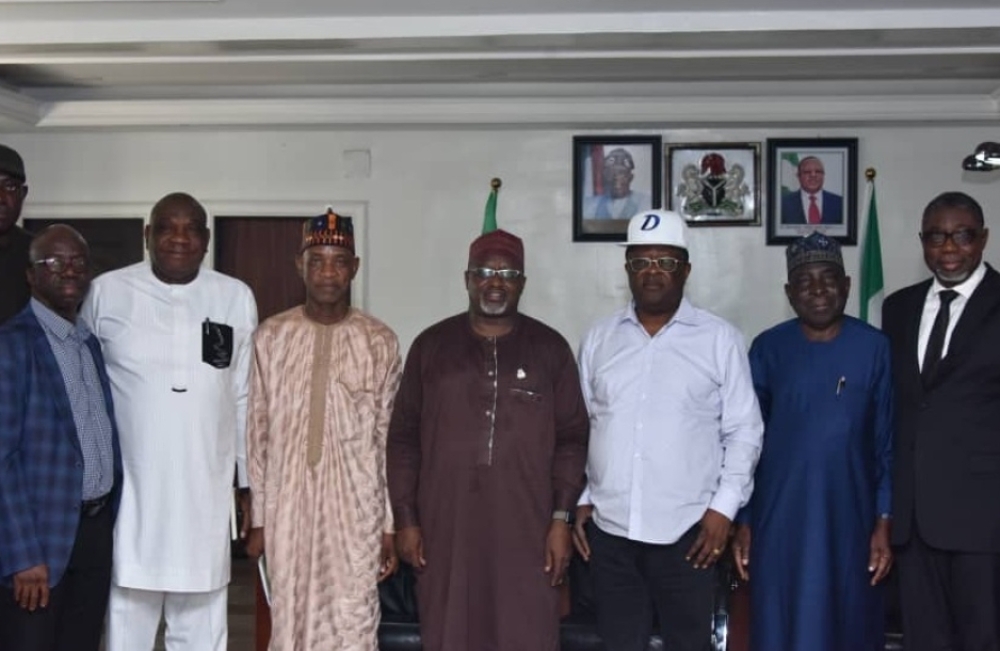
FG, COREN Collaborate To Develop Nigerian Roads The FG and the Council for the Regulation of Engineering in Nigeria (COREN) have both met to discuss the way forward to develop Nigerian roads, the Minister of Works, H.E Sen. (Engr.) David Nweze Umahi CON represented the Ministry and presided over the meeting while the President and Chairman of Council for the Regulation of Engineering in Nigeria (COREN) Engr. Prof Sadiq Zubair Abubakar, FNSE led the engineering team to the meeting, the deliberation was held at the Ministry of Works Headquarter in Mabushi, Abuja. The Minister in his remarks said “I want to involve COREN and the Nigerian Society of Engineers (NSE) in our road construction. l have gone round three regions of Nigeria, I am very dissatisfied with the supervision of these construction works. It seems that it is only in the South West that there are very capable hands and hardworking Directors and controllers, notwithstanding, will put the same template to use in all the regions”. “We would like you to join us as COREN, there is no concrete road constructed in Ebonyi that has not lasted Seven years, our recommendation is that most of our highways are going to be a continuous reinforced highways, this is the vision of the Ministry” he added. Umahi further said “when growing up in engineering we use to have consultant, consultant would always know that if they compromised their certificate of practice will be withdrawn even at the ministry level, that is the kind of discipline we want to bring on our road infrastructure, there is no supervision in all our projects, like I said other than the South West. Henceforth every project is going to have one senior consultant later we can begin to have other junior ones, like surveyor, geotechnical and material engineers and other road engineers“. He enjoined COREN to join him in the propagation for the reintroduction of Concrete pavement in Nigeria. The Minister said that no road that was built in this country had lasted more than three to four years even in the Northern part of Nigeria, he said that the roads in the South East are collapsing even while still under construction. The design in the roads are mostly built below the flood plain and the rains comes, and they are washed away, in his words, the Minister said he counted 9 locations that have collapsed. The President of COREN in his reaction said “having listened to you carefully COREN and NSE will key into these new positions that you have mentioned, the lack of supervision you talked about, will be addressed, and we believe that needs to change totally, we will be able to give our own contribution in that respect”. He said “COREN has been restructured, we now have, six Regional offices, with Lagos as a special Region, and then the thirty six state offices with desk offices with seven departments, these will play key roles in this supervision, we have developed a protocol to engage our members. l believe we are going to play a positive role when we develop modalities on how this will be worked out“. “ln the aspect of seven professionals per project we are going to look at that and also contribute, the introduction of reinforced concrete, there is a ministerial committee with this ministry which have been working on the specification. l am the chairman of that committee with senior expert along with the Managing Director/Chief Executive Officer of FERMA and others in the next one month we will make the submission and interim report to you, that should be the first point of engagement which will expand the horizon for us to this new agenda of concrete road pavement” he said. ...
FG in Discussion with Hitech.....Yet to Award .....Lagos -Calabar Coastal Highway. The attention of the Ministry of Works has been drawn to information reported online by nairametrics.com crediting a statement to H.E, Sen. (Engr) David Nweze Umahi the Hon. Minister of works as saying that the: “FG Awards LAGOS -CALABAR COASTAL HIGHWAY TO HITECH”. This information is totally untrue and misleading. The general public is to please note and be well guided and for the RECORDS. The FG has only recently opened a maiden discussion with the Engineering company- HITECH on this project, a second meeting is being considered to further access the the possibility of the project being handled by them.The Ministry has not awarded any such Contract nor has signed any such Contract Agreement with any company in this regard. To this effect, media organizations are to please ensure their facts are duely authenticated with the Federal Ministry of Works before putting out incorrect information to the public. Let's be more thorough in our journalistic activities as the Ministry appreciates as always the cordial and positive reportage of the Ministry's Policies and Programs. ...
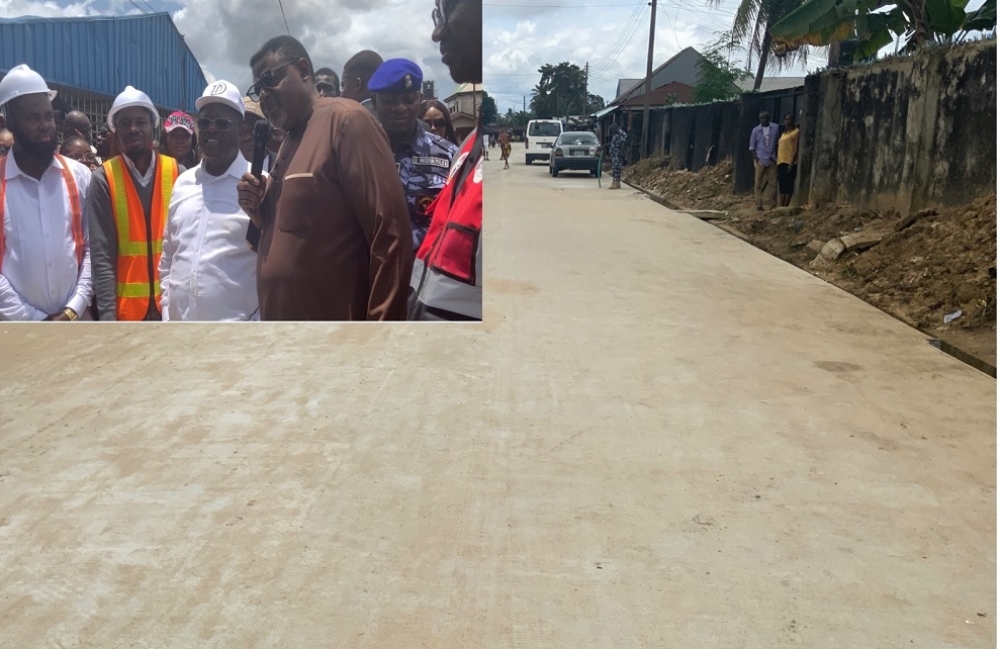
Minister of Works Inspects Pilot Concrete Road Project in Cross River State, Enumerates Its Benefits .....“Let me use this opportunity to debunk reports that I refused to sign certificate of contractors” - Umahi. The Honourable Minister of Works H.E. Sen (Engr) David Nweze Umahi while rounding off his tour of the South-South Federal highways and bridges, also inspected a pilot concrete road project that was constructed by the Cross River State Government in Calabar on Friday. The technology was borrowed from one of Works Minister’s constructed roads in Ebonyi State during his tenure as Governor of the state, the Minister also used the opportunity to highlight the huge benefits and importance of the construction of concrete roads in Nigeria. During the inspection of the concrete road along Nyong Edem Street in Calabar South , Umahi said “ this pilot project is being initiated by the Governor of Cross River State and this is what we are talking about and I want the press people to see it, in the next 50 to 60 years nobody will touch this road , it has being a pilot project from the Governor and his very hard working Commissioner, I want to encourage him to use this concrete to do all his road works and he will not have any regret weather there is rain or sun, this road will continue to remain the way it is and this is what we are talking about “, adding that “ a lot of failures on our roads is because of the method of construction , so I commend the Governor for this bold initiative and I want him to expand it to all his roads”. The Minister used the opportunity to highlight the benefits of concrete roads as follows; it lasts up to 50years, cheaper than asphalt, concrete roads contract can be determined without increase in price , It will lift the pressure on the naira as there won’t be need for bitumen importation, nothing less than 10 companies have indicated interest in opening cement factories , it will create jobs , no expatriate is doing the job but local people through direct labour, we are developing our engineering profession , allowing local content by allowing local engineers to practice what they have learnt and it will create expansion of the existing cement companies to 90% from the current 30%. While responding to allegation of refusal to sign contract certificate, the Minister said “let me use this opportunity to debunk the report that I refuse to sign certificate of contractors and that contractors are dying. That's not the truth, l am signing the certificates that I am convinced that are all right but when a project is N34b and is jerked up to N120b or a project that is N44b is jerked up to N126b, I am a civil engineer I have been on this for 30years or more and I am a member of Nigeria Society of Engineers, as a professional anything you sign, you have to know and you have to take responsibility for it “. Umahi said “ I won’t sign anything I cannot defend, I have told Mr. President this and he is supporting me , so those whose certificates are clear and ok, I have signed, those whose roads have failed I will not sign, they have to go and fix the road back. That is the truth, they say I am signing a certificate for contractors that big men are behind, the only big man before me is God Almighty and Mr. President.“ The Governor of Cross Rivers State Senator (Prince) Bassey Otu in his remarks said to the Minister “I am so glad today that we have such an action Minister , We started this pilot project as a matter of fact we borrowed this technology from Ebonyi because when we checked the cost and the durability and sustainability we came to the conclusion, we have to do something very economical but beneficial to the people , we are going to replicate this in many localities in as much as you give us your support”. The Commissioner for Works, Cross River State, Hon. Pius Edet in his appreciation of the Minister's visit said “Your Excellency I want to thank you very much for coming as the proponent of Modern Construction facility in Nigeria, as a proponent of concrete pavement, we felt that it will not be fair to allow you leave without seeing one of your theory being implemented. We pray that God gives you more wisdom and ideology for the success of our country”. ...

Abeokuta Substation Gets New 60MVA Transformer To Improve Electricity
The yearning to ensure qualitative and stable power to Nigerians has made the Federal Government to upgrade the 132/33KVA Abeokuta Transmission Substation with the installation of a new 60 Mega Volt Ampere (MVA) capacity transformer to boost electricity supply in Abeokuta and its environs.
Addressing the Minister of State II Power, Works and Housing, Surveyor Suleiman Hassan Zarma, who was on an inspection tour to the substation recently, the Assistant General Manager Transmission, Papalanto Sub – Region of the Transmission Company of Nigeria (TCN), Engr. Adeonipekun Adesina said the transformer upon its complete installation would complement the three existing ones at the station.
According to him, the station has 3 transformers of 30MVA each, making a total of 90MVA. But with the new one, the station will now have a 150MVA wheeling capacity. “It used to be a 90MVA Substation. But with the introduction of the new transformer, there will be more power to deliver to the masses and there will be steady supply of electricity”, Adeonipekun said.
Adeomipekun disclosed that the transformer when energized, would improve power supply to Abeokuta Township, Imeko, and Lagos Road, part of Sagamu and University of Agriculture, Abeokuta. In his address, the Minister re-affirmed the Federal Government’s commitment to increasing power supply in the country. Saying “the Federal Government is investing in the expansion of transmission capacity through the TCN by building more substations and expanding existing ones”, adding that the transformer which is installed by the Transmission Company of Nigeria (TCN), under the National Integrated Power project (NIPP) of the Federal Government is aimed at driving the industries, boosting the economy, creating employment opportunities to our teaming youth in Abeokuta and the country in general.

Keynote Address Presented At The 32nd Annual Conference And General Meeting Of The African Union For Housing Finance (AUHF)
Theme: Housing and Africa’s Growth Agenda at PDTF Centre, Central Business District, Abuja, 14th -16th September, 2016. By The Honourable Minister of Power, Works & Housing; Babatunde Raji Fashola, SAN.
Protocols
I am delighted to address you on the occasion of this 2016 Annual Conference and General Meeting of the African Union for Housing Finance (AUHF) holding in Abuja, Nigeria. The political will and momentum of the present administration in her housing sector agenda are further invigorated by this conference taking place few months after the June 2016 National Housing Summit. You will recall that the outcome of the recent National Housing Summit identified Housing Finance as one of the major pillars necessary for realizing Affordable housing delivery in Nigeria apart from others like Land, Concessions/incentives, Off-taker Strategy and General Skills Acquisition. It is indeed, heartwarming and reassuring to note that AUHF is an association of Mortgage Banks, Building Societies, Housing Corporations and other organizations involved in mobilizing funds for housing on the African continent. Also that the goals of AUHF includes promoting and facilitating housing finance and unlocking its multiplier effects on National economies, hence leading to Africa’s economic growth. I understand that the Conference attracts stakeholders from across the African Continent, all with the purpose of advancing investment in affordable housing.
2. Let me begin by thanking the Nigerian Mortgage Refinance Company (NMRC) and other partners for hosting this important conference. The hosting of AUHF 2016 conference in Nigeria could not have come at a more auspicious time than now that Nigeria needs aggressive unleashing of new housing finance investments and opportunities. I will also like to thank all the stakeholders and experts from Africa and around the world for coming together to proffer solutions to the age long challenge of providing housing finance for Africans, especially Nigerians that are facing harsh economic challenges.
3. Housing, we know is critical to every human development and fundamental right of every citizen. Therefore, Housing is central to this Administration’s policy thrust. However, housing a population of over 180 million is an arduous task that cannot be left for Federal Government alone, especially now that the Government’s revenue and the economy is under pressure. The fund to support the construction and mortgages for the end-users is a big challenge for the government. The production cost versus the selling price of the present housing stock is beyond the reach of majority of Nigerians. Demand for affordable housing has grown over the years as a result of population explosion, rural-urban drift and search for higher quality of life. This demand has rapidly overwhelmed the supply capacity of existing Government resources. Many years of inadequate investment and poor maintenance culture have left Nigeria with a significant housing deficit which is slowing down the country’s development and economic growth and will clearly require close collaboration from stakeholders like the AUHF. The above demanding task is the mandate of my Ministry, Federal Ministry of Power, Works and Housing. Therefore, all stakeholders especially the Private sector and AUHF must play major role in this process of creating innovative housing finance in Nigeria.
4. Every Nigerian’s dream is to have a roof over their head! Hence, for an average Nigerian "owning a house" is a mark of economic success and security. Housing is also believed to be a long term investment that protects that investment against high inflation and the unpredictable economic down turn. Therefore, provision of housing is a major tool to reduce corruption. Why is it so difficult for the average Nigerian to realize this dream? Lack of Housing Finance in the public and corporate institutions and double digit housing loans are the major culprits while others include land for housing, population explosion, high cost of building materials, inflation that brings about unemployment and decreased purchasing power of the low and medium income earners.
5. The major housing Finance trends and developments in the Nigerian market can be summarized by tracing the historical tendency of the influence of the financial sector in the housing industry. In 1956, a Secondary Mortgage Institution called Nigerian Building Society (NBS) assumed the role of the main conduit for housing finance delivery. NBS was a British and Nigeria partnership arrangement. Nigeria’s housing finance development can be classified under major political periods, namely pre-independence (1914-1960), post-independence (1960-1979) and a second and subsequent civilian administrations (1979 to date). However, the mortgage institutions decree No. 53 of 1989 led to the establishment of the following; Primary Mortgage Institutions (PMI) as mortgage savings for on-lending property development and mortgage creation. And, the Secondary mortgage institution, the Federal Mortgage Bank of Nigeria (FMBN), to function as the Apex mortgage institution for regulation. While the National Housing Policy of 1991 was a bold step by the Federal Government of Nigeria to address the challenge of lack of finance for housing development and mortgage. The National Housing Fund (Act. No. 3) of 1992 is a collating reservoir of long term funds in terms of monthly contributions from workers in the public and private sectors. Unfortunately, most Nigerians see mortgage loans from Government as part of their share of the "national cake" leading to high default rates. This has forced the Government to encourage prospective home owners to approach commercial banks who regrettably have high interest rates. Thus, the Government who is supposed to be a major player in the provision of homes is now seemingly not on the frontline. The Government established the Nigerian Mortgage Refinancing Company (NMRC) to help in reducing the cost of mortgage loan by improving market efficiency.
6. From the inception of Government initiative in organized housing finance system to date, only a meager sum have so far been injected to the system. This accounts for less than 0.5% of the Gross Domestic Product (GDP) as compared to other climes (like United Kingdom, South Africa etc) due to the inability of financial systems in providing low cost finance that meets the need of low and medium income earners. Therefore, the Secondary Mortgage institution (FMBN) should be strengthened by ensuring full compliance with the National Housing Funds (NHF) Act by affected stakeholders, like the Central Bank, commercial banks, insurance companies, Mutual and Trust Fund administrators. However, I am happy to note that with the greater participation of the private sector in housing and embracing the new initiatives of this Administration, the journey to sustainable housing delivery is on course.
7. Ladies and Gentlemen, it may interest you to note that the current Administration has taken cognizance of the housing sector as an important area requiring priority attention for reinvigoration and revitalization. This accounts for the appreciable budgetary allocation to the sector in the current annual estimate. This vision is increasingly being energized by the Federal Ministry of Power, Works and Housing. Only recently, the Ministry organized a National Housing Summit, where stakeholders met and examined the numerous constraints militating against the provision of affordable housing in Nigeria and proffered a clear, sustainable and strategic blueprint to mitigate same. Identified as a critical factor in the provision of affordable housing was lack of access to construction finance by developers including high risk in current mortgage finance structure which does not support the buying-off of houses to enable developers recoup their investments on time. The Summit resolved that there was need for necessary machinery to be put in place to promote appropriate construction finance schemes. AUHF members are hereby challenged in this regard. In the summit also, various definitions of affordable housing were adduced. However, the consensus from these definitions revealed that there is no one-size-fit all definition for Affordable Housing. The indices that should be used for defining Affordable Housing would include Segregation, Stratification, Classes of people and their income bracket, not more than one-third net household income of the target group and equity contribution of end-users.
8. I am happy to note that despite the challenges that housing delivery has encountered in the country over the years, the renewed vigor and policy re-orientation of this Administration have set the agenda for Housing revolution. In this regard, the Ministry has produced six (6) designs of one bedroom, two-bedroom, three-bedroom flats, bungalows and condominiums that will represent the Nigerian House which responds to our cultural diversity. Another key area of achievement is the pursuit and promotion of local content and standardization of building components such as doors, windows, tiles, roof boards and other accessories to be produced by local manufacturers as part of our support for local industries SMEs and in pursuit of diversification and job creation. Effort is already being made to embrace and deploy modern technology to mass production of housing in all the States of the Federation and FCT using the Traditional procurement platform and the Contractor Finance Initiative model, to reduce the housing deficit.
9. To make the Housing Sector attractive, viable and stimulate growth, the present Administration plans to de-risk lending to approved Housing Developers. This will entail the government providing guarantees and other credit enhancement to developers. Government therefore plans to issue promissory notes to reduce Developers financing requirements. Government recognizes that provision of leverage and guarantees are critical in attracting private sector funds into the industry thereby creating thousands of affordable houses each year as well as generate considerable employment and commercial activities. These are some of the far reaching contribution of the Finance Minister during the Housing Summit.
10. Ladies and Gentlemen, I wish to state here that much discussion has been held on the housing deficit. There is therefore need to change the story to begin to discuss the housing opportunities. Regardless of issues facing the sector, real estate projects are increasingly being launched and completed in Nigeria. With the present Administration’s many incentives, new investors are expected in the market to continue to deliver positive results.
11. It is on this note that I call on all stakeholders, especially members of the African Union for Housing Finance here present to join hands with the Federal Government towards the realization of its objectives in providing affordable housing to the people. As agent of change, members are enjoined to borrow a leaf from Nigeria and influence their respect home governments to domesticate or localize their housing options to reflect the peculiarities and expectations of the people as well as provide the private sector the needed impetus to invest in the sector.
12. Finally, I wish to state that though the challenges to the sector are real and obvious, we are convinced that with the renewed commitment of this Administration, coupled with strengthened collaborations with all stakeholders in the industry, the desired revolution in the housing sector will be achieved in not too distant future.
13. I wish you all very engaging and thoughtful deliberations and thank you for listening.
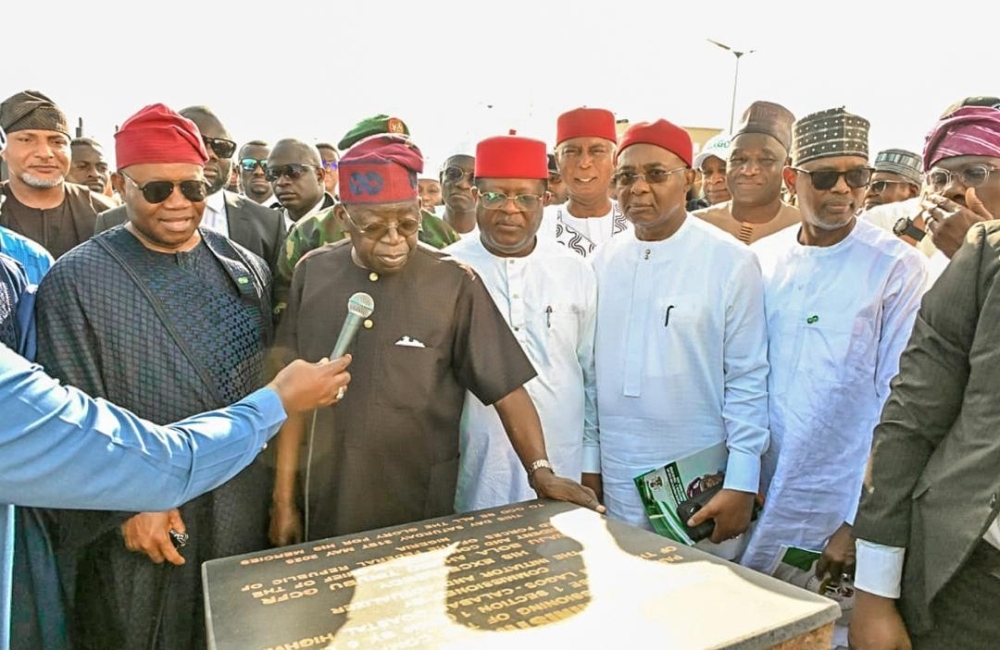
DRIVING NIGERIA’S FUTURE: CELEBRATING TWO YEARS OF TRANSFORMATIVE LEADERSHIP AND THE LAGOS-CALABAR COASTAL HIGHWAY MILESTONE
DRIVING NIGERIA’S FUTURE: CELEBRATING TWO YEARS OF TRANSFORMATIVE LEADERSHIP AND THE LAGOS-CALABAR COASTAL HIGHWAY MILESTONE
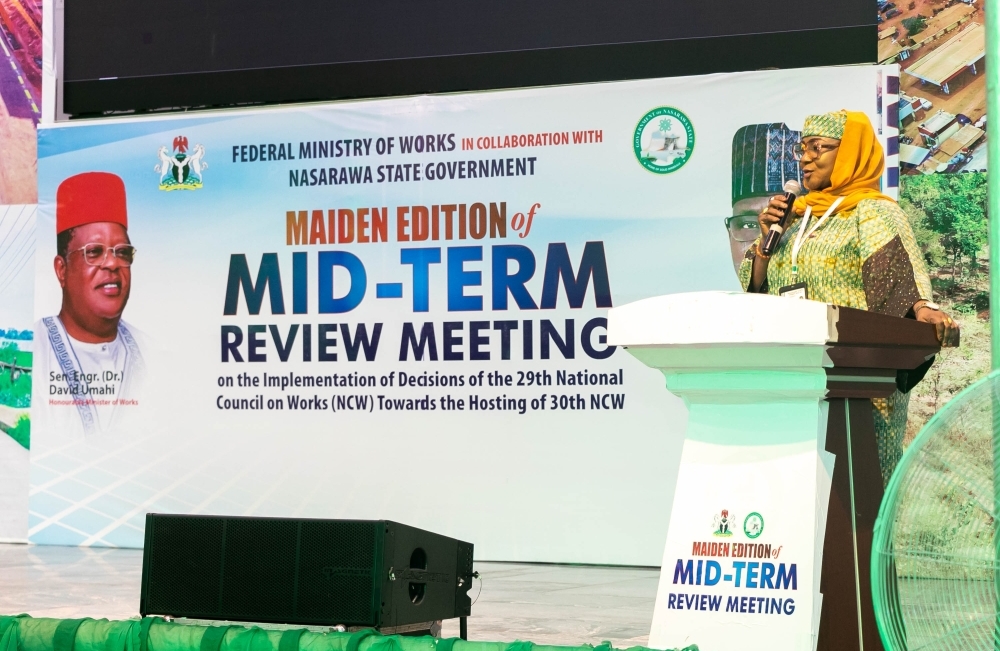
MID -TERM REVIEW MEETING ON THE IMPLIMENTATION OF THE DECISIONS REACHED AT THE 29TH NATIONAL COUNCIL ON WORKS (NCW) DAY 1
MID -TERM REVIEW MEETING ON THE IMPLIMENTATION OF THE DECISIONS REACHED AT THE 29TH NATIONAL COUNCIL ON WORKS (NCW) DAY 1