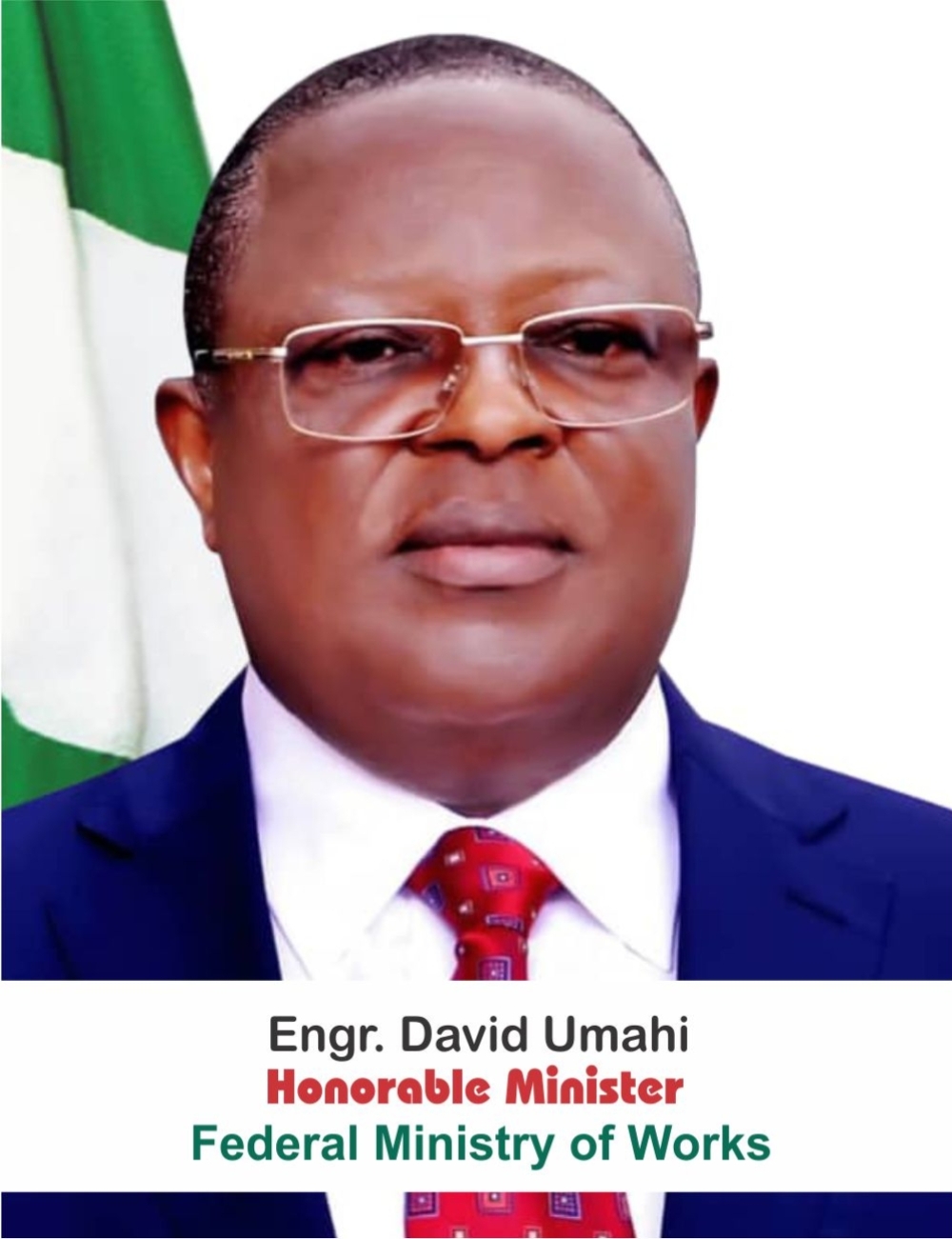
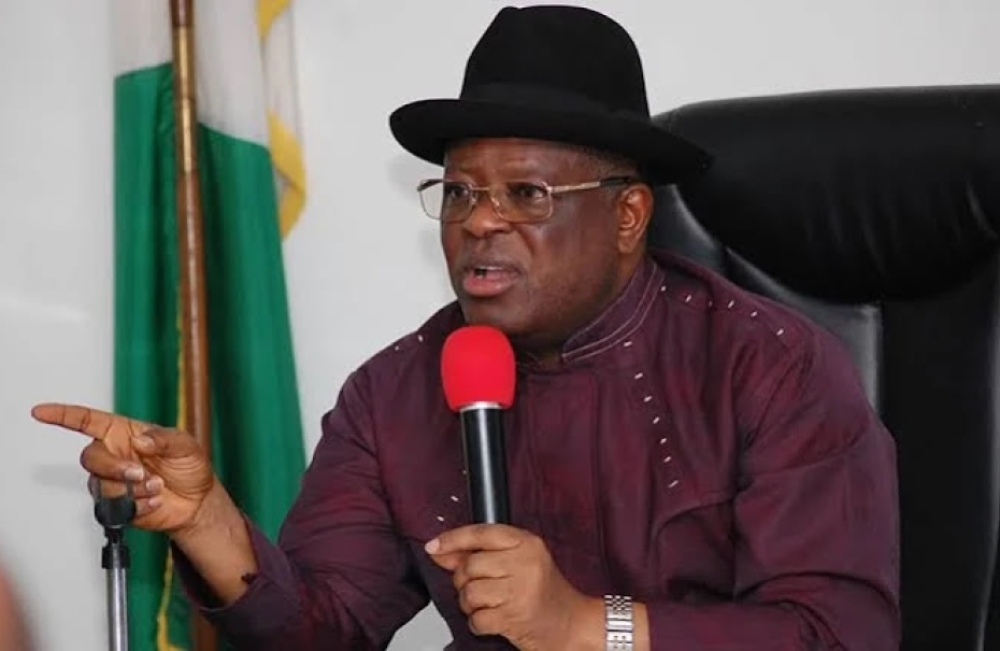
UMAHI ORDERS IMMEDIATE EMERGENCY INTERVENTION ON BENIN-ASABA ROAD, AND SOME OTHER CRITICAL FEDERAL ROADS
The Honourable Minister of Works, Senator Engr. David Nweze Umahi, CON, has directed the immediate deployment of major contractors to all three sections of the Benin-Asaba Federal Road to restore the failed sections and bring an end to the suffering of motorists and other road users.
This is because, the situation on the concessioned Benin-Asaba Road has reached a point where the overall public interest must take precedence over the existing concession agreement.
Recall that the Honourable Minister of Works was on the Benin-Asaba Road about seven days ago, where he assembled a number of contractors and directed them to prepare for immediate palliative intervention on the affected sections of the road at no cost to the concessionaire. In line with the Concession agreement which requires that before the Federal Government could intervene, the permission of the concessionaire must be required, and that permission was not granted to federal government.
The Minister subsequently proposed three options to the concessionaire, any one of which would have enabled the Federal Government to move in and address the worsening condition of the road. Unfortunately, none of the options was accepted by the concessionaire. Immediately after the Minister left Asaba, the already limited equipment deployed to the road by the concessionaire was further reduced to just one, worsening the situation and increasing the suffering of motorists and other road users.
While the Minister takes responsibility for the concerns and suffering of Nigerians using the road, it is important to state that the concessionaire has also not taken the suffering of Edo people and travelling public sufficiently into consideration by declining all the options put forward by the Federal Government. The concessionaire continues to rely on the terms of the concession agreement entered into by the previous administration, an agreement which weighs heavily against the Federal Government’s ability to intervene quickly in the interest of the public in a situation like this.
In view of this situation, the Honourable Minister of Works has directed the immediate deployment of major contractors within the corridor to all three sections of the Benin-Asaba Road to restore the failed sections and bring relief to the people, with the cost of the emergency intervention being borne by the Federal Government. The Honourable Minister has also directed immediate redesign of the entire route to be rebuilt with reinforced concrete pavement. The public should therefore take note that immediate action is underway to restore every failed section of the Benin-Asaba Road and subsequently rehabilitate the entire sections of the road using reinforced concrete pavement.
2. On the Benin-Sapele Road:
The Governors of Edo and Delta States, the Niger Delta Development Commission (NDDC), and the Federal Government are currently engaged in interventions on different sections of the road to restore the entire route. While some sections are receiving palliative attention, permanent works are also ongoing on other sections.
3. On Ifaki(Ekiti) - Kabba (Kogi) Road:
The Federal Government is engaging both the contractor; Gamji Nigeria Company Limited, and Dangote PLC on immediate emergency and permanent intervention on the most failed sections of the road, while efforts are being made to financially mobilise the company for more extensive permanent work to commence on the axis.
4. On the Sokoto-Zamfara-Katsina Road: This is an inherited project involving the dualisation of approximately 350 kilometres, which translates to about 700 kilometers. The project has since been redesigned and is currently ongoing and most sections are being reconstructed using reinforced concrete pavement. From the Sokoto axis towards Zamfara, over 50 kilometres of one carriageway have been fully completed with reinforced concrete pavement. From Zamfara to Katsina, some sections have been completed and palliative works have been ordered over the sections that have not been reconstructed. However, the pace of work slowed down due to the redesign and rephasing of the project. The contractors currently engaged on the road include CBC, SETRACO, Triacta and Mothercat. They are being remobilised to return to site and complete the outstanding works.
5. On the Abuja-Kaduna-Zaria-Kano Road: The Federal Government took over the Road project and has currently completed the 118-kilometer mostly on reinforced concrete pavement on lot 1. The Lot 2, which covers 164 kilometres, is over 60 percent completed on reinforced concrete pavement. The Federal Government has also introduced solar-powered light on the entire route of Abuja-Kaduna-Zaria - Kano to improve visibility during night travel and enhance the overall security situation on the route. The entire project is scheduled for completion by December 2026.
6. On Bauchi-Jigawa Road: Triacta Nigeria Limited has been mobilised to carry out the necessary interventions on some failed sections and work is currently ongoing in those failed sections.
7. On the Sagamu-Ore Road: 48 Kilometers of the 96-kilometre road have already been completed using reinforced concrete pavement. There is also a 24-kilometre section around Ore which was abandoned by the previous contractor. The Federal Government has directed its immediate restoration to ensure seamless travel. Solar lights are being installed in the entire 96kilometer of the road.
8. On Flooded Sections on Sagamu-Ore-Benin Road: The flooded sections on the same corridor between Sagamu-Ore-Benin Road, as well as other flooded sections in Ondo State, are being designed for emergency procurement and intervention.
9. On the East-West Road:
Some failed and critical sections, including defective sections of bridges along the East-West Road, are being marked out for emergency procurement and intervention.
10. On the Abuja-Lokoja Road:
Several contracts are ongoing along the route, while the three critical sections currently without contracts are being procured for emergency intervention.
11. On the Lokoja-Benin-Warri Road: The President has directed a complete redesign and procurement of the 400-kilometre dualised route covering the uncompleted sections, using reinforced concrete pavement, while palliative works will continue with the contractors currently on the road.
12. On Carter Bridge:
While the Federal Government continues to undertake weekly maintenance of the underwater elements of the bridge. The site has also been handed over to the contractor, CCECC, for the construction of a permanent new bridge, and work has commenced.
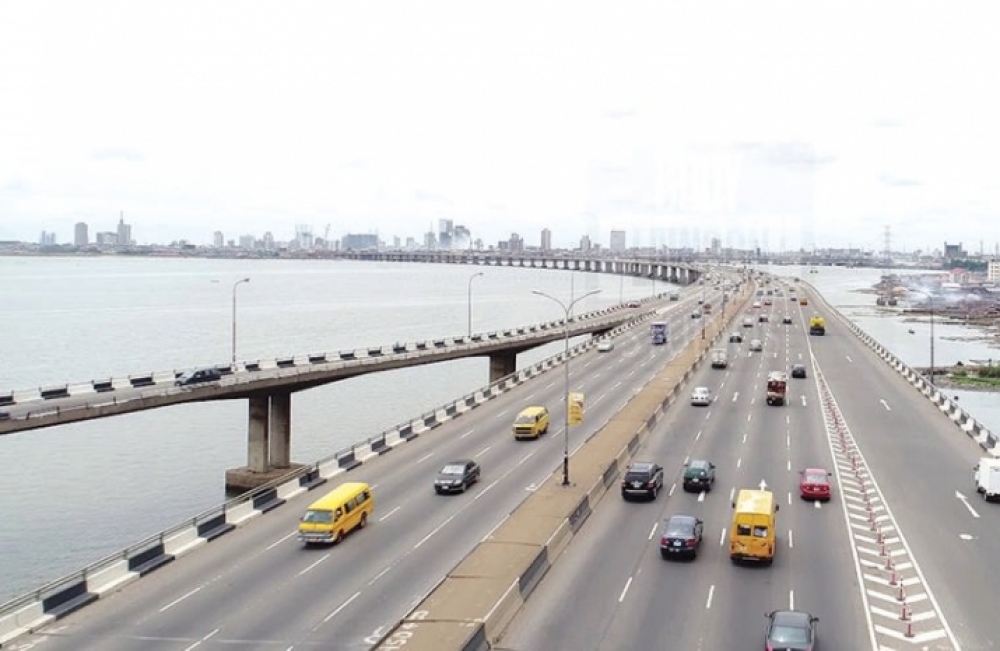
13. On the Third Mainland Bridge:
With regard to the defective underwater structural elements, the Federal Government is at the final stage of determining the appropriate intervention for the repair of the affected elements.
14. On the flooded section of the Lagos-Ibadan Road: Work has commenced on the affected section. There are also several flooded sections on federal roads across the six geopolitical zones, largely occasioned by excessive flooding and the effects of climate change. The Federal Government is identifying and marking these sections for immediate attention.
15. On the First and Second Niger Bridges:
Intervention work is ongoing on the approach roads to the Second Niger Bridge damaged by flood and the work is progressing very well. The First Niger Bridge has been closed to traffic to enable immediate repair works. Contractor has mobilized to site and comprehensive rehabilitation of the bridge has started. From Summit Junction to the First Niger Bridge, massive rehabilitation work is also ongoing using reinforced concrete pavement.
16. The Honourable Minister wishes to commend the President of the Federal Republic of Nigeria, His Excellency Bola Ahmed Tinubu, GCFR, for the massive work being undertaken on the nation’s roads since the administration assumed office in 2023.
17. It is important to state that when the present administration came into office, there was hardly any part of the country where one could travel for an hour without encountering significant challenges on the road network. The condition of the country’s roads and bridges was a major national infrastructure challenge.
18. Rather than shy away from the problem, the administration of President Bola Ahmed Tinubu made the nation’s road network a priority. Virtually every part of the country became a priority, and the Federal Government, through the Federal Ministry of Works, Regional Commissions, Parastatals and other MDA’s has continued to respond extensively to these challenges.
19. The Federal Government is currently working on over 80 percent of the inherited federal roads, an unprecedented level of intervention in the country’s road infrastructure.
20. We ask the public to understand the enormous challenges inherited on our roads and bridges and to take note not only of the problems being solved, but also of the permanent solutions being introduced.
21. A major part of this new approach is the use of reinforced concrete pavement, designed to significantly extend the lifespan of major roads. These roads are expected to last between 50 and 100 years. This means that roads being constructed under President Bola Ahmed Tinubu’s administration are being designed with future generations in mind, rather than simply providing temporary solutions to today’s problems. And this is a complete departure from the past, when roads often deteriorated only a few years after completion, resulting in a continuous cycle of reconstruction and expenditure.
22. We appreciate the concerns of Nigerians over the condition of some roads presently and the difficulties faced by motorists and commuters who cannot move easily from one point to another. Those concerns are legitimate, and the Federal Government is listening. But Nigerians should also recognise the enormous scale of the problems inherited and the amount of work currently being undertaken across the country.
23. It is simply impossible to resolve every road challenge accumulated over many years of neglect by the past administrations within three years. What is important is that the government is working, the government is responding, and the government is putting permanent solutions in place.
25. We appreciate members of the public who send situation reports on failed roads and other infrastructure challenges. These reports help the Ministry identify areas requiring urgent attention. However, we also appeal to members of the public to report when such problems have been addressed, just as they report when they occur.
24. We are aware of situations where photographs and reports of road challenges continue to circulate on social media even after the Federal Government has intervened and resolved the particular problem.
25. However, the Ministry will continue to respond as rapidly as possible to genuine reports and concerns from Nigerians.
26. It is also important to note that we have compiled a comprehensive record of all inherited, ongoing and intervention projects across the country which is available to the public. This is to ensure that Nigerians have access to information on the infrastructure projects being undertaken nationwide and can fully participate in and appreciate the infrastructure revolution of President Bola Ahmed Tinubu’s administration.

UMAHI ORDERS IMMEDIATE EMERGENCY INTERVENTION ON BENIN-ASABA ROAD, AND SOME OTHER CRITICAL FEDERAL ROADS The Honourable Minister of Works, Senator Engr. David Nweze Umahi, CON, has directed the immediate deployment of major contractors to all three sections of the Benin-Asaba Federal Road to restore the failed sections and bring an end to the suffering of motorists and other road users. This is because, the situation on the concessioned Benin-Asaba Road has reached a point where the overall public interest must take precedence over the existing concession agreement. Recall that the Honourable Minister of Works was on the Benin-Asaba Road about seven days ago, where he assembled a number of contractors and directed them to prepare for immediate palliative intervention on the affected sections of the road at no cost to the concessionaire. In line with the Concession agreement which requires that before the Federal Government could intervene, the permission of the concessionaire must be required, and that permission was not granted to federal government. The Minister subsequently proposed three options to the concessionaire, any one of which would have enabled the Federal Government to move in and address the worsening condition of the road. Unfortunately, none of the options was accepted by the concessionaire. Immediately after the Minister left Asaba, the already limited equipment deployed to the road by the concessionaire was further reduced to just one, worsening the situation and increasing the suffering of motorists and other road users. While the Minister takes responsibility for the concerns and suffering of Nigerians using the road, it is important to state that the concessionaire has also not taken the suffering of Edo people and travelling public sufficiently into consideration by declining all the options put forward by the Federal Government. The concessionaire continues to rely on the terms of the concession agreement entered into by the previous administration, an agreement which weighs heavily against the Federal Government’s ability to intervene quickly in the interest of the public in a situation like this. In view of this situation, the Honourable Minister of Works has directed the immediate deployment of major contractors within the corridor to all three sections of the Benin-Asaba Road to restore the failed sections and bring relief to the people, with the cost of the emergency intervention being borne by the Federal Government. The Honourable Minister has also directed immediate redesign of the entire route to be rebuilt with reinforced concrete pavement. The public should therefore take note that immediate action is underway to restore every failed section of the Benin-Asaba Road and subsequently rehabilitate the entire sections of the road using reinforced concrete pavement. 2. On the Benin-Sapele Road: 3. On Ifaki(Ekiti) - Kabba (Kogi) Road: 4. On the Sokoto-Zamfara-Katsina Road: This is an inherited project involving the dualisation of approximately 350 kilometres, which translates to about 700 kilometers. The project has since been redesigned and is currently ongoing and most sections are being reconstructed using reinforced concrete pavement. From the Sokoto axis towards Zamfara, over 50 kilometres of one carriageway have been fully completed with reinforced concrete pavement. From Zamfara to Katsina, some sections have been completed and palliative works have been ordered over the sections that have not been reconstructed. However, the pace of work slowed down due to the redesign and rephasing of the project. The contractors currently engaged on the road include CBC, SETRACO, Triacta and Mothercat. They are being remobilised to return to site and complete the outstanding works. 5. On the Abuja-Kaduna-Zaria-Kano Road: The Federal Government took over the Road project and has currently completed the 118-kilometer mostly on reinforced concrete pavement on lot 1. The Lot 2, which covers 164 kilometres, is over 60 percent completed on reinforced concrete pavement. The Federal Government has also introduced solar-powered light on the entire route of Abuja-Kaduna-Zaria - Kano to improve visibility during night travel and enhance the overall security situation on the route. The entire project is scheduled for completion by December 2026. 6. On Bauchi-Jigawa Road: Triacta Nigeria Limited has been mobilised to carry out the necessary interventions on some failed sections and work is currently ongoing in those failed sections. 7. On the Sagamu-Ore Road: 48 Kilometers of the 96-kilometre road have already been completed using reinforced concrete pavement. There is also a 24-kilometre section around Ore which was abandoned by the previous contractor. The Federal Government has directed its immediate restoration to ensure seamless travel. Solar lights are being installed in the entire 96kilometer of the road. 8. On Flooded Sections on Sagamu-Ore-Benin Road: The flooded sections on the same corridor between Sagamu-Ore-Benin Road, as well as other flooded sections in Ondo State, are being designed for emergency procurement and intervention. 9. On the East-West Road: 10. On the Abuja-Lokoja Road: 11. On the Lokoja-Benin-Warri Road: The President has directed a complete redesign and procurement of the 400-kilometre dualised route covering the uncompleted sections, using reinforced concrete pavement, while palliative works will continue with the contractors currently on the road. 12. On Carter Bridge: 13. On the Third Mainland Bridge: 14. On the flooded section of the Lagos-Ibadan Road: Work has commenced on the affected section. There are also several flooded sections on federal roads across the six geopolitical zones, largely occasioned by excessive flooding and the effects of climate change. The Federal Government is identifying and marking these sections for immediate attention. 15. On the First and Second Niger Bridges: 16. The Honourable Minister wishes to commend the President of the Federal Republic of Nigeria, His Excellency Bola Ahmed Tinubu, GCFR, for the massive work being undertaken on the nation’s roads since the administration assumed office in 2023. 17. It is important to state that when the present administration came into office, there was hardly any part of the country where one could travel for an hour without encountering significant challenges on the road network. The condition of the country’s roads and bridges was a major national infrastructure challenge. 18. Rather than shy away from the problem, the administration of President Bola Ahmed Tinubu made the nation’s road network a priority. Virtually every part of the country became a priority, and the Federal Government, through the Federal Ministry of Works, Regional Commissions, Parastatals and other MDA’s has continued to respond extensively to these challenges. 19. The Federal Government is currently working on over 80 percent of the inherited federal roads, an unprecedented level of intervention in the country’s road infrastructure. 20. We ask the public to understand the enormous challenges inherited on our roads and bridges and to take note not only of the problems being solved, but also of the permanent solutions being introduced. 21. A major part of this new approach is the use of reinforced concrete pavement, designed to significantly extend the lifespan of major roads. These roads are expected to last between 50 and 100 years. This means that roads being constructed under President Bola Ahmed Tinubu’s administration are being designed with future generations in mind, rather than simply providing temporary solutions to today’s problems. And this is a complete departure from the past, when roads often deteriorated only a few years after completion, resulting in a continuous cycle of reconstruction and expenditure. 22. We appreciate the concerns of Nigerians over the condition of some roads presently and the difficulties faced by motorists and commuters who cannot move easily from one point to another. Those concerns are legitimate, and the Federal Government is listening. But Nigerians should also recognise the enormous scale of the problems inherited and the amount of work currently being undertaken across the country. 23. It is simply impossible to resolve every road challenge accumulated over many years of neglect by the past administrations within three years. What is important is that the government is working, the government is responding, and the government is putting permanent solutions in place. 25. We appreciate members of the public who send situation reports on failed roads and other infrastructure challenges. These reports help the Ministry identify areas requiring urgent attention. However, we also appeal to members of the public to report when such problems have been addressed, just as they report when they occur. 24. We are aware of situations where photographs and reports of road challenges continue to circulate on social media even after the Federal Government has intervened and resolved the particular problem.
The Governors of Edo and Delta States, the Niger Delta Development Commission (NDDC), and the Federal Government are currently engaged in interventions on different sections of the road to restore the entire route. While some sections are receiving palliative attention, permanent works are also ongoing on other sections.
The Federal Government is engaging both the contractor; Gamji Nigeria Company Limited, and Dangote PLC on immediate emergency and permanent intervention on the most failed sections of the road, while efforts are being made to financially mobilise the company for more extensive permanent work to commence on the axis.
Some failed and critical sections, including defective sections of bridges along the East-West Road, are being marked out for emergency procurement and intervention.
Several contracts are ongoing along the route, while the three critical sections currently without contracts are being procured for emergency intervention.
While the Federal Government continues to undertake weekly maintenance of the underwater elements of the bridge. The site has also been handed over to the contractor, CCECC, for the construction of a permanent new bridge, and work has commenced.
With regard to the defective underwater structural elements, the Federal Government is at the final stage of determining the appropriate intervention for the repair of the affected elements.
Intervention work is ongoing on the approach roads to the Second Niger Bridge damaged by flood and the work is progressing very well. The First Niger Bridge has been closed to traffic to enable immediate repair works. Contractor has mobilized to site and comprehensive rehabilitation of the bridge has started. From Summit Junction to the First Niger Bridge, massive rehabilitation work is also ongoing using reinforced concrete pavement.
25. However, the Ministry will continue to respond as rapidly as possible to genuine reports and concerns from Nigerians.
26. It is also important to note that we have compiled a comprehensive record of all inherited, ongoing and intervention projects across the country which is available to the public. This is to ensure that Nigerians have access to information on the infrastructure projects being undertaken nationwide and can fully participate in and appreciate the infrastructure revolution of President Bola Ahmed Tinubu’s administration.
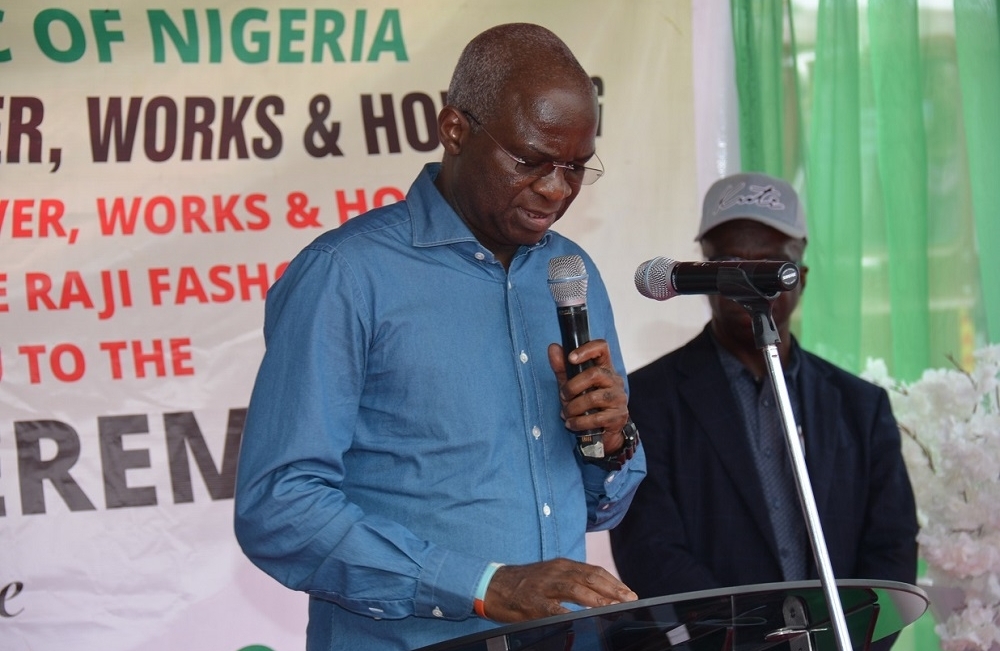
Please Complete The Good Works We’ve Started - Fasola Charges Staff The Minister of Power, Works and Housing, Babatunde Raji Fashola, SAN, has urged the management and staff of his Ministry to try as much as possible and complete the outstanding works he did not finish from 11th of November he resumed office till his exit on 28th May 2019. He also enjoined them not to undermine President Mohammadu Buhari’s quest to deliver quality service to Nigerians in his next level to improve and move the economy forward. Fashola gave the charge today in his Ministry’s Headquarters, Abuja during the valedictory Meeting the Management Staff held in his honour and that of the Minister of State for Power, Works and Housing, Honourable Mustapha Baba Shehuri. Fasola and Shehuri respectively commended the Permanent Secretary (Works and Housing Sector), Alhaji Mohammed Bukar, his counterpart, (Power Sector), Engr. Louis Edozien, the Management and Staff of the Ministry for the co-operation and support given to them during their tenure as Ministers. While appealing for forgiveness from Staff whose toes were stepped on in the course of carrying out their duties, the Ministers appealed for extension of support and co-operation to anyone that might be appointed as the next Minister, stressing that government is a continuum. The various Directors and Heads of Agencies in the Ministry who delivered goodwill messages saluted Fashola and Shehuri for their team spirit, doggedness, resourcefulness and innovativeness in carrying out the mandate of the Ministry. Earlier, the Permanent Secretary Federal Ministry of Power, Works and Housing (Works and Housing), Alhaji Mohammed Bukar extoled both Fashola and Shehuri for superintending and piloting the affairs of the Ministry in the most efficient manner which ushered in an increase and unprecedented increase in the budgetary allocation of the Ministry. In his closing remark, Engr. Louis Edozien stated that the two Ministers had left legacies and indelible marks on the Ministry of Power, Works and Housing so difficult and challenging to surpass in the near future. He prayed that the Almighty God will continue to guide and strengthen them in their future endeavours. ...
FG Denies Plans To Stop Payment Of Shortfalls To GENCOS Following a report in a national daily newspaper, the Ministry of Power, Works and Housing Wednesday denied that the Federal Government has stopped the payment of shortfalls to Electricity Generation Companies (GenCos), describing the report as both false and unfounded. The report, contained in the Wednesday edition of Punch Online media, held that the Federal Government on Tuesday ordered power generation companies to find customers and sell their power directly to the identified customers as, according to the report, “plans are on the way for it to ultimately exit the monthly payments to Gencos to help cushion the revenue shortfalls on the books of the power generators as a result of the poor remittances from the power distributors”. The report titled, “FG to stop payment of shortfalls to Gencos” and attributed to the Permanent Secretary (Power) in the Ministry, Engr. Louis Edozien, emanated from the remarks of the Permanent Secretary at a Workshop organized by the Nigerian Electricity Regulatory Commission (NERC) on Tuesday, 12th February, 2019 on the Eligible Customer Regulation. But in a Statement signed by the Permanent Secretary in person, the Ministry asserted that at no point in his remarks did the Permanent Secretary state that "FGN is to stop payment of shortfalls to Gencos", pointing out that the Payment Assurance Programme of the Federal Government that authorized the Nigerian Bulk Electricity Trader (NBET) to guarantee payment for any power it has contracted from generation companies on the national grid had not been reversed. The Statement read in part, “The Payment Assurance Programme of the Federal Government of Nigeria that authorized NBET to borrow N701.9 billion to guarantee payment for any power it has contracted from generation companies on the national grid and their gas and other suppliers has been in operation since January 2017. The amount NBET is authorized to borrow is not yet fully drawn. The Federal Executive Council (FEC) approved the programme. FEC has not taken any decision to stop it. FEC is the appropriate authority to comment on the Programme’s tenure and borrowing ceiling”. In order to set the records straight, the Statement clarified that at the workshop organized by NERC on the Eligible Customer Regulation, the Permanent Secretary urged generation companies to more aggressively take advantage of the regulation to sell the power they can generate, of which 2,000MW is now stranded, to Eligible Customers who need it and are willing and able to pay for it. Insisting that it would be better than waiting for NBET to pay for it or to guarantee it, for which NBET needs support from the Federal Government due to shortfalls in payment by distribution companies, the Permanent Secretary decried that though the Minister issued the policy direction to NERC that gave rise to the regulation in May 2017, and NERC has issued the regulation, none of the interested consumers and their generation company suppliers have been given licenses to buy and sell power as Eligible Customers. He encouraged NERC to accelerate and simplify the licensing process. He further stated that the Transmission Company of Nigeria (TCN) should continue to support the regulation by making targeted investments in the national grid, as needed to service specific contracts with generation companies and Eligible Customers to transmit the power, with penalties for failure to transmit, adding that TCN could finance such targeted investments with the expected revenue from such bilateral transmission contracts. Encouraging electricity distribution companies (DisCos) to embrace the policy, the Permanent Secretary argued that if the DisCos were satisfying the power supply needs of their consumers of bulk power adequately such consumers would have no reason to generate the power by themselves or to want to become Eligible Customers adding that by embracing the regulation, the DisCos could partner with investors and generation companies to build new distribution infrastructure to better serve specific paying customers. “They can buy power directly from generation companies and contract with TCN to deliver it, and give premium service to selected customers or customer groups”, the Permanent Secretary said adding that in such cases the distribution company must be willing and able to guarantee the payment for the power they buy, “because the shortfalls in payment which characterizes their power purchases from NBET, would not be possible in such bilateral contracts”. The Permanent Secretary then enjoined dissatisfied consumers to take advantage of the Customer Care platforms set up by all the distribution companies in compliance with the provisions of their license, and escalate unresolved complaints to the NERC Consumer f Forum offices, as provided for in regulations, emphasizing that dissatisfied consumers could take advantage of the Mini-Grid Regulation, NERC's up-coming Franchising Regulation and the Eligible Customer Regulation to get premium power that meets their needs. The Workshop revealed that the Ministry has received forty four (44) expressions of interest with a total demand for 600MW from underserved and unserved consumers desirous of becoming Eligible Customers. Of these, 14 have submitted license applications to NERC, two have fulfilled all NERC's conditions and expect to be licensed imminently. The Ministry enjoins the public to discountenance the false report, and requests that the news outlets purveying such fake news cease and desist. ...
FG Reopens Apapa/ Leventis Bridge, Pledges Repairs On Third Mainland Bridge After closure for over one year, the Federal Ministry of Power, Works and Housing on Wednesday reopened the Apapa/Leventis Bridge to traffic. The News Agency of Nigeria (NAN) recalls that the bridge was closed for emergency repairs in August 2016 after a portion of the bridge deck damaged by fire caved in. Some of the reinforcement rods on top of the bridge’s centre had become exposed as the asphalt covering them had been eroded. It was re-opened to light traffic after the emergency repairs and later shut in 2017. The permanent repairs began in 2018 after Julius Berger, the contractor on the project, imported some materials to aid the repairs. The 40-year-old bridge links Nigeria’s premier port to both the Lagos Mainland and Island. While performing the tape cutting ceremony to open the bridge, the Director Highways, South West, Mr Funsho Adebiyi said that the opening would ease gridlock on the Apapa axis. “It is my pleasure to open this bridge in the name of God the Father, Son and Holy Spirit. Today we are having a new bridge as well as a new access road. So, hopefully gridlock will end here,” he said. He said that government was going to take drastic action against all forms of abuses that would cause damage to bridges in Lagos. The Federal Controller of Works in Lagos, Mr Adedamola Kuti said that the bridge was damaged in 2016 due to “activities of some miscreants living under the bridge’’. “When the contractor came on board and removed the slab, that is the deck that got damaged, we discovered that the beams carrying the weight of the slab itself had been affected by the fire. “So, there was no way we could go ahead with the replacement of the slab, other than for us to start from the beams. So we had to produce new distress beams, and then, of course, the slabs. “And we have also done the surfacing of the other adjoining slab close to the damaged one,’’ he said. He thanked residents for their patience during the period of closure of the bridge and pledged Federal Government’s commitment to continued maintenance of all the roads and bridges in Lagos. He listed bridges that had been repaired to include the Marine Beach Bridge, Coconut Bridge and Ijora 7Up Bridge. He added that work was ongoing on the Alaka Bridge in Surulere and the Third Mainland Bridge. He further explained that repair works were ongoing on Lagos-Ota-Abeokuta, Lagos-Ibadan, Ikorodu-Sagamu Expressways and some other federal roads in the metropolise. Kuti said that materials for total rehabilitation of the Third Mainland bridge had been imported and that permanent repair works would soon begin on some damaged expansion joints alongside the ongoing rehabilitation of the bridge. “We have completed the Adeniji Adele bound, we are working on the Mainland bound. So the repair works on the Third Mainland will start very soon because our materials are on the way,’’ he said. Speaking on the newly installed beams on the Apapa/Leventis Bridge, Mr Thomas Balzuweit, Julius Berger’s Regional Manager, said that experts were used to get “a comprehensive design study to get high quality materials“. Balzuweit added that various quality control checks were done before installing the beams to ensure structural integrity of the bridge to cater for the huge vehicular traffic on the axis. Alhaji Wasiu Olowuntoye, President, Container Truck Owners Association, who led a delegation of truck drivers to witness the opening, said that the hardship to truck owners would be minimized. “We are happy today because our members have suffered so much, they spend several days and sometimes weeks trying to go in or out of the ports but with this bridge opened, there will be good for traffic flow,’’ he said. Source: (NAN) ...
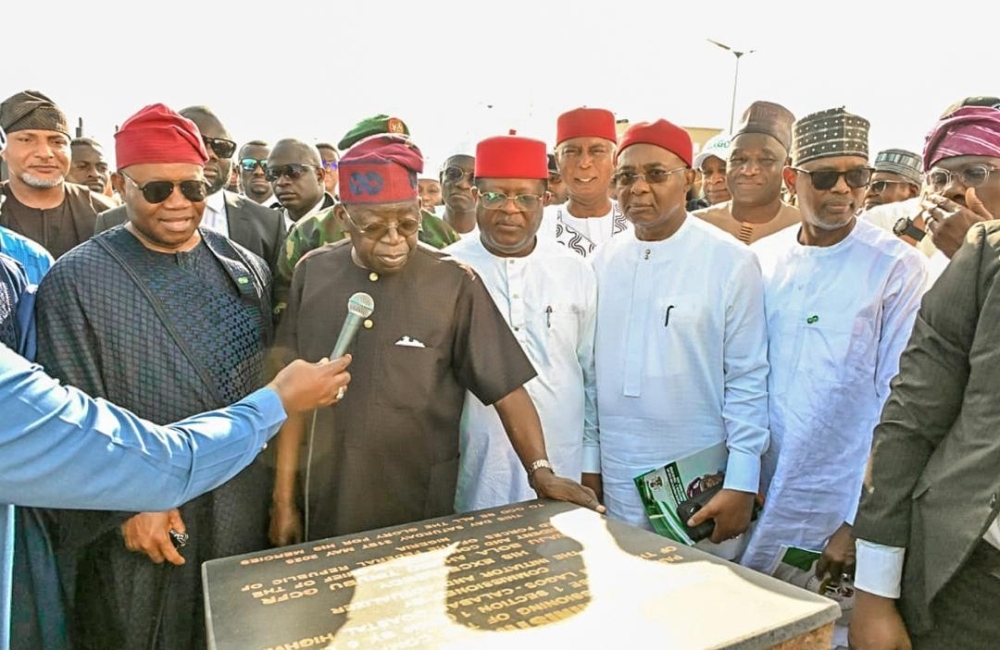
DRIVING NIGERIA’S FUTURE: CELEBRATING TWO YEARS OF TRANSFORMATIVE LEADERSHIP AND THE LAGOS-CALABAR COASTAL HIGHWAY MILESTONE
DRIVING NIGERIA’S FUTURE: CELEBRATING TWO YEARS OF TRANSFORMATIVE LEADERSHIP AND THE LAGOS-CALABAR COASTAL HIGHWAY MILESTONE
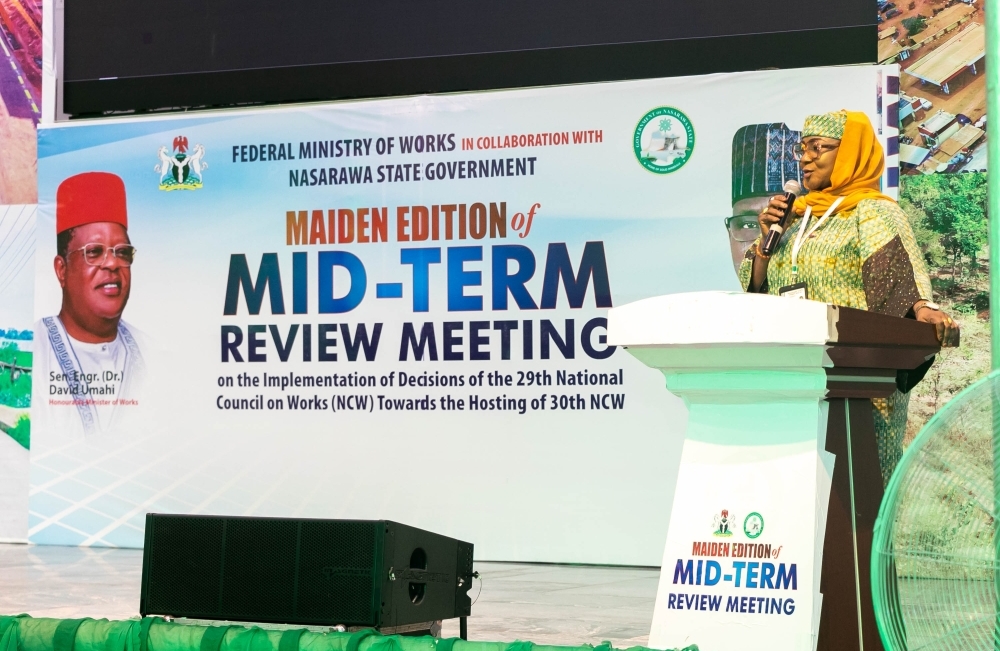
MID -TERM REVIEW MEETING ON THE IMPLIMENTATION OF THE DECISIONS REACHED AT THE 29TH NATIONAL COUNCIL ON WORKS (NCW) DAY 1
MID -TERM REVIEW MEETING ON THE IMPLIMENTATION OF THE DECISIONS REACHED AT THE 29TH NATIONAL COUNCIL ON WORKS (NCW) DAY 1