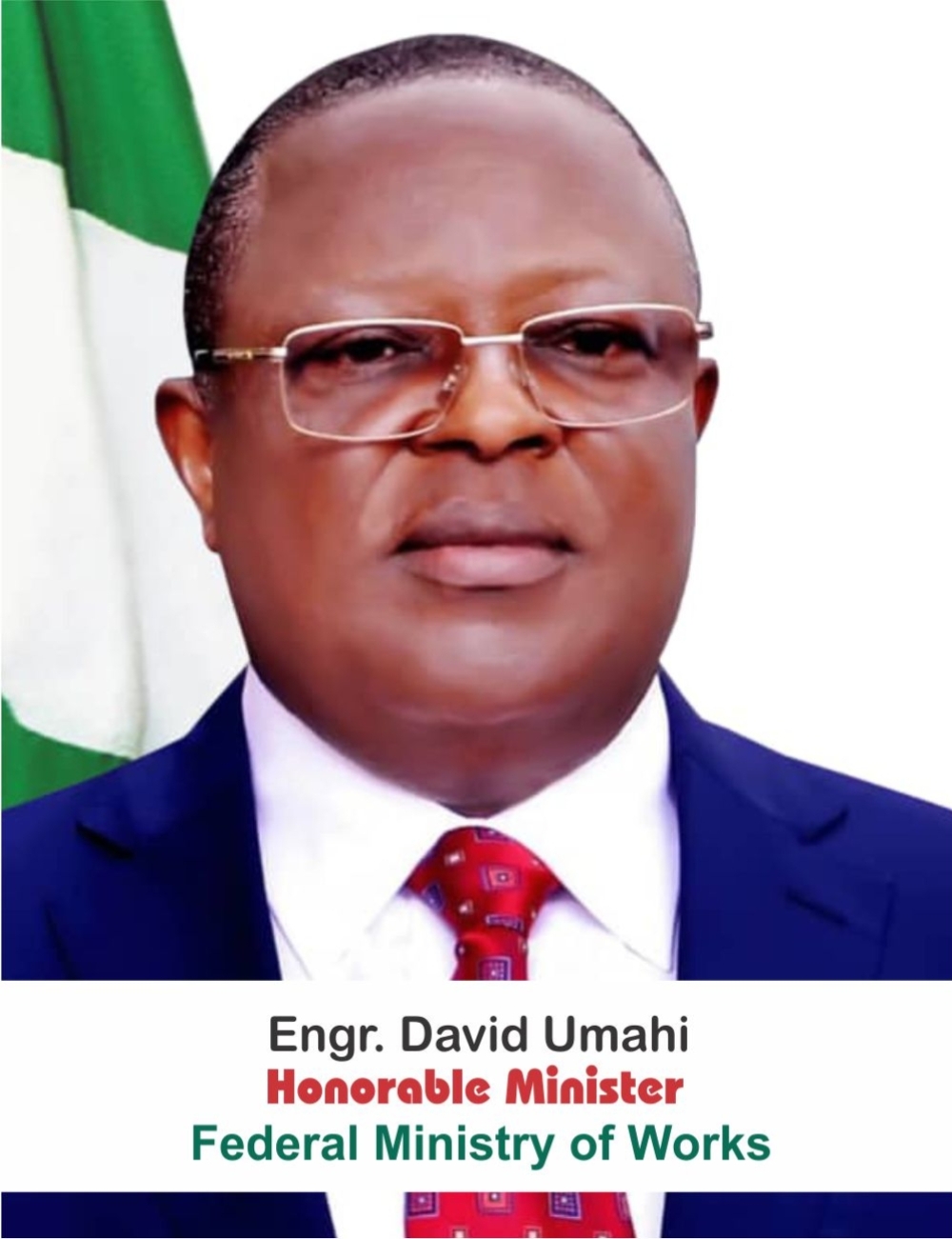
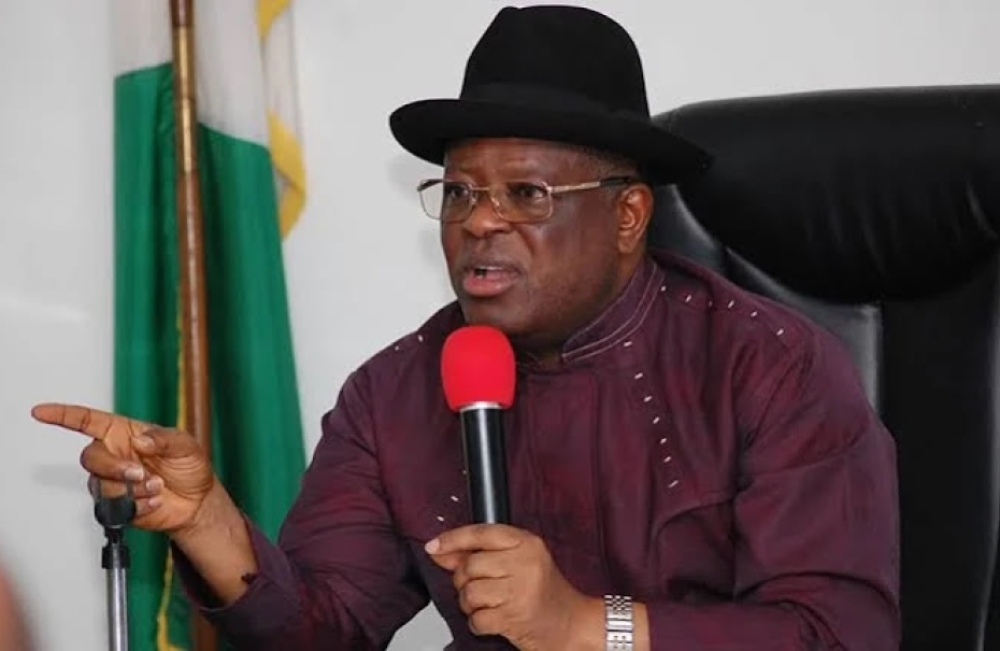
UMAHI ORDERS IMMEDIATE EMERGENCY INTERVENTION ON BENIN-ASABA ROAD, AND SOME OTHER CRITICAL FEDERAL ROADS
The Honourable Minister of Works, Senator Engr. David Nweze Umahi, CON, has directed the immediate deployment of major contractors to all three sections of the Benin-Asaba Federal Road to restore the failed sections and bring an end to the suffering of motorists and other road users.
This is because, the situation on the concessioned Benin-Asaba Road has reached a point where the overall public interest must take precedence over the existing concession agreement.
Recall that the Honourable Minister of Works was on the Benin-Asaba Road about seven days ago, where he assembled a number of contractors and directed them to prepare for immediate palliative intervention on the affected sections of the road at no cost to the concessionaire. In line with the Concession agreement which requires that before the Federal Government could intervene, the permission of the concessionaire must be required, and that permission was not granted to federal government.
The Minister subsequently proposed three options to the concessionaire, any one of which would have enabled the Federal Government to move in and address the worsening condition of the road. Unfortunately, none of the options was accepted by the concessionaire. Immediately after the Minister left Asaba, the already limited equipment deployed to the road by the concessionaire was further reduced to just one, worsening the situation and increasing the suffering of motorists and other road users.
While the Minister takes responsibility for the concerns and suffering of Nigerians using the road, it is important to state that the concessionaire has also not taken the suffering of Edo people and travelling public sufficiently into consideration by declining all the options put forward by the Federal Government. The concessionaire continues to rely on the terms of the concession agreement entered into by the previous administration, an agreement which weighs heavily against the Federal Government’s ability to intervene quickly in the interest of the public in a situation like this.
In view of this situation, the Honourable Minister of Works has directed the immediate deployment of major contractors within the corridor to all three sections of the Benin-Asaba Road to restore the failed sections and bring relief to the people, with the cost of the emergency intervention being borne by the Federal Government. The Honourable Minister has also directed immediate redesign of the entire route to be rebuilt with reinforced concrete pavement. The public should therefore take note that immediate action is underway to restore every failed section of the Benin-Asaba Road and subsequently rehabilitate the entire sections of the road using reinforced concrete pavement.
2. On the Benin-Sapele Road:
The Governors of Edo and Delta States, the Niger Delta Development Commission (NDDC), and the Federal Government are currently engaged in interventions on different sections of the road to restore the entire route. While some sections are receiving palliative attention, permanent works are also ongoing on other sections.
3. On Ifaki(Ekiti) - Kabba (Kogi) Road:
The Federal Government is engaging both the contractor; Gamji Nigeria Company Limited, and Dangote PLC on immediate emergency and permanent intervention on the most failed sections of the road, while efforts are being made to financially mobilise the company for more extensive permanent work to commence on the axis.
4. On the Sokoto-Zamfara-Katsina Road: This is an inherited project involving the dualisation of approximately 350 kilometres, which translates to about 700 kilometers. The project has since been redesigned and is currently ongoing and most sections are being reconstructed using reinforced concrete pavement. From the Sokoto axis towards Zamfara, over 50 kilometres of one carriageway have been fully completed with reinforced concrete pavement. From Zamfara to Katsina, some sections have been completed and palliative works have been ordered over the sections that have not been reconstructed. However, the pace of work slowed down due to the redesign and rephasing of the project. The contractors currently engaged on the road include CBC, SETRACO, Triacta and Mothercat. They are being remobilised to return to site and complete the outstanding works.
5. On the Abuja-Kaduna-Zaria-Kano Road: The Federal Government took over the Road project and has currently completed the 118-kilometer mostly on reinforced concrete pavement on lot 1. The Lot 2, which covers 164 kilometres, is over 60 percent completed on reinforced concrete pavement. The Federal Government has also introduced solar-powered light on the entire route of Abuja-Kaduna-Zaria - Kano to improve visibility during night travel and enhance the overall security situation on the route. The entire project is scheduled for completion by December 2026.
6. On Bauchi-Jigawa Road: Triacta Nigeria Limited has been mobilised to carry out the necessary interventions on some failed sections and work is currently ongoing in those failed sections.
7. On the Sagamu-Ore Road: 48 Kilometers of the 96-kilometre road have already been completed using reinforced concrete pavement. There is also a 24-kilometre section around Ore which was abandoned by the previous contractor. The Federal Government has directed its immediate restoration to ensure seamless travel. Solar lights are being installed in the entire 96kilometer of the road.
8. On Flooded Sections on Sagamu-Ore-Benin Road: The flooded sections on the same corridor between Sagamu-Ore-Benin Road, as well as other flooded sections in Ondo State, are being designed for emergency procurement and intervention.
9. On the East-West Road:
Some failed and critical sections, including defective sections of bridges along the East-West Road, are being marked out for emergency procurement and intervention.
10. On the Abuja-Lokoja Road:
Several contracts are ongoing along the route, while the three critical sections currently without contracts are being procured for emergency intervention.
11. On the Lokoja-Benin-Warri Road: The President has directed a complete redesign and procurement of the 400-kilometre dualised route covering the uncompleted sections, using reinforced concrete pavement, while palliative works will continue with the contractors currently on the road.
12. On Carter Bridge:
While the Federal Government continues to undertake weekly maintenance of the underwater elements of the bridge. The site has also been handed over to the contractor, CCECC, for the construction of a permanent new bridge, and work has commenced.
13. On the Third Mainland Bridge:
With regard to the defective underwater structural elements, the Federal Government is at the final stage of determining the appropriate intervention for the repair of the affected elements.
14. On the flooded section of the Lagos-Ibadan Road: Work has commenced on the affected section. There are also several flooded sections on federal roads across the six geopolitical zones, largely occasioned by excessive flooding and the effects of climate change. The Federal Government is identifying and marking these sections for immediate attention.
15. On the First and Second Niger Bridges:
Intervention work is ongoing on the approach roads to the Second Niger Bridge damaged by flood and the work is progressing very well. The First Niger Bridge has been closed to traffic to enable immediate repair works. Contractor has mobilized to site and comprehensive rehabilitation of the bridge has started. From Summit Junction to the First Niger Bridge, massive rehabilitation work is also ongoing using reinforced concrete pavement.
16. The Honourable Minister wishes to commend the President of the Federal Republic of Nigeria, His Excellency Bola Ahmed Tinubu, GCFR, for the massive work being undertaken on the nation’s roads since the administration assumed office in 2023.
17. It is important to state that when the present administration came into office, there was hardly any part of the country where one could travel for an hour without encountering significant challenges on the road network. The condition of the country’s roads and bridges was a major national infrastructure challenge.
18. Rather than shy away from the problem, the administration of President Bola Ahmed Tinubu made the nation’s road network a priority. Virtually every part of the country became a priority, and the Federal Government, through the Federal Ministry of Works, Regional Commissions, Parastatals and other MDA’s has continued to respond extensively to these challenges.
19. The Federal Government is currently working on over 80 percent of the inherited federal roads, an unprecedented level of intervention in the country’s road infrastructure.
20. We ask the public to understand the enormous challenges inherited on our roads and bridges and to take note not only of the problems being solved, but also of the permanent solutions being introduced.
21. A major part of this new approach is the use of reinforced concrete pavement, designed to significantly extend the lifespan of major roads. These roads are expected to last between 50 and 100 years. This means that roads being constructed under President Bola Ahmed Tinubu’s administration are being designed with future generations in mind, rather than simply providing temporary solutions to today’s problems. And this is a complete departure from the past, when roads often deteriorated only a few years after completion, resulting in a continuous cycle of reconstruction and expenditure.
22. We appreciate the concerns of Nigerians over the condition of some roads presently and the difficulties faced by motorists and commuters who cannot move easily from one point to another. Those concerns are legitimate, and the Federal Government is listening. But Nigerians should also recognise the enormous scale of the problems inherited and the amount of work currently being undertaken across the country.
23. It is simply impossible to resolve every road challenge accumulated over many years of neglect by the past administrations within three years. What is important is that the government is working, the government is responding, and the government is putting permanent solutions in place.
25. We appreciate members of the public who send situation reports on failed roads and other infrastructure challenges. These reports help the Ministry identify areas requiring urgent attention. However, we also appeal to members of the public to report when such problems have been addressed, just as they report when they occur.
24. We are aware of situations where photographs and reports of road challenges continue to circulate on social media even after the Federal Government has intervened and resolved the particular problem.
25. However, the Ministry will continue to respond as rapidly as possible to genuine reports and concerns from Nigerians.
26. It is also important to note that we have compiled a comprehensive record of all inherited, ongoing and intervention projects across the country which is available to the public. This is to ensure that Nigerians have access to information on the infrastructure projects being undertaken nationwide and can fully participate in and appreciate the infrastructure revolution of President Bola Ahmed Tinubu’s administration.

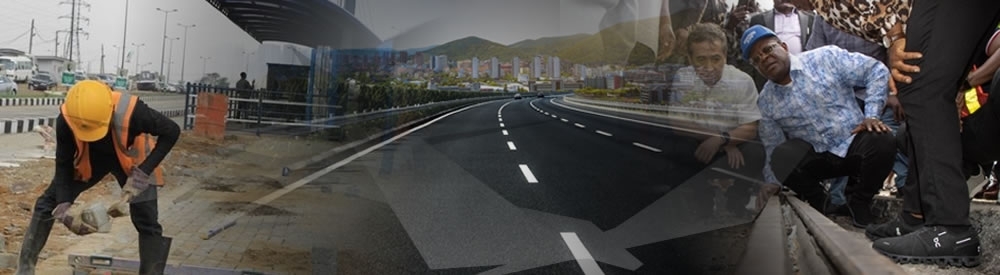
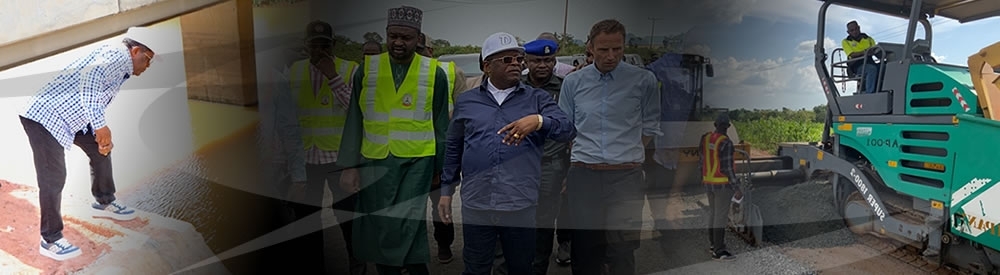
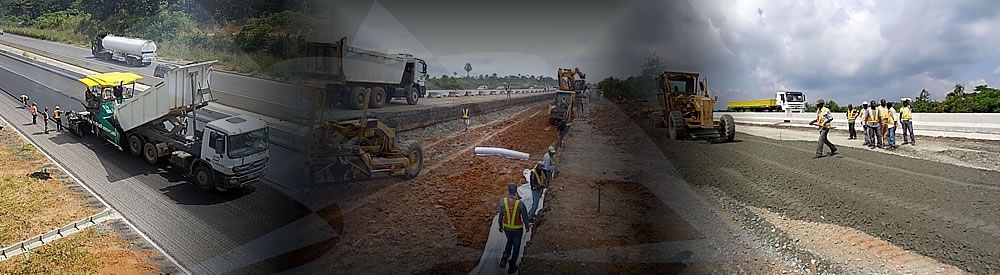
UMAHI ORDERS IMMEDIATE EMERGENCY INTERVENTION ON BENIN-ASABA ROAD, AND SOME OTHER CRITICAL FEDERAL ROADS The Honourable Minister of Works, Senator Engr. David Nweze Umahi, CON, has directed the immediate deployment of major contractors to all three sections of the Benin-Asaba Federal Road to restore the failed sections and bring an end to the suffering of motorists and other road users. This is because, the situation on the concessioned Benin-Asaba Road has reached a point where the overall public interest must take precedence over the existing concession agreement. Recall that the Honourable Minister of Works was on the Benin-Asaba Road about seven days ago, where he assembled a number of contractors and directed them to prepare for immediate palliative intervention on the affected sections of the road at no cost to the concessionaire. In line with the Concession agreement which requires that before the Federal Government could intervene, the permission of the concessionaire must be required, and that permission was not granted to federal government. The Minister subsequently proposed three options to the concessionaire, any one of which would have enabled the Federal Government to move in and address the worsening condition of the road. Unfortunately, none of the options was accepted by the concessionaire. Immediately after the Minister left Asaba, the already limited equipment deployed to the road by the concessionaire was further reduced to just one, worsening the situation and increasing the suffering of motorists and other road users. While the Minister takes responsibility for the concerns and suffering of Nigerians using the road, it is important to state that the concessionaire has also not taken the suffering of Edo people and travelling public sufficiently into consideration by declining all the options put forward by the Federal Government. The concessionaire continues to rely on the terms of the concession agreement entered into by the previous administration, an agreement which weighs heavily against the Federal Government’s ability to intervene quickly in the interest of the public in a situation like this. In view of this situation, the Honourable Minister of Works has directed the immediate deployment of major contractors within the corridor to all three sections of the Benin-Asaba Road to restore the failed sections and bring relief to the people, with the cost of the emergency intervention being borne by the Federal Government. The Honourable Minister has also directed immediate redesign of the entire route to be rebuilt with reinforced concrete pavement. The public should therefore take note that immediate action is underway to restore every failed section of the Benin-Asaba Road and subsequently rehabilitate the entire sections of the road using reinforced concrete pavement. 2. On the Benin-Sapele Road: 3. On Ifaki(Ekiti) - Kabba (Kogi) Road: 4. On the Sokoto-Zamfara-Katsina Road: This is an inherited project involving the dualisation of approximately 350 kilometres, which translates to about 700 kilometers. The project has since been redesigned and is currently ongoing and most sections are being reconstructed using reinforced concrete pavement. From the Sokoto axis towards Zamfara, over 50 kilometres of one carriageway have been fully completed with reinforced concrete pavement. From Zamfara to Katsina, some sections have been completed and palliative works have been ordered over the sections that have not been reconstructed. However, the pace of work slowed down due to the redesign and rephasing of the project. The contractors currently engaged on the road include CBC, SETRACO, Triacta and Mothercat. They are being remobilised to return to site and complete the outstanding works. 5. On the Abuja-Kaduna-Zaria-Kano Road: The Federal Government took over the Road project and has currently completed the 118-kilometer mostly on reinforced concrete pavement on lot 1. The Lot 2, which covers 164 kilometres, is over 60 percent completed on reinforced concrete pavement. The Federal Government has also introduced solar-powered light on the entire route of Abuja-Kaduna-Zaria - Kano to improve visibility during night travel and enhance the overall security situation on the route. The entire project is scheduled for completion by December 2026. 6. On Bauchi-Jigawa Road: Triacta Nigeria Limited has been mobilised to carry out the necessary interventions on some failed sections and work is currently ongoing in those failed sections. 7. On the Sagamu-Ore Road: 48 Kilometers of the 96-kilometre road have already been completed using reinforced concrete pavement. There is also a 24-kilometre section around Ore which was abandoned by the previous contractor. The Federal Government has directed its immediate restoration to ensure seamless travel. Solar lights are being installed in the entire 96kilometer of the road. 8. On Flooded Sections on Sagamu-Ore-Benin Road: The flooded sections on the same corridor between Sagamu-Ore-Benin Road, as well as other flooded sections in Ondo State, are being designed for emergency procurement and intervention. 9. On the East-West Road: 10. On the Abuja-Lokoja Road: 11. On the Lokoja-Benin-Warri Road: The President has directed a complete redesign and procurement of the 400-kilometre dualised route covering the uncompleted sections, using reinforced concrete pavement, while palliative works will continue with the contractors currently on the road. 12. On Carter Bridge: 13. On the Third Mainland Bridge: 14. On the flooded section of the Lagos-Ibadan Road: Work has commenced on the affected section. There are also several flooded sections on federal roads across the six geopolitical zones, largely occasioned by excessive flooding and the effects of climate change. The Federal Government is identifying and marking these sections for immediate attention. 15. On the First and Second Niger Bridges: 16. The Honourable Minister wishes to commend the President of the Federal Republic of Nigeria, His Excellency Bola Ahmed Tinubu, GCFR, for the massive work being undertaken on the nation’s roads since the administration assumed office in 2023. 17. It is important to state that when the present administration came into office, there was hardly any part of the country where one could travel for an hour without encountering significant challenges on the road network. The condition of the country’s roads and bridges was a major national infrastructure challenge. 18. Rather than shy away from the problem, the administration of President Bola Ahmed Tinubu made the nation’s road network a priority. Virtually every part of the country became a priority, and the Federal Government, through the Federal Ministry of Works, Regional Commissions, Parastatals and other MDA’s has continued to respond extensively to these challenges. 19. The Federal Government is currently working on over 80 percent of the inherited federal roads, an unprecedented level of intervention in the country’s road infrastructure. 20. We ask the public to understand the enormous challenges inherited on our roads and bridges and to take note not only of the problems being solved, but also of the permanent solutions being introduced. 21. A major part of this new approach is the use of reinforced concrete pavement, designed to significantly extend the lifespan of major roads. These roads are expected to last between 50 and 100 years. This means that roads being constructed under President Bola Ahmed Tinubu’s administration are being designed with future generations in mind, rather than simply providing temporary solutions to today’s problems. And this is a complete departure from the past, when roads often deteriorated only a few years after completion, resulting in a continuous cycle of reconstruction and expenditure. 22. We appreciate the concerns of Nigerians over the condition of some roads presently and the difficulties faced by motorists and commuters who cannot move easily from one point to another. Those concerns are legitimate, and the Federal Government is listening. But Nigerians should also recognise the enormous scale of the problems inherited and the amount of work currently being undertaken across the country. 23. It is simply impossible to resolve every road challenge accumulated over many years of neglect by the past administrations within three years. What is important is that the government is working, the government is responding, and the government is putting permanent solutions in place. 25. We appreciate members of the public who send situation reports on failed roads and other infrastructure challenges. These reports help the Ministry identify areas requiring urgent attention. However, we also appeal to members of the public to report when such problems have been addressed, just as they report when they occur. 24. We are aware of situations where photographs and reports of road challenges continue to circulate on social media even after the Federal Government has intervened and resolved the particular problem.
The Governors of Edo and Delta States, the Niger Delta Development Commission (NDDC), and the Federal Government are currently engaged in interventions on different sections of the road to restore the entire route. While some sections are receiving palliative attention, permanent works are also ongoing on other sections.
The Federal Government is engaging both the contractor; Gamji Nigeria Company Limited, and Dangote PLC on immediate emergency and permanent intervention on the most failed sections of the road, while efforts are being made to financially mobilise the company for more extensive permanent work to commence on the axis.
Some failed and critical sections, including defective sections of bridges along the East-West Road, are being marked out for emergency procurement and intervention.
Several contracts are ongoing along the route, while the three critical sections currently without contracts are being procured for emergency intervention.
While the Federal Government continues to undertake weekly maintenance of the underwater elements of the bridge. The site has also been handed over to the contractor, CCECC, for the construction of a permanent new bridge, and work has commenced.
With regard to the defective underwater structural elements, the Federal Government is at the final stage of determining the appropriate intervention for the repair of the affected elements.
Intervention work is ongoing on the approach roads to the Second Niger Bridge damaged by flood and the work is progressing very well. The First Niger Bridge has been closed to traffic to enable immediate repair works. Contractor has mobilized to site and comprehensive rehabilitation of the bridge has started. From Summit Junction to the First Niger Bridge, massive rehabilitation work is also ongoing using reinforced concrete pavement.
25. However, the Ministry will continue to respond as rapidly as possible to genuine reports and concerns from Nigerians.
26. It is also important to note that we have compiled a comprehensive record of all inherited, ongoing and intervention projects across the country which is available to the public. This is to ensure that Nigerians have access to information on the infrastructure projects being undertaken nationwide and can fully participate in and appreciate the infrastructure revolution of President Bola Ahmed Tinubu’s administration.
Remarks By The Honourable Minister Mr. Babatunde Raji Fashola, SAN At The Monthly Power Sector Operators Meeting Held In Kano On Monday 14th August 2017 I welcome you to another of our monthly meetings at which I feel the need to make fairly extended opening remarks, in order to properly place on record the steps we are taking, the progress we are making and the challenges we still have to overcome, as we pursue our road map of incremental, steady and ultimately uninterrupted power. I am compelled to start on a sad note, to acknowledge an electrical accident that occurred in Minna, Niger recently, and to commiserate with the victims and extend our heartfelt sympathy to their families and to the people and Government of Niger state. As soon as the incident was brought to my attention, I asked the officials of NEMSA, our safety and standards agency to visit the scene, condole the victims and conduct an investigation, the report of which reached me by e-mail over the weekend and which we will review and implement. As you will re-call, Government has approved the Power Sector Recovery Programme, a series of actions, Policies and Programmes aimed at re- engineering the shortcomings of the privatisation process, supporting the process through this transition and learning period, and ultimately delivering a stable, competitive and efficient Power Sector for Nigeria. Some of the policies, programmes, actions which have started taking effect include: a. Payment assurance guarantee of N 701b b. Constitution of some boards of agencies like NERC and REA, with more still to come c. Verification of MDA debts, now completed with plans to get approvals on how to pay d. Expansion of transmission capacity with the completion of Kukwaba Sub-Station last month to bring relief to Katampe in Abuja, Completion of Aja Sub-Station in Lagos and last week to completion of the repairs at Ikot Ekpene switching station to activate the full 1,300MW evacuation capacity of the Calabar to Ikot Ekpene double circuit transmission line. e. FEC approval of the compromise agreement that frees the Federal Government of Nigeria of Judgement Debt of N119Billion, and also releases N 39 Billion towards the supply of meters to customers of Discos I will pause here to expatiate on how this will work Please re-call that Government had in the past attempted to intervene in meter supply through CAPMI which ultimately I decided we should wind down because of the distrust and disaffection it was creating between consumers and Discos with Government caught in the middle with numerous petitions by customers who paid for meters that were not delivered within the approved time or at all. Some Discos have come back to say that their customers still want to pay for meters and they can reach agreements with them on how to pay for it. Government will not stand in the way of such an agreement. It is consistent with the intent of privatization envisioned by The Electric Power Sector Reform ACT (EPSRA) or at least it does not violate the Act. What I will reiterate is that the Discos have the obligation to meter customers, because they are the ones who charge for electricity which must be measured. If the customers and the Discos reach an agreement between themselves, where the customer assumes the responsibility of the Disco of his own free will, and NERC sanctions this agreement, then so be it. The difference between this kind of agreement and CAPMI, is that it is not a government initiative which CAPMI was. However, through NERC, Government will monitor and regulate to ensure that Discos do not use this as an excuse to abdicate their responsibility to provide meters. In addition to this kind of agreement, what government has decided to do is optimize the EPSRA provision to democratize access to meters, starting with the N 39 Billion, which will be a loan to the meter provider. While it is true that Discos have the obligation to meter customers, the law did not vest a monopoly of meter supplies, or even retail sales, in Discos. Anybody who qualifies under safety regulation by NEMSA and under licenses issued by the NERC can supply meters to customers under conditions stipulated by NERC. In other words, meter supply is an open but regulated business. You need a license from NERC to undertake it. You need to comply with testing and safety standards of NEMSA to produce, import or install it but it is not a monopoly for Discos alone. Therefore, pursuant to the provisions of the EPSRA, NERC will issue regulations for : a. Meter service providers b. Meter and retail franchise operators c. Community Aggregation Services for sale of electricity and provision of meters d. Low cost meter supply Once the regulations are ready we will work with NERC to clarify and announce how to licence and implement the metering programmes. We have met with investors of Discos and discussed these intentions with them, and we will work with them through NERC to formalize the details. The successful implementation of this programme will help to reduce conflict between Discos and customers, ensure collection of tariff, reduce losses, improve liquidity and bring some relief to the finances of some Discos who cannot afford to fund meters. In addition to the meter issue, we have made some progress with generation. I have previously reported that unlike in 2016, damage to Gas pipelines and assets have reduced in 2017 as a result of Government effort and significant progress is being made with repairs and supply of gas. Although this does not mean that we have enough gas for all our power plants, we are at least getting closer to where we were in February 2016 when we hit 5074 MW mainly by the gas plants before the attack on pipelines started. Today’s improved gas supply also coincides with the onset of the rains which gives us added power from the Hydros. The available power that can go on the Grid as at August 10, 2017 is 6,863 MW. The transmission capacity is at 6,700MW. The primary constraint at the moment is the inability of the distribution companies’ 33kV infrastructure to collect all the power that can be delivered at the 750 33kV delivery points at transmission substations and distribute the energy to paying customers. This is progress, that is consistent with our road map of Incremental Power, showing a growth of generation from 2690 MW in May 2015 and growth of transmission from 5,000 MW in May 2015. But I regret to inform that this progress creates a new problem. The Discos are unable to take and sell the power. This is the first time we have more power than the Discos can distribute. It shows that some problems in Generation and Transmission are being solved, while there are still challenges in the value chain. As you know, the assets that Discos inherited were largely aging, investment by them has not been sufficient, foreign exchange volatilities have affected their asset value base and their ability to access credit. We need every part of the value chain, from Gas to Generation, Transmission to Distribution to operate efficiently. Therefore, just as the payment assurance guarantee has provided some comfort for gas and Gencos and transmission investment by Government budget is translating to Incremental Power, we have declared the policy of eligible customer and also the mini Grid regulations. These are also what was intended by the EPSRA which I urge all Nigerians to take time to read. It is a profound piece of Legislation. If we read and understand its provision and we are patient with its steady implementation, we will reap its rewards. Eligible Customers What the law prescribes is the solution to the problem that the Discos currently have with aging distribution equipment at their 33kv and 11kv distribution points and with distribution transformers. Large Power consumers to be prescribed by NERC, such as state Government secretariats, large estates, industrial complexes and even generation companies can apply to NERC to build the distribution assets that Discos cannot fund, defray the cost over time, or pay a user charge to the Disco under an arrangement approved by NERC in order to get more reliable power, at a price which is higher than public tariff of N29Kw/h but less than N80kw/h of diesel power. This creates a new window of investment in the Sector to supply power on a willing buyer and willing seller basis at a price to be negotiated over the public Tariff of N29Kw/h and below Diesel power of at least N80Kw/h. I have heard statements that raise questions about limitations of state Government to participate in power production. I will like to say that whether it is under the Eligible customer principle or Embedded Generation principle, there is nothing in the Law that limits a state Government except to get a licence from NERC. Mini Grids This is also consistent with our policy of Incremental power, and the provisions of the EPRSA which shows that within a Disco’s licence, a new licence can be granted by NERC: because no monopoly was intended by the law unless is expressly stated in the licence. Mini Grids are already a feature of many parts of the world where privatization has taken place and they democratize access to power for those who want to produce below 1MW of power. The Regulations, released by NERC today show the process for qualification and application. I can only ask that we all embrace it and allow it to work. I see many possibilities. First access to power, economic boost, relief to Disocs from unsatisfied customers, an opportunity for Discos to re-invent their businesses with a chance in the future to buy power from mini grids or even buy out the Grid owner. Ladies and Gentlemen, these and more are what the EPSRA clearly intended. This is what the Government is determined to deliver to the people by administering the law, and this is our progress report from last month. Babatunde Raji Fashola, SAN Honourable Minister of Power, Works and Housing 14th August 2017 ...
Housing Staff Multi-Purpose Cooperative Society Takes A Giant Stride The Staff Multi-Purpose Cooperative Society of the Housing Sector of the Ministry of Power, Works and Housing has taken a giant step by aligning with the Ministry’s core mandate of ensuring adequate and sustainable housing delivery. The Permanent Secretary (Works and Housing), Alhaji Mohammed Bukar, represented by the Director, Human Resources Management, Mrs. Morayo Alimi stated this at the commissioning of 9-unit 2 bedroom flats located in Kubwa metropolis of Abuja built by the Staff Multi-Purpose Cooperative Society. The project, which is an initiative of the society, was constructed within six months under the supervision and collaboration of professionals in the ministry. Alimi expressed elation that the project was constructed during her tenure, noting that it is a pointer to great things to come. She added that it is an outstanding success story considering other stories following various co-operative societies, which often end in court cases. She commended the executives of the co-operative society for their commitment and determination in achieving the great feat, adding that in future, staff from other ministries will seek posting to the housing sector of the ministry in order to secure a house to live. She further indicated interest in having the blueprint so that other sectors of the ministry can replicate same. Earlier in his remarks, the Chairman, Association of Senior Civil Servant, (Housing Chapter), Comrade Alaka Olumuyiwa, expressed gratitude to God for a dream come through. He enjoined the management to collaborate with the Union and the Cooperative in achieving other housing projects under construction. Also speaking at the occasion, the Chairman of the Staff Multi-Purpose Cooperative Society, Mr. Frank Obidiri expressed gratitude to God for the completion of the project which started in February, 2017, adding that the houses are strictly for staff of housing sector of the ministry. The cost of each flat is 8 million naira and would be paid for the period of six years. He congratulated the beneficiaries of the houses who are financial members of the co-operative. ...
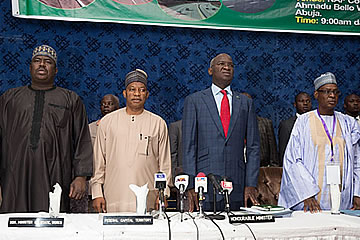
Council On Works Calls For Provision, Standardization Of Road Signage By Government At All Levels * As Council concludes its 23rd Meeting in Abuja * Approves that adequate budgetary provisions be made for the provision of signage infrastructure * Urges states to liaise with FRSC and FMPWH on standard of traffic calming techniques to be adopted at design stages of road projects The National Council on Works rose from its 23rd Meeting in Abuja Thursday with a call on governments at all levels in the country to adhere strictly to the provision and standardization of road traffic signage in order to reduce the incidence of road accidents and ensure comfort and safety for travellers on the nation’s highways. The Council Meeting, which was presided over by the Minister of Power Works and Housing, Mr. Babatunde Fashola SAN, was declared open by the Minister of the Federal Capital Territory, Mallam Muhammad Musa Bello, represented by the Executive Secretary, Federal Capital Development Authority, Engr. Umar Jibril. The meeting was also attended by the Hon. Minister of State, Hon.Mustapha Baba Shehuri, the Chairman, House of Representatives Committee on Works , Hon. Toby Okechukwu, Permanent Secretaries in the Ministry, the Chairman, Federal Character Commission, Commissioners responsible for Works matters in the States of the Federation as well as senior officials of relevant Federal and State Ministries, Departments and Agencies, regulatory bodies and other stakeholders. In a Communiqué at the end of the Meeting hosted by the Ministry of Power,Works and Housing at the NAF Conference Centre in Kado District of the Federal Capital Territory (FCT), the Council noted that installation of modern signage on the country’s highways would reduce the high rate of road carnage being recorded on the highways yearly. While also urging the Governments to assist research bodies in the country to conduct more research in the production of road signage, the Council called on stakeholders to increase funding for the provision of the signage as well as conduct sensitization programmes to enlighten the public on their use. In order to ensure effective monitoring of traffic on the highways, it called on the Federal, States and Local Governments to approve the use of reflectometer as a quality monitoring device on the highways while urging Federal and State Governments to install ICT cameras and Traffic Aids Posts for recording traffic violations and to enforce compliance by road users. Also to further improve monitoring on the highways, the Council recommended the use of survey techniques of RADAR (Radio Direction and Ranging) and LIDAR (Light Direction and Ranging) in monitoring traffic signage, checking vehicular movement and recording of traffic offences such as flouting the speed limits, beating of traffic lights and failures to respect traffic signage such as zebra crossing, among others. Noting that indiscriminate use of billboards and other forms of adverts on road signage constitutes a menace on the highways, it urged all stakeholders to sensitize the public on the negative consequences of defacement, damage and removal of traffic signs on Nigerian roads while also calling for the establishment of Monitoring and Enforcement Units at Federal and State levels to ensure adherence to the use of road signs. The Council, which noted that the use of unstandardized traffic calming techniques, such as bumps, logs of wood and tyres, defaced the roads and reduced their aesthetics conditions as well as that of the environment, urged government at all levels to adopt the use of modern and standard traffic calming techniques such as impediment/ traffic diversion and standard road bumps adding that states should liaise with the Federal Road Safety Corps (FRSC) and Federal Ministry of Power, Works and Housing (FMPWH) to agree on a standard, which, according to them, should be adopted during the design stage of road projects. Other road furniture recommended by the Council to improve safety and comfort on the nation’s highways include Survey Techniques used to demarcate, survey and ensure compliance to the Right of Way (RoW) and Solar Road Studs, which, according to them, are visible up to 800 meters in the night while also emitting, rather than reflecting, light, thereby warning drivers at road sections. It encouraged stakeholders to be proactive in adapting new technologies such as performance retro-reflective materials for all road markings in order to advance road safety while they accepted that in all new bridge projects, the crash barriers should be made up of dwarf concrete walls and metal barriers. On the importance of seeking alternative funding means for sustainable maintenance of street lighting and other road infrastructure by Governments at all levels, the Council, which listed such alternative funding means to include Public Private Partnership (PPP), the Special Energy Efficiency Lighting Fund, the Carbon reduction fund, among others, approved that adequate budgetary provisions be made for the provision of signage infrastructure. In line with the its call on Federal and State Governments to direct their relevant Ministries, Departments and Agencies (MDAs) to provide geo-spatial data for positioning and location of road signage, the Council approved that such geo-spatial data be provided by the use of modern survey techniques by the Office of the Surveyor-General of the Federation (OSGoF) and the Offices of the Surveyors - General of the States (OSGoS). It noted that such Geo-spatial information would create database for national signage for emplacement, monitoring and maintenance of highways furniture and infrastructure adding that all State Governments that were yet to establish Asset Management Units to focus on building database of road furniture and road signage should do so. While encouraging stakeholders in the road sector to consider the use of the LED Solar Road Studs in road design, the Council also urged them to adopt the use of Radio Frequency Identification Technology and other modern technologies and devices in the maintenance and sustenance of street lights along Nigerian Roads, asking them also to assist NITT to design a national strategic ITS plan for effective highways infrastructure and Traffic Management so as to enhance safety and comfort on the roads. Commending the effort of the Yobe State Government in the establishment of computerized Vehicle Inspection Centres and Model Driving Schools, the Council urged other state governments that are yet to establish such Centres and Driving Schools to do so to provide better education for road users. It also urged relevant government agencies to ensure regular review of Road Signs System to conform with the 1968 United Nations Convention adding that stakeholders involved in the review should be expanded to include Federal Ministry of Power, Works and Housing (Works Sector), State Ministries of Works and Transport, Federal Ministry of Transportation, Federal Roads Safety Corps, Vehicle Inspection Office (VIO) and the Nigeria Society of Engineers. The Council, which recalled that Nigeria was represented at a workshop in Geneva, Switzerland by a group of experts on Road Signs and Signals, pointed out that a document was presented by the United Nations Economic Commission for Europe (UNECE) on the challenges associated with the interpretation and implementation of 1968 Convention on Road Signs and Signals. It noted that a National Road Safety Strategy (2016 – 2020) document has been approved by the Federal Executive Council (FEC) and the National Economic Council (NEC) and called for the implementation of the document which, it said, could be accessed on http://frsc.gov.ng/ publications. Noting that the Federal Ministry of Power, Works and Housing Highway Manual Part I: Design Volume VI: Road Traffic Signs and Road Markings 2013 was meant to ensure appropriate signage on the nation’s highways, the Council expressed delight that several jobs would be created among skilled and semi-skilled artisans through the adoption of the new technologies in the production of modern signage. And in order to make education of road users on the use of advance road signage more effective, the Council suggested that the enlightenment be done in local languages urging the Federal Road Safety Corps (FRSC) and Vehicle Inspection Officers (VIO) as well as other stakeholders to intensify efforts on sensitization in motor parks, all places of worship, palaces of traditional rulers and other relevant places. The Council had earlier considered the issues raised in the Memoranda presented at the Meeting and noted with delight the Status of Implementation of its key decisions at the 22nd Meeting of the Council which showed that out of the 37 resolutions adopted at the Meeting, 25 tasks were completed with seven in progress while five were “facing challenges”. A total of 26 Memoranda were received and considered under seven thematic groups including Adequate Traffic Signage – An Essential Key for Highways Infrastructure, Safety and Comfort; The Role of Survey and Mapping to Road Signage; Quality Assurance in the Production and Installation of Road Signage; Standardization of Road Signage; Adherence to the Provision of Road Signage on the Highways; Managing the Challenges of vandalization and Damages to Road Signage and; the Relevance of Intelligence to Signage. The Council Meeting preceded by a three-day Meeting of Directors and Permanent Secretaries from 17th – 19th July, 2017. ...
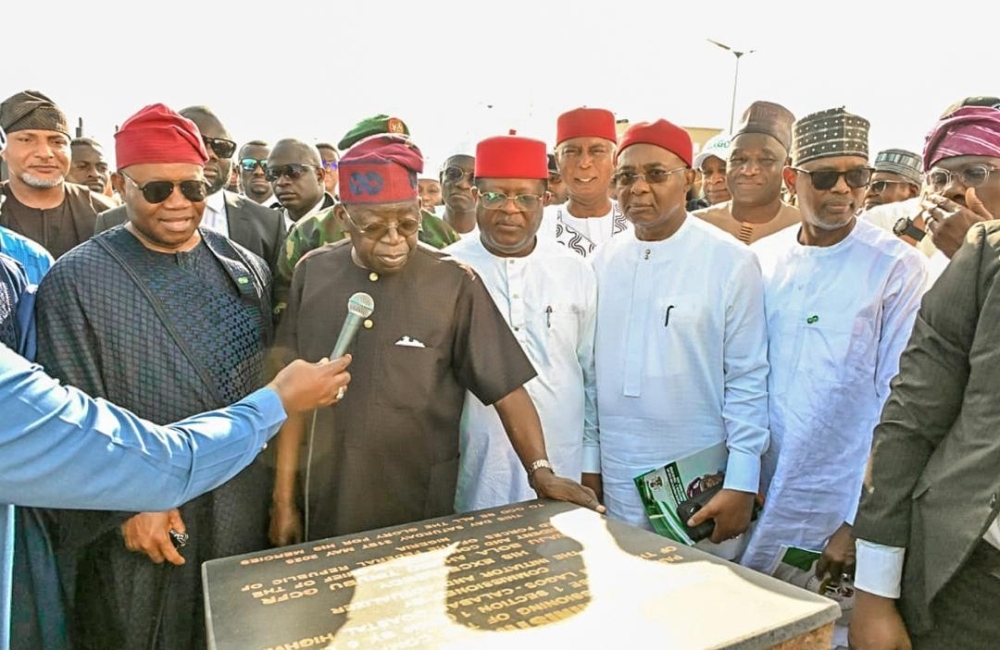
DRIVING NIGERIA’S FUTURE: CELEBRATING TWO YEARS OF TRANSFORMATIVE LEADERSHIP AND THE LAGOS-CALABAR COASTAL HIGHWAY MILESTONE
DRIVING NIGERIA’S FUTURE: CELEBRATING TWO YEARS OF TRANSFORMATIVE LEADERSHIP AND THE LAGOS-CALABAR COASTAL HIGHWAY MILESTONE
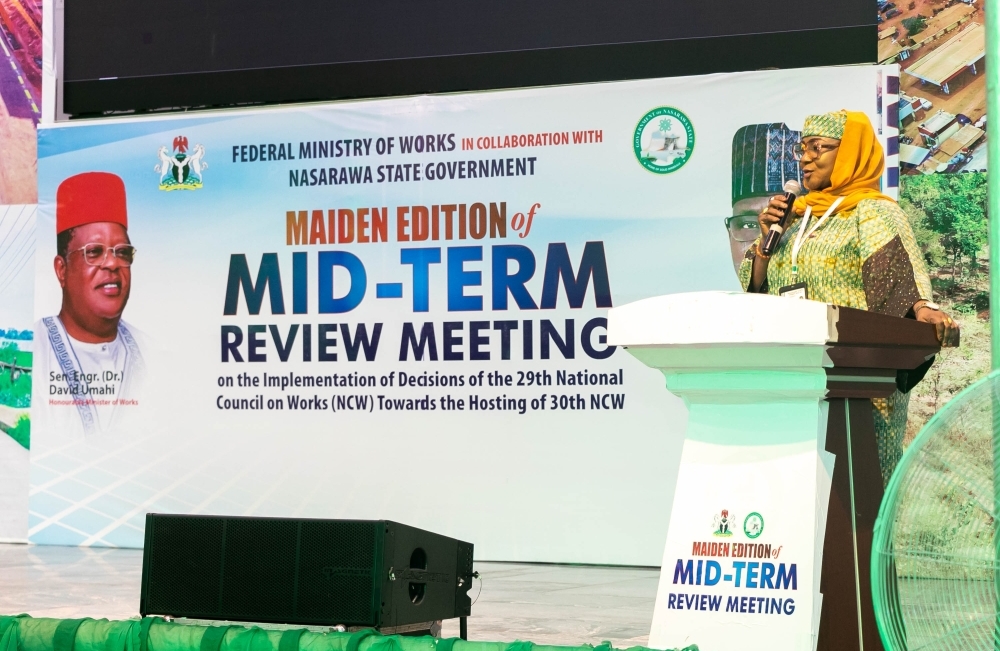
MID -TERM REVIEW MEETING ON THE IMPLIMENTATION OF THE DECISIONS REACHED AT THE 29TH NATIONAL COUNCIL ON WORKS (NCW) DAY 1
MID -TERM REVIEW MEETING ON THE IMPLIMENTATION OF THE DECISIONS REACHED AT THE 29TH NATIONAL COUNCIL ON WORKS (NCW) DAY 1