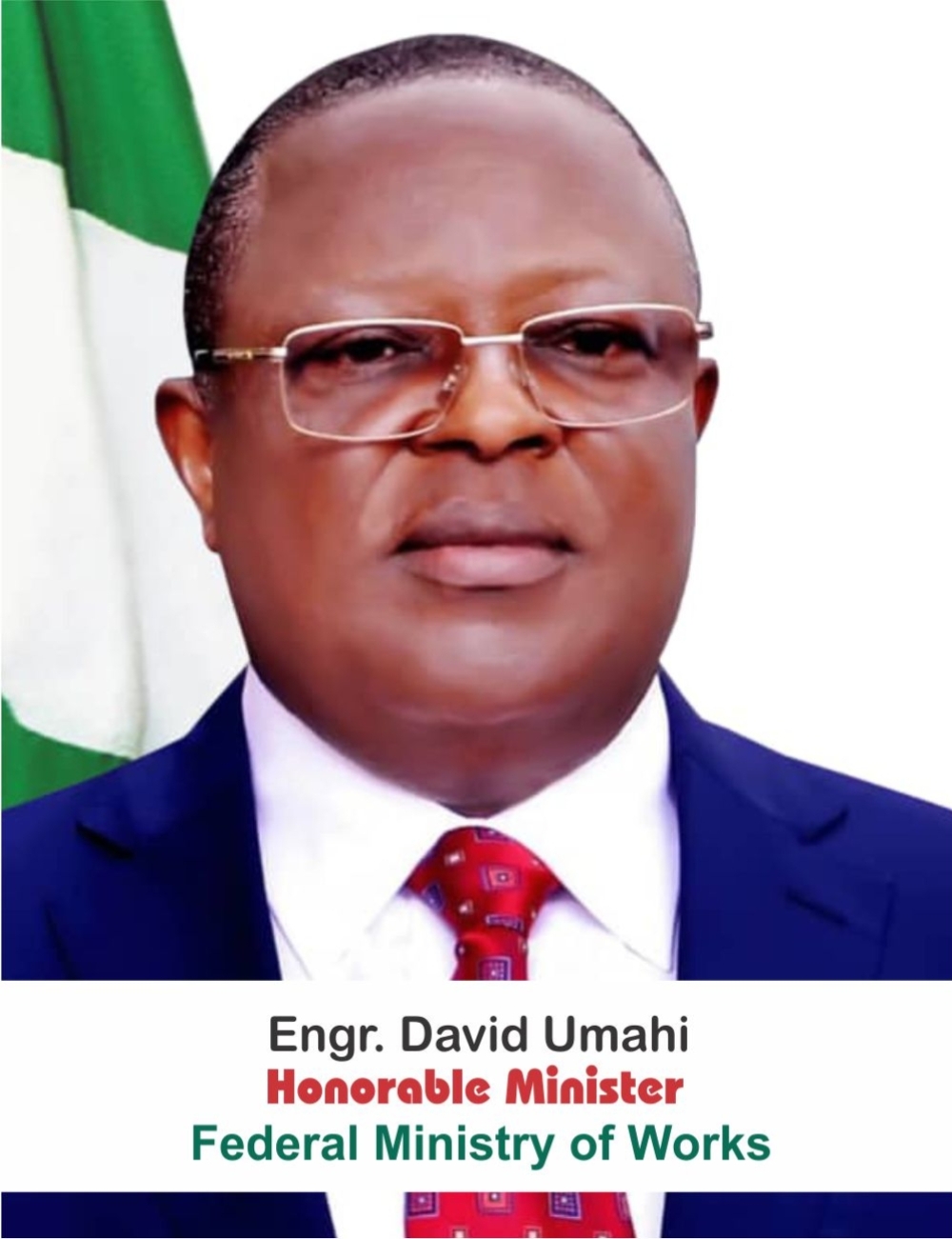
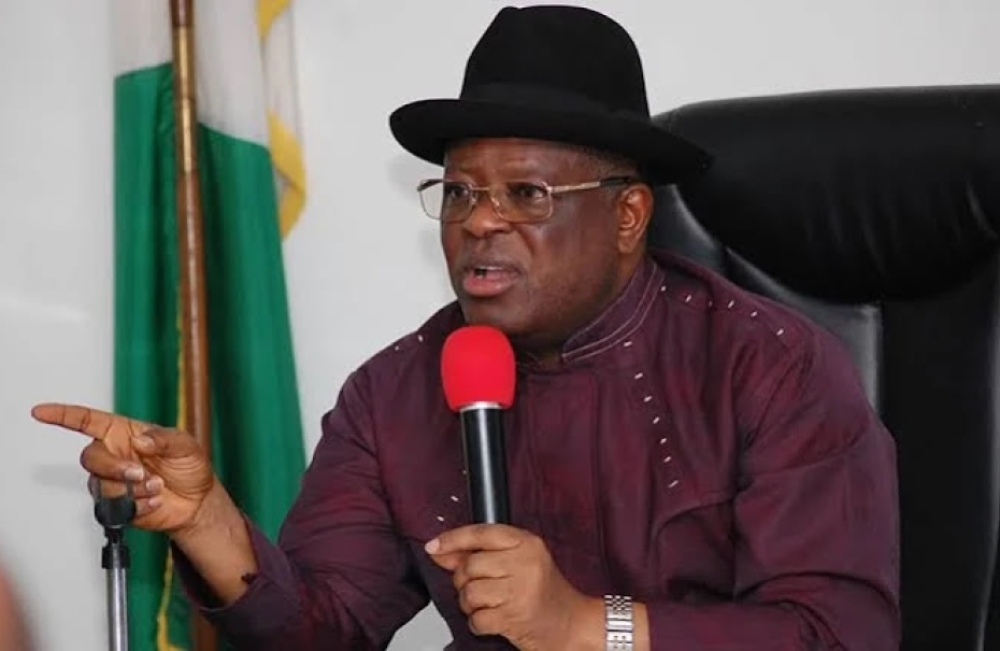
UMAHI ORDERS IMMEDIATE EMERGENCY INTERVENTION ON BENIN-ASABA ROAD, AND SOME OTHER CRITICAL FEDERAL ROADS
The Honourable Minister of Works, Senator Engr. David Nweze Umahi, CON, has directed the immediate deployment of major contractors to all three sections of the Benin-Asaba Federal Road to restore the failed sections and bring an end to the suffering of motorists and other road users.
This is because, the situation on the concessioned Benin-Asaba Road has reached a point where the overall public interest must take precedence over the existing concession agreement.
Recall that the Honourable Minister of Works was on the Benin-Asaba Road about seven days ago, where he assembled a number of contractors and directed them to prepare for immediate palliative intervention on the affected sections of the road at no cost to the concessionaire. In line with the Concession agreement which requires that before the Federal Government could intervene, the permission of the concessionaire must be required, and that permission was not granted to federal government.
The Minister subsequently proposed three options to the concessionaire, any one of which would have enabled the Federal Government to move in and address the worsening condition of the road. Unfortunately, none of the options was accepted by the concessionaire. Immediately after the Minister left Asaba, the already limited equipment deployed to the road by the concessionaire was further reduced to just one, worsening the situation and increasing the suffering of motorists and other road users.
While the Minister takes responsibility for the concerns and suffering of Nigerians using the road, it is important to state that the concessionaire has also not taken the suffering of Edo people and travelling public sufficiently into consideration by declining all the options put forward by the Federal Government. The concessionaire continues to rely on the terms of the concession agreement entered into by the previous administration, an agreement which weighs heavily against the Federal Government’s ability to intervene quickly in the interest of the public in a situation like this.
In view of this situation, the Honourable Minister of Works has directed the immediate deployment of major contractors within the corridor to all three sections of the Benin-Asaba Road to restore the failed sections and bring relief to the people, with the cost of the emergency intervention being borne by the Federal Government. The Honourable Minister has also directed immediate redesign of the entire route to be rebuilt with reinforced concrete pavement. The public should therefore take note that immediate action is underway to restore every failed section of the Benin-Asaba Road and subsequently rehabilitate the entire sections of the road using reinforced concrete pavement.
2. On the Benin-Sapele Road:
The Governors of Edo and Delta States, the Niger Delta Development Commission (NDDC), and the Federal Government are currently engaged in interventions on different sections of the road to restore the entire route. While some sections are receiving palliative attention, permanent works are also ongoing on other sections.
3. On Ifaki(Ekiti) - Kabba (Kogi) Road:
The Federal Government is engaging both the contractor; Gamji Nigeria Company Limited, and Dangote PLC on immediate emergency and permanent intervention on the most failed sections of the road, while efforts are being made to financially mobilise the company for more extensive permanent work to commence on the axis.
4. On the Sokoto-Zamfara-Katsina Road: This is an inherited project involving the dualisation of approximately 350 kilometres, which translates to about 700 kilometers. The project has since been redesigned and is currently ongoing and most sections are being reconstructed using reinforced concrete pavement. From the Sokoto axis towards Zamfara, over 50 kilometres of one carriageway have been fully completed with reinforced concrete pavement. From Zamfara to Katsina, some sections have been completed and palliative works have been ordered over the sections that have not been reconstructed. However, the pace of work slowed down due to the redesign and rephasing of the project. The contractors currently engaged on the road include CBC, SETRACO, Triacta and Mothercat. They are being remobilised to return to site and complete the outstanding works.
5. On the Abuja-Kaduna-Zaria-Kano Road: The Federal Government took over the Road project and has currently completed the 118-kilometer mostly on reinforced concrete pavement on lot 1. The Lot 2, which covers 164 kilometres, is over 60 percent completed on reinforced concrete pavement. The Federal Government has also introduced solar-powered light on the entire route of Abuja-Kaduna-Zaria - Kano to improve visibility during night travel and enhance the overall security situation on the route. The entire project is scheduled for completion by December 2026.
6. On Bauchi-Jigawa Road: Triacta Nigeria Limited has been mobilised to carry out the necessary interventions on some failed sections and work is currently ongoing in those failed sections.
7. On the Sagamu-Ore Road: 48 Kilometers of the 96-kilometre road have already been completed using reinforced concrete pavement. There is also a 24-kilometre section around Ore which was abandoned by the previous contractor. The Federal Government has directed its immediate restoration to ensure seamless travel. Solar lights are being installed in the entire 96kilometer of the road.
8. On Flooded Sections on Sagamu-Ore-Benin Road: The flooded sections on the same corridor between Sagamu-Ore-Benin Road, as well as other flooded sections in Ondo State, are being designed for emergency procurement and intervention.
9. On the East-West Road:
Some failed and critical sections, including defective sections of bridges along the East-West Road, are being marked out for emergency procurement and intervention.
10. On the Abuja-Lokoja Road:
Several contracts are ongoing along the route, while the three critical sections currently without contracts are being procured for emergency intervention.
11. On the Lokoja-Benin-Warri Road: The President has directed a complete redesign and procurement of the 400-kilometre dualised route covering the uncompleted sections, using reinforced concrete pavement, while palliative works will continue with the contractors currently on the road.
12. On Carter Bridge:
While the Federal Government continues to undertake weekly maintenance of the underwater elements of the bridge. The site has also been handed over to the contractor, CCECC, for the construction of a permanent new bridge, and work has commenced.
13. On the Third Mainland Bridge:
With regard to the defective underwater structural elements, the Federal Government is at the final stage of determining the appropriate intervention for the repair of the affected elements.
14. On the flooded section of the Lagos-Ibadan Road: Work has commenced on the affected section. There are also several flooded sections on federal roads across the six geopolitical zones, largely occasioned by excessive flooding and the effects of climate change. The Federal Government is identifying and marking these sections for immediate attention.
15. On the First and Second Niger Bridges:
Intervention work is ongoing on the approach roads to the Second Niger Bridge damaged by flood and the work is progressing very well. The First Niger Bridge has been closed to traffic to enable immediate repair works. Contractor has mobilized to site and comprehensive rehabilitation of the bridge has started. From Summit Junction to the First Niger Bridge, massive rehabilitation work is also ongoing using reinforced concrete pavement.
16. The Honourable Minister wishes to commend the President of the Federal Republic of Nigeria, His Excellency Bola Ahmed Tinubu, GCFR, for the massive work being undertaken on the nation’s roads since the administration assumed office in 2023.
17. It is important to state that when the present administration came into office, there was hardly any part of the country where one could travel for an hour without encountering significant challenges on the road network. The condition of the country’s roads and bridges was a major national infrastructure challenge.
18. Rather than shy away from the problem, the administration of President Bola Ahmed Tinubu made the nation’s road network a priority. Virtually every part of the country became a priority, and the Federal Government, through the Federal Ministry of Works, Regional Commissions, Parastatals and other MDA’s has continued to respond extensively to these challenges.
19. The Federal Government is currently working on over 80 percent of the inherited federal roads, an unprecedented level of intervention in the country’s road infrastructure.
20. We ask the public to understand the enormous challenges inherited on our roads and bridges and to take note not only of the problems being solved, but also of the permanent solutions being introduced.
21. A major part of this new approach is the use of reinforced concrete pavement, designed to significantly extend the lifespan of major roads. These roads are expected to last between 50 and 100 years. This means that roads being constructed under President Bola Ahmed Tinubu’s administration are being designed with future generations in mind, rather than simply providing temporary solutions to today’s problems. And this is a complete departure from the past, when roads often deteriorated only a few years after completion, resulting in a continuous cycle of reconstruction and expenditure.
22. We appreciate the concerns of Nigerians over the condition of some roads presently and the difficulties faced by motorists and commuters who cannot move easily from one point to another. Those concerns are legitimate, and the Federal Government is listening. But Nigerians should also recognise the enormous scale of the problems inherited and the amount of work currently being undertaken across the country.
23. It is simply impossible to resolve every road challenge accumulated over many years of neglect by the past administrations within three years. What is important is that the government is working, the government is responding, and the government is putting permanent solutions in place.
25. We appreciate members of the public who send situation reports on failed roads and other infrastructure challenges. These reports help the Ministry identify areas requiring urgent attention. However, we also appeal to members of the public to report when such problems have been addressed, just as they report when they occur.
24. We are aware of situations where photographs and reports of road challenges continue to circulate on social media even after the Federal Government has intervened and resolved the particular problem.
25. However, the Ministry will continue to respond as rapidly as possible to genuine reports and concerns from Nigerians.
26. It is also important to note that we have compiled a comprehensive record of all inherited, ongoing and intervention projects across the country which is available to the public. This is to ensure that Nigerians have access to information on the infrastructure projects being undertaken nationwide and can fully participate in and appreciate the infrastructure revolution of President Bola Ahmed Tinubu’s administration.

UMAHI ORDERS IMMEDIATE EMERGENCY INTERVENTION ON BENIN-ASABA ROAD, AND SOME OTHER CRITICAL FEDERAL ROADS The Honourable Minister of Works, Senator Engr. David Nweze Umahi, CON, has directed the immediate deployment of major contractors to all three sections of the Benin-Asaba Federal Road to restore the failed sections and bring an end to the suffering of motorists and other road users. This is because, the situation on the concessioned Benin-Asaba Road has reached a point where the overall public interest must take precedence over the existing concession agreement. Recall that the Honourable Minister of Works was on the Benin-Asaba Road about seven days ago, where he assembled a number of contractors and directed them to prepare for immediate palliative intervention on the affected sections of the road at no cost to the concessionaire. In line with the Concession agreement which requires that before the Federal Government could intervene, the permission of the concessionaire must be required, and that permission was not granted to federal government. The Minister subsequently proposed three options to the concessionaire, any one of which would have enabled the Federal Government to move in and address the worsening condition of the road. Unfortunately, none of the options was accepted by the concessionaire. Immediately after the Minister left Asaba, the already limited equipment deployed to the road by the concessionaire was further reduced to just one, worsening the situation and increasing the suffering of motorists and other road users. While the Minister takes responsibility for the concerns and suffering of Nigerians using the road, it is important to state that the concessionaire has also not taken the suffering of Edo people and travelling public sufficiently into consideration by declining all the options put forward by the Federal Government. The concessionaire continues to rely on the terms of the concession agreement entered into by the previous administration, an agreement which weighs heavily against the Federal Government’s ability to intervene quickly in the interest of the public in a situation like this. In view of this situation, the Honourable Minister of Works has directed the immediate deployment of major contractors within the corridor to all three sections of the Benin-Asaba Road to restore the failed sections and bring relief to the people, with the cost of the emergency intervention being borne by the Federal Government. The Honourable Minister has also directed immediate redesign of the entire route to be rebuilt with reinforced concrete pavement. The public should therefore take note that immediate action is underway to restore every failed section of the Benin-Asaba Road and subsequently rehabilitate the entire sections of the road using reinforced concrete pavement. 2. On the Benin-Sapele Road: 3. On Ifaki(Ekiti) - Kabba (Kogi) Road: 4. On the Sokoto-Zamfara-Katsina Road: This is an inherited project involving the dualisation of approximately 350 kilometres, which translates to about 700 kilometers. The project has since been redesigned and is currently ongoing and most sections are being reconstructed using reinforced concrete pavement. From the Sokoto axis towards Zamfara, over 50 kilometres of one carriageway have been fully completed with reinforced concrete pavement. From Zamfara to Katsina, some sections have been completed and palliative works have been ordered over the sections that have not been reconstructed. However, the pace of work slowed down due to the redesign and rephasing of the project. The contractors currently engaged on the road include CBC, SETRACO, Triacta and Mothercat. They are being remobilised to return to site and complete the outstanding works. 5. On the Abuja-Kaduna-Zaria-Kano Road: The Federal Government took over the Road project and has currently completed the 118-kilometer mostly on reinforced concrete pavement on lot 1. The Lot 2, which covers 164 kilometres, is over 60 percent completed on reinforced concrete pavement. The Federal Government has also introduced solar-powered light on the entire route of Abuja-Kaduna-Zaria - Kano to improve visibility during night travel and enhance the overall security situation on the route. The entire project is scheduled for completion by December 2026. 6. On Bauchi-Jigawa Road: Triacta Nigeria Limited has been mobilised to carry out the necessary interventions on some failed sections and work is currently ongoing in those failed sections. 7. On the Sagamu-Ore Road: 48 Kilometers of the 96-kilometre road have already been completed using reinforced concrete pavement. There is also a 24-kilometre section around Ore which was abandoned by the previous contractor. The Federal Government has directed its immediate restoration to ensure seamless travel. Solar lights are being installed in the entire 96kilometer of the road. 8. On Flooded Sections on Sagamu-Ore-Benin Road: The flooded sections on the same corridor between Sagamu-Ore-Benin Road, as well as other flooded sections in Ondo State, are being designed for emergency procurement and intervention. 9. On the East-West Road: 10. On the Abuja-Lokoja Road: 11. On the Lokoja-Benin-Warri Road: The President has directed a complete redesign and procurement of the 400-kilometre dualised route covering the uncompleted sections, using reinforced concrete pavement, while palliative works will continue with the contractors currently on the road. 12. On Carter Bridge: 13. On the Third Mainland Bridge: 14. On the flooded section of the Lagos-Ibadan Road: Work has commenced on the affected section. There are also several flooded sections on federal roads across the six geopolitical zones, largely occasioned by excessive flooding and the effects of climate change. The Federal Government is identifying and marking these sections for immediate attention. 15. On the First and Second Niger Bridges: 16. The Honourable Minister wishes to commend the President of the Federal Republic of Nigeria, His Excellency Bola Ahmed Tinubu, GCFR, for the massive work being undertaken on the nation’s roads since the administration assumed office in 2023. 17. It is important to state that when the present administration came into office, there was hardly any part of the country where one could travel for an hour without encountering significant challenges on the road network. The condition of the country’s roads and bridges was a major national infrastructure challenge. 18. Rather than shy away from the problem, the administration of President Bola Ahmed Tinubu made the nation’s road network a priority. Virtually every part of the country became a priority, and the Federal Government, through the Federal Ministry of Works, Regional Commissions, Parastatals and other MDA’s has continued to respond extensively to these challenges. 19. The Federal Government is currently working on over 80 percent of the inherited federal roads, an unprecedented level of intervention in the country’s road infrastructure. 20. We ask the public to understand the enormous challenges inherited on our roads and bridges and to take note not only of the problems being solved, but also of the permanent solutions being introduced. 21. A major part of this new approach is the use of reinforced concrete pavement, designed to significantly extend the lifespan of major roads. These roads are expected to last between 50 and 100 years. This means that roads being constructed under President Bola Ahmed Tinubu’s administration are being designed with future generations in mind, rather than simply providing temporary solutions to today’s problems. And this is a complete departure from the past, when roads often deteriorated only a few years after completion, resulting in a continuous cycle of reconstruction and expenditure. 22. We appreciate the concerns of Nigerians over the condition of some roads presently and the difficulties faced by motorists and commuters who cannot move easily from one point to another. Those concerns are legitimate, and the Federal Government is listening. But Nigerians should also recognise the enormous scale of the problems inherited and the amount of work currently being undertaken across the country. 23. It is simply impossible to resolve every road challenge accumulated over many years of neglect by the past administrations within three years. What is important is that the government is working, the government is responding, and the government is putting permanent solutions in place. 25. We appreciate members of the public who send situation reports on failed roads and other infrastructure challenges. These reports help the Ministry identify areas requiring urgent attention. However, we also appeal to members of the public to report when such problems have been addressed, just as they report when they occur. 24. We are aware of situations where photographs and reports of road challenges continue to circulate on social media even after the Federal Government has intervened and resolved the particular problem.
The Governors of Edo and Delta States, the Niger Delta Development Commission (NDDC), and the Federal Government are currently engaged in interventions on different sections of the road to restore the entire route. While some sections are receiving palliative attention, permanent works are also ongoing on other sections.
The Federal Government is engaging both the contractor; Gamji Nigeria Company Limited, and Dangote PLC on immediate emergency and permanent intervention on the most failed sections of the road, while efforts are being made to financially mobilise the company for more extensive permanent work to commence on the axis.
Some failed and critical sections, including defective sections of bridges along the East-West Road, are being marked out for emergency procurement and intervention.
Several contracts are ongoing along the route, while the three critical sections currently without contracts are being procured for emergency intervention.
While the Federal Government continues to undertake weekly maintenance of the underwater elements of the bridge. The site has also been handed over to the contractor, CCECC, for the construction of a permanent new bridge, and work has commenced.
With regard to the defective underwater structural elements, the Federal Government is at the final stage of determining the appropriate intervention for the repair of the affected elements.
Intervention work is ongoing on the approach roads to the Second Niger Bridge damaged by flood and the work is progressing very well. The First Niger Bridge has been closed to traffic to enable immediate repair works. Contractor has mobilized to site and comprehensive rehabilitation of the bridge has started. From Summit Junction to the First Niger Bridge, massive rehabilitation work is also ongoing using reinforced concrete pavement.
25. However, the Ministry will continue to respond as rapidly as possible to genuine reports and concerns from Nigerians.
26. It is also important to note that we have compiled a comprehensive record of all inherited, ongoing and intervention projects across the country which is available to the public. This is to ensure that Nigerians have access to information on the infrastructure projects being undertaken nationwide and can fully participate in and appreciate the infrastructure revolution of President Bola Ahmed Tinubu’s administration.
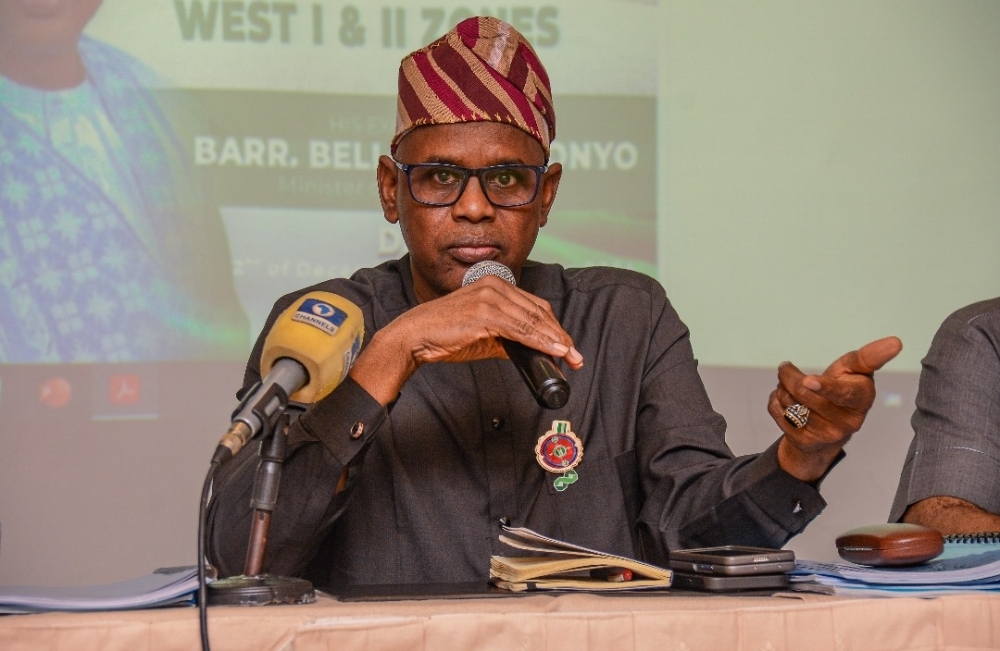
CALL ERRING CONTRACTORS TO ORDER... GORONYO CHARGES FERMA. The Honourable Minister of State, Federal Ministry of Works, HMSW, Mohammed Bello Goronyo Esq, has charged the Managing Director/ CEO of Federal Emergency and Roads Maintenance Agency, (FERMA), to warn contractors who fail to deliver on their contract awards to desist. He said the era of abandoning projects is over. These contracts are awarded and paid through the tax payers money who desire value for their money. The list of defaulting Contractors must be made available to the Headquarters not later than next week. He also proposed the need for a strong Technical Committee that will criss-cross the country to monitor FERMA projects with a view to ascertaining the quality of their deliveries. The Honourable Minister made these remarks on Monday 2nd November, 2024, during his familiarisation tour of the South West section of FERMA, where the State Coordinators made presentations before the HMSW on the progress, challenges and expectations in the cause of the discharge of their duties. Goronyo commended the Federal Road Management Engineers, ( FRME), from the South-West States, assuring them that all issues raised will be looked into to make FERMA great and successful. He was quick to add that though the challenges are real, huge and enormous, they are not insurmountable. “The country must tighten up its belt and combat the challenges frontally. We have been drawing from a well without water for so long. We now have a President who is willing to face the challenges head on without complaining. We must be ready to support one another and do things differently. We must all support His Excellency, President Bola Ahmed Tinubu to deliver on his mandate.” He remarked. The HMSW pledged to pay unscheduled visits to contract sites to have a first hand knowledge of the commitment of contractors to projects, while also assuring that Staff Welfare is a paramount issue of concern which will not be toyed with. ...
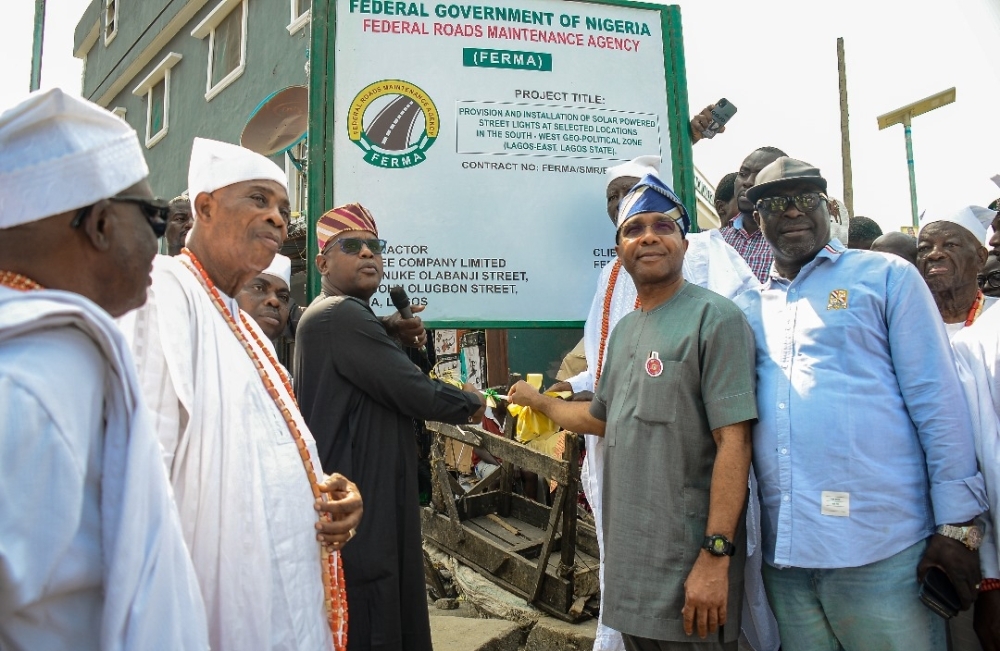
MINISTER COMMISSIONS SOLAR-POWERED STREETLIGHT PROJECT IN LAGOS The Honorable Minister of State for Works (HMSW), Muhammad Bello Goronyo, Esq, has commissioned a solar- powered streetlight project in Lagos on Monday, 2nd December, 2024. The streetlights being provided by the Federal Emergency Roads Maintenance Agency (FERMA), are a relief and a welcome development for the residents of the community of Isale- Eko in Lagos State. Goronyo identified the benefits of the project to include improvement in the socioeconomic well-being, as well as mitigating insecurity challenges confronting the area. “This aligns well with the Renewed Hope Agenda of President Bola Ahmed Tinubu, GCFR,” he added. The Minister further urged residents to take full ownership of the project with a view to safeguarding it from vandalization by unscrupulous elements. The HMSW, on an earlier Courtesy Visit to His Royal Majesty, the Oba of Lagos, Rilwan Babatunde Osuolale Akiolu, in his Iga Idugaran Palace, noted that the initiative is part of a conscious effort by the Federal Government at investing in renewable energy solutions, stating that “as a responsible Government, we have to continue to do more to improve the wellbeing of our teeming communities.” He solicited for prayers and support of His Royal Majesty and indeed Nigerians to be able to do more for the overall growth and development of the nation. Speaking at the Palace, the Managing Director/CEO of FERMA, Engr. Dr. Chukwuemeka Agbasi, thanked the Oba for the warm reception accorded the entourage, also stated that the installation of the solar powered lights will provide extended hours for trading and, therefore, arrest unemployment among the youth. While commending the community for providing an enabling atmosphere for the installation of the facility, Engr. Agbasi, cautioned against vandalisation, pledging that FERMA has resolved not shirk in its responsibility to ensure adequate maintenance, as well as deliver value in road maintenance in the community and the state. Responding, HRM Oba Akiolu, appreciated the Honourable Minister for the visit, noting that FERMA has been wonderful and cooperative in the discharge of its duties to the community. His Royal Majesty also used the occasion to warn miscreants and criminals to desist from vandalising public goods and infrastructure, assuring that Nigerians will laugh soon as the Government of the day is responsible and working very hard to put things right. Patience, the Monarch emphasised, is the keyword, while appealing to Nigerians to give peace a chance. ...
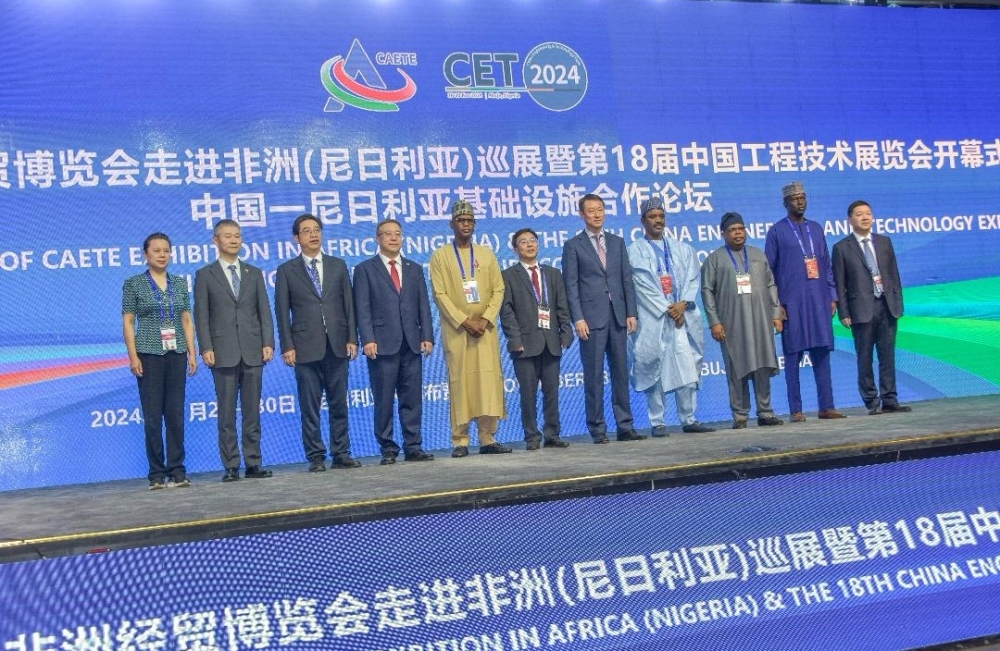
Nigeria - China Partnership: Driving Growth and Development The Honourable Minister of State for Works (HMSW), Mohammed Bello Goronyo, Esq has applauded the partnership between Nigeria and China as a driver of growth in infrastructure, transportation, mining and knowledge transfer. Speaking at the CAETE Exhibition in Africa (Nigeria) and the 18th China Engineering and Technology Expo in Abuja on November 28, 2024, Goronyo emphasised the nations' shared commitment to sustainable development through strategic cooperation. The Minister highlighted Nigeria’s National Integrated Infrastructure Master Plan (NIIMP), which aims to increase infrastructure’s GDP contribution from 30-35% to 70% by 2043, prioritising investments in transportation, energy, healthcare and water systems. He noted China’s significant role in projects like the Abuja-Kaduna Railway, Lagos - Ibadan Expressway and renewable energy initiatives, which have boosted connectivity, commerce and local capacity. He also stressed the importance of green infrastructure, smart cities, and innovative financing mechanisms to ensure sustainability and urged for greater technical training and public-private partnerships. “I am delighted to share Nigeria's strides in redefining its infrastructure landscape through the National Integrated Infrastructure Master Plan (NIIMP). This long-term strategic framework prioritises investments across key sectors, including transportation, energy, water, irrigation and healthcare infrastructures,” the HMSW further emphasised. NIIMP will promote innovative financing models, public-private partnerships, as well as enhance collaboration with global partners like China to deliver on sustainable and inclusive infrastructure. Through this plan, it is hoped that Nigeria will build robust infrastructure, which will drive industrialisation, improve the quality of lives and position the nation as a hub for trade and investment in Africa. This is in tandem with the Renewed Hope Agenda of President Bola Ahmed Tinubu, GCFR. In his Keynote Address, the Honourable Minister of Transportation, Sen. Abubakar Sa’id Alkali, commended the progress achieved in the rail, road and maritime sectors through a Nigeria-China collaboration. The Ambassador of China to Nigeria, Yu Dun Hai described the partnership as a model for South-South cooperation with transformative projects like the Abuja - Kaduna Railway, which showcase the potential of engineering and technology. The event reaffirmed the role of Partnerships in fostering economic growth, regional integration and sustainable development, which align with one of the Renewed Hope Agenda’s vision of enhancing infrastructure and transportation as enablers of growth. The Chairman of the Chinese Community in Nigeria, Mr Erie Ni emphasised that the event is of key importance and would deepen the relationship between the two countries, fostering immense innovation, growth and sustainable development. He stated that "over the years, China and Nigeria have been involved in a dynamic and mutually beneficial relationship as Chinese enterprises, engineers and investors have been privileged to contribute to Nigeria's development in various sectors including construction, telecommunications, energy and transport." The Director General and Global Liaison, the Nigeria – China Strategic Partnership Reached by the Two Countries, Joseph Olasunkanmi Tegbe reiterated the need for enhanced collaboration, cultural exchange and trade to cement a prosperous future for both nations ...
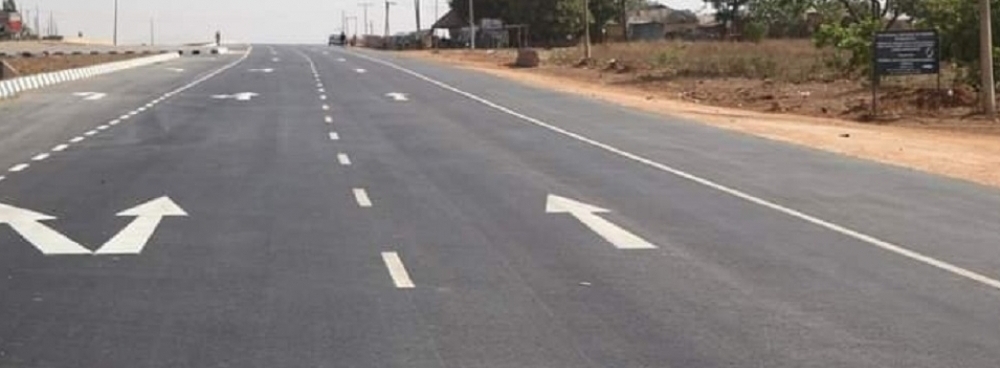
Work progressing steadily on Abuja-Kaduna-Zaria-Kano Road Project - Minister
Minister of State for Works and Housing, Engineer Abubakar D. Aliyu (FNSE) has said that construction work is progressing steadily on the ongoing reconstruction of Abuja-Kaduna-Zaria-Kano Road and would be completed and delivered on time.
The Minister stated this on Thursday 11th February, 2021 while inspecting the project to assess the progress of the ongoing work.
“We are satisfied with the quality of work going on and we are working to increase the pace of the work. You can see that work is going on simultaneously on all sections of both lanes of the dual carriage 375km long road from Abuja-Kaduna-Zaria- Kano" he said
He explained that the work was initially for rehabilitation but now full reconstruction work was being done and this had delayed the job.
He said: “We are fully committed both from the President Muhammadu Buhari, the Honourable Minister, the Engineers and the Contractor to deliver the project in good time. We will deliver a quality work that will stand the test of time."
Speaking further, the Minister said that Federal Government had prioritized the project and this accounted for the high level of inspection going on the project because Government wanted to finish the project on time.
On the level of work done so far, the Minister said: "We have made a lot of progress. You can see that over 100km of the road, at a stretch, had been completed under sections one to three (Abuja-Kano) , 40km completed under section II (Kaduna-Zaria), and 70km completed under section III (Zaria-Kano)"
He stated that while some sections of the roads were at different levels of completion, section II would be delivered by first quarter of 2022 while section III would be completed by first quarter of 2023.
On his part, the Federal Controller of Works, Kaduna, Engineer Zira Adamu said that the quality of materials as well as the workmanship deployed for the works was satisfactory.
"The contractor is fully mobilized to site and since then work on the project has moved to five work zones and we are satisfied with the pace and quality of work.", he said.
On the challenges being faced, the Regional Manager of Julius Berger Nigeria Limited, Engineer Benjamin Bott lamented that despite the provision of warning / caution signs and traffic control devices to improve safety at diversions within the construction zones some motorists often disregard the signs thereby causing accident.
He added that the prevalence of kidnapping and armed robbery along the project corridor was also affecting their work.
The Abuja-Kaduna-Zaria-Kano road reconstruction project was awarded to Julius Berger Nigeria Plc on 20th December, 2017 and the project commenced on 21st May, 2018 with 36 months completion period.
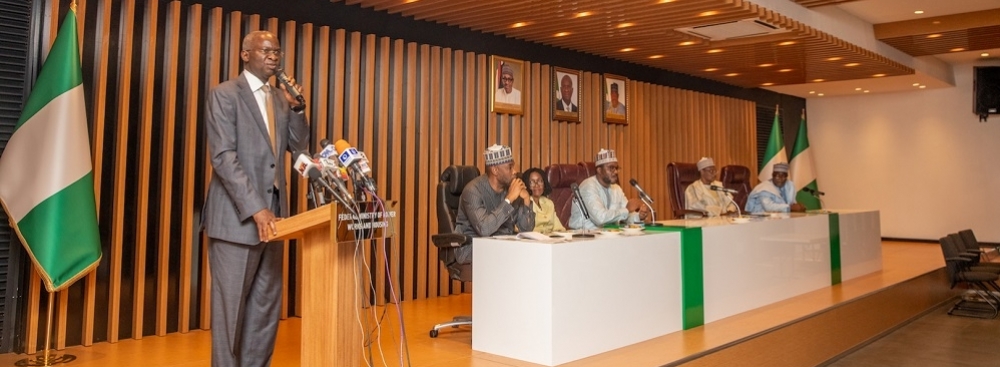
Speech Delivered By H.E, Babatunde Raji Fashola, SAN At Press Briefing On National Infrastructure Maintenance Framework At Federal Ministry Of Power, Works And Housing Headquarters Mabushi, Abuja
I welcome you warmly to this press briefing to share information about two very important developments that occurred in the month of January 2019.
The first was that on the 9th January 2019, the Federal Executive Council, Nigeria's highest decision making organ of the Executive arm of government approved a National Maintenance Framework for public buildings.
The second is that on the 24th January 2019, President Muhammad Buhari signed into law a bill to prohibit discrimination against persons living with disabilities which included provisions for specific actions that must be taken within a period of 5 (FIVE) years to provide opportunities for such persons to live as normal a life as possible.
This briefing is meant to discuss what these developments mean for Nigeria and Nigerians, and to highlight the possibilities that they offer for our way of life and our economy.
National Maintenance Framework for Public Buildings
Let me start with the National Maintenance Framework on Public Buildings and first point out that for now, this only applies to public buildings but will ultimately extend to other public assets like roads, bridges, rail, power installations and other infrastructure of a public nature.
What the FEC approval means is that after decades of agonizing about lack of maintenance, the Buhari government has chosen to act.
This is policy decision of enormous profundity because the records do not indicate that any such policy decision has previously been taken at the federal level.
The decision was provoked by a memorandum from the Ministry of Power, Works and Housing that challenged the conventional thinking that "Nigeria does not have a maintenance culture".
The memorandum argued and FEC agreed, that maintenance of infrastructure whether public or private, is not a cultural issue but an economic one.
The memorandum showed that in the built industry, only about 23% of the workforce is employed by Design (6%) and Construction (15%), Governance (2%) , while the remaining 77% are employed by Maintenance and operation.
Council was persuaded to accept that while skill training and vocational centres exist almost nationwide for training artisans like plumbers, painters, bricklayers, welders, tilers, electricians etc., there is a lack of National policy that makes the practice of these vocations economically worthwhile on a sustainable basis.
The available data showed that many people trained in these vocations often resort to earning a living by resorting to other vocations in which they do not have a training, such as riding motor-cycles and tri-cycles in order to make a living.
Therefore, the federal government’s decision on maintenance is an economic one, to empower Nigerians at the base of the economic pyramid who are artisans, those at the middle of the pyramid who own small businesses, SMEs who are involved in manufacturing of building and allied materials.
What it entails is that:
* Site assessment of the affected buildings will have to be conducted, measurement are to be taken, valuation conducted and data is collated. This on its own requires the employment of people to carry out this process and therefore jobs will be created from the very first step.
* It will also provide for credible data such as lettable space, value of the property and so on which can form the basis of the economic decisions or even actions in emergency periods.
* Condition assessment is the next step that requires people to be trained and employed to assess the conditions of affected buildings from foundation to roof and for mechanical and electrical sustainability for purpose.
* In one of our sample buildings leading up to the memorandum to FEC, we found out that out of 63 air-conditioning units, 11 required replacement or repairs. We also identified windows, doors, tiles, roofing materials, plastering works that required replacement or repair.
* The maintenance program is then developed from these assessments as to what jobs need to be done to restore the building to fitness, what needs to be replaced and what needs to be repaired.
* This is the basis for the award of the maintenance contract following the existing procurement law.
* This provides a window of opportunity for small businesses who are into facility management and for young graduates of building tech, architecture, engineering and even technical schools to register for these contracts.
* Successful bidders are then in a position to employ artisans to execute the maintenance contract they have won in the bid.
* Each ministry, department and agency will be responsible for its own procurement for its own building after training of their designated personnel by the staff of the Ministry of Power, Works and Housing who will guide them through the framework approved by FEC.
* Because data is critical to the programme, each MDA will file data with the Ministry of Power, Works and Housing who will centrally manage data and use it to advise government and brief the public, while the MDA reserves the right to keep its own data.
* The award of contracts will not only drive employment for artisans, it will drive demand of manufacturing and suppliers of parts like wood, pipes, paint, tiles, electrical fittings, windows and tools, in addition to those of cleaning items like soap, detergent, polish, varnish etc.
This is the economy that we see ahead as we set out to implement this approval starting from buildings, and as I said, and extending to roads, rail, bridges etc. as we progress.
Our pilot programme covered 9 buildings comprising a Federal government college, a Federal Hospital, a Federal Court building, a federal prison, a federal secretariat and our office buildings at our headquarters here in Mabushi.
The pilot survey showed that these 9 (Nine) buildings will cost N40.3 billion to reconstruct, while it will cost N922.8m per annum to maintain them which is about 2.3 % of the cost of replacement.
Just these 9 (NINE) buildings will require about 448 people to keep them well maintained a year. For example, the school will require at least 30 people to be employed per school for maintenance; and the federal government owns 104 Unity schools which potentially will require 30 X 104 = 3,120.
So you can see the economy we see when this extends to all our hospitals, all our courts, all our prisons, all our police stations, all our universities and covers all public buildings.
This is an economic choice by this government to drive the small business sector, to drive skill utilization and to move the economy from growth without jobs to growth driven by new jobs that reward services.
But as if this was not enough, President Buhari raised the bar for construction, services and a new way of life for Nigerians when he signed the law to protect people living with disability from discrimination and exclusion.
We have 5 years to comply, and this requires that all our buildings must have lifts and ramps. (By this I mean well designed ramps for people confined to their wheelchairs, not hills they cannot use on their own).
We must modify all our toilets with support for our brothers and sisters who are living with disabilities, as we must build sidewalks for them to use our roads without colliding with vehicles.
Our airports and parking lots in buildings must become compliant with international best practice by providing corridors and facilities for people living with disabilities at arrival and departure points, while a minimum number of slots clearly designated must be provided for vehicles owned by people living with disabilities.
This is another opportunity for jobs to re-design, to re-model, to retrofit all our assets nationwide to comply with the law as signed by Mr President.
Ladies and gentlemen, this is the Nigeria that beckons upon us from today and the immediate future. A Nigeria where public infrastructure works because they are maintained.
A Nigeria where everybody has a secure sense of belonging because they can use their skills and labour to earn a decent income and retain their dignity.
A Nigeria where government cares for the people living with disability by providing the basic minimum facilities that gives them a sense of belonging to demonstrate their ability.
Government has taken the leadership role to provide the policy and the how to make this Nigeria possible.
It is now your responsibility and mine to take ownership of this platform of opportunities and make it work for all of us.
Thank you for listening.
Babatunde Raji Fashola, SAN
Honourable Minister of Power, Works and Housing
Thursday 31st January 2019
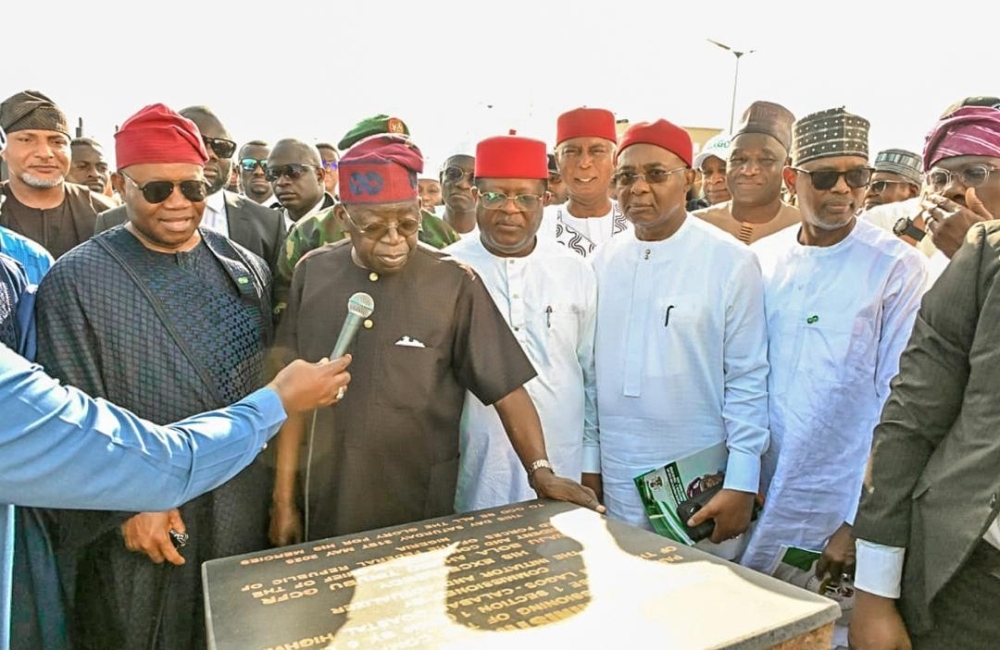
DRIVING NIGERIA’S FUTURE: CELEBRATING TWO YEARS OF TRANSFORMATIVE LEADERSHIP AND THE LAGOS-CALABAR COASTAL HIGHWAY MILESTONE
DRIVING NIGERIA’S FUTURE: CELEBRATING TWO YEARS OF TRANSFORMATIVE LEADERSHIP AND THE LAGOS-CALABAR COASTAL HIGHWAY MILESTONE
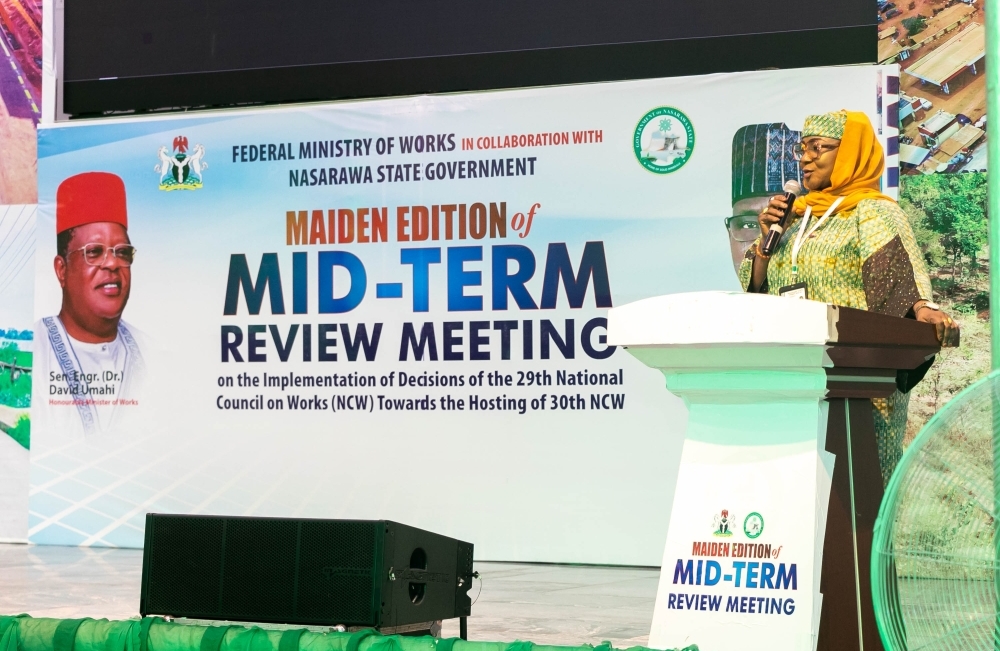
MID -TERM REVIEW MEETING ON THE IMPLIMENTATION OF THE DECISIONS REACHED AT THE 29TH NATIONAL COUNCIL ON WORKS (NCW) DAY 1
MID -TERM REVIEW MEETING ON THE IMPLIMENTATION OF THE DECISIONS REACHED AT THE 29TH NATIONAL COUNCIL ON WORKS (NCW) DAY 1